As an Amazon Associate, Garage Welding may earn from qualifying purchases. This does not change the price you pay.
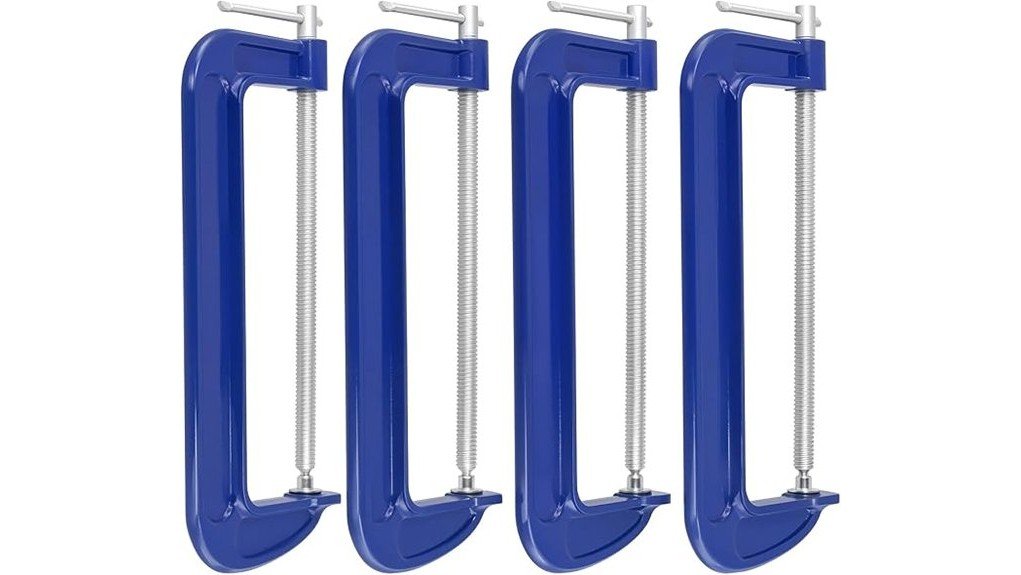
The SENJEOK cast iron C clamps are a 4-pack of large C-clamps with a 10 in jaw opening and a 12 in frame depth, according to the listing. This SENJEOK C clamps review is based on that listing, not on hands-on testing.
They are worth considering if you regularly hold thick or tall assemblies for welding, fabrication or woodworking. Skip them if you only need small clamps for sheet metal, since these are large, heavy tools.
Quick specs at a glance
| Item | Details |
|---|---|
| Product type | Cast iron C-clamps, sold as a 4-pack |
| Jaw opening (per listing) | 10 in |
| Frame depth (per listing) | 12 in |
| Material (per listing) | Cast iron frame with steel screw |
| Weight (per listing) | About 15.87 lb for the pack, so roughly 4 lb each if evenly split |
Per-clamp weight is our arithmetic from the pack figure, not a listed number. Check the listing for any clamping-force rating before relying on one.
What these clamps are and who they suit
A 10 in C-clamp is a big-capacity clamp. The 10 in opening handles thick stacks, such as timber assemblies, tube sets or thick plate on a bench. A deep 12 in frame reaches farther from the edge of a panel than a standard clamp.
That reach and capacity suit fabricators building frames, trailer or gate builders, and woodworkers. Four clamps in a pack covers many situations where you need to hold two parts at once at both ends.
The same size is more than you need for thin sheet. Small clamps are easier to place and leave room for torch access.
Fit and compatibility checklist
- Maximum stack: measure your workpiece including any shims or backing. Aim to use no more than about 80% of the opening for solid tightening.
- Reach vs weight: a longer frame is heavier and can twist the work if you hang it off a thin piece. Support the clamp so it does not pull the part out of alignment.
- Screw end: check the listing images for the type of pad or swivel. A bare screw tip marks soft metal, so add a backing plate.
- Bench clearance: bring a tape measure. A 12 in frame needs space around the work.
- Pack contents: confirm that all four clamps are the same size and whether individual replacements are sold.
Pros and limitations
Pros
- Large opening and deep reach for thick or wide assemblies.
- Cast iron frames are stiff and suited to rigid fixturing.
- A four-pack lets you clamp both ends and the middle.
Limitations
- Heavy and slow to reposition.
- Cast iron can crack if dropped or overloaded; do not use a pipe on the handle for extra leverage.
- The screw thread is exposed to spatter.
- Not a ground clamp, and not designed to carry welding current.
Using large C-clamps safely
- Support the clamp weight on the bench, not on thin tubing.
- Place the screw pad on a flat spot and align the clamp square to the clamping force.
- Snug up by hand; do not use a cheater bar.
- Keep fingers clear of the gap, since large clamps store a lot of force.
- After welding, wait for parts to cool before loosening. Heated parts shrink as they cool and can bind the clamp.
Inspect cast frames for cracks around the throat each time you use them. If you see a crack, retire the clamp.
Maintenance
Wipe the screw clean, remove spatter with a wire brush and apply a drop of light oil. Store them in a dry spot. If the finish wears, paint or a light coat of oil keeps surface rust down. A small amount of anti-spatter on the thread helps in welding shops.
Alternatives and related guides
- HNBun C-clamp set review – a smaller 6 in clamp set for lighter work
- Dasbet cast iron clamp review – another cast iron clamp to compare
- Heavy-duty C-clamps pack review – pack options when you need many clamps at once
- Welding table clamps review – a better fit for slotted welding tables
Frequently Asked Questions
How big is a 10 inch C clamp?
The jaw opening is the maximum distance between the fixed jaw and the screw pad. A 10 in opening can hold stacked material up to about 10 in. The frame depth tells you how far you can reach from the edge of the work.
Are cast iron C clamps good for welding?
They are commonly used to hold parts for tacking, but weld spatter can damage the thread, and heat can cause stress. Use anti-spatter, keep clamps away from the weld pool and never use them as a ground clamp.
Can I use a cheater bar on the handle?
It is not recommended. Cast iron is strong in compression but can crack if over-torqued. Tighten by hand. If the work will not hold, use more clamps or a different fixturing method.
Does the listing give a clamping force?
The listing text we reviewed focuses on size and material and does not provide a verified clamping-force rating. Do not assume a figure; contact the seller if you need a rated working load.
Final verdict
The SENJEOK 4-pack is aimed at buyers who need big capacity and deep reach for fabrication and woodworking. Measure your largest workpiece, expect them to be heavy and treat them as holding tools rather than tools that carry current.