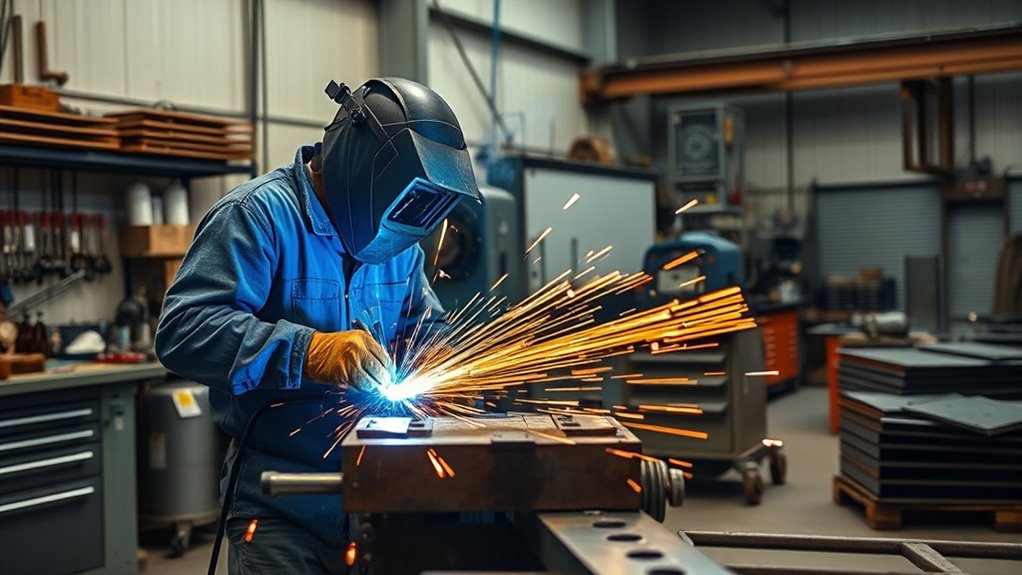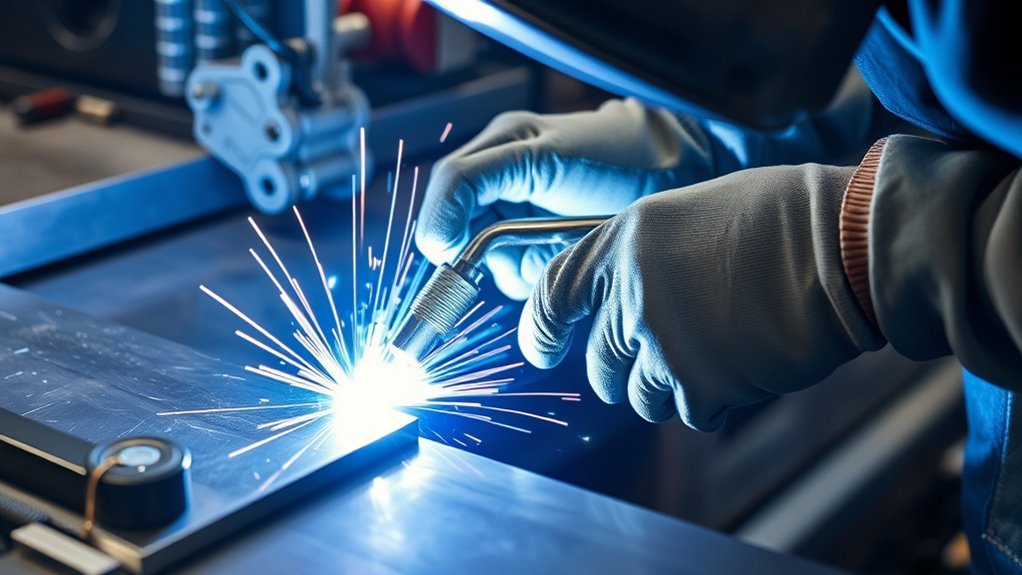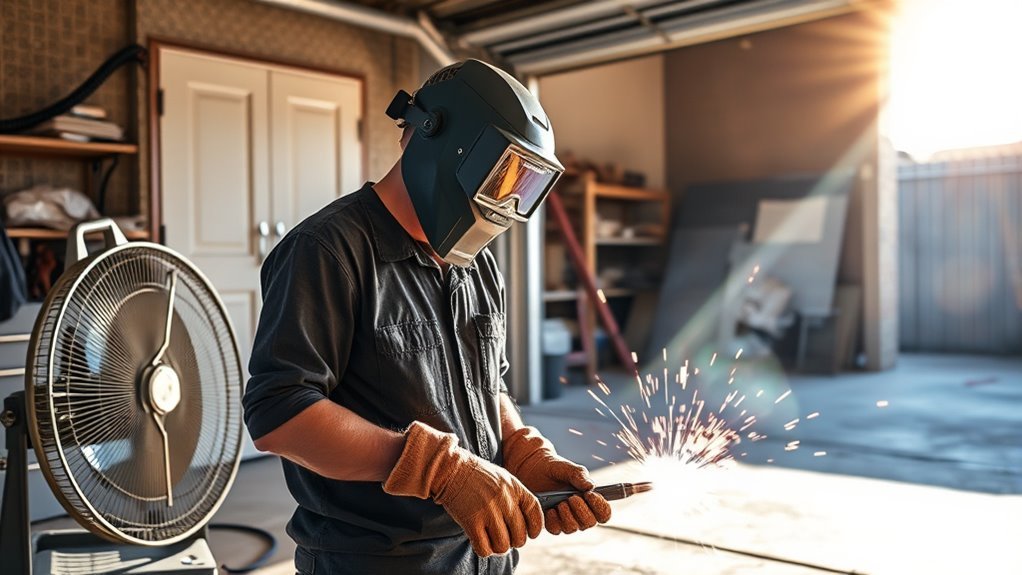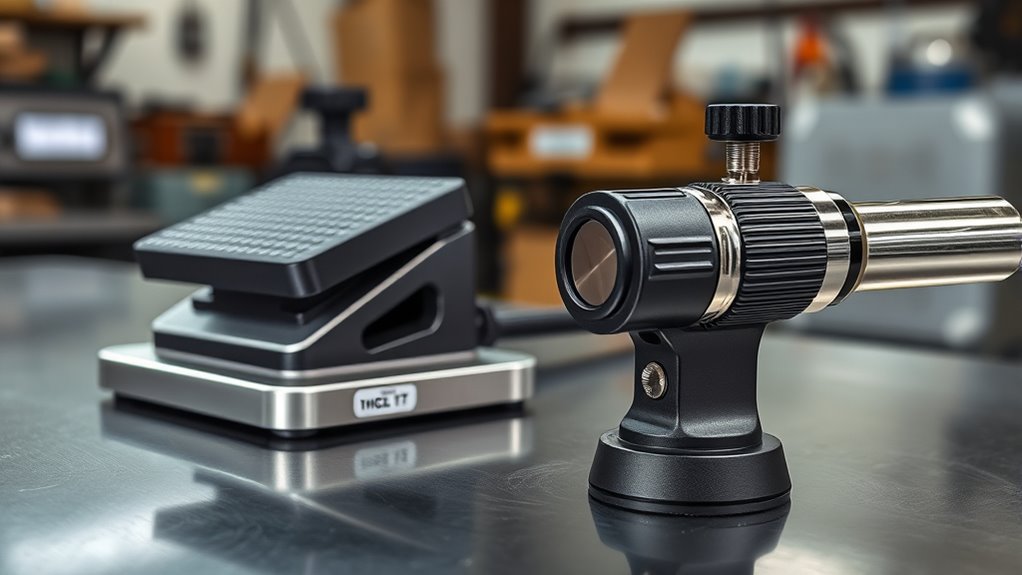
Choosing between a TIG foot pedal and a fingertip control comes down to how you weld, where your body is positioned, and how steady you can keep the torch while changing amperage. A foot pedal usually feels smoother on a bench or seated setup. A fingertip control can be easier when you are under a vehicle, on a ladder, around tubing, or anywhere your foot cannot stay planted.
Quick Answer
Use a TIG foot pedal for bench work, thin material, aluminum, and long welds where smooth amperage control matters most. Use a fingertip control when your foot cannot reach a pedal safely, such as overhead, underbody, field, pipe, or cramped-position welding.
Key Takeaways
- A foot pedal gives the smoothest amperage ramp when your foot can stay relaxed and stable.
- A fingertip control is better when body position makes a pedal awkward, unsafe, or impossible to use.
- Both controls can work well, but both must match your TIG machine’s remote connector and control type.
- For beginners, a foot pedal is usually easier to learn on flat bench welds, while fingertip control takes more torch-hand discipline.
At a Glance
| Time Required | 10 to 20 minutes to test both controls on scrap metal |
| Difficulty | Easy to compare, moderate to master under real welding conditions |
| Tools Needed | TIG welder, compatible foot pedal or fingertip remote, torch, PPE, clean scrap metal |
| Cost | Varies by brand, connector, amperage range, and whether it is OEM or aftermarket |
Warning: TIG amperage controls do not replace welding safety. Wear a proper welding helmet, gloves, flame-resistant clothing, and eye protection for nearby helpers. Keep remote cables out of walkways, inspect damaged insulation, and provide ventilation, especially in small or confined spaces.
What Are TIG Foot Pedals?
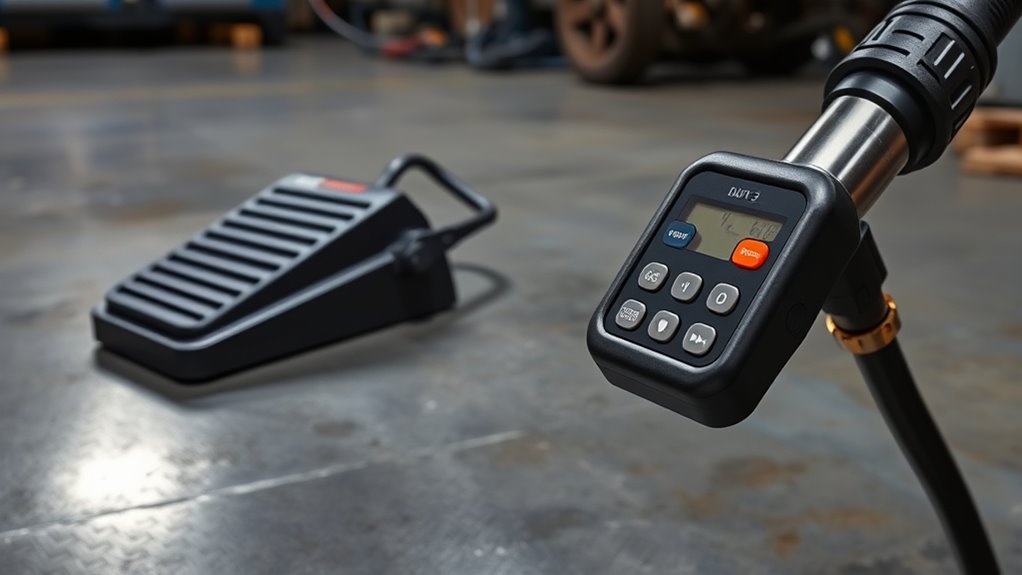
A TIG foot pedal is a remote amperage control that lets you start the arc and change current with your foot. As you press the pedal, the machine increases output up to the maximum amperage you set on the welder. As you ease off, the current drops.
This makes a foot pedal useful for jobs where heat needs to change during the weld. You can add heat to start the puddle, back off near an edge, feather down at the end of the bead, or react when the joint starts soaking up heat.
Foot pedals work best when your body is stable. A bench, stool, welding table, chassis jig, or flat-position part gives your foot a steady place to move without throwing off torch angle.
Benefits of a TIG Foot Pedal
- Smooth amperage ramp: Helpful when welding thin steel, stainless, aluminum, or outside corners.
- Hands stay focused: Your torch hand controls arc length while your filler hand feeds rod.
- Good for long beads: You can adjust heat as the part warms up.
- Easy for beginners on the bench: The motion is usually more natural than moving a thumb wheel while holding a torch.
Drawbacks of a TIG Foot Pedal
- Awkward in tight positions: It can be hard to use under a vehicle, inside a frame, on a ladder, or while standing on uneven ground.
- Trip hazard: The pedal cable needs to be routed away from walkways and hot metal.
- Body-position limits: If your foot is bracing your body, it cannot control amperage smoothly.
- Not always field friendly: Mud, sparks, grinding dust, and cramped floors can make pedal use frustrating.
Pro Tip: Set the machine’s maximum amperage a little higher than you expect to need, then use the foot pedal to fine-tune heat. If the max setting is too high, a small pedal movement can make the weld feel jumpy.
What Are TIG Fingertip Controls?
A TIG fingertip control mounts on or near the torch handle. Depending on the model, it may use a thumb wheel, slider, rocker, button, or switch. Some controls only start and stop the arc, while others provide variable amperage control.
Fingertip controls shine when your foot cannot reach a pedal or when using a pedal would put your body in a poor position. They are common for pipe, motorsports fabrication, roll cages, underbody repairs, overhead welds, ladder work, and field welding.
Benefits of Fingertip Controls
- Better access in cramped spaces: You do not need a flat floor or stable pedal position.
- Less floor clutter: You avoid a pedal and pedal cord near your feet.
- Good for tack welding: A button or switch can make quick starts and stops easier.
- Useful out of position: You can weld when kneeling, standing, reaching, or bracing yourself.
Drawbacks of Fingertip Controls
- Torch movement risk: Moving a wheel or slider can disturb arc length or torch angle.
- Less natural for beginners: Your torch hand must control position and amperage at the same time.
- Small-control fatigue: Gloves, sweat, and awkward angles can make tiny controls harder to feel.
- Limited range on some remotes: Some torch switches are on/off only, not true variable amperage controls.
Foot Pedal vs Fingertip Control: Side-by-Side
| Factor | Foot Pedal | Fingertip Control |
|---|---|---|
| Best environment | Bench, table, seated, or stable floor work | Tight, overhead, field, pipe, or underbody work |
| Amperage feel | Smooth and gradual when your foot is stable | Fast, but may be less smooth if your torch hand moves |
| Torch stability | Very good because amperage is controlled by foot | Depends on how naturally you can move the control |
| Learning curve | Usually easier for new TIG welders on flat work | Takes practice because one hand does more work |
| Cable clutter | Pedal and cable can create floor clutter | Less floor clutter, but the torch lead may feel bulkier |
| Best choice for | Thin sheet, aluminum, stainless, long beads, precise bench work | Tacks, roll cages, pipe, repairs, overhead joints, mobile welding |
How Foot Pedals Improve Welding Control
Foot pedals improve control because they separate heat control from torch control. Your hand keeps the tungsten at a steady arc length, while your foot handles the amperage change.
This is useful when the weld puddle needs small heat changes. On thin material, you can ease in slowly instead of blasting through the edge. On aluminum, you can add current to start the puddle, then back off as the part heats up. Near the end of a weld, you can taper down to reduce crater cracking risk.
Foot control is also helpful when you are learning puddle behavior. You can watch how the bead responds as you add or reduce current without moving your hand away from the torch.
Using Fingertip Controls for Tight Spaces
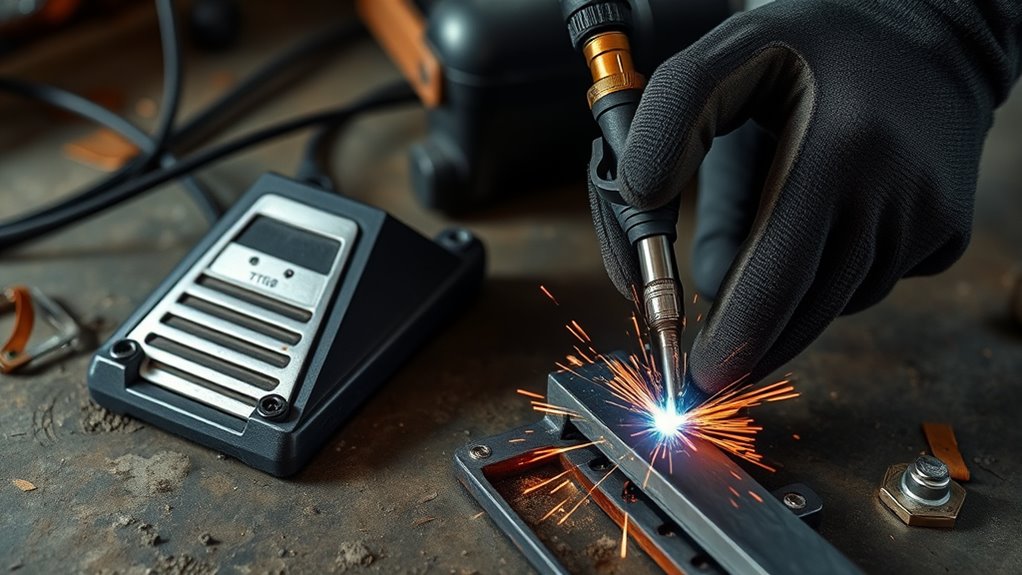
Fingertip controls help when a foot pedal would force an unsafe or awkward position. If you are kneeling beside a frame rail, reaching into a roll cage, welding pipe, or working overhead, your foot may be busy balancing your body. In those cases, a torch-mounted control can be the better option.
The tradeoff is that your torch hand now has two jobs. It must hold arc length and operate the control. If the control makes your hand twitch, the arc length changes, and the weld can become inconsistent.
Tips for Using a Fingertip Control
- Mount the control where your thumb or finger can reach it without changing grip.
- Practice dry runs before striking an arc.
- Use a comfortable glove that still lets you feel the switch or wheel.
- Keep the torch lead supported so the extra control wiring does not pull your hand.
- Use tack welds on scrap until you can adjust amperage without moving the tungsten.
Note: Some fingertip controls are only arc-start switches. Others provide variable amperage. Check your welder manual and the remote-control product description before buying.
Which Control Works Best for Beginners?
Most beginners learn faster with a foot pedal on flat bench welds. It lets you focus on torch angle, arc length, travel speed, filler timing, and puddle size without changing amperage with the same hand that holds the torch.
That does not mean fingertip controls are wrong for beginners. If your first real projects involve roll cages, exhaust work, farm repair, pipe, or vehicle underbody work, you may need to learn fingertip control early. The key is to practice on scrap in the same body position you will use on the real part.
Choosing by Welding Position and Project Type
- Flat bench work: Choose a foot pedal for smooth heat control.
- Thin sheet metal: A foot pedal usually gives better heat tapering.
- Aluminum on a table: A foot pedal is often preferred because aluminum heat input changes quickly.
- Roll cages and chassis tubes: Fingertip control is often easier when your body wraps around the work.
- Pipe or fixed-position welds: Fingertip control can help when foot position changes constantly.
- Overhead welding: Fingertip control is usually more practical than trying to balance on a pedal.
- Long production-style bench welds: A foot pedal can reduce torch-hand fatigue and keep amperage changes smoother.
Compatibility Check Before Buying
Before buying a foot pedal or fingertip control, make sure it matches your TIG machine. Remote controls are not universal. The plug, pin count, resistance value, switch type, and machine settings must match.
- Check the connector: Common TIG remotes use different pin layouts and plugs by brand and model.
- Confirm variable amperage: Do not assume every torch switch can control current. Some only start and stop the arc.
- Match the amperage range: Your remote should work smoothly across the range you use most.
- Check machine settings: Some welders require remote mode, 2T/4T selection, or panel/remote settings.
- Inspect cable length: Longer cables help with movement but can add clutter and snag points.
Products Worth Considering

Wide Compatibility: This TIG welding foot pedal switch is specially designed for ARCCAPTAIN TIG welders, compatible with TIG200, TIG200P, TIG200P ACDC, TIG205 Pro, and TIG205P Pro. Note: Not compatible with MIG205MP.

APPLICATION: Applicable to various types of TIG Welding Machine, such as YESWELDER TIG-200P ACDC/ TIG-205P/ YWT-200DC welders
Setup and Testing Steps
- Turn off the welder before connecting the remote. Follow the manufacturer’s instructions for your exact machine.
- Plug in the control fully. A loose remote connector can cause no arc start or erratic amperage.
- Set the maximum amperage on the machine. The remote usually controls output up to that limit.
- Route cables safely. Keep remote cables away from walkways, sharp edges, hot metal, and grinding sparks.
- Test on scrap. Start low, move through the control range, and confirm the arc responds smoothly.
- Practice the real body position. If the job is overhead or underbody, test the control while positioned that way.
Practical Applications: Using Each Control Type Effectively
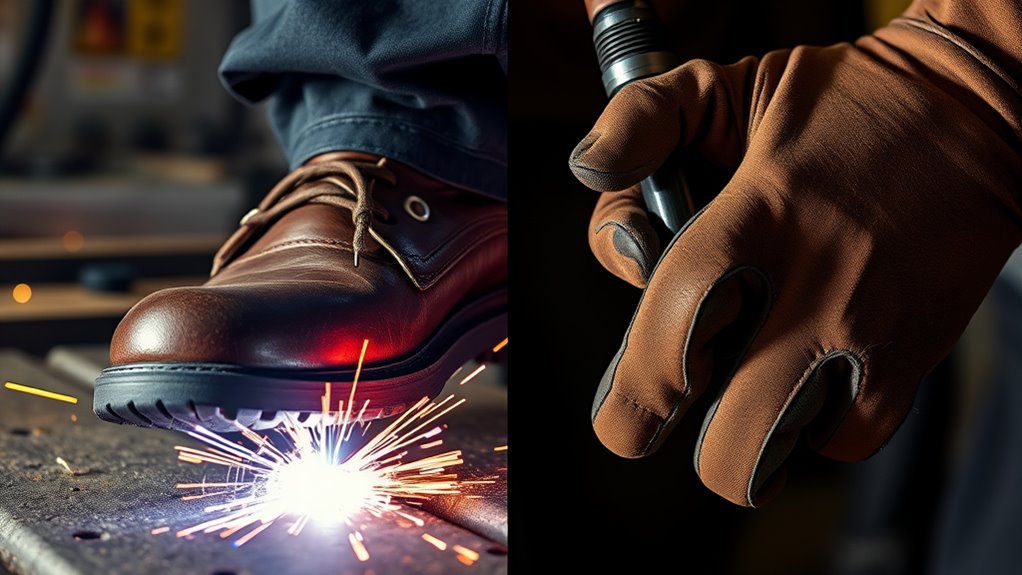
For a stationary setup, a foot pedal is often the cleanest choice. You can rest your foot, control amperage smoothly, and keep both hands focused on torch and filler rod. This works well for welding coupons, brackets, tabs, tanks, tables, aluminum parts, stainless trim, and many automotive fabrication jobs done on a bench.
For fieldwork and tight fabrication, fingertip control can be more practical. It lets you weld when a foot pedal is blocked by the workpiece, floor, creeper, ladder, or your own stance. This matters when welding around tubing, pipe, exhaust, suspension brackets, or parts that cannot be rotated into a flat position.
The best welders often learn both. A foot pedal gives excellent control when the setup allows it. A fingertip control keeps you productive when the part decides your body position for you.
Troubleshooting TIG Remote Control Problems
| Problem | Likely Cause | Fix |
|---|---|---|
| Arc starts, but amperage will not change | Machine still set to panel control, wrong remote mode, or on/off-only switch | Check remote mode, 2T/4T settings, and control type in the manual |
| Amperage jumps suddenly | Max amperage set too high, dirty pedal, damaged cable, or poor thumb-wheel control | Lower max amperage, inspect the control, and test on scrap |
| Remote does nothing | Wrong connector, loose plug, incompatible resistance value, or broken lead | Confirm exact machine compatibility before replacing parts |
| Torch moves when changing amperage | Fingertip control is mounted in an awkward spot | Reposition the control, support the lead, and practice dry runs |
Debunking Common Myths About TIG Controls
- Myth: A foot pedal is always more precise. A pedal is usually smoother on a bench, but it loses its advantage if your foot is unstable or the pedal is hard to reach.
- Myth: Fingertip controls are only for experts. They take practice, but they can be the safer and more practical option in cramped positions.
- Myth: Any remote works with any TIG welder. Remote controls must match the machine connector and control design.
- Myth: A higher max amperage setting gives better control. Too much max amperage can make small pedal or thumb-wheel movements feel too aggressive.
Tips for Choosing the Right TIG Control for Your Needs
Choose a TIG foot pedal if most of your work happens at a welding table, especially on thin material or aluminum. It gives smooth heat control and keeps your torch hand focused on arc length.
Choose a fingertip control if your work often happens out of position. It is usually the better choice for underbody welding, pipe, roll cages, fixed assemblies, repair work, and field jobs where the pedal would be hard to place.
If you can, own and practice with both. A foot pedal gives better control when your body is settled. A fingertip control gives you access when the workpiece, floor, or jobsite makes a pedal impractical.
Products Worth Considering
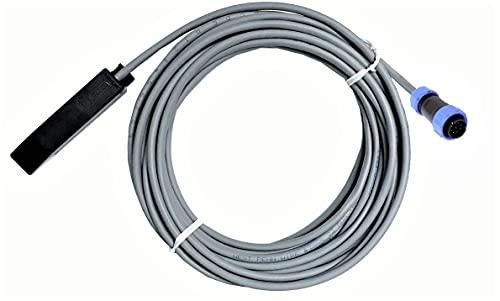
TIG welding hand control for Harbor Freight Vulcan welders (9 pin plug).

TIG welding hand control for Lincoln welders (6 pin plug).
TIG welding hand control for Miller welders (14 pin plug).
Frequently Asked Questions
Is a foot pedal necessary for TIG?
No. A foot pedal is not strictly necessary, but it is one of the easiest ways to control TIG amperage on bench work. Many TIG machines can also use torch switches, fingertip controls, or fixed panel amperage, depending on the machine and setup.
What is the Rule of 33 in TIG welding?
The “Rule of 33” is not a standard TIG amperage rule. Do not rely on 33 amps per 1/8 inch as a setup formula. A safer approach is to start with your welder’s chart, the welding procedure, material thickness, joint type, tungsten size, and test coupons, then adjust based on puddle behavior.
How much does SpaceX pay TIG welders?
SpaceX pay can change by job title, location, shift, experience, clearance needs, and current posting. Check the live job listing instead of relying on a fixed number. For a broad U.S. benchmark, the Bureau of Labor Statistics reported 2024 median pay for welders, cutters, solderers, and brazers at $51,000 per year, or $24.52 per hour.
What is the golden rule in welding?
The golden rule is to control the weld puddle, not just the machine setting. Keep a steady arc length, consistent travel speed, proper torch angle, clean metal, and enough shielding gas. In TIG, the best amperage control is the one that lets you do those things without fighting your body position.
Is a foot pedal or fingertip control better for aluminum TIG?
For aluminum on a bench, a foot pedal is usually easier because aluminum heats quickly and often needs smooth amperage changes. For aluminum in a fixed or awkward position, a fingertip control may be more practical if you can adjust it without moving the torch.
Which control is better for overhead or underbody TIG welding?
A fingertip control is usually better for overhead or underbody TIG welding because your feet may be used for balance or may not reach a pedal safely. The tradeoff is that you must practice enough to adjust amperage without changing torch angle or arc length.
Conclusion
For most bench TIG welding, a foot pedal is the best starting point because it gives smooth amperage control while your hands manage the torch and filler rod. For cramped, overhead, field, pipe, roll cage, or underbody welding, a fingertip control can be the smarter choice because it keeps amperage control on the torch when a pedal is not practical. The best setup is the one that lets you stay stable, see the puddle, control arc length, and weld safely.
Sources
- Miller Remote Controls — supports the use of foot controls, fingertip controls, and compatible remotes for fine-tuning amperage from the weld area.
- OSHA 1910.252, Welding, Cutting, and Brazing General Requirements — supports welding PPE, eye protection, ventilation, confined-space, and safety guidance.
- OSHA 1910.254, Arc Welding and Cutting — supports safe equipment hookup, manufacturer instructions, cable safety, and defect reporting.
- U.S. Bureau of Labor Statistics, Welders, Cutters, Solderers, and Brazers — supports the welder pay benchmark used in the FAQ.