TIG welding brass is difficult because the arc can heat the metal faster than the joint can carry that heat away, while zinc in the alloy can vaporize before the copper-rich base fully melts. That combination can create white zinc-oxide fume, porosity, spatter, color loss, and a weak or uneven bead.
The most important correction is the polarity choice: DC electrode negative (DCEN) is the normal starting point for TIG welding and TIG brazing brass. AC is mainly used for its oxide-cleaning action on metals such as aluminum and magnesium. It is not automatically cleaner, cooler, or less porous on brass.
Good results depend less on a universal amperage number and more on identifying the alloy, deciding whether the joint should be fusion-welded or TIG-brazed, using a zinc-free filler, keeping the puddle small, and controlling fumes at the source. Shielding-gas fundamentals also matter, especially when setting cup size and flow for TIG welding.
Quick Answer
Use DCEN for most TIG work on brass. Use 100% argon, a pointed 2% lanthanated or ceriated tungsten, and a zinc-free filler such as ERCuSi-A silicon bronze when the joint design allows TIG brazing. AC should be used only when a tested procedure or equipment manufacturer specifically calls for it.
Key Takeaways
- DCEN is the default polarity for brass; AC cleaning action is not a cure for zinc loss.
- First decide between fusion welding and TIG brazing. They produce different joints and are not interchangeable.
- Avoid using ordinary brass wire as filler because its zinc can add more fume and porosity.
- Leaded free-machining brass, including many C360 parts, is a poor candidate for fusion welding.
- Indoor work on zinc-bearing metal needs effective local exhaust near the arc, not just an open door or a fan behind the welder.
- Test the exact alloy, joint, filler, and settings on a coupon before welding the finished part.

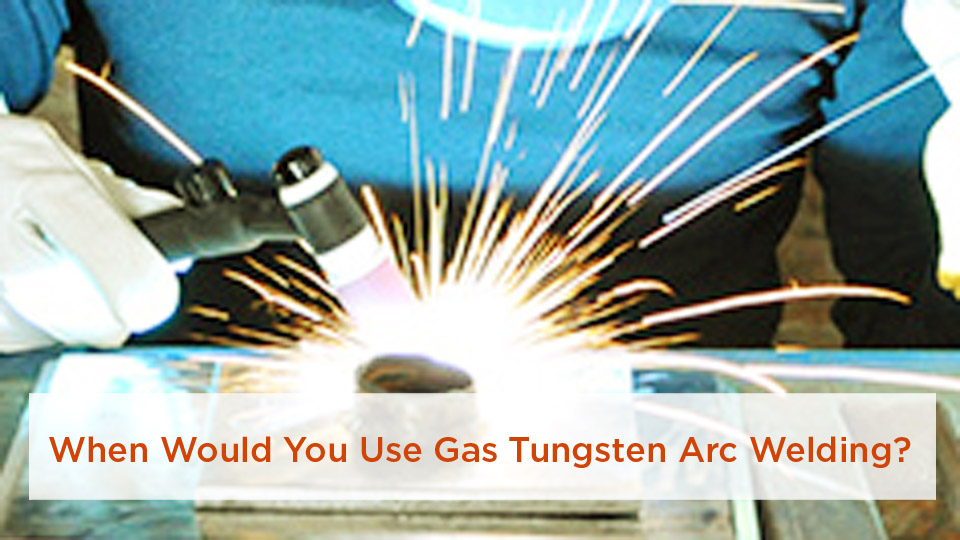
Illustration of TIG welding brass and polarity selection.
At a Glance
| Time Required | About 30–90 minutes for setup, coupon testing, and a small noncritical joint; complex or code work takes longer. |
| Difficulty | Advanced. Brass is less forgiving than mild steel because zinc can vaporize and contaminate the puddle. |
| Tools Needed | DC TIG machine with remote amperage control, argon, pointed lanthanated or ceriated tungsten, suitable filler, clamps, dedicated cleaning tools, PPE, and source-capture exhaust. |
| Cost | Consumables are modest, but a suitable TIG machine and effective local exhaust are the major equipment costs. |
Warning: Heating brass can release zinc-oxide fume, which can cause metal fume fever. Use local exhaust that captures fume near the arc. Unknown or leaded brass needs extra caution. Workplace respirator use must follow an exposure assessment and a compliant respiratory-protection program.
What Is Brass and Why Does It Behave Differently When TIG Welding?
Brass is a family of copper-zinc alloys, not one single metal. Its melting range, strength, color, machinability, and weldability change with zinc, lead, tin, aluminum, and other additions. For example, C260 cartridge brass is roughly 70% copper with zinc as the balance, while C360 free-cutting brass also contains substantial lead.
Zinc is the main welding problem. It boils at a much lower temperature than copper melts, so an oversized or slow-moving puddle can drive zinc out of the joint. The result may be white smoke or residue, popping, undercut, pinholes, and a copper-rich weld area with a different color and properties. The Welding Institute notes that zinc vaporization is a major source of porosity when welding brasses.
Lead creates another problem. Free-machining brasses were designed to cut cleanly on machine tools, not to make sound fusion welds. Molten lead can segregate and contribute to cracking or inclusions. When the alloy is C360, C353, or another leaded grade, brazing, soldering, mechanical repair, or replacement is often safer than attempting a fusion weld.
Note: A magnet and a file cannot identify a brass grade. Use a mill certificate, drawing, part specification, manufacturer data, or positive material identification such as XRF when alloy composition matters.
AC vs DC in TIG Welding: Which Polarity Wins for Brass?
DCEN is the normal choice. With DCEN, electrons flow from the tungsten to the workpiece, placing most arc heat in the work. This gives a stable, concentrated arc and keeps the tungsten cooler than electrode-positive operation. CK Worldwide lists copper and brass among the materials normally welded with DCEN.
AC alternates between electrode-negative and electrode-positive portions of the cycle. The electrode-positive portion helps disrupt tenacious surface oxides on aluminum and magnesium, but it also puts more heat into the tungsten. Brass does not have the same oxide-cleaning requirement, so AC adds complexity without solving the main problem: zinc vaporization caused by excessive puddle temperature and dwell time.
For brass, polarity does not replace heat control. A small DCEN puddle, fast travel, clean metal, and zinc-free filler matter more than AC balance or frequency.
| Aspect | DCEN | AC |
|---|---|---|
| Normal use on brass | Default for most TIG welding and TIG brazing | Procedure-specific exception, not the default |
| Arc behavior | Focused and stable | Alternates polarity and adds electrode-positive heating |
| Oxide cleaning | Relies on proper mechanical and solvent cleaning | Useful mainly for aluminum and magnesium oxides |
| Tungsten loading | Lower than electrode-positive operation | Higher during the electrode-positive portion |
| Best decision rule | Start here unless a qualified procedure says otherwise | Use only with a tested, documented reason |
When Should You Choose AC for TIG Welding Brass?
AC should not be chosen simply because the brass is thin, dirty, high in zinc, or decorative. Those conditions call for better cleaning, tighter heat control, a different filler, or a different joining process. They do not make AC the standard polarity.
Use AC only when the equipment manufacturer, filler-metal manufacturer, repair specification, welding procedure specification, or successful procedure qualification specifically calls for it. Some consumable data permits either DCEN or high-frequency AC, but that is not the same as saying AC is universally better for brass.
If a machine has AC output but no suitable DC TIG output, do not invent an AC balance and frequency recipe on the finished part. Test a documented process on representative coupons, use another approved joining method, or move the work to a machine that provides stable DCEN.
When to Go with DCEN for TIG Welding Brass
Choose DCEN for most repair, fabrication, and TIG-brazing work on weldable brass. It works on thin and thick sections; thickness alone does not determine polarity. As the section gets thicker, the real challenges are heat sinking, joint access, filler selection, and whether preheat or a helium-containing shielding mix is justified by a tested procedure.
DCEN also suits silicon-bronze TIG brazing. In that process, the filler melts and wets the prepared surfaces while the base metal remains mostly solid. Miller describes TIG brazing with silicon bronze as a lower-temperature method that can reduce distortion compared with fusion welding.
Pro Tip: Set the machine’s maximum amperage only high enough to establish a small puddle promptly, then control heat with the pedal or fingertip remote. A slow, oversized puddle usually causes more zinc loss than a brief, controlled peak.
Should You Fusion-Weld or TIG-Braze Brass?
This decision matters more than the AC-versus-DC debate.
| Method | What Melts | Where It Fits | Main Limitation |
|---|---|---|---|
| Fusion TIG welding | Base metal and compatible filler | Known, weldable brass with a tested procedure and a joint that requires fusion | Greater risk of zinc loss, porosity, cracking, color change, and distortion |
| TIG brazing | Primarily the filler metal | Noncritical repairs, decorative work, thin parts, and some dissimilar-metal joints | Not automatically equal to a fusion weld; strength depends on joint design, fit, filler, and service |
| Conventional brazing or soldering | Filler metal | Plumbing, assemblies designed for capillary joints, and parts poorly suited to fusion welding | Requires the correct filler, flux or atmosphere, joint clearance, and service rating |
| Mechanical repair or replacement | Nothing | Leaded brass, unknown castings, pressure parts, or components with heat-sensitive features | May require redesign or a replacement part |
Do not treat TIG brazing as a universal structural substitute. For lifting points, steering parts, pressure vessels, fuel systems, refrigeration components, potable-water parts, or code-regulated work, use the material, joining process, filler, qualification, inspection, and leak test required by the governing specification.
Essential Equipment for TIG Welding Brass
- Constant-current DC TIG machine: High-frequency or lift-arc starting and a remote amperage control make heat easier to manage.
- Tungsten: A pointed or slightly truncated 2% lanthanated or ceriated electrode is a practical choice for DCEN. Size it for the expected current.
- Dedicated tungsten grinder: Grind lengthwise on a clean wheel reserved for tungsten. Do not use a contaminated shop grinder.
- Shielding gas: Use clean 100% argon for most work. A gas lens can improve coverage when access or stickout makes shielding difficult.
- Filler metal: Use a zinc-free copper-alloy filler selected for the base alloy and service. ERCuSi-A silicon bronze is common for TIG brazing and some repair work.
- Fixturing: Use clamps, copper or aluminum backing where appropriate, and soft jaws that do not damage the part. Brass itself is nonmagnetic.
- Source-capture ventilation: Position the hood or extraction nozzle close enough to pull fumes away from the breathing zone without disturbing the argon shield.
- PPE: Wear welding gloves, flame-resistant clothing, safety glasses, and a helmet shade appropriate for the current. OSHA lists a minimum shade of 8 for GTAW below 150 amps and 10 from 150 to 500 amps.
Modern lanthanated and ceriated tungsten avoids the handling concerns associated with thoriated tungsten. Miller notes that thoriated electrodes contain slightly radioactive thorium and require care, especially when grinding dust is generated.
Products Worth Considering

TOP QUALITY: This 10-pack of 2% Lanthanated tungsten electrodes 3/32"x7"(Blue, WL20/EWLa-2) adhere to Standard AWS A5.12M/A5.12:2009 and DIN EN 26848 GB/T 31908-201. All our tungsten has 100% traceability.

BLUE-2% LANTHANATED: Lanthanated electrodes are popular due to the relative ease of striking an arc and lower amperage required. They perform exceptionally well in both AC and DC applications

BLUE-2% LANTHANATED: Lanthanated electrodes are popular due to the relative ease of striking an arc and lower amperage required. They perform exceptionally well in both AC and DC applications.
Choosing the Right Filler Rod for Brass TIG Welds
Do not assume the filler should match the yellow color of the base metal. A filler that contains significant zinc can increase fume and porosity. TWI recommends zinc-free copper-alloy fillers for TIG or MIG welding brasses, including silicon bronze and aluminum bronze.
| Filler Type | Best Use | Advantages | Limits |
|---|---|---|---|
| Silicon Bronze (ERCuSi-A) | TIG brazing, decorative work, and selected brass or brass-to-steel repairs | Flows well, contains very little zinc, and works at a lower temperature than fusion welding the brass | Color is usually redder than yellow brass; joint strength depends heavily on design and fit |
| Aluminum Bronze (alloy selected by procedure) | Selected copper-alloy joints needing higher strength or corrosion resistance | Strong and corrosion resistant when matched correctly | Higher heat demand and a larger risk of mismatching the base alloy or service |
| Phosphor Bronze (alloy selected by procedure) | Specific copper-tin or copper-alloy applications | Zinc-free and available in several strength levels | Not a universal brass filler; composition must match the application |
| Brass base-metal strip or ordinary brass wire | Generally avoid as TIG filler | May look like a color match before welding | Zinc vaporization can increase fume, porosity, and composition loss |
Harris lists ERCuSi-A with roughly 2.8%–4% silicon and a maximum of 1% zinc. That low-zinc composition is one reason it behaves more predictably than feeding ordinary brass into the arc. Always check the filler manufacturer’s data sheet and the required mechanical properties before using it on a loaded joint.
Products Worth Considering

Great tools at a great price

Classification: AWS A5.7-84 ERCuSi-A

ERCuSi-A 1/16 Silicon Bronze Copper TIG Welding Wire 1/16" x 36"
Machine Settings and Joint Prep Tips for Brass
There is no safe one-number amperage chart for all brass. Alloy, section thickness, joint shape, fit, backing, torch access, and whether you are welding or brazing can change the needed current. Use the following as setup guidance rather than a qualified procedure.
| Item | Practical Starting Point | What to Watch |
|---|---|---|
| Polarity | DCEN | Do not switch to AC as a porosity fix |
| Shielding gas | 100% argon; often about 12–20 CFH with a small-to-medium cup | Increase only as cup size and joint geometry require; excess flow can create turbulence |
| Tungsten | Pointed 2% lanthanated or ceriated; 1/16 inch for lower current and 3/32 inch as current rises | Use the electrode manufacturer’s current range and stop if the tip deforms or contaminates |
| Arc length | Short and steady without touching the puddle | A long arc spreads heat and weakens gas coverage |
| Torch angle | About 10–15 degrees from vertical in the direction of travel | Too much angle lengthens the arc and exposes the puddle |
| Pulse | Optional; begin with pulse off, then test it on coupons if it helps control heat | No single pulse frequency prevents zinc porosity |
| Preheat | Usually unnecessary on thin and moderate sections | For thick sections, TWI says preheat may be used up to about 250°C only when the procedure requires it |
| Cooling | Let the part cool in still air unless a qualified procedure says otherwise | Do not wet-rag or quench a hot joint to cure porosity |
Prepare the joint to bright metal with a clean abrasive or dedicated stainless-steel brush. Remove oil with a suitable nonchlorinated solvent, keep it away from ignition sources, and allow it to evaporate fully before striking an arc. OSHA warns against allowing vapors from chlorinated degreasers to enter the welding atmosphere.
Use close fit-up and enough tacks to hold alignment without locking excessive stress into the part. Bevel only when the joint design and required penetration call for it. A large open root makes it harder to keep the puddle small.
Pro Tip: Make at least two coupons from the same alloy and thickness. Use the first to find the lowest practical heat and the second to confirm bead shape, penetration or wetting, and repeatability before touching the finished part.
Step-by-Step Guide to TIG Welding Brass on AC
For ordinary brass work, there is no universal AC recipe to follow. Use this process only when a qualified or manufacturer-supported procedure specifically requires AC:
- Confirm the alloy and procedure. Verify that the base metal, filler, joint, current type, and service are covered.
- Prepare and ventilate the work. Clean to bright metal and place local exhaust near the fume source without pulling away shielding gas.
- Use the specified tungsten and AC controls. Follow the documented balance, frequency, current, gas flow, and preheat limits. Do not copy aluminum settings.
- Run representative coupons. Check for tungsten overheating, white fume, spitting, pinholes, cracking, and unacceptable color loss.
- Inspect to the service requirement. If the coupon is not repeatable, change the procedure or use DCEN rather than experimenting on the finished component.
Step-by-Step Guide to TIG Welding Brass on DCEN
- Identify the alloy and service. Confirm that the brass is weldable and decide whether fusion welding, TIG brazing, conventional brazing, or replacement is appropriate.
- Control the fume. Set the local exhaust close to the arc and keep your head out of the plume. Complete any required exposure assessment before relying on a respirator.
- Clean and fit the joint. Remove coatings, oxide, oil, and dirt. Use tight, even fit-up and clamp the part securely.
- Set up for DCEN. Install a pointed lanthanated or ceriated tungsten, use clean argon, and set a conservative maximum current that you can control with the remote.
- Start on a coupon. Hold a short arc and create the smallest stable puddle or braze-wetting zone that completes the joint.
- Add zinc-free filler. Feed ERCuSi-A or the specified copper-alloy filler at the leading edge. Move briskly and avoid holding the arc over one spot.
- Stop when the process becomes unstable. Heavy white fume, violent popping, a collapsing edge, or persistent pinholes means the heat, cleanliness, alloy, or process choice needs correction.
- Let the joint cool naturally. Keep shielding gas over the end crater and tungsten for the machine’s recommended post-flow. Do not quench the part.
- Inspect and test. Check the bead visually, then use bend, section, leak, dye-penetrant, or other testing only when appropriate to the part and its governing procedure.
Common Mistakes When TIG Welding Brass and How to Fix Them
| Problem | Likely Cause | Better Fix |
|---|---|---|
| Pinholes or porous bead | Excessive dwell, zinc loss, contamination, unsuitable alloy, or zinc-bearing filler | Clean again, shrink the puddle, travel faster, use the correct zinc-free filler, and test whether the alloy should be brazed instead |
| Heavy white smoke or powder | Zinc-oxide generation | Stop, improve source capture, reduce dwell, and reassess the process; do not continue through a dense plume |
| Cracking | Leaded brass, restrained fit-up, incompatible filler, or poor crater control | Verify the alloy, reduce restraint, use the specified filler, fill the crater, or choose brazing or replacement |
| Burn-through or melted edge | Maximum current too high, long arc, slow travel, or a gap that is too wide | Lower the current limit, shorten the arc, tighten fit-up, use backing, and move sooner |
| Tungsten swelling or erosion | Wrong polarity, too much electrode-positive current, undersized tungsten, or poor preparation | Confirm DCEN, use the correct electrode size, and regrind a clean pointed tip |
| Filler balls up instead of wetting | Dirty surfaces, filler placed outside the shield, or insufficient local heat | Reclean, keep the filler tip inside the argon envelope, shorten the arc, and direct heat at the joint rather than overheating the filler |
Safety Considerations: Fumes, Burns, and Shop Controls
OSHA requires local exhaust ventilation for indoor welding or cutting on zinc-bearing base or filler metals. The capture hood must be close enough to remove fumes at the source, and the needed airflow rises as the hood moves farther away. OSHA’s example values range from 150 cubic feet per minute with a hood 4–6 inches from the arc to 600 cubic feet per minute at 10–12 inches.
A general shop fan is not a substitute for source capture. A fan behind the welder can push fume through the breathing zone, while too much cross-draft can strip argon from the puddle. Position extraction so the plume moves away from your face without causing shielding problems.
NIOSH lists chills, fever, muscle aches, cough, metallic taste, headache, chest tightness, and breathing difficulty among the possible symptoms of zinc-oxide exposure. Leave the area and seek medical advice if symptoms develop after welding. Severe breathing trouble, chest pain, confusion, or fainting needs urgent medical attention.
Respirators are the last layer after substitution, process control, and ventilation. In a workplace, selection must be based on exposure and used under an OSHA-compliant respiratory-protection program, including medical evaluation, fit testing, training, and cartridge or filter selection. Unknown coatings, leaded brass, confined spaces, and poor ventilation can require controls beyond those used for clean, known brass.
- Wear flame-resistant clothing, gloves, safety glasses, and an appropriate welding helmet.
- Treat the entire part and fixture as hot; brass spreads heat quickly beyond the visible weld zone.
- Inspect torch leads, work leads, gas hoses, and connections before welding.
- Do not weld sealed containers, pressure parts, or vessels that held flammable material without an approved cleaning and work procedure.
- Keep chlorinated cleaning vapors away from the arc and never use brake cleaner as a last-minute weld-prep shortcut.
Real-World Applications: Where TIG Welding Brass Makes Sense
Controlled TIG work can be useful for decorative hardware, sculpture, furniture, instrument parts, trim, nonpressure fittings, and restoration pieces when the alloy is known and the repair can be tested. TIG brazing is especially useful where lower base-metal melting reduces distortion or where silicon bronze gives an acceptable visual contrast.
Brass-to-steel tabs, feet, and brackets can sometimes be TIG-brazed with silicon bronze, but the joint needs enough overlap or fillet area for its load. Dissimilar-metal service also requires thought about corrosion, temperature, vibration, and coating.
Do not generalize this method to refrigerant lines, fuel systems, pressure housings, potable-water fittings, valves, or safety-critical vehicle parts. Those jobs may require an approved base material, a specified brazing alloy, nitrogen purging, a qualified procedure, certified personnel, pressure testing, and inspection under the applicable code or manufacturer instructions.
Pros and Cons of AC vs DC for Brass TIG Welding
| Aspect | DCEN | AC |
|---|---|---|
| Procedure availability | Common starting point for brass TIG work | Less common and usually application-specific |
| Arc concentration | Focused | Varies with balance and frequency |
| Tungsten heat | Lower | Higher during electrode-positive portions |
| Surface preparation | Requires thorough mechanical and solvent cleaning | Still requires thorough cleaning; AC does not replace prep |
| Porosity control | Depends on alloy, cleanliness, filler, puddle size, and travel | Not inherently lower; zinc loss can still occur |
| Recommendation | Use unless the approved procedure says otherwise | Use only when supported by a tested procedure |
DCEN wins as the practical default. AC is a controlled exception, not a beginner-friendly shortcut.
Advanced Techniques: Pulsing and TIG Brazing Brass
Pulse can help a skilled welder establish a repeatable rhythm, limit average heat, and control a small puddle. It cannot remove contamination or make an unweldable leaded alloy sound. Start with pulse off, establish a stable manual technique, then compare pulsed and nonpulsed coupons rather than assuming a fixed frequency such as 30 Hz is always best.
TIG brazing with ERCuSi-A is often the more practical advanced technique. Keep the base metal below full fusion, heat the joint evenly, and allow the filler to wet both surfaces. A close-fitting lap, flange, or fillet joint usually gives the filler more bonding area than a square butt joint.
Thick, highly conductive parts may need more available current, a larger tungsten, or a qualified argon-helium shielding mix. Preheat can reduce the initial heat sink on heavy sections, but it must be controlled. TWI advises that preheat is generally unnecessary and may be used up to about 250°C for thick sections when needed.
How Brass Alloy Composition Affects Your Polarity and Process Choice
| Alloy | Typical Composition | Practical Welding Guidance |
|---|---|---|
| C230 red brass | About 85% copper and 15% zinc | Lower zinc than yellow brasses, but still requires fume control and coupon testing; DCEN remains the default |
| C260 cartridge brass | 68.5%–71.5% copper, zinc balance | Can be joined with a controlled procedure, but zinc loss and color change remain concerns |
| C360 free-cutting brass | 60%–63% copper, 2.5%–3% lead, zinc balance | Poor fusion-welding candidate; favor brazing, soldering, mechanical repair, or replacement unless a qualified procedure proves otherwise |
| C464 naval brass | 59%–62% copper, 0.5%–1% tin, zinc balance | Not a low-zinc brass; use zinc-free filler, DCEN, and a tested procedure if welding is required |
The Copper Development Association composition limits show why color and softness are unreliable alloy tests. C360 and C464 can both look like ordinary yellow brass while having very different lead or tin contents and different repair risks.
Conclusion: Choose DCEN, Then Control the Whole Process
For most brass TIG work, choose DCEN rather than AC. Then make the more important decisions: identify the alloy, avoid fusion welding leaded free-machining brass, choose between fusion and TIG brazing, use a zinc-free filler, keep the puddle small, and capture zinc fume at the source.
Do not rely on fixed amperage, pulse, balance, or preheat recipes copied from another alloy or thickness. Test a representative coupon, inspect it honestly, and switch to brazing, soldering, mechanical repair, or replacement when the material or service makes fusion welding a poor choice.
Frequently Asked Questions
Can you TIG weld brass to steel?
You can often TIG-braze brass to clean steel with ERCuSi-A silicon bronze on DCEN. Use a joint with enough overlap or fillet area, then evaluate load, corrosion, temperature, and service. Do not assume the joint is suitable for structural, pressure, fuel, or safety-critical use without an approved procedure.
What is the best filler rod for TIG welding brass?
ERCuSi-A silicon bronze is a common zinc-free choice for TIG brazing and selected repairs. Aluminum-bronze or phosphor-bronze fillers may fit specific alloys and service, but they are not universal substitutes. Choose filler from the base-alloy specification, joint design, and required properties.
Why does my brass TIG weld have porosity?
Common causes are zinc vaporization, oil or oxide, unsuitable filler, an oversized puddle, slow travel, a long arc, leaded brass, or poor gas coverage. Clean the joint, verify the alloy, use zinc-free filler, shorten the arc, reduce dwell, and test whether TIG brazing is more suitable.
Should I use AC or DC for thin brass sheet?
Use DCEN as the starting point even on thin brass. Control burn-through with tight fit-up, backing, a small pointed tungsten, a remote amperage control, short arc length, quick travel, and possibly TIG brazing. AC is not automatically gentler on thin brass.
How do I control fumes when TIG welding brass?
Capture the plume close to the arc with local exhaust, keep your head out of the fume path, minimize dwell, and avoid zinc-bearing filler. In workplaces, respirator selection must follow an exposure assessment and a compliant respiratory-protection program. An open window alone is not reliable control.
Can C360 free-cutting brass be TIG welded?
C360 contains about 2.5%–3% lead and is generally a poor fusion-welding candidate. Brazing, soldering, mechanical repair, or replacing the part is often better. Attempt fusion welding only under a qualified procedure that has demonstrated acceptable soundness and properties.
Do I need to preheat brass before TIG welding?
Usually not for thin or moderate sections. Heavy sections can pull heat away quickly, so a tested procedure may use controlled preheat. TWI advises that preheat is generally unnecessary and may be used up to about 250°C on thick sections when required.
Sources
- CK Worldwide — Complete Guide to AC/DC TIG Welding — supports DCEN use for copper and brass and explains electrode-positive heating.
- TWI — Welding of Copper Alloys: Brasses and Bronzes — supports zinc-vaporization, porosity, alloy-weldability, and filler guidance.
- TWI — How Can I Weld Naval Brass? — supports zinc-free filler selection and controlled preheat guidance.
- OSHA 29 CFR 1910.252 — supports local-exhaust requirements and ventilation controls for zinc-bearing metals.
- NIOSH Pocket Guide: Zinc Oxide — supports exposure symptoms and respiratory-protection information.
- Miller — TIG Brazing With Silicon Bronze — supports DCEN TIG-brazing technique and lower-temperature joining.