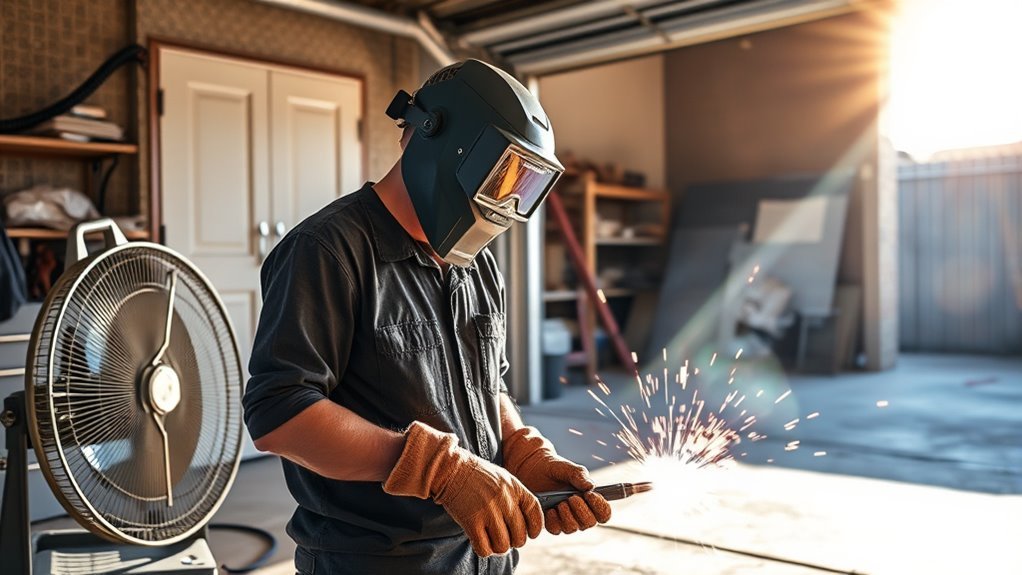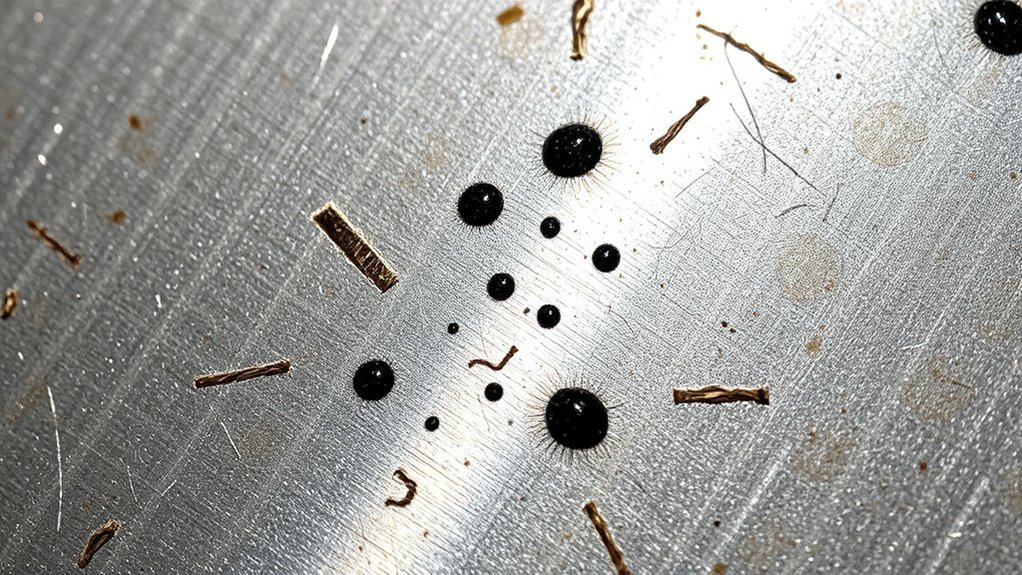
Weld inclusions are solid materials trapped inside or along a weld, such as slag, flux, oxides, or small pieces of tungsten. They matter because they can weaken the joint, create stress points, or make the weld fail inspection under the code or job specification. Most inclusions come from poor cleaning, poor bead shape, low or excessive heat, wrong travel speed, contaminated metal, or slag that is not removed between passes.
Quick Answer
A weld inclusion is a trapped solid contaminant inside the weld metal. Slag inclusions are the most common in stick, flux-core, and submerged arc welding. Prevent them by cleaning the joint, using the right angle and amperage, keeping a smooth bead profile, removing slag between passes, and inspecting each layer before welding over it.
Key Takeaways
- Weld inclusions are trapped solid materials, not gas bubbles. Porosity is a gas-related defect, while inclusions are usually slag, flux, oxide, or tungsten.
- Slag inclusions are most common in flux-based processes such as SMAW, FCAW, and SAW, but oxide or other inclusions can occur in other welding processes too.
- The main causes are poor cleaning, bad bead overlap, undercut, narrow grooves, contaminated base metal, incorrect travel speed, and wrong heat input.
- Visual inspection may show surface clues, but internal inclusions usually require radiographic testing, ultrasonic testing, or another approved NDT method.
- Do not guess whether an inclusion is acceptable on a critical weld. Follow the drawing, WPS, acceptance code, and qualified inspector’s decision.
At a Glance
| Time Required | 1 to 5 minutes per pass for cleaning and visual checks; longer if grinding or NDT is needed. |
| Difficulty | Beginner to intermediate for prevention; qualified inspection may be required for code work. |
| Tools Needed | Wire brush, chipping hammer, grinder, clean abrasives, proper filler, PPE, lighting, and inspection tools. |
| Cost | Low for cleaning tools; higher if radiographic, ultrasonic, or certified inspection is required. |
What Are Weld Inclusions and Why Should You Care?
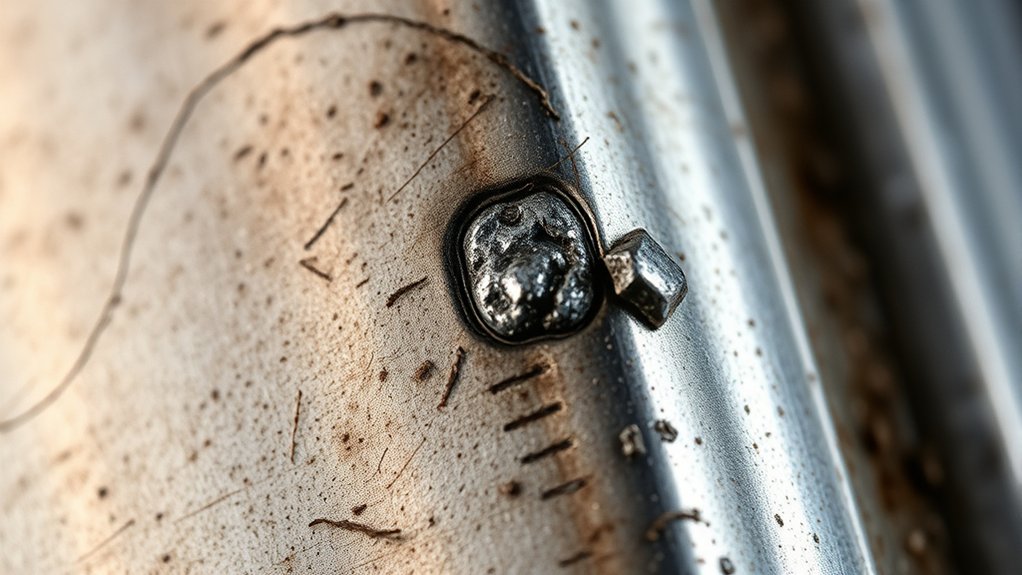
Weld inclusions are solid materials trapped in the weld metal. They are different from porosity, which is caused by trapped gas. Common inclusions include slag from flux-based welding, oxide films from poor cleaning or shielding, flux particles, and tungsten fragments from TIG welding.
Slag inclusions are especially common in flux-based processes such as stick welding, flux-core welding, and submerged arc welding. They can also appear in other processes when the weld pool, joint surface, or filler material is contaminated.
You should care because inclusions can reduce weld strength, act as stress risers, shorten fatigue life, or create corrosion-prone areas. Not every small indication automatically means the weld is unsafe, but a code-governed weld must meet the acceptance criteria in the drawing, procedure, or inspection standard.
Warning: Do not rely on looks alone for structural, pressure, lifting, trailer, vehicle-frame, roll-cage, or code-required welds. Follow the approved welding procedure and have the weld inspected by a qualified person when the job requires it.
What Causes Weld Inclusions?
Most weld inclusions come from something that prevents unwanted material from floating out of the molten weld pool before the weld freezes. In flux-based welding, slag should rise to the surface. If the puddle freezes too fast, the bead shape traps slag, or the previous pass is not cleaned, that slag can remain inside the weld.
The most common causes include:
- Poor slag removal between passes: Slag left in corners, toes, craters, or root areas can get buried by the next bead.
- Bad bead overlap: Poor overlap between adjacent passes can form pockets that trap slag.
- Undercut or rough bead profile: Deep grooves along the weld toe and lumpy previous passes make slag harder to remove.
- Low heat input: A cold weld pool may not stay fluid long enough for slag or oxides to rise.
- Excessive heat with fast travel: Too much current combined with high travel speed can cause undercut, which then traps slag.
- Wrong electrode angle: A poor angle can push slag ahead of or under the puddle instead of letting it trail behind.
- Contaminated base metal: Rust, mill scale, paint, oil, moisture, and dirt can create oxide or slag-like inclusions.
- Narrow or poorly prepared joints: Tight root openings, narrow V-grooves, and poor access make cleaning and fusion harder.
- Wrong consumable or polarity: A filler metal, electrode, flux, or setup that does not match the job can lead to poor puddle control and trapped material.
Good preparation also helps prevent related defects such as lack of fusion, because both defects often trace back to poor cleaning, wrong parameters, or poor puddle control.
What Are the Types of Weld Inclusions?
Different inclusions point to different root causes. Knowing the type helps you decide whether the fix is better cleaning, better technique, different consumables, or a change in weld parameters.
The best time to prevent slag inclusions is before the next pass covers them. Once slag is buried inside the weld, repair usually means removing metal and welding again.
- Linear slag inclusions: Long or broken lines of slag that often run with the weld bead. These are common when slag is trapped between passes or near the root.
- Isolated slag inclusions: Small local pockets of slag caused by missed cleaning, bad puddle control, rough bead edges, or poor overlap.
- Root inclusions: Inclusions near the root of a groove weld. These often come from poor root opening, poor penetration, poor access, or slag trapped at the bottom of the joint.
- Interpass inclusions: Slag or flux trapped between layers in multi-pass welding because the previous pass was not fully cleaned or ground smooth.
- Oxide inclusions: Oxide films or particles caused by dirty metal, poor shielding, long arc length, moisture, or welding over scale or coatings.
- Tungsten inclusions: Small tungsten fragments in a TIG weld, often caused by dipping the tungsten into the puddle, using too much current for the electrode size, or poor torch control.
Proper weld sizing also matters. Oversized welds can add heat, distortion, and extra passes, while undersized welds may not meet design requirements. Follow the drawing or procedure instead of guessing.
Weld Inclusions vs Porosity, Lack of Fusion, and Cracks
Weld defects can look similar in casual conversation, but they are not the same problem.
| Defect | What It Means | Common Cause |
|---|---|---|
| Inclusion | Solid material trapped in the weld | Slag, oxide, flux, dirt, or tungsten trapped in the puddle |
| Porosity | Gas pockets in the weld | Moisture, contamination, poor shielding gas, or wrong arc length |
| Lack of fusion | Weld metal does not properly fuse to base metal or previous bead | Low heat, wrong angle, poor cleaning, or fast travel |
| Crack | A fracture in the weld or heat-affected zone | High stress, hydrogen, rapid cooling, poor filler choice, or restraint |
Which Welding Processes Are Most Prone to Inclusions?
Any welding process can produce inclusions if the metal is dirty or the technique is poor, but the risk changes by process.
- Stick welding / SMAW: High slag-inclusion risk if slag is not chipped and brushed between passes.
- Flux-core welding / FCAW: High risk in multi-pass welds when slag is trapped along toes, roots, or uneven beads.
- Submerged arc welding / SAW: Flux and slag handling are critical because the arc runs under a blanket of flux.
- MIG welding / GMAW: Slag is not normally produced like stick or flux-core, but oxide inclusions, silica islands, or contamination can still cause problems.
- TIG welding / GTAW: Tungsten inclusions can occur if the tungsten touches the puddle or breaks down from overload or contamination.
How Can You Prevent Weld Inclusions?
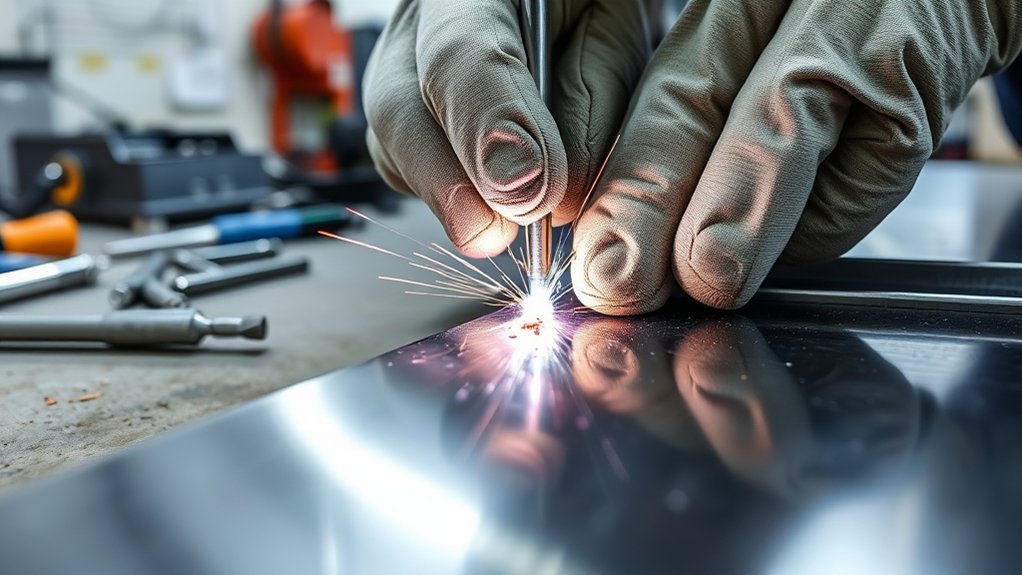
Preventing weld inclusions starts before the arc is struck and continues between every pass. The goal is simple: keep contaminants out, keep the weld pool controlled, and never weld over slag, dirt, or a rough bead profile.
| Prevention Method | What to Do | Why It Helps |
|---|---|---|
| Clean the base metal | Remove rust, scale, paint, oil, moisture, and dirt before welding. | Reduces oxide and non-metallic material in the weld pool. |
| Prepare the joint correctly | Use the right bevel, root opening, fit-up, and access for the process. | Gives slag room to rise and makes the root easier to fuse and clean. |
| Remove slag between passes | Chip, brush, scrape, or grind each pass before adding the next bead. | Stops old slag from being buried inside the next layer. |
| Control heat input | Use the recommended amperage, voltage, wire speed, and travel speed. | Keeps the puddle fluid enough for slag to escape without causing undercut. |
| Watch electrode angle | Use the angle recommended for the rod, wire, position, and joint. | Keeps slag behind the puddle instead of rolling it into the weld. |
| Avoid rough bead profiles | Correct overlap, tie in the toes, and grind high spots or trapped corners. | Smooth beads are easier to clean and less likely to trap slag pockets. |
| Use the right consumables | Match filler, flux, electrode size, polarity, and storage to the job. | Improves puddle control, slag release, and weld soundness. |
Pro Tip: If slag is hard to remove, do not simply weld over it. Check your amperage, travel speed, bead shape, and electrode angle. For narrow grooves or rough multi-pass welds, light grinding between passes may be better than brushing alone.
Products Worth Considering
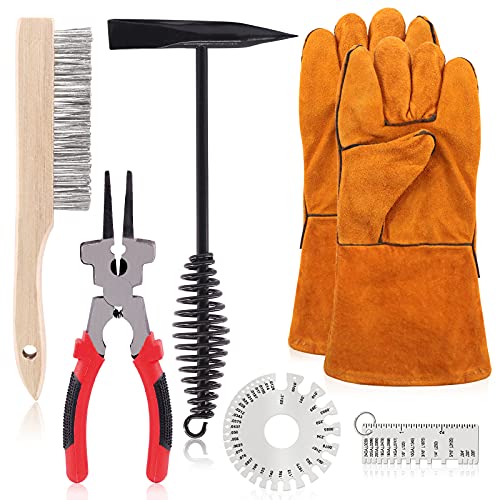
☛ 1, 【 What You Get】 ------ In this kit, You will get 7Pcs 10 Inch Scratch Wire Brush Slag Removal Tool with Welding Gloves. Including 1 piece of wire brush, 1 piece of welding hammer and 1 piece welding plier, 1 piece Metal sheet thickness gauge,1Pcs Round dual sided wire gage. In total 5Pcs. Which are easy to remove and clean corrosion and slag from most of your welds, Welding chipping hammer and steel wire brush, makes it easy to clean and remove slag from all your welds.

Package Includes: You will receive a 11-inch chipping hammer and a 10.5 inch wire brush, lightweight and practical for everyday cleaning tasks for welders and DIY enthusiasts

Dual-Function Chipi Hammer Design: Power through metalwork with precision; engineered head reaches tight spots and removes stubborn material efficiently; delivers clean professional results on every fabrication project for all skill levels
Prevention Checklist: Before, Between, and After Welding
- Before welding: Clean the base metal, confirm fit-up, check consumables, set the machine correctly, and make sure you can reach the root and sidewalls.
- During welding: Watch the puddle edges, maintain arc length, keep a steady travel speed, and avoid rolling slag ahead of the puddle.
- Between passes: Remove all slag, inspect the bead toes and crater, grind trapped pockets if needed, and fix undercut before covering it.
- After welding: Clean the completed weld, inspect for surface clues, compare it with the job acceptance criteria, and use approved NDT when required.
How Can You Spot Weld Inclusions?
You can sometimes spot surface-breaking inclusions with a careful visual inspection, but many inclusions are hidden inside the weld. That is why critical welds often need non-destructive testing instead of visual inspection alone.
- Start with visual inspection: Look for rough bead shape, trapped slag at the toes, surface pits, cracks, lack of tie-in, undercut, and uncleaned crater areas.
- Check every pass: Multi-pass welds should be inspected before the next layer covers the previous one.
- Look for process clues: Stick and flux-core welds need close slag-removal checks. TIG welds need checks for tungsten contamination after accidental contact.
- Use radiographic testing: RT can show internal discontinuities such as slag lines, porosity, and other density changes when the joint geometry and material are suitable.
- Use ultrasonic testing: UT sends high-frequency sound into the material and can help locate internal flaws, especially in thicker welds when performed by trained personnel.
- Use MT or PT when appropriate: Magnetic particle testing and penetrant testing can help find surface or near-surface flaws, but they do not replace volumetric testing for buried inclusions.
Maintaining proper arc stability can reduce defects, but inspection still matters. A weld can look acceptable on the surface while still hiding internal slag or oxide inclusions.
Note: NDT results are usually reported as indications first. Whether an indication is acceptable depends on the job code, material, thickness, weld type, location, and service conditions.
What Should You Do If You Find a Weld Inclusion?
If you find or suspect an inclusion, do not cover it with another pass and hope it disappears. Use a controlled repair process.
- Stop and identify the location: Mark the area so you do not lose it during cleaning or grinding.
- Check the requirement: Compare the indication with the drawing, WPS, inspection plan, or code acceptance criteria.
- Remove the defect if repair is required: Grind, gouge, or machine out the inclusion using an approved method.
- Clean the repair area: Remove slag, oxide, dust, oil, and grinding residue before rewelding.
- Reweld with corrected technique: Adjust heat, travel speed, angle, bead placement, and cleaning so the same defect does not return.
- Re-inspect the repair: Use the required visual or NDT method before accepting the weld.
Products Worth Considering

【Powerful & Precise Performance】Unleash professional-grade power and control with a pure copper motor that delivers up to 30,000 RPM. The 6-speed control allows you to match the power to the task, from delicate detail work to aggressive material removal.

Stable Power Output Looking to handle medium to heavy-duty processing tasks? The Die Grinder is an ideal choice with its industrial-grade motor! Featuring an adjustable speed range of 7000-30000rpm and six-speed settings, it delivers high torque for efficient, fast work, with minimal wear and maximum durability—professional and reliable for all your heavy-duty tasks.
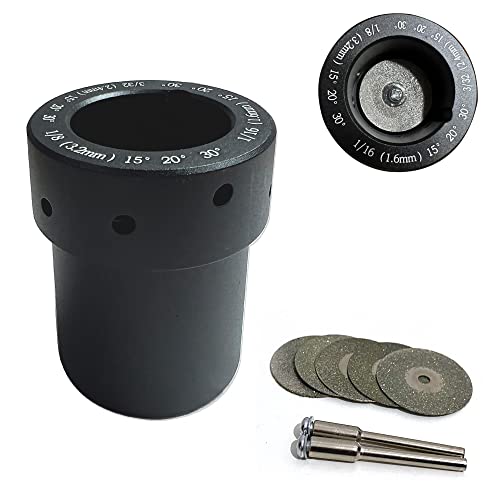
【ANGLE OFFSET DESIGN】: Heavy-duty Sharpener Multi-Angle Off is made of aluminum, anti-corrosion,anti-rust, the surface is treated with black matte, smooth and durable. The size of each hole with angular offset compensation to ensure that the grinding surface of the tungsten needle is in contact with the diamond grinding wheel, and the tool tip is at the grinding center point, so that the ground tip is as straight as possible. Make sure you can buy with confidence and use it.
Frequently Asked Questions
What are the different types of welding inclusions?
Common welding inclusions include slag inclusions, flux inclusions, oxide inclusions, tungsten inclusions, and other non-metallic inclusions. Slag inclusions are common in stick, flux-core, and submerged arc welding. Tungsten inclusions are linked to TIG welding when the tungsten contaminates the weld pool.
What are inclusions and how are they caused in welding?
Inclusions are solid foreign materials trapped in the weld metal. They are caused by poor cleaning, trapped slag, bad bead overlap, undercut, contaminated base metal, poor joint preparation, wrong travel speed, wrong electrode angle, or heat settings that do not let unwanted material rise out of the puddle.
What is f1, f2, f3, f4 in welding?
F1, F2, F3, and F4 are not universal welding-defect labels. Some training programs, inspection sheets, or local standards may use those codes for defects such as lack of fusion, lack of penetration, slag inclusion, or porosity, but the meaning can change. Always check the legend, code, or inspection procedure used on your job.
What are the 5 basic weld types?
People often mean the five basic weld joint types: butt, tee, lap, corner, and edge joints. Common weld forms include fillet welds, groove welds, plug welds, slot welds, spot welds, and seam welds. MIG, TIG, stick, flux-core, and submerged arc are welding processes, not joint types.
Can you weld over slag if the next pass is hot enough?
No. Do not depend on the next pass to burn out slag. Some slag may melt or move, but some can remain trapped and become an inclusion. Clean each pass completely before welding over it.
Are weld inclusions always rejectable?
Not always. Acceptance depends on the weld code, job specification, material, thickness, inclusion size, inclusion shape, orientation, and service conditions. Cracks are usually treated more severely than rounded or blunt inclusions, but code-governed work must be judged by the required acceptance standard.
Conclusion
Weld inclusions are preventable when you control the basics: clean metal, correct joint prep, steady puddle control, suitable consumables, and complete slag removal between passes. The biggest mistake is hiding a problem under the next bead. If you see slag, undercut, rough bead edges, or a dirty root, fix it before continuing.
For non-critical practice welds, good cleaning and visual inspection may be enough to improve your technique. For structural, pressure, safety-related, or code-required work, follow the approved procedure and use qualified inspection. That approach protects weld quality, reduces rework, and helps the finished joint perform as intended.
Sources
- TWI: Defects/Imperfections in Welds, Slag Inclusions — supports slag-inclusion causes, prevention, bead profile, and interpass cleaning guidance.
- TWI: What Is Non-Destructive Testing? — supports visual testing, radiographic testing, ultrasonic testing, and NDT limitations.
- OSHA: Welding, Cutting, and Brazing — supports welding safety, hazards, and standards awareness.
- OSHA: Welding, Cutting, and Brazing Standards — supports PPE, arc welding, and general welding-safety compliance references.
- CCOHS: Welding, Overview of Types and Hazards — supports general welding hazard awareness and safe-work context.