

Welding 22-gauge steel with flux core is one of those jobs that’ll test your patience and your skill. I’ve burned through more thin sheet metal than I care to admit when I first started working on car panels and light-gauge projects.
The challenge is real — that stuff heats up fast, and with flux core wire running hotter than MIG or TIG, controlling the arc and keeping the bead smooth without warping or blowing holes takes a light touch and solid joint prep. You can’t just treat it like thicker plate — the right wire feed speed, travel angle, and even your work distance make all the difference.
Getting it wrong means messy welds, wasted metal, and frustration. But once you understand how to manage the heat and fine-tune your setup, welding 22-gauge steel becomes a lot less intimidating. Stick around — I’ll walk you through the tricks I use to get clean, strong welds on thin metal without all the burn-through drama.
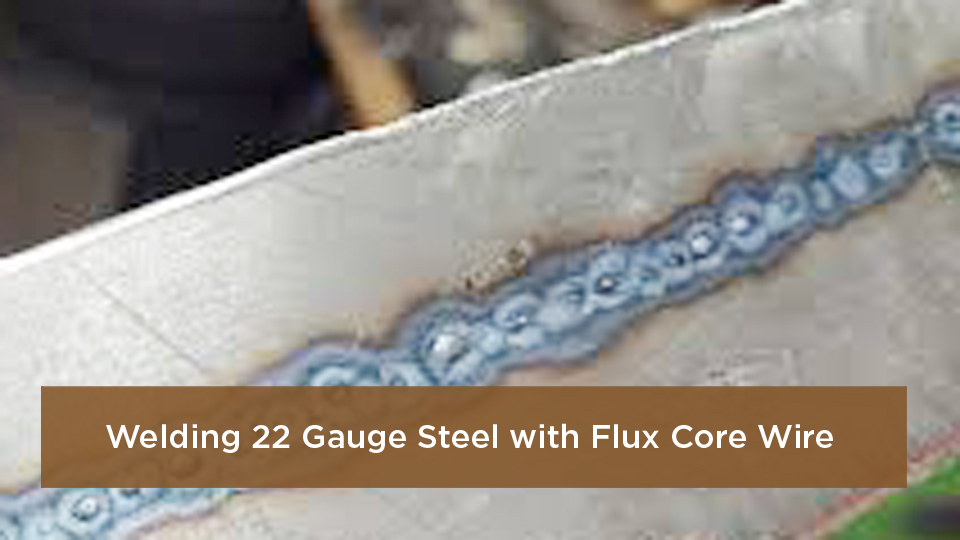
Image by reddit
Can You Actually Weld 22 Gauge Steel with Flux Core?
Yes, you can weld 22 gauge steel with flux core wire, but it’s not for the faint of heart. I’ve pushed my old Hobart Handler to its limits on everything from auto body patches to thin fabrication scraps, and while it works, it’s finicky.
Flux core—short for flux-cored arc welding (FCAW)—uses a tubular wire packed with flux that shields the weld without external gas. That self-shielding is a godsend outdoors or on rusty metal, but the arc runs hotter than a gas-shielded MIG, which spells trouble for thin sheets.
Think about it: 22 gauge is entry-level thin, common in car panels, HVAC ducts, and hobby builds. The flux inside the wire generates intense heat to slag off impurities, but that same heat can chew through your base metal like a kid with cotton candy.
In my early days, I scorched a quarter panel trying to lay a full bead—lesson learned: Short bursts and smart technique are your friends. If you’re a DIYer fixing a floor pan or a pro patching trailers, flux core shines for portability, but expect some practice runs on scrap.
When to pull it out? Grab flux core for 22 gauge when you’re in a drafty garage, dealing with mill scale, or running a 110V setup without gas lines. It’s forgiving on dirty steel, unlike pristine MIG setups. But why bother if it’s tricky? Because it penetrates like nobody’s business, fusing that thin edge without preheat hassles. Just know your limits—under 20 gauge, I’d switch processes faster than a bad blind date.
Why Flux Core Welding Works for Mild Steel—And Where It Struggles on Thin Stuff
Flux core welding is basically MIG’s rugged cousin: Feed wire, arc strikes, flux does the heavy lifting. For mild steel like your 22 gauge, the E71T-11 classification is king—it’s all-position, gasless, and tough on contaminants. The flux melts, forms a gas shield, and slogs impurities into a chip-off layer, leaving a bead that’s got backbone.
Here’s the magic: That deep penetration means better fusion on edges that might otherwise cold-weld. I’ve used it on trailer frames where wind would’ve killed a gas weld, and the joints held through Midwest winters. But on thin gauge? The struggle is real. The arc’s heat input—around 18-22 volts for starters—can warp panels or cause porosity if your travel speed lags.
Pros and cons? Let’s break it down quick.
| Aspect | Pros of Flux Core on 22 Gauge | Cons of Flux Core on 22 Gauge |
|---|---|---|
| Portability | No gas bottle—weld anywhere, anytime. | Slag cleanup adds steps in tight spots. |
| Penetration | Deep fusion for strong holds on edges. | Risk of burn-through on super-thin edges. |
| Material Prep | Handles rust and scale like a champ. | Still needs brushing for cleanest results. |
| Cost | Cheap wire, no shielding gas bills. | More spatter means extra grinding time. |
| Ease for Newbies | Forgiving arc once dialed in. | Hotter than MIG, steeper learning curve. |
Bottom line: It works great for mild steel’s ductility, but pair it with technique tweaks for thin work. One time, I fabbed a lightweight toolbox from 22 gauge scraps—flux core nailed the corners, but I had to quench with a wet rag between passes to kill the heat.
Picking the Right Flux Core Wire for Thin Sheet Metal Jobs
Wire choice is where many folks trip up—get it wrong, and you’re fighting bird’s nests or weak beads. For 22 gauge, stick to 0.030-inch diameter E71T-11 flux core wire. It’s the sweet spot: Thin enough to feed smooth on low amps, versatile for 18-24 gauge ranges. Brands like Lincoln Innershield or Hobart Fabshield are shop staples here in the States—reliable, AWS-certified for code-compliant work.
Why 0.030 over 0.035? Bigger wire amps up the heat, perfect for 1/8-inch plate but a burnout waiting to happen on 22 gauge. I’ve swapped to 0.030 mid-job on a customer’s RV panel after 0.035 chewed holes—night and day. Look for wires labeled “gasless” or self-shielded; dual-shield needs CO2, complicating thin work.
Filler compatibility? Match to mild steel’s low carbon—E71T-11 flows well, minimizing cracks. Storage tip: Keep spools in a dry box; moisture in flux turns your arc into a fireworks show. Cost-wise, a 2-pound spool runs $15-20, enough for a weekend’s worth of patches. Pro move: Cut the end square before loading—avoids feed issues.
Setting Up Your Welder for Flux Core on 22 Gauge Steel
Machine settings are your weld’s GPS—wrong route, and you’re lost in sputter town. Start with DC electrode negative (DCEN) polarity; flip that switch inside your welder (like on a Miller Multimatic or Eastwood 175). It’s crucial—flux core wire needs the heat on the tip, not the workpiece.
For a typical 140-180 amp 110V rig, dial voltage to 16-18V and wire speed to 80-120 inches per minute (IPM). That’s ballpark for 0.030 wire on 22 gauge—test on scrap to tweak. Too low, and you get cold lugs; too high, hello porosity. I remember dialing my old Century 160 for a buddy’s Jeep tub: 17V, 100 IPM, and it purred like a kitten.
Joint prep matters huge. Butt joints? Bevel that 22 gauge edge 30 degrees with a grinder—exposes more meat for fusion. Clean with a stainless brush; acetone wipe kills oils. Ground clamp? Clamp it close, within 6 inches of the joint—bad ground equals arc wander.
Here’s a quick settings cheat sheet for common US machines:
| Machine Model | Wire Size | Voltage | Wire Speed (IPM) | Notes |
|---|---|---|---|---|
| Hobart Handler 140 | 0.030″ | 16-17V | 80-100 | Low heat for auto panels |
| Lincoln Power MIG 140 | 0.030″ | 17-18V | 90-110 | Add 5% if outdoors |
| Eastwood MIG 135 | 0.030″ | 15-16V | 70-90 | Peck welds to cool |
| Harbor Freight Titanium 140 | 0.030″ | 16-18V | 85-105 | Verify tension on drive rolls |
Knurled drive rolls are non-negotiable—V-grooves mash flux wire flat. And stick-out? Keep it 1/2 to 3/4 inch; longer cools the arc, shorter spikes heat.
Step-by-Step Guide to Welding 22 Gauge Steel with Flux Core
Let’s run some beads. This guide’s pulled from countless shop hours, tailored for that 22 gauge beast.
Prep Your Workspace: Clear flammables—thin metal sparks fly far. Clamp pieces with C-clamps or magnets; align edges flush. Grind and brush to bright metal.
Load and Set Wire: Thread 0.030 E71T-11, set DCEN. Jog wire to trim—pointy end feeds better. Tension just snug; too tight, bird’s nest city.
Tack It Up: Start with tacks every inch. Quick trigger pulls—1/4 second bursts. Skip around to even heat; I once warped a flat panel forgetting this. Quench tacks with a damp rag if it heats fast.
Run the Bead: Drag technique only—pull the gun at 10-15 degrees back, 45-degree work angle for fillets. Travel speed? Brisk, like 12-18 inches per minute. Watch the puddle: Wet and shiny good; bubbly bad, dial back voltage.
Weave if Needed: For gaps, slight side-to-side—1/8 inch max. Pause at toes to fill without undercut. On vertical? Downhill for thin stuff—faster travel cuts heat soak.
Chip and Inspect: Slag off with a chipping hammer while warm. Grind high spots, check for cracks with a dye pen. Bend test on scrap: No snap, you’re golden.
First time I followed this on a duct elbow? Bead laid flat, no holes—held pressure at 20 PSI. Takes 10-15 scrap runs to groove it.
Techniques That Save Your Bacon on Thin Flux Core Welds
Technique trumps tools every time. Drag that gun—pushing flux core spits like a cornered cat. Angle? 5-15 degrees travel, perpendicular work unless lapping.
For burn-through phobia: Peck weld—on-off bursts like Morse code. Builds heat gradual. Anecdote time: Fixing a ’72 Nova quarter, I pecked the seam; full bead would’ve ghosted the panel. Vertical down on walls? Whip the wire leading edge, fast travel—mimics TIG lite.
Overhead? Rare for thin, but if forced: Lowest settings, minimal weave, fast hands. Windy day? Flux core laughs at gusts—I’ve welded trailer sides in a Texas blow without a hiccup.
Pro know-how: Preheat? Skip it on 22 gauge; adds warp risk. Post-weld, straightedge check for flatness—hammer bends back if needed.
Common Mistakes When Flux Core Welding Thin Steel—And Quick Fixes
We all botch it sometime. Burn-through? Culprit: Slow travel or high amps. Fix: Speed up, drop 1V, peck more.
Porosity pox? Moisture or bad ground. Dry your wire overnight, clamp tight. I chased bubbles on a fab job once—turned out to be a frayed cable.
Undercut edges? Weave too wide. Tighten motion, pause less. Spatter mess? Wrong polarity—double-check DCEN.
Weak fusion? Cold start tacks. Heat ’em proper, skip around. One fix-all: Practice log. Scrap pieces weekly keep skills sharp.
Safety First: Protecting Yourself on Thin Metal Flux Core Jobs
Thin work amps the risks—sparks pierce gloves, slag flies hot. Gear up: FR jacket, leather sleeves, auto-dark helmet (shade 10-12). Boots over ankles; no synthetics.
Ventilation? Flux fumes are no joke—fumes from manganese hit hard. Shop fan or respirator if indoors. Fire watch: Wet rags on edges, extinguisher handy.
Electrical smarts: 110V bites less, but wet floors? Ground fault plug. Eye pro under hood—slag chips sting.
I’ve singed more sleeves than I care to admit; now I suit like armor. Safe welder’s a long-time welder.
When to Ditch Flux Core and Go MIG with Gas for 22 Gauge
Flux core’s tough, but for pristine panels or indoor finesse, gas MIG wins. Solid 0.023-0.024 wire with 75/25 Ar/CO2 mix—cooler arc, cleaner beads. Settings? 15-16V, 50-80 IPM—half the heat drama.
US shop standard: AWS D1.1 codes favor MIG for auto body strength. Cost? Gas adds $50/setup, but no slag grind saves hours.
Switch if: Clean shop, no wind, or perfection chase. I hybrid now—flux for field, MIG for finish.
Pros and Cons of Flux Core vs. Other Processes for Thin Fabrication
Weighing options? Flux core vs. TIG: TIG’s surgical but slow, gas-heavy. Vs. stick: Stick’s cheap but sloppy on thin.
| Process | Best for 22 Gauge? | Heat Control | Speed | Cost Setup |
|---|---|---|---|---|
| Flux Core | Portable jobs | Medium | Fast | Low |
| Gas MIG | Clean indoor | High | Fastest | Medium |
| TIG | Precision edges | Excellent | Slow | High |
| Stick | Thick backups | Low | Medium | Lowest |
Flux edges out for hobby mobility; MIG for pros.
Real-World Applications: From Auto Repairs to HVAC Builds
22 gauge’s everywhere. Auto? Floor pans, rockers—flux core tacks patches fast. HVAC? Duct seams hold seals tight.
Fab hobby? Custom racks—lightweight, strong. Student project? Budget flux rig teaches arc control.
One yarn: Repaired a grain trailer side—rusty 22 gauge, windy field. Flux core bridged gaps MIG couldn’t touch. Held 5 tons loaded.
Industry? Follow ASME codes—test coupons ensure integrity.
Advanced Tips for Cleaner, Stronger Flux Core Beads on Thin Metal
Dial finer: Arc sounds—steady hum good, crackle means adjust. Puddle watch: 1/4-inch wide ideal.
Multi-pass? Rare on thin, but for overlaps: Cool between, feather edges.
Alloy tweaks: Galvanized? Grind zinc off—fumes toxic.
Upgrade? Spool gun for thin wire feed snags.
Wrapping It Up: Tackle That 22 Gauge with Confidence
Welding 22 gauge steel with flux core boils down to smart prep, dialed settings, and drag-it-like-you-mean-it technique. You’ve got the why (portable power on thin mild steel), the how (0.030 wire, 16-18V pecks), and the gotchas (burn-through fixes). Whether you’re a weekend warrior patching the truck or a shop hand fabbing brackets, this setup builds welds that last without the fuss.
Start low, test often, and clean ruthless—strong joints follow. You’re now geared to pick flux core when it fits, ditching it for MIG when elegance calls. Walk into that shop bolder; your next bead’s waiting. Always quench thin panels with a cold chisel tap post-weld—releases stress before warp sets in. Fire it up, friend—make some metal magic.
FAQs
What Wire Size Should I Use for Flux Core on 22 Gauge Steel?
Go with 0.030-inch E71T-11—it’s balanced for heat without overwhelming the thin stock. Bigger risks holes; smaller starves penetration.
How Do I Avoid Burn-Through When Flux Core Welding Thin Metal?
Peck short bursts, drag fast (15 IPM min), and drop voltage to 16V. Skip tacks around the joint to spread heat—even I swear by it on panels.
Is Flux Core Better Than Gas MIG for Outdoor 22 Gauge Repairs?
Hands down, yes—windproof shield means no arc wander. But indoors, gas MIG’s cleaner. Pick based on your spot.
Can Beginners Weld 22 Gauge with Flux Core?
You bet, with scrap practice. Start on 24 gauge to build feel; it’s forgiving once settings click. Just gear up safe.
What’s the Best Technique for Vertical 22 Gauge Flux Core Welds?
Downhill drag—fast travel, leading wire edge. Lowers penetration for thin stuff; weave light if filling gaps.


