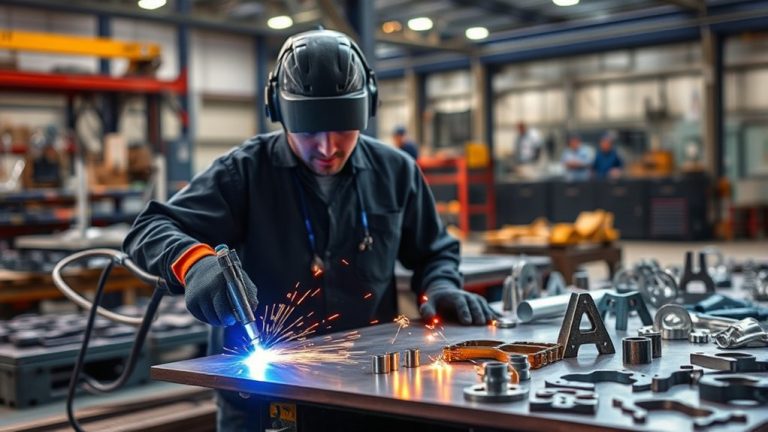
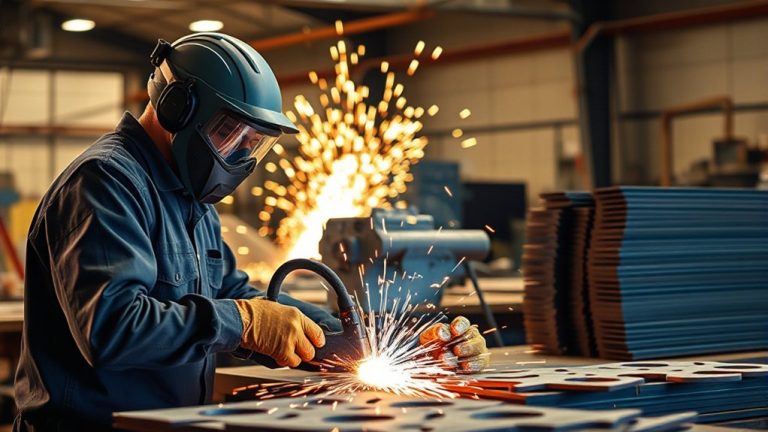
When considering plasma cutting, you’re likely attracted to its ability to slice through medium-thickness materials swiftly. However, this technology carries significant drawbacks that can’t be ignored. The heat-affected zone (HAZ) is larger, potentially compromising material integrity. The equipment is noisy and emits harmful fumes, necessitating advanced ventilation systems. Energy consumption is also high, leading to increased operational costs. Understanding these trade-offs is essential before deciding if plasma cutting is the right fit for your needs.
Understanding the Heat-Affected Zone (HAZ)
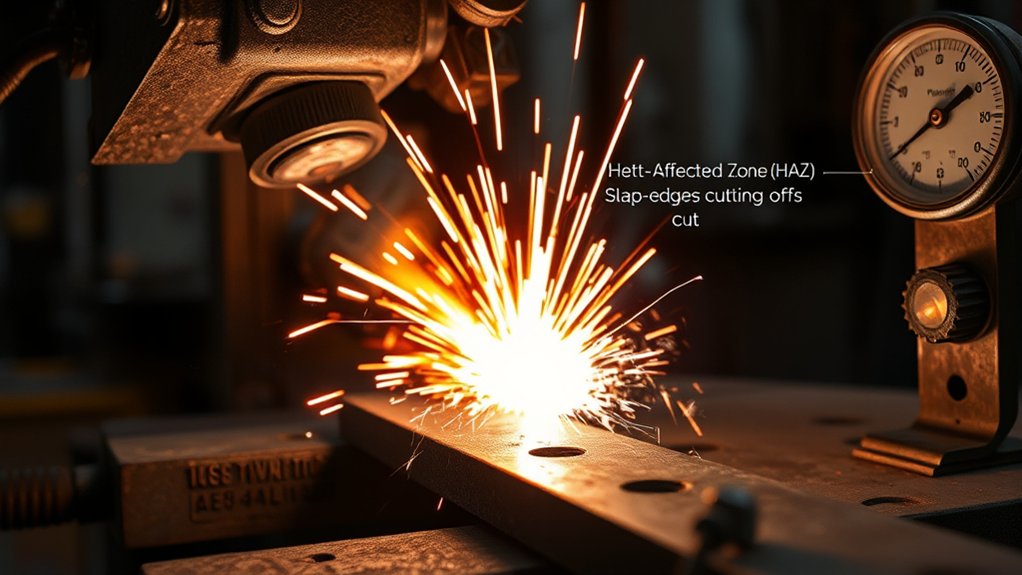
When you’re working with plasma cutting, understanding the Heat-Affected Zone (HAZ) is essential for achieving high-quality results. The HAZ is the region where material properties change due to the intense heat generated during cutting. This can lead to heat distortion, affecting material integrity. Thinner metals are particularly susceptible, as excessive heat may cause warping or weakening, resulting in potential weak spots near the cut edges.
Even with precise cuts, the HAZ can be more extensive compared to other methods like laser cutting. Thicker materials tend to develop a larger HAZ due to longer exposure to high temperatures, which can exacerbate thermal distortion.
Managing the HAZ is critical for preserving the quality of the finished component. Unchecked, it can increase post-processing burdens and degrade performance. As a result, careful control of the HAZ is essential in maintaining both the structural and functional integrity of the material.
Addressing Noise and Fume Challenges
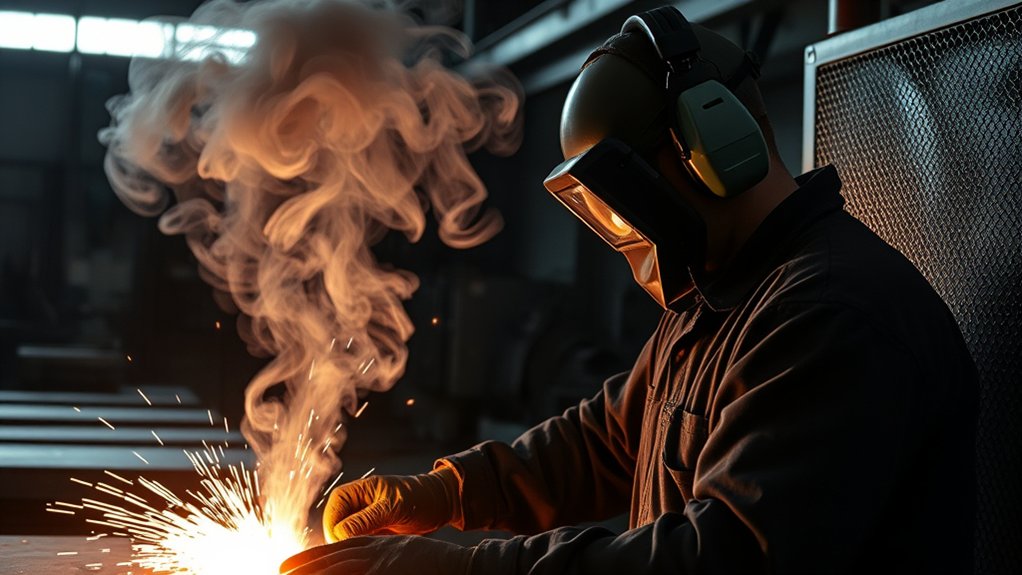
In addressing the noise and fume challenges inherent in plasma cutting, you’ll need to guarantee robust ventilation systems to mitigate the harmful particulate matter released.
Implementing hearing protection is essential, as noise levels frequently exceed 100 decibels, risking auditory damage without proper safeguards.
Compliance with OSHA regulations on noise and fume exposure isn’t just recommended—it’s imperative for maintaining a legal and safe working environment.
Ventilation Requirements
Although plasma cutting is a highly efficient method for cutting metals, it presents significant challenges in managing noise and fumes, making ventilation a vital requirement.
Effective airflow design is essential for controlling the harmful emissions produced during the process. Without a proper ventilation system, toxic fumes such as ozone and nitrogen oxides can accumulate, posing serious health risks.
Implementing fume extraction systems is important to guarantee these emissions are captured and removed from the workspace, maintaining air quality and compliance with safety regulations.
Hearing Protection Essentials
Given the intense auditory environment that plasma cutting creates, exceeding 100 decibels, hearing protection becomes indispensable. Without proper ear protection, you’re at risk for permanent hearing loss. Prolonged exposure to such noise levels can severely damage your auditory system.
It’s essential that you equip yourself with high-quality earplugs or earmuffs designed to attenuate harmful sound frequencies. Adhering to these measures isn’t just about personal safety—it’s a compliance issue with occupational health standards.
Moreover, don’t overlook the fume challenge. Plasma cutting emits toxic gases and particles, necessitating robust ventilation systems. Wearing respirators or masks as part of your safety gear effectively minimizes inhalation risks.
Thickness Limitations in Plasma Cutting
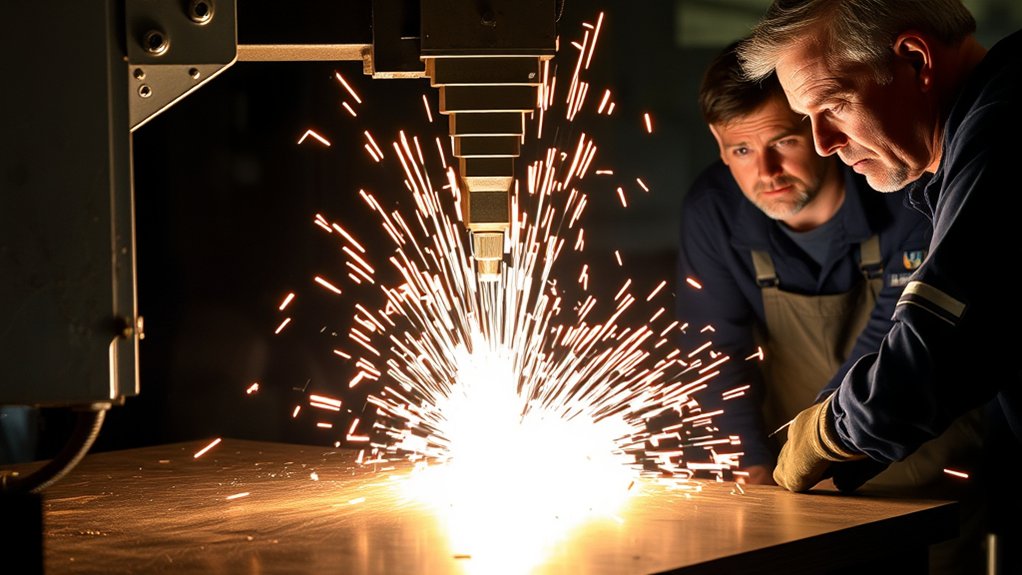
Plasma cutting demonstrates its effectiveness primarily on materials up to 50 mm thick, beyond which its precision and quality markedly decline. When considering plasma efficiency, it’s essential to recognize how thickness impacts the cutting process.
Plasma cutting excels with materials up to 50 mm; beyond that, precision and quality decline.
For metals surpassing the one-inch mark, plasma cutting becomes less efficient, and the quality of cuts suffers. The precision you need is just not achievable, leading to rougher edges and a lackluster finish. This degradation in quality stems from the difficulty in maintaining consistent cut quality on thicker materials.
Moreover, plasma cutting excels with mid-thickness materials, making it unsuitable for heavy-duty applications or extremely thick sections. In such cases, you might find oxy-fuel cutting a more effective alternative.
Understanding these thickness limitations is important for anyone involved in fabrication projects. By recognizing these constraints, you can make informed decisions about the best method to use, ensuring best results and efficient resource utilization.
Considering Energy Consumption
Understanding energy consumption is vital when evaluating the efficiency of plasma cutting. Plasma cutters often demand substantial electricity, directly affecting energy efficiency and increasing operational costs. High-power models, in particular, can greatly elevate these costs due to their greater electricity needs.
Compared to alternative methods like oxy-fuel or laser cutting, plasma cutting systems can consume considerably more energy, which is an important factor to contemplate when evaluating overall cost-effectiveness.
Typically, plasma cutting equipment requires between 20 to 100 amps of electrical current, depending on the model and application. This substantial energy draw can pose challenges for smaller fabrication shops or projects with constrained budgets, as the high energy demands may prove prohibitive.
Consequently, when selecting cutting technologies, it’s critical to weigh plasma cutting’s energy requirements against alternative methods to ascertain that the choice aligns with your budgetary constraints and operational efficiency goals.
The Initial Investment and Skill Requirements
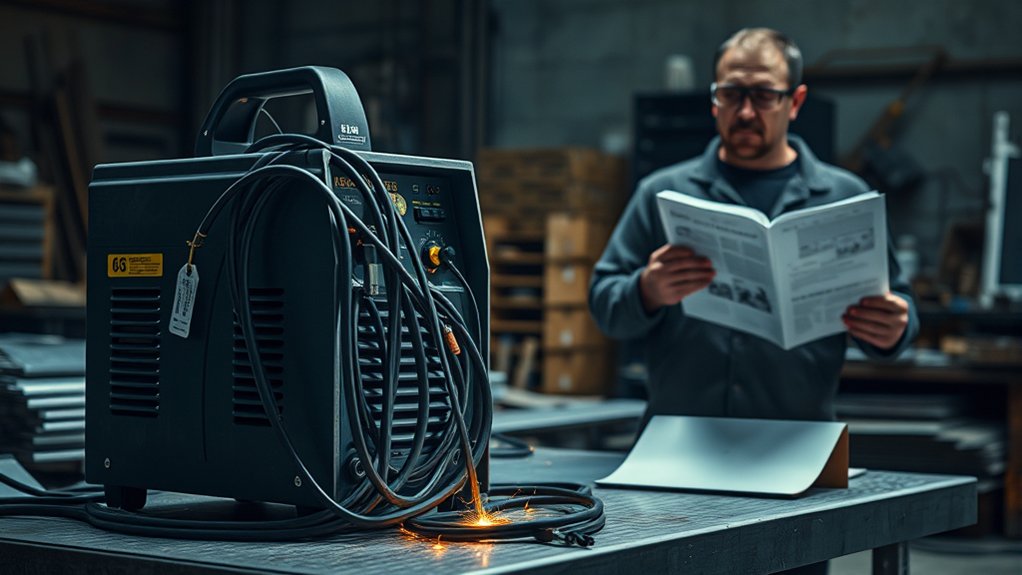
When evaluating plasma cutting technology, it’s important to take into account the substantial initial investment required. This cost barrier can be significant for smaller shops or businesses with limited budgets. High upfront costs for machines and infrastructure can make plasma cutting less accessible.
Here’s what you need to think about:
- Cost Barriers: Plasma cutting equipment requires a considerable financial outlay. Smaller operations may struggle to justify these expenses.
- Training Challenges: Mastery of plasma cutting technology demands specialized knowledge. Operators must undergo targeted training programs, which can be time-consuming and resource-intensive.
- Ongoing Skill Development: As technology advances, continuous training is vital to keep operators up-to-date. Businesses face increased labor costs as they invest in ongoing skill enhancement to maintain operational efficiency.
These factors highlight the significance of thorough planning and resource allocation when evaluating plasma cutting. The initial investment and skill requirements necessitate careful evaluation to guarantee alignment with your operational goals.
Environmental and Safety Concerns
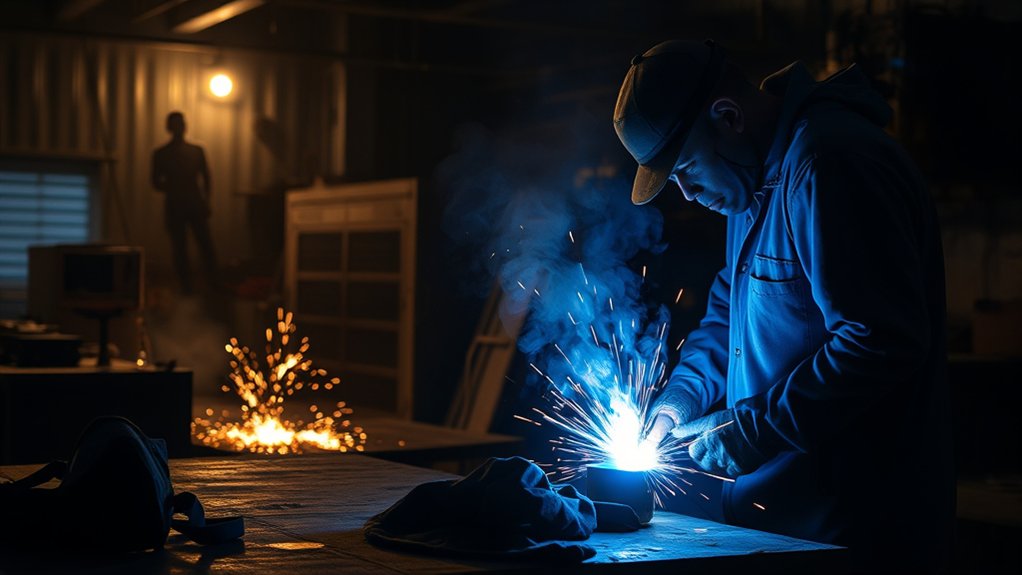
When engaging in plasma cutting, you must address the significant noise and fume risks that can adversely impact health and safety.
Implementing robust ventilation systems is essential to mitigate the harmful effects of emitted particulates and fumes.
Additionally, make certain that operators are equipped with appropriate protective gear and receive thorough training to safeguard against the intense noise levels and light emissions inherent in the process.
Noise and Fume Risks
Plasma cutting operations inherently pose significant noise and fume risks that demand attention for safety and compliance.
You must address these issues through effective noise mitigation and fume extraction strategies. Here’s why:
1. Noise Levels: Plasma cutting can exceed 100 decibels, risking hearing damage without proper protection.
Implement noise mitigation techniques, such as barriers or dampening materials, to safeguard your hearing.
2. Fume Hazards: This process emits harmful fumes and particulates.
Fume extraction systems are essential to maintain air quality and protect respiratory health.
3. Regulatory Compliance: Ignoring noise and fume risks can result in legal liabilities.
Ensuring compliance with occupational safety regulations protects both workers and your business from potential penalties.
Ventilation and Safety Measures
Given the inherent risks associated with plasma cutting, implementing effective ventilation and safety measures is essential to guarantee a secure working environment. You must adopt ventilation techniques to mitigate harmful fume exposure and employ safety protocols to protect against intense light and heat. Proper ventilation prevents the accumulation of toxic fumes, vital for your health and safety.
| Risk Factor | Safety Measure |
|---|---|
| Harmful Fumes | Ventilation Techniques |
| Intense Light | Eye Protection |
| Heat Exposure | Protective Gear |
Evaluating Alternatives for Optimal Cutting
While evaluating alternatives for ideal cutting, it’s essential to take into account the specific requirements of your project. Different cutting technologies cater to varied material selection, thereby impacting the decision-making process.
When choosing cutting technologies, consider your project’s specific material and precision needs.
Consider the following options:
- Laser Cutting: Ideal for thin materials, particularly sheet metal under 15 mm. It offers superior precision and cut quality, making it a preferred choice when accuracy is vital.
- Oxy-Fuel Cutting: More effective for materials exceeding one inch in thickness, where plasma cutting might falter. It’s better suited for applications requiring robust cuts on thicker materials.
- Waterjet Cutting: Provides a zero-heat cutting solution, eliminating heat-affected zones. This is particularly advantageous for materials prone to thermal distortion, such as composites and sensitive metals.
CNC machining offers precision but at the cost of processing time.
Keep in mind operational costs; while plasma is economical for medium thickness, laser and waterjet may lead to higher expenses.
Frequently Asked Questions
How Does Plasma Cutting Affect the Surface Finish of Metals?
Plasma cutting can increase surface roughness and create a heat-affected zone on metals. You’ll notice less precision due to thermal distortion, which might require additional finishing processes to achieve the desired smoothness and dimensional accuracy.
What Materials Are Most Challenging for Plasma Cutting?
You’ll find stainless steel and thick materials pose problems in plasma cutting. Stainless steel’s stubborn structure and thick materials’ massiveness make precise cuts problematic, presenting processing predicaments due to heat dispersion, dross formation, and edge roughness, requiring careful calibration.
Can Plasma Cutting Be Automated for High-Volume Production?
You can automate plasma cutting for high-volume production, greatly boosting production efficiency and precision. Automation benefits include reduced labor costs, consistent quality, and faster turnaround times, though initial setup may require technical expertise and investment.
Does Plasma Cutting Require Regular Maintenance and Part Replacement?
Yes, you’ll need to conduct regular maintenance on plasma cutters. Frequent electrode wear and nozzle replacement are necessary, as these parts endure high temperatures and pressure, ensuring peak performance and preventing potential cutting issues or equipment failure.
How Does Plasma Cutting Impact the Structural Integrity of Metals?
When plasma cutting, thermal stresses can dance across metals, potentially causing material distortion. You might notice changes in structural integrity, especially in thinner materials, as localized heat can lead to warping or weakening of the metal.
Conclusion
When you venture into plasma cutting, you’re stepping into a world where Prometheus’s fire meets modern precision. Yet, the trade-offs are clear. You face the relentless heat that expands the HAZ, the cacophony akin to a blacksmith’s forge, and fumes reminiscent of an industrial dragon’s breath. Energy costs surge like Icarus nearing the sun, and the upfront investment feels like a Herculean task. Consider laser or oxy-fuel cutting as alternatives that might be your guiding stars.