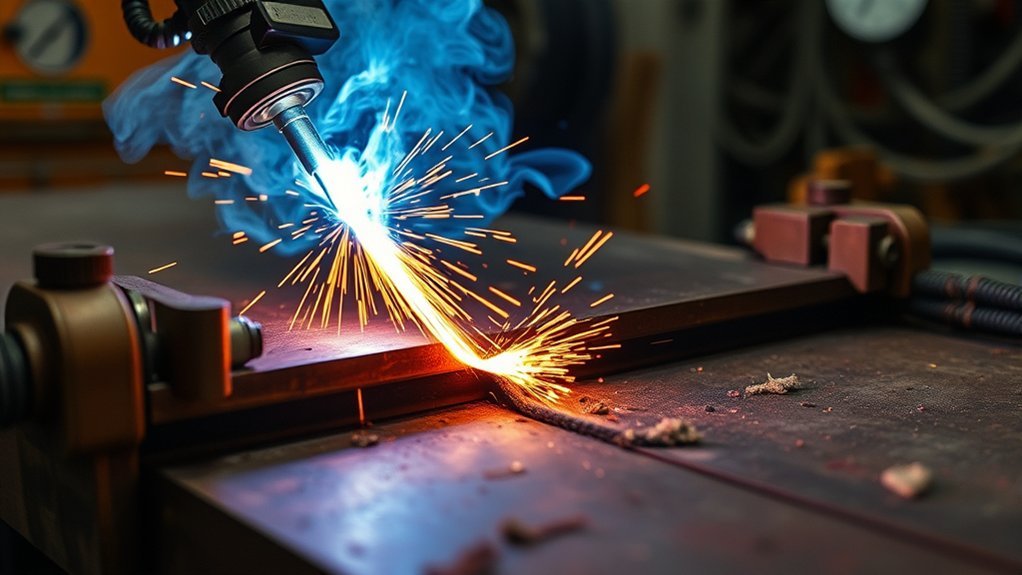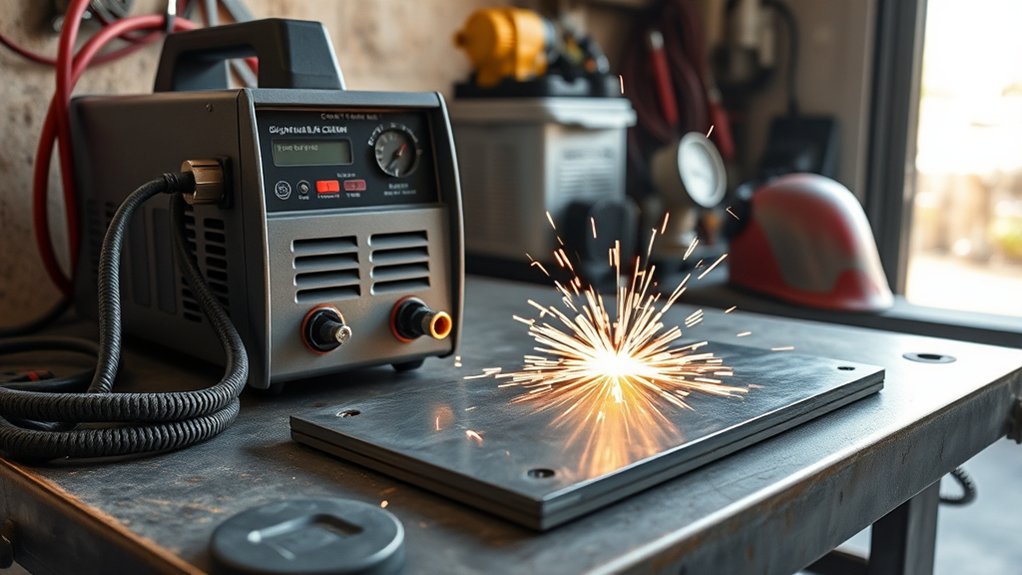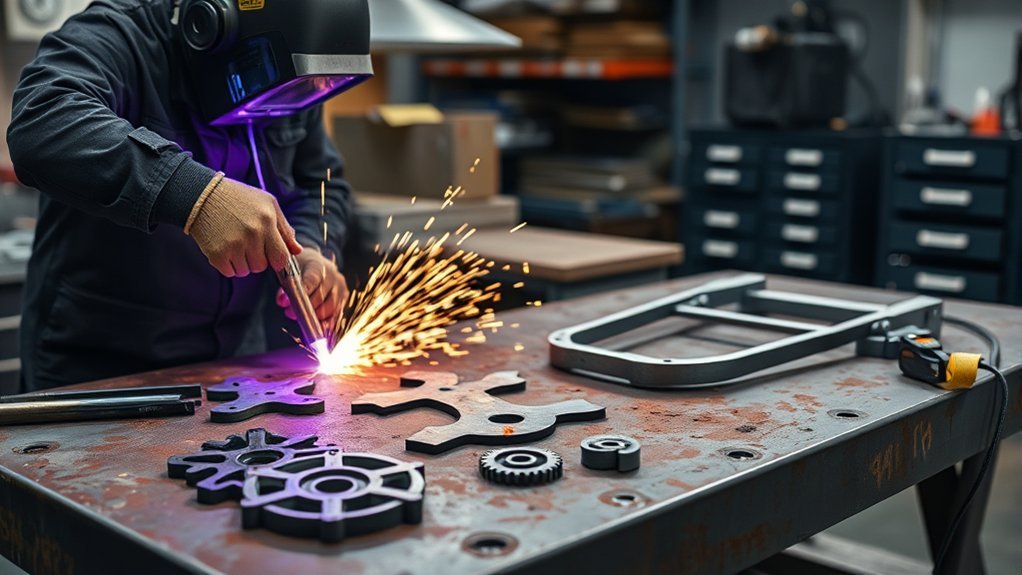
A plasma cutter is useful anywhere you need to cut or shape electrically conductive metal quickly. It can make straight cuts, curves, holes, bevels, repair patches, brackets, signs, gates, and decorative parts. Some machines can also gouge away welds or mark layout lines when fitted with the correct mode and consumables.
Quick Answer
You can use a plasma cutter to cut, bevel, gouge, and shape conductive metals for repairs, brackets, gates, signs, furniture, automotive fabrication, and shop production. Machines designed for low-current marking can also score metal. Plasma cannot cut wood, plastic, glass, or stone because those materials do not conduct electricity.
Key Takeaways
- Plasma cutting works on electrically conductive metals, including carbon steel, stainless steel, aluminum, copper, and brass.
- Correct consumables, dry air, proper torch height, and steady travel speed have a major effect on cut quality.
- A machine’s rated or quality-cut capacity is more useful than its maximum severance claim for everyday work.
- Marking and gouging require machine-supported modes, suitable consumables, and settings from the operator manual.
- Coated metal, galvanized steel, stainless steel, sealed containers, and vehicle structures need added hazard controls.
- Eye, face, hearing, skin, respiratory, fire, and electrical protection must match the specific job and material.
At a Glance
| Time Required | About 5–15 minutes for setup and a test cut; project cutting time varies with thickness, shape, and cleanup. |
| Difficulty | Beginner to intermediate for basic handheld cuts; advanced for structural, mechanized, beveling, and vehicle work. |
| Tools Needed | Plasma cutter, suitable power supply, adequate compressed-air system, work clamp, cutting table, guides, consumables, ventilation, fire-control equipment, and PPE. |
| Cost | Varies widely. Include the cutter, electrical work, compressor capacity, filters or dryers, consumables, PPE, ventilation, and finishing tools. |
What’s in This Article
- How Plasma Cutting Works and What It Can Cut
- Everyday Metal Fabrication and Repairs
- Artistic Creations and Home Decor
- Outdoor Projects: Gates, Furniture, and Yard Art
- Automotive and Industrial Applications
- Getting Started: Tools, Materials, and Cost Considerations
- When a Plasma Cutter Is the Right Tool
- Common Mistakes to Avoid
- Plasma vs. Other Metal-Cutting Methods
- Frequently Asked Questions
- Conclusion
- Sources
How Plasma Cutting Works and What It Can Cut
A plasma cutter sends gas through a narrow torch nozzle and uses electrical energy to turn that gas into a hot, ionized plasma arc. The arc melts a narrow path through the workpiece, while the high-speed gas blows the molten metal out of the cut. Because the arc transfers electrical energy to the workpiece, the material must conduct electricity.
According to Hypertherm’s plasma-technology guidance, plasma systems can cut conductive materials such as carbon steel, stainless steel, aluminum, copper, and brass. Standard plasma cutting does not work on wood, plastic, glass, concrete, or stone.
- Mild and carbon steel: Common choices for repairs, brackets, frames, furniture, gates, and general fabrication.
- Stainless steel: Plasma cuts it effectively, but the process can produce hazardous chromium- and nickel-containing fume. Use effective source capture and follow workplace exposure requirements.
- Aluminum: Cuts readily when the machine, consumables, gas, and speed match the alloy and thickness. Edge appearance differs from carbon steel.
- Copper and brass: Both conduct electricity and can be plasma cut, though machine capacity and cut quality may vary with thickness and alloy.
- Galvanized or plated steel: The base metal is cuttable, but heated coatings can create hazardous fumes. Identify the coating before cutting.
- Painted or unknown scrap: Do not assume the coating is harmless. Old paint, plating, oil, sealers, and residues may release toxic or flammable products when heated.
Note: Cut capacity is machine-specific. Use the manufacturer’s cut chart and distinguish a normal rated or quality cut from a slow maximum severance cut. The largest thickness a machine can separate is not necessarily the thickness it can cut cleanly every day.
Everyday Metal Fabrication and Repairs
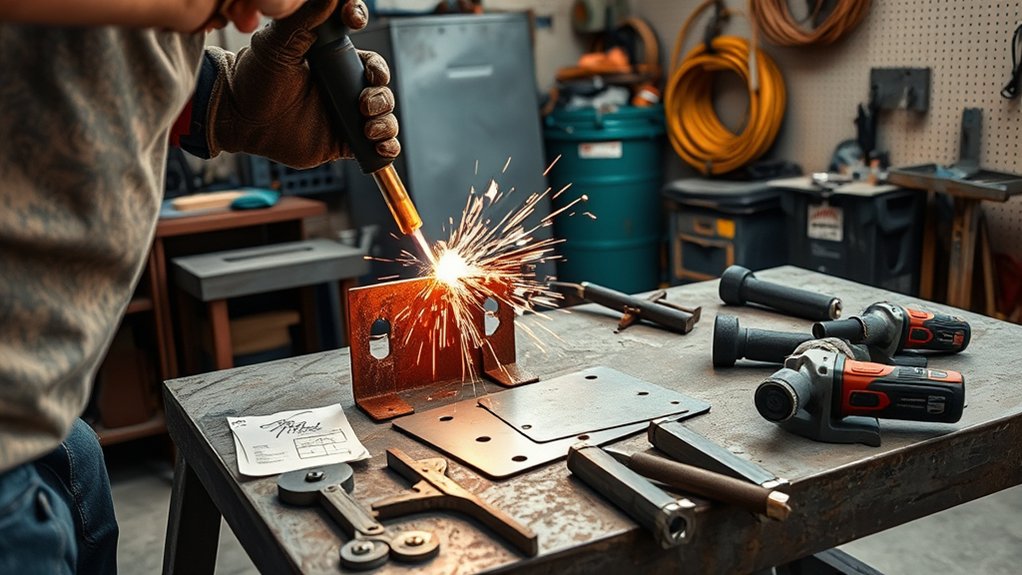
For everyday fabrication and repair work, a plasma cutter can cut plates, tabs, brackets, gussets, patches, tubing, bolts, and damaged welded parts. It is especially useful when a grinder or saw would be slow, difficult to position, or unable to follow a curved line.
Use this basic process before making the real cut:
- Identify the material. Confirm the metal type, thickness, coating, and anything hidden behind or below the cut.
- Prepare the work area. Remove combustibles, protect nearby people from arc light and sparks, provide ventilation, and position fire-control equipment.
- Secure the workpiece. Clamp it so the part cannot shift, fall, close the kerf, or trap the torch.
- Attach the work clamp. Connect it to clean conductive metal as close to the cutting area as practical.
- Check the air supply. Confirm pressure and flow while air is moving through the torch, not only while the system is idle.
- Install the correct consumables. Match the nozzle, electrode, shield, operating mode, and amperage to the material and thickness.
- Make a test cut. Use scrap of the same material and thickness to check penetration, bevel, dross, and travel speed.
Start from an outside edge when possible because edge starts reduce molten-metal blowback onto the torch. When you must pierce, follow the operator manual. Thicker material may require the torch to begin at an angle before it rotates upright.
Hold the standoff specified by the manufacturer. A drag shield may allow the torch to rest on the metal, but only when the torch and installed consumables are designed for drag cutting. Otherwise, dragging the tip can damage consumables and change cut quality.
For most routine handheld cuts within the machine’s rated capacity, preheating is not required. Check the material procedure and equipment manual before cutting thick plate, special alloys, cast material, or critical parts.
Use lead-ins and lead-outs where a start or stop mark would damage important geometry. Keep the torch square to the work unless you are intentionally making a bevel. After cutting, verify dimensions, squareness, fit-up, and edge condition before welding the part.
Plasma gouging can remove old welds, defects, and unwanted attachments without making a full cut through the base metal. Use a supported gouging mode and gouging consumables. A common starting angle is about 30 to 35 degrees from horizontal, but a steeper angle generally creates a narrower, deeper gouge. Current, travel speed, torch height, and angle all change the groove. Follow the machine’s gouging chart and the guidance in Hypertherm’s plasma-gouging techniques.
Warning: Plasma cutting creates intense visible and ultraviolet radiation, hot slag, sparks, metal fumes, noise, sharp edges, and electrical hazards. Use safety glasses under suitable arc-rated face protection, flame-resistant clothing, gloves, hearing protection, protective footwear, effective ventilation, and any respiratory protection required by the hazard assessment. Review OSHA’s welding and cutting hazard guidance.
With practice, these checks produce more repeatable results on plates, tabs, patches, mounting ears, brackets, repair sections, and shop fixtures.
Artistic Creations and Home Decor
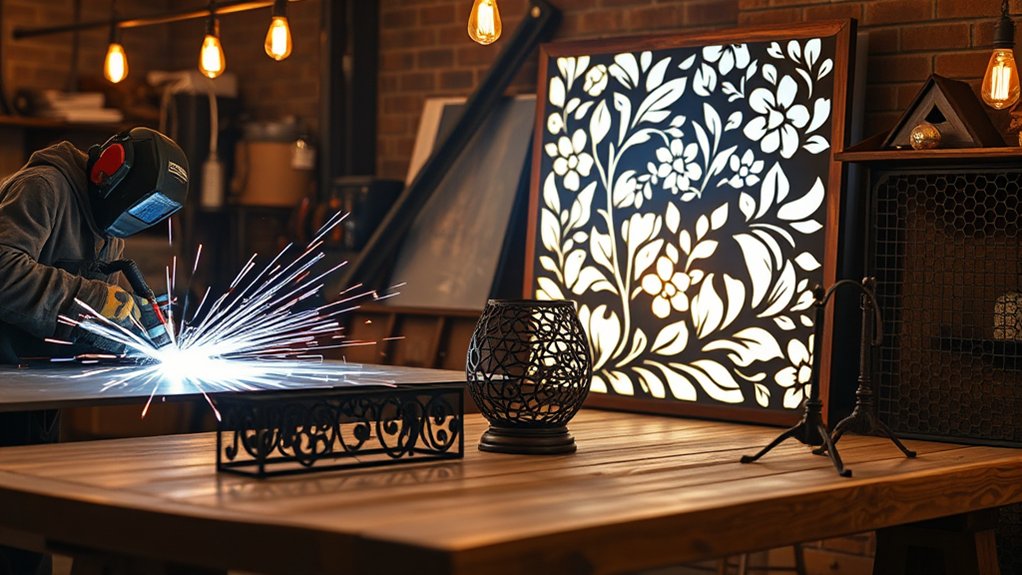
Plasma cutting also works well for metal art and home decor. You can produce address signs, silhouettes, decorative panels, sculptures, fireplace screens, shelf brackets, ornaments, and personalized wall art.
Start by selecting a metal and thickness your machine can cut cleanly. Mild steel is common because it is easy to source and finish. Stainless steel, copper, brass, and aluminum can create distinctive color and texture, but each material responds differently to heat, oxidation, finishing, and outdoor exposure.
Use stencils, straightedges, circle guides, or CAD/CAM templates for repeatable shapes. Leave enough material around narrow bridges, letters, and inside corners so small details do not melt away. Account for kerf width—the strip of material removed by the arc—when parts must fit together accurately.
- Measure twice and test first: Verify kerf, lead-ins, pierce locations, and detail size on scrap.
- Control distortion: Spread cuts around the sheet instead of concentrating heat in one small area.
- Protect the finished face: Plan the torch direction, support the sheet, and keep slag from landing on visible surfaces.
- Finish every exposed edge: Remove dross and sharp burrs before anyone handles or hangs the piece.
- Plan mixed-material joints: Isolate dissimilar metals where practical and protect wood, glass, wiring, and finishes from heat.
After cutting, use files, flap discs, deburring tools, or sanding equipment to smooth edges. Depending on the design, finish the piece with brushing, patina, paint, powder coating, bluing, or a compatible clear coat.
Some plasma systems can mark bend lines, hole locations, part numbers, or decorative scores. Do not assume that every cutter can do this. Use marking only when the manufacturer provides a stable low-current marking mode and suitable consumables, as described in Hypertherm’s metal-marking guidance.
Outdoor Projects: Gates, Furniture, and Yard Art
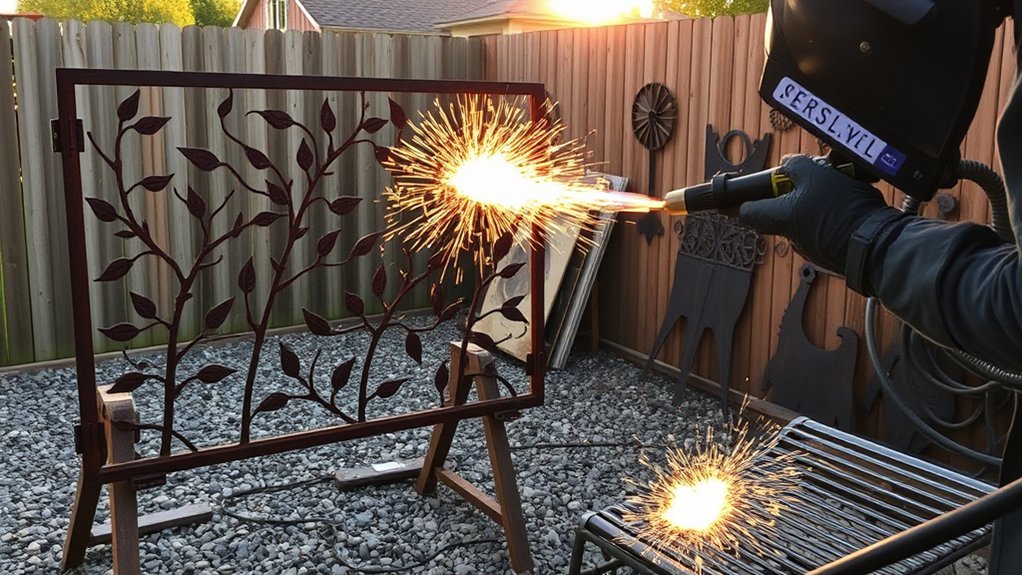
Plasma cutting can help you build gates, rail panels, table frames, benches, planters, fire-pit parts, trellises, brackets, and yard art. Outdoor work requires both accurate fabrication and a finish that can tolerate moisture, sunlight, and temperature changes.
Weathering steel, aluminum, stainless steel, properly prepared carbon steel, and galvanized steel may all be suitable for certain outdoor projects. However, galvanized steel requires special fume precautions because its zinc coating can produce zinc oxide fume when heated. OSHA identifies zinc oxide from galvanized steel as a cause of metal fume fever. Review OSHA’s information on welding and cutting fumes before cutting zinc-coated material.
For a custom gate, square and brace the frame before adding decorative panels. Clamp a guide or dry-run the torch path to make sure the lead and torch body will clear the work. Spread decorative cuts around the panel to reduce heat distortion, and leave enough metal at hinges, latches, and mounting points to carry the expected load.
Deburr the parts, add required attachment points, and provide drain and vent openings before hot-dip galvanizing hollow fabrications. Discuss hole size and placement with the galvanizer before final assembly. Powder coating and paint also require clean, properly prepared surfaces and corrosion-resistant detailing.
For furniture, smooth every edge that hands, legs, clothing, or cushions may contact. Tack and weld in a balanced sequence to limit distortion. Provide drainage where water could collect inside tubing or formed sections.
For fire-pit components, use a material and thickness suitable for repeated heating. Cut vents, ash cleanouts, expansion gaps, and joints so they do not create unstable or razor-sharp edges as the metal cycles between hot and cold.
Warning: Do not use galvanized, painted, plated, oily, or unidentified scrap for a fire pit’s heated surfaces. Heating coatings and residues can release hazardous fumes. Use fire pits only in an appropriate outdoor location and follow local fire restrictions, clearance rules, and manufacturer guidance.
Antique saws, shovels, and other scrap shapes can become yard art, but first determine whether they carry paint, plating, grease, hardened edges, or hidden damage. Trace the pattern, use slower controlled movements for fine details, and add mounting brackets that support wind and weather loads.
Keep the cutting area dry, control sparks and slag, protect nearby buildings and vegetation, and continue watching the area after the cut for smoldering material.
Automotive and Industrial Applications
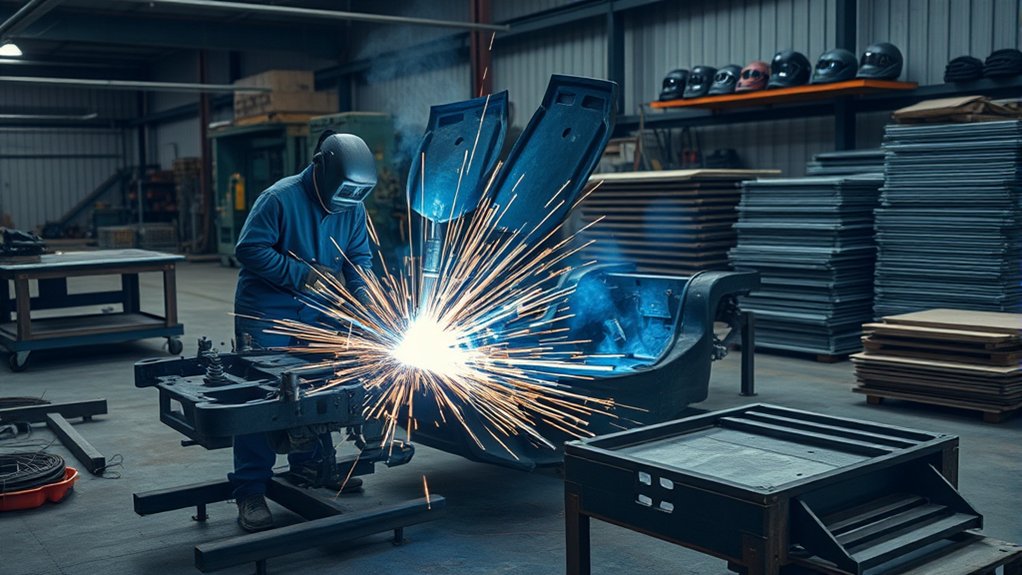
A plasma cutter can fabricate custom brackets, mounting plates, exhaust components, tabs, repair patches, guards, railings, beams, equipment panels, and heavy-plate parts. Fixtures, templates, and mechanized tables can improve consistency when the same profile must be produced more than once.
In custom automotive fabrication, plasma can trim replacement sheet metal, cut nonstructural brackets, remove selected attachments, and shape approved repair pieces. It may also be listed as an approved tool in some structural repair procedures. That does not mean every rail, pillar, rocker, or reinforcement may be cut anywhere.
Note: Before structural vehicle cutting, identify the vehicle by VIN and model year and obtain the current automaker procedure. Approved sectioning locations, materials, attachment methods, measuring steps, corrosion protection, scans, and calibrations vary by vehicle. OEM1Stop and the I-CAR OEM information portal provide access to manufacturer repair resources.
Before cutting a vehicle, follow the OEM procedure for disconnecting or isolating the 12-volt battery, supplemental restraint system, and any high-voltage traction system. Inspect both sides of the cut zone. Move or shield wiring harnesses, fuel lines, brake lines, refrigerant lines, glass, interior trim, sensors, batteries, hoses, and combustible sound-deadening material.
Do not perform hot work near a high-voltage battery or orange high-voltage cabling unless the OEM procedure specifically permits the operation and a properly trained technician has made the system safe. Never cut into an air-conditioning circuit. Refrigerant must be recovered with approved equipment by a qualified person before a line or component is opened.
For industrial parts, validate material type, thickness, cut path, fixture position, and downstream requirements before piercing. Monitor arc quality and consumable wear, then inspect the finished edge for excessive bevel, dross, gouges, cracks, incomplete penetration, or dimensions outside tolerance.
Warning: Never plasma cut a pressurized tank, pipe, cylinder, vessel, shock absorber, or other pressurized component. Do not cut a used drum, tank, pipe, or sealed cavity unless qualified personnel have identified its contents, disconnected connected lines, thoroughly cleaned it, vented or purged it, and tested it safe for hot work. OSHA’s requirements are detailed in 29 CFR 1910.252.
Getting Started: Tools, Materials, and Cost Considerations
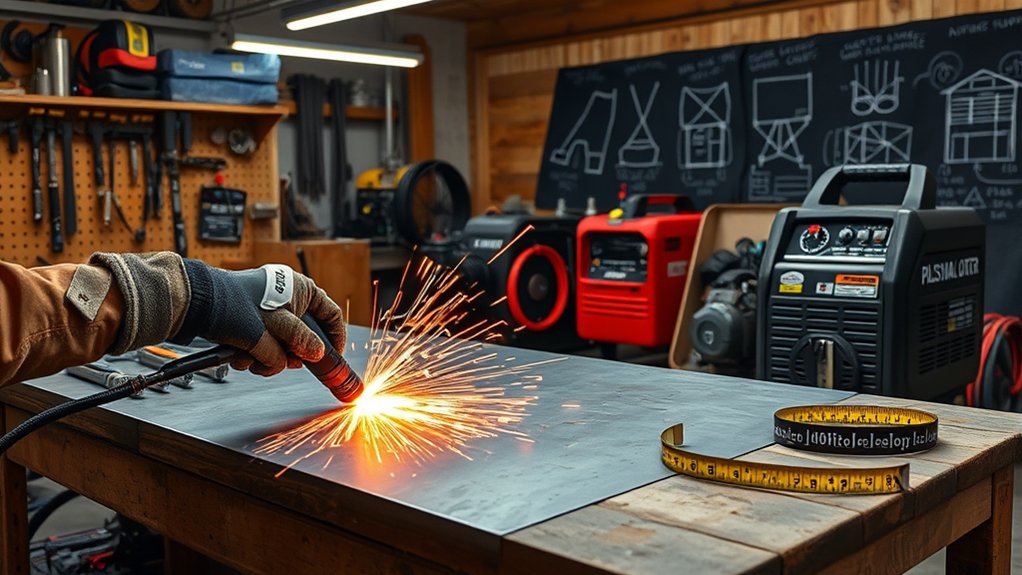
A reliable starting setup includes more than the plasma power source. The electrical supply, compressor, air treatment, consumables, work surface, ventilation, finishing tools, and protective equipment all affect whether the cutter works safely and consistently.
Basic equipment may include:
- A plasma cutter with enough rated capacity for the material normally cut
- The correct torch, shield, nozzle, electrode, and other consumables
- A circuit, plug, wiring method, and breaker that match the manufacturer’s requirements
- An air compressor that can deliver the required flow at the specified operating pressure
- Moisture separation, filtration, and drying suitable for the air quality the cutter requires
- A conductive cutting table or stable workbench with a safe path for sparks and slag
- Work clamps, straightedges, circle guides, templates, squares, and measuring tools
- Deburring tools, files, grinders, and edge-finishing equipment
- Local exhaust or another effective fume-control system
- Eye and face protection, flame-resistant clothing, gloves, hearing protection, and protective footwear
- A suitable fire extinguisher and any required fire-watch equipment
Home and portable cutters may operate from 120-volt, 240-volt, or dual-voltage input, but the exact circuit requirement is machine-specific. Follow the nameplate and manual. Do not substitute an undersized extension cord, adapter, receptacle, or breaker. Have a qualified electrician install or verify the circuit when needed.
Check compressor requirements in standard cubic feet per minute or the unit specified by the manufacturer. A compressor that reaches the stated pressure but cannot maintain the required flow may cause the pressure to fall during a long cut. That can destabilize the arc and shorten consumable life.
Shop air should be clean, dry, and free of excessive oil. Drain the compressor, maintain filters, and use a dryer or additional separator where humidity and duty require it. When a supported process uses bottled nitrogen or another gas, use the correct regulator, hose, fittings, storage method, and gas settings.
Match consumables and amperage to the cut chart. Hypertherm notes that wrong parts or parameters can shorten consumable life and reduce cut quality in its guide to common plasma-cutting mistakes.
Duty cycle tells you how long a machine can operate at a stated output before it must cool under defined test conditions. A low-duty-cycle unit may be adequate for short hobby cuts but frustrating during long profiles, demolition, or production work.
Handheld units usually have a lower total entry cost than CNC tables. A CNC system also needs a table, controller, drives, software, machine torch or interface, torch-height control, and fume management. It can add repeatability and efficient nesting for signs, panels, brackets, and production parts.
Plan ongoing costs for electrodes, nozzles, shields, cartridges, filters, dryers, compressor power, gas, replacement torch parts, ventilation maintenance, and finishing abrasives.
Pro Tip: Cut a small coupon from the same material and thickness as the real part. Check whether sparks exit below the plate, inspect dross and bevel, and adjust only one variable at a time.
Products Worth Considering

[55A 110V/220V Cutting Power]: The SILATU STC550P plasma cutter delivers up to 55A of cutting power with advanced IGBT inverter technology. Use 110V at 15-40A for home garage and lighter-duty jobs, or switch to 220V at 15-55A for thicker metal and more demanding projects. Maximum cutting capacity reaches 1/2" (12mm) at 110V/40A and 7/10" (18mm) at 220V/55A under recommended air pressure (Note: For circuit protection, this machine must be used with 40A circuit breaker)

CUTTING THICKNESS UP TO 20MM: Featuring a brand-new MCU technology upgrade, the plasma cutter machine has a high degree of internal integration, combining full digitalization for more precise control of cutting parameters such as current and voltage. This results in better cutting effects and improved stability. Cutting thickness: Quality 12mm (1/2"), maximum 20mm (3/4").

BUILT-IN AIR COMPRESSOR: With this plasma cutter machine, you're ready to cut as soon as you connect it to a power source, no additional air compressor needed. Designed for effortless outdoor work, it also offers compatibility with external compressors for versatile use
When a Plasma Cutter Is the Right Tool
A plasma cutter is a strong choice when you need fast, flexible cuts in conductive metal and can accept a heat-affected edge that may need cleanup. It is useful for field repairs, curved profiles, demolition, one-off brackets, plate work, artwork, and parts that would be difficult to reach with a saw.
Plasma is often a good fit when:
- The material is electrically conductive.
- You need curves, slots, irregular profiles, or internal cutouts.
- Speed matters more than a perfectly machined edge.
- The part is too large or awkward for a stationary saw.
- Some edge grinding or deburring is acceptable.
- You need portable cutting or gouging at a worksite.
Another process may be better when:
- You need very small holes, extremely fine detail, or tight machining-level tolerances.
- The material cannot tolerate a heat-affected zone or distortion.
- The workpiece is nonconductive.
- A shear, nibbling tool, or saw can make a cleaner straight cut with less finishing.
- The work requires production-level precision better suited to laser or waterjet.
- Very thick carbon steel makes oxy-fuel more practical for the available equipment.
Common Mistakes to Avoid
Many poor plasma cuts result from setup or technique rather than a defective machine. Use the manual’s cut chart as the starting point, then diagnose the visible symptom.
- Using wet or oily air: Moisture and contamination can destabilize the arc and shorten consumable life. Drain and maintain the air system.
- Moving too slowly: Low-speed dross forms along the bottom edge, and the kerf may widen. Increase speed in small steps if other settings are correct.
- Moving too fast: The arc trails behind, leaves hard dross, sprays back, or fails to cut through. Reduce speed and confirm adequate current and air flow.
- Using the wrong consumables: A tip that does not match the amperage or process can create a wide kerf, poor focusing, or rapid wear.
- Running worn consumables: A damaged or enlarged nozzle opening can cause bevel, wandering, top spatter, and rough edges.
- Ignoring the work-clamp connection: Paint, rust, scale, distance, or a loose connection can interfere with reliable arc transfer.
- Using the wrong standoff: Excessive or inconsistent torch height changes bevel and dross. Drag only with approved drag consumables.
- Piercing too close: Molten blowback can damage the shield and nozzle. Use the specified pierce height or rolling-pierce method.
- Blaming speed for every dross problem: Dross can also come from the wrong amperage, worn parts, high standoff, poor air, or unsuitable material condition.
- Skipping the test cut: A short test often reveals the wrong tip, polarity, air pressure, current, speed, or torch angle before the real part is damaged.
- Cutting without checking behind the panel: Hidden wiring, fuel, insulation, batteries, hoses, glass, or combustible material can turn a simple cut into a fire or system failure.
Hypertherm’s dross troubleshooting guide explains how speed, amperage, standoff, nozzle condition, gas, and material condition interact. Keep a setup checklist and record settings that work well for common materials.
Plasma vs. Other Metal-Cutting Methods
- Plasma vs. laser: Plasma equipment is generally more accessible for handheld work and medium plate. Laser systems can produce finer features and tighter tolerances on suitable materials, especially in automated production.
- Plasma vs. oxy-fuel: Plasma cuts both ferrous and nonferrous conductive metal and performs well on thin and medium material. Oxy-fuel is limited mainly to carbon steel but can be practical for very thick steel and does not require an electrical work clamp.
- Plasma vs. waterjet: Waterjet can cut conductive and nonconductive materials without a thermal heat-affected zone. It normally involves more costly, stationary equipment and abrasive handling.
- Plasma vs. a bandsaw or cold saw: Saws can produce clean, square straight cuts with little thermal effect. Plasma is faster for irregular shapes, internal openings, large plate, and work that cannot fit in the saw.
- Plasma vs. a grinder: A grinder is inexpensive and useful for trimming and finishing but is slower for long cuts and creates substantial abrasive dust and wheel hazards.
- Plasma vs. shears or nibblers: These tools can cut thin sheet without a hot edge, but capacity and shape access are limited.
Choose the process based on material, thickness, tolerance, edge finish, heat input, portability, production volume, available utilities, and total cleanup time.
Products Worth Considering
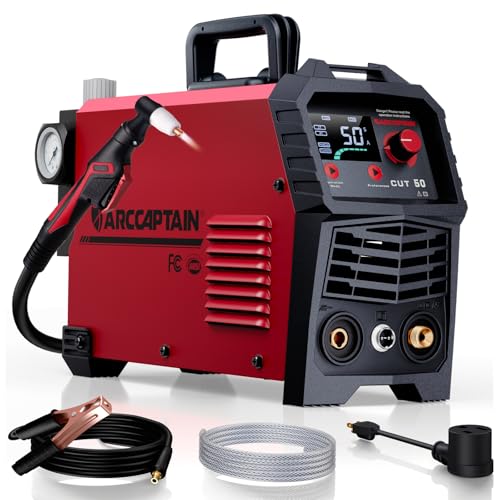
【Powerful Cutting Ability】Switch effortlessly between 110V and 220V for home or workshop use. Achieve professional 1/2" clean cuts on steel, aluminum, and copper with advanced LGBT technology. Perfect for DIY projects and heavy-duty tasks. Recommended maximum cutting thickness: 12mm @ 35A / 110V / 55 PSl; 18mm @ 50A / 220V / 75 PSI. Note: Requires compressed air (compressor sold separately).

【Non-Touch Pilot Arc Function】The ARCCAPTAIN 55A plasma cutter features a pilot arc function. It utilizes a high-frequency non-touch arc starting mode. The torch head does not need to touch the metal plate, reducing energy consumption during non-cutting work, minimizing electrode burning, and extending service life. NOTE: Do not switch voltages until the screen turns off and the fan stops.

POWERFUL CUTTING THICKNESS: This plasma cutter handles 1/2" (12mm) steel at 120V/35A and 5/8" (16mm) at 240V/60A. Dual voltage auto-detection (10-35A@120V / 30-60A@240V) with PSI guidance (70-75 PSI / 0.48-0.52MPa). Optimized for quick, efficient cuts in automotive repairs and metal fabrication
Frequently Asked Questions
How safe is plasma cutting indoors, and what ventilation is required?
Indoor cutting requires control of metal fumes, gases, sparks, arc radiation, noise, and fire risk. Use source-capture local exhaust whenever practical, keep your head out of the fume plume, remove combustibles, protect nearby people, and follow applicable exposure and respiratory-protection requirements. General room airflow alone may not adequately capture fumes from coated, galvanized, stainless, or unknown metal.
Can a plasma cutter engrave, mark, or bevel metal edges?
A plasma cutter can make bevel cuts when the torch, guide, speed, and angle are controlled. Marking or shallow scoring is only recommended when the machine supports a stable low-current marking mode and the manufacturer supplies suitable consumables and settings. Turning down an unsupported cutter is not a reliable substitute for a marking system.
What power supply and breaker size do home users need?
Home units may use 120-volt, 240-volt, or dual-voltage input. The required receptacle, conductor size, plug, breaker, and extension-cord limits depend on the exact machine and output. Follow the nameplate and operator manual, and use a qualified electrician when a new circuit or verification is needed.
Does every plasma cutter need an air compressor?
Most handheld air-plasma systems need compressed air, although some portable machines contain a built-in compressor and some industrial processes use bottled gases. An external compressor must maintain the flow and pressure listed in the manual while cutting. It also needs suitable filtration and moisture control.
Can you plasma cut rusty, painted, or galvanized metal?
The arc may cut through light rust or coatings when it can establish a reliable electrical path, but coating fumes and residues can be hazardous. Identify the coating, expose clean metal for the work clamp, and use effective fume control. Do not heat unknown paint, plating, sealers, oils, or residues until their hazards are known.
How noisy is plasma cutting, and what hearing protection is recommended?
Noise varies with current, material, air flow, workpiece shape, table design, and cutting duration. Select earplugs, earmuffs, or dual protection from a noise assessment rather than guessing. Hearing protection must fit correctly and provide enough attenuation without preventing awareness of other shop hazards.
How does plasma cutting compare with laser or oxy-fuel for precision?
Plasma offers a useful balance of speed, portability, equipment cost, and cut quality on many conductive metals. Laser generally provides finer detail and tighter tolerances on suitable work, while oxy-fuel is often practical for very thick carbon steel. The best method depends on material, thickness, tolerance, heat input, finish, and production volume.
Safety Disclaimer: This article is for general informational purposes and does not replace professional hot-work training, a workplace hazard assessment, the machine manual, OEM vehicle procedures, local fire rules, electrical codes, or qualified safety guidance. Stop if the material, coating, container history, hidden systems, or required controls are unknown.
Conclusion
A plasma cutter gives you a fast and flexible way to cut, bevel, gouge, and shape conductive metal for repairs, artwork, outdoor projects, automotive fabrication, and shop production. Its best uses are jobs where speed, portability, and the ability to follow irregular profiles matter more than a machined edge.
Good results begin before the arc starts. Identify the material and coatings, verify the machine’s real cut capacity, supply clean dry air, install the correct consumables, secure the work, and make a test cut. Keep the torch at the specified height and change one setting at a time when troubleshooting.
Most importantly, treat every cut as hot work. Control fumes, radiation, noise, electricity, sharp edges, sparks, and hidden fire hazards. Use qualified procedures for vehicles, coated metals, industrial equipment, and any container or cavity that may have held pressure, fuel, chemicals, or combustible material.
Sources
- Hypertherm: What Is a Plasma Cutter? — Plasma operation, conductive materials, equipment types, and process comparisons.
- Hypertherm: Common Plasma-Cutting Mistakes — Consumable selection, amperage, maintenance, gas flow, and torch height.
- Hypertherm: Plasma-Cutter Gouging Techniques — Gouging angle, current, speed, height, and groove control.
- Hypertherm: Metal Marking With Plasma — Supported low-current marking modes, gases, and consumables.
- OSHA: Welding, Cutting, and Brazing Hazards and Solutions — Fumes, radiation, burns, electrical hazards, PPE, ventilation, and noise.
- OSHA 29 CFR 1910.252 — Fire prevention, used containers, venting, purging, personnel protection, and hot-work requirements.