When you roll an acetylene cylinder into the shop, most of its safety system is hidden from view. Inside the steel shell is a solid or granular porous mass that holds a solvent and helps keep the acetylene stable. It is not ordinary packing, and it is not a part that a user can inspect, refill, or replace.
Quick Answer
The porous material is called the porous mass or porous filler. It commonly consists of a calcium-silicate-based solid mass or a granular carbon-based material. It holds acetone or DMF, which dissolves the acetylene, limits free-gas spaces, and allows the cylinder to store and release acetylene more safely.
Key Takeaways
- The cylinder contains a porous mass, a solvent, and dissolved acetylene—not a large empty space filled with freely compressed gas.
- Depending on the cylinder, the solvent may be acetone or dimethylformamide, commonly called DMF.
- Keep the cylinder secured and upright so liquid solvent does not reach the valve or enter the gas equipment.
- Never use acetylene at a delivery pressure above 15 psig, and always follow the torch-tip pressure and flow chart.
- The porous mass, solvent, valve, and cylinder shell are supplier-service items. Do not open, repair, clean internally, or refill the cylinder yourself.
Image by enviropacific
Why Acetylene Cylinders Need Porous Material
Acetylene is valuable for welding, brazing, heating, and cutting because an oxygen-acetylene flame can reach about 3,200°C, or roughly 5,800°F. The same chemical structure that gives the gas its intense heat also makes free acetylene capable of rapid decomposition when it is exposed to excessive pressure, heat, shock, or a flashback.
For ordinary use, the OSHA oxygen-fuel gas standard prohibits generating, piping, or using acetylene above 15 psig. Approved cylinders are different because the acetylene is dissolved in a solvent held throughout a porous mass rather than stored as a large volume of freely compressed gas.
The porous mass serves several related purposes:
- It distributes the solvent: The small pores hold the liquid throughout the cylinder instead of allowing it to collect in one open chamber.
- It reduces free-gas spaces: Smaller spaces make it harder for a decomposition reaction to spread rapidly through the cylinder.
- It supports controlled withdrawal: Acetylene comes out of solution as cylinder pressure falls and gas is drawn through the valve.
- It slows decomposition: The mass divides the cylinder interior into very small passages that interrupt the progress of a reaction.
Warning: The porous mass makes an approved acetylene cylinder safer to transport and use, but it does not make the cylinder harmless. Keep it upright, secured, ventilated, away from heat and ignition sources, and connected only to approved acetylene equipment.
What Exactly Is the Porous Material?
The correct industry term is porous mass or porous filler. It occupies most of the cylinder’s internal volume and contains thousands of small, connected pores. The mass must be compatible with the cylinder shell, solvent, and acetylene, and it must remain stable through filling, transport, withdrawal, and temperature changes.
Modern designs commonly fall into two broad groups:
- Monolithic masses: A solid, one-piece mass, often based on calcium silicate, that is formed or cured inside the cylinder.
- Non-monolithic masses: A granular filling, commonly carbon- or charcoal-based, that is packed to meet the cylinder design requirements.
Older descriptions may mention mineral materials such as diatomaceous earth, while individual manufacturers may use proprietary blends. You cannot identify the exact fill by looking at the cylinder’s color, age, brand, or size. The cylinder manufacturer and gas supplier records control.
The material is selected to be:
- Highly porous: It must hold and distribute enough solvent for the cylinder’s rated acetylene content.
- Chemically compatible: It must not create a dangerous reaction with the solvent or acetylene.
- Mechanically stable: It must tolerate normal filling, transport, and use without creating large voids.
- Heat resistant: It must continue to perform within the cylinder’s approved service conditions.
Note: The cylinder’s weight comes from the steel shell, valve, porous mass, solvent, and acetylene. An acetylene cylinder can therefore feel surprisingly heavy compared with another cylinder of similar external size.
How the Porous Mass, Solvent, and Acetylene Work Together
The safety system depends on three parts working together:
- The porous mass fills the cylinder interior. Its network of small pores distributes the solvent and minimizes large free spaces.
- The solvent wets the porous mass. Depending on the cylinder design, the carrier solvent may be acetone or dimethylformamide, commonly called DMF.
- Acetylene dissolves in the solvent during filling. The cylinder can contain much more acetylene in dissolved form than it could safely hold as free gas at the same pressure.
- Gas comes out of solution during use. When the cylinder valve is opened through a suitable regulator, acetylene leaves the solution and flows to the torch at a controlled rate.
The pressure shown on the cylinder-side gauge is not the same as the regulated delivery pressure at the torch. An approved cylinder can contain dissolved acetylene at an internal pressure well above 15 psig, but the gas must pass through an acetylene regulator, and the delivery pressure must never exceed 15 psig.
An acetylene cylinder is not just a steel bottle of gas. It is a matched safety system consisting of the shell, porous mass, solvent, valve, pressure-relief devices, and dissolved acetylene.
Drawing gas too quickly can pull solvent vapor or liquid into the regulator and hoses. That may produce an irregular flame, contaminate equipment, reduce cutting quality, and leave the cylinder with an improper solvent balance. The solution is a larger cylinder, a lower-flow tip, or an approved manifold—not more regulator pressure.
Common Porous-Mass Designs
| Design | Typical Material | Characteristics |
|---|---|---|
| Monolithic | Often calcium-silicate-based | A solid mass formed as one continuous structure inside the cylinder |
| Non-monolithic | Often granular carbon- or charcoal-based | A packed granular mass engineered to meet the cylinder’s porosity and stability requirements |
| Older or proprietary formulation | May include other mineral or composite materials | Exact composition must be confirmed through the cylinder manufacturer or gas supplier |
No design should be treated as automatically superior merely because of the material name. The important point is that the porous mass, solvent quantity, cylinder shell, valve, and pressure-relief system were approved and maintained as a complete package.
Under U.S. transportation rules, acetylene is carried in approved cylinders containing a suitable porous mass and solvent. The Pipeline and Hazardous Materials Safety Administration identifies acetylene as a Division 2.1 flammable gas subject to special packaging and handling requirements.
Why the Porous Material Matters to Welders
The porous mass is hidden, but it affects nearly every part of an oxy-fuel setup:
- Safety: The mass and solvent reduce the amount of free acetylene and help slow a decomposition reaction.
- Flame stability: Correct cylinder orientation and withdrawal rates help deliver gas without excessive solvent carryover.
- Equipment life: Keeping solvent out of regulators, hoses, check valves, and torches reduces contamination and premature failure.
- Cylinder selection: A small cylinder may hold enough total gas for a job but still be unable to supply the tip’s required hourly flow safely.
- Work quality: Correct pressure, flow, tip condition, and cylinder size produce a more stable flame and cleaner cuts or brazed joints.
The user’s job is not to maintain the porous mass. The user’s job is to protect the cylinder from impact and heat, keep it upright, stay within the approved withdrawal rate, and return it to the supplier whenever something seems wrong.
Safety Considerations for Acetylene Cylinders
Acetylene requires more care than an ordinary compressed-air or propane cylinder. The following rules apply to both full and nominally empty cylinders because an “empty” cylinder still contains flammable gas and solvent vapor.
- Secure the cylinder upright: Use a cylinder cart, chain, strap, or approved rack. OSHA requires acetylene cylinders to be stored valve end up and fuel-gas cylinders to be valve end up while in use.
- Use adequate ventilation: Never store a cylinder in a locker, cupboard, sealed vehicle, or other unventilated enclosure.
- Protect the valve: Install the valve-protection cap when the cylinder is designed for one and is not connected for use.
- Keep it away from heat: Do not place it where sparks, slag, flame, hot work, heaters, or hot metal can reach it.
- Separate stored oxygen: In covered U.S. workplace storage, keep oxygen cylinders at least 20 feet from fuel-gas cylinders or use a qualifying noncombustible barrier at least 5 feet high with a minimum half-hour fire-resistance rating.
- Use the correct regulator: Connect only an approved acetylene regulator and equipment rated for the required flow.
- Never exceed 15 psig delivery pressure: Use the pressure specified for the exact torch, tip, gas, and job.
- Open the valve slowly: OSHA says an acetylene valve should preferably be opened no more than three-fourths of a turn and never more than one and one-half turns, unless the cylinder manufacturer specifies a different procedure for its valve design.
- Keep oil and grease away: Keep cylinders, valves, regulators, couplings, hoses, and oxygen equipment clean and free of oily contamination.
- Test for leaks safely: Use a manufacturer-approved leak-detection solution. Never use a flame.
- Close the cylinder valve: Close it when work is finished, before moving the cylinder, and before removing the regulator.
Use the Correct Acetylene Withdrawal Rate
Withdrawal guidance varies among reputable sources. Some torch and equipment instructions continue to use a maximum of one-seventh of the cylinder capacity per hour. ESAB describes the 1/7 rule, and a Miller heating-tip document also uses it.
Other current supplier guidance is more conservative. The Air Products acetylene Safetygram recommends no more than one-tenth of cylinder capacity per hour for intermittent withdrawal and one-fifteenth per hour when the full contents are being withdrawn continuously.
Because the cylinder design, solvent, ambient temperature, duty cycle, and supplier instructions can differ, use this order of authority:
- Follow the instructions supplied by the cylinder owner or gas supplier.
- Check the torch-tip chart for the required acetylene flow in standard cubic feet per hour, or SCFH.
- Follow the equipment manufacturer if it gives a lower allowable rate.
- For conservative planning when no more specific instruction is available, size for no more than 1/10 of capacity per hour intermittently or 1/15 continuously.
- Use an approved manifold or a larger cylinder when one cylinder cannot meet the required flow.
Pro Tip: Choose the cylinder from the tip’s SCFH requirement, not from the pressure setting. A large heating tip may use modest pressure while demanding far more gas volume than a small cylinder can release safely.
How to Check and Maintain an Acetylene Cylinder
A torch user can perform an external pre-use inspection, but internal cylinder maintenance belongs to the gas supplier or an authorized cylinder facility.
At a Glance
| Time Required | About 5–10 minutes before setup |
| Difficulty | Basic visual and equipment inspection; cylinder service is supplier-only |
| Tools Needed | Approved leak-detection solution, clean dry cloth, cylinder restraint, and the torch manufacturer’s instructions |
| Cost | Minimal for inspection; exchange, testing, or repair costs depend on the supplier |
- Confirm the cylinder identity: Read the product label and cylinder markings. Never rely on cylinder color alone to identify the gas.
- Inspect the shell: Look for deep dents, bulges, fire or heat marks, heavy corrosion, gouges, damaged feet, or signs that the cylinder was dropped.
- Inspect the valve area externally: Check for visible damage, contamination, or a missing handwheel or operating key. Do not insert anything into the valve outlet.
- Secure the cylinder upright: Place it on a stable cart or rack and restrain it before removing the cap or connecting equipment.
- Inspect the regulator and hoses: Use an acetylene regulator with readable gauges. Check hoses, fittings, reverse-flow check valves, and flashback arrestors for damage and correct gas orientation.
- Connect equipment according to its manual: Keep all components free of oil and grease, stand to the side of the regulator, and open the valve slowly.
- Perform a leak test: Apply approved leak-detection solution to the specified joints. Close the valve and correct any equipment leak before lighting the torch.
- Verify pressure and flow: Set the pressure from the tip chart and make sure the tip’s acetylene consumption does not exceed the cylinder’s permitted withdrawal rate.
- Close and depressurize after work: Follow the torch manufacturer’s shutdown sequence, close both cylinder valves, bleed the lines safely, release regulator-adjusting pressure, and store the equipment properly.
- Return suspect cylinders: Tag the cylinder out of service and contact the gas supplier if the valve is difficult to operate, the cylinder is damaged, solvent carryover is suspected, or gas flow remains abnormal after the equipment has been checked.
Warning: Do not repair a cylinder valve, remove a pressure-relief device, drill or weld the shell, add solvent, open the cylinder, or refill it yourself. OSHA restricts cylinder refilling and says valve trouble must be reported to the supplier.
Products Worth Considering
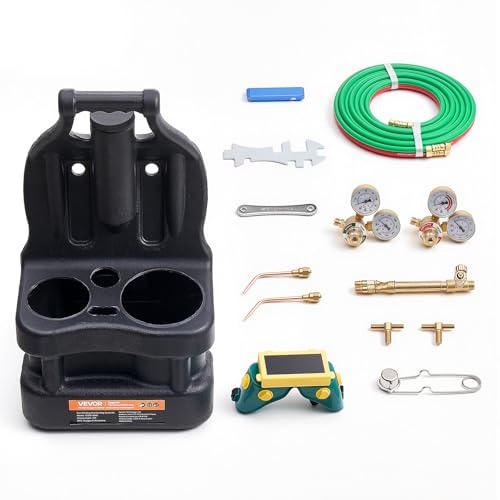
More Secure Use: This oxy-acetylene torch kit features 2 external check valves that tightly seals the disk assembly to prevent flashback and gas backflow. With the spring compressing under normal gas flow to push the disk assembly forward for smooth gas flow

Durable Construction: This acetylene torch kit includes 2 durable brass welding tips, providing exceptional corrosion resistance and high-temperature durability. Built to last, this kit is your go-to choice for reliable performance in welding projects. (NOT Suitable for B-type Gas Cylinder)
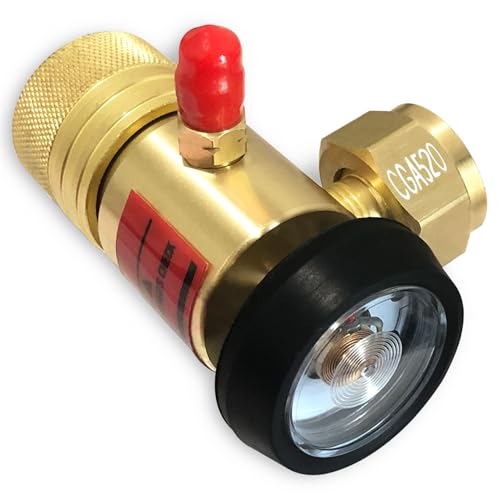
【 Product Introduction 】AR-B acetylene regulator, air acetylene gas service, B tank connection, swirl air acetylene accessories
When to Stop and Call the Supplier
Remove the cylinder from normal service and contact the supplier when you find:
- A dent, bulge, severe corrosion, gouge, damaged valve, or evidence of impact.
- A leak that continues after the cylinder valve is closed.
- A valve that will not open or close normally by hand or with its proper fixed key.
- Repeated solvent odor, visible liquid, or unexplained sputtering after the regulator and torch have been checked.
- A flashback that may have reached the cylinder or heated the regulator and valve.
- Exposure to fire, high heat, or a hot metal surface.
- A cylinder that becomes warm, hot, hisses, vents, discolors, or behaves abnormally.
If a cylinder is hot, fire-exposed, venting, or involved in an uncontrolled leak, keep people away, eliminate ignition sources only when that can be done safely, call emergency services, and tell responders that acetylene is involved. Do not approach or move a dangerous cylinder merely to place it outdoors.
In the United States, cylinder testing and requalification must be performed by an approved facility. PHMSA provides a cylinder requalifier locator.
Common Mistakes and How to Fix Them
| Mistake | Why It Is a Problem | Correct Action |
|---|---|---|
| Shaking the cylinder to check whether it is full | It does not provide a useful measurement and subjects the cylinder to needless handling | Use supplier records, the rated capacity, and the supplier’s approved inventory method |
| Using or storing the cylinder on its side | Liquid solvent can reach the valve and enter the regulator or hose | Keep it secured upright; if it has been horizontal, stand it upright for at least 30 minutes or for the longer period specified by the supplier |
| Applying a universal 1/7 rule | Some current supplier guidance requires lower intermittent or continuous rates | Follow the cylinder supplier and tip chart; use conservative 1/10 intermittent and 1/15 continuous planning when no more specific instruction is available |
| Raising acetylene pressure to feed a large tip | Pressure does not replace the required gas volume and acetylene must never be delivered above 15 psig | Use a larger cylinder, an approved manifold, or a lower-consumption tip |
| Using one pressure setting for every job | Required pressure and flow vary by tip, torch, hose, flashback arrestor, material, and process | Use the exact manufacturer chart for the installed tip |
| Cleaning or repairing the cylinder valve | Tools, solvents, sealants, or improvised repairs can damage the valve and violate supplier or regulatory requirements | Close the valve, tag the cylinder, and contact the supplier |
| Assuming smooth flow proves the porous mass is sound | A user cannot inspect or certify the internal mass, and many equipment faults affect flow | Check the regulator, hose, tip, temperature, and flow demand; return the cylinder if the problem remains |
A weak or uneven flame should not automatically be blamed on the cylinder. Check the tip for damage or blockage, verify oxygen and acetylene settings, inspect hoses and arrestors, test for leaks, and confirm that the tip is not demanding more acetylene than the cylinder can release.
Choosing the Right Acetylene Cylinder
Cylinder names are not completely standardized across suppliers. MC and B are widely recognized small sizes, but larger cylinders may be described by a number, a nominal capacity, or a supplier-specific code. Always read the label or supplier data sheet.
The following examples are based on a current Matheson/Nippon Sanso cylinder chart. Values are approximate, and your supplier’s cylinder may differ.
| Common Size | Approximate Capacity | Conservative Intermittent Rate at 1/10 | Conservative Continuous Rate at 1/15 |
|---|---|---|---|
| MC | 10 cu. ft. | About 1 SCFH | About 0.7 SCFH |
| B | 40 cu. ft. | About 4 SCFH | About 2.7 SCFH |
| AC75 | 60–75 cu. ft. | About 6–7.5 SCFH | About 4–5 SCFH |
| SM | 110–140 cu. ft. | About 11–14 SCFH | About 7.3–9.3 SCFH |
| MED | 200–250 cu. ft. | About 20–25 SCFH | About 13.3–16.7 SCFH |
These figures are planning examples, not permission to override your supplier. A supplier that authorizes 1/7 for a particular cylinder may publish a higher rate, while another cylinder may require the lower 1/10 or 1/15 rate.
Use this selection process:
- Find the installed tip’s acetylene consumption in SCFH.
- Decide whether the use is brief and intermittent or sustained and continuous.
- Compare that flow with the cylinder supplier’s allowable withdrawal rate.
- Select the next larger cylinder when the requirement is close to the limit.
- Use a professionally designed manifold when one cylinder cannot meet the flow.
A local supplier may describe a cylinder near 130–145 cubic feet as a “#4,” while another supplier uses a different name or capacity range. Capacity on the actual cylinder documentation is more reliable than the nickname.
Do not estimate remaining acetylene by shaking the cylinder or by relying only on pressure. Acetylene is dissolved in solvent, and pressure changes with temperature. Ask the cylinder supplier which inventory or weighing method applies to its cylinders.
Products Worth Considering

75 cu. ft. Steel Acetylene Cylinder
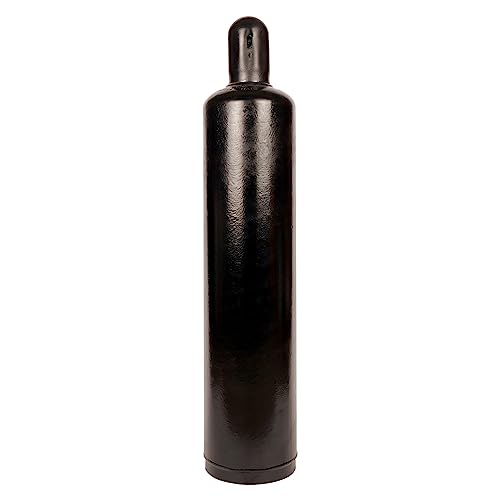
DOT-8Al/TC-9WAM Stamped

COMPLETE OXY-ACETYLENE WELDING SET - Includes MC 10 cu ft steel acetylene cylinder with CGA200 valve and 20 cu ft steel oxygen cylinder with CGA540 valve. Ready-to-fill portable set for oxy-acetylene welding, cutting, brazing, soldering, and heating. Convenient bundle for hobbyists, small shops, mobile repair, and light-duty torch work.
Practical Tips for Welding, Cutting, Brazing, and Heating
- Use the tip chart: Set oxygen and acetylene pressures for the exact tip model and process. Never treat 5, 10, or 15 psi as a universal setting.
- Check gas consumption: Heating tips can demand far more acetylene than welding or small brazing tips, even when the pressure looks modest.
- Use flashback protection: Install reverse-flow check valves and flashback arrestors where required by the torch manufacturer, employer, code, or local rule. Confirm that they have enough flow capacity for the tip.
- Purge correctly: Purge oxygen and fuel-gas hoses separately and according to the equipment manual before lighting.
- Use a spark lighter: Do not use a match, cigarette lighter, or another open flame to light the torch.
- Prepare the workpiece: Remove oil, paint, plating, and other contamination using a method suitable for the material and coating hazards.
- Adjust the flame properly: A neutral flame is used for many welding and brazing jobs, but the required flame depends on the base metal, filler, and procedure.
- Do not starve a heating tip: Insufficient flow can overheat the tip and contribute to backfire or flashback.
- Close down by the manual: Torch-valve shutdown sequences differ among equipment systems. Follow the manufacturer, then close the cylinder valves and bleed the system.
If a cut becomes wavy or the flame loses stability, do not simply raise acetylene pressure. Check the tip, oxygen supply, gas flow, hose restriction, arrestor capacity, travel speed, material condition, and cylinder withdrawal limit.
Real-World Applications of Acetylene
Acetylene remains useful because it provides a concentrated, adjustable flame with portable equipment.
- Oxy-Acetylene Welding: Commonly used for thin carbon steel, repair work, and jobs where electrical power is unavailable. Gas welding of aluminum and other nonferrous metals is possible with the correct flux, filler, and specialized procedure, but it should not be treated as a beginner setup.
- Oxy-Fuel Cutting: Commonly used on carbon and low-alloy steels that support the oxidation cutting reaction. Standard oxy-acetylene cutting is not the normal method for stainless steel or aluminum.
- Brazing and Soldering: Useful for copper tubing, refrigeration work performed by qualified technicians, carbide tools, and mixed-metal assemblies.
- Heating: Used for bending, straightening, preheating, loosening seized components, and localized fabrication work when an appropriately sized cylinder or manifold is available.
- Flame Cleaning and Gouging: Used in selected industrial procedures with the correct torch attachment and trained operator.
In every application, the porous mass performs the same basic job: it holds the solvent throughout the cylinder so acetylene can remain dissolved until it is withdrawn through the valve. Stable operation still depends on correct cylinder orientation, pressure, flow, equipment condition, and operator training.
Conclusion
The porous material in an acetylene cylinder is a purpose-built porous mass, commonly made as a calcium-silicate-based solid or a granular carbon-based fill. It holds acetone or DMF, distributes that solvent through the cylinder, limits large free-gas spaces, and helps slow acetylene decomposition.
That internal design is only one part of safe use. Keep the cylinder upright and secured, use approved equipment, stay below 15 psig delivery pressure, follow the supplier’s withdrawal limit, and choose the cylinder from the tip’s actual SCFH demand. Never open, repair, refill, or add solvent to the cylinder yourself.
When a cylinder is damaged, leaking, fire-exposed, unusually hot, or producing unexplained solvent carryover, stop using it and contact the gas supplier. Treating the cylinder as a complete, supplier-maintained safety system is the best way to protect the torch equipment, the work, and everyone in the shop.
Frequently Asked Questions
What is the porous material in an acetylene cylinder called?
It is called the porous mass or porous filler. Common designs include a monolithic calcium-silicate-based mass and a non-monolithic granular carbon-based mass. The exact composition is determined by the cylinder manufacturer.
What happens if the porous mass in an acetylene cylinder is damaged?
A damaged or deteriorated mass may create unacceptable voids, affect solvent distribution, or contribute to irregular withdrawal. A user cannot inspect the mass directly. Stop using a cylinder that has suffered impact, fire, severe corrosion, unexplained solvent carryover, or persistent flow trouble and return it to the gas supplier.
Can an acetylene cylinder be used without porous material?
No. A transportable acetylene cylinder must be an approved design containing the correct porous mass and solvent. Never use, build, refill, or modify a container that was not manufactured and maintained for dissolved-acetylene service.
How can I tell whether an acetylene cylinder is low on solvent?
A torch user cannot reliably diagnose the solvent level from flame quality, cylinder pressure, sound, or hand-lifting. Solvent odor, visible liquid, repeated sputtering, or unexplained regulator contamination are reasons to stop and contact the supplier, but they do not authorize the user to add solvent or repair the cylinder.
Why should an acetylene cylinder not be laid on its side?
Horizontal positioning can allow liquid solvent to move toward the valve and enter the regulator or hose during use. Transport, store, and use the cylinder upright. If it has been horizontal, stand it upright for at least 30 minutes or for the longer period required by the gas supplier before connecting it.
Does the 15-psi rule apply to the pressure inside the cylinder?
The 15-psig limit applies to acetylene being generated, piped, or used in ordinary equipment. Approved cylinders store acetylene dissolved in solvent at a higher internal pressure. A suitable regulator must reduce that pressure, and the delivery side must never be set above 15 psig.
Is the acetylene withdrawal limit 1/7, 1/10, or 1/15?
It depends on the cylinder supplier, equipment instructions, and whether use is intermittent or continuous. Some current equipment guidance uses 1/7. Air Products recommends 1/10 for intermittent withdrawal and 1/15 for continuous full-cylinder withdrawal. Follow the cylinder supplier’s instructions and use the lowest applicable limit.
How long does an acetylene cylinder last?
Runtime depends on nominal capacity, actual tip consumption, temperature, duty cycle, and the allowable withdrawal rate. As a rough gas-quantity calculation, divide usable cubic feet by the tip’s average SCFH. The result is not valid if the tip requires more hourly flow than the cylinder is permitted to deliver.
Can I repair the valve or replace the porous filler myself?
No. Do not repair the valve, remove safety devices, open the shell, replace the mass, add solvent, or refill the cylinder. Close and tag the cylinder when safe, then contact its owner or gas supplier.
Sources
- OSHA 29 CFR 1910.253: Oxygen-Fuel Gas Welding and Cutting — pressure limits, cylinder storage, valve operation, handling, and repair restrictions.
- PHMSA Safety Advisory Guidance for Acetylene — porous-mass, solvent, packaging, transportation, and cylinder requirements.
- Air Products Safetygram 13: Acetylene — solvent types, cylinder construction, hazards, handling, and conservative withdrawal rates.
- ESAB: Understanding the 1/7th Rule for Acetylene — equipment-industry guidance that continues to use the 1/7 withdrawal rule.
- BOC: Good Practice in Acetylene Handling — upright transport, vehicle ventilation, and settling after horizontal positioning.
- Matheson/Nippon Sanso Industrial Cylinder Dimensions — common acetylene-cylinder names, approximate capacities, dimensions, and tare weights.