An acetylene tank may look like an ordinary compressed-gas cylinder, but the inside is very different from an argon, oxygen, or carbon-dioxide bottle. Acetylene is stored in a solvent held throughout a solid porous mass, rather than as one large volume of free compressed gas.
That construction affects how the cylinder must be stored, moved, opened, emptied, and connected to a torch. It also explains why cylinder pressure can be much higher than the maximum pressure allowed in the hose and torch.
Quick Answer
An acetylene tank contains a steel shell packed with porous material and a solvent—usually acetone—in which acetylene is dissolved. Applicable DOT cylinders may be charged up to 250 psig at 70°F, but acetylene must never be used downstream at more than 15 psig.
Key Takeaways
- Acetylene is dissolved in solvent distributed through a porous mass; it is not stored like an ordinary free compressed gas.
- The 250-psig figure is a cylinder charging limit at 70°F for applicable DOT cylinders, while the maximum downstream-use pressure is 15 psig.
- Keep the cylinder valve end up, secure it against falling, protect it from heat, and use only approved acetylene equipment.
- Use the cylinder supplier’s withdrawal limit. The conservative Harris guidance is no more than one-tenth of rated capacity per hour.
- Torch pressures, tip sizes, protective devices, lighting, and shutdown procedures must match the specific equipment manual.
At a Glance
| Time Required | About 15–25 minutes for inspection, connection, leak testing, purging, and adjustment |
| Difficulty | Intermediate; hands-on training and the equipment manual are required |
| Tools Needed | Approved regulators, correct hoses and fittings, compatible torch and tip, striker, approved leak-test solution, cylinder cart or chain, PPE, and suitable fire extinguisher |
| Cost | Varies by cylinder rental or exchange plan, torch system, protective devices, and local gas supplier |
Warning: Acetylene and oxygen equipment can cause fire, explosion, severe burns, or asphyxiation when handled incorrectly. This guide does not replace hands-on training, the cylinder supplier’s instructions, the torch manual, an employer hot-work program, or applicable fire and workplace rules.
What Exactly Goes Into an Acetylene Cylinder?
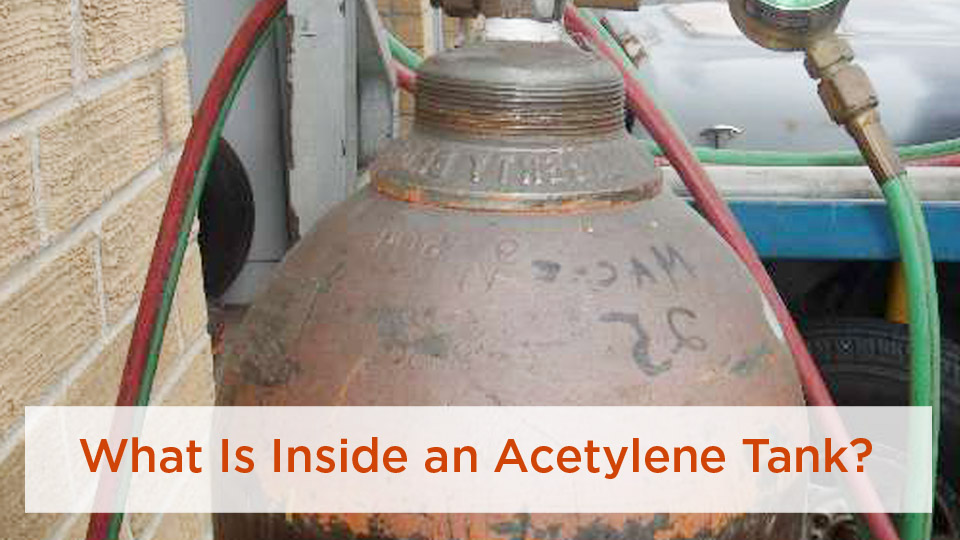
An acetylene cylinder contains acetylene gas, a solvent, a rigid porous mass, a steel shell, a cylinder valve, and one or more pressure-relief devices. The gas is colorless in pure form. Commercial acetylene may have a noticeable garlic-like odor because of trace impurities, but smell must never be used as the only leak-warning method.
| Component | Purpose |
|---|---|
| Acetylene, C2H2 | The fuel gas released from the solvent when the cylinder valve is opened. |
| Solvent | Usually acetone; some cylinder services use another approved solvent such as DMF. It dissolves a large amount of acetylene. |
| Porous mass | Distributes the solvent throughout the shell and prevents one large pocket of free gas from forming. |
| Free-gas space | A limited volume from which gaseous acetylene is withdrawn after it leaves the solvent. |
| Steel shell and valve | Contain the filling and provide the approved connection to a regulator. |
| Pressure-relief devices | Provide fire-related pressure relief according to the cylinder design. Their type and location vary, and they must never be altered. |
Federal cylinder specifications allow porous fillings with different porosity levels and solvent quantities. That means percentage diagrams found online should be treated as illustrations, not as exact recipes for every cylinder. The cylinder must remain sealed and may be filled or repaired only by authorized parties.
Why Acetylene Is Dissolved in a Solvent
Free acetylene can undergo rapid exothermic decomposition when exposed to enough heat, pressure, shock, or an initiating source. The porous mass breaks the internal space into very small passages, while the solvent holds most of the acetylene in solution. Together, they limit the amount of free gas available in one space and slow the spread of decomposition.
OSHA prohibits generating, piping, or using acetylene above 15 psig, except for approved cylinder manifolds and acetylene dissolved in a suitable solvent inside compliant cylinders.
The number shown on the cylinder-pressure gauge is therefore not the same as the pressure delivered to a torch. A charged cylinder can hold dissolved acetylene at a pressure far above 15 psig, while the regulator reduces the outlet pressure to the value required by the approved tip chart.
Note: Under 49 CFR 173.303, the pressure in an applicable DOT acetylene cylinder may not exceed 250 psig at 70°F. That is a maximum charging pressure, not a universal “full” reading for every cylinder at every temperature.
What the Porous Filler Material Does
The rigid filler is permanently installed during manufacturing. Depending on the cylinder design, it may use a calcium-silicate-based or another approved formulation. Its exact construction is controlled by the cylinder manufacturer and must resist sagging, shrinkage, and disintegration during normal service.
The mass distributes the solvent through small pores and helps limit the movement of heat and decomposition inside the cylinder. It reduces risk, but it does not make an acetylene cylinder harmless in a fire, after severe impact, or when its safety devices have been damaged.
This internal construction also explains why acetylene tanks often feel unusually heavy for their gas capacity. Much of the weight comes from the shell, porous mass, valve, and solvent rather than the acetylene itself.
Warning: Never drill, cut, weld, heat, refill, open, or attempt to repair an acetylene cylinder. Return a damaged, leaking, contaminated, or questionable cylinder to the supplier under the supplier’s instructions.
How Acetylene Cylinders Are Made and Filled
In the United States, traditional dissolved-acetylene cylinders are commonly manufactured to DOT-8 or DOT-8AL specifications. Both specifications identify a 250-psig service pressure. DOT-8 cylinders use the construction requirements in 49 CFR 178.59, while DOT-8AL cylinders use 49 CFR 178.60.
For DOT-8 production, a selected cylinder from a lot is tested to at least 750 psig. After that cylinder passes, the remaining cylinders undergo the prescribed 500–600-psig pressure test and must show no defect. These manufacturing tests should not be confused with routine field inspection or cylinder requalification.
During filling, an authorized plant checks the cylinder condition, solvent quantity, porous filling data, tare weight, temperature, and final pressure. Acetylene is added in controlled stages so it can dissolve into the solvent without exceeding the cylinder’s approved charging limit.
The stamped tare weight includes the cylinder shell, porous filling, valve, and solvent, without a removable cap. Users must not add solvent, transfer acetylene between cylinders, or refill a supplier-owned cylinder.
How to Tell How Much Acetylene Is Left
Cylinder pressure is a poor stand-alone contents gauge because acetylene is dissolved in solvent and its pressure changes with temperature. A pressure reading can help identify an empty or nearly empty cylinder, but it cannot reliably show a precise percentage remaining.
The most dependable shop methods are:
- Track consumption: Record the cylinder’s rated cubic-foot capacity and estimated hourly flow from the tip chart.
- Weigh the cylinder: Compare the measured weight with the stamped tare and supplier information. Have the supplier resolve any unexplained difference because solvent loss can affect weight.
- Use supplier data: Cylinder sizes, rated capacities, tare markings, and allowable residual pressure differ.
- Exchange rather than run completely flat: Follow the supplier’s return-pressure instructions so contamination cannot enter the cylinder.
Pro Tip: Mark the installation date and record the torch tip, approximate flow, and operating time. A simple usage log is usually more useful than trying to estimate contents from cylinder pressure alone.
Safe Storage, Movement, and Transport of Acetylene Tanks
Acetylene cylinders must be protected from falling, impact, heat, electrical contact, oil, grease, sparks, and unauthorized handling. Apply these basic rules:
- Keep the valve end up: Store and use the cylinder upright and secure it with a chain, rack, strap, or approved cart.
- Protect the valve: Close the valve before moving the cylinder. Remove regulators and install the valve-protection cap when required, unless the cylinder is secured on an approved special truck designed for connected cylinders.
- Use ventilation: Store cylinders in a dry, protected, well-ventilated location. Do not place them in unventilated lockers, cupboards, trunks, or other small enclosures.
- Separate stored oxygen: Oxygen cylinders in storage must be at least 20 feet from fuel-gas cylinders and combustible materials, or separated by a compliant noncombustible barrier at least 5 feet high with a minimum one-half-hour fire-resistance rating.
- Keep away from hot work: Position cylinders where flame, sparks, slag, and hot metal cannot reach them, or provide a suitable fire-resistant shield.
- Keep oxygen equipment oil-free: Never handle oxygen valves, regulators, or fittings with oily gloves, lubricant, pipe compound, or grease.
- Use a cylinder cart: Do not drag, roll, lift by the cap, drop, or use a cylinder as a support or roller.
The 20-foot oxygen-separation provision applies to cylinders in storage. OSHA distinguishes cylinders in storage from cylinders connected for use, although connected carts must still be secured and protected from fire hazards.
Vehicle Transport
Close the valves, remove regulators when required, fit valve caps, secure cylinders against movement, and keep them valve end up in a vehicle suitable for transporting compressed gas. Provide effective ventilation and follow the cylinder supplier’s instructions and all federal, state, and local transport rules. Do not leave cylinders in a hot or unventilated vehicle.
If a Cylinder Was Laid Down or Knocked Over
Place it valve end up only if it is safe to do so and there is no sign of leakage, heat exposure, valve damage, or severe impact. Do not use it until the solvent has had the stand time required by the cylinder supplier. Required settling times vary, so a universal one-hour rule should not replace supplier instructions.
Step-by-Step Oxy-Acetylene Setup
The following sequence is a general safety framework. The regulator, torch, tip, cylinder, and protective-device manuals control whenever their instructions are more specific.
Products Worth Considering

Gas Regulator: Acetylene Connector (CGA-510, excludes MC/B sizes) & Oxygen Connector (CGA-540). Please check the gas regulator connector before purchase

Complete Kit: Ideal for HVAC & Light Duty Brazing - Designed specifically for light-duty brazing and welding jobs, this kit is your go-to tool for HVAC repairs, metal crafts, and other precision tasks. Its portable design is perfect for on-the-go professionals

Durable Construction: This acetylene torch kit includes 2 durable brass welding tips, providing exceptional corrosion resistance and high-temperature durability. Built to last, this kit is your go-to choice for reliable performance in welding projects. (NOT Suitable for B-type Gas Cylinder)
Before You Begin
- Use the system only after hands-on training.
- Wear suitable shaded eye protection, flame-resistant clothing, gloves, and closed footwear.
- Remove or shield combustible material and keep suitable fire-extinguishing equipment ready.
- Confirm that ventilation is adequate for the base metal, coating, flux, and work area.
- Keep cylinders outside confined spaces and follow confined-space entry procedures.
- Verify that the torch, regulators, hoses, fittings, check valves or flashback arrestors, and tips are approved for acetylene service.
- Secure and inspect both cylinders. Keep them valve end up. Check for obvious dents, scorching, corrosion, damaged outlets, contamination, loose valves, and leaking safety devices. Do not use a questionable cylinder.
- Inspect the equipment. Check regulator seats, gauges, hose ends, O-rings, torch valves, mixer, cutting attachment, and tip. Replace damaged equipment rather than improvising a repair.
- Back out the regulator adjusting screws. Turn them counterclockwise until no spring pressure remains. Close all torch valves before pressurizing the system.
- Clean the connections correctly. Follow the cylinder supplier and equipment manufacturer’s procedure. Current Miller guidance allows momentarily clearing the oxygen outlet while standing aside but specifically says not to crack an acetylene valve; it recommends clean nitrogen, clean air, or an oil-free cloth for the acetylene outlet.
- Attach the correct regulators. Use only the specified cylinder connection. Never force a fitting, use an adapter of uncertain approval, apply oil or grease, or substitute an oxygen regulator for a fuel-gas regulator.
- Install the correct hoses and protective devices. In the U.S., oxygen hose is commonly green with right-hand connections, while fuel hose is commonly red with left-hand hose connections. Cylinder outlet types still vary by cylinder size. T-grade hose is suitable for multiple fuel gases; R and RM grades are intended for acetylene service.
- Open the cylinder valves slowly. Stand to one side of each regulator. Slowly pressurize the oxygen regulator, then open the oxygen cylinder valve fully. Open the acetylene valve only as directed by the supplier or manual—OSHA prefers about three-quarters of a turn and permits no more than one and one-half turns.
- Leak-test the complete system. Apply an approved oxygen-compatible leak-test solution to the cylinder connections, regulators, hose connections, protective devices, torch, and joints. If bubbles appear, close the associated cylinder valve and remove the system from service until the leak is corrected.
- Set pressure from the exact tip chart. Open the relevant torch valve while adjusting delivery pressure, as directed by the manual. Never set acetylene above 15 psig.
- Purge one hose at a time. Purge oxygen and fuel separately for the time specified by the manufacturer. Close each torch valve after its hose is purged so an oxygen-fuel mixture cannot remain in the hose.
- Light with an approved striker. Never use a match, cigarette lighter, or hot metal. Adjust the flame according to the torch manual and application.
Warning: Never use acetylene through a torch, hose, manifold, or other downstream device at more than 15 psig. Do not defeat a regulator stop, replace an acetylene regulator with another gas regulator, or use an unapproved pressure-boosting arrangement.
Why Generic Pressure Tables Are Risky
| Task | Correct Setup Method | Important Check |
|---|---|---|
| Brazing 1/2-inch copper pipe | Select the brazing tip and pressures from the torch manufacturer’s chart. | Match heat input to the joint and filler alloy; avoid overheating the tube and flux. |
| Welding 1/8-inch mild steel | Use the welding-tip chart for the exact torch family and joint design. | Do not heat thin steel to dull red unless an approved procedure specifically requires it. |
| Cutting 1/4-inch carbon steel | Use the cutting-tip chart and set oxygen as instructed, including the cutting-lever procedure. | Confirm that the acetylene cylinder can supply the required flow without exceeding its withdrawal limit. |
| Gouging cast iron | Use only a torch and gouging tip approved for the process. | Cast iron technique and consumables differ from ordinary steel cutting; follow the equipment procedure. |
Normal Shutdown
Follow the shutdown order printed in the torch manual. The correct torch-valve sequence can vary by torch design; for example, current Smith/Miller instructions for the cited systems specify closing the torch oxygen valve and then the fuel valve.
After the flame is extinguished, close both cylinder valves. Bleed the oxygen and fuel sides separately, verify that both gauges return to zero, close the torch valves, and back out both regulator adjusting screws. Install valve caps when the cylinders are disconnected or moved.
Withdrawal Rate and Solvent Carryover
Acetylene must leave the solvent and pass through the porous mass before it can flow from the valve. If demand is too high, the gas can carry solvent droplets into the regulator, hose, torch, or tip.
Older shop guidance commonly used one-seventh of cylinder capacity per hour. Harris now recommends treating one-tenth of rated cylinder capacity per hour as the general maximum unless the supplier approves another rate.
For example, a cylinder rated at 130 cubic feet would have a conservative maximum continuous withdrawal of about 13 cubic feet per hour:
130 cubic feet ÷ 10 = 13 cubic feet per hour
A large heating tip may require much more than that. The safe answer is not to open the regulator farther. Use a properly engineered manifold, a larger approved supply arrangement, or a suitable alternate fuel system.
Possible signs of excessive withdrawal include an unstable or unusually sooty flame, pressure that will not hold under flow, solvent odor, residue, or damage to downstream components. Close the system, allow the cylinder to remain valve end up, and contact the supplier if solvent carryover is suspected.
Pro Tip: Check the tip’s required cubic feet per hour before choosing a cylinder. Delivery pressure and cylinder withdrawal capacity are separate limits; satisfying one does not guarantee that the other is adequate.
Check Valves and Flashback Arrestors
A reverse-flow check valve and a flashback arrestor are not the same device:
- Reverse-flow check valve: Helps prevent oxygen from flowing into the fuel side or fuel from flowing into the oxygen side. It does not necessarily stop flame propagation.
- Flashback arrestor: Is designed to stop a flame from traveling beyond the device. Many arrestors include a built-in check valve and thermal or pressure functions.
Install only the arrangement approved for the torch system. Adding unnecessary devices can restrict flow, and insufficient flow can contribute to overheating, backfire, or poor operation. Protective devices require periodic inspection, testing, and replacement according to their manufacturer.
Products Worth Considering

Occupational Health & Safety

ONE-WAY VALVE: The one-way valve design allows the flashback arrestor to guarantee that gas can merely flow in one direction instead of back flow to prevent accidents.

Gas Service: Oxy/Fuel Torch Mount Flashback Arrestors
Common Acetylene-Tank Mistakes and Fixes
- Exceeding the cylinder withdrawal rate: Compare tip demand with the cylinder’s rated capacity before lighting. Use an approved manifold or another fuel when demand is too high.
- Using or storing the cylinder horizontally: Keep it valve end up and secured. If it was horizontal, obtain the required settling time from the supplier.
- Using generic pressures: Tip numbers are not universal. Use the chart for the exact torch and tip.
- Backing the oxygen valve away from fully open: Open a conventional oxygen cylinder valve slowly and then fully unless the valve manufacturer specifies otherwise.
- Opening the acetylene valve too far: Use the supplier’s instruction; OSHA prefers about three-quarters of a turn and permits no more than one and one-half turns.
- Skipping the leak test: Test every connection with approved solution after assembly or equipment changes.
- Using oil or grease: Keep oxygen equipment completely free from petroleum contamination.
- Mixing fittings or using adapters: Use only approved, gas-specific connections. Never force mismatched threads.
- Ignoring cylinder markings or damage: Return cylinders with illegible markings, expired qualification, severe corrosion, heat exposure, valve damage, or leakage to the supplier.
- Leaving a connected system pressurized: Close the cylinder valves and bleed the system when work is finished or the equipment will be unattended.
Pros and Cons of Acetylene
Acetylene remains useful because it produces a concentrated primary flame and can reach an oxy-acetylene flame temperature of roughly 3,200°C under suitable conditions.
Advantages include:
- Enough concentrated heat for fusion welding of steel with appropriate equipment and technique.
- Cutting, brazing, soldering, heating, straightening, and welding capability from one portable system.
- No electrical power requirement at the point of work.
- Fast, controllable localized heating.
Limitations include:
- A strict 15-psig downstream-use limit.
- Restricted cylinder withdrawal rates because the gas must leave the solvent.
- More demanding cylinder handling and storage precautions than many alternate fuels.
- Higher fuel cost and lower practicality for large heating tips than propane or propylene in many shops.
- Dependence on skilled manual flame and puddle control for sound welds.
| Attribute | Acetylene | Propane |
|---|---|---|
| Flame characteristics | Hot, concentrated primary flame; approximately 3,200°C maximum under suitable oxy-fuel conditions | Lower peak temperature and less heat concentrated in the primary flame |
| Typical strengths | Gas welding, precision brazing, cutting, and localized heating | Economical cutting, preheating, heating, and large heating applications |
| Storage form | Dissolved in solvent held by a porous mass | Liquefied fuel gas stored under pressure |
| Withdrawal concern | Flow limited to prevent solvent carryover | No acetone-withdrawal limit, although cylinder vaporization and equipment-flow limits still apply |
Machine Settings and Joint Preparation
Start with the procedure for the base metal and the chart supplied with the torch tip. Remove oil, paint, rust, plating, moisture, and mill scale from the joint area using a method that does not leave a flammable residue.
For mild-steel gas welding, use a neutral flame and a filler classification suitable for the base metal and service. ER70S-2 can be appropriate in some clean mild-steel applications, but it is not a universal choice for every joint or code requirement.
Do not automatically preheat 1/8-inch steel to a dull-red temperature. Thin material can overheat, distort, oxidize, or lose joint control. Use only the preheat required by the material, thickness, procedure, and service condition.
Cast iron often needs broad, controlled preheat, a suitable filler or brazing alloy, and a slow cooling plan. Aluminum gas welding requires specialized flux, surface preparation, torch control, and filler selection. For critical or structural work, use a qualified welding procedure.
When to Choose Acetylene Over Another Process
Oxy-acetylene is a strong option for field repair, brazing, heating, straightening, small carbon-steel cutting jobs, and situations where electrical power is unavailable. It is also useful for learning heat control because the operator can clearly observe and manipulate the molten puddle.
MIG, flux-cored, stick, or TIG welding usually offers better productivity and easier procedure control for structural fabrication. Plasma cutting is normally a better choice for stainless steel and aluminum because conventional oxy-fuel cutting depends on rapid oxidation of iron and is best suited to carbon and many low-alloy steels.
For large heating jobs, propane, propylene, natural gas, or engineered multi-cylinder systems may provide the required flow more economically and without acetylene solvent-carryover limits.
Flame Adjustment and Filler-Rod Selection
- Neutral flame: The usual starting point for welding mild steel and many general brazing operations. It has a defined inner cone without a visible acetylene feather.
- Carburizing or reducing flame: Contains excess fuel and shows an acetylene feather. It is used only where the material, filler, or procedure calls for it.
- Oxidizing flame: Contains excess oxygen and has a shorter, sharper cone. Some copper-alloy operations may call for it, but it is not the universal setting for cutting.
During oxy-fuel cutting, the preheat flame prepares the steel while a separate high-purity cutting-oxygen jet performs the oxidation and ejects the reaction products. Set the preheat flame and cutting oxygen exactly as the cutting-tip manual directs.
Match the filler alloy and diameter to the base metal, joint design, service requirement, and heat input. Store rods clean and dry. Do not use unidentified wire merely because it fits the joint.
Troubleshooting Acetylene Flow Problems
| Symptom | Possible Cause | Safe Response |
|---|---|---|
| Delivery pressure falls during use | Cylinder withdrawal limit exceeded, nearly empty cylinder, frozen regulator, restricted hose, clogged tip, or undersized equipment | Shut down, verify tip flow demand, inspect equipment, and correct the supply arrangement. Do not raise acetylene above 15 psig. |
| Yellow or unusually sooty flame | Incorrect flame adjustment, insufficient oxygen, dirty tip, low flow, or possible solvent carryover | Extinguish the torch, inspect the tip and settings, and contact the supplier if solvent carryover is suspected. |
| Popping or backfire | Tip touching the work, overheated or loose tip, incorrect pressure, damaged seat, or restricted flow | Shut down using the manual’s procedure. Allow equipment to cool and inspect it before relighting. |
| Whistling, squealing, or flame traveling inside the torch | Possible sustained backfire or flashback | Close the torch and cylinder gas supplies if it is safe, evacuate if necessary, and remove the system from service for inspection. |
| Bubbles during leak testing | Loose, dirty, damaged, or incompatible connection | Close the cylinder valve and correct the connection. Do not operate until the system passes another leak test. |
Leaking or Heat-Exposed Cylinder
If acetylene is leaking, eliminate ignition sources only when that can be done without operating switches or equipment in the suspected gas cloud. Warn others, evacuate the area, call emergency services for a significant leak, and contact the gas supplier. Close the cylinder valve only if it can be reached safely.
Warning: Do not approach, move, vent, or attempt to cool an acetylene cylinder that is hot, scorched, bulging, involved in fire, or suspected of internal decomposition. Evacuate, call emergency services, identify the cylinder from a safe location, and leave cooling or fire-control operations to trained responders.
Integrating Acetylene Into a Modern Welding Shop
Oxy-fuel equipment can complement MIG, TIG, stick, and plasma systems when each process is used within its strengths. Examples include controlled preheating before welding, localized straightening, brazing assemblies, loosening seized parts, and preparing carbon-steel edges.
Preheat temperature must come from the welding procedure, material specification, or engineering requirement. Uncontrolled heating can change mechanical properties, damage coatings, increase distortion, or violate a qualified welding procedure.
Plasma is normally the more versatile cutting process for stainless steel and aluminum. Oxy-fuel remains effective for many carbon and low-alloy steels. High-flow heating should use a supply system engineered for the torch demand rather than overdrawing one acetylene cylinder.
Do not improvise gas piping or fittings. Acetylene can form sensitive compounds with certain metals, including copper, silver, and mercury under unsuitable conditions. Use only equipment, alloys, connections, and piping approved for acetylene service.
Conclusion: Use Acetylene With Respect and a Verified Procedure
An acetylene cylinder works because the gas is dissolved in solvent and distributed through a porous mass. That design allows practical storage, but it does not remove the hazards created by pressure, fuel gas, oxygen, heat, impact, leaks, or excessive withdrawal.
Keep the cylinder valve end up, secure it, respect the one-tenth withdrawal guidance or the supplier’s stricter limit, and never use acetylene above 15 psig downstream. Open oxygen slowly and fully, limit the acetylene-valve opening, leak-test every connection, purge each hose separately, and use the exact tip chart and shutdown procedure for your equipment.
Frequently Asked Questions
Can I store an acetylene tank on its side?
No. Store and use the cylinder valve end up and secure it against falling. If it was accidentally horizontal, stand it upright only when safe and obtain the required settling time from the cylinder supplier before use.
How do I know when an acetylene tank is low?
Pressure alone cannot show an accurate percentage because the gas is dissolved in solvent and pressure changes with temperature. Track operating time and flow, use supplier capacity data, or have the cylinder weighed against its marked tare information.
What should I do if acetylene leaks?
Keep flames and ignition sources away, warn others, evacuate a significant release, and call emergency services and the gas supplier. Close the valve only if it can be reached safely. Do not operate electrical switches inside a suspected gas cloud.
Is acetylene safe for indoor welding?
It can be used indoors only in an authorized hot-work area with adequate ventilation, fire precautions, approved equipment, trained operators, and controls for fumes and combustion gases. Keep cylinders outside confined spaces and follow the applicable confined-space procedure.
Why does my oxy-acetylene flame turn yellow or sooty?
Common causes include too much fuel, insufficient oxygen, a dirty or restricted tip, low delivery flow, or excessive cylinder withdrawal. Shut down, inspect the equipment and chart settings, and contact the supplier if solvent carryover is suspected.
Why can the cylinder be above 15 psig if acetylene use is limited to 15 psig?
Inside an approved cylinder, acetylene is dissolved in solvent and held throughout a porous mass. OSHA’s 15-psig limit applies to generated, piped, or utilized acetylene downstream, not to compliant dissolved-acetylene storage cylinders.
What is the one-tenth acetylene withdrawal rule?
It limits continuous gas withdrawal to about one-tenth of the cylinder’s rated capacity per hour unless the supplier approves another rate. A 130-cubic-foot cylinder would therefore supply about 13 cubic feet per hour under that rule.
Sources
- OSHA 1910.253—Oxygen-Fuel Gas Welding and Cutting and OSHA 1910.252—General Welding Requirements — pressure limits, cylinder handling, storage, fire prevention, PPE, ventilation, and confined-space precautions.
- 49 CFR 173.303—Charging Acetylene Cylinders — porous material, solvent, filling requirements, and the 250-psig charging limit.
- 49 CFR 178.59—DOT-8 Cylinders and 49 CFR 178.60—DOT-8AL Cylinders — service pressure, construction, porous filling, tests, and tare marking.
- Miller—10 Steps for Safe Oxy-Fuel Torch Setup — valve operation, hose selection, protective devices, leak testing, purging, and manufacturer-chart use.
- Harris Products Group—Acetylene Withdrawal Rule — transition from the older one-seventh guidance to the one-tenth rule.
- NOAA CAMEO Chemicals—Acetylene and American Chemical Society—Acetylene — chemical hazards, decomposition, fire behavior, odor, and approximate oxy-acetylene flame temperature.