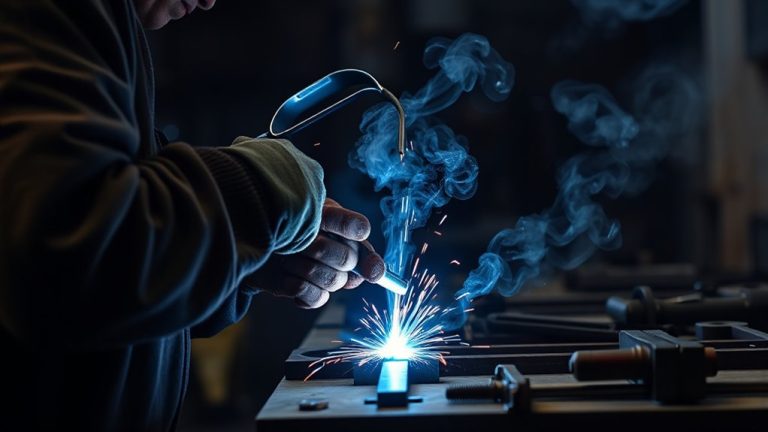
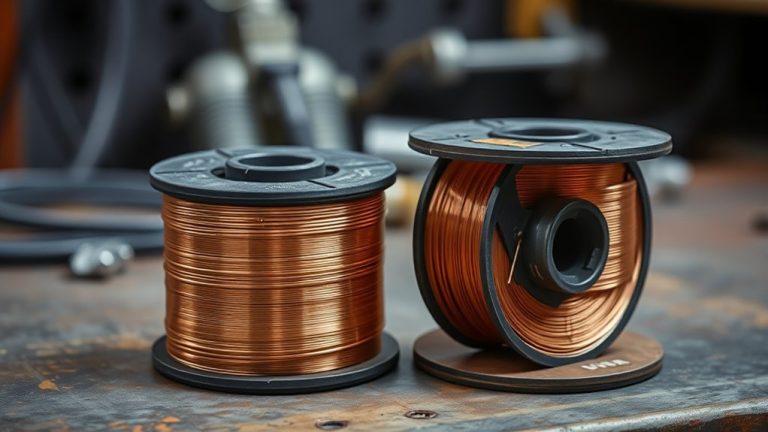
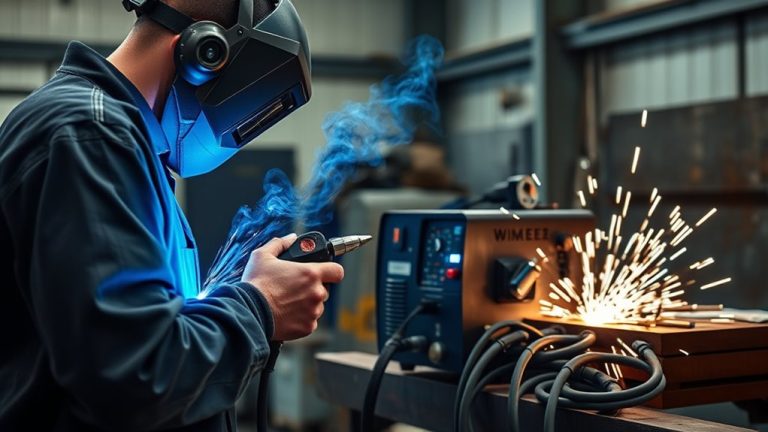
Welding modern aluminum cars is challenging because aluminum moves heat quickly, forms a hard oxide skin, and can lose strength when the wrong repair method is used. You are not just melting two edges together; you are controlling heat, contamination, filler choice, wire feeding, shielding gas, and the vehicle maker’s repair procedure on thin safety-related parts.
Quick Answer
Modern aluminum cars are harder to weld because aluminum pulls heat away fast, melts before it changes color, forms a tough oxide layer, and is more sensitive to contamination than steel. Safe repairs also depend on OEM procedures, aluminum-specific equipment, clean shielding gas, and careful heat control.
Key Takeaways
- Aluminum conducts heat quickly, so the weld puddle can change from cold to burned through in seconds.
- The oxide layer must be removed before welding because it blocks fusion and traps contamination.
- Pulsed MIG helps control heat on thin aluminum, but it does not replace cleaning, proper shielding gas, or OEM repair procedures.
- Some aluminum parts should be riveted, bonded, replaced, or left unwelded if the vehicle maker does not allow a weld repair.
At a Glance
| Time Required | 30 to 90 minutes for cleaning, setup, and test welds before the actual repair; the repair time depends on the part and OEM procedure. |
| Difficulty | Advanced. Aluminum auto repair is not a beginner welding job, especially on structural parts. |
| Tools Needed | OEM repair information, pulsed MIG or TIG equipment, spool gun or push-pull gun, 100% argon, aluminum filler wire, stainless steel brush, solvent, clamps, PPE, ventilation, and fire protection. |
| Cost | Prep supplies are modest, but proper aluminum welding equipment, training, and OEM repair access can cost much more than basic steel welding setup. |
Why Aluminum Car Welding Is Hard
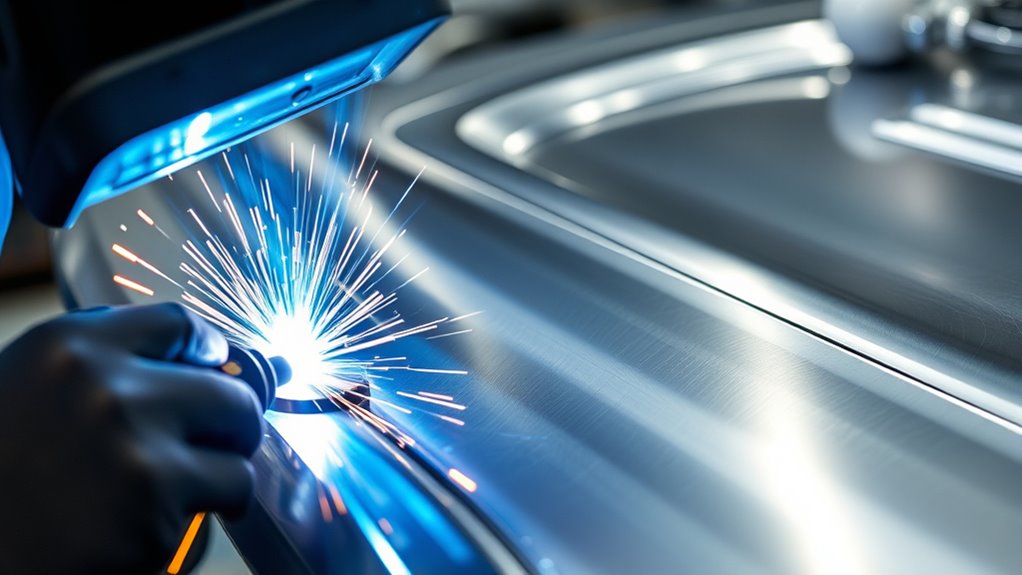
Aluminum car welding is hard because the metal behaves very differently from steel during heat input and filler delivery. You are fighting high thermal conductivity, so heat leaves the joint fast and the puddle can become unstable if your current, travel speed, and torch angle are not controlled.
The surface oxide creates another problem. Aluminum melts at about 660 degrees C, while aluminum oxide melts at a much higher temperature. That means the oxide skin can stay solid while the base metal underneath is already melting. If you do not remove it, the weld can look active while fusion is still poor.
Aluminum does not give you the same warning signs as steel. It can go from too cold to burned through with very little color change.
Thin automotive panels make this harder. A little too much heat can cause burn-through, panel warping, or a wide heat-affected zone. Too little heat can leave lack of fusion. With MIG, soft aluminum filler wire can buckle in the feeder and cause birdnesting, so the wire path, liner, drive roll tension, and gun style matter.
Warning: Do not weld a structural aluminum vehicle part unless the OEM repair procedure allows welding in that location. Some aluminum parts must be replaced, riveted, bonded, or repaired with a specific approved process.
Aluminum’s Heat, Oxide, and Porosity Problems
Because heat drains away so quickly in aluminum, you have to drive enough energy into the joint to form a stable weld pool without overheating the part. This balance is narrow on thin auto body panels. Move too fast and the weld may sit on top. Move too slowly and the panel can warp, sag, or burn through.
Before you strike an arc, remove the oxide layer and any oil, grease, adhesive residue, road film, or moisture. The oxide layer blocks wetting and fusion. Dirt and moisture can feed gas into the weld pool, which can leave pinholes after the weld solidifies.
Porosity is one of the most common aluminum welding defects. Hydrogen can dissolve into molten aluminum and then form voids as the puddle cools. Moisture on the part, contaminated filler wire, poor shielding gas coverage, drafts, long stickout, and dirty base metal all raise the risk.
- Clean every weld edge before welding, not hours earlier.
- Use a dedicated stainless steel brush for aluminum only.
- Keep filler wire dry, clean, and covered when not in use.
- Use steady shielding gas coverage and avoid drafts across the weld.
- Match heat input to thickness, fit-up, joint design, and the OEM procedure.
Pro Tip: Clean in the right order: remove oil and grease first with a suitable solvent, then remove oxide with a stainless brush or approved abrasive. Brushing first can smear contaminants into the aluminum.
What Aluminum Repairs Change in Auto Body Work
When you repair modern aluminum body panels, you need more than steel-welding habits. The material’s oxide layer, low melting point, fast heat movement, and warp sensitivity change the whole repair process. You also need to know whether the part can be welded at all.
OEM Repair Procedures Come First
Modern vehicles use aluminum in body panels, closure panels, crash parts, suspension parts, and mixed-material structures. Not every aluminum part is weld-repairable. Some parts are heat-treated, adhesive-bonded, rivet-bonded, or designed to crush in a specific way during a crash.
Before welding, check the OEM procedure through the vehicle maker’s repair information or an approved repair information source such as I-CAR Repairability Technical Support. The correct procedure may specify replacement, sectioning points, rivets, bonding adhesive, squeeze-type resistance spot welding, MIG brazing, MIG welding, or no heat repair.
If the procedure says not to weld a part, do not “make it work” with extra heat or filler. A weld that looks acceptable can still change crash performance, corrosion protection, or fatigue life.
Repair Training Needs
Repairing aluminum changes auto body work because you cannot rely on steel equipment or steel cleaning habits to produce sound results. Training should cover aluminum metallurgy, OEM repair information, safe hot work, shielding gas, wire feeding, weld inspection, and corrosion protection.
- Clean oxide before each weld area is welded.
- Use aluminum-specific tools and avoid cross-contamination from steel dust.
- Make test welds on matching scrap before welding the vehicle.
- Inspect welds for porosity, cracking, undercut, burn-through, and lack of fusion.
- Restore seam sealer, coatings, and corrosion protection after the repair.
Certification may be required by an OEM program, insurer, employer, or local rule. Even when it is not required, documented training helps protect the repair quality and the technician.
Equipment and Heat Control
Aluminum body repairs demand a different setup than steel work. Soft wire can buckle in a standard MIG liner, so many aluminum MIG repairs use a spool gun or push-pull gun. These shorten or support the wire path and help prevent feeding problems.
Pulsed MIG is often useful because it alternates higher peak current with lower background current. The peak helps detach droplets and drive fusion. The background current lowers average heat input, which helps limit burn-through and distortion on thin aluminum.
TIG gives excellent control on small, thin, or visible repairs, but it is slower and requires more operator skill. For production collision repair, MIG is often chosen when the OEM procedure allows it because it is faster and easier to repeat.
Dedicated Aluminum Work Area
Aluminum repair also changes the shop. Steel grinding dust can contaminate aluminum and create corrosion issues. A proper aluminum setup uses dedicated brushes, abrasives, clamps, files, benches, and vacuum systems when required by the shop program or OEM procedure.
- Do not use the same wire brush on steel and aluminum.
- Keep grinding dust away from cleaned aluminum parts.
- Store filler wire in a clean, dry area.
- Clean clamps and backing bars before they touch the repair area.
- Use separate sanding and cutting tools when the repair program requires it.
MIG, TIG, or Stick for Aluminum Repairs?
Choosing the right process starts with the OEM repair procedure, then the joint, material thickness, access, and required finish. Do not choose the process only because it is the one already sitting in the shop.
| Process | Best Use | Main Limits |
|---|---|---|
| Pulsed MIG | Common choice for many approved aluminum auto repairs because it is repeatable and controls heat better than conventional spray transfer. | Needs correct setup, clean metal, good gas coverage, and aluminum-specific wire feeding. |
| TIG | Good for thin, detailed, low-volume, or appearance-sensitive work when the procedure allows it. | Slower, more skill-dependent, and not always practical for production collision repair. |
| Stick | Rarely useful in modern aluminum car repair. | Too hard to control on thin panels and usually not an OEM-approved auto body process. |
For aluminum car repair, MIG and TIG are the practical choices when welding is allowed. Stick welding belongs outside most modern aluminum body repair conversations.
Why Pulsed MIG Matters for Aluminum Repairs
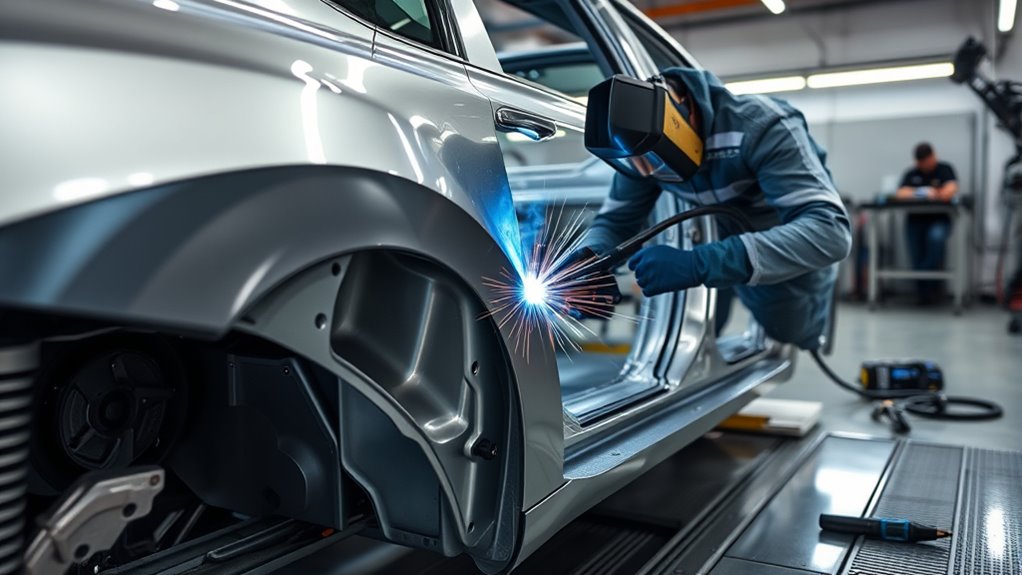
When you use pulsed MIG on an approved aluminum repair, you control heat by alternating peak and background current. That helps limit burn-through and distortion while still giving the arc enough energy to fuse the joint.
Pulsed MIG also helps stabilize transfer with less spatter. This matters on thin automotive aluminum because the part may not tolerate the wider heat input of a poorly tuned conventional setup.
Note: Pulsed MIG is a heat-control tool, not a shortcut. It will not fix dirty aluminum, wet filler wire, poor shielding gas coverage, or a repair that the OEM procedure does not allow.
Heat Control
Heat is the main challenge in aluminum repair. Pulsed MIG gives you a tighter grip by using a high peak current to transfer metal and a low background current to cool the puddle between pulses. This lowers average heat input while keeping the arc active.
- You reduce warping and help preserve panel shape.
- You improve arc stability when settings are tuned correctly.
- You lower burn-through risk on thin sections.
- You make repeatable welds easier after proper test welds.
This lets you direct energy into the joint without flooding the whole panel with heat.
Better Aluminum Fusion
Pulsed MIG can improve fusion because the peak current drives penetration while the background current gives the puddle time to settle. The result can be a cleaner weld with less heat damage when the metal is clean and the gas envelope is stable.
| Control | What It Does | Why It Matters |
|---|---|---|
| Peak current | Drives droplet transfer and penetration. | Helps avoid cold lap and lack of fusion. |
| Background current | Lowers average heat input. | Reduces burn-through and distortion risk. |
| Shielding gas | Protects the molten weld from air and moisture. | Helps prevent porosity and black soot. |
You can tune pulse frequency, wire feed speed, voltage trim, and travel speed for the alloy and thickness. Always confirm settings on scrap of similar thickness before welding the vehicle.
How to Clean and Set Up Aluminum Parts
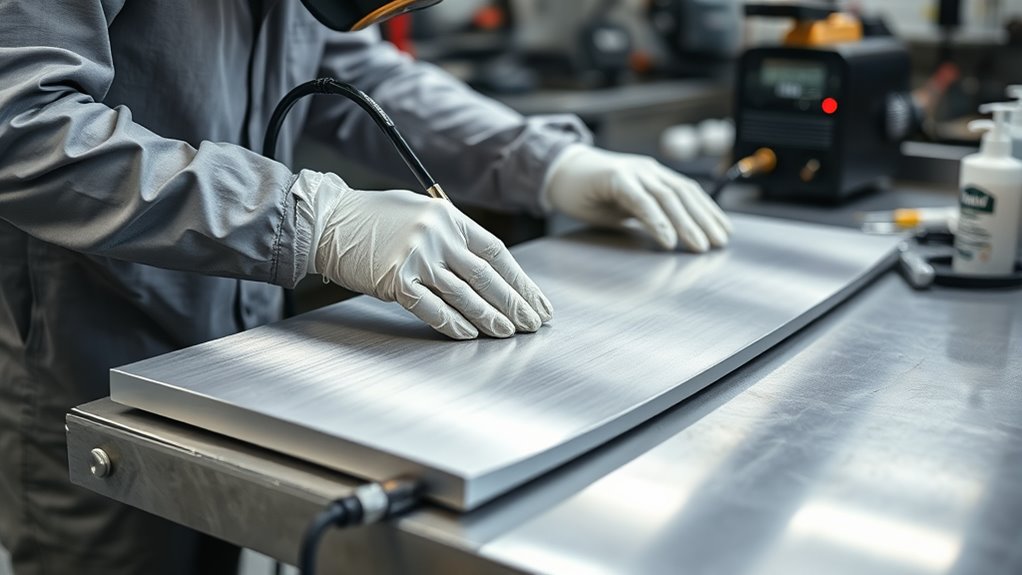
Before you strike an arc, thoroughly clean aluminum with a suitable solvent such as acetone or isopropyl alcohol to remove oils, grease, and organic residue. Let the solvent flash off fully before welding. Follow the product label and shop safety rules because many cleaning products are flammable.
Next, remove the oxide layer with a dedicated stainless steel brush, approved abrasive, or OEM-approved method. Do not gouge the panel. On thin aluminum, aggressive grinding can remove too much material and create a weak edge before the weld even starts.
- Confirm the repair procedure: Check whether welding is allowed and where the joint can be placed.
- Remove coatings: Clear paint, sealer, adhesive, and corrosion protection only as far as the procedure requires.
- Degrease first: Remove oil and residue before brushing.
- Remove oxide: Brush or abrade with aluminum-only tools.
- Fit the joint tightly: Gaps make burn-through and lack of fusion more likely.
- Clamp and support: Use clean clamps and backing where approved.
- Run test welds: Use matching scrap and inspect before welding the car.
Preheating may help on thicker aluminum, but it must be controlled. Too much preheat can widen the heat-affected zone and damage nearby adhesives, coatings, trim, wiring, or heat-sensitive vehicle parts.
Filler Wire, Shielding Gas, and Machine Setup
Aluminum filler wire must match the base material, joint type, and OEM repair procedure. Common filler families include 4043 and 5356, but you should not pick one by habit. The wrong filler can create cracking, corrosion, or strength problems.
Most aluminum MIG and TIG repairs use argon shielding gas. Helium blends may be used in some thick aluminum work, but they are not a casual substitute for correct procedure and machine setup. Keep gas flow steady, avoid drafts, and check for leaks before blaming the machine.
- Spool gun: Shortens the wire path and helps soft aluminum wire feed smoothly.
- Push-pull gun: Supports the wire from the feeder and the gun, which helps on longer leads.
- Drive rolls: Use aluminum-suitable rolls and avoid crushing the wire.
- Liner and contact tip: Use parts sized for aluminum wire and keep them clean.
- Wire storage: Keep wire dry and covered to reduce contamination.
Note: A smooth wire feed is part of weld quality. If the wire shaves, slips, or nests in the feeder, stop and fix the feed path before welding the vehicle.
Common Aluminum Weld Defects and Fixes
Most aluminum weld problems come from heat, contamination, fit-up, gas coverage, or wire feeding. Use the defect as a clue instead of turning up the machine and hoping for the best.
| Defect | Likely Cause | Fix |
|---|---|---|
| Porosity | Moisture, dirty metal, contaminated wire, drafts, or poor shielding gas coverage. | Clean again, protect the gas envelope, check flow, inspect hoses, and store wire properly. |
| Burn-through | Too much heat, slow travel, wide gaps, or thin unsupported metal. | Reduce heat input, improve fit-up, use backing if approved, and shorten arc time. |
| Lack of fusion | Oxide left in place, low heat, wrong angle, or fast travel. | Remove oxide, tune settings, adjust travel speed, and confirm penetration on test coupons. |
| Black soot | Poor shielding, long arc, dirty metal, or wrong torch angle. | Improve gas coverage, shorten stickout, clean the part, and check cup or nozzle condition. |
| Birdnesting | Soft wire buckling from poor liner, too much drive tension, or a restricted tip. | Use a spool gun or push-pull gun, correct liner, proper rolls, and correct contact tip size. |
| Cracking | Wrong filler, high restraint, poor joint design, or alloy sensitivity. | Follow the OEM filler and procedure, reduce restraint where allowed, and test before repair welding. |
| Distortion | Excess heat input or poor weld sequence. | Use short welds, proper clamping, pulsed settings, and cooling time between welds. |
Inspection and Corrosion Protection After Welding
A finished aluminum weld should not be judged by appearance alone. A smooth bead can still hide porosity, lack of fusion, or cracks. Follow the inspection method required by the repair procedure. That may include visual inspection, destructive testing on practice coupons, bend tests, peel tests, or other checks used by the shop program.
After welding, restore the corrosion protection system. Aluminum does not rust like steel, but it can corrode, especially where dissimilar metals, road salt, trapped moisture, or damaged coatings are present. Replace seam sealer, cavity wax, primers, coatings, and isolation materials as required by the OEM procedure.
- Do not grind welds flush unless the procedure allows it.
- Do not leave bare aluminum exposed after repair.
- Keep steel fasteners isolated from aluminum where the procedure requires it.
- Document test welds, settings, materials, and technician steps when the repair program requires records.
Aluminum Welding Safety and Shop Requirements
Once your aluminum parts are cleaned and fitted, you need a shop setup that controls risk as tightly as it controls heat. OSHA lists welding, cutting, and brazing standards for general industry, maritime, and construction, and OSHA 1910.252 covers general requirements such as fire precautions, eye protection, protective clothing, ventilation, and first-aid availability.
| Control | Requirement | Why It Matters |
|---|---|---|
| Ventilation | Use local exhaust or general ventilation suitable for the job. | Keeps fumes and gases away from your breathing zone. |
| PPE | Wear a correct-shade helmet, gloves, flame-resistant clothing, and eye protection. | Protects against arc rays, heat, sparks, and burns. |
| Fire safety | Remove or shield combustibles and keep fire protection ready. | Welding sparks and heat can ignite hidden materials. |
| Vehicle hazards | Protect wiring, fuel lines, batteries, airbags, trim, glass, and electronics. | Modern vehicles contain heat-sensitive and safety-critical systems. |
| Emergency response | Keep a fire extinguisher and first-aid equipment available. | Speeds response if a burn, fire, or exposure occurs. |
Warning: Never weld near fuel vapors, battery gases, undeployed restraint-system parts, or hidden combustibles. Inspect both sides of the work area and protect adjacent panels before striking an arc.
Frequently Asked Questions
Why is aluminum welding so difficult?
Aluminum is difficult to weld because it conducts heat quickly, forms a hard oxide layer, melts without much color change, and is sensitive to contamination. Thin automotive aluminum adds another challenge because too much heat can cause burn-through or distortion, while too little heat can leave poor fusion.
Does welding aluminum make it weaker?
It can. Some aluminum alloys, especially heat-treated alloys, can lose strength in the weld and heat-affected zone. The amount depends on the alloy, temper, process, filler, heat input, and any post-weld treatment. That is why OEM repair instructions matter so much on vehicle structures.
Why is aluminum sometimes called not weldable?
Most common aluminum alloys can be welded with the right process, but not every aluminum car part should be welded during repair. Some alloys crack easily, some lose strength from heat, and some vehicle parts are designed for replacement, bonding, riveting, or sectioning instead of weld repair.
Is MIG or TIG better for aluminum car repair?
MIG, especially pulsed MIG, is often better for approved production auto repairs because it is faster and repeatable. TIG gives more hand control and can be better for small or appearance-sensitive work. The best choice is the one specified by the OEM repair procedure.
Can you use flux-core or stick welding on aluminum car panels?
Not for normal modern aluminum auto body repair. Thin aluminum panels need clean shielding gas, tight heat control, and an approved process. Flux-core and stick methods are usually too hard to control for this work and are not the standard choice for structural aluminum vehicle repairs.
What should you check before welding an aluminum car part?
Check the OEM repair procedure, part material, allowed sectioning location, joining method, filler requirement, corrosion protection steps, and safety hazards behind the panel. Then make test welds on similar material before welding the vehicle.
Conclusion
When you weld modern aluminum cars, you are managing heat, oxide, contamination, wire feeding, and repair procedure limits at the same time. Aluminum can reward clean prep and controlled technique, but it punishes shortcuts quickly. Check the OEM procedure first, clean the metal properly, use the right equipment, run test welds, and protect the repair after welding. That is how you reduce porosity, burn-through, distortion, and unsafe repairs.
Sources
- OSHA 1910.252 General Requirements — supports welding fire safety, PPE, ventilation, eye protection, and first-aid guidance.
- OSHA Welding, Cutting, and Brazing Standards — supports the safety-standard context for welding work.
- I-CAR Repairability Technical Support — supports the need to check repair procedures and vehicle-specific collision repair information.
- American Welding Society Standards — supports the welding standards context for aluminum and automotive welding work.
- PubChem: Aluminum — supports aluminum material property references.
- PubChem: Aluminum Oxide — supports aluminum oxide material property references.