Disclosure: As an Amazon Associate, we earn from qualifying purchases. If you click a link on this page and make a purchase, we may receive a small commission at no extra cost to you.
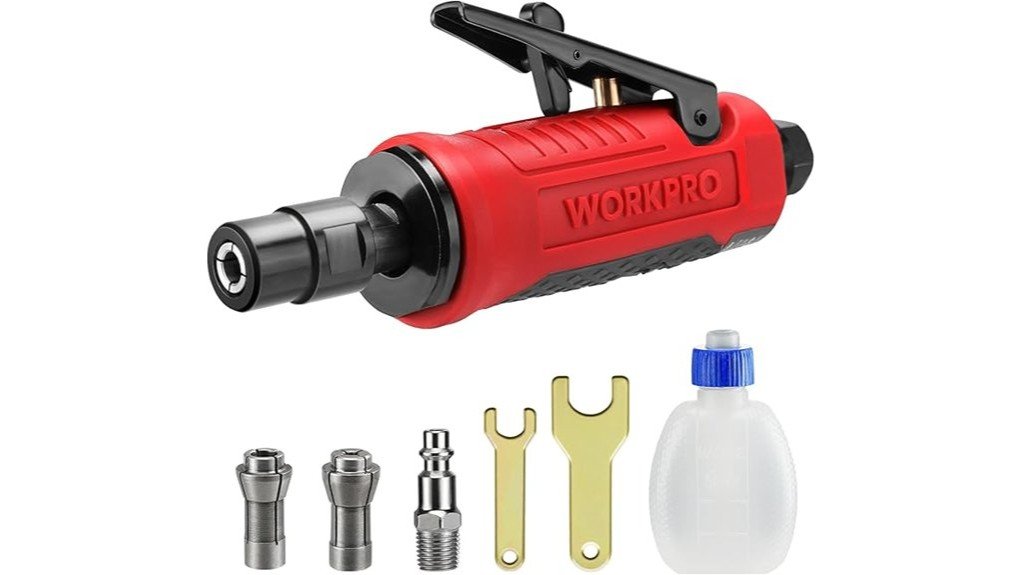
Small grinding jobs need control, speed, and a tool that does not tire your hand after a few minutes. The WORKPRO 1/4-Inch Pneumatic Die Grinder is built for buyers who already use compressed air and want a lightweight tool for grinding, deburring, shaping, and polishing. Its biggest strengths are the 0.72 lb body, 25,000 RPM speed, and support for both 1/4-inch and 1/8-inch collets. The main tradeoff is simple: this is an air-powered tool, so its performance depends on your compressor setup, air pressure, accessory choice, and maintenance routine.
Quick Verdict
Rating: 8.2/10, Recommended with caveats
Best For: DIY users, garage projects, light fabrication work, detail grinding, and small-space finishing tasks.
Bottom Line: The WORKPRO Pneumatic Die Grinder is a strong value if you want a light, fast air die grinder for detail work. Skip it if you need a cordless tool, a heavy-duty industrial grinder, or a setup that does not require an air compressor.
| Specification | Detail |
|---|---|
| Brand | WORKPRO |
| Model | 1/4-Inch Pneumatic Die Grinder |
| Product type | Air-powered die grinder |
| Tool weight | 0.72 lb |
| Maximum speed | 25,000 RPM |
| Operating pressure | 90 psi (6.3 bar) |
| Air consumption | 85.5 L/min (3 cfm) |
| Collet compatibility | 1/4-inch and 1/8-inch collets |
| Safety features | Trigger latch and rear exhaust design |
| Best use | Precision grinding, deburring, shaping, smoothing, and polishing with compatible accessories |
| Maintenance note | Regular oiling and air inlet filter checks are needed for consistent performance |
What Is the WORKPRO 1/4-Inch Pneumatic Die Grinder?
The WORKPRO 1/4-Inch Pneumatic Die Grinder is a compact air tool designed for fast rotary work in a garage, shop, or home workspace. It runs at 25,000 RPM and uses compressed air instead of a battery or wall outlet. That makes it useful when you want steady power for smaller grinding and finishing jobs.
The tool supports both 1/4-inch and 1/8-inch collets, so you can use a wider range of compatible grinding stones, carbide burrs, polishing points, and other die grinder accessories. This flexibility matters if you move between metal cleanup, surface prep, small edge shaping, or detailed finishing.
At 0.72 lb, the grinder is light enough for one-handed control, which is helpful when you need precision. It is not a stand-alone tool, though. You still need a suitable air compressor, proper fittings, air tool oil, and safe accessories rated for the tool speed.
Before You Buy: This is a pneumatic tool, not a cordless electric grinder. Make sure your compressor can support 90 psi and about 3 cfm, and use only accessories that match the collet size and are rated for high-speed die grinder use.
Who Should Buy It?
Best For
- DIY buyers who already own an air compressor and want a compact grinder for small jobs.
- Garage users who need a light tool for deburring, smoothing, or cleaning up tight areas.
- Hobby and repair work where 1/4-inch and 1/8-inch accessory compatibility adds useful flexibility.
Skip If
- You do not have a compressor or do not want to manage hoses, fittings, and air tool oil.
- You need a heavy-duty grinder for large weld cleanup, thick material removal, or long industrial shifts.
- You want exact verified details on warranty, included accessories, or material construction before purchase.
Design and Ergonomics
The biggest design advantage is the low 0.72 lb weight. A lighter die grinder is easier to guide around small edges, grooves, brackets, and tight work areas. If you often work with one hand while steadying the part with the other, this weight can make the tool feel less tiring during detailed work.
The article-supported design also highlights an ergonomic grip. That matters because die grinders depend on control, not just speed. A secure grip helps you keep the bit steady, reduce small slips, and make cleaner passes when smoothing burrs or shaping a small surface.
The compact body is better suited for precision work than large-area material removal. If you expect this tool to replace a full-size angle grinder, you may be disappointed. Think of it as a detail tool for smaller contact points, corners, and cleanup tasks.
Performance and Air Requirements
The WORKPRO die grinder runs at 25,000 RPM, which is fast enough for many grinding, deburring, and polishing tasks when paired with the right accessory. High speed helps with cleaner finishing, but it also means accessory choice matters. The bit, burr, stone, or polishing point should be rated for high RPM use.
The listed operating pressure is 90 psi (6.3 bar), and the listed air consumption is 85.5 L/min (3 cfm). These numbers are important because a weak compressor can make the tool feel inconsistent. If the compressor cannot keep up, speed may drop during longer cuts or grinding passes.
For best results, use a clean air supply, check your hose and fittings for leaks, and avoid running the tool above the pressure recommended for it. More air pressure does not automatically mean better results. It can increase wear and create a safety risk.
Collet Compatibility and Accessory Use
This WORKPRO die grinder supports 1/4-inch and 1/8-inch collets. That gives you access to common die grinder accessory sizes and makes the tool more flexible for different jobs. A 1/4-inch shank is common for many burrs and stones, while 1/8-inch compatibility can help with smaller, more detailed accessories.
The right accessory depends on the material and the job. Carbide burrs are often used for shaping and deburring metal. Grinding stones can help with small cleanup tasks. Polishing points or sanding accessories may help with finishing, depending on the surface and the accessory rating.
Always seat the shank correctly in the collet and tighten it securely before use. A loose accessory can wobble, damage the workpiece, or become unsafe at high speed.
Safety Features and Before You Use It
The tool includes a trigger latch that helps reduce the chance of accidental startup. That is useful on a fast air tool because the accessory begins spinning quickly once the trigger is engaged. Even with a latch, treat the tool as active whenever it is connected to an air line.
The rear exhaust design sends air away from your face. This can make the tool more comfortable to use and may help keep exhaust airflow from blowing directly toward your work area. You should still wear eye protection, hearing protection, and a dust mask or respirator when the material or accessory creates dust or debris.
Disconnect the air supply before changing accessories, checking the collet, or storing the tool. Keep this tool away from children and anyone who has not been trained to use compressed-air equipment.
Pro Tip: Add a few drops of air tool oil before use if the manual calls for it, then run the grinder briefly to distribute the oil before starting your work.
Maintenance and Care
Regular maintenance is one of the easiest ways to keep this tool working well. The article-supported care routine includes oiling the grinder and checking the air inlet filter for contamination. Dirty air, low lubrication, or moisture in the line can reduce performance and shorten tool life.
After use, disconnect the tool from the air supply, remove the accessory, and wipe the body clean. Store it in a dry area away from grinding dust, metal chips, and moisture. If the tool starts to feel weak, rough, or inconsistent, check your air pressure, hose connections, filter, lubrication, and accessory condition before assuming the grinder has failed.
How It Performs in Real Use
For Metal Deburring
The 25,000 RPM speed makes this die grinder useful for cleaning sharp edges, small burrs, and rough spots on metal parts. The lightweight body helps you guide the bit with more control than a bulky grinder. It works best when you make steady, light passes instead of forcing the accessory into the material.
For Detail Grinding in Tight Areas
The compact, light design helps when you need to reach brackets, holes, inside edges, and small work areas. The tool is not meant for large surface grinding, but it can be handy for cleanup work where a larger grinder feels awkward.
For Polishing and Surface Prep
With compatible polishing or surface-prep accessories, the grinder can help smooth small areas before finishing. Because it is a high-speed tool, start carefully and test on a scrap area when the finish matters. The wrong accessory can remove material faster than expected.
For Wood Shaping and Hobby Work
The tool can be used for some woodworking tasks with compatible bits, but you should use caution. Wood can grab, burn, or create dust when worked at high speed. If you use it on wood, keep the passes light, secure the workpiece, and wear proper eye and respiratory protection.
Setup Tips Before First Use
Before connecting the tool, check that your compressor can provide the needed pressure and airflow. The listed requirements are 90 psi and 85.5 L/min (3 cfm). If your compressor is too small, the grinder may run well for short bursts but lose power during longer use.
Inspect the collet, accessory shank, air hose, and fittings before each session. Use the correct collet size for the accessory, tighten it firmly, and pull gently on the accessory before starting the tool. Never use a cracked grinding stone or an accessory that looks bent, damaged, or poorly seated.
Let the tool reach speed before touching the workpiece. Use light pressure and let the accessory do the cutting or polishing. Pushing too hard can slow the tool, overheat the accessory, and make the result less controlled.
Common Mistakes to Avoid
One common mistake is using this tool with the wrong accessory speed rating. A 25,000 RPM grinder needs accessories that can safely handle high speed. Another mistake is treating the die grinder like a large angle grinder. It is better for detail work, not heavy stock removal.
Skipping oil and air-line checks is another problem. Pneumatic tools depend on clean, lubricated air. A little preventive care can help the grinder run smoother and last longer.
Pros and Cons
Pros
- 0.72 lb body makes one-handed control easier during detailed work.
- 25,000 RPM speed supports fast grinding, deburring, and polishing with compatible accessories.
- 1/4-inch and 1/8-inch collet compatibility gives you more accessory flexibility.
- Trigger latch helps reduce accidental startup risk.
- Rear exhaust design directs airflow away from the operator’s face.
Cons
- Requires a compressor that can support the listed 90 psi and 3 cfm air demand.
- Not ideal if you want a cordless or plug-in electric grinder.
- Warranty, material details, and included accessory list should be checked on the current product page before buying.
Is It Worth the Price?
The WORKPRO 1/4-Inch Pneumatic Die Grinder looks like a strong value for the price if you already own a suitable compressor and need a light, fast rotary tool for small jobs. The combination of 25,000 RPM, 0.72 lb weight, and two collet sizes gives it more flexibility than a very basic single-collet air grinder.
You will get the most value from it if you use it for garage repair, fabrication cleanup, small shaping, and finishing work. It is not the best fit if you need a premium industrial tool for all-day professional use or if you do not want to maintain an air-powered setup.
How It Compares to Alternatives
Compared with larger industrial die grinders, this WORKPRO model is easier to handle and better suited for light detail work. A heavier shop-grade grinder may be better for long professional sessions, but it may feel less comfortable for small, precise tasks.
Compared with electric rotary tools, this pneumatic grinder depends on an air compressor but can deliver strong high-speed performance in a compact body. Compared with right-angle die grinders, the straight design can be better for open access and direct-line control, while an angled grinder may be better in cramped areas where a straight body is hard to position.
Frequently Asked Questions
Does the WORKPRO Pneumatic Die Grinder need an air compressor?
Yes. This is a pneumatic die grinder, so it needs compressed air to run. The article-supported specs list 90 psi and 85.5 L/min (3 cfm), so check your compressor rating before buying.
What collet sizes does it support?
The grinder supports 1/4-inch and 1/8-inch collets. That gives you more flexibility when using compatible burrs, grinding stones, polishing points, and other high-speed accessories.
Is it good for beginners?
It can work for beginners who already understand basic air tool safety. Start with light pressure, secure the workpiece, wear eye and hearing protection, and disconnect the air supply before changing accessories.
Can you use it for woodworking?
You can use it for some wood shaping or smoothing tasks with the right accessory, but it is not a substitute for every woodworking tool. Use light passes, control dust, secure the piece, and avoid bits that are not rated for the grinder speed.
How loud is this die grinder?
The article does not provide a verified decibel rating. Pneumatic die grinders are commonly loud during use, so hearing protection is a smart safety step.
What maintenance does it need?
The article-supported maintenance steps include oiling the grinder and checking the air inlet filter for contamination. Clean air, proper lubrication, and dry storage can help the tool run more consistently.
Is it a replacement for an angle grinder?
No. This die grinder is better for small grinding, deburring, shaping, and polishing jobs. Use an angle grinder for larger surface grinding, heavy cutting, or broad material removal.
Who should skip the WORKPRO 1/4-Inch Pneumatic Die Grinder?
Skip it if you do not have a compressor, need a cordless tool, or want verified details on every included accessory before purchase. It is also not the best choice for heavy industrial grinding or long daily production use.
The Bottom Line
The WORKPRO 1/4-Inch Pneumatic Die Grinder is worth considering if you want a light, fast air grinder for small grinding, deburring, shaping, and finishing jobs. Its 0.72 lb weight, 25,000 RPM speed, and dual collet compatibility are the main strengths, while compressor dependence and limited verified listing details are the main caveats. Buy it if you already have a compatible air setup, but skip it if you need a cordless grinder or heavy-duty industrial performance.