Disclosure: As an Amazon Associate, we earn from qualifying purchases. If you click a link on this page and make a purchase, we may receive a small commission at no extra cost to you.
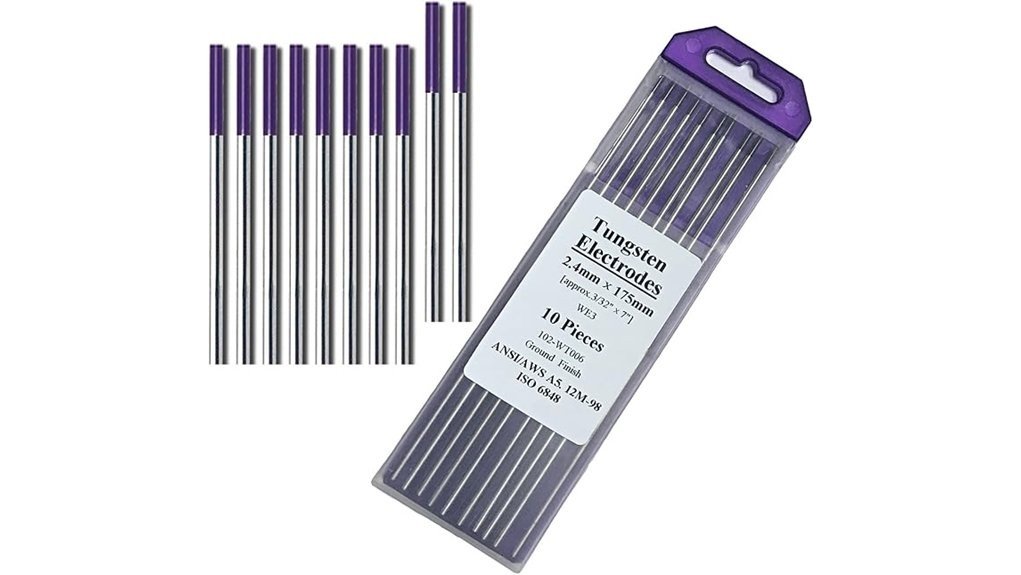
Choosing TIG tungsten electrodes is not just about grabbing the right diameter. You also need a stable arc, low burn-off, and a composition that fits the metals you weld most often. The Zinger TIG Welding Electrodes are 3/32 x 7-inch rare earth blend electrodes designed for TIG welding on AC and DC settings. This review helps you decide whether this purple EWG-style tungsten set is a smart fit for aluminum, titanium alloy, stainless steel, and general shop work, while also pointing out where you should verify the listing before buying.
Quick Verdict
Rating: Recommended with caveats, 8.4/10
Best For: TIG welders who want a non-radioactive 3/32-inch tungsten option for mixed AC and DC work.
Bottom Line: Zinger TIG Welding Electrodes make the most sense if you want a rare earth blend electrode that supports reliable arc starts and steady performance across common TIG setups. The main tradeoff is that standards, packaging quantity, and exact listing details should be checked on the current Amazon page before you use them for code-sensitive or professional work.
| Specification | Detail |
|---|---|
| Brand | Zinger |
| Product type | TIG welding tungsten electrodes |
| Electrode style | Rare earth blend, EWG-style, purple color |
| Size | 3/32 x 7 inches |
| Composition note | Non-radioactive tungsten blend, according to the provided article details |
| Polarity support | AC and DC TIG welding settings |
| Common material use | Aluminum, titanium alloys, stainless steel, and other TIG-compatible metals when matched to the right setup |
| Best use | Shop, hobby, fabrication, repair, and mixed TIG welding practice |
| Storage note | Store dry, clean, and protected from contamination |
| Standards note | The original article references AWS, ISO, and ANSI-related standards, but buyers should confirm current markings and documentation before code work. |
What Are Zinger TIG Welding Electrodes?
The Zinger TIG Welding Electrodes are 3/32-inch by 7-inch tungsten electrodes made for TIG welding. The article identifies them as a rare earth blend, purple EWG-style electrode designed to support stable arc starts, low burn-off, and use across AC and DC welding setups.
This size is a common choice for many TIG welders because 3/32-inch tungsten can cover a useful middle range of jobs. It is not as small as a 1/16-inch electrode for very thin detail work, and it is not as large as a 1/8-inch electrode for heavier amperage work. That makes this Zinger set a practical option if you want one electrode size for regular aluminum, stainless steel, titanium alloy, and general TIG practice.
The main reason to consider this product is the rare earth blend. Compared with older thoriated tungsten options, a non-radioactive rare earth blend can be more appealing if you want to avoid thorium while still getting consistent arc behavior. You should still match the electrode to your machine settings, cup size, shielding gas, base metal, and welding technique.
Before You Buy: Confirm the current Amazon listing details, package count, and any standards markings before using these electrodes for inspected, structural, or code-required welding. Do not rely only on a product summary for compliance-sensitive work.
Who Should Buy It?
Best For
- TIG welders who want a 3/32-inch tungsten electrode for everyday shop use.
- Buyers who prefer a non-radioactive rare earth blend instead of thoriated tungsten.
- Hobbyists and professionals who weld different metals and need AC and DC compatibility.
Skip If
- You need a verified certification document before purchase for a strict welding procedure.
- You only weld very thin sheet metal and prefer a smaller 1/16-inch electrode.
- You need a known package quantity and cannot confirm it on the current listing.
Performance Features of Zinger TIG Welding Electrodes
The biggest performance claim for these Zinger electrodes is steady arc-striking. A clean, reliable start matters because TIG welding depends on control. If the arc wanders or starts poorly, you can lose puddle control, contaminate the tungsten, or spend extra time regrinding the tip.
The rare earth blend is also intended to reduce burn-off during normal TIG use. Lower burn-off can help the electrode last longer between sharpening sessions, especially when your amperage range and tungsten diameter are matched correctly. You still need to avoid dipping the tungsten into the weld puddle or overloading the electrode with too much current.
Because the electrodes are listed for both AC and DC settings, they are useful for welders who switch between aluminum and other metals. AC is commonly used for aluminum TIG welding, while DC is common for stainless steel and many steel or alloy jobs. This does not mean one electrode can fix poor setup, but it does make the set more flexible for mixed shop use.
Materials and Build Quality
The Zinger electrodes are described as a rare earth blend tungsten electrode with a purple color marking. Purple tungsten is commonly associated with EWG-style rare earth blends, which are used as a flexible alternative to single-additive tungsten types. For a buyer, the practical benefit is simple: you get one electrode style that can handle a wider range of TIG tasks when used within its limits.
The 7-inch length gives you enough material for repeated sharpening and normal torch setup. You can grind the tungsten to the point profile your job needs, then shorten it over time as the tip wears or becomes contaminated. That makes proper grinding and storage just as important as the electrode brand itself.
Fit and Compatibility
These electrodes are 3/32 inch in diameter, so you need TIG torch parts that fit 3/32-inch tungsten. That usually means matching the collet, collet body, gas lens, and cup setup to the electrode size. If your torch is currently set up for 1/16-inch or 1/8-inch tungsten, check your consumables before buying.
The article positions these electrodes for aluminum, titanium alloys, and stainless steel. In real use, compatibility depends on your welder, polarity, shielding gas, cup setup, base metal, joint design, and amperage. The electrode helps create the arc, but the final weld quality still depends on your full TIG setup and technique.
Pro Tip: Before your first weld, confirm that your collet and collet body match 3/32-inch tungsten. A loose or mismatched torch setup can cause poor arc control even when the electrode itself is fine.
Compliance and Standards: What to Verify
The original product article mentioned AWS D1.1, AWS A5.12, ISO 9001, and ANSI Z49.1. Those references can matter for buyers who work in professional environments, but you should confirm the current product packaging, seller listing, and manufacturer documentation before relying on any standards claim.
For casual shop use, this may not be a major issue. For structural welding, inspected work, employer procedures, or school requirements, it is a serious buying point. Check whether your instructor, welding inspector, or procedure allows EWG-style rare earth tungsten electrodes before using them on required work.
How It Performs in Real Use
For Aluminum TIG Welding
For aluminum work, the AC compatibility is the key reason to consider these electrodes. A stable tungsten can help you maintain a cleaner arc and better puddle control, especially when the material is clean and the machine settings are dialed in. You still need proper cleaning, correct shielding gas flow, and the right filler rod for the base metal.
For Stainless Steel Practice
For stainless steel, these electrodes should appeal to buyers who want a clean DC arc and repeatable starts. The 3/32-inch size is useful for many common practice joints, brackets, repairs, and fabrication tasks. Keep your tungsten sharp and clean, because stainless TIG work shows contamination quickly.
For Titanium Alloy Work
The article lists titanium alloys as a compatible use case, but titanium welding is less forgiving than many shop metals. Shielding, cleanliness, and heat control are critical. If you weld titanium, treat the electrode as only one part of the process and follow a proven welding procedure.
For Hobby and Garage Projects
For hobby welding, these electrodes are practical because they support a wide range of TIG learning projects. You can use them to practice arc starts, bead control, cup angle, and travel speed. The main limit is that beginners may still need trial and error to match tip shape, amperage, and material thickness.
How to Use Them Correctly
Start by checking that your TIG torch is set up for 3/32-inch tungsten. Install the correct collet and collet body, tighten the back cap gently, and make sure the electrode sits straight. If the tungsten is off-center or loose, the arc can feel unstable.
Grind the tungsten lengthwise, not around the electrode. A lengthwise grind helps the arc track more predictably toward the workpiece. Use a clean grinding wheel when possible, because contamination from other metals can affect your weld.
For AC aluminum work, your tip preparation may differ from what you use on DC stainless work. Follow your welder manual and the electrode packaging for the safest starting point. If the electrode overheats, balls too much, splits, or burns back quickly, reduce amperage, check polarity, or move to a more suitable tungsten size.
Storage and Maintenance
Tungsten electrodes should stay dry, clean, and separated from shop grime. Store them in a tube, sealed container, or marked holder so they do not pick up oil, dust, grinding debris, or moisture. Clean storage helps reduce arc problems that can look like a bad electrode but are really contamination issues.
After each job, inspect the tip. If it is rounded, split, dipped, or discolored from contamination, regrind it before the next weld. A few seconds of prep can save you from poor starts, wandering arcs, and wasted material.
Safety Notes Before Welding
The article describes these electrodes as non-radioactive, which is one reason many welders consider rare earth blends. That does not remove normal TIG welding hazards. You still need a welding helmet with the correct shade, gloves, protective clothing, ventilation, and safe handling of hot metal.
Grinding tungsten creates dust, so avoid breathing grinding debris and keep your grinding area clean. Never weld near flammable materials, fuel vapors, or unknown coatings. If you are welding professionally, follow your employer’s safety procedure and the product documentation.
Pros and Cons
Pros
- 3/32 x 7-inch size fits many common TIG welding jobs.
- Rare earth blend design supports AC and DC use.
- Non-radioactive composition is appealing if you want to avoid thoriated tungsten.
- Useful for mixed metal work, including aluminum, stainless steel, and titanium alloy applications.
- Long 7-inch electrode length allows repeated sharpening over time.
Cons
- Current package count and documentation should be confirmed on the seller page.
- Not the best single choice if your work needs a smaller or larger tungsten diameter.
- Standards claims should be verified before code-required or inspected welding.
Is It Worth the Price?
Zinger TIG Welding Electrodes look like a strong value for the price if you need a flexible 3/32-inch tungsten option for regular TIG welding. The biggest value comes from the rare earth blend design, AC and DC support, and broad use across common TIG materials.
This set is worth considering if you want one tungsten style for practice, repair, and general fabrication rather than buying several specialty electrode types right away. It is not the best fit if you need verified documentation before purchase or if your work always calls for a different diameter.
How It Compares to Alternatives
Compared with thoriated tungsten, these Zinger electrodes may appeal to buyers who want a non-radioactive option. Compared with ceriated or lanthanated tungsten, the rare earth blend approach is aimed at broad use rather than one narrow specialty. If you already know your shop prefers a specific tungsten type, follow that requirement first.
The Zinger set makes the most sense if you want a flexible 3/32-inch electrode for mixed AC and DC TIG work. If you weld only thin sheet, a 1/16-inch option may feel easier to control. If you run higher amperage on thicker metal, a 1/8-inch electrode may be more suitable.
Frequently Asked Questions
What materials are compatible with Zinger TIG Welding Electrodes?
The article lists aluminum, titanium alloys, and stainless steel as suitable materials. Your final results still depend on the welder settings, shielding gas, filler rod, base metal condition, and your TIG technique.
Are these electrodes good for beginners?
Yes, they can work for beginners who are learning TIG welding with a compatible torch setup. Beginners should focus on correct tungsten grinding, clean base metal, safe PPE, and matching the electrode to the machine settings.
What torch parts do I need for 3/32-inch tungsten?
You need torch consumables that fit 3/32-inch electrodes, including the correct collet and matching collet body or gas lens. If your torch is set up for another tungsten size, change the consumables before use.
How should I store these welding electrodes?
Store them in a dry, clean container or electrode tube. Keeping tungsten away from oil, dust, moisture, and grinding debris helps protect arc quality and reduces contamination problems.
Can I use these for both AC and DC TIG welding?
The article describes these electrodes as suitable for both AC and DC welding settings. That makes them useful for welders who switch between aluminum work and DC welding on stainless steel or other TIG-compatible metals.
Do these replace thoriated tungsten?
They may be a practical alternative if you want a non-radioactive rare earth blend electrode. Still, you should follow your welding procedure, school requirement, employer policy, or inspector guidance when a specific tungsten type is required.
How long will one electrode last?
Electrode life depends on amperage, material, tip shape, grinding quality, and how often the tungsten gets contaminated. A 7-inch electrode can usually be sharpened many times, but dipping it into the puddle or overheating it will shorten its useful life.
Who should skip these electrodes?
Skip them if you need verified standards paperwork before purchase or if your work requires a different tungsten diameter. You should also choose a specific tungsten type if your welding procedure calls for one.
The Bottom Line
The Zinger TIG Welding Electrodes are a good fit if you want a 3/32 x 7-inch rare earth blend tungsten electrode for mixed TIG welding on AC and DC settings. They are best for welders who value stable arc starts, non-radioactive composition, and broad material use, but they are not ideal if you need confirmed documentation or a different electrode size. The verdict is recommended with caveats, especially for hobby, garage, and general shop TIG work.