Disclosure: As an Amazon Associate, we earn from qualifying purchases. If you click a link on this page and make a purchase, we may receive a small commission at no extra cost to you.
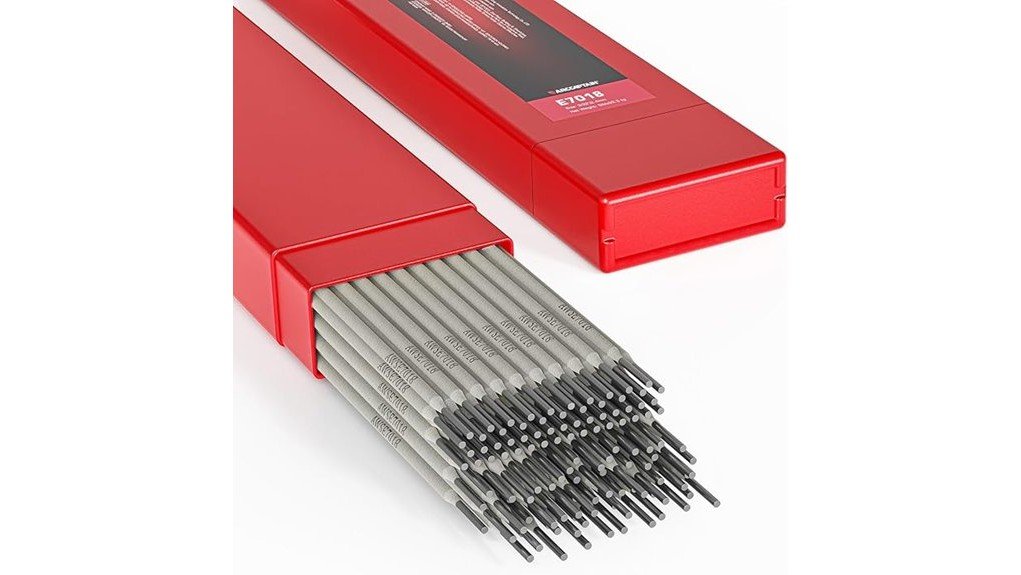
A low-hydrogen electrode can improve weld quality, but only when the rod matches your machine, steel, joint, and storage setup. The ARCCAPTAIN E7018 Welding Rod reviewed here is the 3/32-inch, 14-inch, 5 lb version made for carbon and low-alloy steel. This review explains its verified specifications, suitable welding positions, amperage range, storage needs, and practical limits. It is a solid option for prepared steel and controlled stick welding, but it is not the most forgiving rod for dirty metal, thin sheet, or casual storage in a damp shop.
Quick Verdict
Rating: 8.6/10
Best For: Welders who need a 3/32-inch low-hydrogen E7018 electrode for prepared carbon steel, structural fabrication, equipment repair, and position welding.
Bottom Line: The ARCCAPTAIN E7018 offers a stable arc, low-spatter operation, all-position capability, and 70,000 PSI-class tensile strength. Its main tradeoff is that moisture control, clean base metal, and correct amperage are essential to getting the performance buyers expect from an E7018 rod.
ARCCAPTAIN E7018 at a Glance
| Specification | Detail |
|---|---|
| Brand | ARCCAPTAIN |
| Classification | E7018 |
| Product type | Shielded metal arc welding electrode, also called a stick welding rod |
| Electrode design | Low-hydrogen, iron powder electrode |
| Diameter | 3/32 inch, about 2.4 mm |
| Length | 14 inches |
| Package weight | 5 lb |
| Tensile-strength class | 70,000 PSI |
| Current and polarity | AC or DCEP, also called DC electrode positive or reverse polarity |
| Manufacturer amperage range | 80 to 110 amps for the 3/32-inch size |
| Welding positions | Flat, horizontal, vertical, and overhead |
| Suitable materials | Carbon steel, low-alloy steel, and some medium-carbon steel applications |
| Claimed performance | Stable arc, smooth welds, high deposition efficiency, and minimal spatter |
| Storage requirement | Keep sealed and dry, then follow the package or welding procedure for opened-electrode storage |
Key Takeaways
- The verified 3/32-inch version is listed for 80 to 110 amps, AC or DCEP.
- Its low-hydrogen design is useful only when the electrodes stay dry and clean.
- The rod supports all-position welding, but vertical and overhead work require practiced puddle control.
- It is better suited to prepared carbon or low-alloy steel than rusty metal or thin sheet.
What Is the ARCCAPTAIN E7018 Welding Rod?
The ARCCAPTAIN E7018 is a consumable stick electrode for shielded metal arc welding. This listing covers rods that measure 3/32 inch in diameter and 14 inches long, packed in a 5 lb container. The E7018 classification identifies a 70,000 PSI tensile-strength class, all-position capability, and a low-hydrogen iron powder coating.
That combination is aimed at welders who need smoother, stronger welds on carbon and low-alloy steel. ARCCAPTAIN lists structural steel, frames, bridges, ships, pipelines, power equipment, and other high-integrity steel work among the intended applications. Those examples describe the electrode category, not permission to perform code-controlled work without the required qualification, procedure, inspection, or engineering approval.
The product works with AC or DCEP. This makes it compatible with many transformer and inverter stick welders, provided the machine can hold a stable arc in the recommended amperage range.
Before You Buy: E7018 performance depends on moisture control. A rod that has absorbed moisture may no longer provide the low-hydrogen behavior you bought it for, especially on critical or highly restrained joints.
Who Should Buy It?
Best For
- Welders repairing or fabricating prepared carbon-steel brackets, frames, supports, and equipment parts.
- Users who need a 3/32-inch E7018 rod for flat, horizontal, vertical, or overhead welding.
- Shops that can keep opened electrodes dry and follow a defined welding procedure.
Skip If
- You mainly weld thin sheet metal and need the easiest possible heat control.
- You often weld through rust, paint, oil, or poor surface preparation.
- You cannot protect low-hydrogen electrodes from humidity after opening the package.
Low-Hydrogen Coating and Electrode Design
The defining feature is the low-hydrogen iron powder coating. In suitable procedures, low-hydrogen electrodes help limit diffusible hydrogen in the weld deposit, which reduces one contributor to delayed cracking. The benefit matters most on restrained joints, thicker steel, higher-strength steel, and work where weld integrity is more important than fast rough repair.
The iron powder coating also supports deposition efficiency. In practical terms, the rod can place filler metal at a useful rate while maintaining a smooth puddle when the current, arc length, work angle, and travel speed are controlled.
Low hydrogen does not mean no preparation is needed. Wet rods, contaminated steel, poor fit-up, rapid cooling, or an unsuitable procedure can still produce defects or cracking.
Arc Stability, Spatter, and Bead Control
ARCCAPTAIN describes the electrode as producing a smooth, stable arc with minimal spatter. That is consistent with the buyer appeal of E7018: a quieter arc, a controlled puddle, and a bead that can require less cleanup than a more aggressive digging rod.
The 3/32-inch diameter is useful when you want more control than a larger 1/8-inch electrode. It can fit smaller joints and lower-amperage machines more easily, though it still creates too much heat for many thin-sheet jobs.
Starts and restarts require clean technique. Remove slag from the crater before restarting, keep the arc short, and avoid whipping the rod far ahead of the puddle. E7018 is normally run with a steady drag or slight weave, depending on the joint and position.
Strength and Crack Resistance
The “70” in E7018 identifies a 70,000 PSI minimum tensile-strength class under the applicable electrode classification. That does not mean every weld automatically reaches a safe structural result. Final strength depends on the base metal, joint design, penetration, weld size, preheat, interpass temperature, technique, and inspection.
The low-hydrogen coating is the main reason this rod is more appropriate than general-purpose electrodes for many strength-sensitive steel jobs. You still need to use dry electrodes and follow any procedure requirements for preheat, storage, exposure time, and reconditioning.
Amperage, Polarity, and Welder Compatibility
ARCCAPTAIN lists 80 to 110 amps for the 3/32-inch version. Start near the lower or middle part of that range on thinner material or out-of-position work, then make a test bead and adjust. A rod that repeatedly sticks may need more amperage, while excessive undercut, a very fluid puddle, or heavy spatter can point to excessive current or poor technique.
The electrode is listed for AC or DCEP. DCEP means the electrode holder connects to the positive terminal. Do not assume DC electrode negative is acceptable unless the product label or an approved procedure specifically allows it.
Check that your welder can deliver stable output in the recommended range. Small 120-volt machines may run a 3/32-inch E7018, but performance can depend on input power, duty cycle, extension-cord size, and the machine’s open-circuit voltage.
Pro Tip: Run two or three short test beads on matching scrap. Change only one variable at a time, such as amperage, arc length, or travel speed, so you can see which adjustment improves the bead.
Welding Positions and Technique
The listing supports flat, horizontal, vertical, and overhead welding. Flat and horizontal positions are the easiest places to learn the rod because gravity makes the puddle easier to manage.
For vertical-up welding, use a short arc and controlled pauses at the sides of the joint. For overhead work, reduce the puddle size, keep the arc tight, and wear complete protective clothing because slag and molten metal can fall directly toward you.
All-position capability describes what the electrode can do under proper conditions. It does not remove the need for skill, a qualified welding procedure, or position-specific practice.
How It Performs in Real Use
For General Steel Repair
On clean brackets, frames, supports, and equipment parts, the 3/32-inch rod gives useful puddle control without the heat and deposition rate of a larger electrode. It is a better match for sound, prepared steel than for a fast repair over heavy rust or paint.
For Structural Fabrication
The low-hydrogen design and 70,000 PSI tensile class make E7018 a common category for structural work. For any load-bearing, permitted, or code-controlled project, use the specified electrode classification and follow the approved procedure rather than relying on a retail product description.
For Pipe and Pressure-Related Work
ARCCAPTAIN lists pipelines and pressure-related applications among the uses for its E7018 rods. Those jobs require qualified welders, approved procedures, correct consumable handling, and inspection. This 5 lb package may suit practice, maintenance, or procedure-approved work, but the application determines whether the exact electrode is acceptable.
For Vertical and Overhead Practice
The smaller diameter can make puddle size easier to control while you practice out-of-position beads. Expect more difficulty than flat welding, and stop if slag begins to run ahead of the puddle or the bead loses its shape.
How to Use It Correctly
Prepare the joint first. Remove paint, oil, moisture, loose rust, and heavy scale from the weld area. Confirm the steel type, joint design, fit-up, and required weld size before striking an arc.
Set the machine to AC or DCEP and begin within the verified 80 to 110 amp range. Tack the joint, run a short test bead when practical, and keep the arc length close to the diameter of the electrode core. Maintain a consistent work angle and travel angle so slag stays behind the puddle.
Chip and brush all slag between passes. Do not weld over trapped slag, porosity, cracks, or an incomplete restart. For multipass work, follow the required interpass cleaning and temperature limits.
Storage and Rod Maintenance
Keep unopened rods in their sealed container and store them away from damp floors, exterior walls, open doors, and large temperature swings. Condensation can occur when cold electrodes enter a warm, humid shop, even if they were not directly exposed to water.
After opening the package, follow the instructions printed on the container or the welding procedure used for the job. Critical low-hydrogen work may require controlled heated storage and strict exposure limits. A basic plastic tube may protect rods from dirt and splashes, but it is not automatically a substitute for a rod oven or specified storage method.
Do not guess at re-drying temperatures. Excess heat can damage some electrode coatings, and underheating may not restore a moisture-exposed rod. Use the manufacturer’s instructions or your shop procedure.
Safety Notes Before Welding
Stick welding exposes you to electric shock, hot metal, sparks, ultraviolet and infrared radiation, fire, and welding fumes. Wear an appropriate helmet, safety glasses, dry welding gloves, flame-resistant clothing, and closed leather footwear. Keep combustible material away from the work area and have suitable fire protection available.
Use adequate ventilation and keep your head out of the fume plume. Coatings, plated metal, stainless alloys, and unknown scrap can create additional hazards. Do not weld on tanks, drums, pipes, or closed containers unless they have been properly identified, cleaned, vented, and cleared by a qualified person.
Trailer hitches, lifting points, pressure systems, vehicle frames, structural members, bridges, and similar critical parts should be welded only under an appropriate design and procedure. A strong electrode cannot compensate for an unsafe joint design or unqualified repair.
Pros and Cons
Pros
- Verified 3/32-inch diameter, 14-inch length, and 5 lb package.
- Low-hydrogen iron powder design for strength-sensitive steel work.
- Listed for all welding positions.
- Works on AC or DCEP in an 80 to 110 amp manufacturer range.
- Smooth, stable arc and low-spatter performance when used correctly.
Cons
- Moisture exposure can undermine the low-hydrogen advantage.
- Less forgiving than E6011 on dirty, painted, or rusty steel.
- Not the easiest choice for thin sheet metal or first-time stick welders.
Is It Worth the Price?
The ARCCAPTAIN E7018 looks like a strong value for welders who want a manageable 5 lb supply instead of a large industrial container. The verified size, all-position rating, AC or DCEP compatibility, and low-hydrogen design cover the main features buyers expect from this electrode category.
You get the most value when you already have a capable stick welder, clean steel, and a dry storage plan. The purchase makes less sense when your typical work involves thin sheet, dirty farm repairs, or electrodes left open in a humid garage.
Availability and seller offers can change, so compare the current package details before ordering and confirm that the selected option is the 3/32-inch, 5 lb version reviewed here.
How It Compares to Alternatives
An E6011 rod is usually easier to use on less-clean steel and provides a more forceful digging arc, which can suit rough repair work. An E6013 is often considered for light fabrication and thinner material because it can run with a softer arc and easier bead appearance on suitable machines.
The ARCCAPTAIN E7018 makes more sense when your priority is a smooth low-hydrogen deposit on prepared carbon or low-alloy steel. It is the controlled-work option of the three, not the universal answer for every steel condition.
Frequently Asked Questions
What is the ARCCAPTAIN E7018 Welding Rod best used for?
It is best suited to prepared carbon and low-alloy steel where you want a smooth, low-hydrogen weld deposit. Typical uses include fabrication, steel frames, equipment repair, and procedure-approved structural or pipe work.
What size and package are reviewed here?
This review covers the 3/32-inch diameter, 14-inch long rods sold in a 5 lb package. Check the selected Amazon option before ordering because other diameters or package sizes may appear on related listings.
What amperage should you use for the 3/32-inch rod?
ARCCAPTAIN lists 80 to 110 amps for its 3/32-inch E7018. Use that as the starting window, then adjust for the machine, joint, position, steel thickness, and instructions on the container.
Can you run these rods on AC and DC welders?
Yes. The product is listed for AC or DCEP, which is DC electrode positive and is often called reverse polarity. Confirm the lead connections and output capability in your welder manual before starting.
Can ARCCAPTAIN E7018 rods weld vertically or overhead?
Yes, the rod is listed for all positions. Vertical and overhead welds need a short arc, smaller puddle, controlled travel, complete protective clothing, and enough practice to keep slag behind the weld pool.
How should you store opened E7018 rods?
Follow the package directions or the approved welding procedure. Keep the rods dry, limit exposure to humid air, and use controlled heated storage when the job requires it. Do not assume a closed plastic tube meets low-hydrogen storage rules for critical work.
Is this a good rod for thin or rusty metal?
It is not the easiest option for either condition. The 3/32-inch size can still overheat thin sheet, and E7018 performs best on cleaned steel. E6011 may be more practical for some dirty repair work, while another process may give better control on very thin metal.
Who should skip this welding rod?
Skip it if you lack dry electrode storage, mostly weld contaminated steel, or need a rod for thin sheet. It is also a poor substitute for the exact consumable and procedure required on a code-controlled job.
The Bottom Line
The ARCCAPTAIN E7018 Welding Rod earns an 8.6/10 for welders who need a verified 3/32-inch, 5 lb low-hydrogen electrode for prepared carbon or low-alloy steel. Its strongest points are its stable arc, all-position use, 70,000 PSI tensile class, and AC or DCEP compatibility.
Buy it when you can run the recommended 80 to 110 amps, clean the joint properly, and keep the rods dry. Skip it when thin sheet, dirty steel, uncontrolled storage, or a different procedure calls for another electrode.
Ready to Buy?
Confirm the 3/32-inch, 5 lb option and check the latest seller details before you decide.