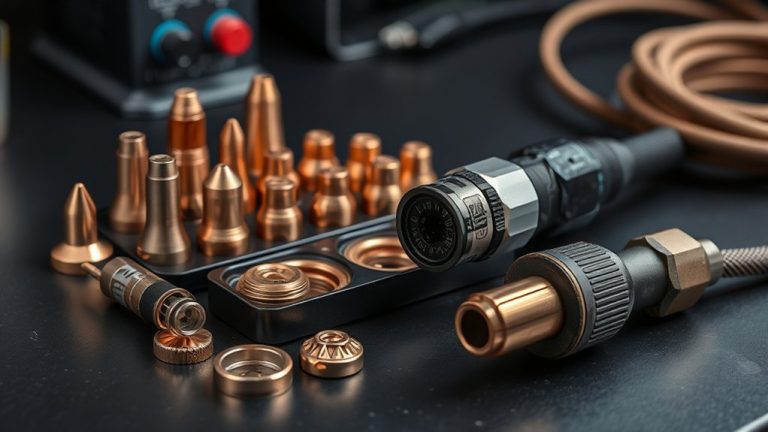
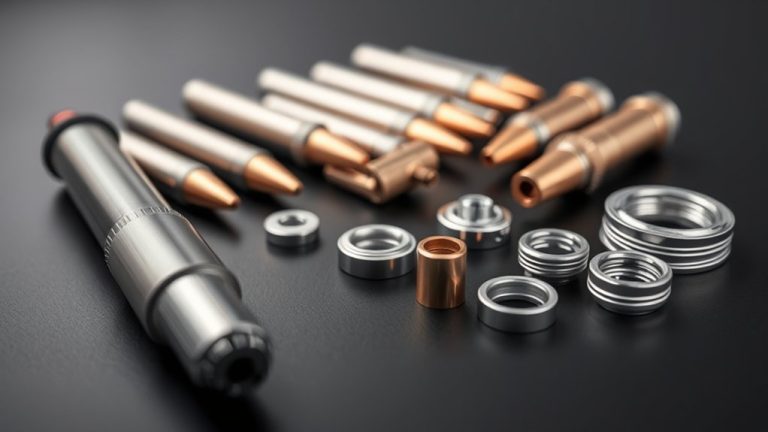
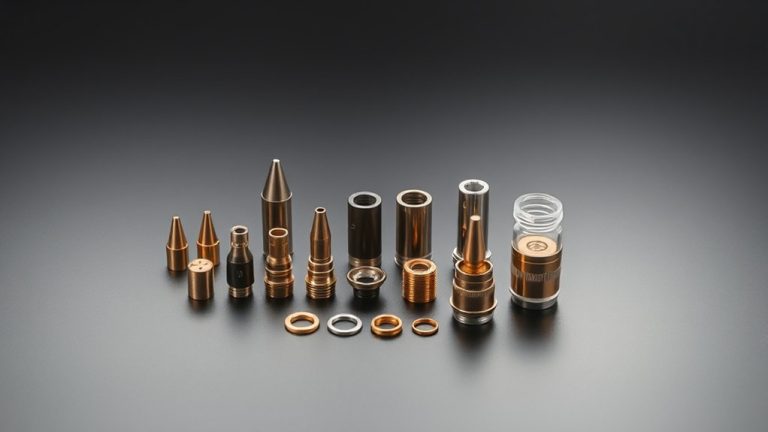
You’re right to ask if plasma cutter torches are interchangeable, because the answer hinges on ignition method (HF vs. blowback), amperage match, connector pinout, and control logic. Manufacturers lock designs to specific power sources, and mismatches can trigger faults, poor arc stability, or damage. Consumable geometry and gas flow also matter for cut quality and duty cycle. Before swapping, you’ll want objective checks—part numbers, wiring diagrams, standards—because the risks aren’t obvious at first glance.
How Plasma Torches Work and Key Components
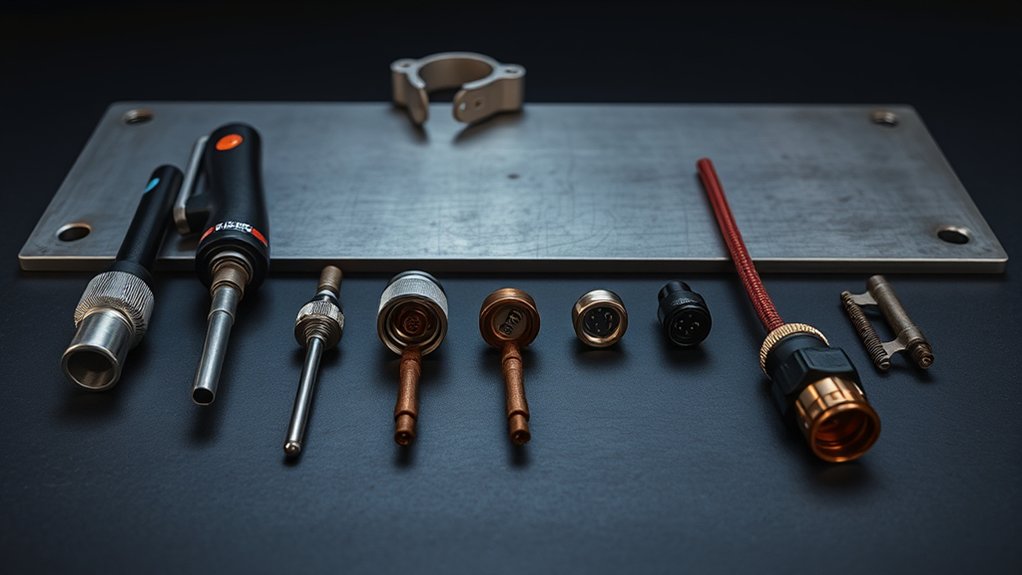
Precision starts with the arc: a plasma torch drives a high‑voltage DC current through a compressed gas to ionize it, forming a constricted plasma jet that melts and ejects metal for fast, accurate cuts.
Precision starts with the arc: high‑voltage plasma ionizes gas, forging a jet that slices metal cleanly and fast.
You initiate and sustain a plasma arc between the electrode (cathode) and the workpiece (anode). The nozzle orifice hydraulically constricts the arc, increasing current density and heat flux for narrow kerf and low heat‑affected zone. The shield cap isolates and cools the nozzle, stabilizing flow and improving edge quality.
You should monitor electrode wear because emitter recession increases arc voltage, widens the kerf, and degrades cut angularity.
Pair the electrode with a nozzle sized to your amperage; mismatches elevate thermal load and accelerate consumable failure. Maintain clean, dry gas per manufacturer spec to avoid double‑arcing and spatter.
Inspect and replace consumables at defined thresholds, store them dry, and torque parts per guidance to maintain conductivity, gas sealing, and repeatable cut performance.
Types of Torches and Starting Methods (HF vs. Blowback)
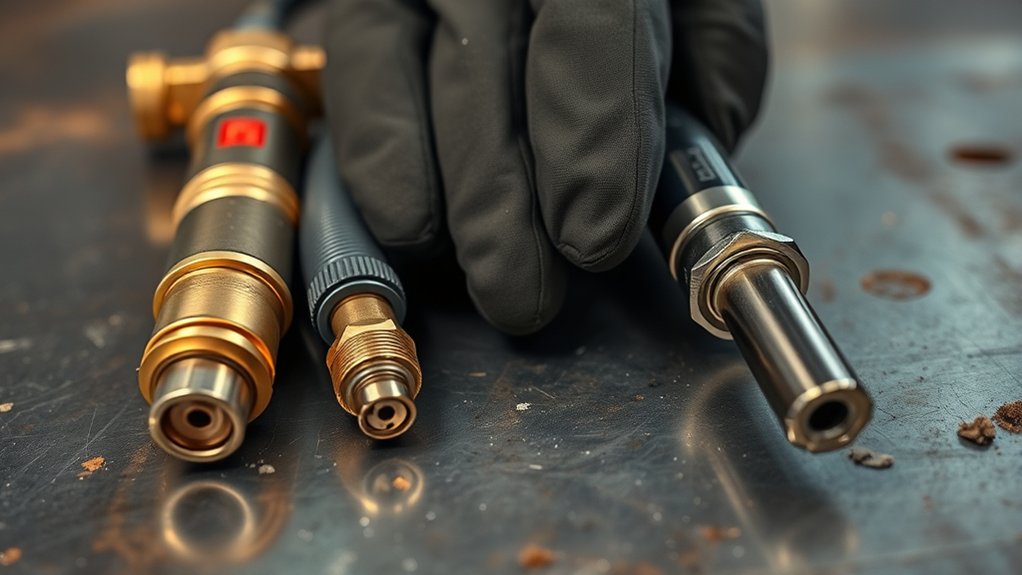
You should understand High-Frequency (HF) start basics: it uses high-voltage bursts to strike the arc, which can yield cleaner initiations but demands machine-side HF-compatible circuitry and proper EMI shielding per manufacturer specs.
In contrast, blowback start relies on a mechanical electrode lift to form a pilot arc, improving simplicity and reducing EMI but constraining torch compatibility to units designed for that method.
When evaluating interchangeability, verify starting-method match, trigger/air connections, and amperage rating against the cutter’s specifications.
High-Frequency Start Basics
Although both aim to ionize gas and establish a pilot arc, HF-start and blowback-start plasma torches initiate differently and aren’t universally interchangeable.
With HF start, a high-voltage, high-frequency signal ionizes the gas column without contacting the workpiece—delivering high frequency advantages like reduced tip wear and improved arc stability.
You must match an HF torch to a power source designed for HF; otherwise, you risk misfires, EMI faults, or poor cut quality.
Verify pinouts, pilot-arc circuits, and shielding per the torch and machine manuals before swapping.
- A crisp, contactless spark tracing through shielding gas.
- A steady pilot arc forming before metal ever heats.
- Clean pierce points with minimal dross.
- Stable current transfer across thin gauge material.
- Cabling routed to minimize electromagnetic interference.
Blowback Start Compatibility
Curiously, blowback-start torches offer the broadest interchange potential, but only when their starting method, amperage class, and connector/wiring standards align with the host power source. You’ll see blowback advantages in cleaner EMI behavior, simpler pilot circuits, and more interchangeable models across brands—if specs match. Always verify torch pinout, pilot-arc control, gas solenoid location, and duty-cycle rating before swapping.
| Criterion | Requirement |
|---|---|
| Starting method | Blowback-only pairing; no HF mix |
| Amperage class | Match rated A (e.g., 30/45/65) |
| Connector/pinout | Identical plug, pins, pilot lead |
| Control logic | Torch switch, pilot sense compatible |
| Grounding/EMI | Meets machine’s EMC design |
HF-start torches aren’t drop-in due to spark-gap circuitry and grounding paths. Misaligned wiring can disable pilot or damage boards. Check manuals, schematics, and consumable compatibility to confirm a safe, standards-compliant interchange.
Compatibility Factors: Amperage, Wiring, and Connector Styles
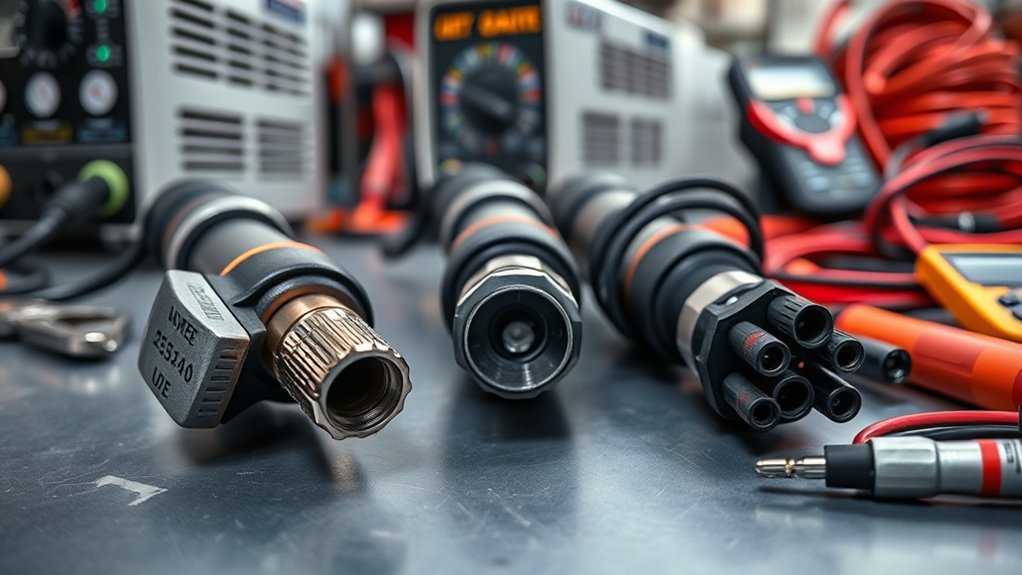
You’ll first match the torch’s amperage rating to the machine’s nameplate output and duty cycle to stay within spec.
Next, verify start method compatibility (HF, pilot arc, or blowback) and confirm the plug type, pinout, and control wiring align with the manufacturer’s schematic.
If the connector style differs, use a rated adapter harness and validate continuity and signaling before power-up.
Matching Amperage Ratings
Before swapping torches, verify the torch’s amperage rating matches or exceeds the plasma cutter’s output, then validate the starting method, wiring, and connector style against the machine’s specifications. Treat amperage matching as a hard constraint: a torch under-rated for current overheats, erodes consumables, and risks failure. Overspec’d torches are acceptable but may add cost and weight.
Quantify duty cycle at the target amperage; deviations drive thermal stress and performance implications across cut speed, kerf width, and electrode life.
- Check nameplate amps vs. machine max output; avoid >10% underspec.
- Compare duty cycle at 40°C; validate equal or higher than use case.
- Validate cable gauge supports continuous load.
- Inspect nozzle current range (e.g., 30–60 A tips).
- Confirm protection ratings for expected environment.
Start Method Compatibility
Although amperage matching is non‑negotiable, start method compatibility often decides whether a torch will actually fire. Verify that your power source and torch use the same start method—high‑frequency (HF) or pilot arc (blowback). Mixing HF with pilot‑arc controls can inhibit ignition, trip fault circuits, or damage components.
Confirm three compatibility factors.
First, amperage: align the torch’s rated current with the machine’s output to prevent nozzle erosion and overcurrent faults.
Second, wiring: map trigger, pilot, and safety‑interlock leads; miswired pilots or shorts reduce operational efficiency, cause hard‑starts, or disable arc transfer.
Third, connector styles: verify mechanical fit and correct circuit continuity across contacts.
Document model numbers, review manufacturer interface charts, and measure coil/trigger continuity. If the starting principle matches and circuits align, interchangeability is typically reliable.
Plug, Pinout, Adapters
Even when amperage and start method match, plug type, pinout, and available adapters ultimately decide whether a torch will function safely. You must verify connector styles and the exact pinout configuration against the cutter’s wiring map before mating hardware. A mismatched pin can short triggers, disable pilot arc, or stress current paths, causing failures.
Adapters can bridge physical plugs, but they don’t fix electrical incompatibilities; confirm current rating, insulation class, and start circuitry first. Always validate with manufacturer documentation before energizing.
- A keyed circular plug that mates cleanly with locking detents
- A rectangular multi-pin block labeled for trigger, pilot, and current sense
- A pinout diagram overlaying wire colors to terminal numbers
- An adapter pigtail converting uncommon connector styles safely
- A multimeter verifying continuity and isolation before test cuts
Consumables and Their Impact on Interchangeability
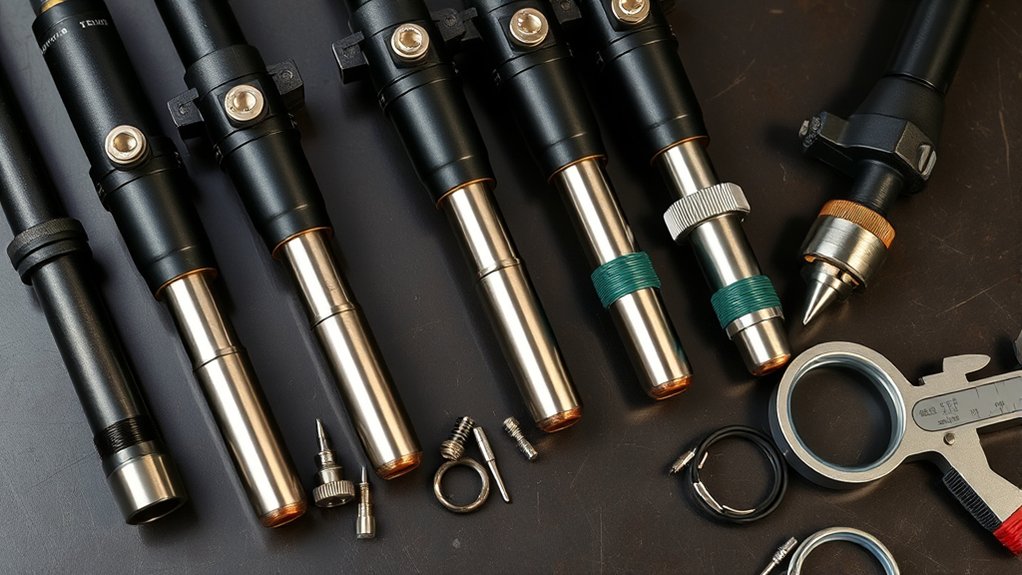
Because consumables dictate electrical behavior and thermal loading, they largely determine whether torches are truly interchangeable. You must match electrode/nozzle geometry, orifice size, and amperage ratings to the power source’s specs to control arc stability, consumable lifespan, and performance impact. Physical fit isn’t enough—starting principle (HF vs. blowback), gas flow paths, and connection stack-up all affect current density and heat rejection.
Use manufacturer charts to verify compatibility before mixing parts across torch families. Inspect wear regularly; eroded electrodes and ovalized nozzles drive rough kerfs, misfiring, and higher duty-cycle stress. Replace at defined wear limits to maintain cut quality and protect the torch.
| Parameter | Why It Matters | Typical Check |
|---|---|---|
| Amperage rating | Prevents overheating/arc blowout | Match within ±5 A |
| Start method | Guarantees reliable ignition | HF vs. blowback |
| Nozzle orifice | Controls arc constriction | Diameter tolerance |
| Electrode insert | Affects arc root stability | Material/type match |
| Gas flow design | Maintains cooling/shape | LPM/CFM spec adherence |
Brand-Specific Considerations and Warranty Implications
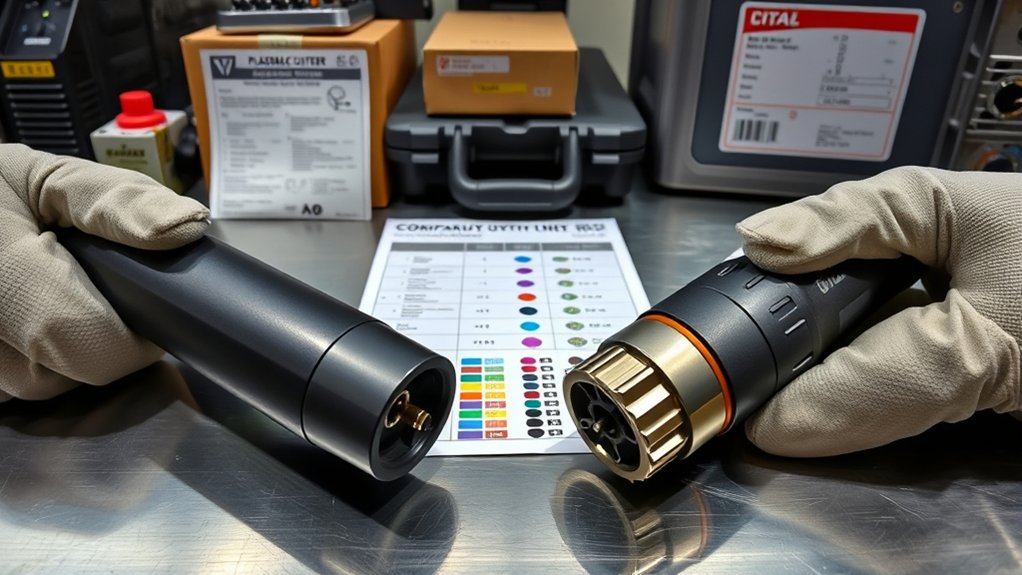
Consumable specs only get you so far; brand and model constraints ultimately govern whether a torch will operate correctly and keep your warranty intact.
Brand considerations matter because torch bodies, leads, pins, and control signals aren’t standardized across manufacturers. Unique wiring layouts and ignition methods (HF start vs. blowback) impose hard limits on interchangeability. If you bolt on a non-brand torch, you risk misfires, unstable arcs, and premature consumable wear—and you invite warranty implications if damage occurs.
Brand-specific torches aren’t interchangeable—mismatched pins and ignition methods risk failures and void warranties.
- Different pinouts: envision a connector where one mismapped pin overheats a board.
- Ignition mismatch: picture a blowback torch trying to talk to an HF-start power supply.
- Gas dynamics: see swirl rings tuned to a brand’s nozzle geometry, not a generic clone.
- Control logic: imagine trigger signals and safety interlocks speaking different “dialects.”
- Service audits: think of logs and photos used to deny claims after incompatible use.
Manufacturers optimize consumables for their torches, yielding tighter kerf, cleaner dross lines, and longer life when you stay within the brand’s ecosystem.
How to Verify Fit: Part Numbers, Manuals, and Compatibility Guides
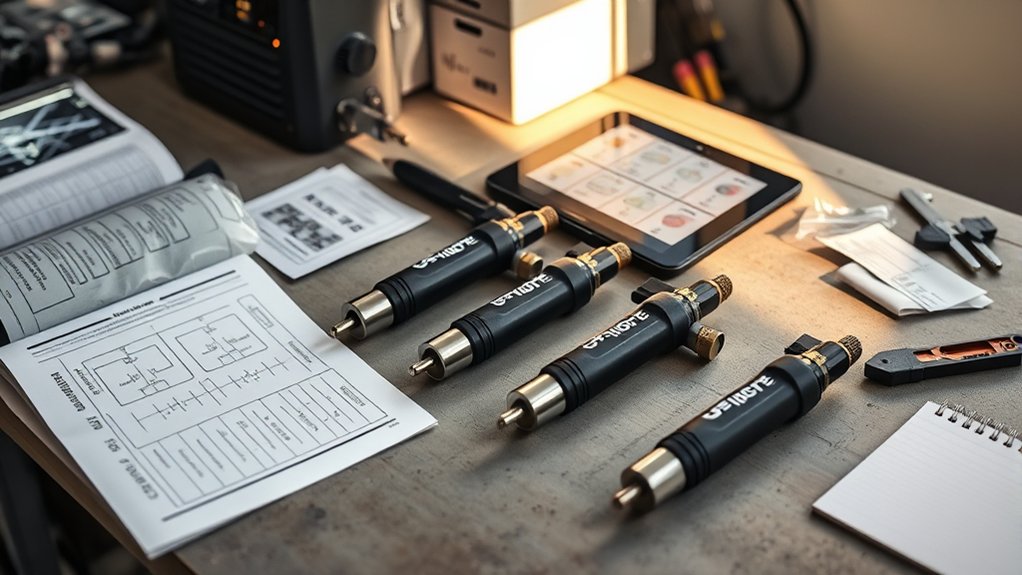
Start with identifiers: match the torch and power source by exact part numbers, then validate against the plasma cutter’s user manual and the OEM compatibility chart for your model and amperage range.
Use disciplined part number verification: record the torch head, handle, lead set, connector, and consumable series numbers, then compare them to the cutter’s bill of materials and supported assemblies.
Perform user manual consultation to confirm electrical interface (pinout, connector type), duty cycle, gas requirements, and ignition method.
Verify ignition compatibility explicitly—high-frequency vs. pilot arc—because mismatches can cause misfires, unstable arcs, or EMI issues.
Cross-check the manufacturer’s online compatibility guides by model and rated output (e.g., 30–45 A, 60–85 A).
Ascertain the approved torch’s current rating meets or exceeds your machine’s maximum output.
Confirm consumable family alignment (nozzle, electrode, swirl ring) to avoid thermal imbalance and premature wear.
If any data conflicts, contact the OEM or a vetted distributor with model and serial numbers for confirmation.
Practical Alternatives and Best Practices for Adapting Torches
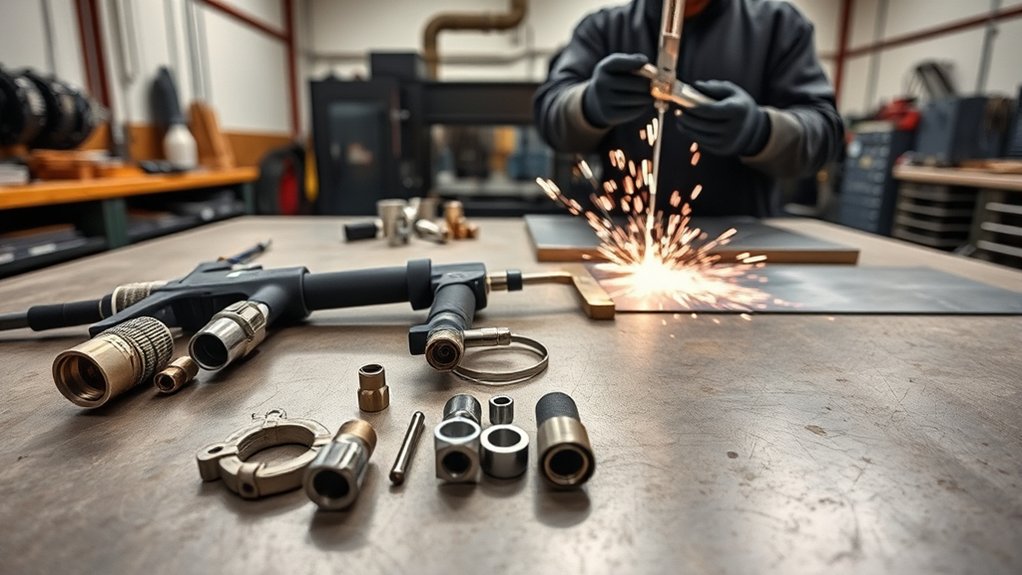
While full torch swaps aren’t plug-and-play, you can adapt alternatives effectively by matching three pillars: ignition method, current rating, and wiring interface.
Verify HF vs. pilot arc start, confirm amperage parity, and map trigger, pilot, and safety leads pin-for-pin. Favor high-quality, brand-specific options for durability; use generic substitutes only when specifications and wiring diagrams align. Document torch modifications, apply safety precautions, and validate with controlled test cuts.
Verify HF vs. pilot start, match amperage, map leads precisely, and test with documented, safe cuts.
- Match nameplate amperage to duty cycle data; derate 10–20% if airflow or leads differ.
- Confirm consumable family (e.g., IPT) and restrict mixing; cross-check orifice size, stand-off, and swirl ring geometry.
- Inspect connector schemes (DIN, CPC, proprietary) and continuity-test each conductor before energizing.
- Implement strain relief, shield HF with braided grounds, and verify pilot arc continuity to avoid misfires.
- Run qualification coupons: cut speed, kerf width, bevel angle, and arc stability at 40/60/80 A.
Keep aftermarket consumables compatible; mixing brands can damage components and void warranties.
Frequently Asked Questions
Can Torch Interchangeability Affect CNC Controller Noise or Interference?
Yes. When you swap torches, you can change EMC/EMI profiles, impacting CNC controller noise. You should evaluate torch performance, grounding, shielding, cable routing, and interference sources per IEC/EN 61000 standards, then validate with spectrum measurements and controller error logs.
Do Interchangeable Torches Change Duty Cycle or Cooling Requirements?
Yes—interchangeable torches can change duty cycle and cooling requirements. You must match torch amperage, consumable geometry, and cooling method (air vs. liquid) to the power supply’s rated duty cycle per manufacturer specifications and IEC 60974 test conditions.
How Does Torch Weight Impact User Fatigue and Cut Consistency?
Precise, predictable performance depends on weight: heavier torches heighten fatigue, hinder steadiness, and degrade cut uniformity. You optimize torch ergonomics and user comfort by targeting sub-1.2 kg mass, balanced centers, compliant grips, and reduced moment arms, improving kerf quality and repeatability.
Are There Insurance or Safety Certification Issues When Swapping Torches?
Yes. You risk violating insurance regulations and safety standards if you swap non‑approved torches. Verify OEM compatibility, UL/CSA/CE listings, duty-cycle ratings, and OSHA/NFPA compliance. Document serials, manuals, and training. Otherwise, insurers can deny claims and auditors cite nonconformance.
Will Torch Swapping Affect Arc Voltage Calibration for THC Systems?
Yes. Different torches change electrical characteristics, so your THC’s arc voltage setpoint shifts. You’ll need calibration adjustments: measure cut voltage at baseline parameters, update presets, verify with test coupons, and document offsets per manufacturer specs and controller firmware versions.
Conclusion
Bottom line: you can’t swap plasma torches like mixtapes. You must match start method (HF vs. blowback), amperage rating, duty cycle, pinout, and connector standard to the exact power source. Verify with OEM manuals, part numbers, wiring diagrams, and compatibility matrices. Use specified consumables; cross-brand parts often alter arc voltage and kerf quality, risking failure. Respect warranty terms and standards (IEC/EN safety, EMC). If adapting, employ certified adapters and perform continuity, pilot arc, and leak checks before cutting.