Who Invented Plasma Arc Welding? History and Key Pioneers

Curious about plasma arc welding's origins? Delve into Robert M. Gage's groundbreaking 1953 invention and its transformative impact on modern industries.
Explore welding methods that pair with plasma cutting: TIG, Plasma Arc Welding (PAW) in melt-in or keyhole mode, and Plasma Transferred Arc (PTA) for hardfacing. Learn where each excels—thin stainless, precision tube, high-productivity joints, or wear-resistant overlays. We cover polarity (DCEN), gas choices (argon or Ar-H₂), nozzle/orifice sizing, current, travel speed, and standoff to manage penetration, taper, and distortion. See when to add filler versus autogenous passes, how pulsing improves puddle control, and why tight joint prep and torch alignment matter. Compare pros/cons with MIG and laser, spot common defects with quick fixes, and follow PPE and fume-extraction basics for consistent, high-quality results.
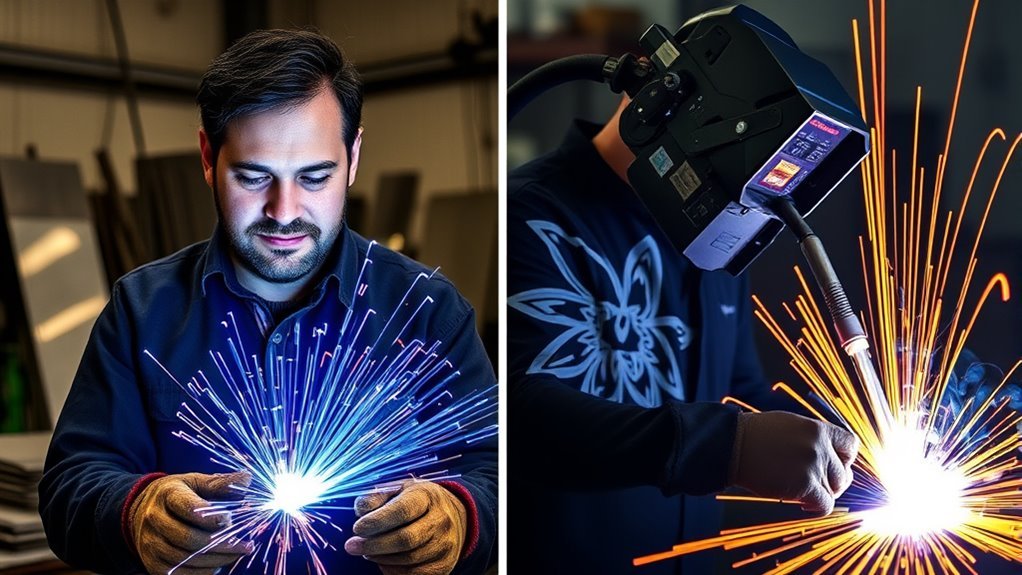
Curious about plasma arc welding's origins? Delve into Robert M. Gage's groundbreaking 1953 invention and its transformative impact on modern industries.

Tracing the origins of Plasma Arc Welding back to 1953, discover how this invention reshaped industries and explore its ongoing innovations.

Plasma arc welding operates on a precise pilot arc mechanism, but how does shielding gas like argon enhance weld integrity? Discover the secrets inside.

How does Plasma Arc Welding decide the use of filler material for optimal joint strength? Discover when and why it's essential for ideal fusion.

Are you curious about how TIG and plasma welding differ in precision and application? Discover which technique suits your project best.