Like a good cattle dog, a cheap plasma cutter should be tough, dependable, and easy to handle. You’re looking for a 50A class unit around $300 that won’t choke on rusted farm steel, runs on 120/240V, and doesn’t burn through costly consumables. Focus on duty cycle, true cut capacity, and clean, dry air delivery. Add a regulator, moisture filter, and spare nozzles. If you want real farm-proof picks and setup tips, here’s what actually works.
Top Budget Plasma Cutters for Farm Use in 2025
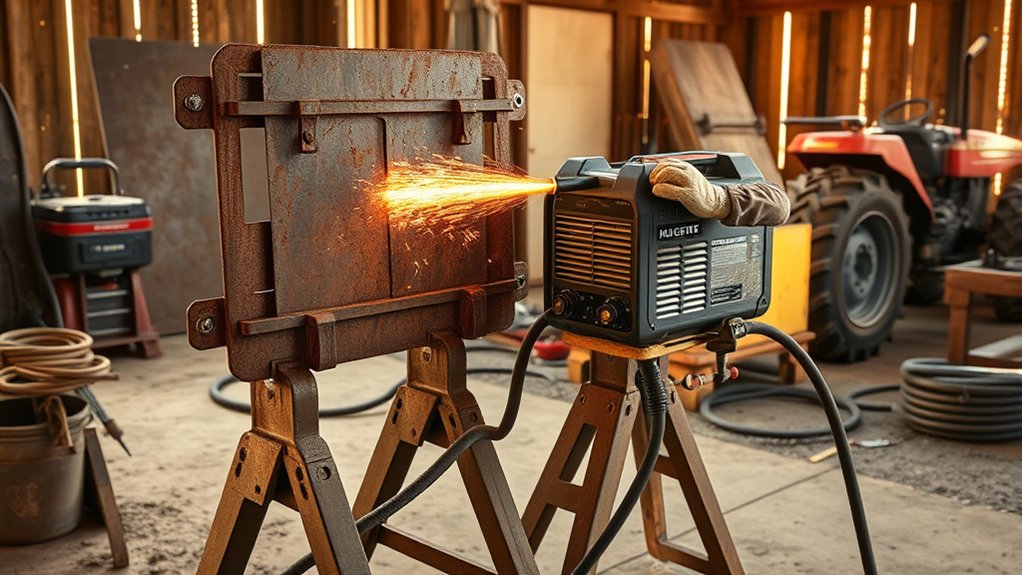
If you’re outfitting a farm shop on a tight budget, five plasma cutters stand out for 2025.
Chicom’s CUT50 sits near $300 and reliably slices 3/8″ plate; with steady travel speed and clean grounding, you’ll get straight cuts on common metal types like mild steel and galvanized sheet.
Chicom CUT50: around $300, cleanly cuts 3/8″ plate with solid grounding and steady travel speed
Lotos’s Non-Touch Pilot Arc 50A runs on 110/220V and keeps the arc lit over rust, paint, and dirty surfaces—ideal when you can’t fully prep stock.
PrimeWeld’s 50A unit delivers consistent performance and strong support if you need troubleshooting on consumables or cutting techniques.
YesWelder’s Blowback Digital 65A shines on 220V, pushing fast, smooth kerfs on thicker farm repairs at a sharp price.
ToolIom’s Non-Touch Pilot Arc 50A, about $225.99, adds onboard air pressure adjustment, helping you dial in psi for cleaner edges and reduced dross.
Match tips, air flow, and travel speed to the metal types you cut most.
Key Features to Prioritize: Duty Cycle, Amperage, and Cut Capacity
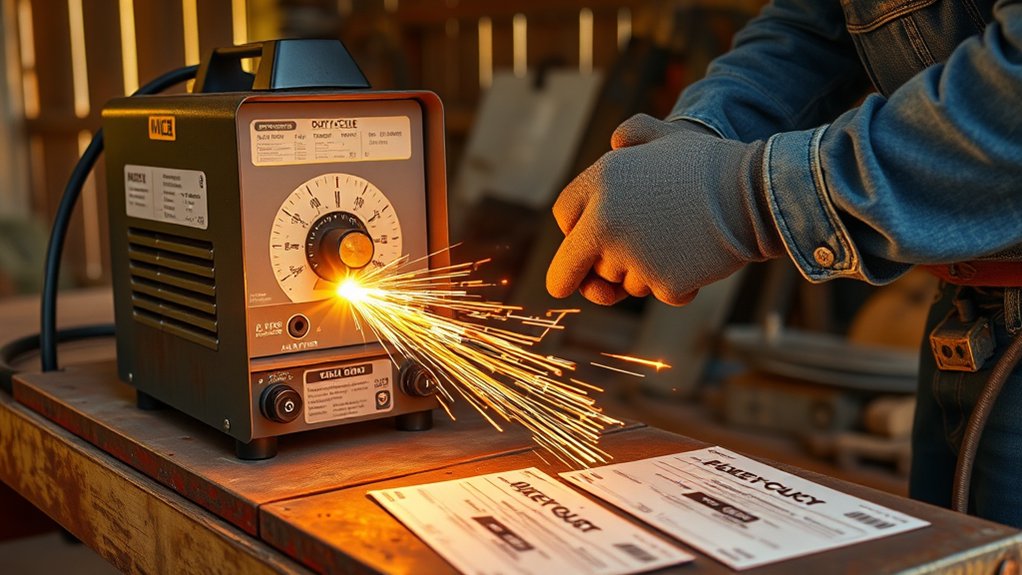
Though price grabs attention, you’ll get more done by zeroing in on duty cycle, amperage, and cut capacity. Aim for a 60% duty cycle or better at your target amps so you can cut longer without tripping thermal protection. That matters when you’re slicing gates or repairing implements—stop-and-cool cycles kill productivity and cut quality.
Match amperage to material thickness. A 50 amp unit reliably cuts 1/2 inch steel and cruises through 3/8 inch, which covers most farm jobs. For occasional thicker stock, check the sever rating: some machines can sever up to 3/4 inch with gas assist, but expect slower travel and rougher edges.
Evaluate stated cut capacity against real-world results: look for clean cut quality at 3/8 inch, not just a marketing sever number.
Finally, factor consumables. Torches with common, easy-to-replace tips and electrodes keep costs down and maintain consistent arc performance, especially when you’re cutting rusty, painted, or galvanized material.
Portability and Power: 110/220V Dual Voltage Considerations
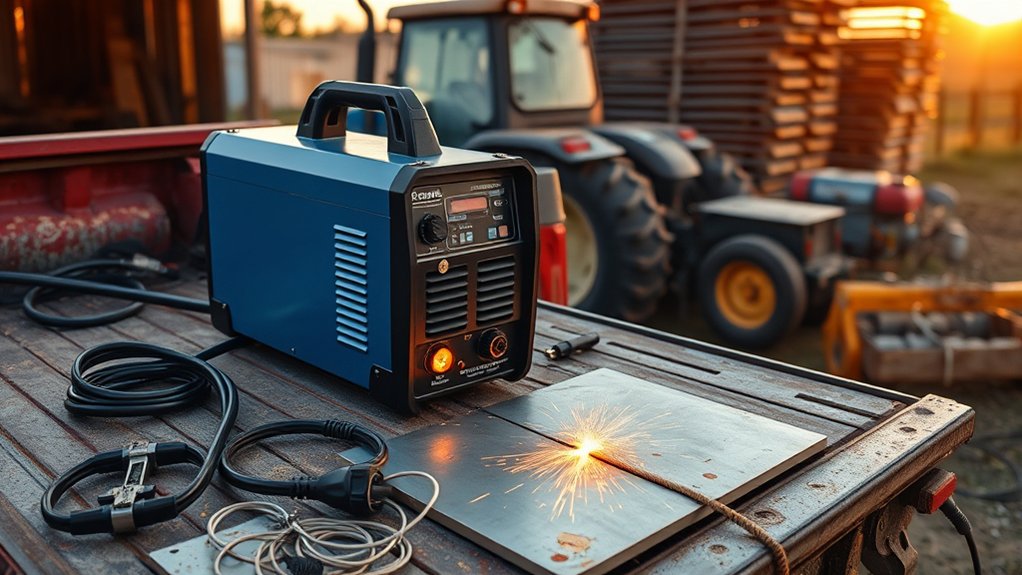
You’ll balance portability with power by choosing a dual-voltage unit and managing extension cord limits—use short, heavy-gauge cords (10–12 AWG) to keep voltage drop low.
Switch voltage safely: set the selector, match the plug, confirm the breaker size, and check air pressure before striking an arc.
Know when to run 110V for light cuts near standard outlets and when to use 220V for thicker steel, cleaner kerfs, and steadier duty cycles.
Extension Cord Limits
While dual-voltage plasma cutters promise flexibility on the farm, your extension cord sets the real limits on performance. Smart extension cord selection keeps amperage available at the machine and minimizes power loss that kills arc stability.
On 110V, voltage drop shows up fast: long, thin cords starve a CUT50 and similar units, reducing duty cycle and making thick steel cuts sputter. Use the shortest cord you can, with 12 AWG minimum up to 50 ft; step to 10 AWG beyond that.
Running 220V helps because current is halved for the same wattage, reducing drop over the same length. Still, match plug type and gauge: 10 AWG is a safe bet for 50–100 ft.
Keep connections clean, fully seated, and off wet ground. Your 13‑lb portable stays effective when the cord isn’t the bottleneck.
Switching Voltage Safely
Before you flip a dual‑voltage plasma cutter from 110V to 220V, confirm the whole chain can handle it: correct adapter, matching plug/receptacle, and a circuit with the needed amperage (many cutters want a 50A, 240V supply for full output).
Check the unit’s voltage compatibility label, then power down, unplug, and move the selector switch or input lead as the manual specifies. Inspect cords and adapters for heat damage, tight terminals, and proper grounding. Use short, heavy‑gauge leads only.
As you switch, apply safety precautions: lockout the breaker, verify no load, and confirm polarity/ground continuity with a tester. Set your air compressor to the required PSI/CFM before striking an arc.
After switching, keep settings consistent and watch for nuisance trips, dimming, or sputtering.
110V Vs 220V Power
Even on a budget, dual‑voltage plasma cutters earn their keep by letting you plug into a 110V outlet for quick light cuts or step up to 220V when you need speed and thickness. You get flexibility on the farm: run a CUT50 from common receptacles for repairs, then move to a 220V circuit when you’re slicing thicker plate. Understand the tradeoffs: 110V advantages include easy access, portability, and less generator demand; 220V brings higher duty cycle and faster travel speeds. Watch for 220V disadvantages like needing a dedicated circuit and heavier cords.
| Scenario | Practical Take |
|---|---|
| Thin sheet fixes (field) | 110V, short leads, moderate air flow |
| 1/4–3/8 in plate (shop) | 220V, higher amps, faster cut speed |
| Limited outlets | Dual-voltage keeps you working anywhere |
Air Supply, Filters, and Dryers: Protecting Your Investment
Two things keep a budget plasma cutter alive: clean, dry air and correct pressure. Start with your compressor: size it to deliver steady CFM at the cutter’s required PSI, then set a regulator at the machine for precise air pressure.
Add moisture control at the tank outlet—a quality particulate filter plus a refrigerated or desiccant dryer if humidity’s high. A built-in moisture trap ahead of the cutter stops rust, corrosion, and sticky valves.
Add moisture control at the tank: quality filter plus dryer. Trap moisture before the cutter to prevent rust and sticky valves.
Plumb with short, large-diameter hose to minimize pressure drop. Purge the line before cutting. Drain the compressor tank daily; crack the drain while the tank’s pressurized to blow out water. Replace filter elements on schedule and watch the sight glass on desiccant dryers for color change.
Verify pressure at the torch while air is flowing; static readings lie. Proper, dry airflow stabilizes the arc, tightens kerf, and boosts performance on thicker plate—protecting your investment and keeping cuts clean and consistent.
Consumables, Parts Availability, and Ongoing Costs
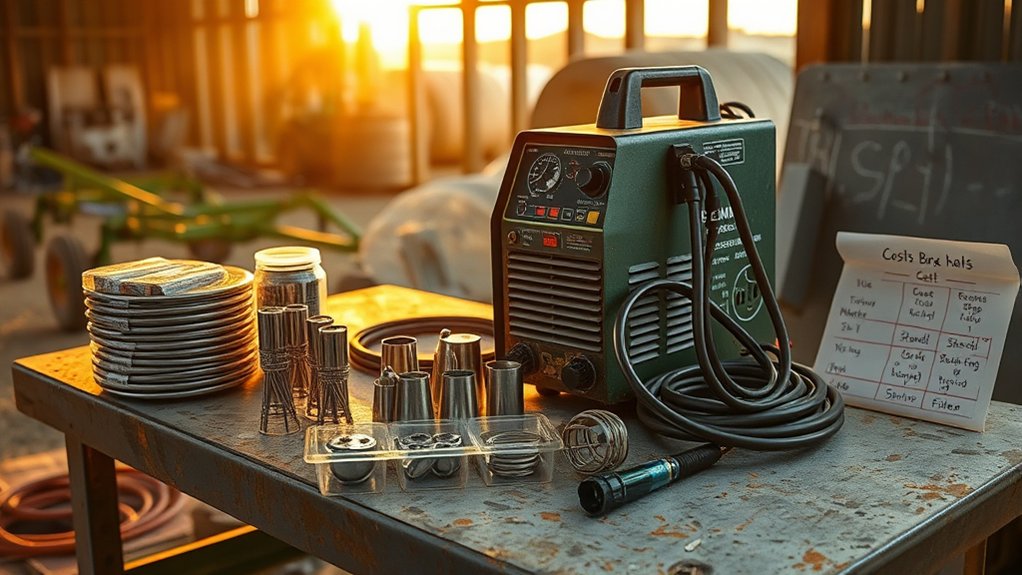
With clean, dry air handled, your next recurring expense is consumables and common wear parts. On budget cutters like a CUT50, tips, electrodes, and swirl rings are cheap and widely available, so you can keep a small kit on hand.
Buy name-brand or higher-grade consumables; they cut cleaner, improve consumable longevity, and protect torch threads and seats. Watch arc starts—restarts on painted or rusty steel burn tips fast. Keep the torch square, use proper standoff, and match amperage to thickness to avoid molten blowback.
Plan a maintenance frequency: inspect nozzle orifice, electrode pit depth, and ceramic cup each session; replace when holes egg out or arc wander appears.
Swap air filters regularly and purge the dryer—moisture shortens life and raises ongoing costs. Check the ground clamp and cable; many budget units ship with surprisingly stout clamps that reduce arc instability and heat.
Verify parts compatibility by torch model, not just cutter brand.
Real-World Picks: Pros and Cons of Popular Models
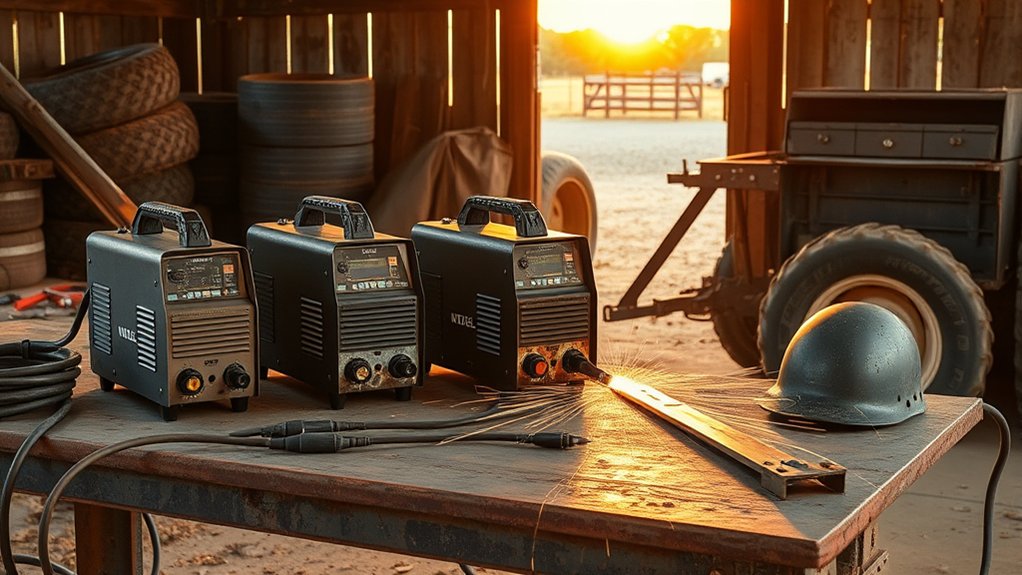
You’re balancing budget models against what they actually cut in the field, so weigh features like pilot arc, blowback start, and dual voltage against real throughput on rusty steel.
Expect performance trade-offs: some units fluctuate or sag on 110v, need longer ground leads, or require upgrades to air and pressure parts.
Check reliability and support up front—QC history, consumable availability, and warranty response matter more than spec-sheet amps on a working farm.
Budget Model Highlights
On a tight farm budget, these sub-$400 plasma cutters deliver real work if you match features to your tasks.
In budget model comparisons, the Lotos 50A Non‑Touch Pilot Arc (~$300) shines on rusty gates and painted panels; pilot arc keeps the tip off the metal, so starts are clean. User testimonials back its portability and farm-ready reliability.
For occasional fixes, the CUT50 (~$300) wins on cheap consumables and simple setup.
BestArc 50A adds a digital air gauge and dual voltage; you’ll dial air precisely and plug into 120/240V as needed, with responsive support if issues pop up.
YesWelder Blowback Digital 65A excels on 220V, cutting fast for the money.
ToolIom 50A (~$226) looks slick, but plan on tweaks and upgrades to optimize output.
Performance Trade-Offs
Budget picks only go far if their performance fits your metal and power. The CUT50 around $300 is fine for brackets, gates, and patch work, but once material thickness pushes past 3/8″, cutting quality drops and travel speed slows.
The Lotos Non-Touch Pilot Arc shines on rusty or painted stock; the arc stays lit through scale, so you spend less time grinding, though the short ground clamp can limit reach.
BestArc’s 7th Gen adds a digital air gauge, but reported pressure swings can widen kerfs and leave dross; verify regulator stability and use dry air.
Thermal Dynamics at $1875 disappointed on 1/2″–3/4″, proving price doesn’t guarantee throughput.
YesWelder 65A is efficient on mixed metals, but low-voltage operation reduces power and edge quality.
Reliability and Support
Even if raw amps and duty cycle look good on paper, reliability and support decide whether a farm cutter earns a place on your cart.
You want solid reliability ratings, fast parts, and clear troubleshooting. Customer feedback points to a few standouts and cautions.
- CUT50: Around $300, fine for occasional repairs. Expect basic support; keep a filter/dryer on it to protect consumables and valves.
- Primeweld 50A: Strong reliability ratings and excellent customer service. If you need phone help and quick replacements, this is the safe budget bet.
- Thermal Dynamics 50A: High price (~$1875) but mixed customer feedback on thicker cuts; many call it a poor investment for farm needs.
- YesWelder Blowback Digital 65A: Efficient on 220v, reliable at home-shop loads; good value if you maintain air quality and store it dry.
Safety, Setup, and Maintenance Tips for Longer Service Life
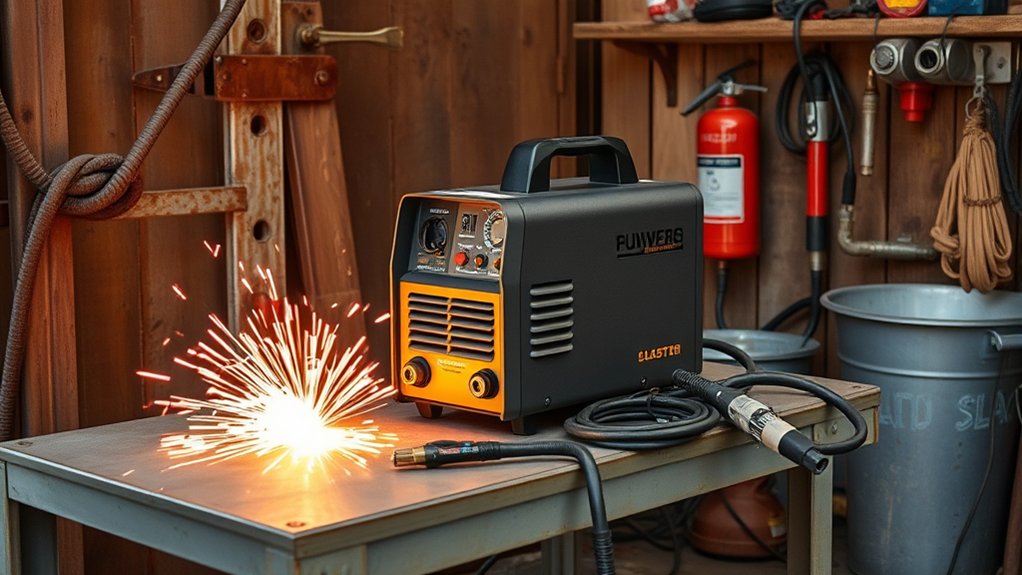
While a plasma cutter looks simple to fire up, its longevity and safety hinge on a few disciplined habits: set a solid ground and keep the clamp clean and tight, plumb dry air through a quality filter and dryer to keep moisture and grit out of the torch, and verify hoses, fittings, and air pressure before each cut. Treat these as non‑negotiable safety precautions and maintenance routines.
Use a robust ground lead; remove paint, rust, and scale at the contact point for a low-resistance bond. Run 60–90 psi to the machine (per manual) and confirm dynamic pressure at the torch—starved air erodes consumables.
Drain the compressor tank daily and service the air filter/dryer to stop moisture from pitting internal components.
Before each job, inspect torch leads, hoses, and fittings for nicks or leaks. Replace worn electrodes and nozzles as a set to maintain arc stability.
After use, blow out dust, coil leads loosely, and store the unit dry and secure.
Frequently Asked Questions
Can a Plasma Cutter Run off a Small Generator on Remote Fields?
Yes, if you match generator compatibility and power requirements. Use a clean-output inverter generator, sufficient wattage (surge and continuous), proper grounding, and heavy-gauge cords. Disable PFC if needed, reduce duty cycle, and test arcs under load before field work.
How Does Cold Weather Affect Plasma Cutter Performance and Storage?
Cold weather effects reduce plasma cutter performance: arc starts harder, airflow condenses, hoses stiffen, consumables crack. You test this—truth checks out. Pre-warm unit, dry your air, use winter-rated hoses, store above freezing, acclimate consumables, keep batteries charged.
Are There Farm-Friendly Cases or Carts for Rough Terrain?
Yes. You’ll find farm-friendly cases and carts built for plasma cart durability and terrain adaptability. Choose pneumatic tires, sealed bearings, low center of gravity, welded frames, tie-down points, weatherproof compartments, and shock-absorbing mounts. Test stability on ruts loaded.
What Insurance or Liability Issues Arise Using Cutters on Leased Land?
You face insurance coverage gaps and liability concerns for fire, property damage, and injury. Get landlord named as additional insured, confirm subrogation waivers, secure worker’s comp, document hot-work permits, maintain extinguishers, set fire watch, and photograph preexisting conditions.
How Noisy Are Budget Cutters and Do They Affect Livestock?
They’re loud: typical budget cutters hit 85–95 dB at the arc. You’ll spike noise levels with compressor hiss too. Use distance, barriers, and schedule work away from pens to minimize livestock stress and sudden startle responses.
Conclusion
You’ve got the specs, the picks, and the setup tips—now pull the trigger. Choose a 50A dual-voltage unit with a solid duty cycle, cheap consumables, and a clean, dry air supply, and it’ll cut like a hot knife through haywire. Keep filters fresh, leads tidy, and grounds solid. Stick to regular maintenance and safe practices, and your budget plasma cutter will punch above its weight, turning rough farm repairs into clean, fast work without torching your wallet.