Disclosure: As an Amazon Associate, we earn from qualifying purchases. If you click a link on this page and make a purchase, we may receive a small commission at no extra cost to you.
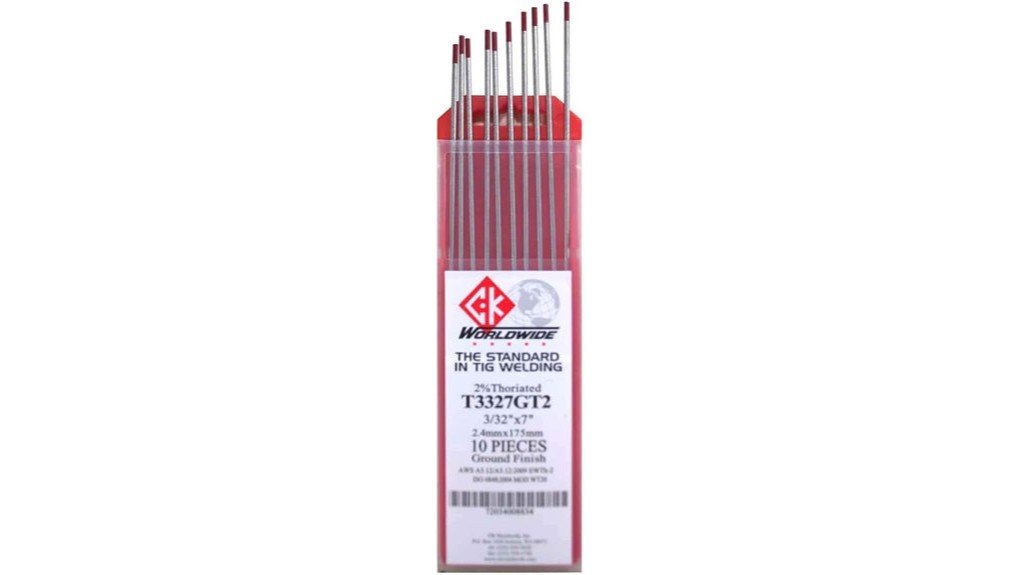
Choosing a TIG tungsten electrode is not only about arc starts. You also need the right tungsten type for your current, base metal, safety practices, and sharpening setup. The CK T3327GT2 2% Thoriated Tungsten Electrode is aimed at welders who want a stable arc for Direct Current work on materials such as non-corroding steels, titanium alloys, nickel alloys, and copper alloys. This review explains where it performs well, where it needs caution, and who should consider a non-radioactive alternative instead.
Quick Verdict
Rating: 8.2/10
Best For: TIG welders who use Direct Current and want a stable, durable tungsten for stainless or specialty alloy work.
Bottom Line: The CK T3327GT2 makes sense if you value arc stability and controlled weld puddle behavior in DC TIG work. The main tradeoff is the thorium content, which requires careful grinding, storage, and disposal habits.
| Specification | Detail |
|---|---|
| Brand | CK |
| Model | T3327GT2 |
| Product type | 2% thoriated tungsten electrode |
| Classification | EWTh-2 / WT20, as stated in the source article |
| Composition | 1.7% to 2.2% thorium oxide, based on the article claim |
| Best use | Direct Current TIG welding applications |
| Compatible materials | Non-corroding steels, titanium alloys, nickel alloys, and copper alloys |
| Power source note | Compatible with transformer-based constant current power sources, according to the article |
| Safety note | Contains thorium, so grinding dust and disposal need extra care |
Key Takeaways
- The CK T3327GT2 is a 2% thoriated tungsten electrode built for Direct Current TIG welding.
- Its 1.7% to 2.2% thorium oxide content supports stable arc starts and steady arc behavior.
- It suits non-corroding steels, titanium alloys, nickel alloys, and copper alloys when your setup matches the electrode.
- The medium erosion rate can help reduce frequent tungsten changes during controlled welding work.
- The thorium content is the main caution because grinding dust and waste handling need responsible safety practices.
What Is the CK T3327GT2?
The CK T3327GT2 is a 2% thoriated tungsten electrode for TIG welding. It uses a thorium oxide blend, listed in the article as 1.7% to 2.2%, and falls under the EWTh-2 / WT20 classification.
This type of electrode is made for welders who want strong arc stability in Direct Current work. It is especially relevant when you work with non-corroding steels, titanium alloys, nickel alloys, and copper alloys.
The biggest appeal is consistency. A stable tungsten helps you keep a focused arc, manage the weld pool, and reduce interruptions from frequent reshaping. The tradeoff is safety, since thoriated tungsten needs careful handling during grinding and disposal.
Before You Buy: This electrode contains thorium. If your shop avoids radioactive materials, or if you cannot control grinding dust properly, compare lanthanated, ceriated, or zirconiated tungsten before buying.
Who Should Buy It?
Best For
- TIG welders using Direct Current setups for stainless or specialty alloy work.
- Users who want steady arc starts and a controlled weld pool.
- Shops that already have safe tungsten grinding, ventilation, and waste practices in place.
Skip If
- You mainly weld AC aluminum and want an electrode type chosen for that use.
- Your workplace does not allow thoriated tungsten because of radioactive material policies.
- You need confirmed package quantity, diameter, or length before purchase and the seller listing does not clearly state it.
Composition and Characteristics
The CK T3327GT2 is described as a 2% thoriated tungsten electrode with 1.7% to 2.2% thorium oxide. This composition is the reason it is commonly linked with reliable starts, stable arc behavior, and good control in DC TIG welding.
The article identifies it as EWTh-2 / WT20. That matters because tungsten classification helps you match the electrode to your process instead of choosing only by brand name or color coding.
Its medium erosion rate gives it a useful balance between performance and durability. You still need to grind and prepare the tip correctly, but the electrode should support consistent welding when your amperage, torch parts, shielding gas, and workpiece preparation are correct.
Application and Compatibility
This electrode is designed primarily for Direct Current work. That makes it a practical choice for many stainless, titanium, nickel, and copper alloy TIG jobs when your welding procedure calls for this tungsten type.
The source article also notes compatibility with transformer-based constant current power sources. That is useful if your shop runs traditional TIG equipment, but you should still confirm electrode size, torch collet size, and machine settings before use.
Do not treat this as a universal tungsten for every project. If you weld mostly AC aluminum or magnesium, compare other tungsten types that fit your process and machine settings better.
Performance and Erosion Rate
The main performance advantage is arc stability. A stable arc helps you keep heat focused, see the puddle clearly, and reduce the chance of wandering during precision work.
The medium erosion rate also helps with day-to-day usability. It can reduce how often you stop to regrind the electrode, especially when you stay within a suitable amperage range and avoid contaminating the tip.
That said, tungsten performance depends heavily on preparation. A poor grind angle, dirty workpiece, wrong polarity, or contaminated tip can make even a good electrode perform badly.
How It Performs in Real Use
For Stainless and Non-Corroding Steel Work
The CK T3327GT2 is a strong fit when you need a focused arc on non-corroding steel. It gives you better control over the puddle than a generic, poorly matched tungsten choice.
For Titanium and Nickel Alloy Jobs
For titanium and nickel alloys, arc control and cleanliness matter. This electrode can support precise welding, but you still need correct shielding gas coverage, clean material, and proper procedure control.
For Repeated Shop Use
The medium erosion rate helps when you weld regularly and do not want to stop after every short bead. You should still inspect the tip often because contamination changes arc behavior quickly.
For Occasional DIY Use
Occasional users can benefit from the stable arc, but they should think carefully about safety. If you do not have dust control for grinding tungsten, a non-thoriated alternative may be easier to manage.
How to Use It Correctly
Match the electrode to the welding current, torch parts, and base material before you strike an arc. Use the right collet size for the electrode diameter listed by the seller, and avoid forcing the electrode into mismatched torch hardware.
Keep the tungsten clean and sharpen it consistently. A dedicated grinding wheel or tungsten sharpener helps reduce contamination from other metals.
Pro Tip: Grind thoriated tungsten with dust control and keep that grinder setup separate from general shop grinding. This helps protect the tip and keeps dust management more controlled.
Compatibility and Safety
The main safety issue is the thorium content. Thoriated tungsten is widely used in TIG welding, but grinding can create fine dust that deserves careful control.
Use proper ventilation, avoid breathing grinding dust, and follow your shop’s safety rules for storage and disposal. If you work in a school, shared shop, regulated workplace, or home garage without dust collection, consider a non-radioactive tungsten type.
Store the electrodes dry and protected from impact. A simple storage tube or case helps prevent chipped tips, contamination, and moisture exposure.
Pros and Cons
Pros
- 2% thoriated composition supports stable Direct Current TIG performance.
- EWTh-2 / WT20 classification gives buyers a clear tungsten type to match.
- Works across several article-supported materials, including non-corroding steels and nickel alloys.
- Medium erosion rate can help reduce frequent regrinding during suitable use.
- Good fit for welders who prioritize steady arc control over the lowest-risk material choice.
Cons
- Thorium content requires more careful grinding, storage, and disposal practices.
- Not the best match if you mainly need tungsten for AC aluminum work.
- Package quantity, size, and length should be confirmed on the seller page before purchase.
Is It Worth the Price?
The CK T3327GT2 is worth considering if you do enough DC TIG welding to benefit from a stable, durable tungsten. It is a stronger value for welders who care about arc control than for buyers who only need a basic electrode for occasional practice.
The value depends on your safety setup as much as the electrode itself. If you already have a dedicated tungsten grinder, ventilation, and storage routine, the performance benefits make more sense.
It is not the best fit if you want the lowest-maintenance or lowest-risk electrode type. In that case, a non-thoriated option may be a smarter buy for everyday use.
How It Compares to Alternatives
Compared with pure tungsten, the CK T3327GT2 is more focused on DC arc stability and controlled starts. Pure tungsten is often considered for other TIG situations, but it is not the same kind of performance-focused choice for the uses described in this article.
Lanthanated, ceriated, and zirconiated tungsten electrodes are the main alternatives to compare. Lanthanated and ceriated options appeal to buyers who want strong arc behavior without thorium, while zirconiated tungsten is often compared for AC-focused work. The CK T3327GT2 makes the most sense when you specifically want 2% thoriated tungsten for DC TIG and can manage the safety requirements.
Frequently Asked Questions
What is the CK T3327GT2 best used for?
It is best used for Direct Current TIG welding where arc stability matters. The article-supported material list includes non-corroding steels, titanium alloys, nickel alloys, and copper alloys.
Can you use this electrode for AC welding?
This electrode is mainly presented as a Direct Current option. If you mainly weld AC aluminum or magnesium, compare tungsten types made for that process before choosing this one.
Is thoriated tungsten safe to use?
It can be used responsibly, but it contains thorium. The biggest concern is fine dust from grinding, so you should use ventilation, dust control, and proper shop handling procedures.
What does EWTh-2 / WT20 mean?
EWTh-2 / WT20 identifies a 2% thoriated tungsten electrode type. This classification helps you match the electrode to the welding process instead of buying only by model number.
How should you store CK T3327GT2 electrodes?
Store them dry, clean, and protected from impact. A case or tube helps prevent chipped ends, contamination, and unnecessary handling.
What alternatives should you compare?
Lanthanated, ceriated, and zirconiated tungsten electrodes are worth comparing. They may suit buyers who want different arc behavior, AC compatibility, or a non-thoriated option.
Who should skip this electrode?
Skip it if your shop avoids thorium, you do not have dust control for grinding, or you mainly weld AC aluminum. You should also confirm the listed diameter and package quantity before ordering.
The Bottom Line
The CK T3327GT2 is a solid choice for welders who want 2% thoriated tungsten for stable Direct Current TIG performance. Buy it if you work on compatible steels and alloys and have safe grinding practices in place.
Skip it if you prefer non-thoriated tungsten, need an AC-focused electrode, or cannot confirm the package details on the seller page. Its strongest advantage is arc stability, while its main limitation is the extra care required for thorium handling.