Disclosure: As an Amazon Associate, we earn from qualifying purchases. If you click a link on this page and make a purchase, we may receive a small commission at no extra cost to you.
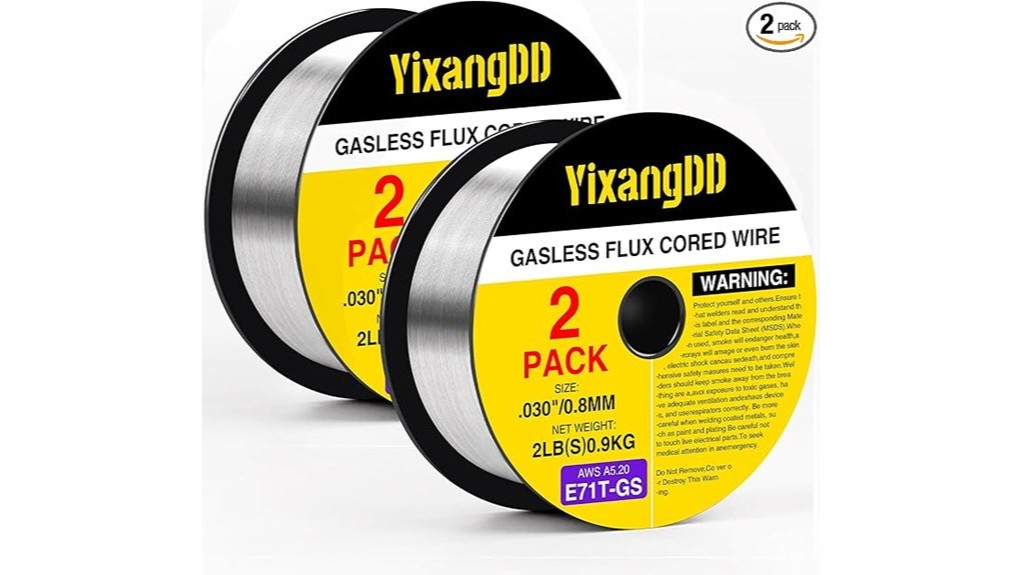
Choosing flux-core wire can be confusing because small differences in diameter, spool condition, and machine fit can change how your welds turn out. The E71T-GS welding wire is made for gasless welding, with article-supported sizes from 0.030 to 0.045 inches and a 2-pound spool that is easy to store. Its biggest appeal is simple setup, steady arc action, and protective vacuum packaging. The main caveat is that you should confirm the exact wire diameter, welder compatibility, and base-metal match before you buy.
Quick Verdict
Rating: Recommended with caveats, 8.2/10
Best For: DIY welders and light repair users who want gasless flux-core wire for mild steel and general shop projects.
Bottom Line: This wire is a practical choice if you want a self-shielded welding wire with stable feed, low-spatter performance, and moisture-resistant packaging. It is not the best pick if you need verified stainless filler performance, a known brand listing, or exact published specs beyond the article-supported details.
Key Takeaways
- The E71T-GS welding wire is article-supported as AWS E71T-GS mild steel flux-core wire for gasless welding.
- The listed wire diameter range is 0.030 to 0.045 inches, so you should select the size that matches your welder drive rolls, contact tip, and project needs.
- The 2-pound spool is easier to handle than larger shop spools and is useful for occasional repairs, small fabrication jobs, and DIY storage.
- Vacuum packaging helps protect the wire from moisture, dust, and storage damage before you open the roll.
- The main buyer warning is compatibility: confirm your welder accepts the selected wire size and follow safe welding practices, especially around coated or galvanized metal.
| Specification | Detail |
|---|---|
| Product type | Self-shielded flux-core welding wire |
| AWS classification | E71T-GS, as stated in the article |
| Material | Article-supported high-grade AWS E71T-GS mild steel |
| Wire diameter | 0.030 to 0.045 inches, depending on the selected size |
| Spool weight | 2 pounds per roll |
| Spool material | Durable ABS plastic spool, as stated in the article |
| Shielding gas | No external shielding gas required for gasless welding |
| Packaging | Individually vacuum-packed for moisture, water, and dust protection |
| Best use | Light repairs, DIY fabrication, mild steel work, and gasless welding setups |
| Safety note | Use proper PPE, ventilation, and welder settings. Confirm base-metal compatibility before welding stainless or coated materials. |
What Is the E71T-GS Welding Wire?
The E71T-GS welding wire is a flux-core wire designed for gasless MIG-style welding. Instead of needing a separate shielding gas bottle, the flux inside the wire helps protect the weld puddle while you work. That makes it useful for small shops, home garages, farm repairs, and outdoor jobs where a gas setup is inconvenient.
The article-supported version uses AWS E71T-GS mild steel wire on a 2-pound ABS plastic spool. It is listed with a 0.030 to 0.045-inch diameter range, which means you need to choose the correct size for your welder, drive rolls, liner, and contact tip. Its vacuum-packed roll is a useful storage feature because flux-core wire can suffer when moisture or dust gets into the wire path.
Before You Buy: Confirm the exact diameter and spool size on the Amazon listing before checkout. A 0.030-inch wire and a 0.045-inch wire may need different drive-roll tension, contact tips, and amperage settings.
Who Should Buy It?
Best For
- You want gasless flux-core wire for mild steel repairs and small fabrication work.
- You use a compact wire-feed welder that accepts 2-pound spools.
- You need a wire that is easier to store because each roll is vacuum-packed.
Skip If
- You need a fully verified brand listing, warranty terms, or manufacturer datasheet before buying.
- You need stainless-specific filler metal for a corrosion-matched stainless weld.
- Your welder only accepts a different spool size, wire diameter, or wire type.
Material Quality and Construction
Material quality matters because flux-core wire has to feed smoothly, burn consistently, and resist storage problems. This E71T-GS welding wire is described as high-grade AWS E71T-GS mild steel, which supports dependable strength for common light-duty welding jobs. For your setup, the most important buying detail is not just the classification. It is whether the exact diameter you buy matches your machine.
The 2-pound spool size is convenient if you weld occasionally and do not want a large roll sitting open for months. The ABS plastic spool also helps protect the wire during storage and handling. A small spool can be a good fit for compact machines, but it may run out faster if you are doing long beads or frequent shop work.
Welding Efficiency and Performance
Welding efficiency depends on stable arc behavior, steady feed, and the right settings. The article describes this wire as having smooth arc action, low spatter, high feed rate capability, and high slag coverage. Those details matter because less spatter means less cleanup, while better slag coverage can help the weld cool with a cleaner-looking surface.
Flux-core wire still needs setup attention. If your drive-roll tension is too loose, the wire can slip. If it is too tight, you can deform the wire and cause feeding problems. Start with the wire diameter, polarity, voltage, and wire-speed guidance from your welder and product label, then adjust on scrap metal before working on the final part.
| Feature | What It Means | Buyer Benefit |
|---|---|---|
| Arc stability | Smooth, consistent arc behavior when settings are correct | Better control and cleaner bead appearance |
| Wire feedability | Designed for steady feed through compatible machines | Fewer stops, slips, and frustrating restarts |
| Slag coverage | Flux leaves a protective slag layer after welding | Helps protect the weld as it cools, but still needs cleanup |
| Gasless design | No external shielding gas bottle required | Simpler setup for garages, repairs, and outdoor work |
Packaging and Applications
The packaging is one of the stronger practical details in the article. Each roll is individually vacuum-packed, which helps protect the wire from moisture, dust, and handling contamination before you open it. That matters because wire that sits exposed in a damp garage can feed poorly and may create less consistent welds.
The article lists galvanized, stainless, and mild steel among possible applications. Mild steel is the clearest fit for an E71T-GS mild steel wire. If you plan to work on galvanized metal, clean the joint area when appropriate, use proper ventilation, and protect yourself from fumes. If you plan to weld stainless steel, confirm that this filler is suitable for your goal because mild steel wire will not give you a corrosion-matched stainless weld.
Machine Fit and Setup Tips
The best wire will still perform poorly if it does not match your welder. Before you buy, check three things: the spool size your machine accepts, the wire diameter your drive rolls and contact tips support, and the polarity recommended for self-shielded flux-core wire. These checks can prevent feeding issues and weak test welds.
Pro Tip: Run a short test bead on scrap metal from the same project before welding the final piece. This lets you dial in wire speed, voltage, travel angle, and cleanup without risking your actual workpiece.
- Match the contact tip: Use a contact tip marked for the selected wire diameter.
- Check drive-roll tension: The wire should feed without slipping, but it should not be crushed.
- Clean the work area: Remove heavy rust, paint, oil, or thick coating where the weld will be placed.
- Store opened wire carefully: Keep leftover wire sealed in a dry container when you are not using it.
How It Performs in Real Use
For Small Garage Repairs
This wire makes sense for brackets, light frames, patch work, and general mild steel repairs where gasless convenience matters. The 2-pound roll is easy to keep near a compact welder, and the vacuum packaging helps keep unused rolls protected until you need them.
For Outdoor or Drafty Work Areas
Because this is a gasless flux-core wire, it is better suited to outdoor or drafty spaces than solid wire that depends on shielding gas. You still need to protect the weld area from dirt, water, and heavy wind. Good surface prep and steady travel speed remain important.
For Beginners Practicing Flux-Core Welding
Beginners may appreciate the simple gasless setup, but flux-core wire is not maintenance-free. You will need to chip or brush slag, control spatter, and adjust wire feed speed until the arc sounds steady. Practicing on scrap first can save wire and frustration.
For Longer Shop Projects
The 2-pound spool is convenient for light use, but it may not be ideal for high-volume welding. If you weld often, compare the cost per pound and check whether your machine can accept larger spools. For occasional repairs, the smaller roll can reduce waste.
Safety and Material Notes
Welding wire is only one part of a safe welding setup. You should use a properly rated welding helmet, flame-resistant gloves, long sleeves, hearing protection when needed, and safety boots. Keep flammable materials away from the weld area and follow your welder manual for polarity, wire speed, voltage, and duty-cycle limits.
Be extra careful with galvanized or coated metal. Heating coatings can create harmful fumes, so use strong ventilation, clean the weld area where appropriate, and follow professional safety guidance. If the project involves load-bearing parts, vehicle structural parts, pressure vessels, or critical repairs, get help from a qualified welder.
Pros and Cons
Pros
- Gasless flux-core design keeps setup simple for home garages and small repairs.
- Article-supported 0.030 to 0.045-inch range covers common wire-feed welder needs.
- 2-pound spool is easy to handle, store, and load into compact machines.
- Vacuum packaging helps protect unopened rolls from moisture and dust.
- Stable arc and high slag coverage can support cleaner weld appearance when settings are correct.
Cons
- Exact brand, warranty, and manufacturer details were not available from the article.
- Not the right choice if you need stainless-specific filler for corrosion-matched work.
- Requires correct machine setup, contact tip size, and storage to avoid feeding problems.
Is It Worth the Price?
This E71T-GS welding wire is best viewed as a practical value buy for occasional gasless welding. You get a 2-pound roll, a common flux-core classification, and protective packaging that helps if you store spare rolls in a garage or workshop.
It is worth considering if you need a simple wire for mild steel repairs, practice welds, and small projects where a shielding gas bottle would be inconvenient. It is not the best fit if you need a fully documented premium wire with a known brand datasheet, certified project requirements, or a stainless-specific filler.
How It Compares to Alternatives
Compared with ER70S-6 solid MIG wire, this E71T-GS wire is easier to use without shielding gas, but it creates slag that you need to clean. Solid wire can be cleaner in a controlled shop with gas, while flux-core wire is often more practical for portable or outdoor repairs.
If you need heavier multi-pass flux-core work, compare this with E71T-11 wire options that match your machine and project. The E71T-GS wire makes the most sense when you want gasless convenience, a smaller spool, and article-supported mild steel performance for lighter tasks.
Frequently Asked Questions
What is E71T-GS welding wire best used for?
It is best used for gasless flux-core welding on light mild steel repairs, small fabrication jobs, and general DIY work. It is a practical choice when you do not want to use an external shielding gas bottle.
Does this wire need shielding gas?
No. The article describes this as gasless E71T-GS flux-core wire, so it is made to run without a separate shielding gas bottle. You should still follow the polarity and setup instructions for your welder.
Which wire diameter should you choose?
The article lists 0.030 to 0.045 inches. Choose the diameter your welder supports, then match the contact tip, drive roll, and settings to that diameter before you start welding.
Can you use it on stainless steel?
The original article lists stainless steel among possible applications, but this wire is described as mild steel E71T-GS wire. If you need a corrosion-matched stainless weld, choose a stainless-compatible filler and follow professional guidance.
How should leftover welding wire be stored?
Keep opened wire dry, clean, and covered. A sealed bag or dry storage container can help reduce dust and moisture exposure between projects.
What safety gear should you use with this wire?
Use a properly rated welding helmet, gloves, long sleeves, safety boots, and ventilation. For galvanized or coated metal, take extra fume precautions and follow professional safety guidance.
Who should skip this E71T-GS wire?
Skip it if your welder does not accept the listed wire diameter or 2-pound spool format. You should also skip it for stainless-specific, structural, or certified work unless a qualified welder confirms it is suitable.
The Bottom Line
The E71T-GS welding wire is a solid option for you if you want gasless flux-core wire for mild steel repairs, garage projects, and occasional fabrication. Its strongest points are simple setup, a manageable 2-pound spool, and vacuum packaging, while its biggest limitation is the lack of independently verified brand and listing details. Skip it if you need stainless-matched filler, certified project specs, or a documented manufacturer datasheet.