Disclosure: As an Amazon Associate, we earn from qualifying purchases. If you click a link on this page and make a purchase, we may receive a small commission at no extra cost to you.
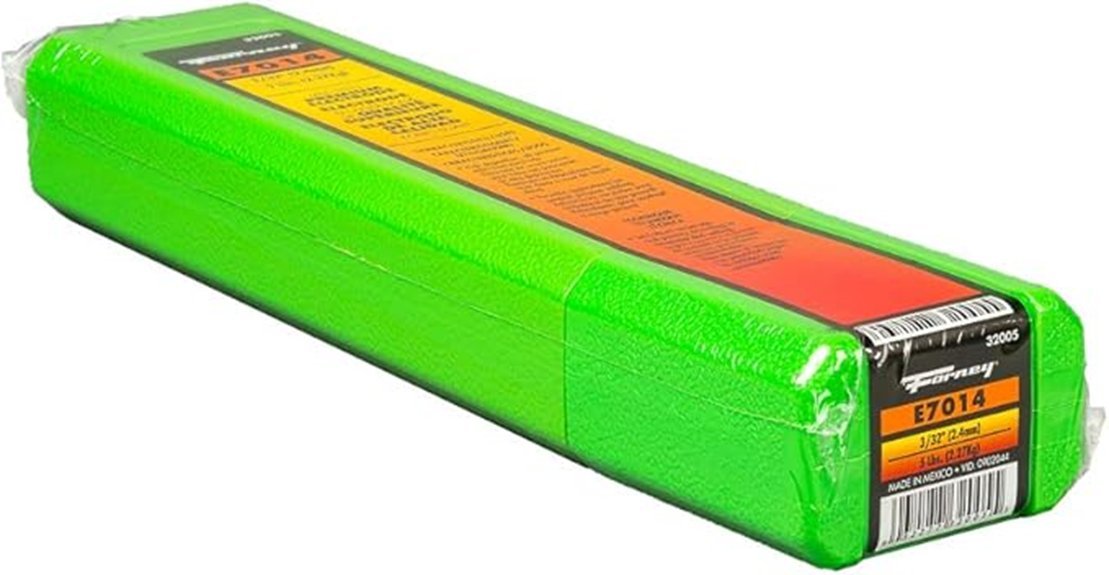
Choosing the right stick electrode matters when you need clean beads, steady arc control, and less cleanup on mild steel. The Forney 32005 E7014 Welding Rod is a 3/32-inch, 5-pound box of mild steel electrodes made for welders who want an easy-running rod with good appearance and low spatter. This review helps you decide whether it fits your maintenance, repair, sheet metal, ornamental iron, and general shop work. It is a strong choice for smooth operation, but it is not the best rod when you need the most aggressive digging action.
Quick Verdict
Rating: 8.4/10
Best For: Welders who want a smooth-running 3/32-inch E7014 rod for mild steel, sheet metal, ornamental iron, and repair work.
Bottom Line: The Forney 32005 E7014 is easy to run, produces low spatter, and works well when appearance and steady arc behavior matter. Skip it if you need a low-hydrogen rod for critical structural welds or a fast-freeze rod for heavy rust, deep root passes, or poor joint fit-up.
| Specification | Detail |
|---|---|
| Brand | Forney |
| Model | 32005 |
| Product type | E7014 mild steel stick welding electrode |
| Electrode size | 3/32 inch |
| Package weight | 5 pounds |
| Material/application | Mild steel welding |
| Electrode style | Iron-powder, high-deposition E7014 electrode |
| Recommended polarity | AC, DCEP, or DCEN |
| Recommended amperage | 70 to 90 amps |
| Tensile strength | 83,000 PSI |
| Penetration profile | Medium to shallow penetration, with smooth arc behavior and low spatter |
| Best use | Sheet metal, ornamental iron, poorly fitted joints, maintenance, and repair work |
| Warranty note | 30-day warranty against defects in material and workmanship under normal use and care |
What Is the Forney 32005 E7014 Welding Rod?
The Forney 32005 is a 3/32-inch E7014 stick welding electrode sold in a 5-pound package. It is designed for mild steel welding and uses an iron-powder coating that supports high deposition, smooth arc characteristics, and low spatter.
E7014 rods are often chosen when you want an easier bead appearance than a more aggressive digging rod can provide. This Forney version makes sense for shop repairs, ornamental iron, sheet metal, and maintenance work where you want steady operation and a clean-looking finish.
The rod can run on AC, DCEP, or DCEN, which helps if you use a basic AC stick welder or a DC-capable inverter machine. The recommended 70 to 90 amp range also fits many small stick welders, as long as your machine can run 3/32-inch electrodes comfortably.
Before You Buy: E7014 is not the same as E7018, E6010, or E6011. Choose this rod for smooth beads, low spatter, and easy operation on mild steel, not for code-critical low-hydrogen work or aggressive root penetration.
Who Should Buy It?
Best For
- DIY welders who want an easy-running 3/32-inch stick electrode for mild steel.
- Repair and maintenance work where smooth arc control and low spatter matter.
- Sheet metal, ornamental iron, and general shop projects that need good bead appearance.
Skip If
- You need a low-hydrogen electrode for structural or code-sensitive welds.
- You need deep root penetration on very rusty, thick, or poorly prepared steel.
- Your welder cannot run 3/32-inch rods in the 70 to 90 amp range.
Welding Characteristics and Performance
The Forney 32005 E7014 Welding Rod is built around smooth arc behavior, good arc stability, and low spatter. That makes it easier to control than many harsher-running rods, especially when you want a neat bead on mild steel.
Its iron-powder coating supports a higher deposition rate than some general-purpose electrodes. In practical terms, you can put down metal at a steady pace while keeping the puddle easier to watch and guide.
The official product description lists this E7014 rod as a medium-to-shallow penetration electrode. That matters because it should not be treated as a replacement for E6010 or E6011 when you need a forceful digging arc. It works best when ease of operation, bead appearance, and steady deposition are more important than maximum penetration.
Arc Stability, Spatter, and Slag
Arc stability is one of the main reasons to consider this rod. A stable arc helps you keep a more consistent travel speed and reduces the frustration that comes from frequent sticking, wandering, or rough starts.
Low spatter also helps during cleanup. You still need to chip slag and inspect the bead, but less scattered spatter can save time on small repairs, visible joints, and ornamental work.
The rod is especially useful when you want a smooth bead appearance on mild steel. That makes it a good match for visible brackets, light fabrication, shop fixtures, gates, railings, and non-critical repair work.
Application Suitability and Use Cases
The Forney 32005 E7014 is best suited for mild steel work where the joint does not require low-hydrogen control or an aggressive root pass. It fits common stick welding jobs where you want a clean, steady bead and a rod that is not difficult to run.
- Sheet metal and light mild steel fabrication
- Ornamental iron work where bead appearance matters
- Maintenance repairs on mild steel parts
- General shop projects, brackets, and fixtures
- Poorly fitted joints where easy operation and high deposition help
The original product listing also notes use on galvanized, rusty, oily, or painted materials. You should still clean the joint as much as practical before welding. Cleaner metal usually gives you better fusion, fewer inclusions, and more predictable results.
Surface Preparation and Maintenance Benefits
This rod can be forgiving in maintenance situations, but it does not remove the need for basic surface prep. Remove loose rust, paint, oil, zinc coating, and debris whenever you can do so safely.
For repair work, the benefit is speed. You may not need the same level of preparation that a more demanding process requires, but the weld still improves when you grind or brush the joint clean before striking an arc.
Forney positions this E7014 as useful where ease of operation and good appearance are required. That makes it a practical shop rod for small jobs, touch-ups, and mild steel parts that are not under critical load.
Pro Tip: Start near the middle of the 70 to 90 amp range, then adjust based on bead shape, slag behavior, and whether the rod feels too cold or too hot on your material thickness.
Compatibility and Setup
The Forney 32005 can run on AC, DCEP, or DCEN polarity. That gives you flexibility across common transformer welders and inverter stick welders, provided the machine supports the required amperage range.
Use the rod only with a stick welder, also called SMAW welding. It is not a MIG wire, TIG filler rod, or flux-core wire. A MIG machine cannot use this rod unless it also has a dedicated stick welding function.
For best results, match the rod to mild steel and choose your amperage based on your machine, joint type, and material thickness. Always follow your welder manual, electrode packaging, and basic welding safety practices.
How It Performs in Real Use
For General Shop Repairs
For small mild steel repairs, this rod gives you a stable arc and a smooth bead profile. It works well when you need to fix brackets, repair shop fixtures, or weld non-critical steel parts without fighting a harsh arc.
For Sheet Metal and Ornamental Iron
The medium-to-shallow penetration profile helps when bead appearance matters more than deep digging action. It is a smart fit for ornamental iron and light fabrication where you want a cleaner-looking weld after slag removal.
For Poorly Fitted Joints
The high-deposition E7014 design can help fill small gaps better than some lighter-running rods. You still need proper joint preparation, but this electrode can make imperfect fit-up easier to manage on mild steel projects.
For Maintenance Work
Maintenance welding often involves older metal, imperfect surfaces, and time pressure. This rod can handle practical repair work well, but you should clean the surface whenever possible and avoid using it for critical structural repairs unless the welding procedure allows it.
Common Mistakes to Avoid
Do not assume E7014 is the best rod for every job just because it is easy to run. It is better for smooth operation and appearance than for deep root passes or low-hydrogen requirements.
Do not weld over heavy paint, oil, or galvanizing without proper cleaning and ventilation. Galvanized steel can release harmful fumes, so remove the coating around the weld area when appropriate and use safe ventilation and PPE.
Do not ignore storage. Keep electrodes dry and protected from moisture. Damp rods can create poor arc behavior, excess spatter, porosity, and weak-looking beads.
Safety and Storage Notes
Stick welding creates heat, UV radiation, sparks, fumes, and slag. Use a proper welding helmet, gloves, protective clothing, ventilation, and fire-safe work area every time you weld.
Because this product is a welding consumable, storage matters. Keep the 5-pound box in a dry location and close it after use. Moisture exposure can reduce performance and make the rod harder to run cleanly.
For galvanized, painted, oily, or rusty steel, clean the weld area first and follow safe fume-control practices. When the job involves load-bearing parts, vehicle frames, trailers, pressure pipe, or code work, use the correct welding procedure and get qualified guidance.
Pros and Cons
Pros
- 3/32-inch size fits many small and mid-size stick welding jobs.
- 70 to 90 amp range works with many common stick welders.
- AC, DCEP, and DCEN compatibility gives you flexible setup options.
- Iron-powder E7014 design supports smooth arc behavior and low spatter.
- 5-pound package is practical for repeated shop, repair, and hobby use.
Cons
- Not the best choice for critical low-hydrogen welding procedures.
- Medium-to-shallow penetration may not suit deep root welds.
- Still needs proper surface cleaning for the strongest and cleanest results.
Is It Worth the Price?
The Forney 32005 E7014 is worth considering if you want a dependable mild steel electrode for general shop welding, repairs, and clean-looking beads. The 5-pound package also makes sense if you weld often enough to need more than a small trial pack.
Its best value comes from ease of use, broad polarity compatibility, and steady arc behavior. You get the most from it when your projects involve mild steel, visible welds, and practical repair work rather than critical structural welding.
It is not the best fit if you need a certified low-hydrogen electrode, a rod for deep root penetration, or a specialty electrode for stainless steel, cast iron, aluminum, or hardfacing work.
How It Compares to Alternatives
Compared with E6011, the Forney 32005 E7014 is usually smoother and cleaner to run, but it does not offer the same aggressive digging action. If your work involves dirty farm repairs or root passes, E6011 may be worth comparing.
Compared with E7018, E7014 is easier for many hobby welders to handle and does not focus on low-hydrogen performance. If your project requires stronger procedure control, structural welding, or low-hydrogen electrodes, E7018 may be the better match.
Compared with E6013, E7014 can offer higher deposition and a smooth bead on mild steel. The Forney 32005 makes the most sense when you want an easy-running rod for repair, sheet metal, ornamental iron, and appearance-focused mild steel work.
Frequently Asked Questions
What amperage should you use with the Forney 32005 E7014?
Forney lists the recommended range at 70 to 90 amps. Start near the middle of that range, then adjust based on material thickness, bead shape, slag behavior, and your welder’s output.
Can this rod be used with a MIG welder?
No, this is a stick welding electrode for SMAW welding. You need a stick welder or a multi-process welder with a stick welding mode.
What polarity works with the Forney 32005 E7014?
The rod can run on AC, DCEP, or DCEN. This makes it flexible for many basic AC stick welders and DC inverter machines.
Is E7014 good for beginners?
Yes, many beginners like E7014 because it runs smoothly and produces low spatter. You still need proper safety gear, clean metal, correct amperage, and practice to get consistent welds.
Is this rod good for rusty or painted metal?
The product listing describes it as useful for maintenance and repair work on less-than-perfect surfaces. Even so, you should remove loose rust, paint, oil, and coatings when possible for cleaner welds and safer fume control.
Can you use this rod for vertical and overhead welding?
The Amazon listing describes it as an all-position rod and mentions vertical and overhead use. Your results will depend on amperage, joint position, travel speed, and your skill with slag control.
Is Forney 32005 E7014 the same as E7018?
No. E7014 focuses on easy operation, smooth bead appearance, and high deposition, while E7018 is a low-hydrogen electrode used for different welding requirements. Do not substitute one for the other when a welding procedure specifies a rod type.
How should you store these welding rods?
Store them in a dry area and close the package after use. Moisture can hurt arc quality and increase the chance of poor weld appearance or porosity.
The Bottom Line
The Forney 32005 E7014 Welding Rod is a strong pick if you want a smooth, easy-running 3/32-inch mild steel electrode for shop repairs, sheet metal, ornamental iron, and general maintenance. It offers flexible polarity options, a 70 to 90 amp working range, and low-spatter performance, but it is not the right choice for every structural or deep-penetration job.
Buy it if you want a dependable E7014 rod for clean-looking mild steel welds. Skip it if your project calls for low-hydrogen electrodes, specialty materials, or a welding procedure that requires a different AWS classification.