Panel alignment before welding is the final fit check that keeps doors, fenders, hood edges, quarter panels, and replacement panels from being welded into the wrong position. Before you strike an arc, verify the panel against fixed reference points, compare the gaps to the undamaged side or OEM repair information, check flushness with a straightedge, and lock the mockup in place with clamps or Clecos.
Quick Answer
To check panel alignment before welding, mock up the full assembly, measure gaps at several points, confirm edge flushness with a straightedge, cross-measure fixed datum points, and test door, hood, latch, and fender movement. Lock the fit with clamps or Clecos, then recheck before each tack weld.
Key Takeaways
- Use OEM repair information or the undamaged side of the vehicle as your main reference, not a universal gap number.
- Check gaps, flushness, diagonals, latch action, and adjacent panels before welding.
- Use clamps, Clecos, magnets, or temporary screws to hold the panel without forcing the metal out of shape.
- After the first tack welds, pause and recheck the panel because heat and shrinkage can move thin sheet metal.
At a Glance
| Time Required | 20 to 60 minutes for most panels, longer for structural or multi-panel mockups |
| Difficulty | Moderate, because small panel shifts can create visible fit problems after welding |
| Tools Needed | Ruler, feeler gauges, straightedge, tram gauge or tape measure, marker, clamps, Clecos, panel magnets, and notebook |
| Cost | Usually $0 to $40 if you already own basic measuring tools and clamps |
Warning: Welding is hot work. Wear proper eye, hand, and skin protection, keep a fire extinguisher ready, remove or shield combustibles, and use ventilation for fumes. Follow the vehicle maker’s repair instructions and the safety guidance in OSHA 1910.252 before welding, especially around coatings, adhesives, seam sealer, foam, fuel lines, wiring, or interior trim.
Check Panel Alignment Before Welding
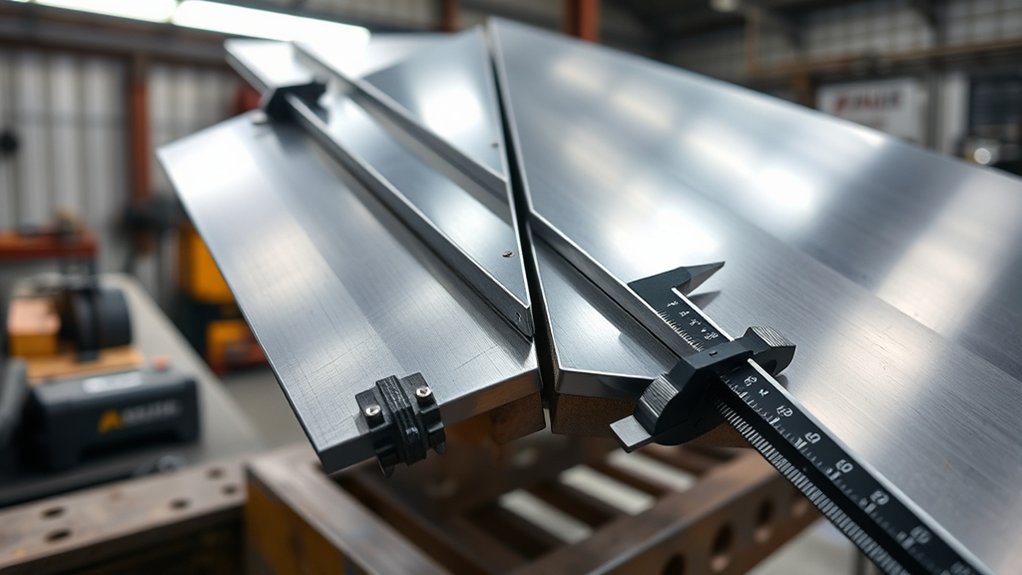
Before you weld, assemble the panel as close to its final position as possible. Install nearby panels that affect the reveal, such as the door, fender, hood, rocker, quarter panel, bumper cover, headlamp bracket, or latch support. A single panel can look correct by itself and still be wrong once the rest of the body is fitted.
Use OEM repair procedures when the work involves collision repair, structural parts, welded replacement panels, sectioning, or modern driver-assistance systems. OEM information can show approved weld locations, sectioning points, panel tolerances, and measurement points for that exact year, make, and model.
Start with fixed reference points that have not moved. Good references include the cowl edge, hinge pillar, striker area, rocker pinch weld, factory holes, frame datum points, and the matching gap on the undamaged side of the vehicle. If the vehicle has collision damage, measure the structure first. Do not use a damaged panel as your only guide.
Note: A gap near 1/8 inch is a common visual reference on many body panels, but it is not a universal rule. The correct target is the OEM specification, the matching side of the vehicle, or the surrounding factory panels.
Measure Gaps and Edge Flushness
Measure every panel gap at more than one point. For a door, check the top, middle, and bottom of the front and rear gaps. For a hood, check both fender gaps, the rear cowl gap, and the front latch-side spacing. For a fender, check the door edge, hood edge, rocker edge, and bumper or headlamp relationship.
Use a ruler or feeler gauges to check the gap width, then use a straightedge to check flushness. The surfaces should sit even with each other unless the factory body line calls for a slight step. If one edge is proud, low, bowed, or twisted, fix the panel position before welding. Welding will not hide poor fit, and heat can make a small fit problem harder to correct.
| Check | What You Want to See |
|---|---|
| Gap width | Even spacing from top to bottom or side to side, matched to OEM specs or the undamaged side |
| Edge flushness | Panel faces sit level with no proud edge, low edge, or step unless factory design requires it |
| Body line match | Character lines continue smoothly across the door, fender, quarter panel, and hood |
| Diagonal measurement | Corner-to-corner measurements are equal or within the vehicle maker’s tolerance |
Write down the measurements before you weld. A simple record helps you spot movement after clamping, after the first tack welds, and after the panel cools. If the gap changes after you tighten a clamp, the clamp is pulling the panel rather than holding it.
Test Door, Hood, and Fender Fit
With the gaps and edge flushness verified, test the door, hood, and fender as a full assembly. The door should open and close without lifting, dragging, or needing extra force. The lower door edge should track the rocker panel, and the leading edge should stay parallel with the fender. If the door drops when opened, correct hinge wear or hinge position before you use the door as a reference.
For a hood, check the gap along both fenders, then confirm the rear edge at the cowl and the front edge at the latch area. The hood should latch without being forced down, and the height bumpers should not be used to hide a crooked panel. For a fender, check the door gap first, then verify the hood gap, headlamp fit, bumper edge, and rocker or apron mounting points.
Cross-measure corner to corner when the opening must stay square. A tape measure can work for quick checks, but a tram gauge is better when you need repeatable measurements from body holes or datum points. If the diagonal measurements are different, the panel opening may be racked, even if the visible gap looks acceptable from one angle.
Pro Tip: Fit the panels with the latch, striker, hinges, seals, and nearby bolt-on parts installed when those parts affect the final position. A panel that fits without weatherstrip may sit differently once the seal pushes back.
Products Worth Considering

【Telescoping Tram Gauge】That’s a total game changer. Collapses to 28" for easy hauling, then extends to 10 feet in seconds. Metric & US markings? You bet. Real-world ready.

21inches closed to max 59 inches open
Use Clamps, Clecos, and Straightedges
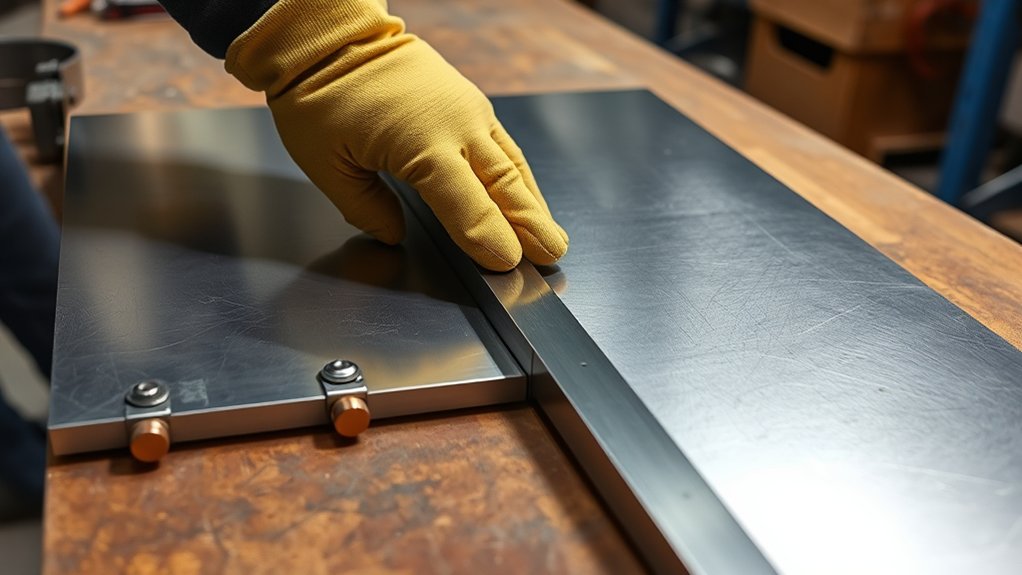
Use clamps and Clecos to lock the panels in place while you check alignment, so you can make quick corrections without the assembly shifting. Clecos are useful on flanges and plug-weld areas because they hold registration through drilled holes. Clamps are better where you need broad holding pressure. Panel magnets can help during mockup, but do not rely on them when the panel needs firm, repeatable positioning.
Keep clamp pressure even. A clamp should hold the panel in position, not bend the edge into position. If you have to force the panel hard to close a gap, stop and look for the real cause. Common causes include a bent flange, weld-through primer buildup, trapped seam sealer, a burr around a plug-weld hole, hinge wear, or a panel sitting on an old spot-weld remnant.
Run the straightedge across the seam after each clamp is tightened. If the edge rises or drops, loosen the clamp, adjust the panel, and measure again. This is also the time to verify any joint types for body panels so the flange, lap, butt, or plug-weld area is fitted correctly before heat is added.
| Tool | Best Use |
|---|---|
| Panel clamps | Holding butt joints or panel edges at a consistent gap |
| Clecos | Temporary fastening through holes on flanges and plug-weld areas |
| Straightedge | Finding high, low, bowed, or stepped edges before welding |
| Tram gauge | Checking fixed reference points and diagonal measurements |
| Marker and notebook | Recording gap and datum measurements before and after tack welding |
Products Worth Considering

Value Pack: The package includes 24 packs of butt welding clamps, enough quantity to meet your daily needs and replacements. Each butt welding clamps is individually wrapped in a small bag, convenient to carry and use.

Adaptability: Our butt welding clamps are suitable for both straight panels or curved panels. Maintains 0.40" gap between panels for edge-to-edge welding.They will work well in these 2 kinds of p

Product Purpose: Butt welding clamps set includes 8 welding corner square welder clamps, which can be used to make precision butt welds and edge-to-edge welds for patch repairs in floors, wings, door skins, fabricating, and re-skinning projects
Clean and Prepare the Weld Area
Panel alignment is not only about the visible gap. The mating surfaces must also sit flat and clean. Remove burrs, old weld nuggets, rust scale, heavy paint edges, seam sealer, adhesive squeeze-out, and debris that can hold the panel away from the flange. If the panel is galvanized or zinc-coated, follow the OEM procedure, product instructions, and ventilation requirements before grinding or welding. For more context on coated panels, review safe prep practices for MIG welding galvanized steel.
Use weld-through primer only where the vehicle maker or product instructions allow it. Do not apply heavy primer layers in a way that changes fit. In the actual weld zone, follow the repair procedure for clean metal, corrosion protection, and post-weld coating. A small coating buildup on a flange can change the gap enough to show after paint.
Tack Weld and Recheck Before Final Welding
Once the panel is aligned and clamped, place a small tack weld at a stable point, then recheck the gap and flushness. Do not fully weld one side before checking the rest of the panel. Thin automotive sheet metal moves as heat shrinks the weld area, so the safest method is to tack in a spaced pattern, move around the panel, and let the metal cool between welds.
After every few tack welds, check the straightedge, diagonal measurements, and panel operation again. Open and close the door or hood if that panel is part of the fit. If the panel moves, stop and correct it while the welds are still small enough to adjust. This saves more time than trying to grind, pull, and refit a fully welded panel later.
The best time to fix panel misalignment is before the first tack weld. The second-best time is after the first tack weld, before heat locks the mistake into the panel.
Troubleshoot Common Panel Alignment Problems
If the mockup still looks wrong, do not assume the new panel is the only problem. Work backward from the fixed points, then check the mounting surfaces, hinges, flanges, and adjacent panels.
| Problem | Likely Cause | Fix Before Welding |
|---|---|---|
| Gap tight at top and wide at bottom | Door, fender, or opening is tilted | Adjust hinges or panel position, then cross-measure the opening |
| Panel edge sits proud | Clamp pressure, bent flange, coating buildup, or trapped debris | Clean the flange, reduce clamp distortion, and reset the panel |
| Door closes only with force | Striker, latch, weatherstrip, or hinge alignment is off | Fit seals and latch parts, then adjust before welding nearby panels |
| Diagonal measurements do not match | Opening is racked or structure is still damaged | Measure from OEM datum points and correct the structure first |
| Gap changes after tack welding | Heat shrinkage or weak clamping | Skip around, cool between tacks, and recheck before continuing |
Verify Final Mockup Before Welding
Once the panels are clamped in their final mockup position, verify every gap and datum before you weld. Run the ruler across each seam, use the straightedge on the panel faces, and cross-measure corner to corner. Check door and fender gaps, hood-to-fender gaps, rocker alignment, latch operation, and body lines one last time.
Do a final visual inspection for curling edges, proud flanges, low corners, and clamp marks. Confirm that no wiring, insulation, foam, seam sealer, fuel components, glass, or interior trim sits in the heat path. Make sure the weld area is clean, dry, and supported. If anything moved during mockup, reset the clamps and measure again before welding.
- OEM repair information checked for the vehicle.
- Adjacent panels installed or mocked up.
- Gaps measured at several points and recorded.
- Flushness checked with a straightedge.
- Diagonal measurements checked from fixed reference points.
- Latch, striker, hinges, seals, and nearby trim test-fitted where needed.
- Clamps or Clecos holding the panel without bending it.
- Weld area cleaned and prepared according to the repair procedure.
- PPE, ventilation, and fire protection ready before welding.
Frequently Asked Questions
How do you prevent misalignment when welding body panels?
Mock up the full assembly first, measure the gaps at several points, check flushness with a straightedge, and hold the panel with clamps or Clecos. Tack weld in a spaced pattern, let the metal cool, and recheck the panel after every few tack welds.
What is the golden rule of panel alignment before welding?
The golden rule is to prove the fit before welding. If the panel gap, flushness, latch action, and diagonal measurements are wrong during mockup, they will usually be worse after heat and weld shrinkage.
What is panel alignment?
Panel alignment means positioning body panels so the gaps, edges, body lines, latch points, and surface height match the surrounding panels. Good alignment makes the repair look correct and helps doors, hood, and other moving parts work without binding.
Is 1/8 inch the correct panel gap before welding?
A gap near 1/8 inch is a common reference on many exterior panels, but it is not correct for every vehicle or every panel. Use OEM specifications first. If specs are not available for a cosmetic panel, compare the gap to the undamaged side and nearby factory panels.
How do you check welded joints for alignment?
Check the joint visually, then use a straightedge for flushness and a ruler or feeler gauge for gap consistency. For larger panels, cross-measure fixed reference points. If the joint moved after tack welding, stop and correct it before completing the weld.
Should you test-fit doors and hood before welding a fender or quarter panel?
Yes. Doors, hood, fenders, bumper edges, lights, and rocker panels often control the final reveal. Test-fitting adjacent panels before welding helps you catch a crooked opening, bad hinge position, or shifted support before the welded panel becomes difficult to move.
Why does panel alignment change after tack welding?
Alignment can change because welding heat shrinks the metal around the tack weld. Weak clamping, too much heat in one area, or a stressed panel can also pull the gap out of position. Tack in a spaced pattern and recheck often.
Conclusion
Before you strike an arc, confirm every contour, clearance, and corner. Check the OEM repair information, mock up adjacent panels, measure the gaps, verify flushness, cross-measure fixed points, and test the door, hood, fender, latch, and seals. When the full mockup fits without force, lock it with clamps or Clecos and tack slowly while rechecking the panel. Careful alignment before welding prevents crooked gaps, binding panels, heat distortion, and costly rework.
Sources
- OEM1Stop: Statement on Use of OEM Repair Procedures — supports using vehicle-specific OEM repair procedures, measurements, and tolerances.
- OSHA 1910.252: Welding, Cutting, and Brazing General Requirements — supports welding safety, fire prevention, PPE, ventilation, and zinc-bearing material precautions.
- OSHA: Welding, Cutting, and Brazing Overview — supports general welding hazard awareness.
- American Welding Society: Free Welding Safety Resources — supports welding safety topics including fumes, fire prevention, PPE, coated steels, and ventilation.