A weak tube joint can turn a small automotive cooling-system repair into a coolant leak, overheating, or another teardown. Brazing can make a durable connection on a confirmed copper or copper-brass part, but only when the component is repairable, the filler matches the metals, and the finished assembly is cleaned and tested to the vehicle maker’s procedure.
Quick Answer
Only braze a part after confirming it is copper or copper-brass and that the vehicle maker permits repair. Remove, drain, clean, and closely fit the part; use filler and flux approved for the exact metal pair; heat the base metals evenly; let capillary action draw in the filler; then clean, inspect, pressure-test, refill, and bleed the system.
Key Takeaways
- Confirm the component material and the OEM repair method before applying heat; many automotive heat exchangers and lines are aluminum, steel, plastic, or mixed-material assemblies.
- Copper-to-copper, copper-to-brass, and copper-to-steel joints do not use the same filler-and-flux combination.
- A clean, close-fitting joint lets capillary action pull molten filler through the connection.
- Heat the base metals broadly and evenly instead of melting the rod directly with the flame.
- Remove flux residue and test the repaired part only to the pressure and procedure listed for the vehicle.
At a Glance
| Time Required | About 60–120 minutes for an accessible, removed tube repair; component removal, refill, bleeding, and diagnosis can take longer |
| Difficulty | Advanced DIY; professional service is recommended for thin heat-exchanger cores, mixed metals, vehicle A/C, hybrids, and EV thermal systems |
| Tools Needed | Approved torch setup, tube cutter, deburring tool, abrasives, compatible filler and flux, clamps, PPE, fire extinguisher, and the correct cooling-system pressure tester |
| Cost | Consumables are modest if you already own approved torch and test equipment; buying the full setup can cost more than professional repair or component replacement |
What’s in This Article
- Why Brazing Matters in Automotive Cooling Systems
- Confirm the Part Is Copper and Repairable
- Engine Cooling Versus Vehicle A/C Lines
- Before You Begin: Safety, Time, and Setup
- Tools You Need for Effective Brazing
- Preparing Your Copper Pipes for Brazing
- Choosing the Best Filler Metal for Your Copper Pipes
- Torch Brazing Copper Pipes: Step by Step
- Induction Brazing
- Furnace Brazing
- Five Common Brazing Mistakes
- What to Do If Brazing Fails
- Pressure-Test, Refill, and Bleed
- Maintenance Tips
- When Replacement Is Safer
- Frequently Asked Questions
Why Brazing Matters in Automotive Cooling Systems
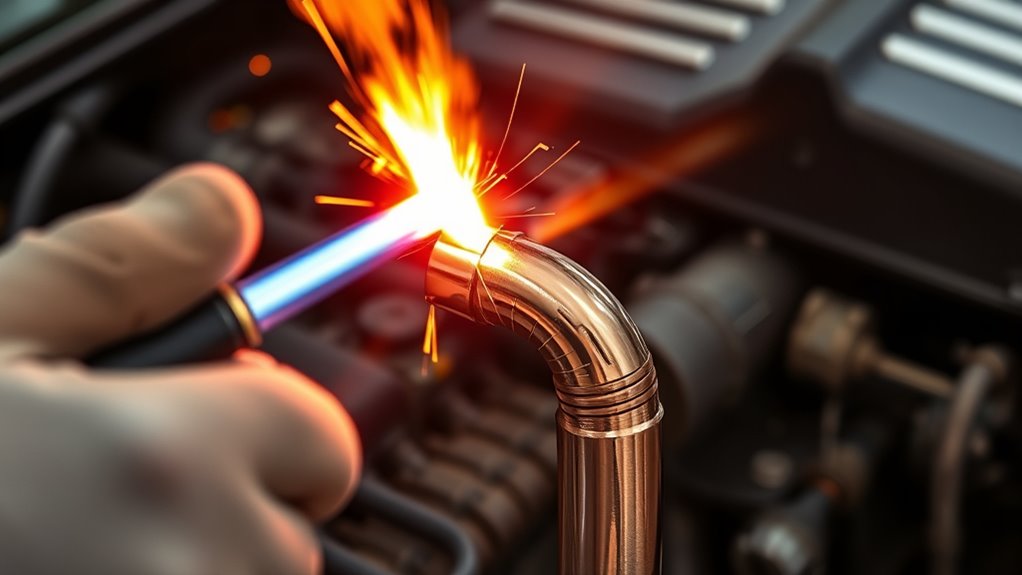
Brazing joins metal with a filler that melts above 840°F (450°C) but below the melting point of the base metals. The heated joint draws the molten filler through a close gap by capillary action. This can create a strong, leak-resistant connection without melting the copper tube itself. The Lucas-Milhaupt brazing fundamentals explain why joint fit, cleanliness, filler selection, and even heating all affect the result.
Automotive cooling parts must withstand heat cycles, pressure, vibration, coolant, and road exposure. A sound braze can work on a repairable copper or copper-brass component, but brazing is not automatically the correct fix for every radiator, heater core, oil cooler, or tube. Some older copper-brass radiator materials were selected for solderability, and many newer assemblies use aluminum cores with plastic tanks or factory-controlled joining methods.
The strongest repair begins with the correct diagnosis: identify the system, the base metals, and the approved repair method before lighting the torch.
Confirm the Part Is Copper and Repairable
Do not assume a reddish or dirty tube is copper. Remove paint, corrosion, and grime from a small noncritical area, then identify the material from the part number, service information, or a reliable material test. A magnet can help identify some steels, but it cannot prove that a nonmagnetic part is copper.
- Copper or copper-brass tube: May be suitable for brazing when the metal is thick enough, the joint can be cleaned and fitted correctly, and the OEM or component rebuilder permits repair.
- Aluminum tube or core: Requires aluminum-specific filler, flux, temperature control, and often a controlled production process. Do not use copper-phosphorus filler on aluminum.
- Plastic tank or plastic/composite line: Do not expose it to brazing heat. Replace or repair it only by the approved method.
- Steel or nickel connection: Requires a phosphorus-free filler and compatible flux; phosphorus-bearing copper filler can form brittle compounds on ferrous or nickel-base metals.
- Severely corroded, cracked, or thinned metal: Replace the part. Filler metal cannot restore missing base-metal strength.
The Copper Development Association lists copper alloys historically used in automotive radiator tubes and cores, including alloys valued for thermal conductivity, corrosion resistance, and solderability. That does not mean every radiator is copper or that every leak should be brazed. Verify the exact part first through the Copper Development Association alloy reference and the vehicle’s service information.
Note: “Copper pipe” is common search language, but automotive systems usually use formed tube, brazed fittings, heat-exchanger cores, hoses, and mixed-material assemblies. Do not substitute plumbing tube or fittings unless the vehicle or component manufacturer specifically approves them.
Engine Cooling Versus Vehicle A/C Lines
Engine coolant and mobile air-conditioning refrigerant are different systems. Engine cooling carries liquid coolant through the engine, radiator, heater core, and related circuits. A vehicle A/C system contains refrigerant and oil under pressure, and many A/C lines are aluminum rather than copper.
Warning: Never heat, cut, or braze a charged A/C line. In the United States, refrigerant must be recovered with certified equipment before service that could release it, and paid MVAC service requires EPA Section 609 certification. See the EPA motor-vehicle A/C servicing requirements.
Dry nitrogen flow is used in some refrigeration brazing work to limit internal oxidation, but it is not a substitute for refrigerant recovery, approved service procedures, or leak testing. For a vehicle A/C line, follow the manufacturer’s repair manual and use a qualified MVAC technician. For an engine-coolant tube, nitrogen purging is usually unnecessary unless the component maker specifically calls for it.
Before You Begin: Safety, Time, and Setup
Plan at least 60 to 120 minutes for an accessible repair after the component is removed. Tight access, diagnosis, draining, refill, bleeding, and repeat testing can add substantial time.
- Read the service information: Confirm the part can be repaired, note the approved material and joining method, and record the cooling-system test pressure and refill procedure.
- Let the vehicle cool completely: A hot cooling system can release steam and scalding coolant. Ford’s coolant guidance warns not to remove the pressure cap while the engine is running or the system is hot.
- Disconnect power: Disconnect the 12-volt battery when the service procedure calls for it. On hybrids and EVs, do not work near high-voltage wiring, battery cooling circuits, or electric coolant heaters without the required training and isolation procedure.
- Drain and capture the fluid: Use a clean container. Keep coolant away from children and animals, and take used antifreeze to an approved recycling or household hazardous-waste facility.
- Remove the component when possible: Keep the flame away from fuel, oil, wiring, hoses, paint, insulation, batteries, and plastic tanks.
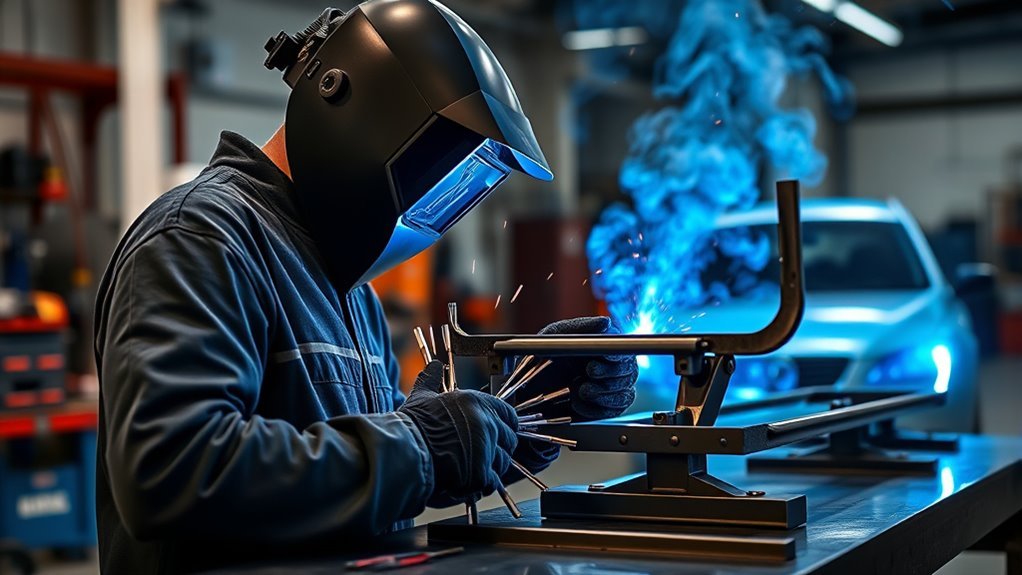
- Prepare the hot-work area: Use ventilation, eye and hand protection, flame-resistant clothing, a fire-resistant work surface, and a suitable extinguisher.
Warning: Do not braze a closed, pressurized, contaminated, or fuel-exposed part. OSHA identifies burns, eye injury, fumes, fire, and explosion as hot-work hazards and requires suitable fire protection where those hazards exist. Review OSHA’s welding, cutting, and brazing hazards before starting.
Tools You Need for Effective Brazing
Gather the full setup before lighting the torch:
- Approved torch and fuel system: Propane, MAP-Pro, air-acetylene, or oxy-fuel equipment may be appropriate depending on tube size, joint mass, and filler requirements. Use only the regulator, hose, tip, check valves, and flashback protection specified for the setup.
- Correct brazing filler: Match the AWS classification or manufacturer product to the exact base-metal pair and service conditions.
- Compatible flux: Use the filler maker’s flux when required. Do not allow excess flux to enter a coolant or refrigerant passage.
- Tube cutter and deburring tool: Make a square cut and remove inside and outside burrs.
- Dedicated abrasives and brushes: Use clean emery cloth, abrasive pads, or a stainless brush reserved for the base metal.
- Cleaner: Use a residue-free cleaner approved for the component, then allow it to dry fully before applying heat.
- Clamps or fixtures: Hold alignment without crushing thin tube.
- Heat protection: Use a fire-resistant blanket or heat shield to protect nearby surfaces.
- PPE and fire equipment: Wear safety glasses with suitable shade protection for the torch process, heat-resistant gloves, long sleeves, and closed footwear; keep an extinguisher ready.
- Inspection and test tools: Use a light, mirror, magnification if needed, and the correct cooling-system pressure tester and adapter.
Inspect cylinders, regulators, hoses, and connections before use. Keep oxygen equipment free of oil and grease, secure cylinders upright, and follow the equipment maker’s lighting and shutdown sequence. OSHA’s oxygen-fuel gas requirements describe key handling precautions.
Products Worth Considering

Powerful Self-Ignition System: Built-in piezo igniter ensures instant lighting. Tested 30,000+ times, this propane torch is ready for any brazing, welding, or plumbing task

MULTI-PURPOSE TORCH KIT: Ideal for soldering, thawing, sweating pipes, any general repair works, and DIY heat applications
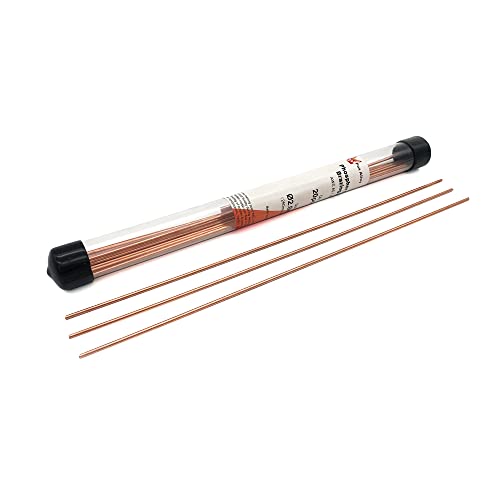
Material: The package includes 20PCS 2.0mm cooper brazing rods BCuP-2 brass brazing rod
Preparing Your Copper Pipes for Brazing
Good brazing starts before heat is applied. The filler cannot wet dirty or oxidized metal, and capillary action cannot fill a joint that is badly misaligned or too loose.
Cleaning Pipe Surfaces
Cut back to sound metal. Remove coolant deposits, paint, oil, old flux, oxide, and loose filler. Deburr the inside and outside edges, then clean the mating surfaces until the metal is bright. Use a residue-free cleaner after mechanical cleaning, and braze soon after preparation so the surfaces do not become contaminated again.
Do not expect flux to clean a greasy or corroded part. Flux protects the prepared surfaces from oxidation during heating and helps the filler wet the joint; it does not replace proper cleaning.
Ensuring Proper Fit
A tubular lap or socket joint needs full engagement, correct alignment, and a small, even clearance. Lucas-Milhaupt shows that many capillary brazed joints work in a very close clearance range, often around 0.001–0.005 inch, but the correct room-temperature fit depends on the filler, joint length, base metals, and their thermal expansion. Follow the filler technical data and component drawing rather than forcing one universal gap.
Dry-fit the pieces, mark the insertion depth, and support the assembly so it cannot move as the filler solidifies. Do not rely on a large external fillet to compensate for a loose joint; capillary penetration inside the overlap is what matters.
Pro Tip: Practice the same joint, tube wall thickness, filler, and torch setup on scrap material. A practice coupon reveals whether your heat pattern and fit produce full filler penetration before you risk the vehicle part.
Choosing the Best Filler Metal for Your Copper Pipes
Choose filler by base-metal combination, joint clearance, vibration, temperature, corrosion exposure, and the component maker’s instructions. “Silver brazing rod” is not a complete specification because silver-bearing fillers have different compositions and uses.
| Base Metals | Typical Filler/Flux Direction | Important Limit |
|---|---|---|
| Copper to copper | A phosphorus-bearing copper or silver-copper-phosphorus filler may be self-fluxing on clean copper when its manufacturer says so | Choose a ductile alloy for vibration and thermal cycling; follow the product data sheet |
| Copper to brass | A compatible phosphorus-bearing or silver filler generally requires the recommended flux | Avoid overheating brass because zinc-bearing surfaces can oxidize and fume |
| Copper to steel or nickel-base metal | Use a phosphorus-free silver brazing filler with the specified flux | Do not use phosphorus-bearing BCuP filler; brittle phosphides can form |
| Copper to aluminum | Use only a process and consumables specifically engineered for this dissimilar-metal joint | Usually a specialist repair or replacement; basic copper brazing guidance does not apply |
For example, the manufacturer describes Sil-Fos 15 (AWS BCuP-5) as a copper-to-copper filler whose phosphorus acts as the fluxing agent on copper; flux is recommended for brass. Its higher ductility within that product family can help where thermal cycling and vibration matter. The exact alloy still must match the approved repair procedure.
Read the filler and flux safety data sheets. Avoid unidentified, obsolete, or cadmium-bearing filler. Do not choose filler only because it melts easily or is already in the toolbox.
Products Worth Considering

Durable Material – High-quality 15% silver brazing rods create strong, clean joints for any repair job.

[Professional Brazing Solution] Designed for HVAC technicians, refrigeration specialists, plumbers, and repair professionals who need reliable brazing performance in demanding jobs.

Quality Material: our silver brazing rods are made from 15% silver and carefully selected elements, ensuring reliable performance and safer use; Ideal for various home repairs, they offer a practical and convenient solution for everyday patching needs
Torch Brazing Copper Pipes: A Step-by-Step Guide
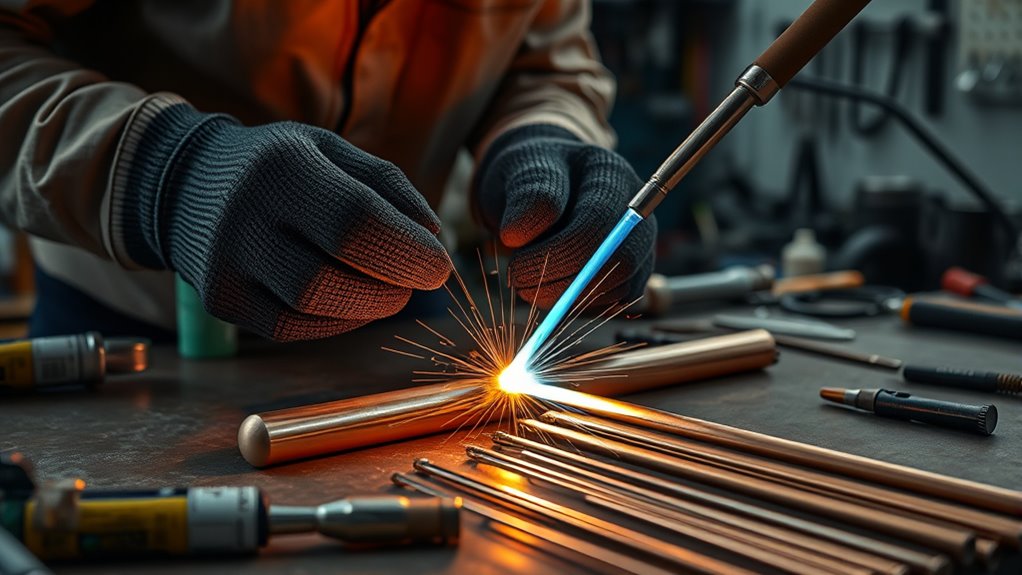
Use this sequence only for a removed, confirmed copper or copper-brass engine-cooling component that the service information allows you to repair.
- Confirm the repair: Identify the component, base metals, approved joining method, filler, test pressure, coolant, and bleeding procedure.
- Cool, isolate, drain, and remove: Let the vehicle cool, disconnect power as required, drain the coolant into a suitable container, and remove the component when practical.
- Cut back to sound metal: Remove cracked, stretched, pitted, or heat-damaged material. Replace the component if sound wall thickness cannot be restored.
- Deburr and clean: Make square cuts, remove burrs, brighten the mating surfaces, degrease them, and let them dry.
- Test-fit and fixture: Confirm full insertion, correct capillary clearance, and stable alignment. Protect nearby surfaces with a heat shield.
- Apply flux when required: Brush on a thin, even coat of the exact flux specified for the filler and metals. Keep excess flux out of the tube.
- Light and adjust the torch: Follow the torch maker’s sequence. Use the flame condition recommended by the filler supplier; oxy-fuel copper brazing commonly uses a neutral to slightly reducing flame rather than an oxidizing flame.
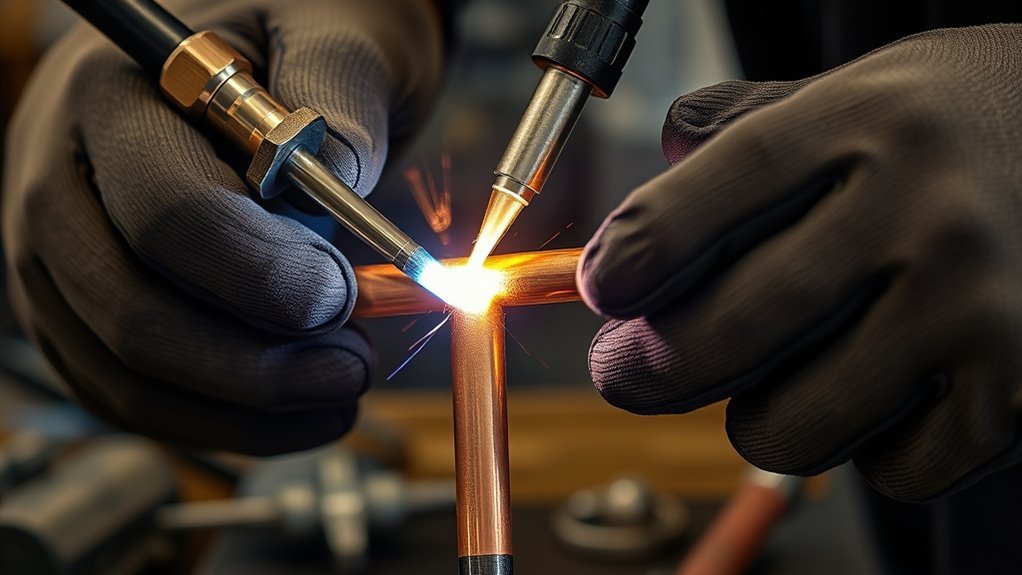
- Heat the base metals evenly: Sweep the flame around the fitting and tube, spending more time on the heavier section. Do not hold the inner cone in one spot.
- Feed the filler at the joint: Touch the rod to the heated joint opposite or slightly away from the flame. The base-metal heat—not direct flame on the rod—should melt and draw the filler through the overlap.
- Stop when the joint is filled: Remove heat as soon as filler has flowed around the connection. Excess heat can burn flux, oxidize copper, melt thin fins, or loosen nearby factory joints.
- Cool naturally and clean: Keep the assembly still until the filler solidifies. Do not quench unless the filler manufacturer specifically instructs it. Remove all flux residue by the approved method.
- Inspect and test: Check the full circumference for smooth wetting, gaps, cracks, pinholes, burnt areas, and distortion. Pressure-test only to the OEM value, then refill and bleed with the specified coolant.
Brazing filler melts above 840°F (450°C), so this is not a soft-solder repair. Broad heating keeps both sides of the joint at brazing temperature and helps the filler wet the surfaces evenly. The Lucas-Milhaupt brazing tips guide illustrates fit, cleaning, flux selection, flame adjustment, and filler application.
Note: If the filler balls up, smears, or follows the flame without entering the joint, stop. The usual causes are contamination, insufficient base-metal heat, burnt flux, wrong filler, or excessive clearance—not a need to pile more rod on the outside.
Induction Brazing: How to Connect Copper Pipes
Induction brazing uses an electromagnetic field instead of an open flame. It can deliver fast, repeatable, localized heat when the coil, power level, joint geometry, and filler placement are engineered together.
- Prepare and fixture the joint: Clean the surfaces, set the specified clearance, apply the approved flux or atmosphere, and hold the parts in position.
- Position the induction coil: Center the coil so the intended joint area heats evenly without overheating nearby thin sections.
- Run the qualified heat cycle: Use the validated power and time settings for the assembly.
- Apply or preplace filler: Let the heated base metals draw the filler through the joint.
- Cool, clean, and inspect: Remove residue and test the assembly to its specification.
Induction brazing is mainly a shop or production method, not a shortcut for an in-vehicle repair. It reduces open-flame exposure but still creates hot surfaces and fumes and still requires a qualified process.
Furnace Brazing for Automotive Cooling Systems: Key Advantages
Furnace brazing is used for production assemblies such as heat exchangers that contain many joints. It heats the complete assembly in a controlled cycle and may use a protective atmosphere, vacuum, or a material-specific flux system.
Uniform heating and preplaced filler can improve repeatability, but furnace parameters are engineered for a specific alloy and assembly. This is not a practical field-repair method.
| Advantage | Description | Impact on Production |
|---|---|---|
| Controlled Atmosphere | Can limit oxidation when matched to the alloy system | Improves joint consistency |
| Batch Processing | Brazes many joints during one controlled cycle | Supports production volume |
| Pre-shaped Filler Metals | Places a measured amount of filler at each joint | Improves repeatability |
| Process-Specific Flux Control | Some atmospheres reduce or eliminate separate flux; other systems require specialized flux | Can simplify post-braze cleaning |
| Uniform Heating | Reduces large temperature differences across the assembly | Helps control distortion |
Top 5 Common Mistakes in Brazing Copper Pipes and How to Avoid Them
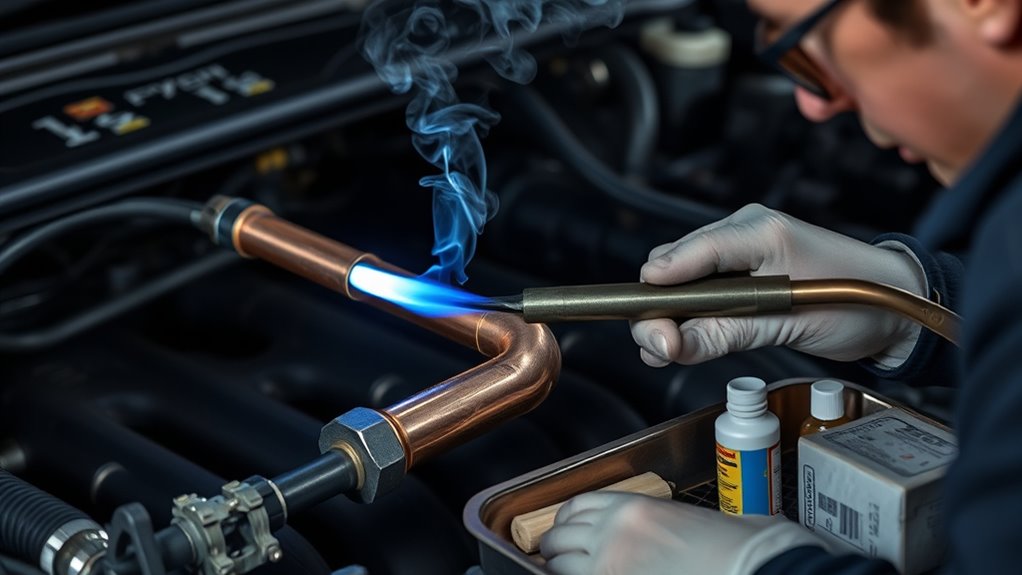
- Brazing the wrong part or material: Verify copper or copper-brass and confirm that repair is allowed. Do not apply this method to aluminum, plastic, refrigerant-charged, or high-voltage thermal-system components.
- Skipping preparation or using a loose fit: Remove all contamination, cut back to sound metal, deburr, and create the clearance specified for the filler and joint.
- Using the wrong filler or flux: Match the exact metals. Never use phosphorus-bearing filler on steel or nickel-base metal, and use flux on brass or dissimilar-metal joints when the filler maker requires it.
- Heating one spot or melting the rod directly: Heat both base metals broadly and evenly, then let the joint heat melt the filler. Stop before the copper, brass, nearby solder, or thin fins overheat.
- Skipping cleanup and testing: Flux residue can promote corrosion, and a pretty external fillet does not prove full penetration. Clean, inspect, pressure-test, refill, and recheck the repair.
Pro Tip: Watch the joint, not the rod. When the base metals reach the filler’s working temperature, the rod will melt on contact and flow toward the hottest clean area.
What to Do If Your Torch Brazing Fails?
Stop heating and let the part cool. Repeatedly reheating a contaminated or thinned joint can enlarge the damage. Inspect the base metal, fit, flux condition, and filler choice before attempting another repair.
Apply heat to the base metals around the joint—not just to the filler rod—so the joint can draw the filler into the gap.
| Symptom | Likely Cause | Corrective Action |
|---|---|---|
| Filler beads up | Oil, oxide, wrong flux, or base metal below working temperature | Remove all filler and residue, restore bright metal, verify consumables, and reheat the joint evenly |
| Filler stays on the outside | Gap too large, poor overlap, or heat applied only at the edge | Rebuild the fit or replace the tube/fitting; do not bridge a structural gap with a large fillet |
| Black, crusted surface | Overheating, oxidizing flame, or burnt flux | Stop, clean to sound metal, check flame and heat input, and replace the part if the wall has eroded |
| Leak after cooling | Incomplete penetration, pinhole, crack, or leak outside the repaired joint | Depressurize, clean, locate the exact leak, and decide whether one controlled rework or replacement is safer |
| Joint cracks after service | Brittle filler, poor support, vibration, thermal stress, or incompatible metals | Replace the damaged section, correct support/alignment, and use the approved ductile filler and joint design |
Re-clean all surfaces before a second attempt. Remove old flux, burnt residue, and filler lumps that prevent the parts from seating. If the tube wall is thin, the joint has been overheated more than once, or a crack reaches a tank, header, fin pack, or mounting point, replace the component.
Pressure-Test, Refill, and Bleed the System
A brazed cooling-system repair is not complete until it passes a controlled leak test and the system is refilled correctly.
- Clean and dry the part: Remove flux residue and moisture so seepage is visible.
- Inspect before pressure: Look for pinholes, incomplete flow, cracks, distortion, and heat damage to nearby joints.
- Install the correct tester: Use the adapter made for the radiator neck or expansion tank.
- Pressurize only to the specified value: Use the vehicle service manual or pressure-cap rating. Do not exceed it to “prove” the repair.
- Hold and inspect: Watch the gauge and every repaired surface. A pressure drop can also come from hoses, caps, pumps, heaters, coolers, or hidden leaks.
- Release pressure safely: Depressurize the tester before removing adapters or opening the system.
- Refill with the exact coolant: Use the coolant type and mixture specified for the VIN, model year, and powertrain. Do not mix formulas based only on color.
- Bleed the system: Follow the OEM vacuum-fill, bleed-screw, scan-tool, heater-control, or warm-up procedure. Some engines can trap air and overheat if filled incorrectly.
- Recheck cold: After a complete heat cycle and cool-down, inspect the joint and verify coolant level again.
Warning: Never open a hot cooling system. Steam and scalding coolant can escape under pressure. Follow the vehicle maker’s cap-removal and refill instructions, such as Ford’s engine-coolant safety guidance.
Maintenance Tips for Long-Lasting Copper Connections
- Inspect the joint when the engine is cold: Look for wetness, colored crust, white or green residue, staining, or a sweet coolant odor.
- Maintain the correct coolant: Use the specified formula and service interval. Incorrect coolant or mixed chemistry can accelerate corrosion in metals, seals, and heat exchangers.
- Check mounting and support: A rigid, unsupported tube can crack from engine movement and road vibration even when the braze itself is sound.
- Watch the coolant level and temperature: Repeated coolant loss, heater changes, bubbling, or rising temperature needs diagnosis rather than repeated top-offs.
- Keep dissimilar metals isolated as designed: Retain factory clips, sleeves, coatings, and electrical grounds that help control rubbing or galvanic corrosion.
Inspect the entire circuit, not only the repaired spot. A new leak may expose excess system pressure, a failed cap, combustion-gas intrusion, poor hose support, freeze damage, or widespread corrosion.
When Replacement Is Safer Than Brazing
Replace the component or use a qualified specialist when any of these conditions apply:
- The part is aluminum, plastic, composite, or an unknown alloy.
- The vehicle maker says the assembly is nonrepairable or requires a factory process.
- The leak is in a thin radiator or heater-core fin pack, plastic-tank crimp, header plate, oil cooler, charge-air cooler, or multilayer heat exchanger.
- Corrosion extends beyond the visible hole or the tube wall collapses during cleaning.
- The repair is on a charged A/C refrigerant line or near an airbag, fuel system, battery, high-voltage cable, or EV battery thermal circuit.
- The joint has already been overheated or reworked several times.
- The repaired part cannot be pressure-tested and inspected safely off the vehicle.
A replacement part is often the more reliable choice when labor to remove, clean, rebraze, pressure-test, reinstall, refill, and bleed approaches the cost of a sound replacement.
Frequently Asked Questions
Do You Use Flux When Brazing Copper A/C Lines?
Use flux only when the filler and base-metal combination requires it. Phosphorus-bearing filler can be self-fluxing on clean copper-to-copper joints, while copper-to-brass and copper-to-steel joints usually need a specified flux. A vehicle A/C system must first be recovered and serviced under the applicable EPA and OEM procedures.
What Gas Do You Use to Braze Copper Pipe?
Propane, MAP-Pro, air-acetylene, and oxy-fuel torches can all be used for suitable copper joints. Tube size, joint mass, filler working temperature, access, and the torch maker’s instructions determine the correct setup. The goal is broad, even heating without burning flux or melting thin base metal.
What Metals Cannot Be Brazed?
Many metals can be brazed with a qualified process, but not with one universal rod or torch method. Aluminum, magnesium, titanium, coated metals, and some dissimilar-metal combinations need special fillers, fluxes, atmospheres, and temperature control. Replace or use a specialist when the alloy is unknown.
Do You Braze Copper Pipes?
Yes. Copper tube can be brazed when the joint needs the strength or temperature capability of brazing and the component design permits it. Clean metal, a close lap joint, correct filler, controlled heat, residue removal, and pressure testing are all required.
Can You Rebraze a Leaking Copper Cooling-System Joint?
Sometimes. Rebraze only when the tube and fitting still have sound wall thickness, the old filler and flux can be removed, the fit can be restored, and the service procedure allows it. Replace a joint that is cracked, thinned, distorted, repeatedly overheated, or attached to a failing core or tank.
How Do You Know If a Brazed Copper Joint Is Good?
A sound joint shows smooth wetting around the circumference, no pinholes, cracks, burnt areas, or distortion, and evidence that filler entered the overlap rather than sitting only on the surface. It must also hold the OEM-specified test pressure without seepage or gauge loss.
Can You Braze a Radiator While It Is Still in the Vehicle?
Removing the component is safer and gives better cleaning, heat control, and inspection. In-vehicle hot work can damage plastic tanks, fins, wiring, paint, hoses, batteries, and nearby fuel or oil residue. Do not proceed unless the service procedure specifically permits it and the hot-work area can be made safe.
Should You Purge Automotive Copper Tube With Nitrogen While Brazing?
Dry nitrogen flow can limit internal scale in refrigeration tubing, but it is not normally needed for an open, drained engine-coolant tube unless the component maker specifies it. For vehicle A/C, refrigerant recovery, nitrogen use, brazing, evacuation, and charging should be handled under the OEM and EPA service requirements.
Safety Disclaimer: This article is for informational purposes and does not replace vehicle-specific service information, hot-work training, refrigerant certification, or professional diagnosis. Stop and use a qualified technician when the material, system pressure, filler selection, high-voltage isolation, or repairability is uncertain.
Conclusion
Brazing copper tube in an automotive cooling assembly is not just a matter of heating a leak and adding rod. First confirm that the part is copper or copper-brass, that repair is permitted, and that the job is on an engine-coolant component rather than a charged refrigerant or high-voltage thermal system.
Build the repair around sound metal, close fit, the correct filler-and-flux combination, broad heat, complete residue removal, and an OEM-limited pressure test. When the part is thin, mixed-material, badly corroded, or difficult to test, replacement is usually the safer and more durable repair.
Sources
- OSHA: Welding, Cutting, and Brazing—Hazards and Solutions — hot-work health, eye, burn, electrical, and fire hazards
- OSHA 29 CFR 1910.252: General Requirements — fire prevention, extinguisher readiness, and fire-watch precautions
- U.S. EPA: Regulatory Requirements for MVAC System Servicing — refrigerant recovery equipment, venting, and Section 609 requirements
- Lucas-Milhaupt: Brazing Fundamentals — capillary action, joint design, clearance, heating, and filler flow
- Lucas-Milhaupt: Brazing Tips and Techniques — copper preparation, filler/flux selection, flame control, and copper-to-steel limitations
- Copper Development Association: C26130 Alloy — automotive radiator-tube uses and material properties