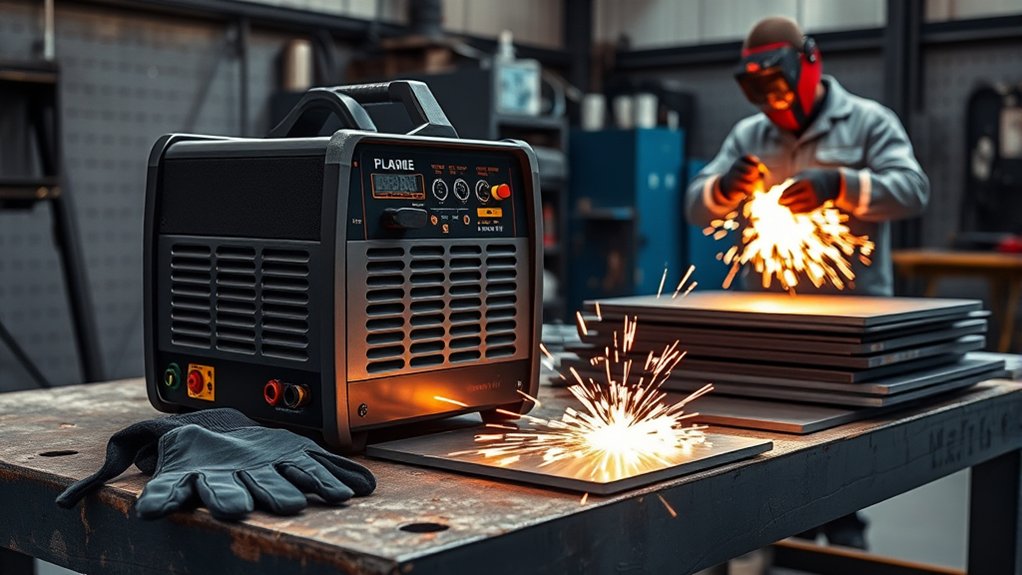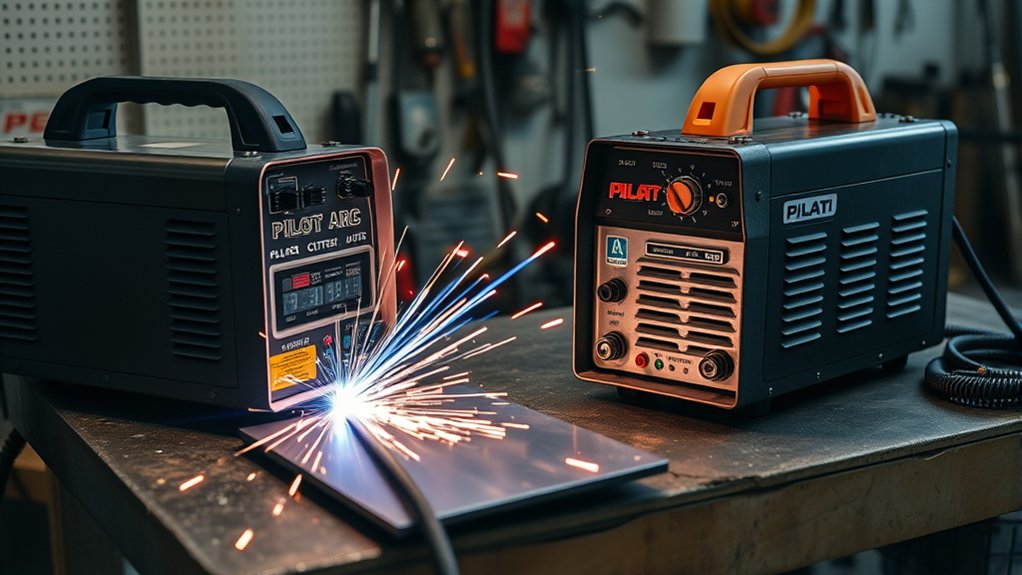
Starting plasma cutting with clean edges comes down to safe setup, clean metal, correct air pressure, and steady torch control. Before you cut your final piece, match the machine to the metal thickness, inspect the consumables, clamp the work lead to clean bare metal, and make a test cut on scrap from the same material.
Quick Answer
To start plasma cutting cleanly, wear proper eye, face, hand, and respiratory protection, use clean dry air, set amperage for the metal thickness, attach the ground clamp to bare metal, and keep a steady travel speed so the sparks trail under the cut.
Key Takeaways
- Use safety glasses or a face shield with the correct filter shade for your machine and arc visibility.
- Clean the workpiece and clamp the work lead to bare metal before you strike the arc.
- Clean, dry, oil-free air is critical for a stable arc and longer consumable life.
- Too much dross usually means speed, amperage, air pressure, standoff, or consumables need adjustment.
At a Glance
| Time Required | 15-30 minutes for setup and practice cuts |
| Difficulty | Beginner to intermediate |
| Tools Needed | Plasma cutter, clean dry compressed air, ground clamp, straightedge or guide, clamps, PPE, scrap test metal, wire brush or grinder |
| Cost | Low if you already own the cutter; expect ongoing costs for consumables, air filtration, PPE, and scrap practice material |
Essential Safety Gear and Precautions
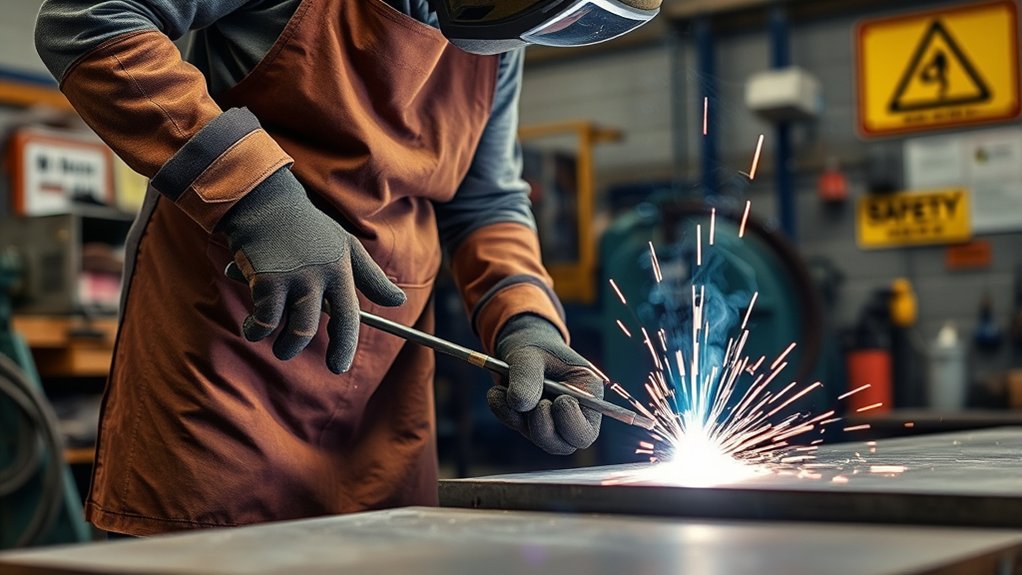
Before you start cutting, set up your personal protection and work area first. Plasma cutting creates arc light, sparks, hot metal, fumes, noise, and compressed-air hazards, so do not treat it like ordinary grinding or sawing.
Use eye and face protection that matches your plasma cutter and the work being done. OSHA eye and face protection guidance says filter lenses must have a shade number suitable for the operation. Many low-amperage plasma kits include shade 5 glasses, but OSHA’s plasma arc cutting table lists higher minimum shades when the arc is clearly visible. Start darker, then move lighter only if you can see the cut safely and you are still following the machine manual.
Wear flame-resistant clothing, leather gloves, closed-toe leather boots, and hearing protection. Avoid polyester, nylon, and loose synthetic clothing because sparks can melt them into the skin. A face shield or cutting helmet also protects your face from flying slag and hot sparks.
Warning: Plasma cutting is hot work. Remove combustibles from the area, keep a suitable extinguisher nearby, and do not cut near flammable liquids, vapors, sawdust, rags, fuel tanks, or pressurized containers.
Use ventilation every time you cut. Cutting coated, painted, galvanized, stainless, lead-painted, or unknown metal can release harmful fumes. CDC/NIOSH welding fume guidance notes that welding fumes contain metals, and inhaled manganese can affect the lungs, liver, kidneys, and nervous system. Use local exhaust, a fume extractor, or outdoor airflow that moves fumes away from your breathing zone.
Do not use ordinary dust masks as your main protection against metal fumes. If a respirator is needed, use the correct NIOSH-approved type for the hazard and make sure it seals properly. For confined spaces or hazardous coatings, follow a written safety procedure and get qualified help.
Products Worth Considering

Lens Technology- IR 5.0 Filter Green Lens are ANSI & CSA compliant, with 99% protection from UV rays to reduce eye fatigue and prevent damage.

✅Arc & Flame Resistant for Life - This 7 oz material is a soft, breathable cotton. They will remain arc and flame retardant regardless of the washes and wear cycles. These cotton fr balaclavas are NFPA 70E Compliant, HRC / CAT 2, EBT = 12 cal/cm² and meet ASTM F1506.
Selecting the Right Plasma Cutting Machine
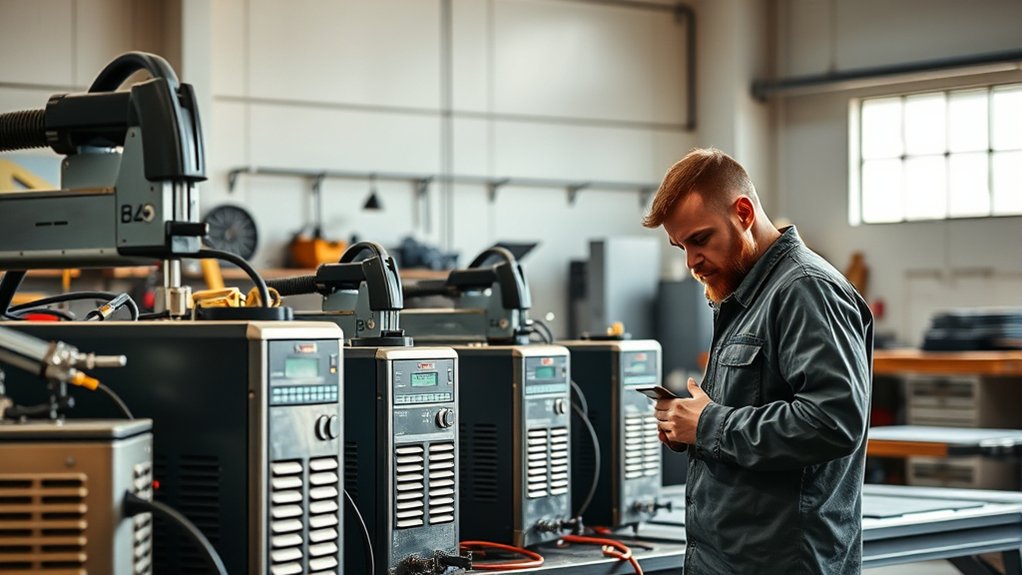
Select your plasma cutter by metal thickness, duty cycle, power supply, air demand, and the type of work you do most often. Thin sheet metal, brackets, and small repair work do not need the same output as heavy plate or frequent shop production.
For example, the Hypertherm Powermax30 XP is a 15-30 amp plasma cutter with a recommended cut capacity of 10 mm, or 3/8 inch. Hypertherm lists its air need as clean, dry, oil-free air or nitrogen at 4 scfm at 80 psi. That makes it a better fit for thinner material, portable jobs, and smaller shop setups.
The Hypertherm Powermax45 XP has a 10-45 amp output range and a recommended cut capacity of 16 mm, or 5/8 inch. It also needs a stronger air supply, listed by Hypertherm at 188 L/min, or 400 scfh, at 90 psi. If your compressor cannot keep up, the arc will sputter and the cut edge will suffer.
Match the plasma cutter to both the metal thickness and the air supply. A powerful cutter with weak, wet, or oily air will still make rough cuts.
Products Worth Considering

COMPLETE BUILT-IN AIR SYSTEM: Equipped with an integrated high-performance air pump, this plasma cutter eliminates the need for an external air compressor—simply plug into power and start cutting with no extra equipment or complicated setup required

2.8 in. LCD Screen – For an easier and user friendly user interface.

【Built in Air Compressor Save Costs & Space】:Complete Built in AIR SYSTEM,Zero External Units Needed,Integrated high-efficiency air pump eliminates the need for separate air compressors. Reduces equipment investment and maintenance by removing standalone compressors. Maximizes workshop space utilization,simply plug into power and start cutting with no extra equipment or complicated setup required.
How to Set Up a Plasma Cutter Before Cutting
A clean cut starts before the torch touches the work. Use this setup order before every practice cut and every final cut.
- Inspect the torch consumables. Check the electrode, nozzle, swirl ring, shield, and retaining cap. Replace worn, cracked, or clogged parts.
- Drain the compressor tank. Water in the air line makes the arc unstable and shortens consumable life.
- Check air pressure while air is flowing. Static pressure can look fine, then drop when the torch fires.
- Clean the metal. Remove paint, heavy rust, oil, and mill scale from the cut line when possible.
- Attach the ground clamp to bare metal. Keep it close to the cut and away from loose paint, rust, or dirt.
- Set amperage for the metal thickness. Use the chart in your machine manual as the starting point.
- Make a test cut on scrap. Use the same metal type and thickness before cutting the final piece.
Pro Tip: If the cut quality suddenly gets worse, check the simple things first: wet air, a loose ground clamp, worn consumables, incorrect standoff, or travel speed.
Understanding Arc Starting Methods
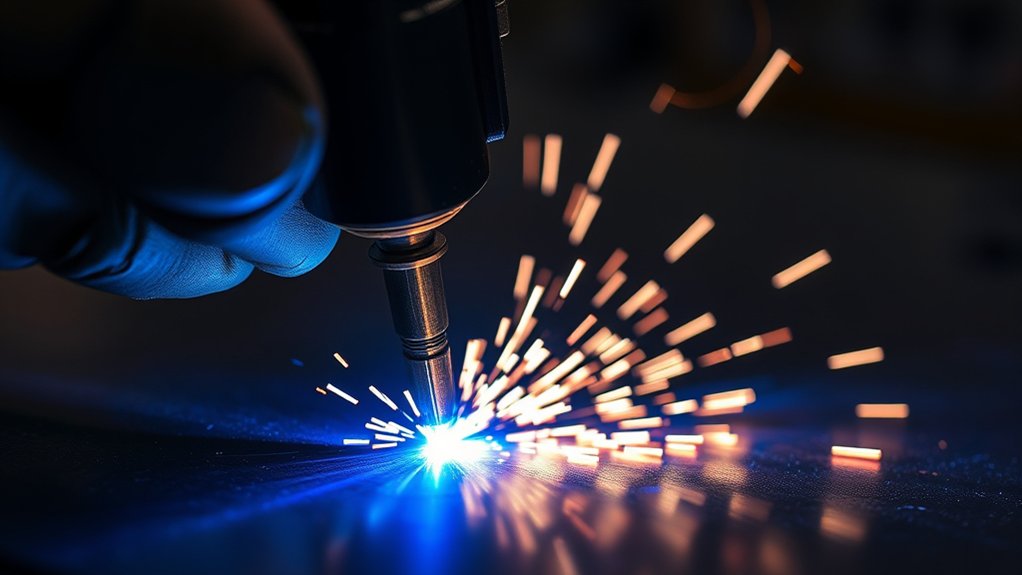
Plasma cutters use different arc-starting systems. Knowing which type you have helps you understand how the torch starts, how it handles rusty metal, and whether it may interfere with nearby electronics.
Pilot Arc Advantages
A pilot arc starts inside the torch before the main cutting arc transfers to the workpiece. This helps the cutter start more smoothly, especially on expanded metal, painted surfaces, light rust, or uneven edges.
Even with a pilot arc, clean metal is still better. A cleaner workpiece improves grounding, reduces arc wandering, and gives you a smoother edge with less slag to remove afterward.
High Frequency Method
High-frequency start systems use a high-voltage spark to help start the arc without touching the workpiece. This can work well, but it may create electrical noise that can bother nearby computers, CNC controls, radios, or sensitive electronics.
If you use a high-frequency start machine, keep electronics away from the cutting area and make sure the cutter is grounded according to the manufacturer’s instructions.
Blowback System Mechanics
A blowback system starts the arc by using air movement inside the torch to separate the electrode and nozzle. This design is common on many modern portable plasma cutters because it starts reliably and avoids much of the radio-frequency interference linked with high-frequency start systems.
Blowback systems still need clean air and good consumables. If the electrode sticks, the nozzle is damaged, or the air is wet, starts can become rough and cut quality can fall quickly.
Prepare the Workpiece and Ground Clamp
Plasma cutting works only on electrically conductive materials. Common options include mild steel, stainless steel, aluminum, copper, and brass. Non-conductive material such as wood, plastic, glass, and most ceramics will not cut with a standard plasma cutter.
Clean at least the cut path and the clamp area. Oil, paint, rust, and heavy mill scale can make the arc hunt for a better path, which leaves a wider kerf and rougher edge. If the metal is coated or painted, assume the fumes may be hazardous until you know what the coating is.
Note: Do not cut sealed containers, tanks, drums, or tubing that may have held flammable or toxic material unless they have been professionally cleaned, vented, and approved for hot work.
Techniques for Optimal Travel Speed and Quality Cuts
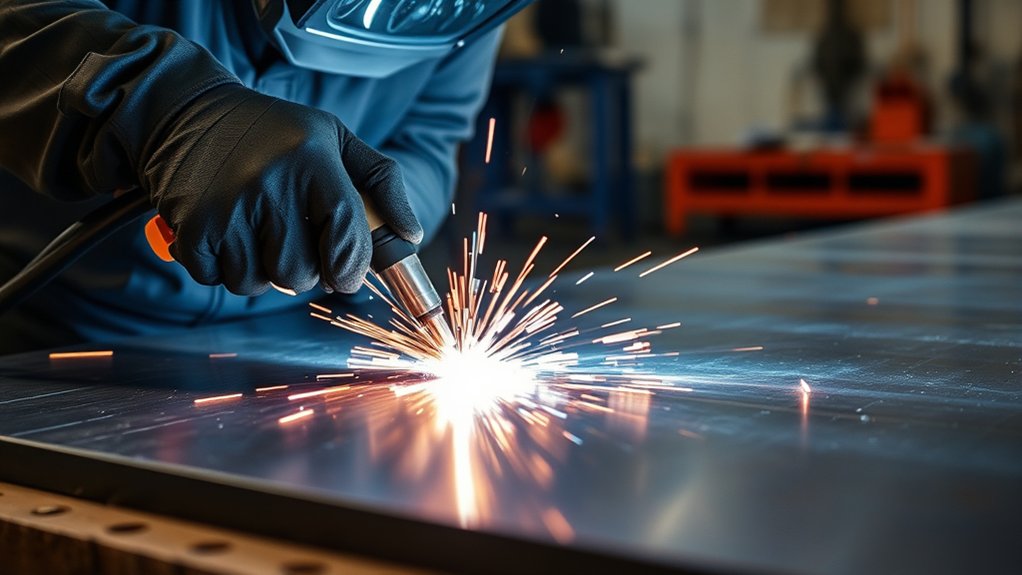
Good plasma cutting technique is a balance of amperage, air pressure, standoff, torch angle, and travel speed. Change only one setting at a time while practicing so you can see what actually improved the cut.
Adjusting Travel Speed
Your travel speed should let the plasma stream cut fully through the metal without dragging too far behind. Watch the sparks under the workpiece. For most hand cutting, the spark stream should exit through the bottom and trail slightly behind the torch.
If sparks spray back toward the top, you may be moving too fast, using too little amperage, holding the torch too high, or cutting metal that is too thick for the machine. If heavy slag builds up on the bottom, you may be moving too slowly or using too much heat for the material.
Preventing Consumable Clogs
Consumables clog and wear faster when air is wet, dirty, oily, or unstable. Use an air filter or dryer if your shop air carries moisture. Drain the compressor often, especially in humid weather.
Never poke the nozzle with random wire or drill bits. If the orifice is damaged, the arc shape changes and the cut edge gets worse. Replace the consumable instead.
Minimizing Dross Formation
Dross is the hardened metal left on the edge after cutting. Some dross is normal, but heavy dross means the settings or technique need work.
- Low-speed dross: Usually thick and easy to chip off. Increase travel speed slightly.
- High-speed dross: Often thin, hard, and difficult to remove. Slow down or increase amperage if the machine allows it.
- Top spatter: Often caused by incorrect standoff, worn consumables, or poor angle.
- Beveled edge: Check torch angle, worn nozzle, travel direction, and guide stability.
Utilizing Cutting Guides and Tools for Precision
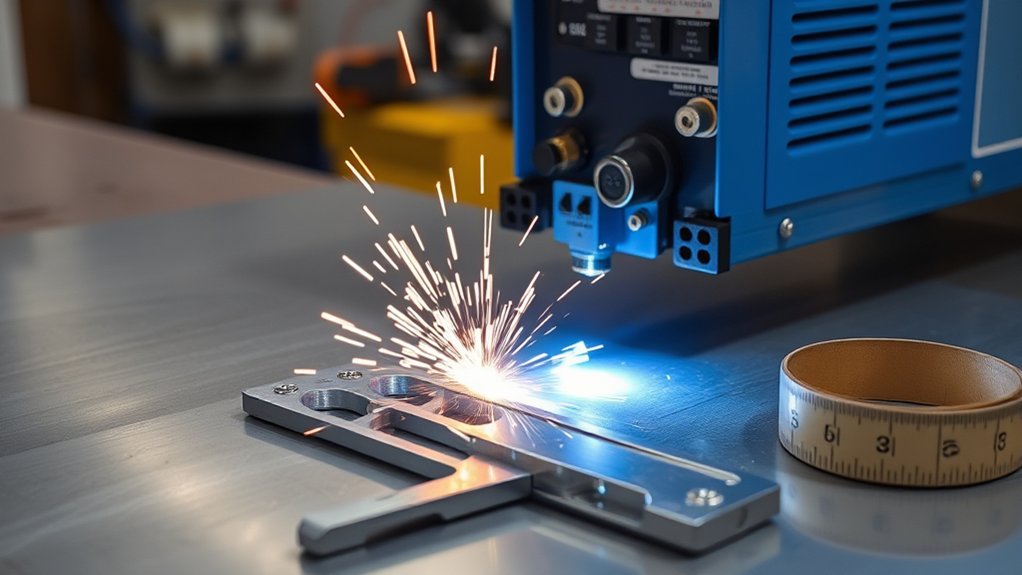
Guides help you make straighter cuts and smoother curves, especially when you are new to plasma cutting. A clamped straightedge, metal ruler, or purpose-built plasma guide keeps your hand from drifting away from the cut line.
Before using a straightedge, check the torch offset. The nozzle or shield may not sit exactly on the cut line, so make a short test cut and measure the distance from the guide to the finished edge. Then set the guide with that offset in mind.
For circles, use a circle cutting guide or magnetic pivot attachment. Keep the pivot tight, support the metal so it cannot drop during the cut, and plan where the cutout will fall after the final section separates.
Mastering Air Dynamics for Enhanced Cutting Accuracy
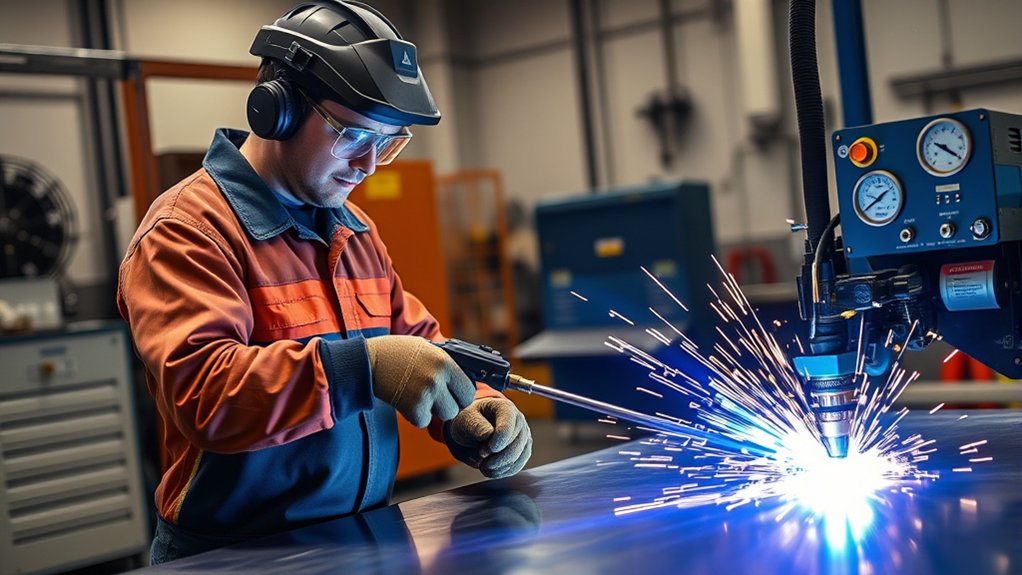
Air does more than blow molten metal away. It helps shape and stabilize the plasma arc. If pressure drops, moisture enters the line, or the torch parts are worn, the arc can widen, wander, or sputter.
Keep the torch square to the work unless you are intentionally beveling. Maintain the correct standoff for your torch style. Drag-cutting shields are designed to touch the work, while other tips need a small gap. Always follow the torch manual.
Cut direction can also affect edge quality because the plasma gas swirls through the torch. On many hand cuts, one side of the kerf is cleaner than the other. Make a test cut, identify the cleaner side, and plan your direction so the best edge stays on the finished part.
Common Plasma Cutting Problems and Fixes
| Problem | Likely Cause | Fix |
| Arc will not start | Poor ground, low air pressure, worn electrode, damaged nozzle | Clean clamp area, check flowing air pressure, inspect consumables |
| Heavy bottom dross | Travel speed too slow or settings too hot | Increase speed slightly or reduce amperage if the cut still penetrates |
| Sparks blow back upward | Moving too fast, low amperage, weak air, or metal too thick | Slow down, raise amperage within the chart, or use a larger cutter |
| Wide, rough kerf | Worn nozzle, incorrect standoff, poor torch angle | Replace nozzle, hold torch square, use the correct drag shield or standoff |
| Arc sputters during cut | Wet air, oil in air line, compressor cannot keep up | Drain tank, add filtration, check compressor cfm against machine specs |
Plasma Cutter Maintenance for Cleaner Cuts
Clean cuts depend on routine maintenance. Inspect consumables before important cuts, not after the edge quality has already failed. A worn electrode or nozzle can make the torch wander even if your hand is steady.
- Drain the compressor tank often.
- Check air filters and moisture separators.
- Replace worn electrodes and nozzles as a set when needed.
- Keep torch threads clean and do not overtighten parts.
- Inspect the work lead and clamp for heat damage or loose connections.
- Store consumables in a clean, dry container.
Frequently Asked Questions
What materials can be cut using a plasma cutter?
A standard plasma cutter can cut electrically conductive metals, including mild steel, stainless steel, aluminum, copper, and brass. It will not cut non-conductive materials like wood, glass, plastic, or most ceramics.
How do I maintain my plasma cutter for longevity?
Use clean, dry air, drain the compressor, inspect torch consumables, replace worn parts promptly, keep the ground clamp clean, and follow the service schedule in your operator manual. Moisture and worn consumables are two of the fastest ways to ruin cut quality.
Can plasma cutting be used underwater?
Not with an ordinary shop plasma cutter. Underwater cutting is a specialist commercial-diving task that uses purpose-built equipment and strict safety controls. It carries serious electrical, gas, heat, and explosion hazards, so it is not a beginner or home-shop method.
How do I troubleshoot common plasma cutting issues?
Start with the basics: check the ground clamp, inspect consumables, confirm flowing air pressure, clean the metal, and make a test cut. If sparks blow back upward, slow down or increase power. If heavy dross forms, adjust speed, amperage, or standoff.
What is the environmental impact of plasma cutting?
Plasma cutting can create metal fumes, particulates, noise, and scrap. Reduce impact by using ventilation or fume extraction, avoiding unknown coatings, collecting scrap metal for recycling, and following local rules for contaminated filters, dust, and used consumables.
Why does my plasma cut have so much dross?
Heavy dross usually comes from slow travel speed, incorrect amperage, poor air pressure, wet air, wrong standoff, or worn consumables. Use your cut chart as the starting point, then adjust one variable at a time on scrap metal.
Do I need a separate air compressor for plasma cutting?
Many plasma cutters need an external compressor that can supply the required cfm and pressure while the torch is cutting. Some models include a built-in compressor, but they usually cut thinner material and still need clean air paths and proper maintenance.
Conclusion
Clean plasma cuts come from safe habits and steady setup. Wear the right protection, clear the hot-work area, use clean dry air, clamp to bare metal, and test your settings before cutting the final piece. Once the arc is stable, focus on a square torch angle and a smooth travel speed. Small changes in speed, standoff, and air quality can make the difference between a rough edge and a cut that needs very little cleanup.
Sources
- OSHA 1910.133 – Eye and Face Protection – filter shade and eye/face protection requirements for welding and cutting hazards
- OSHA 1910.252 – Welding, Cutting, and Brazing General Requirements – fire prevention, hot-work precautions, ventilation, and confined-space rules
- CDC/NIOSH – Welding Fumes and Manganese – welding fume health risks and manganese exposure concerns
- Hypertherm Powermax30 XP Specifications – amperage, cut capacity, air flow, and model information
- Hypertherm Powermax45 XP Specifications – amperage, cut capacity, air flow, and model information