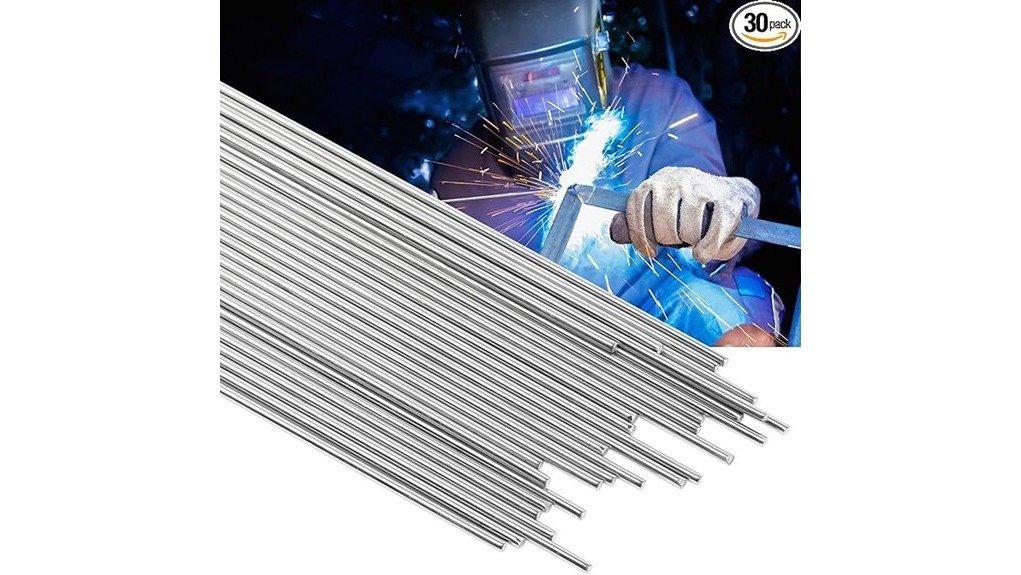
J422 vs E6013 welding rods comes down to the thickness of the mild steel you weld most. The WOFICRET J422 pack has small-diameter rods that suit thin sheet and detail work, while the HARFINGTON E6013 pack of 1/8 in. rods suits general-purpose repairs on medium-thickness steel. J422 is a Chinese-standard designation generally treated as comparable to E6013, so check the packaging for the exact classification. Neither pack is a structural electrode.
Top Picks
|
Best for |
Product |
|---|---|
|
Thin sheet and detail work |
|
|
General-purpose 1/8 in. repairs |
How to Choose Between J422 vs E6013 Welding Rods
- Metal thickness: small rod diameters suit thin sheet, and the J422 pack lists 1.0 to 2.5 mm sizes per the listing. The 1/8 in. (3.2 mm) E6013 suits medium-thickness mild steel.
- Machine: both listings say AC or DC. Check that your machine can run the low amperage thin rods need.
- Position: both are listed as all-position rods, so vertical and overhead work is possible with practice.
- Storage: keep rods dry. If a pack comes in a plain bag, move the rods to a sealed container.
- Structural work: neither pack is a structural electrode. E7018 is the usual choice for load-bearing welds.

These J422 rods are the kind of pack you reach for when you need reliable, all-position performance on thinner mild steel. You get a variety of small diameters that run well on both AC and DC, and they tend to produce low spatter and manageable slag so cleanup is easier. If you do automotive trim, light fabrication, or general repair work, these make it simple to dial in a neat bead once you back down the amperage for the thin sizes.
They’re not pretending to be a one-size-fits-all structural electrode, but if your projects lean toward detailed work or thinner gauge metal, you’ll appreciate the control and versatility they offer.
Buyer Feedback to Check
Read the recent buyer reviews on the listing page before you order. Look for comments on arc starts, spatter, slag removal and how the rods were packed.
|
Pros |
Cons |
|---|---|
|
✅ Good control and low spatter on thin steel |
❌ Thin diameters require dialing down amperage |
|
✅ Works on AC and DC machines |
❌ Packaging may be a simple bag rather than a sealed tube, so plan dry storage |
|
✅ Versatile for flat, vertical, horizontal, and overhead |
❌ Not ideal for heavy structural welding |
Situational Benefits
|
Situation |
How It Helps |
|---|---|
|
Auto Body and Sheet Metal |
You can tack and weld thin panels with less burn-through when you use the smaller diameters and lower amperage settings. |
|
Home Repairs and DIY |
The all-position capability and low spatter mean fewer touch-ups and an easier time when you’re working in awkward spots around the house. |
|
Detail Fabrication |
When you need neat, controllable beads on thin gauges, these rods give you the finesse to shape small welds without excessive grinding. |
Expertise Level
Beginner to Intermediate
Key Benefits
- Low spatter for easier cleanup
- All-position versatility for varied jobs
- Multiple diameters for thin-to-medium steel
- Runs on AC or DC for flexible machine use

This 1/8″ E6013 from HARFINGTON is the kind of rod you reach for when you want predictable, no-fuss performance on mild steel. It gives a steady arc and a usable bead profile that makes routine repairs, workshop projects, and maintenance work easier to handle.
The size balances penetration and control so you can move between thicker thin-gauge panels and medium plates without swapping electrodes constantly. If you need a dependable general-purpose stick for everyday tasks, this is a straightforward option to keep in your kit.
Buyer Feedback to Check
Read the recent buyer reviews on the listing page before you order. Look for comments on arc starts, spatter, slag removal and how the rods were packed.
|
Pros |
Cons |
|---|---|
|
✅ You get predictable E6013 behavior and reliable strikes |
❌ Not intended for heavy structural or specialty metals |
|
✅ Works in flat, vertical, horizontal, and overhead positions |
❌ You may need to adjust settings for best results on different thicknesses |
|
✅ Good for routine repairs and general fabrication |
❌ Limited number of customer reviews to gauge long-term consistency |
Situational Benefits
|
Situation |
How It Helps |
|---|---|
|
Workshop Repairs |
You can tackle common fixes and maintenance tasks with a rod that gives steady penetration and a manageable bead. |
|
Farm and Outdoor Fixes |
The all-position capability helps when you’re welding posts, gates, or equipment in awkward spots. |
|
General Fabrication |
You’ll find it convenient for building or mending medium-thickness assemblies where a reliable, everyday rod is preferred. |
Expertise Level
Beginner to Intermediate
Key Benefits
- Consistent E6013 arc and bead
- All-position usability for varied tasks
- Good balance of penetration and control
- Ready for routine workshop and repair jobs
Related guides: a stick welding amperage chart, a YESWELDER E6013 rod review, and E7018 rods for structural work.
Frequently Asked Questions
Which rod is best for thin metal?
The small-diameter WOFICRET J422 rods suit thin sheet and detailed trim because you can pick a small size and run low amperage. The HARFINGTON E6013 1/8 in. is a better pick when you need more penetration on medium-thickness mild steel. Test on scrap first to avoid burn-through.
How do I set my welder for these rods?
Both listings say the rods run on AC or DC. Start at the low end of the amperage range printed on the packaging for your rod diameter, then raise it until the arc is steady and the bead looks right. Keep a short arc and clean the joint first.
Is E6013 good for structural welding?
E6013 is a general-purpose, easy-running rod for light fabrication and repairs. For load-bearing or code work, E7018 is the usual choice, and you should follow the applicable code and procedure.
What is a J422 welding rod?
J422 is a Chinese-standard designation for a rutile-type mild steel electrode. It is generally treated as comparable to E6013, but check the packaging and listing for the exact classification before you rely on it.
How should I store and handle the rods?
Store rods in a dry, cool place. If they have picked up moisture, dry them as the manufacturer instructs before use to avoid arc instability. Some packs come in simple bags, so a sealed container helps. Always use proper PPE and ventilation when welding.
Which Rod Fits Which Job
The deciding factor is the metal thickness and how easy the rod is to run. If you need fine control and low spatter for thin sheet work, you’ll lean toward the WOFICRET J422, whereas if you want a familiar, reliable E6013 that offers steadier penetration for general repairs and medium-thickness steel, the HARFINGTON E6013 is the go-to.
Bottom Line
If you work mostly with thinner sheet metal or need small-diameter rods for detailed repair and trim work, WOFICRET J422 is the more fitting option, as long as you dial the amperage down. If your jobs are general-purpose repairs on medium-thickness mild steel, the HARFINGTON E6013 in 1/8 in. is the more straightforward choice. For structural welds, step up to E7018.
Either choice will serve well when matched to the metal thickness and machine settings, so pick the rod that fits the projects you actually do and store them dry for consistent results.
| 50PCS J422 Welding Rods 1.8mm, Mild Steel Electrodes | HARFINGTON E6013 Welding Rod, 1/8″ x 14″ Mild Steel Arc Welding Stick | |
|---|---|---|
 |
 |
|
| Welding Current | AC / DC, per the listing (check the packaging for the amperage range by diameter) | AC / DC, per the listing (check the packaging for the amperage range) |
| Diameter | Available in 1.0mm, 1.2mm, 1.4mm, 1.6mm, 1.8mm, 2.0mm, 2.5mm (per the listing) | 1/8″ (3.2mm) x 14″ (350mm) |
| Pack size | 50 pieces, per the listing | About 2.2 lb, per the listing |
| Check price on Amazon → | Check price on Amazon → |