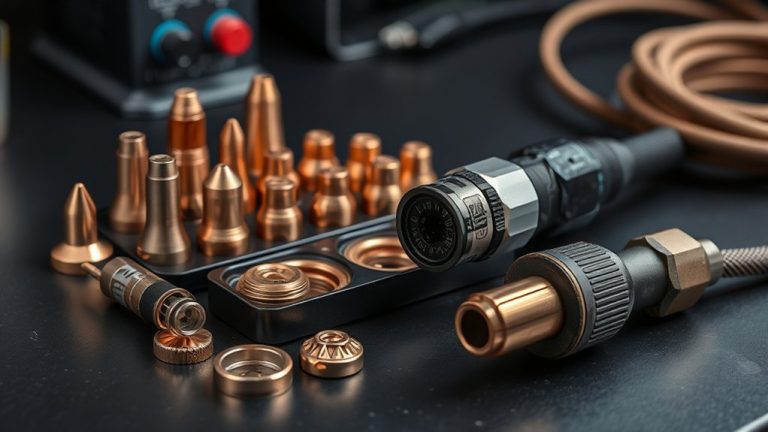
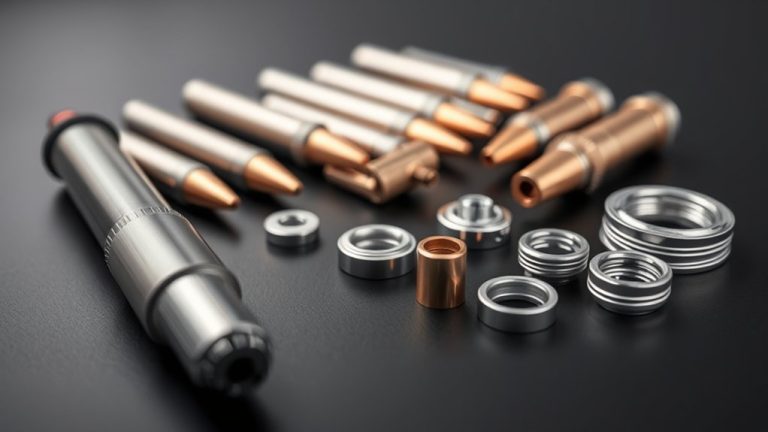
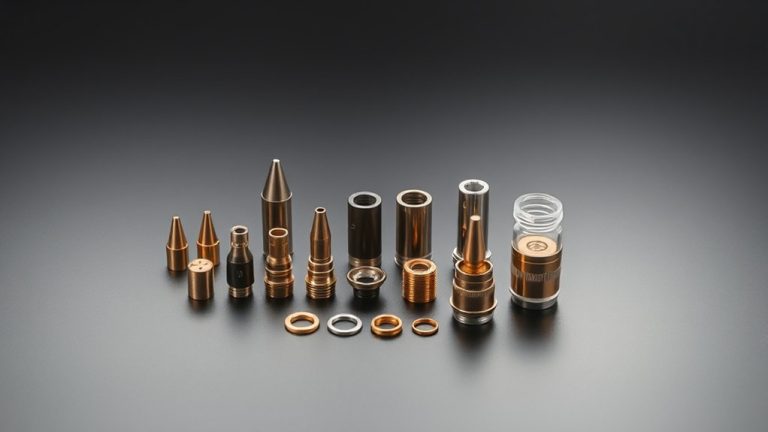
Sparks follow a narrow path when your torch cuts steel. Consumables decide if that path stays clean or turns ragged. You manage a stack of parts: the electrode, nozzle, swirl ring, retaining cap, and shield. Tolerances, amperage, and standoff distance control how long they last and the quality of your cuts. Check the hafnium pit in the electrode. Replace it when wear hits 1 to 1.6 mm to keep the arc stable. Look over shields for cracks and heat erosion. Stick with OEM-spec parts, set the right gas flow, and follow duty cycle rules. The next cut will reveal any weak link.
Quick Answer
Plasma cutter consumables are the electrode, nozzle, swirl ring, retaining cap, and shield cap. They shape, stabilize, and protect the plasma arc so you get consistent cuts.
- Replace the electrode when the hafnium pit reaches 1 to 1.6 mm deep.
- Most electrodes and nozzles last 1 to 3 hours of arc-on time.
- Inspect every shift, use OEM parts, and keep gas clean and dry to make them last longer and keep cuts sharp.
What Are Plasma Cutter Consumables?
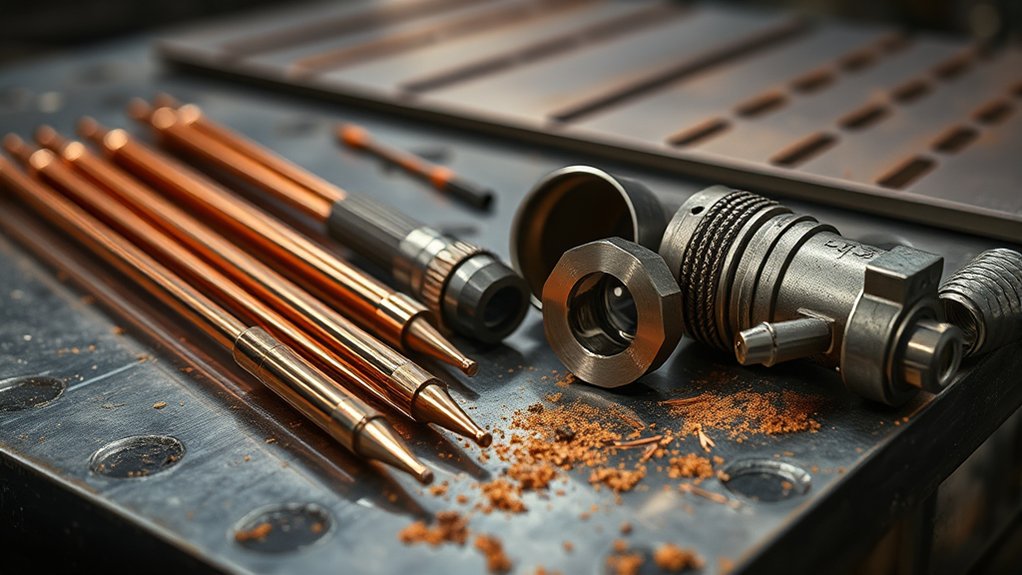
These parts look small and easy to swap, yet they are mission-critical wear items. The stack includes electrodes (copper body with hafnium insert), nozzles, swirl rings, retaining caps, and shield caps. They shape the plasma arc, stabilize it, cool it, and shield it for steady cut quality and machine performance.
Compact yet critical, plasma cutter consumables shape, stabilize, and protect the arc for reliable performance.
In plasma cutting, these parts control arc formation, constriction, cooling, and shielding. Treat them like precise gauges. The electrode’s hafnium pit should stay under 1 to 1.6 mm. Past that point, arc voltage climbs and cut quality drops. Electrodes usually give 1 to 2 hours of cutting time. Swirl rings can last 5 to 10 hours if you keep them crack-free so the gas vortex stays stable and the nozzle does not overheat.
Nozzles constrict and aim the arc. They wear fastest because of heat and erosion. Check them often for a bigger orifice, beveling, or spatter buildup.
Retaining caps and shield caps keep everything aligned and protect flow. Inspect threads and seating surfaces. Swap them on time to hold tight tolerances, repeat the same kerf width, and keep the machine running.
The Consumable Stack and How It Works
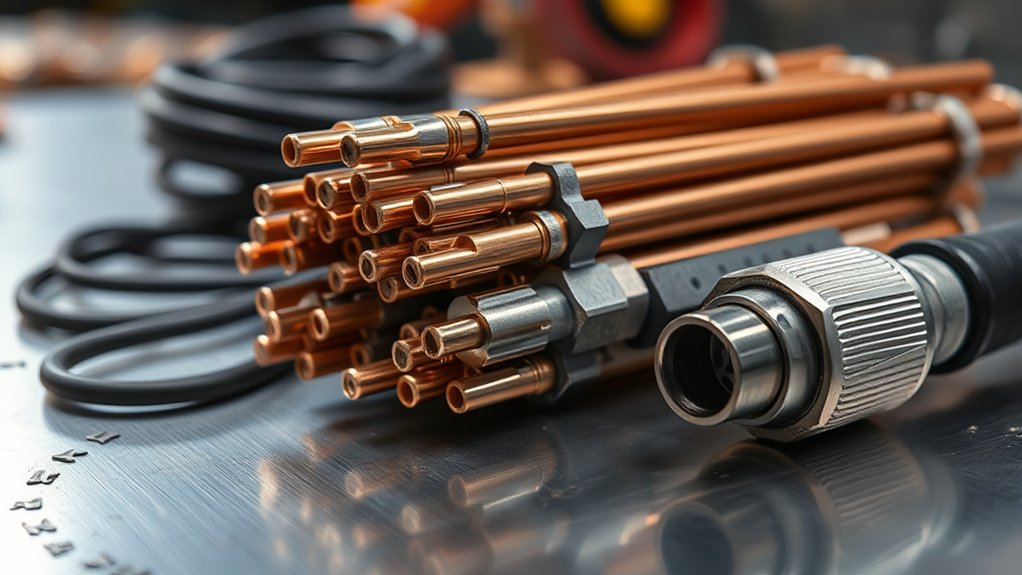
When you assemble the stack correctly, the electrode, nozzle, swirl ring, retaining cap, and shield cap create a controlled path for gas and electricity. This path starts the arc, narrows it, cools it, and shields it. You get repeatable cuts every time.
The electrode starts the arc column. The nozzle orifice squeezes it to the right kerf width. The swirl ring spins the gas to steady the arc and cool the nozzle. The retaining cap locks parts in line. The shield cap directs outside flow to control dross. Always match consumables to your torch specs so gas flow and tolerances stay correct.
| Function | Control Point |
|---|---|
| Arc initiation | Electrode tip-to-nozzle stand-off |
| Beam constriction | Nozzle orifice diameter/taper |
| Arc stability | Swirl ring port count/angle |
| Shielding/cooling | Shield venting and cap torque |
Follow the maker’s torque specs, gas pressure, and pierce height. Misaligned parts cause double arcing, angled cuts, and extra heat. Check the stack often and replace any part that goes past its limit. This keeps cut quality high and downtime low.
Electrode Types, Wear Signs, and Replacement
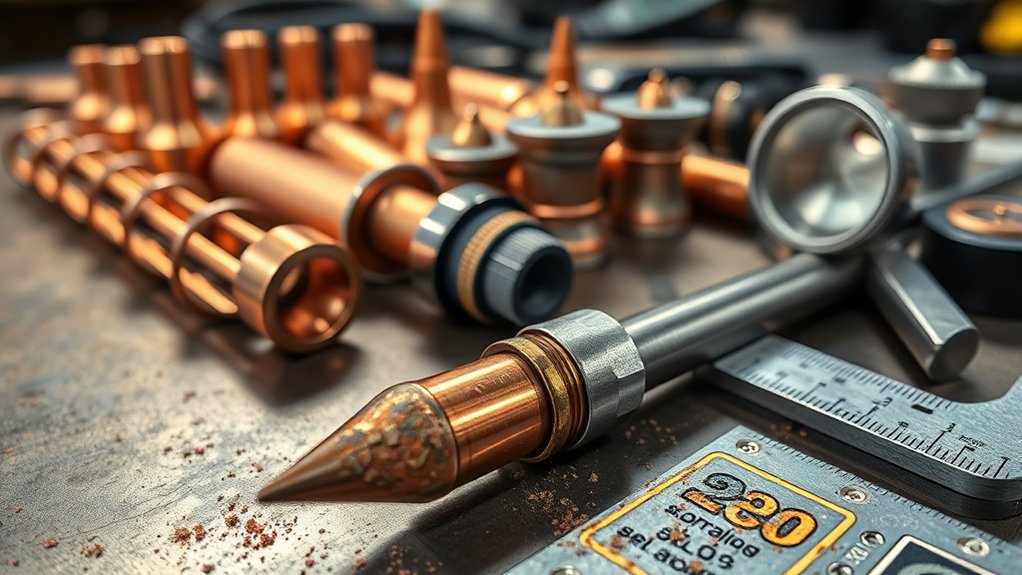
The electrode is the base of the system. It is a copper body with a hafnium insert that carries and starts the arc.
Copper moves heat away fast while hafnium holds a steady spot under high current. Performance drops as the hafnium pit grows deeper. Use a simple check: retire the electrode when the pit goes past 1 to 1.6 mm. This stops arc wander, misfires, and rough edges.
You can expect roughly 1 to 3 hours of arc-on time. The exact length changes with amperage, duty cycle, and the metal you cut. Higher current shortens life. Track your amperage and run time so you can spot wear trends.
Inspect at least every 8 hours, or more often near max rating. Change the electrode with its matching nozzle to keep alignment and arc stability. Use the right torque and keep parts clean. Log replacements to link consumable cost with output and quality.
Nozzles: Sizing, Kerf Control, and When to Swap
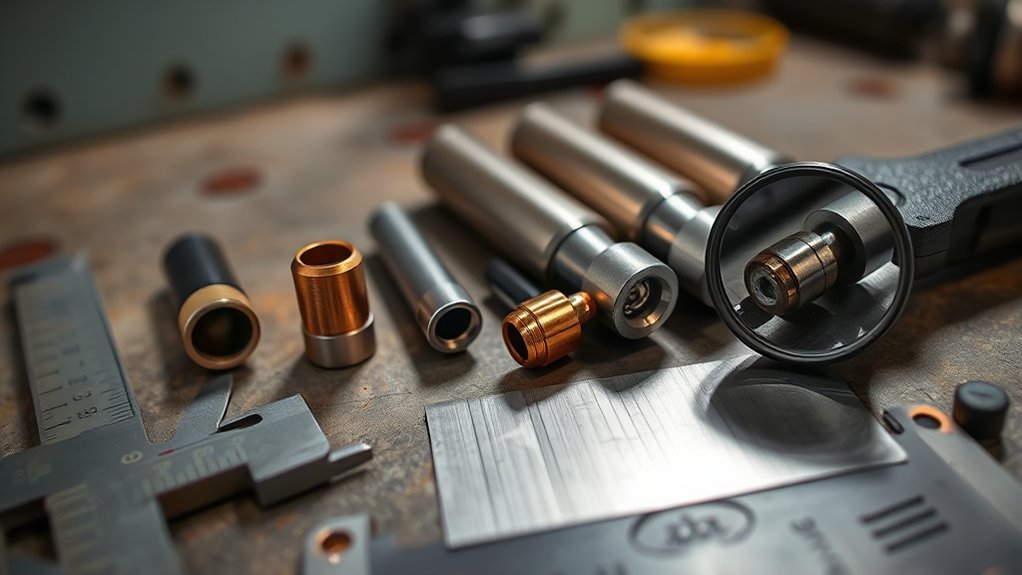
Once the electrode spot stays centered, the nozzle controls arc focus and kerf width. Pick the nozzle size that matches your amperage. Run a 45-amp nozzle at 45 A to hold energy density, cut turbulence, and avoid early wear.
Smaller orifices give tighter kerfs for fine work. Larger ones allow more flow for gouging or fast cuts. Adjust kerf by choosing the right orifice for your material and current, then test cuts and measure with calipers.
Size the orifice to material and current; confirm kerf with test cuts and calipers.
Set inspection timing by your duty cycle. Visually check the orifice after groups of pierces. Swap when you see pitting, oval shape, or a chamfered exit. Nozzles usually last 1 to 3 hours of arc time, less at high amps or thick material.
Worn nozzles widen the kerf, roughen edges, and change heat effects. Change them before tolerances drift. Keep spare nozzles sorted by amp rating and record hours used so you can match wear to your settings.
Swirl Rings, Retaining Caps, and Shields: Roles and Care
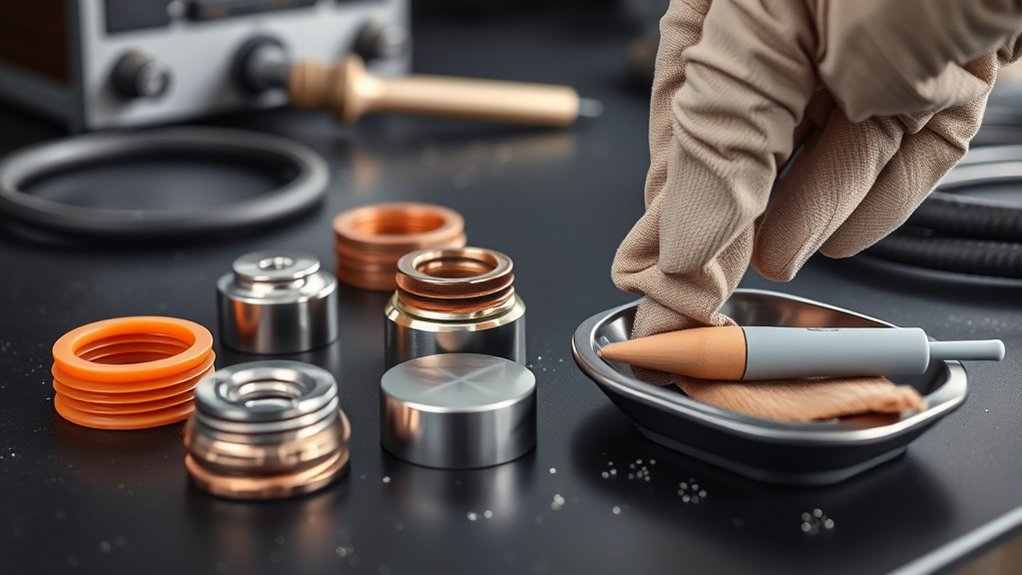
The swirl ring spins gas to steady the arc and cool the nozzle. The retaining cap holds parts straight and stops coolant leaks. The shield guards the nozzle from spatter and heat.
Schedule visual checks for cracks, wear, or heat marks. Replace any part at the first sign of change. Clean the shield, torque it to spec, and log replacements. These steps stretch part life and hold process quality.
Roles in Arc Control
Swirl rings, retaining caps, and shield caps may look minor, but they control arc stability and cut consistency. The swirl ring spins gas to center the plasma column, reduce nozzle heat, and stop early wear. The retaining cap keeps alignment and seals coolant to avoid leaks. The shield pushes spatter away, keeps orifice shape, and holds smooth assist flow for steady kerf width.
| Control Element | Arc-Control Function |
|---|---|
| Swirl ring | Vortex gas shaping; thermal moderation; precision columning |
| Retaining cap | Mechanical alignment; seal integrity; leak prevention |
| Shield cap | Spatter shielding; airflow preservation; kerf consistency |
| Gas path | Stable mass flow; turbulence minimization |
| Coolant path | Heat extraction; dielectric stability; seal reliability |
Use maker specs for gas pressure, flow, and torque so cut quality stays steady.
Inspection and Maintenance
Small changes in swirl rings, retaining caps, or shield caps can cause arc instability, fast nozzle wear, and uneven kerf. Match inspection frequency to your duty cycle and air quality. High-use shops should check every shift.
For swirl rings, confirm holes are open, parts stay round, and no cracks show. Replace at any heat marks or nicks. Check retaining caps for damaged threads, flat faces, and tight seals to stop misalignment and coolant leaks. Look at shield caps for spatter buildup and erosion. Clean ports to keep airflow good.
Apply correct torque and lube when you reassemble. Keep stack order and seating exact. Do not mix part families. Log replacements, track hours, and tie findings to cut quality.
Lifespan by Part and Factors That Shorten or Extend It
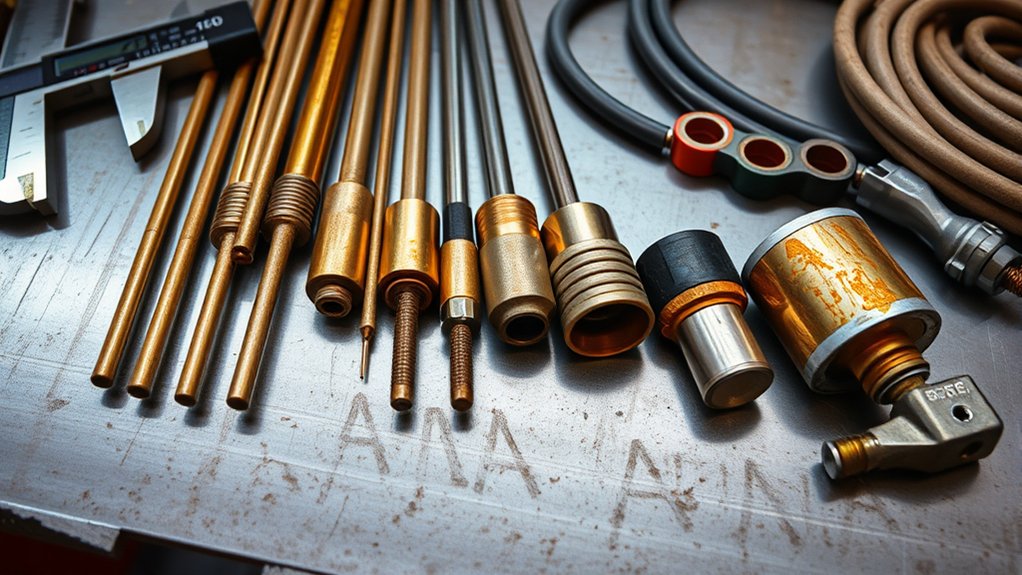
Benchmark life by part: electrodes run about 1 to 3 hours at low power or up to 3 to 5 hours at high power (replace when pitting exceeds 1 to 1.6 mm). Nozzles last 1 to 3 hours. Shields last 3 to 5 hours. Swirl rings last 5 to 10 hours.
Track wear drivers such as high amperage, thick stock, poor technique, and dirty air. These speed up erosion and hurt cut quality. Extend life by staying inside correct parameters, using clean dry air, and swapping parts on time.
Typical Lifespan Ranges
Consumable life changes with setup and technique, but ranges are clear. Electrodes give about 1 to 2 hours of arc-on time. Nozzles give 1 to 3 hours. Shield caps give 3 to 5 hours. Swirl rings give 5 to 10 hours. These numbers assume standard cutting, dry clean air, and OEM parts.
Match amperage to plate thickness and travel speed. Keep correct standoff and steady speed. High amperage adds heat at the nozzle and speeds pitting. Thick plate increases dwell time and heat load on every part. Dirty air adds contamination and oxidation that hurt flow and stability.
Inspect often for pitting on electrodes, oval orifices on nozzles, discoloration on shields, and erosion on swirl rings. Swap at the first clear change to hold cut quality.
Key Wear Factors
Wear follows clear patterns by part and depends on heat, arc stability, and flow. Electrodes pit as hafnium erodes (critical past 1 to 1.6 mm). Nozzles open like a bell from arc contact. Swirl rings crack or twist and lose gas symmetry. Higher amperage, thicker stock, and dirty air speed wear. Correct settings protect efficiency and cut accuracy.
| Part | Typical lifespan and key limits |
|---|---|
| Electrode | 1–3 h low power; 3–5 h high power; retire at 1–1.6 mm pit. |
| Nozzle | 1–3 h; kerf growth indicates orifice erosion. |
| Swirl ring | 5–10 h; inspect for cracks to maintain flow. |
Routine checks and timely swaps stop chain damage and keep cuts steady.
Practices to Extend Life
Good setup and operation stretch consumable life and steady cut quality. Electrodes can deliver 1 to 3 hours at low power and up to 5 hours at high power. Nozzles usually last 1 to 3 hours depending on amperage, duty cycle, and material thickness.
Set amperage to match plate thickness and travel speed. Oversetting speeds erosion. Hold steady torch-to-work distance and speed to avoid double arcing and orifice damage. Supply only clean, dry air or gas. Add filters and separators to remove oil, water, and particles that damage orifices.
Check every 8 hours. Record arc starts, current, and kerf width. Replace at the first sign of pits, cratered tips, or wider orifices.
Pro Tips to Prolong Consumable Life and Cut Quality
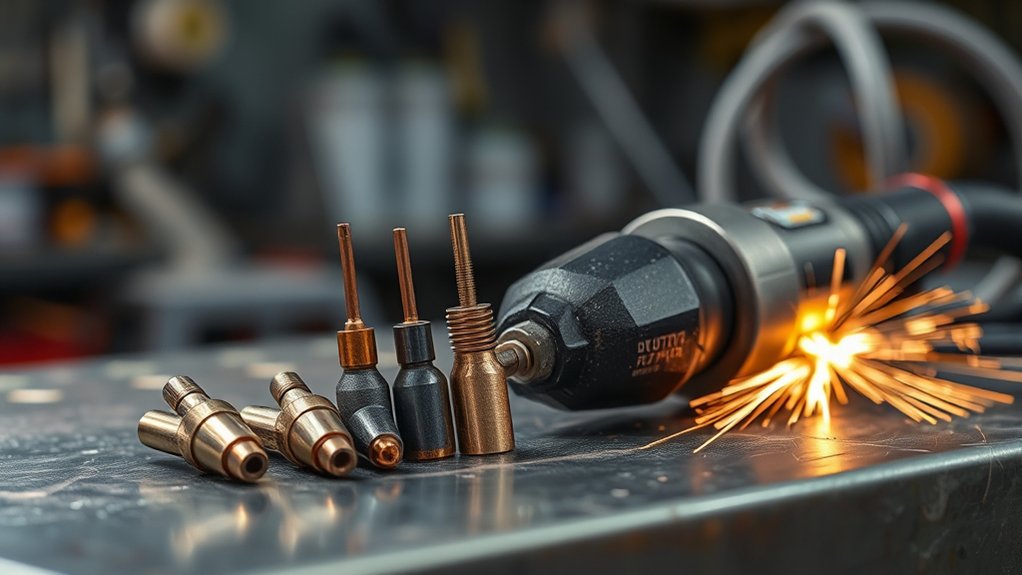
Three habits stretch life and tighten cut quality: watch wear limits, control process settings, and keep the gas stream clean. Replace electrodes when the pit passes 1 to 1.6 mm. Past that, arc stability drops and bevel grows.
Check nozzles each shift for oval shape, nicks, or larger orifice diameter. These widen kerf and roughen edges. Excessive taper or dross at steady speed usually means nozzle wear.
Lock parameters in place. Match amperage to nozzle rating, hold correct standoff with height control, and keep travel speed even. Wrong settings speed erosion and twist the arc column. Feed only clean, dry air or gas. Use filters and dryers to block oil, water, and particles.
Inspect every 8 hours. Record pit depth, nozzle condition, and settings to stop drift and unplanned stops.
Selecting Compatible Parts and Brand Considerations
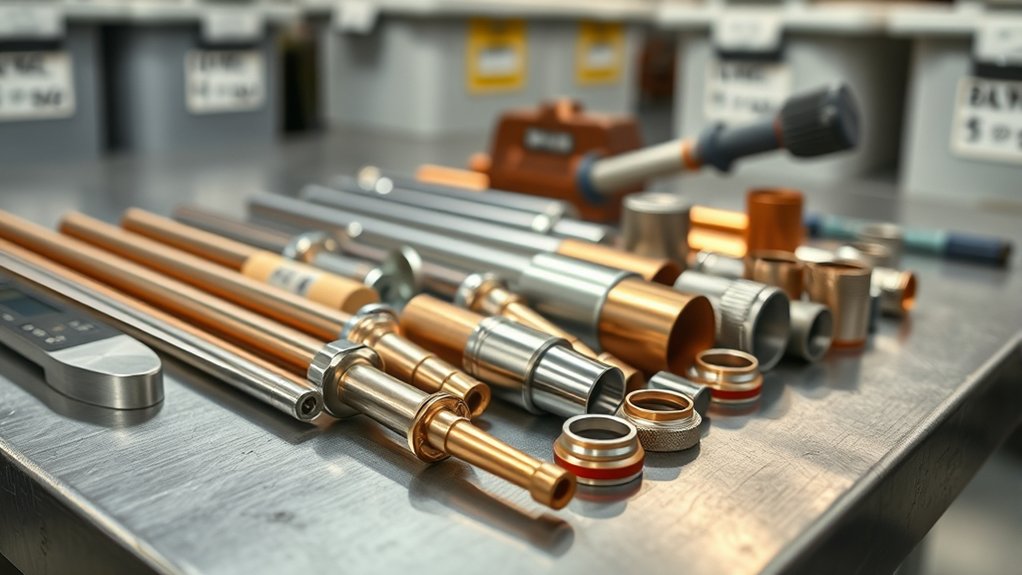
Wear checks only work when parts match your system. Open the operator’s manual and match exact part numbers and amperage ranges. This guarantees fit and steady arc behavior.
Mixing brands often changes tolerances and causes misalignment, gas leaks, wider kerf, more dross, and poor arc starts. Choose OEM or approved brand-name consumables. Their materials, orifice shape, and coolant paths usually last longer and control the process better than substitutes.
Follow maker replacement rules: retire standard electrodes when pit depth exceeds 0.040 inch to stop double arcing and nozzle burn. Record part revisions and torch model codes so you avoid obsolete pieces.
Verify every component matches the series and current rating. Wrong combinations restrict gas flow and upset arc density. Build your spare stock from the manual’s parts list and replacement schedule. This protects cut accuracy, output, and machine health.
Frequently Asked Questions
How Do Ambient Humidity and Storage Affect Consumable Oxidation and Performance?
Humidity speeds surface oxidation, raises contact resistance, and hurts arc stability. Store parts in sealed containers with desiccant. Keep temperature steady and rotate stock by shelf life. Use vacuum packs, vapor corrosion inhibitors, 40 percent or lower relative humidity, and 25 °C or cooler. Purge with dry air before use.
Can I 3d-Print Consumable Organizers to Prevent Damage and Mix-Ups?
Yes, you can. Print organizers with stable materials. Add keyed slots and desiccant spaces. This protects parts, tracks inventory, and follows manufacturer dimensions and labeling rules.
What Signs Indicate Torch Body Damage Rather Than Consumable Wear?
Look for uneven arc, gas leaks, hot handle, misaligned nozzle seat, cracked torch head, loose threads, damaged lead relief, and erratic pilot starts. Inspect visually, check continuity and leaks, and measure against maker tolerances.
Are Aftermarket Cooling Fluids Compatible With My Torch’s Consumables?
They usually work, but check carefully. Confirm chemistry, conductivity under 5 µS/cm, viscosity, and inhibitors match OEM specs. Review compatibility lists, material risks, and warranty terms. Then monitor particles and pH.
How Do CNC Pierce Height Errors Mimic Bad Consumables in Diagnostics?
Pierce height mistakes create the same symptoms as worn parts: wide kerf, double arcing, heavy dross, and short nozzle life. Test with ohmic height checks, pierce delay timing, voltage calibration, and cut charts.
Conclusion
Each consumable has a clear job in the arc system. Check electrodes for 1 to 1.6 mm hafnium wear, size nozzles to your target kerf, and inspect shields for cracks. Hold proper standoff, match amperage to plate and nozzle rating, and use OEM-compatible parts. Track life by cut length, starts, and pierces instead of just hours. Do this and you will lock in steady edge quality, fewer misfires, and predictable costs.