A surprisingly small change in torch lead size can cut your plasma cutter’s performance and safety in half, so you need to get it right. This guide explains how length and diameter interact with amperage, voltage drop, gas flow, and heat buildup, and when a longer or thicker lead helps or hurts your setup. Keep reading to match leads to your application and avoid common wiring and routing mistakes.
Quick Answer
- For handheld cutting, use a 10–12 ft lead. For general shop use, aim for 16–19 ft. CNC tables typically need 19–25 ft.
- Match lead diameter to your cutter’s amperage rating. Undersized leads overheat, increase voltage drop, and wear out faster.
- Use a minimum 1/4″ diameter unless your manufacturer specifies otherwise.
- Keep leads as short as practical to preserve arc stability and cut quality.
- Route leads away from heat and sharp edges, and inspect them regularly for wear.
Why Torch Lead Size Matters for Plasma Cutting
The torch lead links your hand to the cutter’s power source. Its length and diameter directly affect reach, gas flow, cooling, and electrical stability. Choose wrong and you’ll lose arc consistency and cut quality.
Length governs operational flexibility. Longer leads improve reach and user comfort but increase voltage drop. Without proper sizing or compensation, longer leads degrade torch performance.
Diameter controls gas flow and cooling efficiency. Larger diameters support higher flow rates needed for thicker materials and help maintain arc stability.
Diameter governs gas flow and cooling — bigger diameters enable higher flows for thicker cuts and stabilize the arc.
Hard-wired leads can’t be extended simply. Splicing them often reduces lead durability and introduces safety risks.
The right approach: minimize unnecessary length to preserve voltage and arc consistency, and choose a diameter that sustains the gas and cooling rates your material thickness requires.
Proper selection maintains cutting precision, consistent arc stability, and reliable torch performance over the life of the equipment.
Recommended Torch Lead Lengths by Application
Once you’ve picked the right diameter, match lead length to how you’ll actually work. For general shop use, plan on about 16–19 feet for good reach without excessive voltage drop. CNC tables typically need 19–25 feet to span larger gantries. Handheld tasks often work best with shorter 10–12 foot leads for maneuverability and reduced operator fatigue.
- Handheld applications: 10–12 ft minimizes fatigue, improves control, and reduces cable management complexity.
- General shop/Cutting benches: 16–19 ft balances reach and electrical performance for typical layouts.
- CNC considerations: 19–25 ft accommodates large gantries and travel paths while preserving operational range.
Think through your workspace layout, cable routing, and whether you’ll move the torch frequently or keep it tethered.
Longer leads increase reach but need better strain relief and routing to avoid drag and interference.
Always select the shortest length that meets your reach requirements. That’s how you get peak performance and operator comfort.
How Lead Diameter Affects Amperage and Flexibility
When you match lead diameter to your cutter’s amperage, you keep current within safe limits and avoid overheating or excessive voltage drop. Larger-diameter leads carry higher currents with less resistance. Smaller ones limit maximum usable amperage and raise thermal stress.
Choose a diameter that handles your required amperage for continuous duty cycles without conductor heating. Larger conductors reduce resistance, lower voltage drop over distance, and keep arc characteristics stable under load. They also tend to be more flexible and mechanically durable, which improves torch maneuverability and reduces strain at the terminations.
Undersized leads restrict amperage capacity, raise conductor temperature, and accelerate insulation and connector wear. Match diameter to your cutter’s rated output and your expected lead length. Always verify current ratings from the vendor rather than guessing by visual thickness alone.
Proper selection minimizes thermal stress, preserves cutting performance, and extends component life.
Extending or Replacing a Hard-Wired Torch Lead
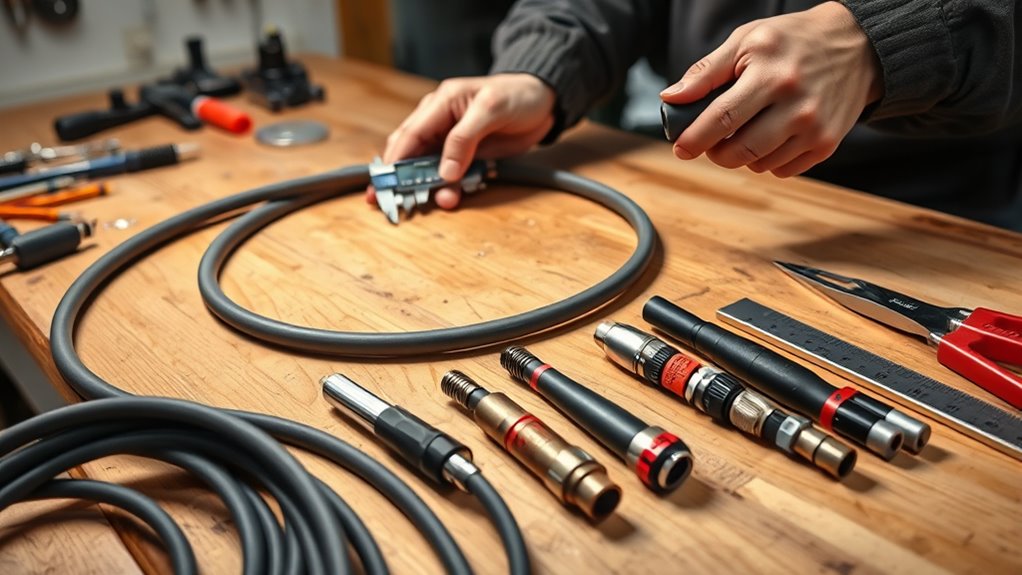
Before you cut into a hard-wired torch lead, verify torch and machine compatibility. Connectors, conductor sizes, and gas fittings must all match the required specs.
If you must splice the air line or conductors, use pressure-rated fittings and sealed electrical splices. Follow manufacturer torque and pressurization guidelines to maintain gas flow and prevent leaks.
When factory replacements aren’t available, consider professional extension services or specialty suppliers who can provide custom-length leads and certify the work for safe operation.
Assessing Torch Compatibility
Start by measuring the exact lead length you need and compare it to the cutter’s specifications. Hard-wired torches often can’t be extended without risking leaks, reduced gas flow, voltage drop, or arc instability.
Evaluate compatibility on length, electrical characteristics, and mechanical fit. Check manufacturer guidance to avoid voiding the warranty and to confirm acceptable lead materials and connector types.
Keep in mind that longer leads can degrade arc stability and increase voltage drop.
- Verify specified maximum lead length and conductor gauge against your needed run.
- Inspect air/jacket construction and seals for extension feasibility and leak risk.
- If replacement is required, source an OEM-equivalent torch matching electrical, pneumatic, and mechanical specs.
Safe Splicing Practices
When extending or replacing a hard-wired torch lead, work with the cutter powered off. Treat the lead as a high-current circuit that must be preserved: match the original conductor gauge (typically no smaller than 14 AWG), use rated connectors or solder joints that can carry the cutter’s amperage (often 20–40 A), and fully insulate splices with heat-shrink or equivalent to prevent shorts and moisture ingress.
Choose splicing techniques that maintain low resistance and mechanical strength: crimped butt connectors rated for the correct AWG and amperage, soldered joints with heat-shrunk insulation, or approved multi-pin plugs where applicable.
After splicing, visually inspect and run a load test to verify continuity, no heat buildup, and intact wire insulation.
Professional Extension Services
Splicing is practical for short repairs, but for a longer professionally finished hard-wired torch lead or a full replacement, a specialist service is the safer choice.
Professionals provide precise air-line splicing, verified electrical continuity, and component compatibility checks that DIY work often misses. They also assess voltage drop implications for extended lengths and recommend correct conductor diameter or alternate routing to preserve cutting efficiency.
- Custom solutions for non-standard lengths and connector types
- Documented testing to confirm compliance with safety standards
- Warranty-aware procedures that avoid manufacturer conflicts
Using a certified service minimizes connection failures, protects warranty status, and ensures the lead meets both performance and regulatory expectations.
Installation Best Practices and Routing Considerations
One clear rule governs torch lead installation: size and routing directly affect performance and safety. Match lead length and diameter to equipment specs, and route the lead to minimize damage and stress. Keep length under about 19 feet when possible, use a minimum 1/4″ diameter unless the manufacturer specifies otherwise, and choose flexible leads for moving setups. For general safety guidance on plasma arc cutting, see OSHA’s welding and cutting safety guidelines.
Inspect sleeves, clamps, and connections regularly, and replace damaged leads right away.
| Area | Action |
|---|---|
| Length | Limit to 19 ft max |
| Diameter | Minimum 1/4″ or per spec |
| Protection | Use sleeves, avoid heat/edges |
| Securing | Clamp, tie, relieve strain |
Route leads away from sharp edges and heat sources. Use cable management to prevent abrasion and kinking, and secure leads at intervals to reduce movement stress and keep gas flow consistent. Avoid tight bends and leave service loops for motion. These steps preserve arc stability, prevent disconnections, and extend component life.
Troubleshooting Voltage Drop, Signal Loss, and Air Flow Issues
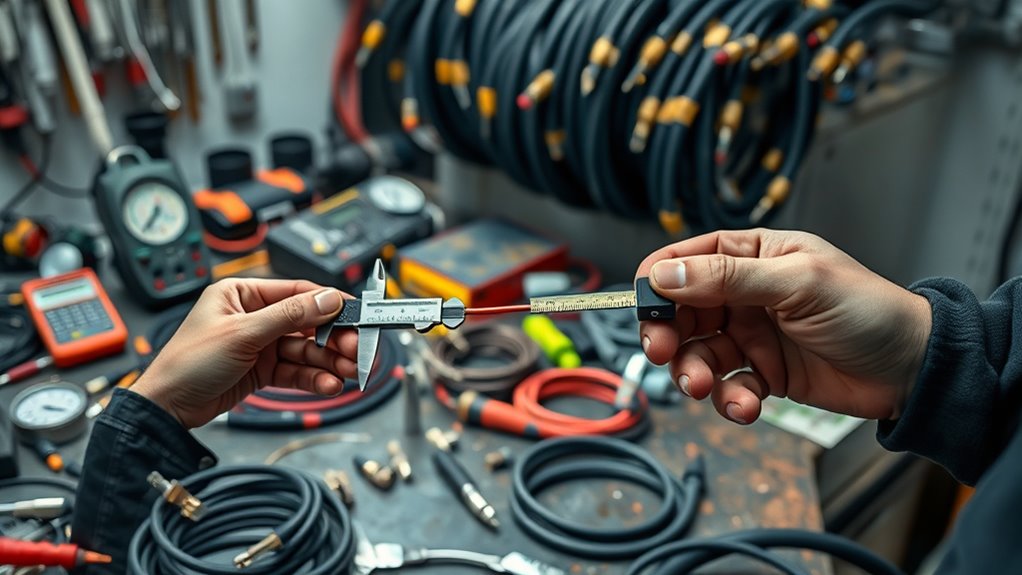
Torch leads can look fine while quietly degrading your cuts. Voltage drop, signal loss, and restricted air flow all affect cutting performance, so diagnose them together by checking lead length, diameter, connections, and physical condition.
Measure voltage stability at the torch under load. A drop of about 5% can destabilize the arc and worsen cut quality. Check cable gauge against amperage requirements: undersized cores cause signal loss and poor communication with the power supply. Also inspect for abrasion, kinks, or corroded terminations, since all of these increase resistance and pressure loss.
- Check lead length and diameter against manufacturer specs to prevent excessive voltage and pressure loss.
- Test continuity and signal paths; replace leads showing high resistance or intermittent connections.
- Confirm unrestricted air flow by measuring nozzle inlet pressure and swapping to a correctly sized lead to isolate restrictions.
Correct sizing and regular inspection restore voltage stability, consistent signal transmission, and reliable air flow for repeatable cuts.
Selecting Compatible Leads for Popular Plasma Cutter Models
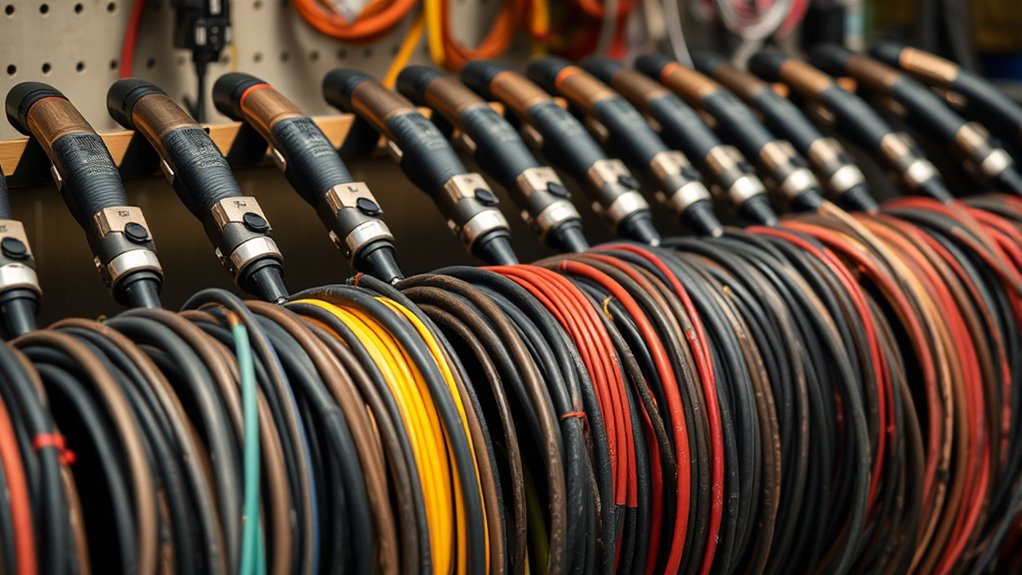
When selecting leads for popular plasma cutter models, verify torch length requirements against the manufacturer’s spec (some units need up to 19 ft) to avoid voltage drop and airflow losses.
Check connector pinouts and fitting types to confirm that electrical and gas connections mate correctly with your torch model.
Also verify compatible torch models and consider lead flexibility or custom extension options if your workspace or handling needs differ from the standard setup.
Torch Length Requirements
If you’re setting up a plasma table, pick torch leads that match each cutter’s required length to maintain control and performance.
Use torch length calculations and lead material selection to confirm compatibility. For example, Shopiron needs 19 feet for a new table, while models like Viper Cut 30 perform well at about 16 feet.
Hard-wired leads complicate extensions, so plan custom solutions or alternate routing when you need extra reach. When extending, splice the air line properly and verify that cut quality isn’t affected.
User feedback consistently confirms that correct lead length preserves precision and efficiency. Mismatches increase drag, noise, and instability.
- Match documented lengths per model
- Consider hard-wired vs detachable systems
- Test extended leads under load
Connector and Pinouts
Matching the cutter’s connector type and pinout to the lead assembly is a critical step. Incorrect mating or wiring can cause arc instability, control faults, or equipment damage. Verify connector types and pinout specifications against the manufacturer’s manual for each model. Confirm wire diameter for amperage and limit lead length to reduce voltage drop. For custom leads, get pinout drawings and consult the manufacturer or a qualified technician before building.
| Brand/Model | Connector Types | Pinout Specifications |
|---|---|---|
| Brand A | 6-pin circular | Control, ground, pilot |
| Brand B | Rectangular 4p | Power+, Power-, signal |
| Brand C | Proprietary lug | Refer OEM diagram |
| Custom | Variable | Confirm before build |
Compatible Torch Models
Compatibility starts with confirming that the torch lead matches your cutter’s amperage rating, gas type, and connector interface. Mismatched leads degrade cut quality and can damage equipment.
Verify compatibility against plasma cutter brands and documented torch lead types before buying or extending. Check nozzle diameter to confirm the lead’s internal diameter supports required gas flow and cutting precision. For proprietary systems like the Hypertherm Powermax series, manufacturer-specific leads are required for proper fit and performance.
Also factor in required length. Industrial tables often need leads of 19 ft or more.
- Confirm whether the manufacturer permits extensions; unsupported extensions may require custom leads or alternative replacements.
- Match amperage, gas type, connector pins, length, and diameter to maintain safety and cut quality.
Frequently Asked Questions
Can Torch Leads Be Used in Cold Weather Without Insulation Modifications?
Technically yes, but it’s not a good idea. Add proper insulation materials and protective jackets, monitor flexibility and connectors, and prevent moisture ingress to maintain performance, safety, and electrical integrity in low temperatures.
Are There Flame-Resistant Lead Options for Hot Work Environments?
Yes. You can choose flame-resistant materials like silicone- or PTFE-insulated, fiberglass-braided leads for hot work environments. These provide heat, abrasion, and arc resistance while maintaining electrical integrity and compliant insulation ratings.
How Do Lead Materials Affect Electromagnetic Interference With Nearby Electronics?
Lead materials directly influence electromagnetic interference. Conductive copper or braided shields reduce emissions and coupling. Nonconductive insulators increase EMI risk. Choose materials and grounding strategies to minimize interference with nearby equipment.
Can Lead Length Affect Consumable Wear Rates Indirectly?
Yes. Longer leads raise resistance, which increases voltage drop and arc instability. That leads to hotter, less consistent arcs and faster consumable wear. Shortening or replacing oversized leads helps reduce the problem.
Are There Quick-Disconnect Standards Across Different Manufacturers?
Some standardized quick-disconnect formats exist, like DIN connectors, but proprietary designs are common. Always verify pinouts, voltage/current ratings, and locking mechanisms before swapping leads between brands.
Conclusion
Torch lead length and diameter directly affect cut quality, safety, and torch life. Pick leads within the 10–25 ft range and match diameter to your cutter’s amperage to avoid overheating and voltage drop. Don’t overlook routing, strain relief, or manufacturer specs. Improper leads cause up to 40% more downtime in workshops, so choosing the right lead isn’t optional. It’s essential for reliable, precise plasma cutting and lower operating costs.