Disclosure: As an Amazon Associate, we earn from qualifying purchases. If you click a link on this page and make a purchase, we may receive a small commission at no extra cost to you.
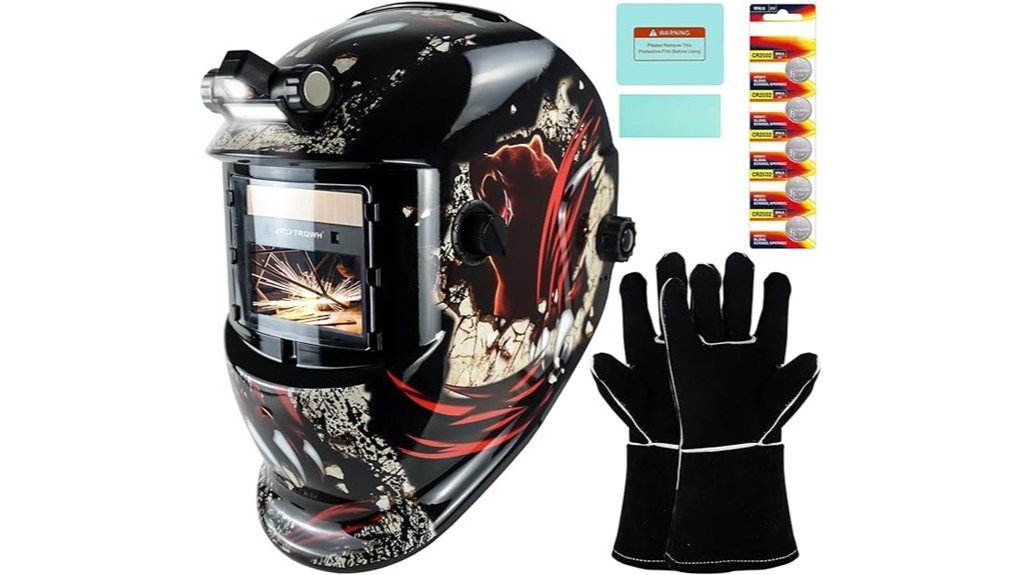
Choosing a welding helmet is not just about finding a shield that darkens when you strike an arc. You need clear visibility, dependable eye protection, comfortable headgear, and controls that match the type of welding you do. The TRQWH Welding Helmet focuses on true color viewing, fast auto-darkening response, and adjustable sensitivity and delay settings. It looks like a solid option for welders who want a feature-rich helmet for MIG, TIG, stick, grinding, and cutting tasks, but you should confirm the exact listing details and safety markings before you buy.
Quick Verdict
Rating: Recommended with caveats, 8.1/10
Best For: Welders who want true color viewing, fast auto-darkening, external controls, and broad process compatibility.
Bottom Line: The TRQWH Welding Helmet gives you strong article-supported features, including a 1/1/1/2 optical rating, 1/20000-second light-to-dark response, and dual solar and battery power. The main tradeoff is that exact listing details could not be independently verified here, so confirm the current product page, markings, and included parts before ordering.
Key Takeaways
- The TRQWH Welding Helmet is built around true color technology and an article-supported optical performance rating of 1/1/1/2.
- The auto-darkening lens is listed with a fast 1/20000-second shift from light to dark, helping protect your eyes during arc starts.
- External delay and sensitivity knobs let you tune the helmet for different light conditions, welding processes, and work habits.
- The article-supported comfort features include a thickened sponge forehead pad, adjustable headgear, and side knobs for angle adjustment.
- It supports several welding and cutting tasks, including plasma cutting, abrasive cutting, DC TIG, AC TIG, MIG/MAG, and MMA/stick welding.
Key Specifications
| Specification | Detail |
|---|---|
| Brand | TRQWH |
| Product type | Auto-darkening welding helmet |
| Optical rating | 1/1/1/2, based on the source article |
| Viewing technology | True color technology |
| Light state | DIN4 |
| Light-to-dark response | 1/20000 second |
| Dark-to-bright delay | Adjustable from 0.2 seconds to 1.0 seconds |
| Controls | External delay knob, sensitivity knob, and grind button |
| Power source | Solar power plus replaceable lithium battery |
| Supported applications | Plasma cutting, abrasive cutting, DC TIG, AC TIG, MIG/MAG, and MMA/stick welding |
| Comfort features | Thickened sponge forehead pad, adjustable headgear, and side angle knobs |
| Listed standards | ANSI Z87.1, EN379 CE, and CSA Z94.3, as stated in the source article |
| Best use | Multi-process welding and grinding where visibility, fit, and control adjustments matter |
Before You Buy: Because the product listing could not be independently verified during this edit, confirm the current Amazon page, safety markings, lens shade range, replacement lens availability, and included accessories before you purchase.
What Is the TRQWH Welding Helmet?
The TRQWH Welding Helmet is an auto-darkening helmet made for welders who want a clearer view of the workpiece while still using a protective welding shield. Its main article-supported strengths are true color viewing, a 1/1/1/2 optical performance rating, and a quick light-to-dark response when the arc starts.
The helmet is positioned for several common processes, including MIG/MAG, TIG, stick welding, plasma cutting, abrasive cutting, and grinding. That range makes it more flexible than a basic fixed-shade helmet, especially if you switch between prep work, tack welds, longer beads, and cleanup.
Who Should Buy It?
Best For
- DIY welders and shop users who want true color visibility instead of a very green lens view.
- Users who switch between welding and grinding and want an external grind button.
- Welders who need adjustable delay, sensitivity, and headgear fit for different tasks.
Skip If
- You need a helmet with independently verified dimensions, weight, and accessory details before purchase.
- You prefer a premium brand helmet with a widely documented manual and replacement parts network.
- You need a specialized helmet for a workplace that requires employer-approved PPE documentation.
Exceptional Optical Clarity With True Color Technology
The biggest reason to consider this helmet is its viewing setup. The article lists true color technology and a 1/1/1/2 optical performance rating, which points to strong clarity for color, distortion, light uniformity, and angle dependence.
In daily use, better optical clarity can help you see puddle movement, joint edges, and workpiece details with less strain. That matters when you are running beads on thinner metal, checking fit-up, or working in a shop where lighting changes throughout the day.
The wide field of view also supports comfort. You still need to position your head correctly, but a broader viewing area can make it easier to track the weld zone without constant helmet movement.
Advanced Eye Protection Features
The TRQWH Welding Helmet uses an auto-darkening lens that shifts from light to dark in 1/20000 second, according to the source article. That fast response helps reduce the chance of arc flash exposure when the weld starts.
The article also lists double liquid crystal layers and an optical coating filter that blocks 99% of harmful light. For buyers, the practical benefit is simple: you get a helmet designed to darken quickly while still letting you set up and inspect the workpiece in a lighter state.
- Auto-darkening lens response listed at 1/20000 second.
- DIN4 light state for setup and positioning.
- Double liquid crystal layers and optical coating filter listed in the article.
- ANSI Z87.1, EN379 CE, and CSA Z94.3 compliance listed in the article.
You should still inspect the helmet before every use. Do not weld with a cracked shell, damaged lens, weak battery, missing cover plate, or unclear safety markings.
Customizable Adjustable Settings
The external delay and sensitivity knobs make the helmet more adaptable than a simple auto-darkening model with limited controls. Sensitivity helps the lens respond to the arc, while delay controls how quickly it returns to a lighter state after welding stops.
The dark-to-bright shift time is listed as adjustable from 0.2 seconds to 1.0 seconds. A shorter delay can feel better for quick tack work, while a longer delay can help when the weld pool and surrounding metal stay bright after the arc ends.
The external grind button is another useful detail. It lets you switch from welding mode to grinding mode without removing the helmet, which can save time during fit-up, cleanup, and repair work.
Pro Tip: Test the sensitivity and delay settings on scrap material before you start the real weld. A small adjustment can make tack welding, TIG work, and grinding feel much smoother.
Enhanced Comfort and Durability
Comfort matters more than many buyers expect. A helmet that feels fine for five minutes can become distracting during a longer repair, fabrication session, or training day.
The TRQWH helmet includes article-supported comfort details such as a thickened sponge forehead pad, adjustable headgear, and side knobs for angle adjustment. These features help you position the helmet so it sits more securely and drops into place more naturally.
The article also mentions durable construction, but it does not provide shell material, weight, or impact-test details. Treat that as a reason to review the current product listing carefully if you need exact PPE documentation for professional use.
Versatile Applications and Dual Power Source
The TRQWH Welding Helmet supports several welding and cutting tasks, including plasma cutting, abrasive cutting, DC TIG, AC TIG, MIG/MAG, and MMA/stick welding. That makes it useful for buyers who handle more than one process in the same garage, farm shop, maintenance bay, or fabrication area.
| Welding Technique | How the Helmet Helps |
|---|---|
| Plasma Cutting | Supports visibility while protecting your face during bright cutting work. |
| DC TIG and AC TIG | True color viewing can help you watch puddle detail and filler placement. |
| MIG/MAG | Fast darkening helps during quick starts, tack welds, and repeated beads. |
| MMA/Stick Welding | Adjustable delay and sensitivity help when arc brightness and slag glow vary. |
The dual power setup combines solar power with a replaceable lithium battery. Solar assistance can reduce battery strain during bright welding conditions, while a replaceable battery gives you a service path when the battery runs low.
How It Performs in Real Use
For MIG and Stick Welding
For MIG and stick welding, the fast light-to-dark response is the most useful feature. It helps when you are making repeated starts, short beads, or quick tacks where a slower helmet can feel distracting.
For TIG Welding
For TIG work, the true color view and optical clarity matter more than speed alone. A clearer lens can help you track the puddle, tungsten position, and filler rod without fighting as much visual distortion.
For Grinding and Prep Work
The external grind button is useful when you move between welding and surface prep. You can grind, clean, reposition, and return to welding mode without constantly removing the helmet.
For Longer Shop Sessions
The adjustable headgear, forehead padding, and side angle knobs help during longer projects. You may still need trial and error to get the fit right, but the adjustment points give you more control than a fixed headband setup.
Setup Tips Before First Use
Before your first weld, check the helmet shell, lens, cover plate, headgear, battery area, and control knobs. Make sure the lens responds correctly before you use it near a live arc.
- Adjust the headgear so the helmet sits secure without pinching your forehead.
- Set the viewing angle so the helmet drops into a natural working position.
- Use the sensitivity knob to match the process, arc brightness, and shop lighting.
- Use a longer delay when the weld area stays bright after the arc stops.
- Switch out of grind mode before welding, since grind mode may prevent normal auto-darkening behavior.
Compatibility and Safety Notes
The helmet is listed for common welding and cutting processes, but you should match every setting to your actual machine, process, amperage, and work environment. Follow the welder manual, the helmet instructions, and your workplace safety rules.
Do not rely on the helmet alone for full welding safety. You still need appropriate gloves, sleeves, jacket, respiratory controls when needed, and safe ventilation for the material you are welding or cutting.
The article lists ANSI Z87.1, EN379 CE, and CSA Z94.3 standards. Because independent product verification was not available during this edit, check the markings on the helmet, packaging, or manual when those standards matter for your jobsite.
Pros and Cons
Pros
- True color technology helps you see the workpiece with more natural detail.
- 1/1/1/2 optical rating is strong for a buyer-focused welding helmet review.
- 1/20000-second light-to-dark response supports quick arc starts and tack work.
- External delay, sensitivity, and grind controls make the helmet easier to tune.
- Solar and replaceable lithium battery power gives you two power-support methods.
Cons
- Exact dimensions, weight, shell material, and included accessories were not verified here.
- You may need trial and error to dial in sensitivity, delay, and headgear fit.
- Professional shops should confirm current safety markings and documentation before approval.
Is It Worth the Price?
The TRQWH Welding Helmet is worth considering if you want true color viewing, fast auto-darkening, and practical external controls in one helmet. Those features are useful for everyday welding, repair work, and users who switch between welding and grinding.
Its value depends on the current Amazon price and how much you care about the listed optical rating, broad process support, and dual power source. It is not the best fit if you need fully verified professional PPE documentation before purchase.
How It Compares to Alternatives
Compared with basic fixed-shade helmets, the TRQWH model offers more convenience because it auto-darkens and includes adjustable controls. Compared with premium helmets from long-established welding brands, it may be more appealing for feature value, but those alternatives often have stronger documentation, parts availability, and workplace familiarity.
The TRQWH helmet makes the most sense if you want a practical multi-process helmet with true color viewing and external adjustments. If your jobsite has strict PPE approval rules, compare it against the documentation requirements before you buy.
Frequently Asked Questions
Is the TRQWH Welding Helmet good for beginners?
Yes, it can suit beginners who want auto-darkening protection, true color viewing, and adjustable controls. New welders should still read the manual, test the settings on scrap metal, and learn proper shade and PPE requirements before welding.
What welding processes does it support?
The article lists plasma cutting, abrasive cutting, DC TIG, AC TIG, MIG/MAG, and MMA/stick welding. Always match the helmet settings to your process, amperage, and safety requirements.
How fast does the lens darken?
The source article lists a light-to-dark response time of 1/20000 second. That fast response is helpful for tack welds, repeated starts, and general arc welding work.
Does it have a grind mode?
Yes, the article lists an external grind button. Make sure you switch back to welding mode before striking an arc, since grind mode can change how the auto-darkening filter behaves.
What power source does the helmet use?
The helmet is described as using solar power plus a replaceable lithium battery. Check the current listing or manual for the exact battery type and replacement steps before buying spare batteries.
Can the lens be replaced if it gets damaged?
The original article says lens replacement is possible, but exact replacement part details were not verified. Confirm compatible cover lenses and replacement parts on the current product page or manual before you rely on long-term serviceability.
How should you care for the helmet?
Keep the lens clean, store the helmet away from impact and moisture, and inspect the shell and cover plate before use. Replace damaged lenses or worn parts instead of welding with compromised protection.
Who should skip this welding helmet?
Skip it if you need fully verified dimensions, weight, accessory details, or formal jobsite PPE approval documents before purchase. In that case, compare it with helmets that provide complete manuals, replacement part lists, and workplace-approved documentation.
The Bottom Line
The TRQWH Welding Helmet is a strong fit if you want true color viewing, fast auto-darkening, adjustable controls, and multi-process compatibility in one helmet. You should skip it if you need independently verified specs, detailed workplace documentation, or a premium brand support network before purchase.
Its main strength is the mix of optical clarity, fast response, and practical controls. Its main limitation is that key product listing details were not independently verified during this edit, so check the current Amazon page before you decide.