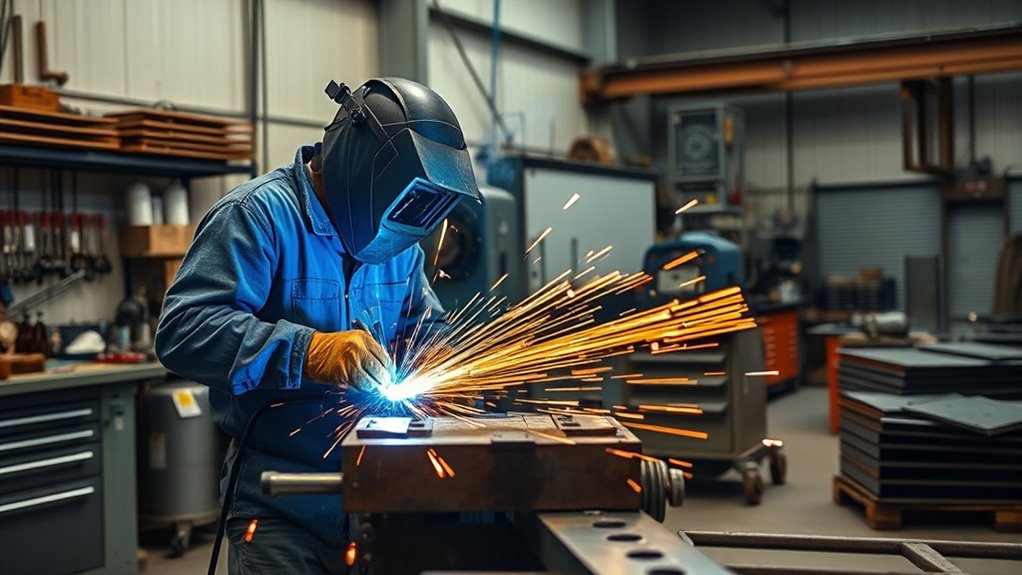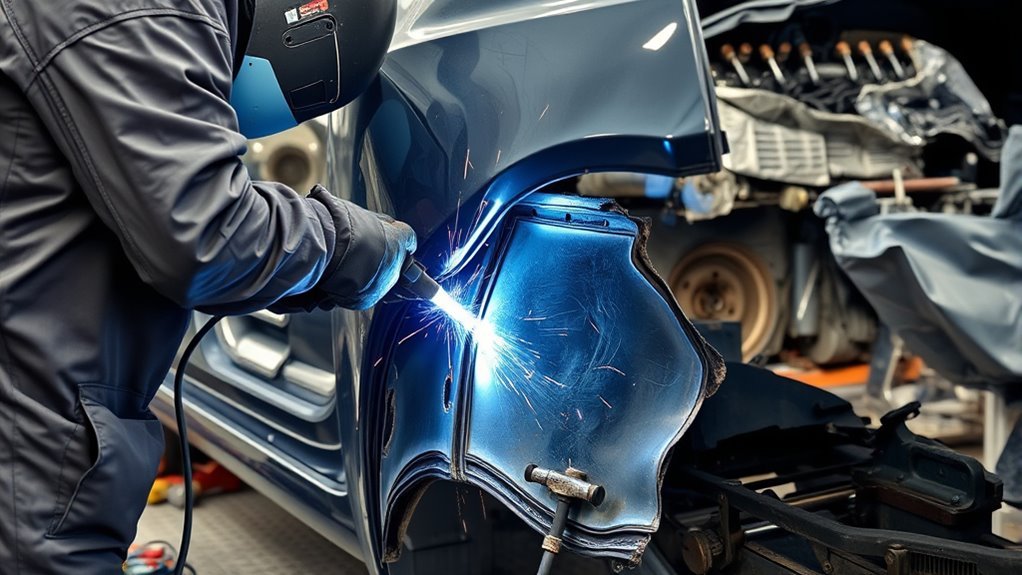
You’ll need welding for auto body repairs when damaged metal must regain strength, seal a leak, or attach a replacement section in a way that matches the vehicle manufacturer’s repair procedure. Common examples include frame and unibody section repairs, welded panels, quarter panels, rocker panels, exhaust leaks, rust holes, cracks, and patch panels. Cosmetic dents, bolt-on fenders, plastic bumpers, and small paint damage usually do not need welding.
Quick Answer
Auto body repairs need welding when metal is cracked, rusted through, structurally damaged, or replaced with a welded-in section. Frame, unibody, rocker, quarter panel, wheel well, and exhaust repairs often need welding. Dents, scratches, bolt-on panels, glass, trim, and plastic bumper covers usually need other repair methods instead.
Key Takeaways
- Structural repairs need the exact OEM repair procedure, not guesswork.
- MIG welding, resistance spot welding, plug welding, TIG welding, and MIG brazing all have different uses.
- Many outer panels bolt on and do not need welding unless the mounting structure is damaged.
- Rust holes must be cut back to sound metal before a patch is welded in.
- After welding, corrosion protection must be restored with the correct coating, seam sealer, cavity wax, or undercoating.
At a Glance
| Time Required | Small exhaust or patch repairs may take a few hours. Structural section repairs can take days because measuring, disassembly, welding, corrosion protection, and refinishing are required. |
| Difficulty | Moderate for small non-structural patches; professional level for frame, unibody, airbag-zone, high-strength steel, aluminum, or insurance repairs. |
| Tools Needed | Welder approved for the repair, clamps, measuring tools, grinder, PPE, fire protection, weld-through coating where specified, seam sealer, primer, cavity wax, and OEM repair information. |
| Cost | Varies widely. A small patch is usually far less than a structural section repair, which may require frame measuring, panel removal, refinishing, and calibration checks. |
Which Auto Body Repairs Need Welding?
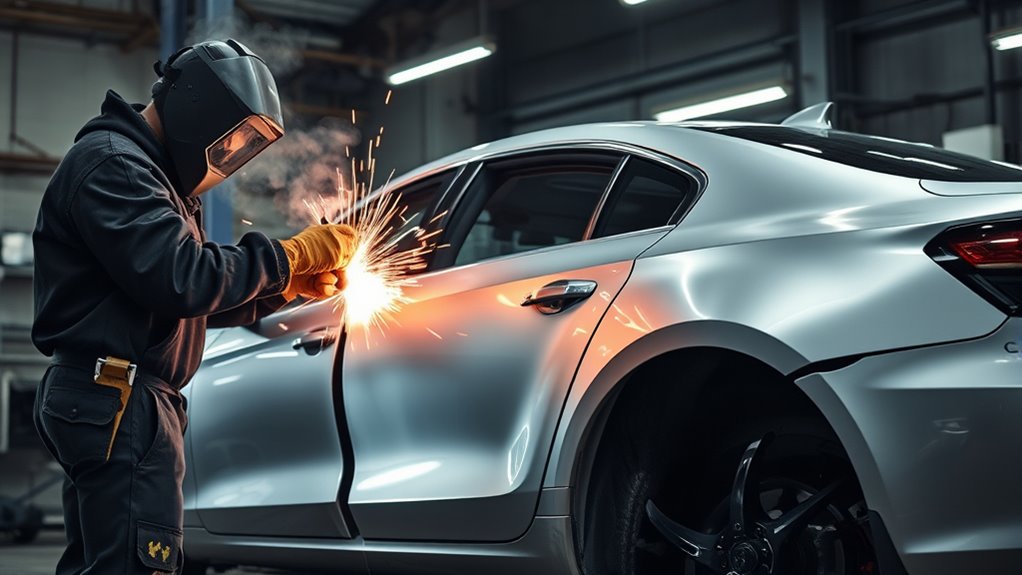
Welding is required when a repair must join metal permanently, restore a load path, close a rust hole, seal a crack, or attach a replacement section that the manufacturer designed to be welded. You’ll use welding in auto body repair after collision damage has bent, torn, cracked, or separated parts that cannot be safely repaired with filler, adhesive, clips, or bolts alone.
Common welded repairs include frame sections, unibody rails, rocker panels, quarter panels, wheel houses, floor sections, welded seams, patch panels, and some exhaust repairs. The exact method depends on the vehicle, the metal, the repair location, and the OEM procedure. A modern body can include mild steel, high-strength steel, ultra-high-strength steel, aluminum, adhesives, rivets, and factory spot welds in the same area.
Before choosing a process, check the repair information for the exact year, make, model, and damaged part. OEM1Stop is a useful starting point because it points technicians to repair information made available by participating automakers.
Warning: Do not weld structural vehicle parts unless you have the right training, repair procedure, welder, PPE, ventilation, and fire protection. A weak weld can affect crash performance, alignment, airbag-system behavior, and passenger safety.
Some repairs do not need welding. A shallow dent in a door skin, a scratched bumper cover, a bolt-on fender, a cracked plastic bumper, or a paint chip usually needs body filler, paintless dent repair, plastic repair, panel replacement, adhesive, or fasteners instead. Welding is for metal joining, not every kind of body damage.
How to Tell If Welding Is Required
Start by asking what the damaged part does. If it supports crash loads, suspension loads, door openings, seat belts, bumpers, or the unibody shell, treat it as structural until the repair information says otherwise. If it is only a removable trim piece or cosmetic outer panel, welding may not be needed.
| Damage or part | Welding likely? | What to check first |
|---|---|---|
| Frame rail or unibody rail | Often yes | OEM sectioning location, measuring data, material type, and approved weld method |
| Quarter panel or rocker panel | Usually yes when replaced | Factory joints, sectioning points, corrosion protection, and seam sealing |
| Bolt-on fender or hood | Usually no | Whether the bolt-on panel is damaged or the welded mounting structure behind it is damaged |
| Rust hole in steel panel | Often yes | How far corrosion spreads beyond the visible hole |
| Exhaust leak at pipe or muffler | Often yes | Metal thickness, corrosion level, sensor locations, and emissions equipment |
| Plastic bumper cover | No metal welding | Plastic repair, replacement, brackets, paint, and parking sensor mounts |
Pro Tip: If the damage crosses a seam, rail, pillar, rocker, suspension mount, seat belt mount, or airbag sensor area, stop treating it like a simple patch. Pull the OEM procedure before cutting or welding.
Frame and Unibody Welding Repairs
Frame and unibody repairs are the highest-risk welding jobs in auto body repair. These areas manage crash energy, suspension loads, door fit, and alignment. You need accurate measurements, approved sectioning points, correct weld spacing, and corrosion protection after the weld is finished.
Products Worth Considering

Value Pack: The package includes 24 packs of butt welding clamps, enough quantity to meet your daily needs and replacements. Each butt welding clamps is individually wrapped in a small bag, convenient to carry and use.

Be Ready with Bulk: ensure you're always prepared for any task on hand with our bulk package of 1200 stud welder pins; These are ideal for large scale projects and repairs, meeting your welding needs for an extended period

Frame Section Welding
Frame section welding is used when collision damage has bent, torn, crushed, or cracked a structural rail or section that the manufacturer allows to be repaired or replaced. The goal is not just to close a gap. The goal is to restore the original load path as closely as the repair procedure allows.
MIG welding, plug welding, resistance spot welding, MIG brazing, rivet bonding, or a combination of joining methods may be required depending on the vehicle. Do not assume one method fits every frame repair. High-strength steel and ultra-high-strength steel can lose strength if overheated, so heat control and the specified process matter.
In automotive repair, you also need to use the correct amperage settings, wire type, shielding gas, weld pattern, and test welds before welding on the vehicle. Even a strong-looking bead can fail if penetration, heat input, or panel fit-up is wrong.
Unibody Seam Repairs
A unibody vehicle uses the body shell as part of the structure. That means seams, pillars, rockers, rails, floor pans, and wheel houses work together. If a seam separates after a crash or rust repair, the correct fix may be replacement, sectioning, plug welding, resistance spot welding, or MIG brazing, depending on the OEM procedure.
Before welding a unibody seam, inspect for corrosion, hidden cracks, seam sealer damage, adhesive layers, nearby wiring, fuel lines, foam, insulation, and electronic modules. Remove anything that can burn or melt. Support the vehicle correctly so the body does not move while you cut or weld.
Correct seam repair helps preserve alignment, door gaps, water sealing, and crash behavior. Incorrect repair can cause body flex, leaks, poor panel fit, corrosion, and safety problems in another collision.
Panel, Fender, and Quarter Panel Repairs
Panel, fender, and quarter panel repairs depend on how the part is attached. Some outer panels bolt on. Some are welded, bonded, riveted, or attached with a mix of factory spot welds and adhesives. Do not choose the repair method based only on the part name.
| Repair type | Common joining method | Important caveat |
|---|---|---|
| Bolt-on fender | Bolts and alignment adjustment | Welding is usually not needed unless the welded mounting structure is damaged. |
| Door skin or outer panel repair | Repair, replacement, adhesive, hem flange, or limited welding | Heat can warp thin metal. Use the procedure for that exact panel. |
| Quarter panel replacement | Spot welds, plug welds, MIG brazing, adhesive, or rivets | Sectioning location and heat limits are OEM-specific. |
| High-strength steel panel | Often resistance spot welding, plug welding, or MIG brazing | Do not overheat. Some areas may be replace-only. |
| Aluminum panel | TIG, MIG, adhesive, rivets, or replacement | Aluminum needs clean metal, dedicated tools, correct filler, and contamination control. |
For thin sheet metal, the biggest risks are burn-through, warping, poor penetration, and corrosion at the seam. Understanding lack of penetration helps you avoid a weld that looks acceptable on top but fails to bond through the joint.
Products Worth Considering

Adaptability: Our butt welding clamps are suitable for both straight panels or curved panels. Maintains 0.40" gap between panels for edge-to-edge welding.They will work well in these 2 kinds of p


DURABLE - Double-Sided 3/8" Heavy Duty High Speed Rotary Metal Cutting Blade Made From High-Quality High-Speed Steel.
Exhaust System and Muffler Welding
Exhaust system and muffler welding is different from structural body welding. The goal is usually to seal leaks, restore support, reduce noise, and keep exhaust gas flowing through the correct path. Common repairs include cracked pipes, rusted muffler seams, broken hangers, small holes, and replacement pipe sections.
MIG welding is common for exhaust work because it can join thin and medium-gauge steel quickly when the metal is still sound. TIG welding may be used for stainless exhausts or cleaner custom work. If the pipe is too thin, flaky, or rusted around the repair area, replacement is safer than trying to weld onto weak metal.
Note: Exhaust welding should repair or replace parts, not bypass emissions controls. Do not remove, disable, or weld around catalytic converters, oxygen sensors, diesel particulate filters, or other emissions equipment in a way that defeats their function. EPA explains that Clean Air Act vehicle rules include tampering, defeat devices, maintenance, and alterations.
Your welding techniques matter. Poor penetration can create leaks. Too much heat can blow through thin tubing. Bad fitment can stress hangers and flex joints. Proper surface preparation is also important when working around coated or galvanized components because coatings can contaminate the weld and create hazardous fumes.
Rust, Crack, and Hole Patching
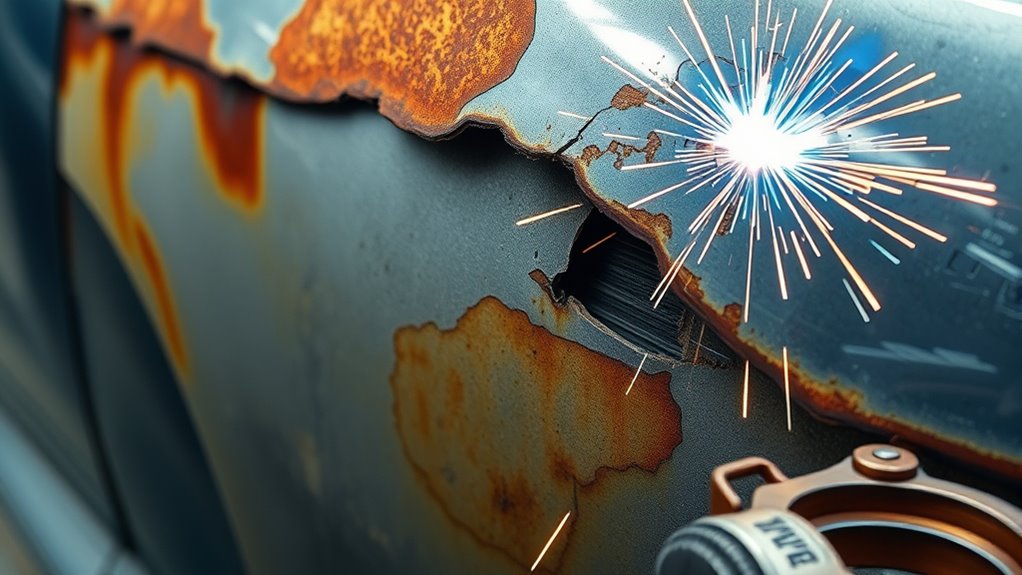
Rust, cracks, and holes often need welding when the damaged metal is too weak to hold filler or fasteners. The correct repair starts by removing the bad metal, not by welding over it. If you weld over rust, paint, seam sealer, scale, or undercoating, the weld can become porous and the corrosion can return quickly.
Rust Damage Repair
Rust damage repair starts with finding the full edge of the corrosion. The visible bubble or hole is usually only part of the problem. Cut back to clean, solid metal, shape a patch that fits tightly, and weld in short controlled stitches to avoid heat distortion.
In rust damage repair, surface preparation is just as important as welding. Remove rust, paint, old filler, scale, undercoating, and moisture from the weld area. Use MIG welding only when the panel is suitable and the equipment is set correctly for thin metal. Employing heat control techniques helps reduce burn-through on body panels.
After welding, grind only as much as needed. Over-grinding can thin the patch and weaken the repair. Inspect the weld for pinholes, apply epoxy primer or other specified coating, seal the seam, and protect the back side with cavity wax or coating where the manufacturer allows it.
Crack And Hole Patching
Even a small crack or hole can spread if the metal flexes, vibrates, or traps moisture. In crack and hole patching, you restore strength by removing weak metal and fitting a patch made from compatible material and thickness.
Before the welding process starts, do thorough surface preparation. Remove rust, paint, oil, scale, seam sealer, and debris so the weld bonds cleanly. For mild steel patch panels, MIG welding is common. For some high-strength steel repairs, MIG brazing may be safer because it can limit heat input when the OEM procedure calls for it. For aluminum, use the correct aluminum repair process, clean tools, and contamination control.
If the damaged part is cast iron, the repair is a different job from normal sheet metal body welding. Review the welding challenges of cast iron before attempting that kind of repair, because cast iron can crack if it is welded with the wrong process or heat control.
OEM Welding Rules and Safety Requirements
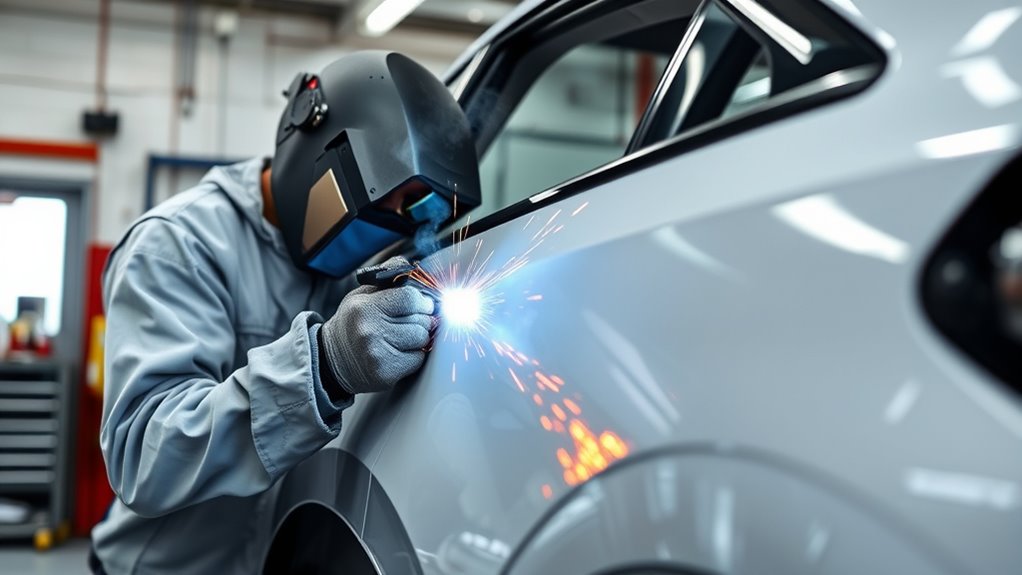
OEM welding rules define the repair method, sectioning location, weld type, weld spacing, filler material, corrosion protection, and inspection steps for that vehicle. These rules matter because modern vehicles use different metals and joining methods in different parts of the body.
Always check the exact repair information before you cut, drill, heat, or weld. OEM procedures may require resistance spot welds, plug welds, MIG brazing, rivets, adhesive bonding, or panel replacement. Some damaged areas are not approved for sectioning. Some panels require special corrosion coatings, seam sealing, or cavity wax after welding.
| Requirement | Why it matters |
|---|---|
| OEM repair procedure | Identifies approved sectioning points, weld type, attachment method, and material limits. |
| Material identification | Prevents overheating or misjoining high-strength steel, aluminum, coated steel, or mixed materials. |
| Test welds | Confirms machine settings before welding on the vehicle. |
| Fire protection | Protects insulation, undercoating, trim, fuel vapors, wiring, and hidden cavities from sparks and heat. |
| Corrosion control | Restores rust protection after grinding, welding, drilling, or panel replacement. |
OSHA’s welding, cutting, and brazing requirements cover fire prevention, eye protection, protective clothing, and ventilation. Follow professional safety practices even if the repair is small. Sparks can ignite interior padding, sound deadener, undercoating, or fuel vapors far from the visible weld.
Prep Checklist Before Welding Auto Body Metal
Good welding starts before the arc. A clean, measured, and protected repair area is more important than a pretty bead.
- Confirm the repair procedure: Check the exact vehicle and part before cutting or welding.
- Identify the material: Mild steel, high-strength steel, ultra-high-strength steel, aluminum, stainless, and coated steel need different methods.
- Disconnect and protect electronics: Follow the OEM procedure for battery, modules, sensors, airbag components, and ADAS equipment.
- Remove fire hazards: Move trim, carpet, foam, insulation, seam sealer, undercoating, and fuel-adjacent materials away from heat.
- Clean the metal: Remove rust, paint, primer, oil, adhesive, and coating from the weld area unless a specific weld-through coating is required.
- Fit the patch or panel: Tight gaps, correct overlap, and proper clamps reduce heat distortion and weak welds.
- Make test welds: Use scrap of the same material and thickness before welding on the vehicle.
- Plan corrosion protection: Know how you will coat the front side, back side, seams, and closed cavities after welding.
Note: For steel repairs, many OEMs specify zinc-based weld-through coatings in certain weld areas. 3M notes that zinc offers sacrificial protection for steel, while copper can accelerate steel corrosion. Use the coating specified by the vehicle maker, not a random primer.
Post-Weld Corrosion Protection
Welding burns away factory coatings. If you do not restore corrosion protection, the repair can rust from the back side even when the outside looks perfect. This is especially important on wheel openings, rocker panels, quarter panels, floor pans, lower pinch welds, and closed cavities.
After welding, inspect the weld, remove only the metal that must be dressed, clean the repair area, and apply the specified primer, seam sealer, undercoating, or cavity wax. 3M’s collision repair corrosion protection resources emphasize protecting both visible and hidden metal surfaces, including closed cavities and undercoated areas.
Seam sealing is not just cosmetic. It keeps water, salt, and road debris out of panel overlaps. Cavity wax is also important inside rockers, pillars, frame members, and enclosed areas where paint cannot reach. A repair that is welded well but left unprotected can fail early from rust.
Repairs That Usually Do Not Need Welding
Not every auto body repair should be welded. In many cases, welding adds heat, risk, and cost without improving the repair.
- Small dents: Often repaired with paintless dent repair or body filler after proper metal finishing.
- Scratches and paint chips: Usually need sanding, primer, paint, and clear coat.
- Plastic bumper cracks: Need plastic repair, replacement, or bracket repair, not metal welding.
- Bolt-on panels: Many fenders, hoods, doors, and trunk lids can be replaced or aligned with bolts.
- Loose trim: Usually needs clips, adhesive, fasteners, or replacement trim.
- Glass openings: Windshield and back glass repairs usually need urethane and proper surface prep, not welding, unless the metal frame is rusted or damaged.
If a shop recommends welding on a simple cosmetic repair, ask why. The answer should connect to the vehicle structure, metal damage, rust-through, or the OEM procedure.
When to Use a Professional Body Shop
Use a professional body shop for frame damage, unibody sectioning, high-strength steel, aluminum structural repairs, airbag-zone repairs, seat belt anchor areas, suspension mounting points, insurance repairs, and any repair that requires frame measuring equipment. These jobs need more than a welder. They need procedure access, measuring tools, training, corrosion materials, and inspection steps.
You should also use a professional when the repair affects ADAS sensors, radar brackets, camera mounts, bumper reinforcement, crumple zones, battery-electric vehicle structures, or hybrid high-voltage components. Welding near electronic systems can create safety and calibration issues if the vehicle is not prepared correctly.
For a small rust patch on a non-structural steel panel, an experienced DIY repairer may be able to weld safely with the right equipment. For anything structural, the risk is too high to treat it as practice.
Frequently Asked Questions
Which type of welding is most commonly used for automotive repairs and why?
MIG welding is common in auto body repair because it is fast, versatile, and works well on many steel repairs when the settings are correct. However, it is not the only method. Resistance spot welding, plug welding, TIG welding, MIG brazing, rivets, and adhesives may be required depending on the vehicle and the OEM procedure.
What are the different types of auto body repair?
Common types include dent repair, paint refinishing, bumper repair, glass replacement, rust repair, panel replacement, frame measuring, unibody sectioning, rocker repair, quarter panel replacement, exhaust repair, and custom fabrication. Only some of these repairs require welding.
Do auto body shops do welding?
Yes. Many auto body shops perform welding for structural repairs, panel replacement, rust repair, and exhaust-related metal work. A qualified shop should follow OEM repair procedures, use the correct welding equipment, protect the vehicle from fire and fume hazards, and restore corrosion protection after welding.
What are the two major types of weld repair?
The two broad types are structural weld repair and non-structural or cosmetic weld repair. Structural welding affects strength, crash performance, alignment, or load paths. Non-structural welding may patch a small rust hole, repair an exhaust leak, or attach a cosmetic panel section.
Can you weld over rust on a car?
No. Welding over rust creates weak, contaminated welds and leaves corrosion trapped under the repair. Cut back to clean, solid metal, fit a proper patch, weld with controlled heat, then seal and coat both sides of the repair where accessible.
Is auto body welding safe for DIY repairs?
Small non-structural steel patches may be possible for a trained DIY repairer with the right welder, PPE, ventilation, and fire protection. Structural repairs, high-strength steel, aluminum structure, airbag-zone repairs, and frame or unibody sectioning should be handled by a qualified body shop.
Does a bolt-on fender need welding?
Usually no. Many fenders are bolted to the body and can be replaced or adjusted without welding. Welding may be needed if the inner apron, mounting flange, rocker, or nearby welded structure is damaged.
Can exhaust welding affect emissions compliance?
Yes. Welding can be used to repair leaks or replace damaged sections, but it should not remove or disable catalytic converters, oxygen sensors, diesel particulate filters, or other emissions equipment. Repairs should keep the exhaust system functioning as designed.
Sources
- OEM1Stop backs up the need to check current automaker repair information for the exact vehicle.
- OSHA 1910.252, Welding, Cutting, and Brazing backs up fire prevention, eye protection, protective clothing, and ventilation guidance.
- U.S. EPA Clean Air Act Vehicle and Engine Enforcement backs up the emissions-tampering caution for exhaust repairs.
- 3M Collision Repair Corrosion Protection Resources backs up post-weld corrosion protection, seam sealing, undercoating, and cavity wax guidance.
Conclusion
Welding is needed for auto body repairs when metal must be permanently joined, structurally restored, sealed, or replaced according to the vehicle’s repair procedure. Frame and unibody sections, rocker panels, quarter panels, rust holes, cracks, and exhaust leaks often need welding. Cosmetic dents, bolt-on panels, plastic bumper covers, trim, and paint damage usually do not.
The safest repair starts with the OEM procedure, clean metal, correct equipment, proper PPE, fire protection, controlled heat, and strong corrosion protection afterward. With the right weld and the right process, you do more than close damaged metal. You restore fit, strength, durability, and safety.