You might think any heavy‑gauge cable will do, but undersizing causes voltage drop, heat, and tripped breakers. You’ll learn how amperage, duty cycle and run length determine the AWG you need, and why a 30 A cutter isn’t treated the same as a 40 A unit over long runs. Stick around to get clear, code‑aligned guidance and a simple method to pick the right conductor for safe, reliable plasma cutting.
How Plasma Cutter Amps and Duty Cycle Affect Wire Size
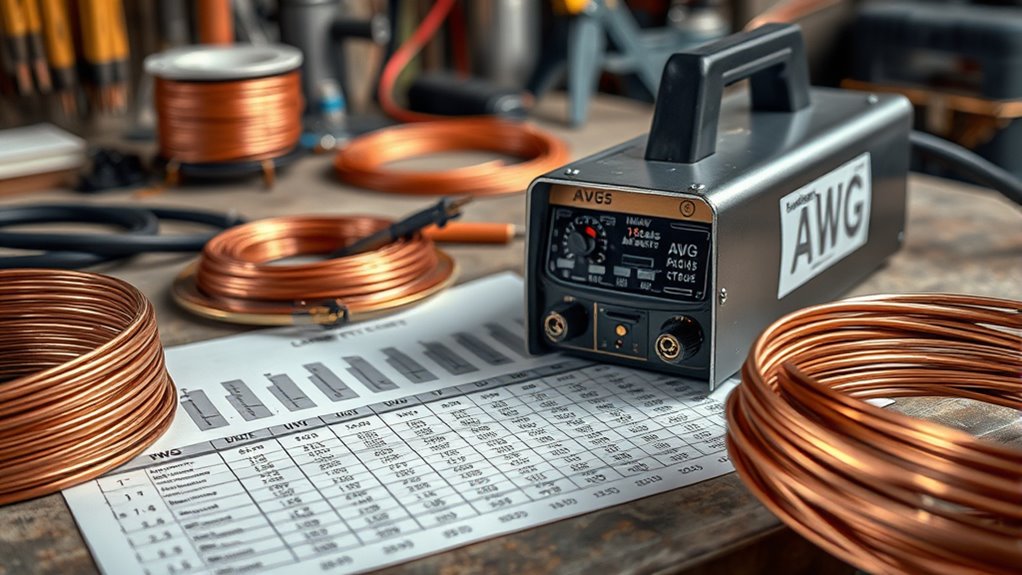
Because a plasma cutter draws substantial current, you need to match wire size to the cutter’s amperage and duty cycle to avoid overheating and voltage drop.
You evaluate amperage impact first: higher amperage requires thicker conductors so the wire can safely carry continuous current without excessive temperature rise. For example, a 40 A cutter typically needs at least 8 AWG for short runs to prevent overheating and maintain performance.
Then factor in duty cycle: a longer duty cycle means the cutter runs longer before cooling, increasing sustained heating in both torch and supply wiring; you may need a heavier gauge to handle that sustained load.
For longer run lengths (particularly beyond ~50 feet), increase gauge further to counter voltage drop.
You should consult ampacity charts and manufacturer guidance to select the proper conductor based on both amperage impact and duty cycle, ensuring compliance with electrical standards and reliable cutter operation.
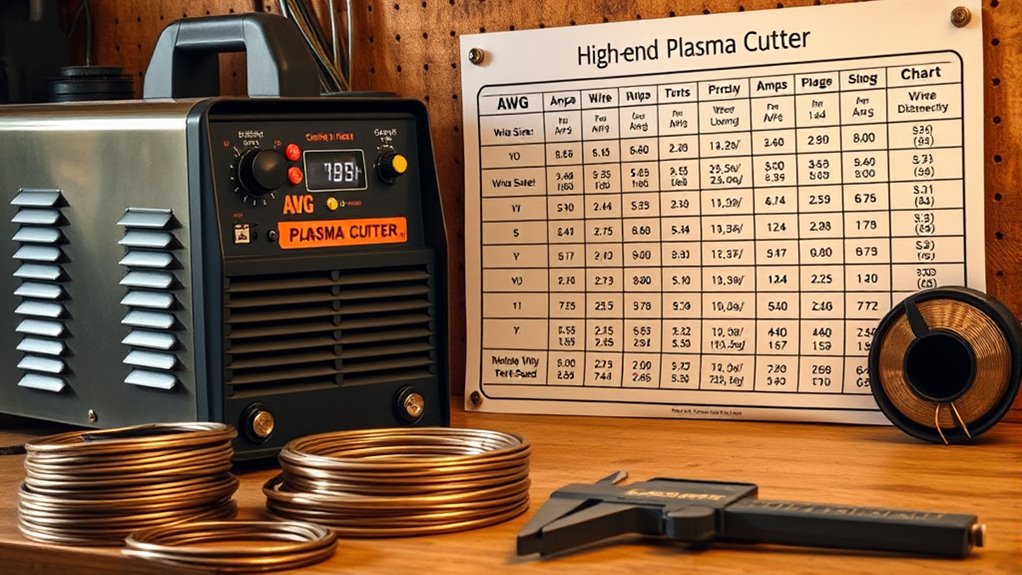
AWG Chart: Recommended Wire Sizes by Current and Run Length
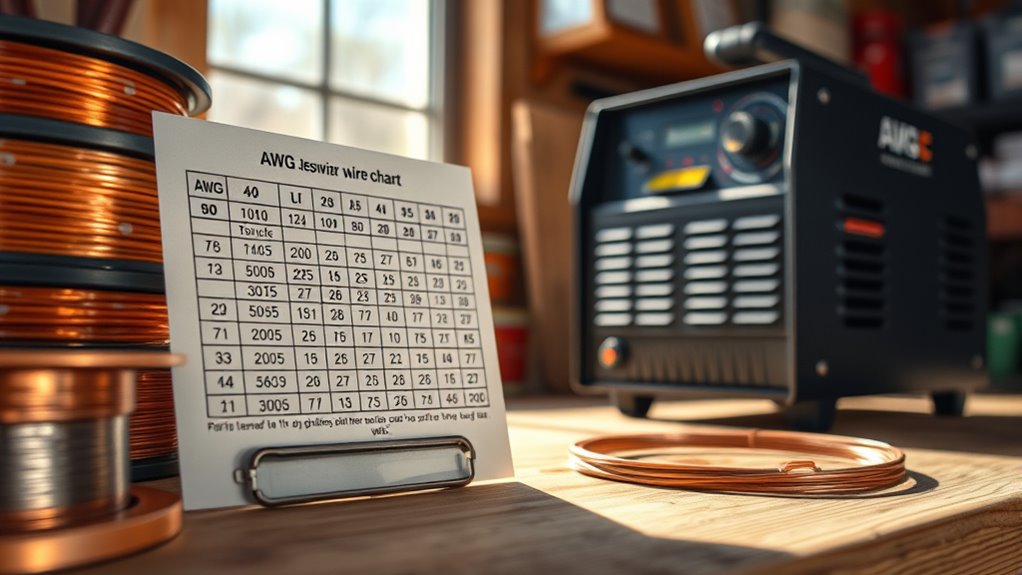
Now we’ll look at the AWG chart so you can match cutter amperage to the proper conductor size.
You’ll see how increasing run length forces you to use a heavier gauge to limit voltage drop (for example, 30 A needs 10 AWG up to ~25 ft but 8 AWG at ~50 ft).
Also factor in NEC’s ~3% voltage‑drop guidance plus insulation and temperature effects when finalizing wire selection.
Amps vs. Gauge
Choosing the right wire gauge for your plasma cutter comes down to matching the cutter’s amperage and the run length to minimize voltage drop and meet NEC ampacity requirements.
You’ll balance amps and resistance: higher current increases heating and voltage loss, so select a gauge and performance that keeps resistance low and stays within NEC ampacity tables.
- For ~40 amps and short runs (≤25 ft) use 10 AWG as a minimum; it limits resistance and preserves cutter performance.
- For ~60 amps up to ~50 ft choose 6 AWG to reduce voltage-drop risk and meet ampacity expectations.
- Verify conductor ampacity vs. device rating and local code; if in doubt, upsize gauge to guarantee safe, reliable operation.
Length and Voltage-drop
When your plasma cutter has to run a long distance, you’ll need progressively larger AWG to keep voltage drop under the commonly accepted 3% limit; use an ampacity/voltage‑drop chart to match current and run length so the cutter gets adequate voltage and the conductor doesn’t overheat.
You should size conductors so voltage drop and distance impact don’t compromise cutting performance or electrical safety. For example, a 20 A cutter at 50 ft calls for at least 10 AWG; a 30 A cutter at 100 ft should use 8 AWG.
Consult the ampacity chart for other combinations of current and run length, and adjust for ambient temperature or conduit fill.
Always verify that chosen wire meets both ampacity and maximum voltage‑drop criteria before installation.
Voltage Drop and Why Distance Changes Your Gauge Choice
Because wire resistance eats voltage over distance, you’ll see performance drop if you don’t size conductors to limit voltage loss to about 3% for a plasma cutter.
You’ll base voltage calculations on load amperage and run length; wire resistance per foot multiplies with current to produce drop. NEC guidance tells you to evaluate ampacity and length together, not ampacity alone.
- Calculate: determine cutter amps and round-trip feet, use wire resistance to compute volts lost; keep loss ≤3% of supply voltage.
- Select gauge: longer runs require lower AWG (thicker) to reduce resistance — e.g., a 30 A cutter at 50 ft often needs 10 AWG versus 12 AWG for short runs.
- Verify: confirm selected wire meets ampacity, temperature rating, and NEC voltage-drop recommendations to prevent underperformance or nuisance faults.
Follow precise voltage calculations and resistance data tables when choosing conductor size; don’t rely on amp rating alone.
Copper Vs Aluminum: Material Considerations for Plasma Cutter Leads
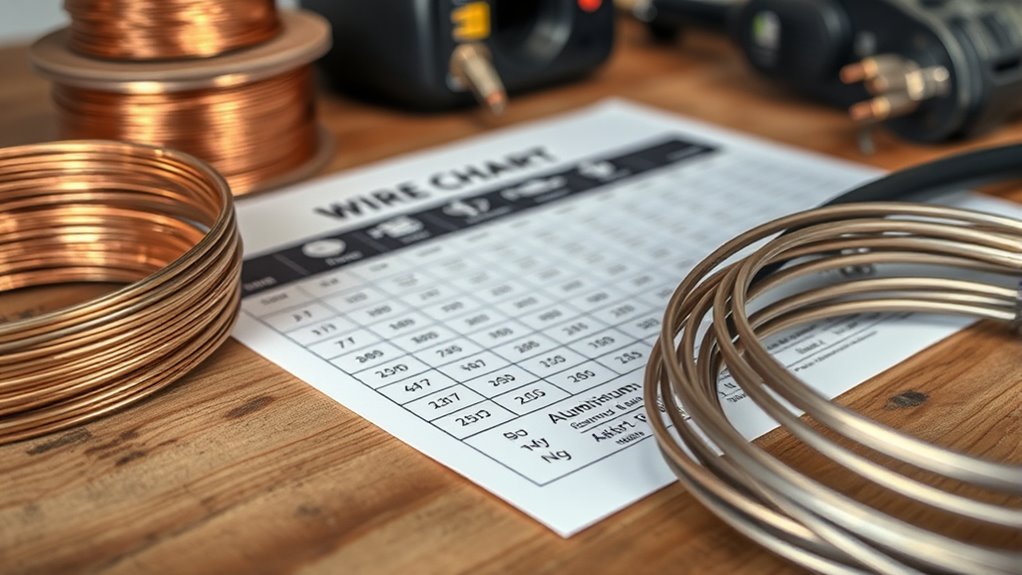
You’ll favor copper for plasma leads when conductivity and low resistance are priorities, because it carries current more efficiently than aluminum.
If weight and flexibility matter—for example on portable rigs—aluminum can be attractive but you’ll need a larger gauge to match copper’s ampacity.
Always match material choice to the installation, balancing required gauge, heat risk, and handling needs.
Conductivity and Resistance
Although both copper and aluminum will carry current to a plasma cutter, copper’s superior conductivity and lower resistance make it the better choice for high‑current leads.
In a conductivity comparison, copper offers roughly 100% base conductivity versus about 61% for aluminum, so you’ll see lower resistance factors, reduced voltage drop, and less heating under load.
- Conductivity: copper’s low resistivity (~0.0000017 Ω/m) yields more efficient current transmission than aluminum (~0.0000028 Ω/m).
- Ampacity: you can use 10 AWG copper at ~30 A; aluminum requires a larger gauge (typically 8 AWG) to match performance.
- Durability: copper resists corrosion and physical damage better, maintaining conductive integrity in demanding fabrication environments.
Weight and Flexibility
When handling leads for a plasma cutter, pay attention to weight and flexibility since they directly affect portability and ease of routing; copper is heavier but more conductive and generally stiffer, while aluminum is lighter and easier to maneuver but needs a larger diameter to match copper’s ampacity.
For a clear weight comparison, copper’s higher density increases pack weight but reduces required cross‑section for given amps, improving heat management and current transfer.
Aluminum gives flexibility benefits in handheld setups and reduces transport strain, but its lower tensile strength and larger required diameter can complicate routing and attachment hardware.
Choose copper where ampacity, heat control, and mechanical durability matter; choose aluminum only when low weight and cost override those standards.
Grounding, Connectors, and Practical Installation Tips
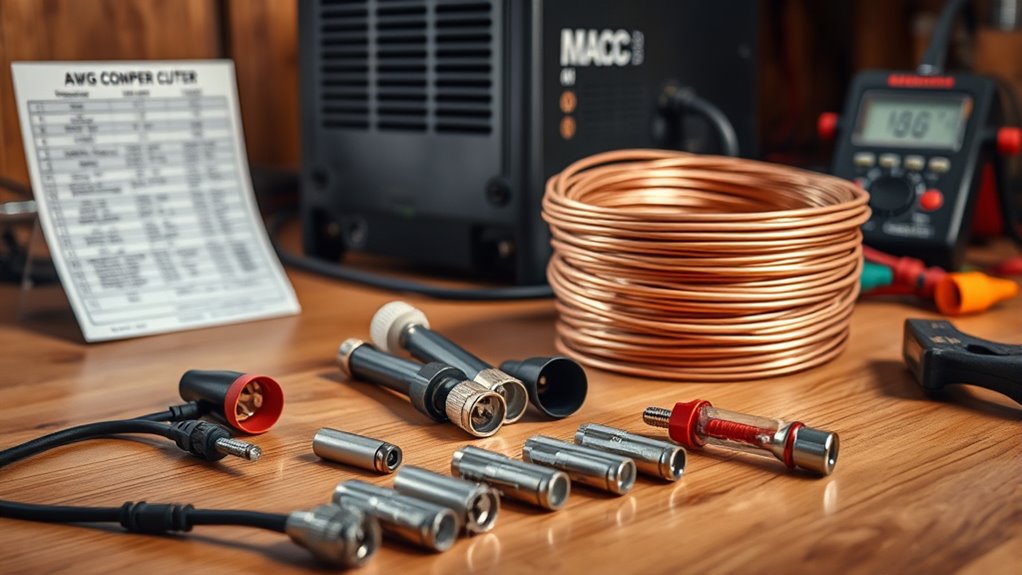
Because a solid electrical system starts with proper grounding, make sure you run a dedicated ground conductor at least the same gauge as your power feed and bond it to the cutter chassis and local earth, complying with NEC requirements. You’ll reduce shock risk and demonstrate grounding importance during inspections.
Use connectors with proper ratings; connector ratings must meet or exceed the cutter’s continuous and peak amperage to prevent overheating.
- Choose connectors rated ≥ the machine’s amps (many use 40 A minimum), use crimp or screw types rated for heat, and inspect for corrosion.
- Keep feed length short to limit voltage drop; match gauge to ampacity and run the ground parallel to the hot conductors, using proper strain relief.
- Follow NEC wiring methods, secure enclosures, torque terminals to manufacturer specs, and document installations for future service.
Maintain high‑quality terminations and periodic checks; poor connectors increase resistance, heat, and failure risk.
Calculating Wire Size Step‑by‑Step for Your Setup
Now that your grounding and connectors are sorted, you’ll calculate the wire size by starting with the cutter’s maximum amperage rating from the manufacturer. Use this step‑by‑step method: note the rated amps, measure one‑way distance to the power source, consult an ampacity chart for AWG versus amperage and distance, and adjust for wire insulation and ambient temperature. If temperature or insulation reduces ampacity, pick the next larger AWG. Confirm compliance with local electrical codes.
| Step | Action | Example |
|---|---|---|
| 1 | Record cutter max amps | 40 A |
| 2 | Measure distance | 50 ft |
| 3 | Check ampacity chart | 6 AWG recommended |
| 4 | Adjust for insulation/temp | Use larger gauge if needed |
| 5 | Verify code compliance | Local rules met |
Apply conservative margins for voltage drop and heat. Document your choices and keep manufacturer data and code references with the installation records.
Common Mistakes and Safety Rules When Sizing Plasma Cutter Cables
If you ignore proper cable sizing, you’ll risk overheating, excessive voltage drop, and code violations — mistakes that can cause equipment failure or fire.
You must avoid common mistakes and follow safety guidelines: never undersize wire for the cutter’s amp draw (e.g., a 50 A unit needs ~6 AWG), and don’t ignore run length — increase wire size about 10% per 50 ft to limit voltage drop.
Never undersize conductors — match cutter amps (50 A ≈ 6 AWG) and upsizing ~10% per 50 ft for voltage drop.
- Check ampacity and NEC: follow manufacturer specs and NEC ampacity tables, select conductor and insulation rated for the environment (90°C where required), and document calculations.
- Inspect and maintain: routinely examine cables for frays, damaged insulation, or overheating discoloration; replace compromised cables immediately to prevent shock or failure.
- Install correctly: use proper terminations, secure routing to avoid mechanical damage, and ground per code.
Adhere to these safety guidelines and you’ll minimize risk, maintain performance, and stay code‑compliant.
Frequently Asked Questions
Can I Use Extension Cords Safely With a Plasma Cutter?
You can, but only with properly sized, heavy‑duty extension cord ratings matched to cutter amperage and length; use grounded, welded‑plug cords, minimize voltage drop, avoid coils, inspect regularly, and follow safe usage standards and manufacturer recommendations.
How Does Ambient Temperature Affect Wire Ampacity for Cutters?
Ambient temperature reduces wire ampacity: you’ll de-rate capacity as heat rises because wire conductivity factors worsen and heat dissipation considerations shrink. Follow standards, apply specified correction factors, and choose larger AWG or improved cooling accordingly.
Are Inverter Plasma Cutters Different for Wire Sizing?
Yes — but wait: you’ll want to verify specifics. Inverter plasma cutters often raise inverter efficiency and alter power requirements, so you’ll size wire to the actual input current, duty cycle, and local code for safe, standards‑focused installation.
What Wire Insulation Type Is Best for Plasma Cutter Leads?
You should use high‑temperature, oil‑resistant EPDM or silicone rubber wire insulation for plasma cutter leads; they give superior heat, arc, and chemical resistance while maintaining lead flexibility, meeting welding equipment standards and ensuring durable, safe performance.
Can Battery-Powered Plasma Cutters Use the Same Gauge Wires?
Yes — you can often use the same gauge, but you’ll match wire gauge to battery capacity and current draw; guarantee sufficient ampacity, low voltage drop, and prioritize wire flexibility for portable leads to meet safety and performance standards.
Conclusion
You’ve seen how amps, duty cycle and distance dictate cable choice, so pick the largest gauge that meets both ampacity and voltage‑drop limits. Treat copper as the default, upsizing for long runs like adding armor to a shield, and follow NEC ampacity tables, proper grounding and quality connectors. Measure run length, calculate voltage drop, and choose a wire that keeps cutter performance and safety within spec—don’t gamble when lives and equipment depend on correct wiring.