Auto welding certification is not one single card that covers every job. The right credential depends on whether you work in collision repair, restoration, performance fabrication, exhaust work, manufacturing, or structural steel fabrication. Most auto body and collision technicians focus on steel GMA/MIG, aluminum GMA/MIG, sectioning, OEM repair procedures, and shop-specific requirements. Fabricators may also need an AWS Certified Welder test that matches the exact welding process, material, thickness, position, and Welding Procedure Specification (WPS).
Quick Answer
For most auto body and collision work, start with I-CAR or OEM-required welding certification for steel GMA/MIG, steel sectioning, and aluminum GMA/MIG. For fabrication, manufacturing, or structural steel work, an AWS Certified Welder test can prove a specific process, material, and position. Match the credential to the exact repair procedure, not a generic title.
Key Takeaways
- Collision repair usually points toward I-CAR, OEM, or shop-required welding credentials, especially for steel GMA/MIG, aluminum GMA/MIG, and sectioning work.
- AWS Certified Welder testing is useful for fabrication and manufacturing, but it qualifies you only for the process, material, position, and WPS you test on.
- MIG/GMAW is the main auto repair process, while TIG is valuable for custom, aluminum, motorsports, and thin-material fabrication.
- Steel, aluminum, stainless, and coated metals need separate attention because each material reacts differently to heat, filler metal, shielding gas, and preparation.
- Always follow OEM repair procedures and safety rules before welding near high-voltage systems, batteries, airbags, fuel systems, adhesives, foam, or zinc-coated panels.
At a Glance
| Time Required | Same-day testing if you are ready; several days to several months if you need training and practice first. |
| Difficulty | Moderate for basic steel MIG; higher for aluminum, overhead welds, sectioning, TIG, and pipe/tube tests. |
| Tools Needed | Welding machine, approved PPE, test coupons, clamps, grinder or prep tools, wire brush, welding gauge, ventilation, and the correct WPS or OEM repair procedure. |
| Cost | Varies by test facility, program, process, material, and retest needs. Ask the AWS ATF, I-CAR provider, school, or employer for current pricing. |
What Certifications Do Auto Welders Need?
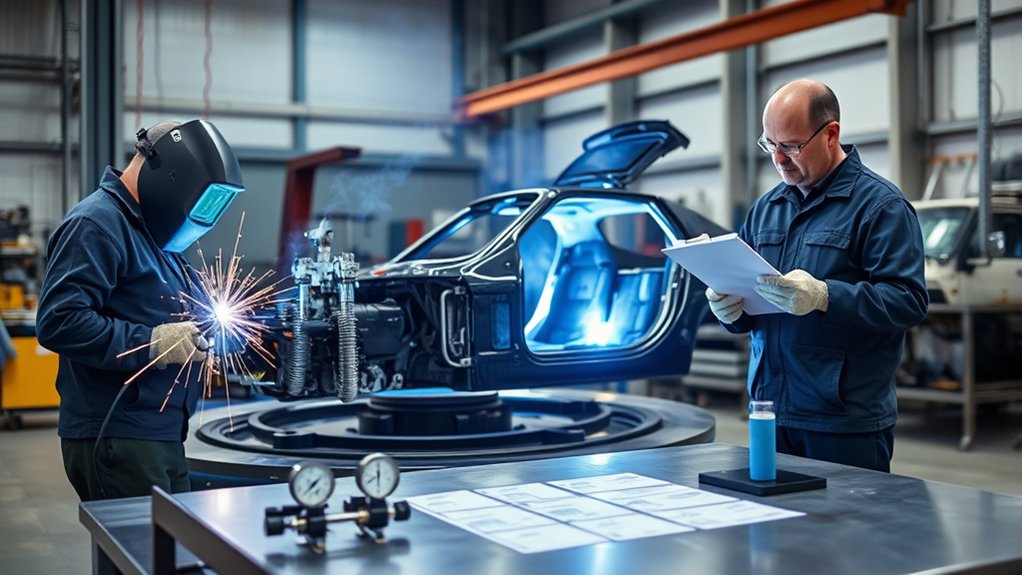
If you want to work as an auto welder, first decide what kind of auto work you mean. A collision repair technician, a race car fabricator, an exhaust technician, a production welder, and a structural steel fabricator can all need different proof of skill.
For collision repair, the most relevant route is often I-CAR Welding Training and Certification, OEM-specific training, or a shop/network requirement. I-CAR offers welding training and certification for areas such as steel GMA welding and aluminum GMA/MIG welding, and many collision programs care about whether you can make welds that match modern repair procedures.
For fabrication, manufacturing, or structural work, the AWS Certified Welder Program can be useful because it is performance-based. You weld a test coupon to a specific WPS, and the test proves your skill for that process, base material, thickness range, and position. It is not a blanket license for every auto weld.
If you inspect welds, supervise quality, or work in a shop with formal quality control, a Certified Welding Inspector credential can help. It is not usually the first credential a hands-on auto welder needs, but it can support quality checks, documentation, and training roles.
When you prepare coated automotive parts, safe prep matters. If you work with galvanized parts, learn how to remove zinc coating safely and follow ventilation rules before welding.
Warning: Never weld on a vehicle until you have checked the OEM repair procedure and made the vehicle safe. That may include battery disconnect steps, airbag precautions, fuel-system protection, adhesive and foam removal, fume control, and high-voltage disablement on hybrids and EVs.
AWS vs. I-CAR vs. OEM: Which Path Fits Auto Work?
The best certification path depends on your job target. Do not choose a credential just because it sounds advanced. Choose the one employers, insurers, OEM networks, or shop procedures actually require.
| Work Type | Best Certification Focus | Why It Matters |
|---|---|---|
| Collision repair | I-CAR welding certification, OEM training, steel GMA/MIG, aluminum GMA/MIG, sectioning | Modern repairs must match vehicle-specific procedures and insurer or OEM program rules. |
| Automotive fabrication | AWS Certified Welder, employer procedure qualification, MIG, TIG, tube work | Custom brackets, chassis parts, fixtures, and tube assemblies need repeatable weld quality. |
| Manufacturing | Employer-specific qualification, AWS or internal WPS-based testing | Production work often uses the employer’s exact machine settings, material, and inspection rules. |
| Structural steel or shop fabrication | AWS D1.1-based qualification when required by the project | AWS D1.1 applies to structural steel, not ordinary auto body panels. |
| Hybrid and EV repair | OEM high-voltage safety training, I-CAR EV resources, welding credentials required by the repair procedure | High-voltage systems and battery structures add safety steps before any welding or cutting starts. |
Products Worth Considering

Multipurpose Fit: Repairs at least 98% of the plastics on the market. Suitable for repairing: bumper, dashboard, lamp holder, plastic ring, radiator, spoiler, handles, headlights, plastic wings, car and motorcycle plastic device, etc

UL CERTIFIED: Our Plastic Welder, the factory, and the process have been tested, approved, and Certified by Underwriters Laboratories (UL). Safety is our number one priority
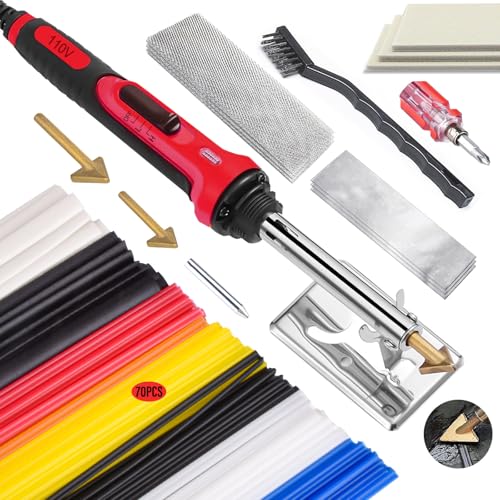
UPGRADED 150W RAPID HEATING - This 150W plastic weld adopts advanced ceramic heating chip, It can be heated to 1112 ℉ in 15-20 seconds. By quickly heating, melting, and repairing, the plastic welding gun reassembles broken plastic to extend the lifespan of items, saving a significant amount of time and money. Compared with the traditional tungsten wire chips, it not only heats up faster, but also lasts 10 times longer than the traditional tungsten chip. And this plastic welding with 6 ventilation holes, it helps to dissipate heat quickly. The design of plastic handle insulation is not easy to deform and don't worry about burning your hands.
Which Welding Processes Matter Most in Automotive Work?
In automotive work, GMAW/MIG welding is usually the main process because it is fast, repeatable, and common in steel collision repair and fabrication. That is why many auto welding tests focus on MIG setup, travel speed, weld size, penetration, and destructive testing of coupons.
TIG welding matters when you need tight heat control, clean weld appearance, or precise work on aluminum, stainless, thin tubing, and custom parts. It is common in motorsports, restoration, and custom fabrication, but it is not automatically the right process for every collision repair. Always check the OEM procedure.
Resistance spot welding and MIG brazing also matter in collision repair because some factory-style joints and high-strength steels may call for methods other than regular fusion welding. Plasma cutting is not a welding certification by itself, but understanding plasma cutting technology can help with safe fabrication and part preparation.
Stick welding or SMAW has a place in heavier repair and general fabrication, but it is not the usual choice for thin modern auto body panels. It can add too much heat, and many OEM procedures will not allow it for collision repairs.
As vehicles use more aluminum and mixed materials, aluminum welding becomes more valuable. Be careful with shortcuts, though. Aluminum GMA/MIG certification normally uses proper shielding gas, clean wire feeding, and controlled settings. Do not assume gasless MIG welding methods will satisfy an aluminum certification test or an OEM repair procedure.
Do Auto Welders Need MIG or TIG Certification?
Most auto welders should start with MIG/GMAW certification because it covers the process used most often in collision repair, brackets, sheet metal, sectioning, and general automotive fabrication. If you want to work in a collision shop, steel GMA/MIG and aluminum GMA/MIG credentials are usually more practical than a general TIG-only path.
TIG certification is still worth considering if you want to weld aluminum, stainless, chromoly tubing, custom intake or exhaust parts, tanks, intercooler piping, or motorsports components. TIG proves heat control and hand coordination, but it should support your job target, not replace the process your employer or repair procedure requires.
When you test through an AWS Accredited Test Facility, the test is tied to a WPS. That means the credential is specific to variables such as process, position, material, and thickness. For collision repair, I-CAR or OEM programs may be the more direct proof employers want.
Pro Tip: Before paying for a test, ask three local employers what they require. Collision shops may ask for I-CAR or OEM training, while fabrication shops may prefer AWS or an in-house weld test.
Products Worth Considering

AWS D1.1 Compliant Weld Geometry - Limited Thickness Qualification Plate Designed for welder performance qualification and welding procedure testing in accordance with AWS D1.1 standards. Assembled and Ready to Weld with 45 degree bevel and a 1/4" Root Gap

1" Thick Weld Test Plate Set beveled to 22.5 degrees per plate for a total of 45 degree grove. 2" Wide by 1/4 thick backing strip with run-off tabs. 4" Wide (each plate) with 22.5 degre (+/- 3 degrees) bevels on both sides 6" Height on Both Plates Unit is assembled and ready to weld

201 STAINLESS STEEL - Made of Premium Type 201 stainless steel with excellent corrosion and heat resistance. Ideal for consistent practice across MIG, TIG, Stick, and wire-feed welding applications.
How Do Plate, Pipe, and 6G Tests Work?
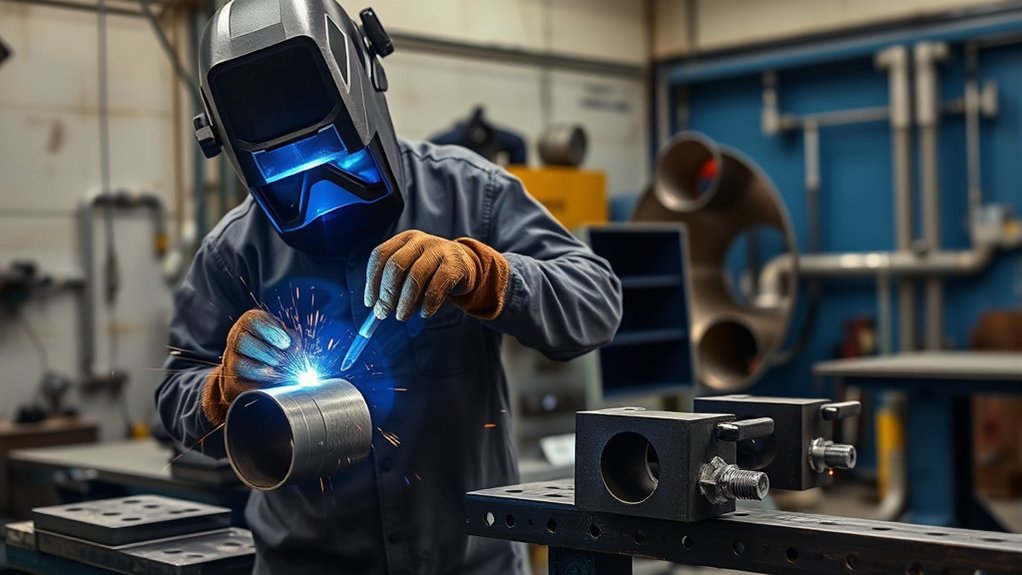
Welder certification tests usually check whether you can follow a procedure and produce an acceptable weld under controlled conditions. The test coupon may be plate, sheet, pipe, or tube, depending on the work you are trying to qualify for.
In auto body and collision repair, sheet and plate-style coupons are more common than pipe tests. In exhaust, roll cages, chassis fabrication, motorsports, and broader industrial welding, tube or pipe tests can become more useful.
During testing, wear proper personal protective equipment, control sparks and fumes, and follow the test administrator’s procedure. The goal is not only to make a good-looking bead. The weld must pass the required inspection, which may include visual inspection, bend testing, macro etch, break testing, or other acceptance checks.
Plate Test Basics
A plate test uses flat coupons to check bead control, joint prep, penetration, fusion, and consistency. The test may involve positions such as flat, horizontal, vertical, or overhead. Plate testing is a practical starting point because many auto brackets, tabs, mounts, and repair coupons are closer to plate or sheet work than pipe work.
For AWS testing, the test must match the WPS. For collision repair, the test may use automotive-style coupons and weld types that match real repair work, such as plug welds, butt joints, or sectioning-related welds.
Pipe Test Positions
Pipe tests are more demanding because the joint is curved and the weld puddle changes as you move around the pipe. A 5G pipe test uses a fixed pipe, so you weld around it without rolling the pipe. A 6G pipe test fixes the pipe at about a 45-degree angle, which forces you to handle flat, vertical, horizontal, and overhead challenges in one weld.
Pipe and tube skills can help in performance fabrication, exhaust work, roll cages, and industrial jobs. For normal fenders, quarter panels, and collision sectioning, though, a 6G pipe test is usually more advanced than necessary unless the employer specifically asks for it.
6G Test Challenge
The 6G test is one of the hardest common pipe welding tests because the pipe is fixed at an angle and you must weld all the way around it. It shows strong puddle control, body positioning, travel speed, and consistency. It can strengthen your resume, but it is not a substitute for collision-specific MIG or aluminum certification.
| Test Type | Typical Setup | Best Use in Auto Work |
|---|---|---|
| Sheet or plate test | Flat, horizontal, vertical, or overhead coupon | Collision repair, brackets, tabs, sectioning practice, basic fabrication |
| Pipe or tube test | Fixed or rolled round joint | Exhaust, tube fabrication, race car work, industrial jobs |
| 5G test | Fixed pipe, usually horizontal | Advanced tube and pipe work |
| 6G test | Fixed pipe at about 45 degrees | High-skill pipe/tube qualification, not usually required for standard auto body repair |
How Does Material Type Affect Certification?
Material type affects certification because steel, aluminum, stainless steel, and coated panels do not weld the same way. Heat input, filler metal, shielding gas, cleaning, joint design, and inspection criteria can all change. A test passed on mild steel does not automatically qualify you for aluminum.
This is especially important in automotive work because modern vehicles can include mild steel, high-strength steel, ultra-high-strength steel, aluminum, adhesives, foams, and mixed-material joints. Some parts are not supposed to be welded at all unless the OEM repair procedure allows it.
Steel Vs Aluminum
Steel is generally more forgiving than aluminum, but automotive steel can still be thin, coated, or heat-sensitive. High-strength steel can lose strength if you use the wrong heat input or repair method. That is why OEM repair procedures matter.
Aluminum needs cleaner prep, better wire feeding, correct shielding gas, and tighter heat control. It also conducts heat quickly, so distortion and burn-through can happen fast. Aluminum welding certification may focus on GMA/MIG, TIG, or a specific collision repair process.
- Use steel certification for the exact steel process and joint type required by the job.
- Use aluminum certification when the work involves aluminum panels, structures, or custom parts.
- Do not treat stainless, galvanized, or coated material as the same as clean mild steel.
Procedure Qualification Matters
A welding certification is only as useful as its scope. In formal testing, the WPS or repair procedure controls the process, base metal, filler metal, shielding gas, position, joint type, thickness, and acceptance method. Change the material or process, and you may need a different qualification.
| Material Type | Qualification Focus | Auto Work Concern |
|---|---|---|
| Mild steel | Fit-up, fusion, penetration, weld size | Common in brackets, panels, and general fabrication |
| High-strength steel | OEM-approved heat input and repair method | Wrong welding can weaken crash structure |
| Aluminum | Cleaning, shielding gas, heat control, wire feeding | Distortion and porosity risks are higher |
| Galvanized or coated steel | Safe coating removal, ventilation, approved procedure | Zinc fumes and contamination can create safety and weld-quality problems |
| Mixed materials | OEM repair method, joining method, adhesives, fasteners, rivets, or welding limits | Some joints should not be fusion welded in the field |
If you are working with galvanized steel, consumable choice and prep affect quality. Review proper welding technique for coated material and use ventilation that matches the hazard.
Test For Each Material
Every material may require its own test because a pass on one material does not prove you can weld another. Aluminum, steel, and stainless steel all behave differently under heat. Even within steel, a thin automotive coupon is not the same as a thick structural plate.
- Check the material before choosing a test.
- Match the certification coupon to the work you actually perform.
- Confirm whether the test covers the welding position you need.
- Ask whether the credential satisfies your employer, insurer, OEM program, or customer specification.
When you qualify for the right material and process, you can work with more confidence and avoid claiming coverage your certification does not provide.
Where Can Auto Welders Get Certified?
You can get certified through several routes. The right route depends on the work you want and the employer requirements in your area.
- AWS Accredited Test Facilities: Use this route for AWS Certified Welder testing tied to a specific WPS, process, material, and position.
- I-CAR welding programs: Use this route for collision repair welding skills, including steel GMA/MIG, aluminum GMA/MIG, and related collision repair procedures.
- OEM training: Use this route when a vehicle manufacturer, certified repair network, or EV program requires specific training before repairs.
- Trade schools and community colleges: Use these programs to build skills before testing. Many offer MIG, TIG, stick, blueprint reading, metallurgy, and safety training.
- Employer weld tests: Some shops qualify welders in-house using the company’s own procedure, coupons, and inspection method.
Online study can help with welding symbols, safety, theory, and procedure reading, but it cannot replace hands-on testing. You still need practice under real shop conditions.
If you are new, start with steel MIG/GMAW, coupon prep, machine setup, safety, and visual inspection. Then add aluminum, TIG, sectioning, tube work, or flux core welding if those skills match your target job.
How Long Do Auto Welding Certifications Last?
Certification duration depends on the program. AWS Certified Welder credentials require continuity maintenance, which means you must document that you continue to use the welding process you are certified for. Collision repair, I-CAR, OEM, school, and employer credentials may follow different renewal or recertification rules.
Before you rely on any credential, check three things:
- When it expires or needs continuity documentation.
- Whether it covers your current process, material, and position.
- Whether your employer, OEM program, insurer, or customer accepts it.
Automotive Welding Safety Before You Test or Repair
Certification proves welding skill, but it does not replace shop safety. Auto welding can involve fumes, paint, seam sealer, foam, adhesives, zinc coatings, airbags, fuel vapors, wiring, sensors, batteries, and high-voltage systems.
Before welding, review OSHA welding, cutting, and brazing standards, your shop safety policy, and the OEM repair procedure. If you work on a hybrid or EV, use I-CAR high-voltage safety resources and the manufacturer’s service information before cutting or welding.
A good weld test proves skill on a coupon. A safe auto repair proves you can apply that skill only after the vehicle, material, and repair procedure are confirmed.
Frequently Asked Questions
What welder do I need for automotive work?
For most automotive work, start with a quality MIG/GMAW welder that can handle thin steel and the wire size required by your repair or fabrication work. For aluminum or custom parts, you may also need a spool gun, push-pull gun, or TIG welder. Collision repair should follow the OEM procedure, not just the welder’s capability.
What are the four main types of welding certifications?
Common AWS credential types include Certified Welder, Certified Welding Inspector, Certified Welding Engineer, and Certified Welding Educator. For auto collision repair, I-CAR and OEM welding credentials may be more directly relevant than higher-level AWS inspector or educator credentials.
What is F1, F2, F3, and F4 in welding?
F1, F2, F3, and F4 are not welding positions. F-numbers are filler-metal groupings used in some qualification systems. Welding positions are usually written as 1G, 2G, 3G, 4G, 5G, and 6G for groove welds, or 1F, 2F, 3F, and 4F for fillet welds.
How much does a D1.1 certification cost?
Pricing varies by test facility, process, material, coupon type, inspection method, and whether training is included. AWS says candidates should contact their preferred Accredited Test Facility for current pricing. Also remember that D1.1 is a structural steel code, so it may not be the right target for ordinary auto body repair.
Is AWS or I-CAR better for auto welding?
For collision repair, I-CAR or OEM-required welding certification is often the better match. For fabrication, manufacturing, structural steel, or broader welding work, AWS Certified Welder testing may be more useful. The best choice is the credential your target employer or repair program actually requires.
Do I need 6G certification for auto welding?
Usually no. A 6G test is valuable for pipe and tube welding, but most auto body and collision work needs sheet, plate, steel GMA/MIG, aluminum GMA/MIG, or OEM-specific repair certification. Consider 6G only if your job involves pipe, tube, motorsports fabrication, or industrial welding beyond standard auto repair.
Conclusion
In auto welding, the best certification is the one that matches the job, material, process, and repair procedure. Collision repair often points toward I-CAR, OEM, steel GMA/MIG, aluminum GMA/MIG, and sectioning credentials. Fabrication and manufacturing may call for AWS Certified Welder testing or an employer’s own WPS-based qualification. Before you strike an arc, check the vehicle procedure, confirm the material, choose the right process, and certify for the work you actually perform.
Sources
- American Welding Society — Certified Welder Program — backs AWS performance-based testing, ATF testing, WPS-based qualification, and six-month continuity maintenance.
- American Welding Society — Accredited Test Facilities — backs where AWS Certified Welder testing is performed.
- I-CAR — Welding Training and Certification — backs collision repair welding certification paths for steel GMA and aluminum GMA/MIG work.
- I-CAR — High-Voltage Safety for EV Collision Repair — backs EV and hybrid safety, OEM procedures, and high-voltage repair precautions.
- AWS D1.1/D1.1M:2025 Structural Welding Code — Steel — backs structural steel qualification context.
- OSHA — Welding, Cutting, and Brazing Standards — backs welding safety, ventilation, and workplace hazard controls.