Angle grinder no-load speed is the spindle RPM measured while the accessory spins freely, before it touches the work. RPM normally drops during cutting or grinding because the motor is under load. Use the grinder’s maximum marked speed, not the expected loaded speed, when checking a wheel or accessory. The accessory must also match the tool’s allowed diameter, arbor or thread, flanges, guard, and intended operation.
Last updated: July 23, 2026. This guide was checked against current manufacturer data and OSHA grinder-safety guidance. Your tool manual and accessory label control.
Quick Answer
No-load speed is the grinder’s free-spinning RPM. A slight, smooth RPM drop under load can be normal, but severe bogging, surging, smoke, or strong vibration is not. Choose accessories by the grinder’s maximum marked RPM and verify the wheel’s size, mounting system, guard, material rating, and intended use.
Key Takeaways
- No-load RPM is a free-spinning specification, not a promise of cutting speed.
- A moderate speed drop under load is normal; sharp drops, surging, smoke, or strong vibration are warning signs.
- Choose every accessory by the grinder’s maximum marked speed, not by the slower RPM you expect during use.
- RPM alone does not show torque, motor output, electronic speed regulation, or overall cutting performance.
- Wheel diameter and RPM work together to determine rim speed, but the wheel’s own marked limit remains the approval standard.
- Wheel diameter, arbor fit, flange type, guard, material rating, and intended operation matter as much as RPM.
What Is Angle Grinder No-Load Speed?
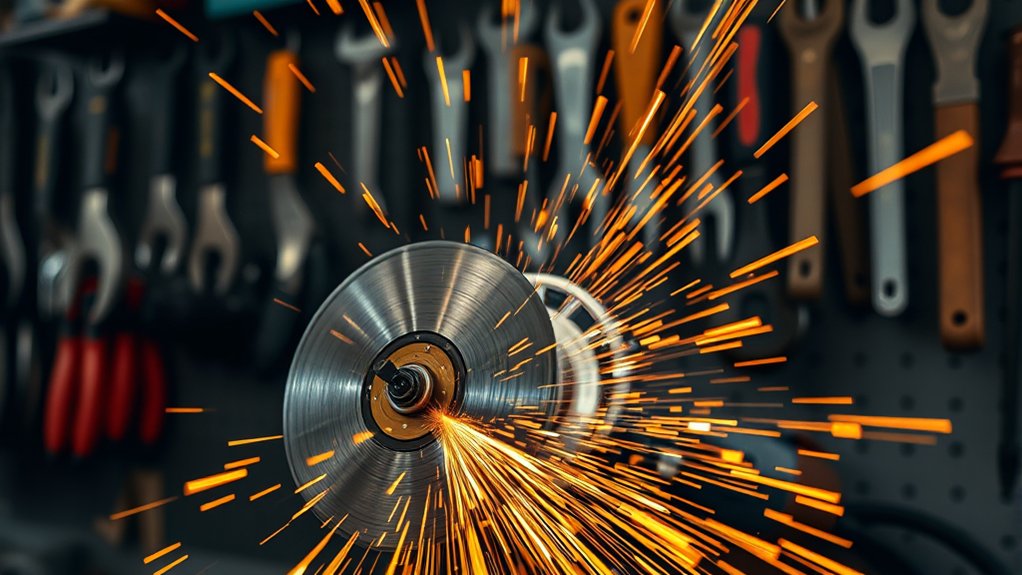
No-load speed is the RPM an angle grinder reaches while the spindle and accessory rotate without touching the workpiece. Manufacturers usually show it on the tool nameplate, product page, or instruction manual as RPM, r/min, or min-1. These labels all describe revolutions per minute.
The number has two practical uses. It helps you compare the speed range of grinders built for similar wheel sizes, and it provides the tool-speed figure used for accessory compatibility checks.
Smaller wheels often run at higher spindle RPM than larger wheels. For example, the Bosch GWS 6-125 is listed at 11,000 RPM with a 125 mm wheel, while the Bosch GWS 2200 is listed at 6,500 RPM with a 230 mm wheel. The exact speed varies by model, so use the number marked on your own tool.
Choose a wheel for the grinder’s marked maximum speed, not for the lower RPM you expect after the wheel touches the work.
How Do No-Load RPM, Working RPM, and Wheel RPM Differ?
These three speed terms describe different things. A grinder has one marked no-load or maximum speed, but its working RPM changes continuously with pressure, contact area, material, wheel condition, power supply, and motor control.
| Term | What It Means | How to Use It |
|---|---|---|
| No-load speed | The grinder’s free-spinning speed before the wheel meets resistance. | Use the tool’s maximum marked figure when checking wheel speed compatibility. |
| Working speed | The actual RPM while cutting, grinding, sanding, brushing, or polishing. | Expect it to change with pressure, cut depth, material, wheel condition, battery state, and motor control. |
| Accessory rated speed | The highest speed the accessory manufacturer allows for that wheel, disc, pad, or brush. | It must be at least equal to the maximum speed marked on the power tool unless the tool and accessory manuals expressly state another approved arrangement. |
The DEWALT DWE4120 instruction manual states that an accessory’s rated speed must be at least equal to the maximum speed marked on the tool. A wheel that physically fits the spindle is not automatically safe to use.
Warning: Never install a wheel or accessory with a maximum RPM below the grinder’s marked maximum speed. An oversped accessory can break apart and throw fragments at high speed.
Why Does Angle Grinder RPM Drop Under Load?
When the wheel contacts the workpiece, friction and cutting force oppose its rotation. The motor then has to produce enough torque to keep the wheel moving. A small drop in speed is normal. The amount of drop depends on more than material hardness.
- Feed pressure: Pushing harder increases load and heat.
- Cut depth and contact area: A deep cut or broad grinding pass loads the wheel more than light contact.
- Wheel type and condition: A glazed, loaded, dull, or wrong wheel can slow the tool and cut poorly.
- Motor output and electronics: More usable output and constant-speed control can help the grinder hold RPM.
- Power supply: A weak battery, unsuitable extension cord, poor connection, or low supply voltage can reduce performance.
- Cooling and tool condition: Blocked vents, worn internal parts, or overheating can cause power loss or shutdown.
Higher torque can help a grinder resist slowdown, but no-load RPM does not tell you how much torque the tool can deliver. Some modern grinders also use electronic controls to maintain speed as load changes. Soft start only limits the initial surge, and an electronic brake only shortens stopping time; neither feature by itself guarantees stronger performance under load.
Pro Tip: Use light, steady pressure and keep the wheel moving as the operation requires. If the motor note drops sharply, ease off rather than forcing the cut.
How Material and the Job Affect Working RPM
Material resistance is only one part of the load. Thick steel, a deep masonry cut, or a wide grinding contact can slow a grinder more than a light pass. However, a sharp wheel matched to the material may cut a hard workpiece with less strain than a dull or unsuitable wheel on a softer one.
Cutting, grinding, sanding, wire brushing, and polishing also load the tool in different ways. A thin cut-off wheel has a narrow contact area but can bind if the cut closes. A grinding wheel may have a wider contact patch. A flap disc can load up on some materials. A wire wheel can expand slightly under speed and load, so its allowed diameter and guard clearance matter.
Do not judge performance by RPM alone. A grinder that holds speed well with the correct wheel often works faster and more smoothly than a higher-RPM model that bogs down easily.
Why Does Wheel Diameter Change Surface Speed?
The edge of a larger wheel travels farther during each revolution than the edge of a smaller wheel. Wheel diameter and RPM therefore work together to determine surface speed, also called rim speed or peripheral speed. This is one reason large grinders often use lower spindle RPM than small grinders.
Worked Example
OSHA defines surface feet per minute as 0.262 × wheel diameter in inches × RPM. A 125 mm wheel at 11,000 RPM has an edge speed of about 14,180 SFPM, or 72 m/s. A 230 mm wheel at 6,500 RPM is about 15,420 SFPM, or 78 m/s. The spindle speeds differ sharply, but the edge speeds are in a similar range. These figures explain the relationship; they do not replace the wheel’s marked maximum operating speed.
Never install a larger wheel simply because it clears the spindle. An oversized wheel may exceed the tool’s design limits, project outside the guard, overload the motor, or prevent correct guarding. Use only the wheel diameters and thicknesses listed for the grinder.
Note: A wheel’s RPM or m/s rating is tied to its stated diameter and construction. Do not use a worn-down wheel from a larger grinder on a faster small grinder.
Choosing Accessories for No-Load and Working Speeds
Your accessory must match the grinder and the operation. Check the wheel label, grinder nameplate, and both manuals before mounting anything.
| Compatibility Check | What to Confirm |
|---|---|
| Maximum RPM | Accessory rating meets or exceeds the grinder’s maximum marked speed. |
| Diameter and thickness | Both fit within the tool and guard capacity. |
| Arbor or thread | The mounting hole or thread matches the spindle and locating flange without improvised adapters. |
| Flanges and nut | Use the correct manufacturer-specified mounting hardware and orientation. |
| Guard | Use the guard type required for grinding, cutting, brushing, or dust collection. |
| Material and operation | The wheel is approved for the material and for cutting, grinding, sanding, brushing, or polishing as applicable. |
For mounting details, see the angle grinder arbor size guide. For a task-by-task comparison of cut-off wheels, grinding wheels, flap discs, wire brushes, and polishing accessories, see the angle grinder wheel guide.
Products Worth Considering

【Fits All 4-1/2 Inch Angle Grinders】 PRETEC Cut Off Wheel is compatible with all 4-1/2 inch angle grinders with 7/8 inch arbor. The high rotating speed of up to 13,300 RPM, more than common 13,000 RPM, ensure maximum efficiency.

Structural Components: A Cut off wheel typically comprises an abrasive, a binder, and air holes. The abrasive cuts, the binder shapes and strengthens, and the air holes remove swarf and dissipate heat to prevent damage to the cutting disc from overheating

Which Grinder Disc or Wheel Matches the Job?
The right grinder disc improves control, finish quality, and safety. Match the accessory to the operation first, then verify its speed, diameter, mounting system, guard, and material approval.
- Use a cut-off wheel only for cutting and with the cutting guard required by the tool manufacturer.
- Use a grinding wheel for the grinding surfaces and angles allowed by its label and manual.
- Use a flap disc for approved blending, deburring, and finishing work.
- Use a wire wheel or cup brush only if its rated speed, diameter, thread or arbor, and guard requirements match the grinder.
- Use polishing pads and backing pads only on a grinder designed for that operation and speed range.
Do not grind on the side of a cut-off wheel or apply sideways force to it. Do not use toothed saw blades, chain wheels, or improvised adapters unless the grinder manufacturer specifically designs and approves the complete system.
Products Worth Considering
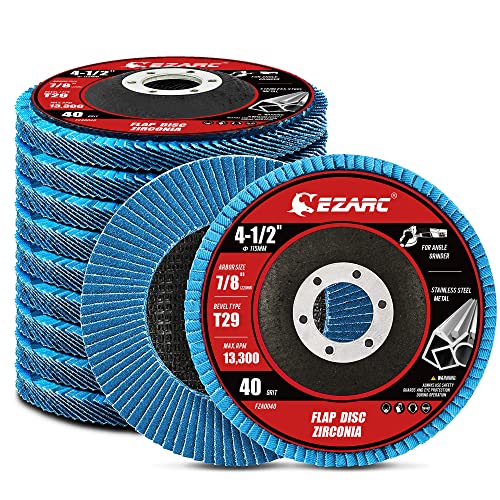
【Great Performance】EZARC flap sanding discs are made of hard zirconia material which lasts longer than standard aluminum oxide abrasive material, built for a more robust and economical grinding wheel

STRONGEST FIBER BACKING THAN OTHER PRODUCTS:4 1/2 grinding wheels made for TOP-LEVEL Hard zirconia.Good material for griding wheel. This Flap Disc is constructed of industrial grade high density premium zirconia material, increased durability than standard flap discs, built for a more robust and economical grinding wheel

[Various Grit Flap Discs]: Including 4-1 2 inch Flap discs with 40/60/80/120 4 different grits. This angle grinder flap disc set contains 2 x 40 grit, 1 x 60 grit, 1x 80 grit, 1 x120 grit. This sanding discs set is a great choice for grinding various metals, perfectly meets all you need.
Can a Variable-Speed Grinder Use Lower-RPM Accessories?
A variable-speed grinder can help with polishing, paint removal, stainless finishing, or other work that benefits from lower speed. It does not make every low-RPM accessory safe.
Use only accessories approved for the tool and the operation. Follow the grinder manual for the allowed speed setting, guard, backing pad, and attachment. Do not rely on the speed dial as a reason to mount an accessory whose rating is below the tool’s marked maximum unless the manufacturer expressly permits that combination.
Pre-Use Speed and Safety Check
No-load speed matters most before the grinder touches the work. Use this check each time you change accessories:
- Disconnect the plug or remove the battery before mounting or adjusting an accessory.
- Inspect the wheel for chips, cracks, moisture damage, unusual wear, or contamination. Use a ring test only when the wheel type and manufacturer call for it.
- Confirm the accessory RPM, diameter, thickness, arbor or thread, flange arrangement, guard, and intended material.
- Fit the correct guard and side handle, then position the guard between you and as much of the exposed wheel as the design allows.
- Secure the workpiece and clear the spark path of flammable liquids, gases, dust, rags, and other combustibles.
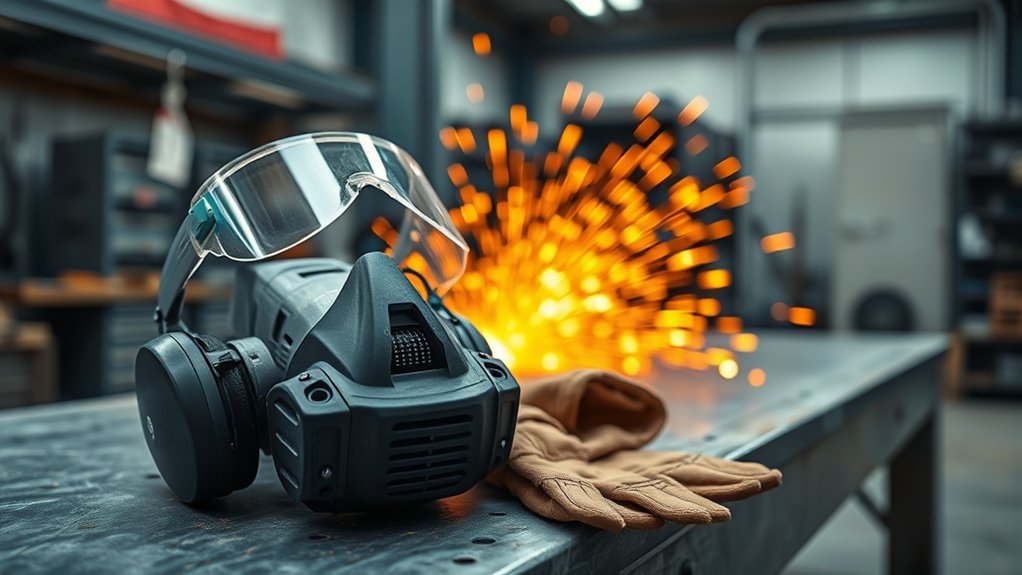
- Put on suitable eye and face protection, hearing protection, close-fitting clothing, and other task-specific PPE.
- After mounting, follow the manual’s test-run procedure. Stand out of the wheel’s plane, keep bystanders clear, and stop if you see wobble or feel unusual vibration.
OSHA’s portable grinder requirements address guarding and wheel inspection, while manufacturer manuals give the exact setup and test-run instructions for each tool.
Safety Tips for Using No-Load Speed Correctly
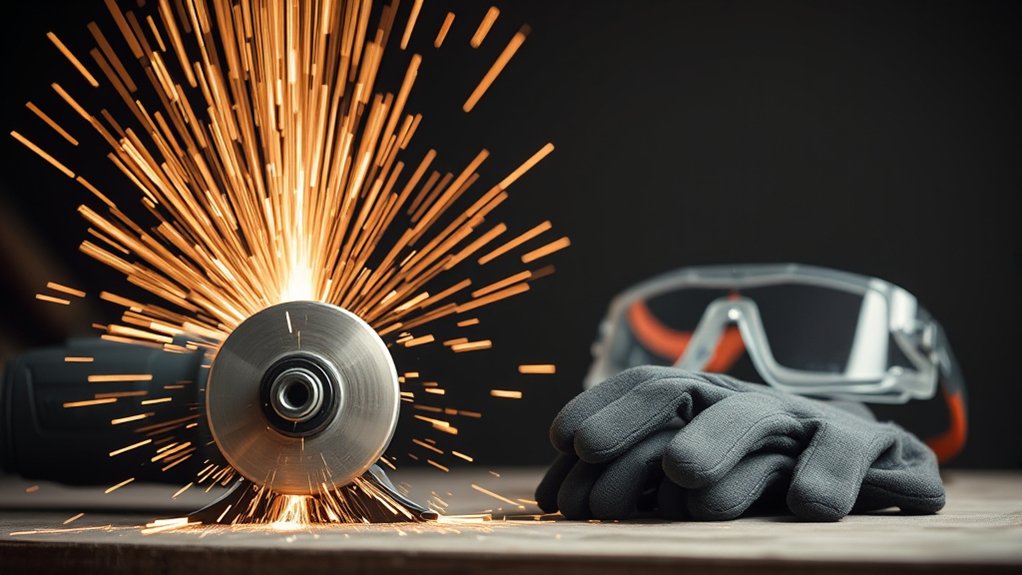
No-load speed sets the highest speed the accessory may face during normal free running. Check the wheel and tool before each use, and never defeat a guard or switch.
| Aspect | Safe Practice | Why It Matters |
|---|---|---|
| No-load speed | Use the maximum speed marked on the grinder for compatibility checks. | The wheel can reach this speed before it contacts the work. |
| Accessory rating | Use a rating equal to or higher than the grinder’s maximum marked speed. | Helps prevent overspeed failure. |
| Guard and handle | Use the correct guard and auxiliary handle in the positions required by the manual. | Improves control and helps deflect fragments and sparks. |
| Wheel condition | Inspect before use and after a drop or impact. | Damaged accessories may break during startup or use. |
| PPE and work area | Use task-appropriate PPE, secure the work, control dust, and remove fire hazards. | Reduces exposure to fragments, sparks, noise, dust, and kickback. |
Warning: Grinding and cutting concrete, masonry, stone, and other silica-containing materials can create respirable crystalline silica. Use the dust-control method required for the task, such as a compatible shroud and vacuum system or a manufacturer-designed integrated water-delivery grinder. Never add water to a standard dry grinder that is not designed for wet use.
The OSHA silica-control fact sheet for handheld grinders describes compatible vacuum dust collection and integrated water-delivery methods. Where water is an approved part of the system, follow the tool instructions and electrical-safety requirements, including suitable ground-fault protection and watertight connections.
Real-World Applications of No-Load Speed
No-load speed helps you choose a grinder for cutting, grinding, sanding, wire brushing, and polishing, but it is only one specification.
- Thin metal cutting: Wheel type, cut stability, and the ability to hold speed matter more than the highest number on the box.
- Heavy grinding: Usable motor output, torque, cooling, and constant-speed electronics become more important.
- Concrete or masonry: Wheel approval, guard or shroud, dust control, and silica precautions are essential.
- Surface finishing: Variable speed and a compatible backing pad or finishing accessory may give better control.
- Wire brushing: Brush RPM, diameter, guard clearance, and wire condition must match the tool.
A grinder rated at 10,000 or 11,000 RPM may work well on thin metal, but the same no-load figure does not guarantee equal performance in a deep cut. Compare the complete tool and accessory system.
Does Corded or Cordless Power Hold RPM Better?
Power source alone does not determine how well a grinder holds speed. Corded models suit long sessions without battery changes, while cordless models provide mobility and can deliver strong performance with the battery specified by the manufacturer.
Compare the exact models for wheel size, no-load speed, usable motor output, constant-speed electronics, thermal protection, battery requirements, ergonomics, and expected duty cycle. For a broader buying comparison, see the corded vs. cordless angle grinder guide.
When Is RPM Slowdown Normal, and When Is It a Problem?
A slight, smooth change in motor sound when the wheel contacts the work can be normal. Stop and investigate when the slowdown is severe, sudden, repeated, or paired with heat, smoke, surging, or strong vibration.
| What You Notice | What It Usually Suggests | What to Do |
|---|---|---|
| Small, steady speed drop | Normal load from cutting or grinding. | Keep light, steady pressure. Ease off if the motor note keeps falling. |
| Sharp slowdown with one wheel or cut | Too much pressure, a glazed or wrong wheel, excessive contact area, or a closing kerf. | Stop, disconnect power, inspect the accessory, and support the work so the cut stays open. |
| Surging, smoke, burning odor, repeated shutdown, or strong vibration | A power, cooling, motor, bearing, gearbox, or accessory fault may be present. | Take the grinder out of service. Do not keep testing it under load. |
Check the battery or supply cord, use only an extension cord size allowed by the manual, clear blocked vents as directed, and replace a worn, loaded, damaged, or incorrect wheel. If abnormal noise or vibration remains during a safe no-load test, use the angle grinder gearbox troubleshooting guide or have the tool inspected by a qualified service provider.
Do not keep forcing a grinder that repeatedly bogs down. The wheel may bind, the motor may overheat, and control can be lost.
Common Mistakes When Reading Angle Grinder RPM
- Treating no-load RPM as the actual cutting speed.
- Choosing a wheel only because its arbor hole fits.
- Using a larger wheel than the grinder and guard allow.
- Using a surface-speed calculation to override the wheel label or tool manual.
- Assuming a variable-speed dial makes an under-rated accessory safe.
- Grinding with the side of a cut-off wheel.
- Pressing harder when the motor bogs instead of correcting the cause.
- Ignoring dust, spark, noise, and kickback hazards while focusing only on speed.
Frequently Asked Questions
What is no-load speed in an angle grinder?
No-load speed is the RPM the grinder reaches while the spindle and accessory rotate without contacting material. It is useful for comparing similar tools and for checking accessory speed compatibility.
What does RPM mean on a grinder?
RPM means revolutions per minute. On the grinder, it usually describes spindle speed. On a wheel or accessory, the marked maximum RPM is the highest speed allowed by that accessory’s manufacturer.
What is the best RPM for an angle grinder?
There is no single best RPM. The correct speed depends on the grinder’s wheel size, the accessory, the material, and the operation. Use the speed range and accessories approved in the tool manual.
Can the grinder’s maximum RPM exceed the wheel’s rated RPM?
No. The wheel or accessory rating must meet or exceed the maximum speed marked on the grinder. Do not base the choice on the lower speed you expect under load.
Why does my angle grinder slow down when cutting?
The wheel slows because the cut creates load. Too much pressure, a pinched cut, a dull or wrong wheel, low battery power, poor power supply, blocked cooling, or a tool fault can make the slowdown excessive.
Can I use a low-RPM polishing pad on a variable-speed grinder?
Only when the grinder and pad manufacturers approve that combination, including the backing pad, guard requirements, and speed setting. Do not assume the dial alone makes an under-rated accessory compatible.
Does a higher no-load RPM mean a grinder cuts faster?
Not necessarily. Cutting speed also depends on wheel type and condition, motor output, torque, electronic speed control, material, cut depth, feed pressure, and whether the tool can hold speed without overheating.
How much should an angle grinder slow down under load?
There is no universal safe percentage because working RPM changes with the grinder, wheel, material, contact area, and pressure. A small, smooth drop that recovers when you ease pressure can be normal. Severe bogging, surging, smoke, repeated shutdowns, or strong vibration requires an immediate stop and inspection.
What RPM is safe for a 4.5-inch angle grinder?
There is no single safe RPM for every 4.5-inch grinder or accessory. Read the maximum speed marked on the grinder, then use only a 4.5-inch wheel whose marked maximum RPM meets or exceeds the tool’s figure and whose type, thickness, arbor, flange, and guard requirements also match.
Conclusion
No-load speed is the grinder’s free-spinning RPM, not a guaranteed cutting or grinding speed. Before use, check three things: the grinder’s maximum marked RPM, the accessory’s maximum rated speed, and the complete fit of the wheel, arbor or thread, flanges, guard, material rating, and intended operation. A small, smooth speed drop under load can be normal. Severe bogging, surging, heat, smoke, or strong vibration means stop, disconnect power, and inspect the setup or tool before continuing.
Sources
- DEWALT DWE4120 Small Angle Grinder Instruction Manual — accessory speed, size, arbor, inspection, test-run, PPE, kickback, and guard guidance.
- OSHA 29 CFR 1910.243: Guarding of Portable Powered Tools — portable grinder guarding, wheel inspection, mounting, and maximum operating speed requirements.
- OSHA 29 CFR 1910.211: Definitions — surface feet per minute definition and calculation.
- OSHA: Safe Use of Portable and Hand-Held Power Tools — wheel speed, guarding, startup position, and accessory guidance.
- OSHA: Handheld Grinders for Tasks Other Than Mortar Removal — silica hazards and approved dust-control methods.
- Bosch Professional GWS 6-125 Technical Data — official 125 mm and 11,000 RPM example.
- Bosch Professional GWS 2200 Technical Data — official 230 mm and 6,500 RPM example.