Disclosure: As an Amazon Associate, we earn from qualifying purchases. If you click a link on this page and make a purchase, we may receive a small commission at no extra cost to you.
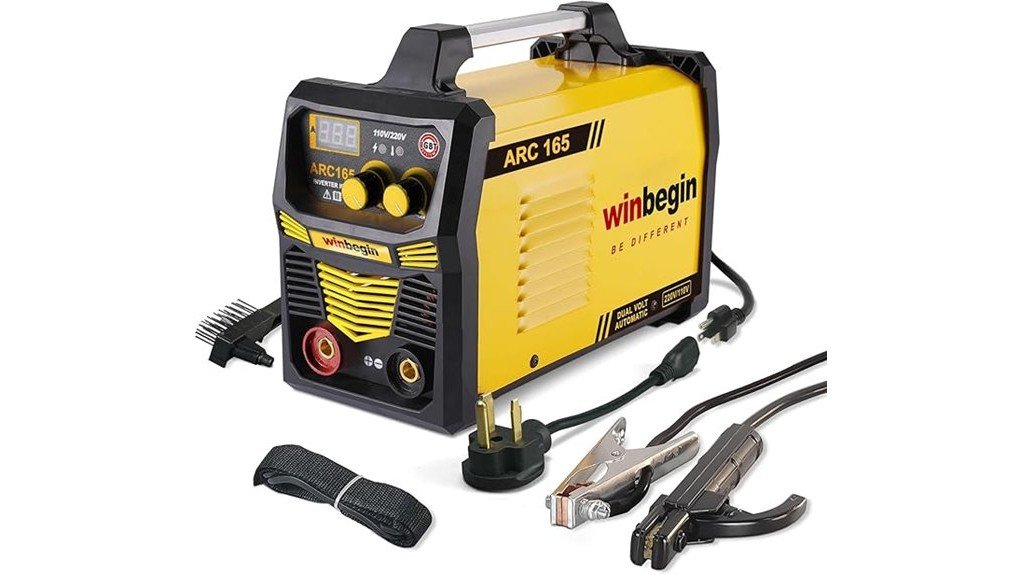
Choosing a compact welder can be tricky because you want enough output for real repair work without buying a heavy industrial machine. This arc welding machine aims to solve that problem with a 165A maximum output, an 80% duty cycle, and a 9.3-pound body that is easier to carry between a garage, workshop, or job site. It supports MMA and TIG lift welding, so it suits common steel repair and fabrication tasks better than basic low-output units. This review helps you decide where it fits well, where it falls short, and what to check before you rely on it for heavier welding work.
Quick Verdict
Rating: 8/10
Best For: DIY welders, light workshop users, maintenance work, and mobile repair jobs
Bottom Line: You get strong portable performance for stick welding, light fabrication, and general steel repair. The tradeoff is that this machine is not the right choice for aluminum welding or nonstop industrial production.
Key Specifications
| Specification | Detail |
|---|---|
| Product Type | Portable arc welding machine |
| Maximum Output | 165A |
| Duty Cycle | 80% |
| Weight | 9.3 pounds |
| Welding Methods | MMA and TIG lift welding |
| Supported Materials | Carbon steel, mild steel, and stainless steel |
| Electrode Compatibility | 6013, 7018, 6010, and 6011 electrodes |
| Power Stability Feature | Closed-loop feedback control for steadier arc performance |
| Best Use | Home garage repairs, light fabrication, maintenance work, and mobile repair tasks |
| Important Limitation | Not ideal for aluminum welding or continuous industrial production workloads |
What Is the Arc Welding Machine?
This arc welding machine is a compact welder designed for stick welding and TIG lift applications. Its 165A output gives you more room for common repair and fabrication jobs than many basic entry-level welders.
The machine is aimed at users who need portable welding power for carbon steel, mild steel, and stainless steel. The 9.3-pound weight makes it easier to move around a garage, load into a vehicle, or carry to a quick repair site.
Its closed-loop feedback control is meant to keep the arc steadier when the input power is less consistent. That can help when you work from a generator or in a setting where voltage changes may affect arc behavior.
Who Should Buy It?
Best For
- DIY welders who need a portable unit for steel repair and small fabrication tasks
- Garage users who want more output than a basic low-power stick welder
- Mobile repair users who value a 9.3-pound machine for job-site movement
Skip If
- You need a dedicated aluminum welding setup
- You run nonstop industrial welding shifts that require heavier-duty equipment
- You want advanced digital controls for highly specialized TIG work
Fit and Compatibility
The machine supports common electrodes, including 6013, 7018, 6010, and 6011. That range gives you flexibility for different steel repair jobs, maintenance tasks, and basic fabrication work.
For mild steel and carbon steel, this compatibility makes the unit useful for brackets, farm-style repairs, shop projects, and general fixes. For stainless steel, you still need the correct electrode and proper technique to match the material and job.
Aluminum is the main limitation. This machine is not designed as a direct aluminum welding solution without additional specialized equipment or setup, so you should choose a different welding system if aluminum is your main material.
Before You Buy: Match this welder to the materials you actually use. It makes sense for carbon steel, mild steel, and stainless steel work, but it is not the right first choice for aluminum welding or industrial nonstop production.
Build, Portability, and Controls
The biggest daily advantage is the 9.3-pound design. A lighter welding machine is easier to carry between work areas, store on a shelf, or bring along for field repair tasks.
The controls are simple enough for users who want practical welding output without learning a complex digital interface. That simplicity helps beginners focus on electrode choice, arc length, travel speed, and joint preparation.
The tradeoff is limited advanced customization compared with premium welders. If you need fine digital control for specialized work, this machine may feel basic.
Power and Duty Cycle Performance
The 165A maximum output gives you enough range for many home workshop and light fabrication tasks. It also gives you more flexibility than smaller welders when you need to work on thicker steel sections.
The 80% duty cycle is a major strength for longer sessions. It means the machine is designed to spend more time welding before thermal protection interrupts your work, as long as you use it within its intended range.
You should still avoid treating it like a large industrial production welder. Long, high-load work can create heat stress, so allow cooling time and follow the product manual during demanding jobs.
Arc Stability and Weld Quality
The closed-loop feedback control helps the machine maintain steadier arc behavior when power conditions change. That matters when you work from a generator or in a shop where the power supply may not stay perfectly consistent.
A steadier arc can reduce spatter and help you produce more consistent beads, especially after you dial in the right electrode and amperage. It will not replace good prep work, clean material, or welding skill, but it can make the machine easier to manage.
Beginners should still expect a learning curve. Electrode angle, travel speed, workpiece cleanliness, and ground clamp placement all affect the final weld.
How It Performs in Real Use
For Daily Workshop Repairs
For brackets, small frames, basic steel repairs, and maintenance jobs, the 165A output gives you useful working range. The machine works best when you prepare the metal properly and choose an electrode that matches the job.
For Mobile Repair Work
The 9.3-pound weight makes the machine easier to move than heavier shop welders. That helps when you need to carry it to a vehicle, outdoor repair area, or different part of a workshop.
For Longer Welding Sessions
The 80% duty cycle helps reduce frequent cooling interruptions during normal use. It is still wise to watch heat buildup and avoid pushing the machine beyond its intended workload.
For Generator or Variable Power Use
The closed-loop feedback control can help stabilize the arc when input power is less consistent. You should still use a suitable power source and follow the machine’s operating instructions before connecting it to a generator.
Setup Tips Before First Use
Start by checking the electrode type, material thickness, and recommended amperage range before you strike an arc. A 6013 electrode can be easier for many general tasks, while 7018, 6010, and 6011 electrodes fit different repair and penetration needs.
Clean the workpiece before welding. Rust, paint, oil, and dirt can cause poor starts, more spatter, and weaker weld quality.
Make sure the ground clamp has clean metal contact. Poor grounding can make the arc unstable, even when the welder itself has enough power.
Pro Tip: Keep a small electrode chart near the welder so you can match 6013, 7018, 6010, or 6011 rods to the material, joint type, and thickness before you begin.
Compatibility and Safety Notes
Welding involves heat, sparks, fumes, bright arc light, and electrical risk, so use proper protective gear every time. Wear a suitable welding helmet, gloves, long sleeves, eye protection, and protective footwear.
Work in a properly ventilated area, especially when welding coated, painted, or dirty metal. Remove flammable materials from the work area before you start.
This machine can support practical repair work, but it does not remove the need for training and safe technique. Follow the product manual, use the correct power supply, and get professional guidance for structural, load-bearing, or safety-critical welds.
Pros and Cons
Pros
- 165A maximum output supports a wider range of steel repair tasks
- 80% duty cycle helps during longer workshop sessions
- 9.3-pound body improves portability for mobile repair work
- Supports 6013, 7018, 6010, and 6011 electrodes for flexible use
- Closed-loop feedback control helps steady the arc in variable power conditions
Cons
- Not suitable as a direct aluminum welding solution
- Not designed for heavy industrial continuous production
- Limited advanced digital welding controls compared with premium units
Is It Worth the Price?
This arc welding machine fits the budget-to-mid-range category for users who want useful welding power without moving into a heavier industrial system. Its strongest value comes from the mix of 165A output, 80% duty cycle, and portable 9.3-pound weight.
It is worth considering if you mainly weld carbon steel, mild steel, or stainless steel in a garage, workshop, or mobile repair setting. You get the most value if you need a practical stick welder for intermittent jobs rather than a production machine.
It is not the best fit if you need advanced TIG control, frequent aluminum welding, or nonstop high-load operation. In those cases, a more specialized welder would be a smarter long-term investment.
How It Compares to Alternatives
Compared with basic low-output 110V stick welders, this unit offers higher output and a stronger duty cycle, which helps when you need more capability for steel repair. Compared with premium industrial welders, it trades advanced settings and heavy-duty production capacity for portability and simple operation.
If you want maximum TIG precision or aluminum capability, compare it with a dedicated TIG or multi-process machine. If your priority is portable stick welding for general steel jobs, this arc welding machine makes more sense.
Frequently Asked Questions
Can this arc welding machine weld stainless steel?
Yes, it can weld stainless steel when you use compatible electrodes and proper technique. You still need to match the electrode, amperage, and surface prep to the specific stainless steel job.
Is it beginner-friendly?
Yes, the simple controls and stable arc behavior make it approachable for beginners practicing stick welding. Beginners should still use proper safety gear, start with scrap metal, and learn basic electrode control before working on important parts.
Can it run on a generator?
The article-supported closed-loop feedback control helps it handle variable power conditions better than a basic unstable setup. You should still use a suitable generator and follow the welder’s manual before operating it that way.
Does it support aluminum welding?
No, it is not presented as a direct aluminum welding machine. Choose a dedicated TIG or suitable multi-process setup if aluminum is one of your main materials.
Which electrodes does it support?
It supports 6013, 7018, 6010, and 6011 electrodes. That gives you options for general repair, penetration needs, and different steel welding situations.
Is the 80% duty cycle enough for long sessions?
For many garage and light workshop jobs, an 80% duty cycle is a useful strength. It still does not make the machine a replacement for a heavy industrial welder built for nonstop production.
What materials is it best for?
It is best suited for carbon steel, mild steel, and stainless steel. For best results, clean the surface, choose the right electrode, and set the machine for the material thickness.
Who should skip this welder?
Skip it if you need aluminum welding, advanced digital controls, or a welder for continuous industrial workloads. It is better for portable repair work, DIY fabrication, and general steel welding tasks.
The Bottom Line
This arc welding machine is a strong pick if you want a portable 165A welder for DIY projects, garage repairs, light fabrication, and mobile repair work. Its main strengths are the 80% duty cycle, electrode compatibility, and 9.3-pound design.
You should skip it if you need aluminum welding, advanced TIG precision, or nonstop industrial production capacity. For the right buyer, it offers a practical balance of power, portability, and simple use.