Disclosure: As an Amazon Associate, we earn from qualifying purchases. If you click a link on this page and make a purchase, we may receive a small commission at no extra cost to you.
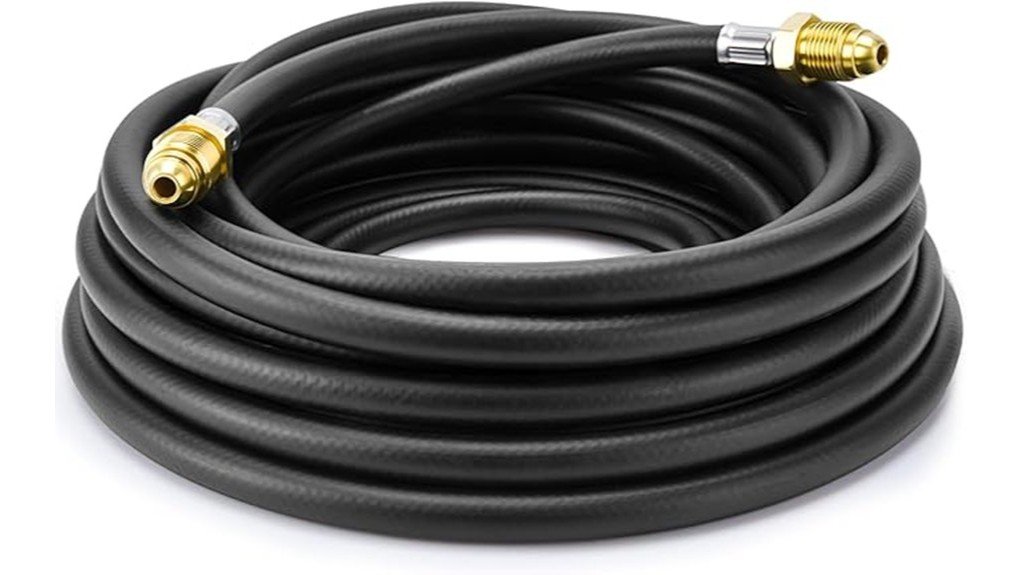
A welding gas hose is easy to overlook until poor flow, a loose connection, or a kink affects your weld. This 30-foot Argon Hose is made for MIG and TIG welding setups that use argon, argon/CO2 mixtures, or helium shielding gas. It combines premium-grade rubber, brass fittings, and a 300 PSI maximum working pressure to help maintain steady gas delivery. The main strength is its reach and flexible build, but you still need to confirm the fitting size against your regulator and welding machine before you buy.
Quick Verdict
Rating: 8/10, Recommended with caveats
Best For: Welders who need a longer gas hose for MIG or TIG work and want a flexible rubber line rated for 300 PSI.
Bottom Line: This Argon Hose is a practical pick if you need more reach and stable gas flow around a shop or garage welding setup. The tradeoff is that fitting compatibility must be checked carefully before installation.
Key Takeaways
- The 30-foot length gives you more room to position your welder, gas cylinder, and workpiece.
- The hose is made from premium-grade rubber for flexibility, kink resistance, and day-to-day durability.
- Its listed maximum working pressure is 300 PSI, which supports steady gas flow for common welding use.
- The article-supported compatibility includes argon, argon/CO2 mixtures, and helium shielding gas.
- Brass fittings help create secure connections, but you should confirm fitting size before ordering.
- Regular leak checks, loose coiling, and dry storage can help protect the hose over time.
| Specification | Detail |
|---|---|
| Product type | Argon welding gas hose |
| Best use | MIG and TIG welding gas delivery |
| Length | 30 feet |
| Material | Premium-grade rubber |
| Maximum working pressure | 300 PSI |
| Fittings | Article lists male fitting references including 1/4 inch and 5/8 inch. Confirm your required connection size before purchase. |
| Gas compatibility | Argon, argon/CO2 mixtures, and helium gas |
| Build notes | Flexible, crack-resistant, abrasion-resistant, kink-resistant, flame-resistant, and oil-resistant design |
| Care note | Inspect for wear, check for leaks, avoid sharp bends, and store loosely coiled in a dry area. |
What Is the 30-Foot Argon Hose?
This Argon Hose is a shielding gas hose for welding setups that need a flexible line between the gas supply and welding equipment. It is intended for MIG and TIG welding, where a steady flow of shielding gas helps protect the weld area during use.
The 30-foot length makes it useful when your gas cylinder cannot sit right next to your work area. That extra reach can help in a garage, small shop, fabrication bay, or repair space where you need to move around a workbench or vehicle.
The hose uses premium-grade rubber and precision-machined brass fittings. Those details matter because a welding gas hose must resist cracking, kinking, and leaks while keeping gas delivery consistent.
Who Should Buy It?
Best For
- Garage welders who need a longer hose between the gas cylinder and welding machine.
- MIG and TIG users working with argon, argon/CO2 mixtures, or helium shielding gas.
- Buyers who want a flexible rubber hose rated for a 300 PSI maximum working pressure.
Skip If
- You need a confirmed brand-specific replacement hose for a particular welder model.
- Your regulator or machine requires a fitting size that does not match this hose.
- You only need a short hose and want to reduce extra line around your work area.
Before You Buy: Check the fitting size on your regulator, flowmeter, and welder before ordering. The hose can only perform well if the connections match your equipment and seal correctly.
Key Features of the Argon Hose
The main appeal of this Argon Hose is its mix of length, pressure rating, and flexible rubber construction. A 30-foot hose gives you more room to set up your workspace without keeping the cylinder directly beside the weld area.
The premium-grade rubber build helps the hose bend around normal shop obstacles without feeling overly stiff. It is also described as resistant to kinking, cracking, abrasion, flame, and oil, which are useful traits in a welding environment.
The listed 300 PSI maximum working pressure gives the hose enough capacity for stable gas flow in typical MIG and TIG applications. You should still set gas flow according to your welder, regulator, gas type, and welding process.
Performance and Compatibility
For MIG and TIG welding, gas flow consistency matters because shielding gas protects the weld area from contamination. A worn, kinked, or leaking hose can waste gas and may affect weld quality.
This hose is described as compatible with argon, argon/CO2 mixtures, and helium gas. That gives it useful flexibility for common welding setups, especially if you switch between TIG work and MIG welding with mixed shielding gas.
| Performance Factor | What It Means for You |
|---|---|
| 30-foot length | More reach for larger work areas, carts, benches, and garage welding layouts. |
| 300 PSI maximum working pressure | Supports stable gas delivery when used with compatible welding equipment. |
| Rubber construction | Helps with flexibility and reduces the chance of annoying kinks during setup. |
| Brass fittings | Help create secure connections when the fitting size matches your setup. |
Materials and Build Quality
The hose is made from premium-grade rubber, which gives it a practical balance of flexibility and toughness. Rubber hoses can handle normal bending better than very rigid lines, but they still need proper storage to avoid long-term damage.
The brass fittings are another important detail. Brass is commonly used in gas connections because it can provide a secure connection when matched with the correct thread and tightened properly.
The hose is also described as flame-resistant and oil-resistant. Those features are helpful in welding areas, but they do not make the hose abuse-proof. Keep it away from direct sparks, hot metal, sharp edges, and moving parts whenever possible.
Safety and Durability Considerations
Safety starts with a correct connection. Before you weld, inspect both ends of the hose, make sure the fittings are seated properly, and check for leaks around the connections.
The hose is described as crack-resistant, abrasion-resistant, and kink-resistant. Those qualities can help it last longer, but you should still inspect it often because welding spaces can be hard on hoses.
Do not use a hose that shows deep cuts, severe cracking, loose fittings, or signs of gas leakage. If you are not sure whether the hose is safe, stop using it and ask a qualified welding professional or equipment supplier for guidance.
Pro Tip: After installation, open the gas slowly and check the fittings with an approved leak-check solution before welding. Recheck after moving the cylinder, cart, or welder.
Setup Tips Before First Use
Start by matching the hose fittings to your regulator, flowmeter, and welding machine. If the fitting size is wrong, do not force the connection because damaged threads can cause leaks.
Route the hose so it does not cross sharp metal edges, hot workpieces, or high-traffic walking areas. A 30-foot hose gives you more freedom, but extra length can become a trip hazard if you leave it loose across the floor.
Keep the hose loosely coiled when you store it. Tight bends can stress the rubber and fittings over time, while loose storage helps the hose keep its shape.
How It Performs in Real Use
For Garage Welding
In a garage setup, the 30-foot length can make cylinder placement easier. You can keep the gas cylinder in a safer corner while still reaching a welding table, cart, or nearby repair area.
For MIG Welding With Mixed Gas
The article-supported compatibility with argon/CO2 mixtures makes the hose useful for common MIG welding setups. You still need to set the flow rate based on your gas, material, and welding conditions.
For TIG Welding With Argon
For TIG use, the hose can support argon gas delivery between the cylinder and machine when the fittings match. Stable gas flow is especially useful for clean TIG welds where shielding coverage matters.
For Long-Term Shop Use
The rubber construction and resistance to cracking, abrasion, kinking, flame, and oil make the hose better suited for repeated shop use than a weak or poorly protected line. Long-term performance still depends on careful routing, leak checks, and proper storage.
Pros and Cons
Pros
- 30-foot length gives you more setup flexibility than short gas hoses.
- 300 PSI maximum working pressure supports steady gas flow for welding use.
- Premium-grade rubber helps resist kinking, cracking, and abrasion.
- Compatible with argon, argon/CO2 mixtures, and helium gas.
- Brass fittings help create secure connections when properly matched.
Cons
- Fitting compatibility needs careful checking before purchase.
- The 30-foot length may be more hose than small work areas need.
- Rubber hoses still require regular leak checks and careful storage.
Is It Worth the Price?
This Argon Hose is worth considering if you need a longer welding gas hose with a flexible rubber build and a 300 PSI maximum working pressure. It offers strong value for everyday MIG and TIG users who need more reach around a garage or shop.
The best value comes from its practical length and multi-gas compatibility. You get the most from it if your setup works with the listed fitting style and you need to move between work areas without repositioning the gas cylinder often.
It is not the best fit if you need a short, brand-specific replacement hose or if your welding setup uses a different connection size. Confirm the product details and fitting requirements before you decide.
How It Compares to Alternatives
Compared with shorter replacement hoses, this 30-foot Argon Hose gives you more reach and workspace flexibility. That can be helpful for larger benches, welding carts, vehicle repairs, and shared shop spaces.
Compared with brand-specific replacement hoses, this option makes the most sense if the fittings match your setup and you want a general-purpose welding gas hose. If your welder requires a proprietary connection, a manufacturer-specific hose may be the safer choice.
Frequently Asked Questions
Can I use this Argon Hose for both MIG and TIG welding?
Yes, the article describes this hose as suitable for both MIG and TIG welding. It is intended for shielding gas delivery, including argon and argon/CO2 mixtures when your equipment connections match.
What gases can this hose handle?
The article-supported gas compatibility includes argon, argon/CO2 mixtures, and helium gas. Always follow your welder, regulator, and gas supplier guidance for safe use.
How long is the hose?
The hose is listed as 30 feet long. That length can help when your gas cylinder needs to sit away from the welding table, but it also requires careful routing to avoid trip hazards.
What is the maximum working pressure?
The article lists a maximum working pressure of 300 PSI. You should still use the hose only within your equipment’s recommended settings and inspect it before each welding session.
How should I store the Argon Hose when not in use?
Coil the hose loosely and store it in a cool, dry area away from sharp edges, heat, and direct sunlight. Avoid tight bends because they can stress the rubber and fittings over time.
How do I troubleshoot gas flow issues with this hose?
Start by checking for kinks, loose fittings, worn sections, or leaks around the connections. Also confirm that your regulator and flowmeter are set correctly for your welding process.
Does this hose fit every welding machine?
No hose should be assumed to fit every machine. This hose is described as compatible with most TIG and MIG units, but you need to verify the fitting size and connection type on your own setup.
What should I know about the warranty?
The source article does not provide verified warranty terms. Check the Amazon listing, seller details, and product documentation before purchase so you know what support is available.
The Bottom Line
The 30-foot Argon Hose is a solid choice if you need a flexible welding gas hose for MIG or TIG work and want extra reach around your shop. Its main strengths are the 300 PSI maximum working pressure, rubber build, and compatibility with argon, argon/CO2 mixtures, and helium.
You should skip it if you need a guaranteed brand-specific replacement or cannot confirm the fitting size for your equipment. For most buyers with matching connections, it is a practical hose worth considering.