MIG Shielding Gas Not Flowing Properly? Symptoms, Causes, and Fixes
Poor MIG shielding gas can turn a clean weld into a porous, messy bead fast. If your arc sounds unstable, your bead shows holes, or spatter keeps building up, start with the gas system before changing every welder setting. This guide shows you the most common causes, the checks to run first, and the best ways to keep your flow rate steady.
Quick Answer
If your MIG shielding gas isn’t flowing properly, check the gas cylinder, regulator, hoses, connections, nozzle, and flow meter. Porosity, heavy spatter, and an unstable arc often point to poor gas coverage. For many MIG jobs, a shielding gas flow rate around 30 to 40 cubic feet per hour works well, but your setup, weld position, and shop airflow can change the best setting.
Key Takeaways
- Check the cylinder valve and pressure before you adjust other welder settings.
- Inspect hoses, fittings, and the MIG gun for leaks, kinks, and blockages.
- Use a flow meter so you can confirm the actual shielding gas flow rate.
- Clean the nozzle and contact tip often because spatter can block gas coverage.
- Match your gas mix to the metal and wire you plan to weld.
Identifying the Symptoms of Poor MIG Shielding Gas Flow
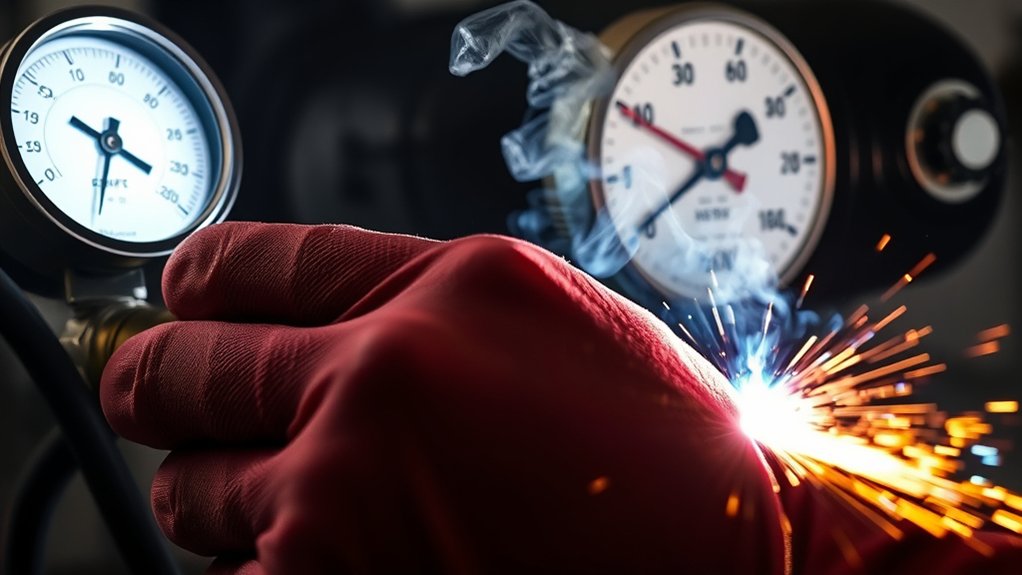
You can often spot poor MIG shielding gas flow by looking at the weld bead. Excessive spatter can point to weak gas coverage, poor settings, dirty metal, or the wrong wire speed. Porosity in the weld bead often means air or contamination reached the weld pool.
An unstable arc can also signal inconsistent gas delivery. You may see visible defects such as undercut, lack of fusion, or a rough bead surface. Catch these symptoms early so you can correct the cause before the weld quality drops further.
To improve your results, monitor your shielding gas flow and keep a consistent flow rate. Proper shielding gas supply helps reduce porosity, weak welds, and unstable arcs.
Common Issues Affecting MIG Shielding Gas Delivery
Several common problems can reduce MIG shielding gas delivery. A nearly empty gas cylinder can lower flow and leave the weld pool exposed. A damaged or inaccurate regulator can also make the gas supply hard to control.
Leaks in hoses or fittings can waste gas and weaken the shield around the weld. Run a visual inspection, then use a soapy water test on fittings if you suspect a leak. Bubbles show escaping gas.
Kinks, crushed hoses, blocked nozzles, and spatter buildup can also restrict flow. Incorrect flow rates can hurt weld quality, even when the cylinder still has gas. Adjust your flow meter for the job, the metal, the gas mix, and the airflow around your work area.
For many mild steel MIG jobs, welders often use a 75/25 argon and CO2 blend. Match your setup to the recommended wire speed and voltage settings so the arc stays stable and the shielding works well.
Inspecting Your Gas Supply and Equipment
After you check the common causes, inspect your gas supply and equipment. A simple checklist can help you find the problem faster and avoid random setting changes.
- Open the gas cylinder valve and confirm the cylinder has enough pressure.
- Check the regulator for steady readings and smooth adjustment.
- Inspect the connections between the gas cylinder, regulator, hose, and MIG gun.
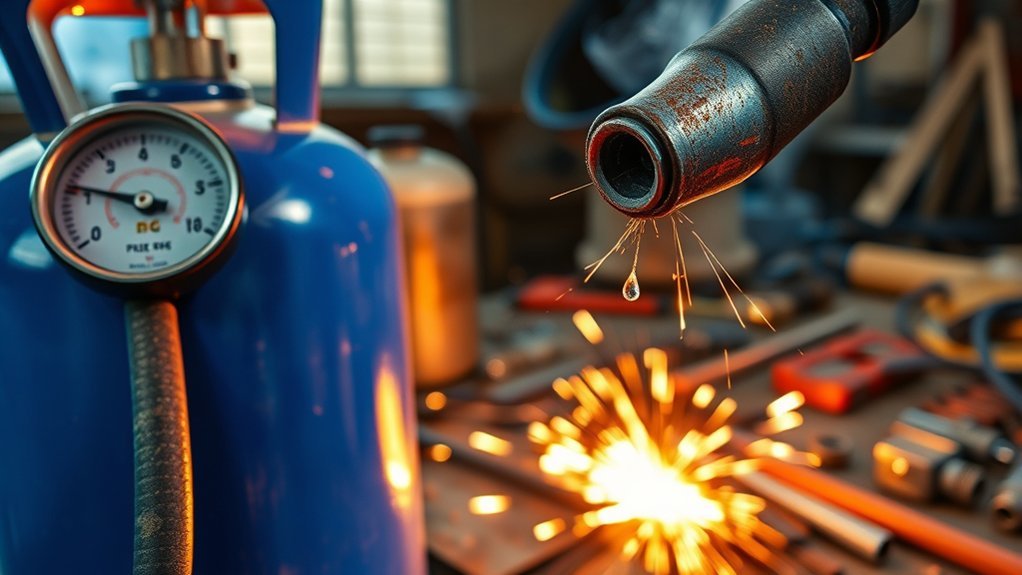
- Use a flow meter to confirm the gas flow rate before you start welding.
- Look for hose kinks, crushed lines, cracks, or other flow restrictions.
- Confirm the gas mix matches the metal, wire, and recommended 75/25 argon and CO2 mix when you weld mild steel.
Warning: Secure gas cylinders upright and work in a ventilated area before you inspect or adjust your welding gas system.
Products Worth Considering

APPLICATION: The ARCCAPTAIN gas pressure regulator can be used with argon, helium, and carbon dioxide gas tanks.

Compatible with CGA-580 tanks: Easily attach this Gas Pressure Regulator/Flowmeter to your Argon, Helium, and CO2 tanks with its CGA-580 inlet connector

WIDE APPLICATION: It easily connects to Argon, Helium, and Argon/CO₂ mixed gas tanks via the CGA-580 inlet nut. No additional adapters are required. Featuring superior airtight and leak-proof performance, it achieves stable and sealed gas supply with minimal gas loss. This regulator is ideal for MIG/TIG welding, chemical processing, general industrial use, and electronics industry applications.
How to Troubleshoot Gas Flow Issues?
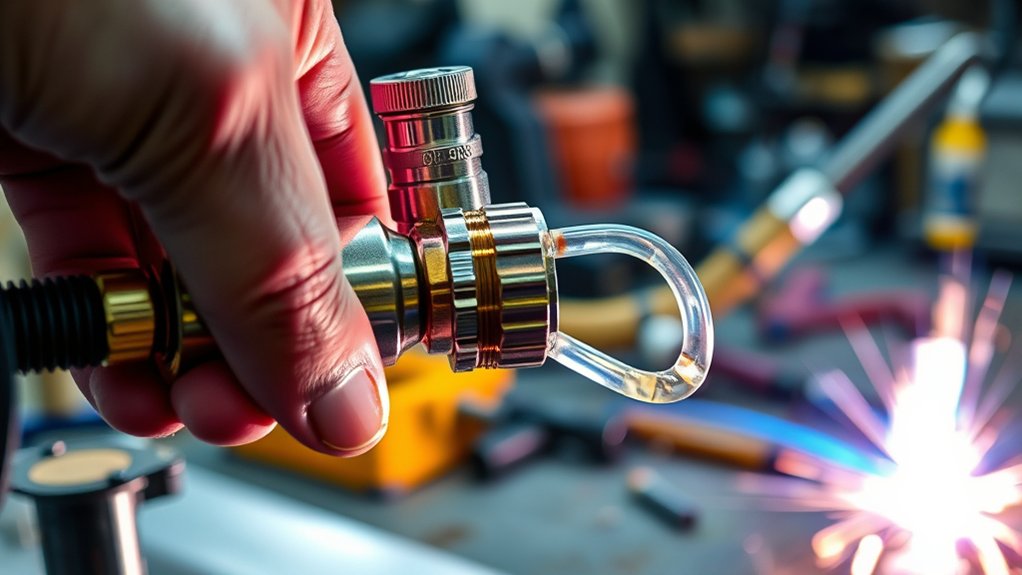
Use a clear order when gas flow issues appear during MIG welding. First, check that your gas cylinder valve sits open and the cylinder has enough pressure. A nearly empty cylinder can interrupt gas flow and cause poor shielding.
Next, inspect the regulator and confirm it responds when you adjust it. Faulty regulators can give unstable pressure readings and make the gas supply uneven. Replace or service the regulator if it will not hold a steady setting.
Check hoses and connections for damage, loose fittings, or leaks. A soapy water test can help reveal small leaks around fittings. If bubbles form, close the cylinder valve, release pressure safely, and fix the connection before welding again.
Confirm the flow meter setting for your welding application. Then clean the nozzle and contact tip so spatter cannot block the gas path. Wear proper protective clothing while you troubleshoot because welding equipment can expose you to heat, sparks, fumes, and sharp metal.
Products Worth Considering

Application: This Gas Pressure Regulator/Flowmeter Can Be Used with Argon, Helium and CO2 Gas tanks.

Argon/CO2 Regulator with Flowmeter: Designed for MIG and TIG welding with argon, CO2, and argon/CO2 mixed gas tanks; CGA-580 inlet fits standard gas cylinders
Best Practices for Ensuring Consistent MIG Shielding Gas Flow
You can keep MIG shielding gas flow steady by building a short inspection habit. Small problems, such as a loose fitting or dirty nozzle, can cause big weld defects. Check the gas path before each important weld.
Consistent shielding gas flow starts with a clean nozzle, tight fittings, a sound hose, and a stable regulator setting.
- Open and secure the gas cylinder before you start welding.
- Inspect the regulator and flow gauge for damage or unstable readings.
- Use a soapy water test on hoses and fittings when you suspect leaks.
- Set the flow rate with a flow meter, then adjust for wind, position, and nozzle size.
- Clean the gas nozzle and contact tip to remove spatter buildup.
- Protect the welding area from drafts when airflow pushes shielding gas away from the weld.
- Review common MIG welding problems and solutions when porosity or spatter continues after gas checks.
Pro tip: Test gas flow at the gun, not only at the regulator, because restrictions can happen anywhere in the line.
What Flow Rate Should You Use for MIG Shielding Gas?
Many MIG welders start around 30 to 40 cubic feet per hour for shielding gas. This range can work well in many indoor mild steel jobs, but it does not fit every setup. Your nozzle size, wire diameter, weld position, joint type, and room airflow can change the best setting.
Too little gas can leave the weld pool exposed and cause porosity. Too much gas can create turbulence near the nozzle and pull air into the shielding zone. Start with a reasonable setting, run a test bead, and adjust based on the bead appearance.
When to Check Wire Speed and Voltage
Gas flow does not cause every MIG welding problem. High wire feed speed, poor voltage settings, dirty base metal, or bad ground contact can also create spatter and rough beads. Check the gas system first when you see porosity, then review your wire speed and voltage if the problem continues.
A stable arc usually needs the right balance between wire feed speed, voltage, gas flow, and travel speed. Change one setting at a time so you can see which adjustment helped. This method saves time and prevents new defects.
Frequently Asked Questions
What Are Signs of Gas Flow Problems in a MIG Weld?
You may see excessive spatter, porosity, a rough bead, or an unstable arc. Also check for weak gas pressure, a regulator problem, a blocked nozzle, or a loose hose fitting.
What Is a Normal Flow Rate Setting for Shielding Gas?
Many MIG jobs use a shielding gas flow rate around 30 to 40 cubic feet per hour. Adjust the setting for the nozzle size, shop airflow, weld position, and gas type.
What Happens if Wire Feed Speed Is Too High?
High wire feed speed can create a harsh arc, heavy spatter, and poor bead control. If gas flow checks out, lower the wire speed or adjust voltage until the arc becomes smoother.
How to Tell if a MIG Weld Is Too Hot?
A weld that runs too hot may show burn-through, a wide bead, excess penetration, or a harsh sound. Lower the voltage, reduce travel heat input, or adjust wire speed based on the weld result.
Can Too Much Shielding Gas Cause Porosity?
Yes, too much gas can create turbulence at the nozzle and pull air into the weld zone. If porosity continues, test a lower flow setting and protect the weld area from drafts.
Conclusion
Good MIG shielding gas flow protects the weld pool and helps you create a cleaner bead. Start with the simple checks: cylinder pressure, regulator response, hose condition, fittings, flow meter setting, and nozzle cleanliness. If the weld still looks poor, adjust wire speed, voltage, and travel speed one at a time. A steady troubleshooting routine will help you find the cause faster and improve your weld quality with less guesswork.