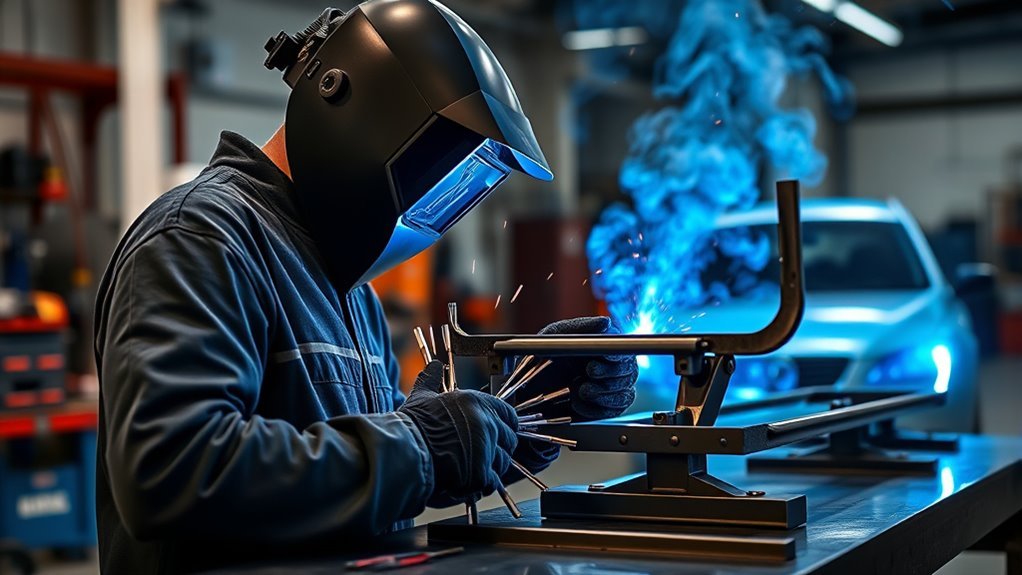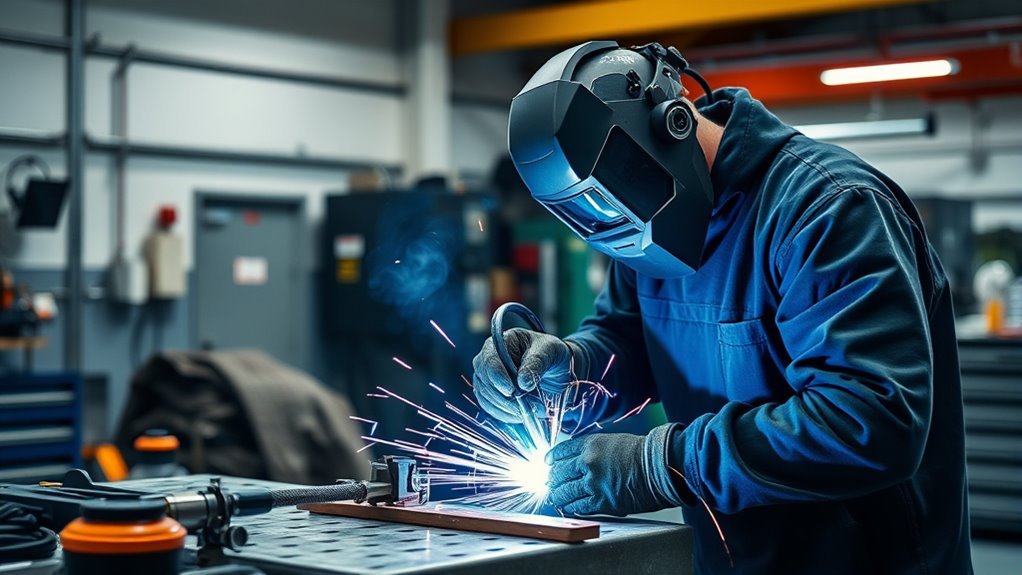
I-CAR welding certification shows that a collision repair technician can produce controlled, repeatable welds for the material and joint types covered by a specific I-CAR event. It is especially relevant to structural steel, sectioning, and aluminum work, but it never replaces the current OEM repair procedure for the vehicle’s VIN and model year.
Quick Answer
I-CAR welding certification is hands-on collision repair training and evaluation for Steel GMA Welding, Steel Sectioning, or Aluminum GMA Welding. Technicians may need it for structural work, I-CAR recognition, OEM-certified networks, or insurer programs. Requirements vary, so match the course to your repair work and program rules.
Key Takeaways
- I-CAR welding certification is designed for collision repair rather than general fabrication, construction, or pipeline welding.
- The three primary paths are Steel GMA Welding, Steel Sectioning, and Aluminum GMA (MIG) Welding.
- Hands-on events are approximately four hours for Steel GMA and six hours for Steel Sectioning or Aluminum GMA, not including prerequisites and practice.
- Requirements depend on the technician’s role, the repair program, and the work the shop performs; certification is not universally required for every welder.
- Course-ready equipment does not automatically satisfy every vehicle manufacturer’s repair requirements.
- Before welding a vehicle, verify the VIN, model year, material, sectioning location, attachment method, disable procedure, and corrosion-protection steps in current OEM information.
At a Glance
| Best For | Collision repair technicians, structural technicians, and shops meeting I-CAR, OEM-network, or insurer-program requirements |
| Hands-On Event Length | Approximately 4 hours for Steel GMA; approximately 6 hours for Steel Sectioning or Aluminum GMA, plus prerequisites and practice time |
| Main Certification Paths | Steel GMA Welding, Steel Sectioning, and Aluminum GMA (MIG) Welding |
| Prerequisites | Course-specific theory training; Steel Sectioning also lists Sectioning Overview and Steel GMA Welding certification in current I-CAR requirements |
| Tools Needed | Course-compliant GMA or pulse-synergic GMA welder, correct wire and shielding gas, contact tips, vise, practice coupons, PPE, ventilation, and fire protection |
| Cost | Varies by course, event, participant status, location, and available discounts; verify the current amount during I-CAR registration |
What Is I-CAR Welding Certification?
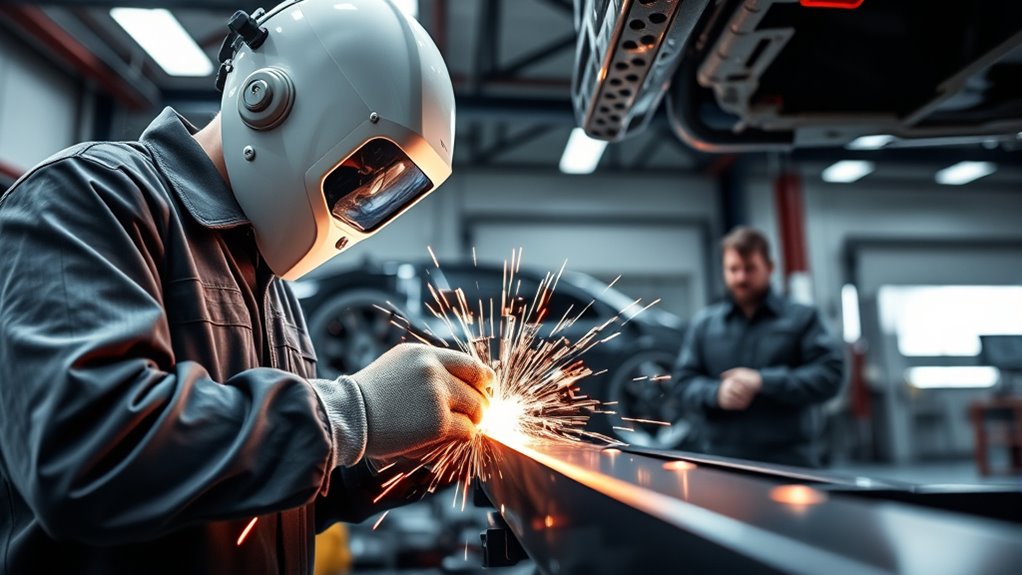
I-CAR welding certification is an industry-recognized collision repair credential that evaluates a technician’s ability to complete specified welds to a defined standard. It focuses on processes used in modern collision repair, including steel GMA welding, controlled steel sectioning, and aluminum GMA welding.
It is different from a general welding certificate. Collision repair requires technicians to control heat on thin materials, reproduce OEM attachment methods, work around coatings and vehicle systems, and restore corrosion protection. A weld can look acceptable yet still be wrong if it uses the wrong process, is placed outside the permitted location, or does not meet the vehicle maker’s repair procedure.
I-CAR combines prerequisite theory with instructor-led practice, coaching, and hands-on evaluation. Depending on the event, welds may be evaluated visually and through destructive testing. The credential documents performance on the course’s required welds; it is not blanket permission to weld every material or vehicle part.
Note: I-CAR certification supports collision repair skill, but the current OEM repair procedure remains the controlling instruction for an actual vehicle. Confirm the VIN, model year, material, permitted replacement location, attachment method, and safety steps before cutting or welding.
Who Needs I-CAR Welding Certification?
You may need I-CAR welding certification if you perform structural collision repairs, work for an I-CAR-recognized business, participate in an OEM-certified repair network, or must satisfy an insurer or Direct Repair Program requirement. The exact requirement depends on your job role, the program, and the repairs your shop accepts.
Certified Repair Networks
OEM and insurer repair networks may require documented training for technicians who perform specific welding operations. Requirements differ by program and can identify a minimum number of trained technicians, a particular welding path, additional vehicle-specific courses, or approved equipment.
Do not assume that one I-CAR credential satisfies every network. Review the current program agreement and training matrix for each manufacturer or insurer your shop works with. Assign welding work only to technicians whose active training matches the repair.
Structural Weld Technicians
Structural weld technicians are the clearest fit for I-CAR welding certification. If you weld rails, pillars, rockers, aprons, reinforcements, or sectioned structural service parts, the completed attachment may affect crash-energy management, dimensional integrity, and occupant protection.
- You demonstrate that you can repeat the welds required by the selected certification path.
- You support documentation required by participating repair programs.
- You learn to identify weak penetration, excessive heat, poor fit-up, porosity, contamination, and other defects.
- You practice on controlled coupons before applying the process to a customer’s vehicle.
- You establish a baseline skill that can be maintained through practice and recertification.
Shop Readiness Requirements
A shop may also pursue welding certification to support I-CAR recognition, OEM-network participation, staff development, or internal quality-control standards. The business must be able to provide the equipment, consumables, PPE, ventilation, fire protection, and work area required for the selected event.
Course readiness and vehicle-repair readiness are not identical. I-CAR’s event checklist tells you what is needed for the training and evaluation. The OEM procedure tells you which equipment, settings, attachments, and repair methods are allowed on a particular vehicle.
Why I-CAR Welding Certification Matters
Collision welds are safety-related work. A repaired vehicle can appear complete from the outside while still containing missing welds, poor plug-weld tearout, inadequate fusion, excessive heat damage, an incorrect attachment pattern, or welds placed outside the manufacturer’s permitted area.
Certification moves welding away from guesswork and toward repeatable preparation, setup, execution, and inspection. It also gives a shop a documented way to assign welding work to technicians who have been evaluated on the relevant process.
In collision repair, weld quality is not only about bead appearance. It is about using the permitted process on the correct material, in the approved location, under the current vehicle-specific repair procedure.
Warning: Welding, cutting, and grinding expose workers to fire, fumes, ultraviolet radiation, hot metal, noise, electrical hazards, and airborne contaminants. Follow OSHA welding, cutting, and brazing requirements, the current I-CAR event checklist, your written shop procedures, and the OEM repair information. Use the required PPE, ventilation, fire protection, and fire watch.
I-CAR vs. AWS Certification: What Is the Difference?
I-CAR welding certification and AWS credentials serve different industries and job functions. I-CAR focuses on collision repair. AWS credentials may address welder performance qualification, inspection, structural fabrication, pipe, manufacturing, or other code-based work, depending on the program.
| Credential | Main Focus | Best Fit |
|---|---|---|
| I-CAR Welding Certification | Collision repair welding, controlled steel sectioning, aluminum GMA welding, and repair-program readiness | Collision repair shops, structural technicians, and participating repair networks |
| AWS Certified Welder | Welder performance qualification for a selected process, material, position, and applicable code or specification | Fabrication, construction, manufacturing, and broader welding careers |
| AWS Certified Welding Inspector | Inspection principles, code interpretation, documentation, and weld-quality evaluation | Inspectors, quality-control personnel, supervisors, and advanced welding professionals |
If you work in collision repair, I-CAR is normally the more directly relevant credential. An AWS qualification can support broader career mobility, but it does not replace collision-specific training or vehicle-manufacturer procedures. For broader career planning, review this guide to becoming a welder in California.
Products Worth Considering

Used Book in Good Condition

50-PIECE VALUE PACK — Includes 50 wave dent pull spot welding wires for frequent auto body work, collision repair shops, mechanics and DIY vehicle dent repair projects.

What Are the I-CAR Welding Certification Types?
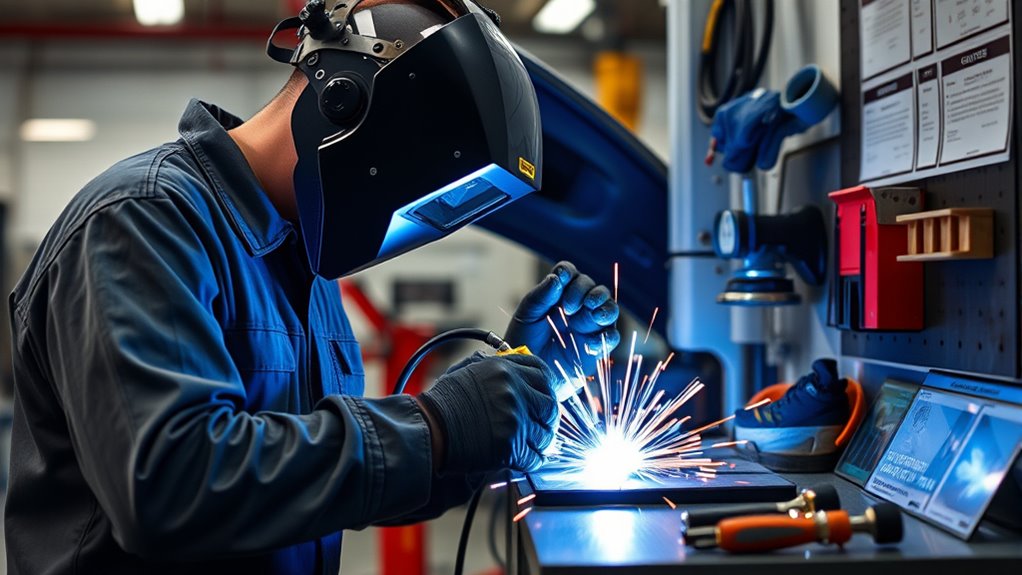
I-CAR lists three primary welding certification paths. Select the path that matches the materials, attachment methods, and repair programs your shop handles.
| I-CAR Path | Approximate Event Length | Current Prerequisite | What It Covers |
|---|---|---|---|
| Steel GMA Welding | About 4 hours | Steel GMA Welding Theory | GMA welding on thin and thicker steel coupons using collision-repair weld types and positions |
| Steel Sectioning | About 6 hours | Sectioning Overview and Steel GMA Welding certification, according to current requirements | Controlled measuring, cutting, fitting, and joining of sectioned steel repair parts |
| Aluminum GMA (MIG) Welding | About 6 hours | Aluminum GMA (MIG) Welding Theory | GMA welding for aluminum-intensive repairs using aluminum-specific equipment, wire, preparation, and shielding gas |
Do not assume one certification covers every repair. Steel and aluminum react differently to heat, contamination, wire selection, joint fit-up, and shielding gas. Sectioning also adds measurement and OEM-location requirements. I-CAR separates the paths so technicians can be evaluated on the work they actually perform.
2026 Recertification Update: I-CAR announced that the Mixed Attachment Methods course would replace Steel Sectioning Recertification in 2026. This change affects the renewal path; it does not eliminate the initial Steel Sectioning certification. Check your myI-CAR record and current course catalog before registering.
Which I-CAR Welding Certification Should You Choose?
Choose the certification that matches the repairs your shop performs and the programs it participates in. Do not select a course only because it appears more advanced.
- Start with Steel GMA Welding when your work involves steel collision-repair welds and you need the foundational I-CAR steel credential.
- Add Steel Sectioning when you measure, cut, fit, and attach partial structural service parts in locations permitted by the OEM.
- Choose Aluminum GMA Welding when you repair aluminum structures or participate in programs that require documented aluminum welding capability.
- Verify network requirements when an OEM, insurer, or repair network specifies a particular course, technician count, renewal event, or equipment package.
Pro Tip: Compare the course with your shop’s repair mix, OEM-program matrix, technician role assignments, and active certification records. Taking the wrong event can consume training time without satisfying the requirement that prompted the registration.
How to Get I-CAR Welding Certified
- Identify the required path. Review the work you perform and any I-CAR, OEM-network, or insurer-program requirement that applies to your role.
- Check your current training record. Sign in to myI-CAR and confirm completed courses, active certifications, prerequisites, and renewal dates.
- Complete the listed prerequisite training. Steel GMA and Aluminum GMA require their corresponding theory courses. Current Steel Sectioning requirements also list Sectioning Overview and Steel GMA certification.
- Review the current event documents. Use the official I-CAR Welding Event Resources page for course checklists, policies, equipment requirements, practice guides, and coupon-ordering information.
- Prepare the facility and equipment. Confirm the machine, wire, gas, contact tips, vise, electrical supply, ventilation, PPE, and fire protection before scheduling or hosting the event.
- Practice the required welds. Use the current coupon dimensions and evaluation criteria rather than unrelated fabrication exercises.
- Attend the hands-on event. Bring the required identification and PPE, follow the instructor’s directions, and complete each assigned weld and evaluation.
- Confirm the result. After completion, review your myI-CAR record and save any documentation needed for technician files, shop recognition, or network compliance.
What Your Shop Needs Before Training
Successful training begins with the current course checklist. I-CAR’s requirements address prerequisites, identification, PPE, equipment, shielding gas, consumables, practice materials, fire protection, and workspace conditions.
| Course | Typical Current Equipment and Consumables | Important Preparation Note |
|---|---|---|
| Steel GMA Welding | GMA welder capable of at least 140 amps, ER70S-6 wire in the permitted diameter range, spare contact tips, 75% argon/25% CO2 shielding gas, vise, coupons, and required PPE | Use the currently linked Steel GMA checklist for exact wire, electrical, helmet, and facility requirements. |
| Steel Sectioning | Course-compliant steel GMA equipment, ER70S-6 wire, 75% argon/25% CO2 gas, vise, measuring and cutting tools, preparation tools, coupons, and PPE | Confirm prerequisites and all sectioning tools before the event; Steel GMA certification is currently listed as a prerequisite. |
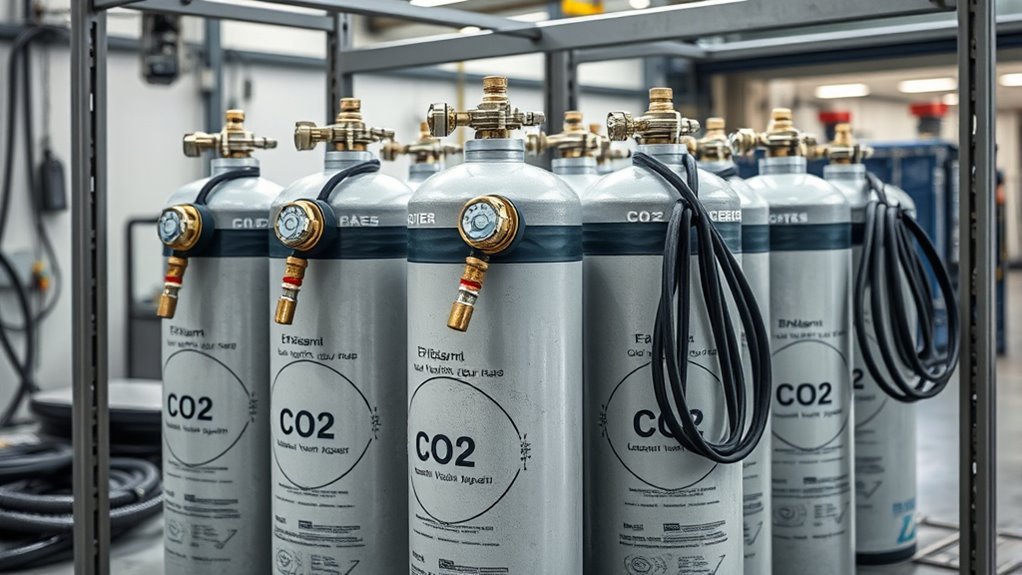
| Aluminum GMA Welding | Pulse-synergic GMA welder, approved aluminum wire such as 5356 or 5554 in the listed diameter, spare tips, 100% argon, aluminum preparation tools, coupons, and required PPE | Prevent steel contamination and follow the current aluminum checklist for machine capability, wire, helmet shade, and workspace requirements. |
Products Worth Considering

COMPATIBILITY: Designed for Lincoln Magnum 100L (K530 series) and Tweco Mini/#1 welding torches. This kit is also a direct fit for YESWELDER FLUX-135PRO Old Version/MIG-140DS PRO/YWM-160/MIG-165DS PRO/MIG-185DS PRO/MIG-205DS PRO/MIG-250PRO/MCT-520.

COMPATIBILITY: Designed for 14AK welding torches, this kit is a direct fit for YESWELDER FLUX-135PRO/FLUX-135MINI models. It’s also compatible with any other welder that uses a 14AK gun. Ideal for gasless flux core welding and general metal fabrication in workshops, construction sites, and automotive repair applications.

Set includes:8pcs Back cup, 20 collets, 20pcs collet body, 20pcs Alumina gas cup/ nozzle.
Shop Readiness Checklist
- Confirm the certification path: Steel GMA, Steel Sectioning, or Aluminum GMA.
- Verify prerequisites: Complete the theory courses and any prior certification listed for the event.
- Download the latest checklist: Do not rely on an old printed copy or a previous event’s requirements.
- Check the welder: Confirm process, amperage, electrical supply, wire-feed setup, and material capability.
- Prepare consumables: Have the specified wire, contact tips, shielding gas, and practice coupons available.
- Inspect PPE: Confirm the required helmet shade, safety glasses, gloves, protective clothing, hearing protection, footwear, and respiratory protection.
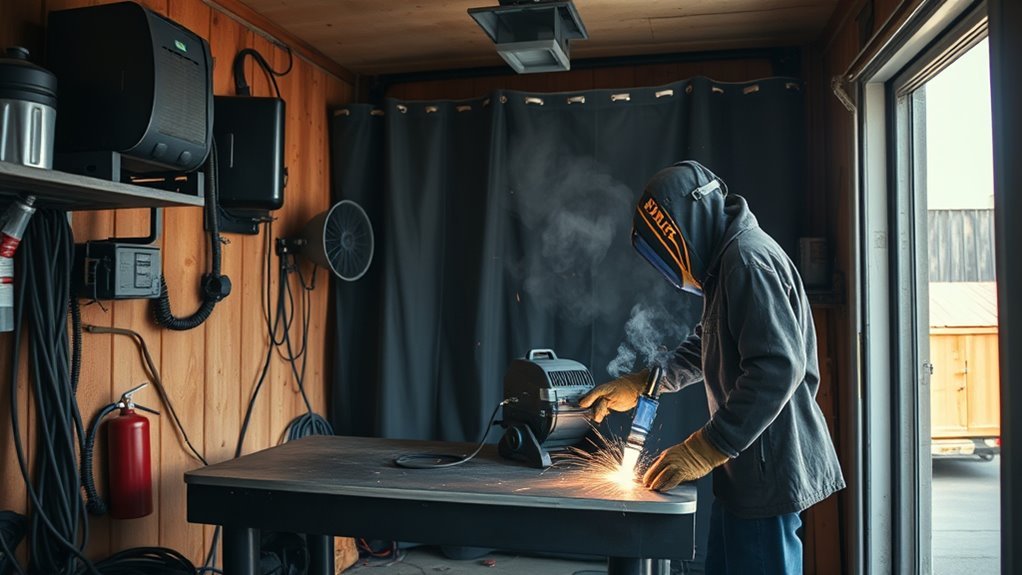
- Control the workspace: Provide ventilation, fire protection, safe cylinder storage, suitable lighting, and enough room for the instructor and participants.
- Practice before the event: Rehearse the welds and positions shown in the current practice guide.
- Verify identification and records: Make sure each participant can present the required identification and has completed the correct prerequisites under the correct I-CAR account.
Strong welds depend on clean metal, correct fit-up, stable travel speed, suitable wire feed and voltage, proper shielding-gas coverage, and controlled heat. General resources on beginner welding fundamentals and welding amperage principles can help build basic understanding, but the current I-CAR GMA event documents control your certification preparation.
Note: Equipment that meets an I-CAR training-event checklist is not automatically approved for every vehicle repair. Before working on a customer vehicle, confirm the welder, attachment method, settings, wire, gas, and related equipment required by the current OEM procedure.
Before Welding on an Actual Vehicle
Certification verifies a skill path. The repair plan for an actual vehicle still begins with current, vehicle-specific information.
- Identify the vehicle precisely. Record the VIN, model year, model, build information, and powertrain type before selecting a procedure.
- Retrieve the current OEM repair procedure. Confirm the component material, replacement boundaries, sectioning permission, cut location, attachment method, weld type, weld count, spacing, and corrosion-protection instructions.
- Verify that partial replacement is allowed. Never section a rail, pillar, rocker, reinforcement, or other structural part solely because a similar vehicle allowed it.
- Follow the electrical and high-voltage disable procedure. Use the OEM sequence, specified personal protective equipment, waiting periods, verification steps, and reactivation process. Do not improvise a high-voltage disable.
- Protect nearby hazards. Inspect both sides of the work area for fuel components, batteries, wiring, restraint-system parts, refrigerant lines, foam, seam sealer, trim, glass, and other heat-sensitive materials.
- Prepare and fit the part correctly. Confirm vehicle dimensions, mating-surface contact, flange condition, hole size, gap, overlap, access, clamping, and weld sequence.
- Make test welds first. Use representative material and thickness, then inspect or destructively test the sample as required before welding the vehicle.
- Control heat and monitor both sides. Follow the approved sequence and use a fire watch where required. Stop if coatings, foam, wiring, or hidden materials begin to burn or overheat.
- Inspect the completed attachments. Check weld size, count, placement, fusion indicators, visible defects, panel alignment, and dimensional condition.
- Restore corrosion protection. Apply the specified weld-through coating, primer, seam sealer, cavity wax, undercoating, and refinishing materials in the required locations and order.
- Document the repair. Retain the OEM procedure, technician assignment, test-weld results, repair photos, measurements, quality-control record, and final scans required by the shop or repair program.
Warning: Never weld, cut, or apply heat until the shop has identified hidden fuel, electrical, high-voltage, restraint-system, refrigerant, foam, adhesive, and corrosion-protection hazards around the repair. Certification does not override an OEM prohibition against sectioning, welding, or using a particular attachment method.
How I-CAR Welding Testing Works
I-CAR welding certification is hands-on. The technician completes course-specific welds that must satisfy the current visual criteria and, where specified, destructive-test criteria. Exact welds, positions, materials, dimensions, and acceptance rules depend on the certification path.
The official I-CAR Practice Welding Guide includes Steel GMA exercises on thin 1 mm and thick 2.5 mm coupons. The listed exercises include fillet welds, plug welds, butt welds with backing, open butt welds, and vertical or overhead positions.
Evaluation can include:
- Visual dimensions: Required bead length, width, face height, plug-weld size, and location.
- Visible condition: Consistency, edge condition, contamination, holes, porosity, undercut, and other observable defects.
- Fusion and penetration: Evidence that the pieces joined correctly rather than producing cold lap or surface-only attachment.
- Backside evidence: Required melt-through or other backside characteristics listed for the exercise.
- Destructive performance: Tearout, fold, separation, or plug-weld behavior when the exercise requires destructive checking.
- Process control: Preparation, fit-up, machine setup, gun angle, travel speed, heat control, and repeatability.
General fabrication experience is useful, but collision repair coupons are thin, controlled, and procedure-driven. Practice the exact thickness, joint, position, and acceptance criteria listed for the event you will attend.
What If You Do Not Pass?
A failed weld is a diagnosis, not a reason to guess at new settings. Identify whether the weld failed its visual requirement, backside requirement, or destructive test. Then change one variable at a time and retest on the correct coupon.
| Observed Problem | Possible Cause | Practice Correction |
|---|---|---|
| Weak backside melt-through or poor tearout | Low heat, excessive travel speed, poor fit-up, contamination, or incorrect gun angle | Reclean and refit the coupon, confirm settings, slow the travel only as needed, and repeat the destructive check. |
| Burn-through or an oversized opening | Excessive heat, slow travel, poor gap control, or holding the arc in one location too long | Confirm coupon gap and machine setup, shorten dwell time, and improve travel consistency. |
| Porosity | Dirty metal, poor gas coverage, drafts, a damaged nozzle, incorrect gas flow, or contamination | Clean the material, inspect the gas path, shield the area from drafts, and verify the correct shielding gas. |
| Incomplete or oversized plug weld | Incorrect hole size, poor gun placement, weak fusion at the base, or excessive fill | Prepare the specified hole, begin fusion on the lower coupon, fill in a controlled pattern, and destructively test the result. |
| Irregular bead size or wandering placement | Unstable hand position, changing contact-tip distance, inconsistent speed, or poor visibility | Improve body support, clean the helmet lens, establish a consistent contact-tip distance, and repeat short controlled practice runs. |
Keep a practice log with the machine, wire, gas, coupon thickness, joint type, position, settings, and test result. Use those notes to repeat a successful setup rather than changing several variables at once.
Maintaining and Renewing I-CAR Welding Certification
Certification status and renewal requirements can change by credential and I-CAR program update. Check the My Training area of your myI-CAR account for active certifications, completed courses, progress, and renewal dates. Do not rely only on a paper certificate or an old shop spreadsheet.
For 2026, technicians renewing Steel Sectioning should pay particular attention to I-CAR’s Mixed Attachment Methods course. I-CAR announced that this course would replace Steel Sectioning Recertification and evaluate attachment methods used for steel parts. Confirm the course currently assigned to your account before registering.
Shops should review technician records at regular intervals and before assigning a repair governed by an OEM or insurer program. Record the technician’s active credential, the repair procedure used, and any program-specific training required for that vehicle.
Where to Get Welding Resources
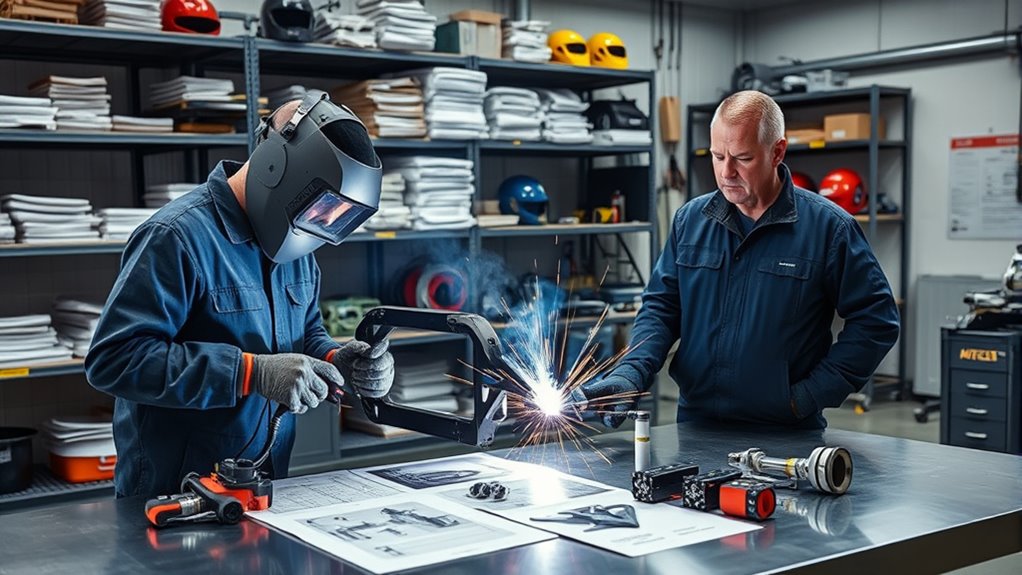
Start with the official I-CAR Welding Training & Certification page. It identifies the certification paths, explains their collision-repair purpose, and links to current welding resources.
Use the Welding Event Resources page for current checklists, course preparation, practice guides, event policies, and coupon information.
For vehicle-specific repair planning, use the I-CAR Repairability Technical Support Portal and the vehicle manufacturer’s service information. RTS provides OEM procedure support, partial-part replacement information, high-voltage guidance, and repairability resources. Certification demonstrates skill; the vehicle procedure determines what the repair permits.
For workplace safety, review OSHA’s Welding, Cutting, and Brazing resources and your shop’s written hot-work program. For broader background, this guide to common welding processes explains how major processes differ, but I-CAR and OEM information should control collision certification and vehicle repair decisions.
Frequently Asked Questions
How much does I-CAR welding certification cost?
The cost varies by course, event type, participant or shop status, location, and available program discounts. Use I-CAR’s current registration system or price calculator for the exact amount. Do not estimate I-CAR pricing from an AWS exam because the programs are unrelated.
How long does I-CAR welding certification take?
The current hands-on event length is approximately four hours for Steel GMA Welding and six hours for Steel Sectioning or Aluminum GMA Welding. Add time for prerequisite theory, facility preparation, coupon practice, registration, and any required retest.
How much does AWS CWI cost, and is it the same as I-CAR?
AWS CWI is not the same as I-CAR welding certification. CWI is an inspector credential covering welding knowledge, practical inspection, and code use. For 2026, AWS lists initial CAWI/CWI exams at $1,255 for members and $1,520 for nonmembers, with training packages costing more. Confirm current amounts on the AWS price list before applying.
What is the hardest welding certification?
Difficulty depends on your background and job. AWS CWI can be demanding because it combines welding fundamentals, practical inspection, and code-book use. In collision repair, Aluminum GMA or Steel Sectioning may be difficult for technicians who have limited practice with contamination control, thin materials, fit-up, heat control, or destructive-test coupons.
What are F1, F2, F3, and F4 in I-CAR welding?
The current official I-CAR practice guide does not define F1 through F4 as a universal classification for four specific weld types. A school, instructor, or shop may use local shorthand, but technicians should follow the named and numbered weld exercises in the current I-CAR practice guide and their event materials.
What is I-CAR welding?
I-CAR welding is collision repair training and certification focused on Steel GMA Welding, Steel Sectioning, and Aluminum GMA Welding. It evaluates course-specific welds and preparation skills used in modern vehicle repairs.
Can a beginner take I-CAR welding certification?
A beginner can work toward certification, but the event is an evaluation rather than a substitute for all basic welding practice. Complete the listed theory prerequisite, learn safe machine setup, and practice the current coupon welds before attending. Steel Sectioning also lists prior Steel GMA certification and Sectioning Overview preparation in current requirements.
Does I-CAR certification mean I can weld any vehicle part?
No. Certification documents skill for a particular path, but each repair depends on the current OEM procedure for the vehicle’s VIN and model year. A part may require full replacement, adhesive bonding, riveting, squeeze-type resistance spot welding, GMA welding, a mixed attachment method, or no sectioning at all.
How do I check whether my I-CAR welding certification is active?
Sign in to myI-CAR and review the My Training area for completed courses, certification status, progress, and renewal dates. Verify the record before assigning work that depends on an active credential or repair-program requirement.
Conclusion
I-CAR welding certification is an important credential for collision repair technicians who weld steel, section approved structural parts, or repair aluminum-intensive vehicles. Choose the path that matches your work, complete the current prerequisites, prepare the correct equipment and PPE, and practice the official coupon exercises before the event.
After certification, continue treating every structural weld as vehicle-specific safety work. Verify the VIN and model year, follow current OEM procedures, complete test welds, control fire and electrical hazards, restore corrosion protection, document quality checks, and monitor your renewal status in myI-CAR.
Sources
- I-CAR Welding Training & Certification — certification paths, course purpose, network relevance, and official resource links
- I-CAR Welding Event Resources — current event preparation, checklists, policies, practice materials, and coupon information
- I-CAR Practice Welding Guide — coupon thicknesses, weld exercises, visual criteria, and destructive-test practice
- I-CAR Welding Training & Certification / Hands-On Skills Development Requirements — prerequisites, equipment, consumables, shielding gas, facility needs, and PPE
- I-CAR Mixed Attachment Methods Course Announcement — 2026 replacement of the Steel Sectioning Recertification course
- OSHA Welding, Cutting, and Brazing — workplace hazards, standards, ventilation, PPE, and fire-prevention resources