Automotive welding in collision repair helps you restore damaged metal parts, but it is not just a way to “stick metal together.” You are working on areas that may affect crash protection, panel alignment, corrosion resistance, and long-term safety. Use the welding process, filler metal, shielding gas, and joint design specified for the vehicle, and check the OEM repair procedure before welding any structural part.
Quick Answer
Automotive welding in collision repair uses controlled heat to join or replace damaged vehicle metal. MIG/GMAW is common for steel repairs, STRSW often matches factory spot welds, TIG gives precise control, and aluminum or advanced high-strength steel must follow OEM procedures. Clean metal, correct settings, PPE, ventilation, and weld inspection are essential.
Key Takeaways
- Always check OEM collision repair procedures before welding structural panels, reinforcements, or advanced high-strength steel.
- MIG/GMAW is common for steel auto body welding, but aluminum usually needs 100% argon, approved aluminum wire, and a dedicated feed setup.
- Clean fit-up, correct wire size, shielding gas, polarity, and heat control matter more than simply making a weld look smooth.
- Welding fumes, zinc coatings, sparks, and hidden trim fires are real hazards, so ventilation, PPE, and fire control are part of the repair.
- A finished weld still needs inspection, corrosion protection, seam sealer, primer, and cavity wax where the repair procedure calls for them.
At a Glance
| Time Required | 30 minutes to several hours, depending on inspection, prep, weld type, panel access, and corrosion protection. |
| Difficulty | Moderate for non-structural practice work; advanced for collision repair and structural parts. |
| Tools Needed | MIG/TIG/STRSW equipment as specified, welding helmet, gloves, jacket, clamps, grinder, wire brush, shielding gas, fire extinguisher, weld-through primer where approved, seam sealer, and corrosion protection products. |
| Cost | Varies widely. Practice supplies may cost little, while certified collision repair equipment, OEM information, aluminum tooling, and corrosion materials can be expensive. |
What Is Automotive Welding?
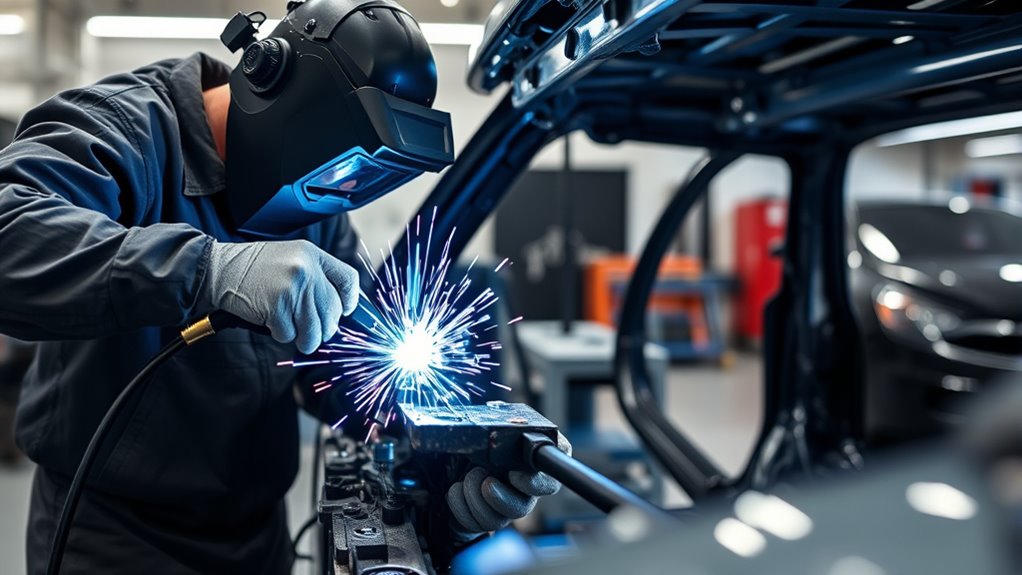
Automotive welding is the controlled process of joining, replacing, or reinforcing metal vehicle components after cracks, rust, fatigue, or collision damage. In collision repair, you use automotive welding to restore the load path, panel fit, and serviceability of parts that the manufacturer allows you to weld.
The main welding and joining methods used around auto body repair include MIG/GMAW, squeeze-type resistance spot welding, GMA brazing, TIG/GTAW, flux-cored welding, and stick/SMAW. Each process fits different materials, joint designs, thicknesses, and access conditions. The right process is the one approved for the exact vehicle area you are repairing.
For thin metals used in body panels, controlled heat and clean fit-up matter most. Butt joints, lap joints, plug welds, and factory-style spot welds all behave differently, so the joint type directly affects strength, distortion, sealing, and corrosion protection. Flux core welding can help with thicker general steel work, but it is not a substitute for OEM collision repair procedures.
Warning: Do not weld structural collision parts, boron steel, ultra-high-strength steel, aluminum structures, or EV/hybrid battery areas unless the OEM repair procedure allows it and you have the correct equipment and training.
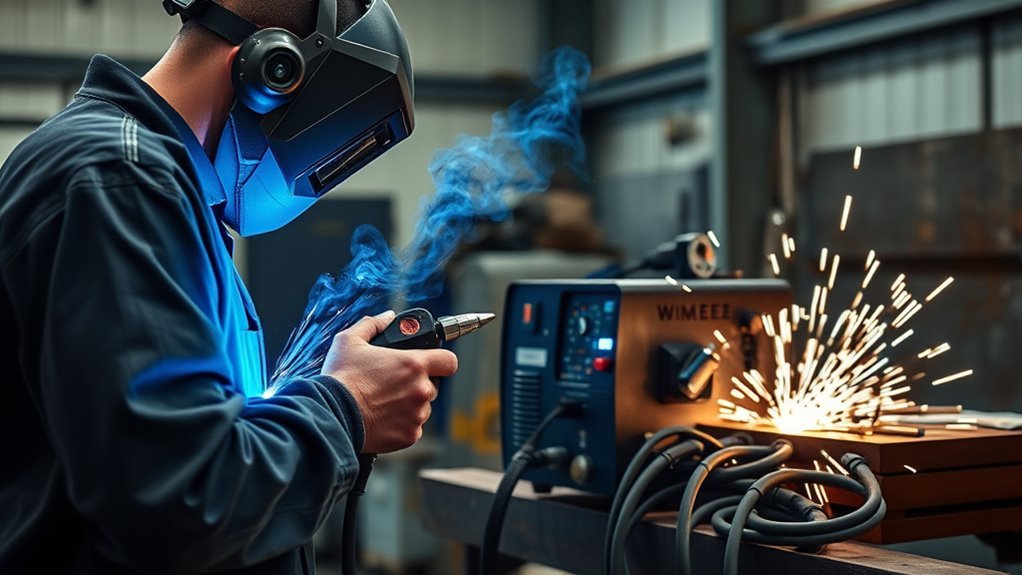
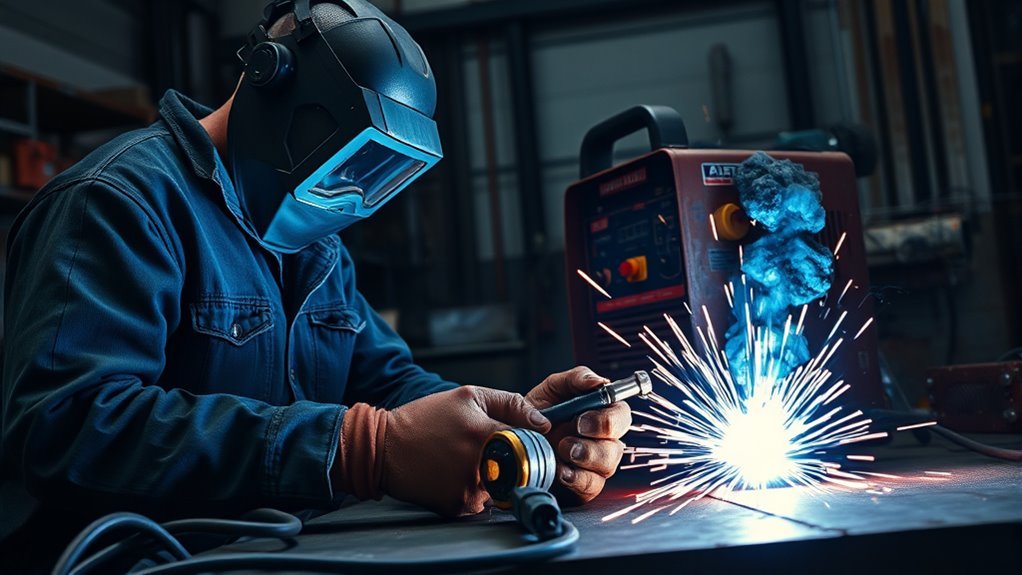
Before you strike an arc, wear a welding helmet, gloves, protective clothing, and eye protection for nearby helpers. The U.S. Occupational Safety and Health Administration notes that welding and cutting require fire-prevention controls, eye protection, protective clothing, and adequate ventilation for fumes and gases. OSHA 1910.252 covers general welding, cutting, and brazing requirements.
Check OEM Procedures Before Welding
Modern vehicles use mild steel, high-strength steel, advanced high-strength steel, ultra-high-strength steel, boron steel, aluminum, adhesives, rivets, and factory spot welds in the same body structure. That means you should not choose a repair method by habit alone.
Before welding, look up the vehicle maker’s repair information and confirm:
- Which parts can be sectioned, repaired, or must be replaced.
- The approved joining method, such as MIG plug welds, STRSW, GMA brazing, rivet bonding, or adhesive bonding.
- The exact weld count, spacing, location, and size.
- Whether heat is allowed near the part.
- Whether weld-through primer, epoxy primer, seam sealer, foam, or cavity wax is required.
- Whether battery disconnection, module protection, or calibration steps are listed.
Note: A weld can look clean and still be wrong if the vehicle maker called for spot welding, brazing, adhesive bonding, or part replacement instead of fusion welding.
Which Welding Process Is Best for Auto Body Repair?
The best welding process depends on the metal, part location, joint design, and repair procedure. MIG welding is common, but it is not the only process used in professional collision repair.
| Process | Best Use | Key Limit |
| MIG/GMAW | Steel panels, plug welds, patches, brackets, and many general auto body repairs. | Too much heat can burn through thin panels or weaken heat-sensitive steels. |
| STRSW | Factory-style spot weld replacement on overlapping sheet metal where access allows. | Requires correct electrode access, squeeze pressure, current, and OEM-approved weld locations. |
| GMA Brazing | Certain galvanized or high-strength steel joints when the OEM calls for lower heat input. | Not interchangeable with normal MIG welding unless specified. |
| TIG/GTAW | Precision work on stainless steel, aluminum, exhaust parts, and controlled fabrication. | Slower and skill-heavy; not always approved for collision structural repairs. |
| Flux-Cored / Stick | Heavier general steel work, outdoor repairs, trailers, or non-body fabrication. | Usually too hot, smoky, or rough for thin modern body panels. |
Products Worth Considering

Professional Dent Removal: VEVOR Stud Welder Dent Puller offers a fast and efficient solution for removing dents from steel car body panels, all while providing precise dent pulling and controlled force for a professional-grade dent repair every time.

Highly Durable Design: The shell of stud welder kit is made of high-quality ABS body, has good stability under high temperature conditions, withstand temperature of 93-118℃, and the movement is pure copper electrode. This welder stud kit is wear-resistant, strong and sturdy.

Professional Dent Removal: VEVOR Stud Welder Dent Puller offers a fast and efficient solution for removing dents from car body, all while providing precise dent pulling and controlled force for a professional-grade dent repair every time.
MIG Welding Basics for Auto Repair
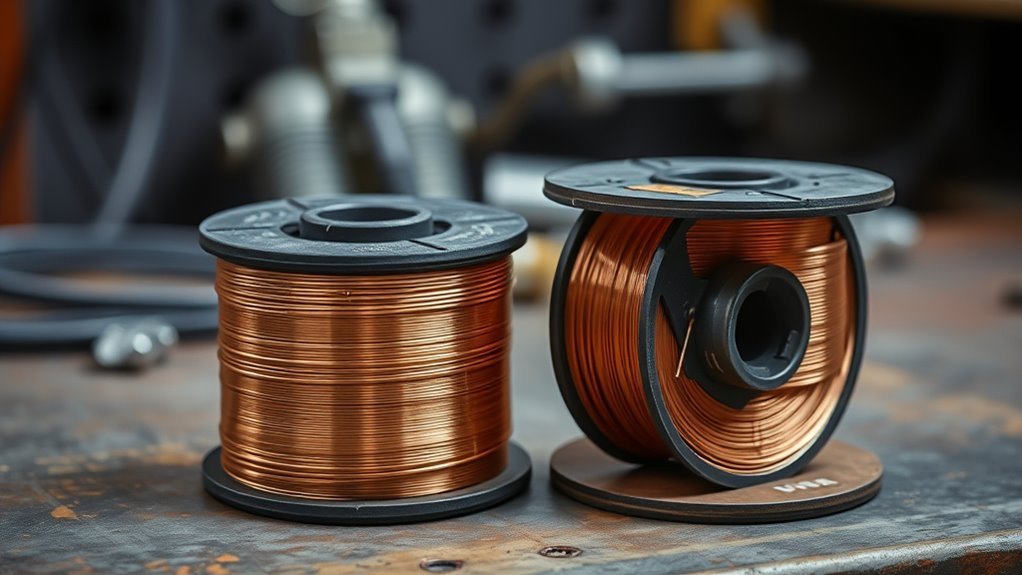
You’ll set up MIG welding by matching voltage, wire feed speed, wire size, shielding gas, polarity, and travel speed to the metal thickness. Gas metal arc welding uses a continuously fed wire electrode and shielding gas to protect the weld from atmospheric contamination. For many mild-steel short-circuit MIG repairs, a 75% argon and 25% CO2 shielding gas blend is common, but aluminum normally uses 100% argon and different wire-feed equipment.
Use the machine chart, the wire manufacturer’s recommendation, and the OEM procedure before welding the vehicle. Additionally, ensure you use the correct polarity settings to optimize the welding process and avoid weak welds. Most solid-wire MIG steel work uses DCEP, while self-shielded flux-cored wire often uses DCEN, but always verify the wire label and welder manual.
MIG Setup and Settings
For steel auto body work, common solid-wire sizes include 0.023/0.025 inch for thin sheet, 0.030 inch for many general repairs, and 0.035 inch for heavier sections. The original 0.030- to 0.035-inch range can work on some jobs, but it is too broad as a universal rule for thin collision panels. Keep your equipment calibrated, use clean wire, and make the base material clean before you strike an arc.
| Setting | Typical Target | Why It Matters |
|---|---|---|
| Wire | Match metal and thickness | Improves fusion and feed stability |
| Gas | 75/25 for many mild-steel MIG jobs; 100% argon for aluminum | Protects the weld pool |
| Voltage settings | Match thickness and transfer mode | Controls heat and bead profile |
| Wire feed speed | Match wire size and voltage | Controls current and fusion |
| Stickout | Often about 1/4 to 3/8 inch for short-circuit MIG | Stabilizes arc and gas coverage |
Choose welding techniques that suit the panel, and verify every adjustment on scrap metal of the same type and thickness before welding the vehicle.
Core Welding Techniques
Master MIG welding basics by practicing on scrap metal that matches the repair material. Collision repair depends on clean, controlled welds in carbon steel, galvanized steel, stainless steel, and aluminum, but each material has different heat and shielding needs.
You’ll use MIG welding in automotive repair because it is fast, versatile, and useful for plug welds and many steel panel repairs when the procedure allows it. Clean the base material, bevel thicker joints when needed, and keep the gun angle steady so the weld pool stays protected by the gas shield.
Adjust welding parameters to match stickout and metal thickness. Use short stitch welds or skip welding on thin panels to limit warping. Use a push technique when you need a flatter bead and better gas coverage on thin material, and use a pull technique only where it fits the joint and wire type.
- Practice beads on matched scrap first.
- Match travel speed to heat input.
- Watch the puddle shape, not just the sparks.
- Let thin panels cool between stitches.
- Inspect for fusion, porosity, undercut, and burn-through.
Pro Tip: Before welding a replacement panel, make two practice plug welds on the same metal stack-up. Cut or peel-test them if the repair procedure calls for destructive testing.
Auto Body Welding Tools and Safety
You’ll need the right welding tools for the repair: use a MIG welder for many steel joining tasks, a TIG welder for precision work, a squeeze-type resistance spot welder when factory-style spot welds are required, and a stick welder only for heavier non-body components where it is appropriate.
Wear an autodarkening helmet, gloves, safety glasses, leather or flame-resistant clothing, and hearing protection when grinding. Keep the work area ventilated to control fumes. CDC/NIOSH warns that welding fumes can include hazardous exposures, including manganese fumes, so ventilation and exposure control matter even when the weld looks routine. CDC/NIOSH welding fume guidance is a useful safety reference.
Secure the panels with welding clamps, and check gas levels, nozzles, ground clamp contact, leads, and consumables before you start. Additionally, consider using a 3-in-1 welder for practice or light fabrication, but do not assume a hobby machine is approved for structural collision repair.
Products Worth Considering

Value Pack: The package includes 24 packs of butt welding clamps, enough quantity to meet your daily needs and replacements. Each butt welding clamps is individually wrapped in a small bag, convenient to carry and use.

Reliable and Robust Welding Every Time: Designed specifically for the automotive repair industry, our stud welder ensures dependable welds on materials up to 1.2mm maximum single-side welding thickness, providing maximum strength without compromising the integrity of your vehicle's body.

Essential Welding Tools
Essential auto body welding starts with the right equipment: a MIG welder for fast, reliable steel repairs, a TIG welder for precise work on stainless steel or aluminum, and a squeeze-type resistance spot welder when the repair procedure calls for factory-style spot welds.
In collision repair, you’ll pair these with a welding helmet, welding gloves, jacket, safety glasses, respirator when required, and other safety gear so you can work with control. Use welding clamps to lock metal surfaces in position, then use an angle grinder, wire brush, or approved stripping disc to clean rust, paint, seam sealer, adhesive, zinc coating, and contamination before welding.
- Choose the process that matches material thickness and OEM repair instructions.
- Clamp parts tightly to prevent movement and distortion.
- Prep metal surfaces until the weld area is clean and bright.
- Verify fit-up before each weld.
- Keep a fire extinguisher nearby and assign a fire watch when needed.
Keep ventilation strong and the workspace clear, so your repairs stay controlled, accurate, and safe.
Safety Gear and Setup
Once your welder, clamps, and grinder are ready, set up the work area with safety as the first priority.
Wear safety gear: an autodarkening welding helmet, safety glasses, gloves, and protective clothing to block sparks, heat, and UV radiation. Use welding curtains to define your workspace and protect nearby people from arc flash.
Verify ventilation so fumes clear fast, and remove flammable materials from the zone. Vehicle interiors often hide foam, insulation, seam sealer, carpet, sound deadener, fuel residue, wiring, and plastic clips. Sparks can travel farther than you expect, so inspect the front and back side of the weld area before and after welding.
Keep welding clamps tight and angle grinders serviced so you can position panels and prep metal without slip or delay. Before striking an arc, make safety checks on welding equipment, leads, connections, shielding gas, and ground clamp contact to confirm proper function.
This disciplined setup protects your body, your crew, and the vehicle from unnecessary risk.
How to Prepare Metal for Welding
Proper metal preparation is critical for strong, reliable welds in collision repair. Before welding, you need to clean the surface with a grinder, approved abrasive disc, or wire brush, removing rust, paint, oil, seam sealer, adhesive, and dirt so contamination does not weaken weld quality.
Check fit-up next. The pieces should align tightly with minimal gaps, because poor spacing reduces strength in repair welding and can cause burn-through. Use clamps to hold the panels steady and prevent movement that can throw off alignment and create inconsistent joints.
For thicker metal over 1/8 inch, bevel edges at about 30 to 45 degrees when the joint design calls for deeper penetration. Inspect for warpage after cutting or grinding, especially on high-strength steel, and manage heat to limit distortion. Proper stripping of zinc coating before welding is essential to reduce contamination and fume risk.
- Verify edge condition before joining.
- Measure gaps along the full seam.
- Recheck clamping after every adjustment.
- Confirm flatness before you strike the arc.
- Protect wiring, glass, trim, airbags, modules, and nearby fuel or brake components.
Warning: Welding zinc-coated or galvanized automotive metal can release hazardous fumes. OSHA requires specific ventilation controls for zinc-bearing materials, especially indoors or in confined spaces. Use local ventilation, respirator protection when required, and never weld in a poorly ventilated area.
Welding Techniques for Vehicle Materials
After you’ve cleaned, fit, and clamped the panels, the next step is choosing the welding process that matches the vehicle material and joint type.
In collision repair, MIG welding is a common option for many steel body panels and plug welds. Set the correct shielding gas, wire size, and polarity to protect the puddle and preserve repair quality. For mild steel, 75% argon and 25% CO2 is a common short-circuit MIG gas blend. For aluminum, use 100% argon with approved aluminum wire, often ER4043 or ER5356 depending on the base metal and repair procedure. If you are researching aluminum flux-core welding, treat it as a specialty topic, not a default method for structural auto repair.
A strong collision repair weld is not judged by appearance alone. It must match the metal, joint design, OEM procedure, and inspection requirements.
Use TIG welding when you need exact control on materials such as stainless steel, aluminum, or custom fabrication parts. Its non-consumable tungsten electrode gives you clean, precise welds, but it is slower and requires strong technique. Adjust heat carefully on aluminum because it moves heat quickly and can distort or lose strength near the weld.
Use squeeze-type resistance spot welding when the OEM procedure calls for factory-style spot welds on overlapping sheet metal. Use GMA brazing only where specified, because brazing and fusion welding create different joints.
Stick welding is useful on heavier general steel parts and outdoor fabrication, but it is less common in automotive body repair and usually too aggressive for thin panels. Choose the process that fits the metals, and your welding techniques will support safer, stronger repairs.
Material-Specific Welding Notes
- Mild steel: Usually the most forgiving automotive welding material. Clean it well, use the correct wire and gas, and control heat to prevent burn-through.
- Galvanized or zinc-coated steel: Remove coatings from the weld zone where the repair procedure allows, use ventilation, and restore corrosion protection after welding.
- High-strength steel and AHSS: Do not apply heat casually. Some areas may allow welding, while others may require replacement, STRSW, brazing, or no repair.
- Boron and UHSS reinforcements: Treat these as procedure-only materials. Welding, sectioning, or heating the wrong area can compromise crash performance.
- Aluminum: Use dedicated cleaning tools, prevent cross-contamination from steel, use 100% argon, and follow the OEM procedure for wire alloy and weld type.
- Stainless and exhaust parts: TIG or MIG may work depending on thickness and access, but clean fit-up and filler selection affect corrosion resistance.
Common Auto Welding Repairs
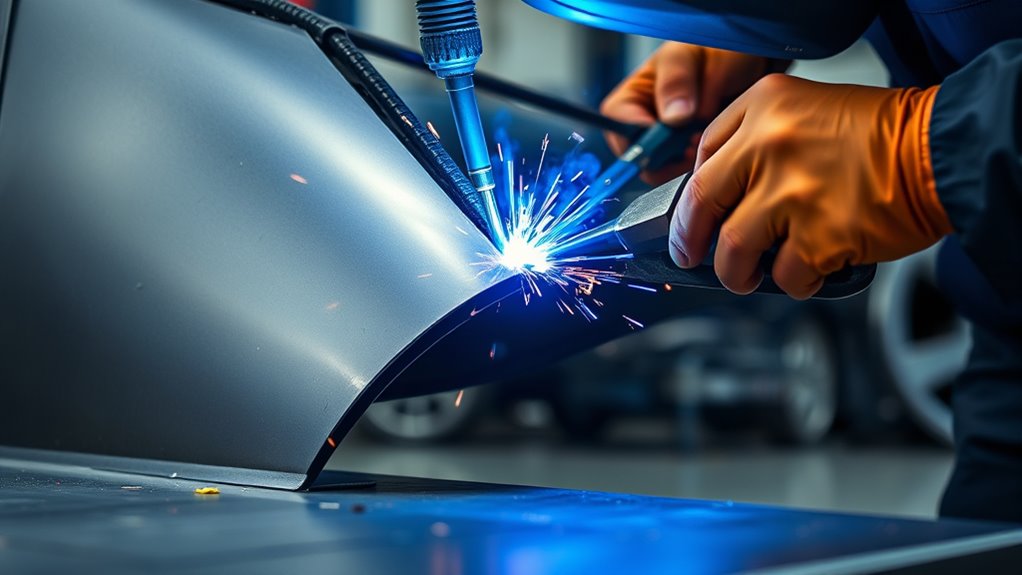
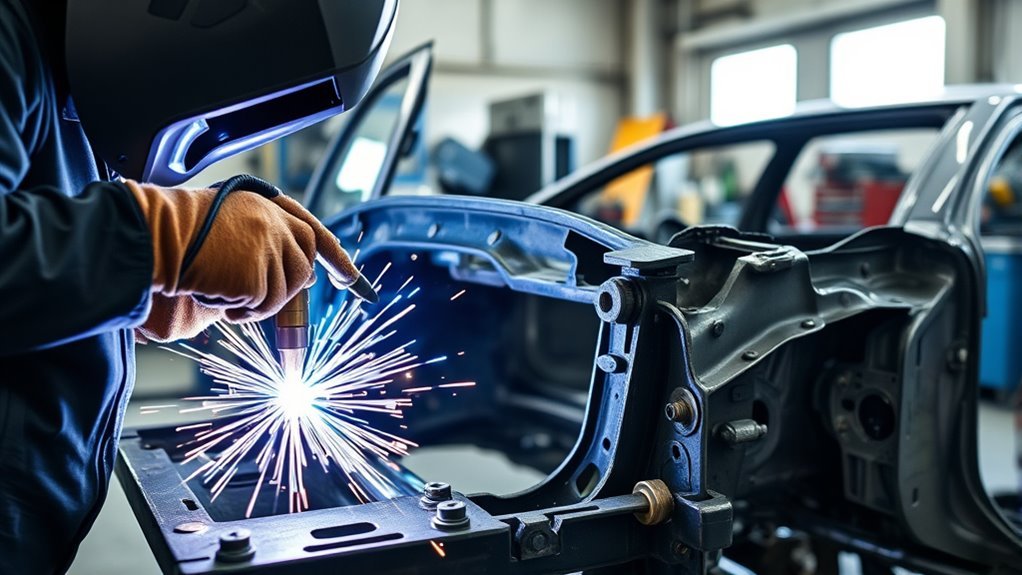
In collision repair, you’ll commonly weld replacement panels, brackets, exhaust sections, tabs, cracks, and some frame or unibody areas only when the OEM procedure allows it. Each repair demands the right process, joint prep, weld spacing, and corrosion protection.
In auto body work, you restore structural integrity by choosing the correct welding method for the metal, load path, and heat control. MIG welding often serves replacement panels and plug welds because it is fast and consistent when settings are correct. For factory-style overlapping sheet metal, spot welding may be the better match.
- Inspect cracked metal, rust, and distortion before repair.
- Fit replacement panels tightly to keep gaps controlled.
- Seal exhaust systems with welds that resist heat and corrosion.
- Reinforce suspension or bracket repairs only when welding is allowed.
- Restore primer, seam sealer, undercoating, and cavity wax after welding.
You should clean, clamp, and align every joint before you strike an arc. Proper joint preparation is essential for a successful weld.
If you rush prep, you weaken the bond and compromise safety.
When you weld with precision, you support durability, clean panel fit, corrosion resistance, and a safer vehicle return.
Common Weld Defects and Fixes
Weld defects often come from dirty metal, poor fit-up, wrong settings, weak gas coverage, or rushing the repair. Use this table as a first troubleshooting pass before you grind out and redo a bad weld.
| Problem | Likely Cause | Fix |
| Burn-through | Too much heat, slow travel, large gap, or wire too large. | Reduce heat, tighten fit-up, use shorter stitches, and practice on matching scrap. |
| Porosity | Dirty metal, poor gas coverage, drafts, moisture, or wrong gas flow. | Clean the joint, check gas, block drafts, trim stickout, and replace contaminated wire. |
| Lack of fusion | Low heat, poor angle, fast travel, or dirty base metal. | Increase heat within approved settings, slow travel, clean metal, and aim at the joint root. |
| Excessive spatter | Voltage and wire speed mismatch, wrong polarity, dirty wire, or poor ground. | Check polarity, ground clamp, wire feed, voltage, and contact tip condition. |
| Warping | Too much continuous heat on thin sheet metal. | Use stitch welds, skip around the panel, clamp well, and allow cooling time. |
Inspect and Protect the Repair After Welding
Inspection is part of the weld, not an optional final glance. Look for a consistent bead or plug weld, full edge wet-out, no visible cracks, no porosity, no undercut, and no burn-through. For plug welds, verify the weld size and spacing against the repair procedure.
When the procedure calls for it, perform test welds before repairing the vehicle. Many collision repair jobs require practice welds on the same metal stack-up, followed by peel or destructive testing to confirm the weld nugget and fusion. Do not skip this step on structural work.
After inspection, restore corrosion protection. Grind only where needed, then apply approved primer, seam sealer, cavity wax, undercoating, or paint system materials. Bare welds and heat-affected zones can rust quickly if you leave them exposed.
Frequently Asked Questions
What is the most common type of welding used in collision repair facilities?
MIG/GMAW is one of the most common welding methods for steel collision repair, especially plug welds and replacement panels. Many shops also use squeeze-type resistance spot welding because it can reproduce factory-style spot welds where access allows. The correct method is always the one listed in the OEM repair procedure.
What is the golden rule in welding?
The practical golden rule is simple: clean metal, tight fit-up, correct settings, and approved procedures come before speed. If the joint is dirty, loose, overheated, or welded with the wrong process, the finished weld can look acceptable but still be weak.
What welding process is used for automotive repair?
Automotive repair can use MIG/GMAW, TIG/GTAW, squeeze-type resistance spot welding, GMA brazing, flux-cored welding, or stick welding depending on the part. For modern collision repair, the vehicle maker’s repair procedure decides the approved process, weld locations, and corrosion protection steps.
What are the 4 main types of welding?
The four common arc welding types are MIG/GMAW, TIG/GTAW, stick/SMAW, and flux-cored/FCAW. Auto body repair also uses resistance spot welding and GMA brazing, so collision repair includes more joining methods than the four basic arc welding categories.
Can you weld aluminum auto body panels with a regular MIG welder?
Only if the welder, gun, liner, drive rolls, wire, and shielding gas are set up for aluminum and the OEM procedure allows it. Aluminum usually needs 100% argon, clean dedicated tools, and a spool gun or push-pull setup to feed soft aluminum wire reliably.
Should you disconnect the battery before welding a vehicle?
Follow the OEM procedure. Many repairs require battery disconnection, module protection, or special steps for airbags, sensors, EV high-voltage systems, and calibration-related components. Never guess on hybrid or EV vehicles.
Conclusion
When you weld in collision repair, you’re restoring structural integrity, corrosion protection, and safe vehicle function, not just joining metal. You need the right process, clean joint prep, correct settings, controlled heat, and a repair method that matches the vehicle maker’s procedure. If you verify the material type, practice on matching scrap, inspect every weld, and restore corrosion protection, you’ll improve safety, durability, and long-term repair quality.
Sources
- OSHA 1910.252 General Requirements — welding, cutting, brazing safety, fire prevention, eye protection, protective clothing, ventilation, and zinc-coated material precautions.
- OSHA Welding, Cutting, and Brazing Overview — general hazards, standards, and safety resources for welding operations.
- CDC/NIOSH Welding Fumes and Manganese — welding fume exposure context and occupational safety resources.
- Miller Electric Guidelines for Gas Metal Arc Welding — GMAW equipment, setup, and process fundamentals.
- Machine Learning Models for Weld Bead Shape Parameters in GMAW T-Joints — supports the importance of welding parameters and bead shape in weld quality assessment.