Disclosure: As an Amazon Associate, we earn from qualifying purchases. If you click a link on this page and make a purchase, we may receive a small commission at no extra cost to you.
Choosing the right TIG filler metal matters when you need clean welds, strong joints, and dependable corrosion resistance. The Forney 48520 TIG Filler Metal is an ER309L stainless steel filler option made for welders who work with dissimilar joints, stainless applications, and heat-treated materials. This review helps you decide where it fits, what its key specs mean, and when you may need a different filler rod instead. Its main strength is its low-carbon ER309L composition, but it is not the right choice for aluminum or specialized underwater welding work.
Quick Verdict
Rating: 8.4/10
Best For: TIG welders who need ER309L stainless filler metal for dissimilar joints and corrosion-resistant stainless work.
Bottom Line: The Forney 48520 is a practical choice if you need a 1/16-inch ER309L filler rod with low carbon content and strong listed tensile strength. Skip it if you are welding aluminum, need multiple size options, or require a filler metal for underwater applications.
Key Takeaways
- The Forney 48520 uses ER309L stainless steel, which makes it useful for many dissimilar stainless welding jobs.
- The 1/16-inch by 36-inch size suits controlled TIG work where you need a slim filler rod.
- The listed low carbon content, less than 0.03 percent, supports better corrosion resistance than higher-carbon stainless filler options.
- The article-supported tensile strength is 85,000 PSI, which points to solid joint strength when used correctly.
- It is not made for aluminum welding, underwater welding, or every stainless alloy combination.
| Specification | Detail |
|---|---|
| Brand | Forney |
| Model | 48520 |
| Product type | TIG filler metal |
| Filler classification | ER309L stainless steel |
| Size | 1/16 inch by 36 inches |
| Package weight | 1 pound |
| Carbon content | Less than 0.03 percent |
| Listed tensile strength | 85,000 PSI |
| Recommended polarity | DCEP (+), with a 90 to 130 listed range |
| Best use | Dissimilar joints, stainless applications, and heat-treated materials where ER309L is appropriate |
| Storage note | Keep dry and protected from moisture, dirt, oil, and shop contaminants |
What Is the Forney 48520 TIG Filler Metal?
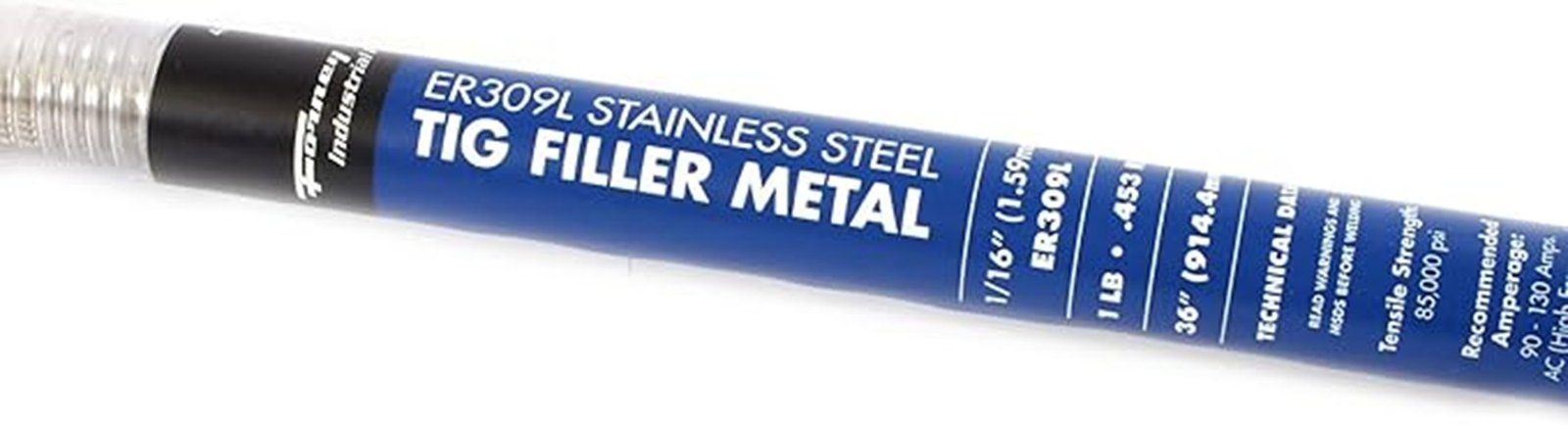
The Forney 48520 is a TIG filler metal made from ER309L stainless steel. It comes in a 1/16-inch by 36-inch size and a 1-pound package, which makes it suitable for welders who want a slim filler rod for controlled work.
ER309L filler metal is commonly chosen when you need to join dissimilar stainless materials or weld stainless to compatible base metals. The low-carbon “L” grade helps reduce carbon-related corrosion concerns compared with higher-carbon stainless filler options.
This product makes the most sense for a welder who already understands TIG setup, filler selection, and base-metal compatibility. It is not a universal rod for every metal, so you should match the filler to your project, weld procedure, and material requirements before you start.
Who Should Buy It?
Best For
- Welders who need ER309L stainless filler metal for dissimilar joint work.
- Shop, repair, and fabrication users who want a 1/16-inch TIG filler rod.
- Projects where low-carbon stainless filler and corrosion resistance matter.
Skip If
- You need a filler metal for aluminum welding.
- Your project requires a different stainless filler classification, such as a grade matched to a specific base metal.
- You need specialized filler metal for underwater welding or code-critical work without a qualified procedure.
Before You Buy: Confirm that ER309L is the correct filler classification for your base metals. This rod is not a substitute for aluminum filler, specialty underwater welding consumables, or a qualified welding procedure when the job is structural or code-regulated.
Features and Specifications
ER309L Stainless Steel Composition
The main reason to consider the Forney 48520 is its ER309L stainless steel composition. This classification is especially useful when your project involves dissimilar joints where a standard stainless filler may not be the right match.
The low-carbon content, listed as less than 0.03 percent, is a practical benefit for stainless work. Lower carbon can help support corrosion resistance when the weld area may face moisture, heat, or general shop exposure after the job is complete.
Size and Handling
The 1/16-inch diameter gives you a narrow filler rod for TIG welding. That size can help when you need careful puddle control, smaller beads, or cleaner placement on lighter workpieces.
Each rod measures 36 inches long, and the package weight is listed as 1 pound. That format is useful for a small shop, repair bench, or welder who does not need a large bulk package.
Strength and Weld Quality
The article-supported tensile strength is 85,000 PSI. That number gives this filler metal a strong performance profile when it is used with compatible materials, proper joint preparation, and correct TIG technique.
Strength still depends on more than the filler rod. Your base metal, fit-up, cleaning, heat input, shielding gas coverage, and welder skill all affect the final weld quality.
Polarity and Setup
The original product details list DCEP (+) with a 90 to 130 range. Because TIG settings can vary by machine, base metal thickness, joint design, and electrode setup, you should treat this as a starting point rather than a fixed rule for every weld.
Before you weld, check your machine manual, filler label, and any required welding procedure. This matters most when the joint affects safety, load support, or professional repair work.
Applications and Benefits
The Forney 48520 works best when you need an ER309L stainless filler for compatible dissimilar metal projects. It can help you make strong, clean welds when a standard filler does not match the base-metal combination.
Its main benefits include:
- Helping join dissimilar joints where ER309L is the correct filler choice.
- Supporting corrosion resistance through its low-carbon stainless composition.
- Giving you a slim 1/16-inch filler size for controlled TIG work.
- Providing a 1-pound package that fits small shops, repair benches, and occasional stainless projects.
This filler metal is most useful when you already know the materials you are joining. If you are unsure about the base metal grade, test the material or get professional guidance before choosing a filler.
Pro Tip: Clean both base metals before welding and keep the filler rods dry. Oil, scale, moisture, and shop dust can hurt puddle control and reduce the chance of a clean stainless weld.
Performance and User Experience
In practical use, the Forney 48520 is best judged by how well it supports clean TIG control, stable feeding, and reliable joints on compatible stainless projects. The 1/16-inch size gives you good control when you need to add filler slowly and avoid oversized beads.
The 85,000 PSI listed tensile strength adds confidence for suitable repair and fabrication work. Still, the final joint is only as good as your preparation, heat control, shielding gas, and filler compatibility.
The low-carbon ER309L composition is also useful when corrosion resistance matters. That makes this filler a better fit for stainless work than general-purpose mild steel filler rods, as long as ER309L matches the job.
How It Performs in Real Use
For Dissimilar Joints
This is the main reason many welders choose ER309L filler metal. The Forney 48520 can be useful when your project calls for a stainless filler that handles dissimilar joint work better than a basic matching-grade rod.
For Small Stainless Repairs
The 1/16-inch diameter helps on smaller stainless repairs where you want better control over filler addition. It can be easier to manage than a thicker rod when the joint is narrow or the material is not very heavy.
For Shop and Fabrication Use
The 1-pound package works well for a home shop, maintenance bench, or light fabrication setup. You get enough filler for multiple small jobs without committing to a large supply that may sit exposed to moisture.
For Long-Term Storage
Stainless TIG filler can last a long time when stored correctly. Keep the rods in a dry place, away from moisture and contaminants, so they stay clean and ready for future work.
How to Use It Correctly
Start by confirming that ER309L is the right filler for your base metals. Then clean the joint area until it is free from oil, paint, scale, rust, and other contaminants that can interfere with TIG welding.
Use a suitable TIG setup for your material thickness and joint design. The article lists DCEP (+) with a 90 to 130 range, but you should follow your welder manual, filler label, and project-specific procedure for final settings.
Feed the 1/16-inch rod smoothly into the leading edge of the weld puddle. Avoid dipping the filler into the tungsten, and stop if you see contamination, porosity, poor shielding, or unstable arc behavior.
Compatibility and Safety
The Forney 48520 is designed for stainless TIG welding applications, not aluminum welding. If you are welding aluminum, you need an aluminum-compatible filler and a setup designed for that material.
This filler metal is also not recommended for underwater welding. Underwater work requires specialized training, equipment, procedures, and consumables designed for that environment.
Always use proper welding protection, including eye, face, hand, and skin protection. Work with good ventilation, follow your machine instructions, and get professional guidance for structural, pressure, marine, or safety-critical welds.
Pros and Cons
Pros
- ER309L stainless composition suits many compatible dissimilar joint applications.
- Low carbon content supports corrosion resistance in stainless work.
- 1/16-inch diameter gives you controlled filler placement during TIG welding.
- Listed 85,000 PSI tensile strength supports strong welds when used correctly.
- 1-pound package is practical for small shops, repair work, and occasional stainless projects.
Cons
- Not compatible with aluminum welding.
- Not suitable for underwater welding or specialized wet welding work.
- Only useful when ER309L matches your base metals and welding procedure.
Is It Worth the Price?
The Forney 48520 is worth considering if you need ER309L stainless TIG filler metal in a manageable 1-pound package. It should deliver the most value for welders who only need this filler classification for specific dissimilar joints or stainless repair work.
It is not the best fit if you need a broad assortment of filler sizes or a rod for a different material. For the right project, though, it offers strong value because it combines a useful stainless classification, a controlled 1/16-inch size, and article-supported strength and corrosion-resistance details.
How It Compares to Alternatives
If you are welding common matching stainless grades, an ER308L or ER316L filler may be worth comparing based on the base metal and corrosion needs. If you need a filler for difficult dissimilar materials, ER312 may also come up in your comparison.
The Forney 48520 makes the most sense when your project specifically calls for ER309L. Do not choose it only because it is stainless filler metal, choose it because the filler classification matches the weld you need to make.
Frequently Asked Questions
Is the Forney 48520 compatible with aluminum welding?
No. This filler metal is for stainless steel TIG welding applications, not aluminum. Aluminum welding requires a compatible aluminum filler and the correct welding setup.
What size is this TIG filler metal?
The article-supported size is 1/16 inch by 36 inches. That slim diameter helps when you want controlled filler feeding on smaller TIG welds.
What does ER309L mean for this filler rod?
ER309L identifies the stainless filler classification. In this review, its main benefit is suitability for compatible dissimilar joints and low-carbon stainless applications.
How should you store the Forney 48520 filler metal?
Store it in a cool, dry place where moisture, oil, grinding dust, and shop dirt cannot contaminate the rods. Clean filler metal helps you maintain better puddle control and weld quality.
Can you use this filler metal for underwater welding?
No. Underwater welding requires specialized equipment, training, procedures, and materials. This filler metal is not recommended for that use.
Is this a good choice for heat-treated materials?
The original article lists heat-treated applications as one use case. You should still confirm filler compatibility, heat input, and procedure requirements before welding heat-treated material.
Who should skip the Forney 48520?
Skip it if you need aluminum filler, a different stainless filler classification, or a material for underwater welding. You should also skip it if you cannot confirm that ER309L matches your base metals.
The Bottom Line
The Forney 48520 TIG Filler Metal is a strong option for welders who need 1/16-inch ER309L stainless filler for compatible dissimilar joints, stainless repair work, and carefully prepared TIG projects. Its low-carbon composition, listed 85,000 PSI tensile strength, and manageable 1-pound package are useful strengths, but it is not a universal filler for aluminum, underwater work, or every stainless alloy.
Buy it if ER309L is the right match for your weld procedure. Skip it if your project calls for a different filler classification or a specialized welding environment.