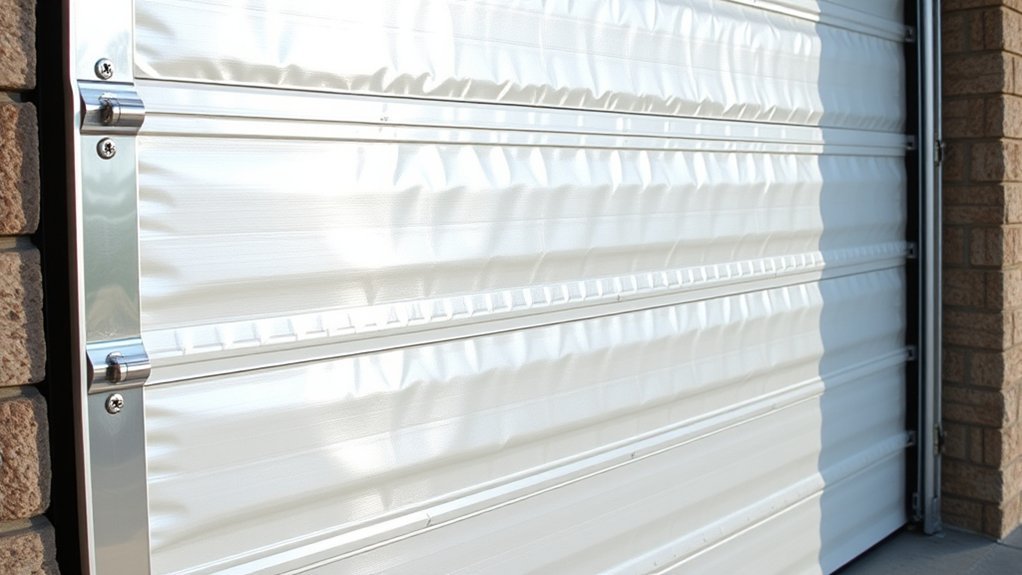
A thin, uninsulated garage door can make a garage uncomfortable in both summer and winter. Adding the right insulation can slow heat transfer, reduce some vibration, and improve comfort, but only when the material fits the door safely and the perimeter seals are in good condition.
This guide explains how to insulate a sectional garage door, choose between fiberglass and rigid foam, protect the door’s moving parts, seal fixed gaps, and test the door after the added weight is installed.
Quick Answer
To insulate a garage door, confirm the door manufacturer allows added insulation, measure every recessed panel, cut a compatible garage-door kit or rigid foam to fit, secure it without blocking hardware, and replace worn perimeter seals. Test the door’s balance and opener afterward; never adjust springs or bottom brackets yourself.
Key Takeaways
- Sectional steel doors with open recessed panels are usually the easiest to insulate; check the door manual and warranty before adding weight.
- R-value describes insulation or a door section, while whole-door U-factor better reflects the complete assembly, including joints and seals.
- Use manufacturer-approved clips, retainers, or foam-safe adhesive. Do not drill into the door or fill moving sections with expanding foam unless the door maker specifically allows it.
- Keep insulation clear of hinges, rollers, tracks, cables, locks, reinforcement, warning labels, and photo-eye sensors.
- Test manual balance and opener operation after installation. Stop and call a trained garage-door technician if the door becomes heavy, drifts, binds, or strains.
At a Glance
| Time Required | About 2–4 hours for a typical sectional door |
| Difficulty | Beginner to intermediate; accurate measuring and safe door testing are essential |
| Tools Needed | Tape measure, marker, straightedge, sharp utility knife, cleaning cloth, gloves, eye protection, and the kit’s retainers or approved adhesive |
| Cost | Varies by door size and material; many single doors need one kit, while a double door may need two |
What’s in This Article
- Check Whether Your Door Can Be Insulated
- Understanding Insulation, R-Value, and U-Factor
- Choose the Right Insulation Material
- Before You Begin
- Tools and Materials Needed
- Step-by-Step Installation Process
- Seal the Door Without Blocking Movement
- Common Pitfalls and Troubleshooting
- Cost and Budget Considerations
- Benefits and Limits
- Frequently Asked Questions
- Conclusion
- Sources
Check Whether Your Door Can Be Insulated
Start by identifying the door type. Aftermarket insulation is most practical on a sectional steel door with open channels or recessed cavities on the garage side. A garage-door insulation kit is designed to sit inside those cavities and use clips or retainers supplied for that system.
Contact the door manufacturer before modifying a wood door, one-piece tilt-up door, already-insulated sandwich door, wind-rated door, or any door with damaged panels. These doors may not have space for a retrofit kit, and added material can affect balance, structural performance, or warranty coverage.
Warning: Do not drill into door sections, loosen bottom brackets, move cables, or adjust torsion or extension springs. These parts can be under dangerous tension, and changes to a garage-door system should follow the original manufacturer’s instructions.
Do not cover required warning labels, ventilation openings, locks, handles, reinforcement struts, or the bracket that connects the opener arm to the door.
Understanding Insulation, R-Value, and U-Factor

R-value measures resistance to heat flow. A higher number means the material or tested door section resists heat flow better. However, an insulation kit’s R-value does not describe every joint, stile, edge, and weather seal in the complete door.
For whole garage doors, U-factor is more useful when it is available because it measures heat transfer through the complete installed assembly. A lower U-factor is better. The Door & Access Systems Manufacturers Association explains that door-section R-value and whole-door U-factor are produced by different methods and should not be treated as direct equivalents.
A current Owens Corning garage-door kit, for example, lists R-8 fiberglass panels, eight pieces per kit, and coverage for an uninsulated metal door up to 9 feet wide by 7 feet 4 inches high. That product rating applies to the insulation system described by the manufacturer, not to every garage door after installation.
The best result comes from combining suitable insulation with tight perimeter seals and a door that remains balanced, unobstructed, and easy to operate.
Choose the Right Insulation Material
Choose a material that fits the available cavity depth and is specifically allowed by the door manufacturer. Do not assume the thickest product is best; a panel that bulges into hinges or hardware can create a safety and reliability problem.
Products Worth Considering
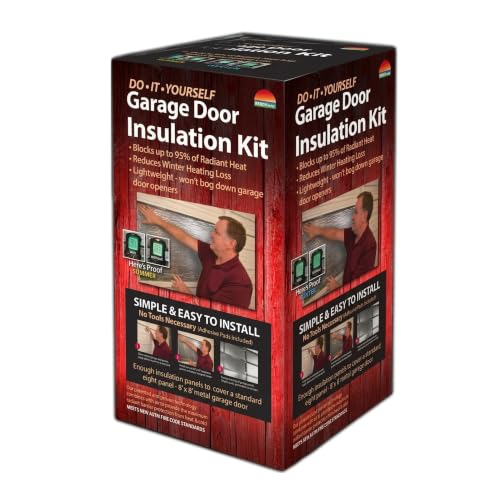
SINGLE DOOR COVERAGE (8ft x 8ft): Designed to insulate one standard single garage door. For double-wide or two-car garage doors, purchase two kits for full coverage.

COVERAGE: This kit is designed to insulate one single-car garage door. For a two-car garage, you will need two kits. For a three-car garage, you will need three kits.
Fiberglass Garage-Door Kits
Vinyl-faced fiberglass kits are flexible and can fit shallow or uneven cavities. Many include adhesive bases, retainer clips, and finished white facing. They can add more weight than thin foam, so door balance must be checked before and after installation.
When cutting fiberglass, avoid compressing it more than the product instructions allow. Compression can reduce thickness and may reduce the thermal resistance the product was designed to provide.
Rigid Foam Panels
Expanded polystyrene, extruded polystyrene, and polyisocyanurate boards are light and easy to cut with a sharp utility knife. Use only a thickness that stays inside the panel cavity. Choose a faced or garage-door-specific product when possible, and follow local code and product instructions for exposed foam.
Use foam-safe tape or adhesive only when the insulation or door manufacturer permits it. Solvent-based construction adhesives can damage some foam products or painted door finishes.
Reflective Foil Kits
Reflective products work differently from fiberglass or rigid foam. Their performance depends on installation details, including a nearby air space and the direction of radiant heat. Treat them as a separate option rather than assuming a thin reflective sheet provides the same performance as a rated insulation panel.
Note: Insulating the door does not turn an unconditioned garage into living space. Walls, ceiling, shared surfaces, air leakage, moisture, ventilation, and local code still matter.
Before You Begin
Estimated total time: Allow about 2 to 4 hours for measuring, cutting, fitting, sealing, and testing. A simple pre-sized kit may take less time, while a custom foam-board installation can take longer.
Read the Door and Opener Manuals
Find the door model label and review the door and opener manuals. Look for limits on added weight, approved insulation kits, panel modifications, wind-load components, and warranty exclusions. The industry guidance on adding weight to a garage-door assembly warns that aftermarket material can affect springs, tracks, hardware, opener performance, and warranty coverage.
Inspect and Test the Door Before Adding Weight
With the door closed, inspect hinges, rollers, cables, tracks, fasteners, panels, seals, and the opener attachment. Stop if you see a broken spring, frayed cable, cracked section, loose track, bent bracket, or damaged panel.
If the manufacturer’s instructions permit a manual balance check, close the door, disconnect the opener with the emergency release, and lift the door using a safe handle. It should move smoothly and remain near the fully open and partly open positions without racing up or dropping. The DASMA consumer inspection checklist provides a detailed sequence for evaluating manual operation and opener safety.
Warning: If the door feels unusually heavy, will not stay partly open, binds, or moves unevenly, reconnect it only as directed and call a trained technician. Do not attempt to correct balance by adjusting springs.
Tools and Materials Needed for Installation
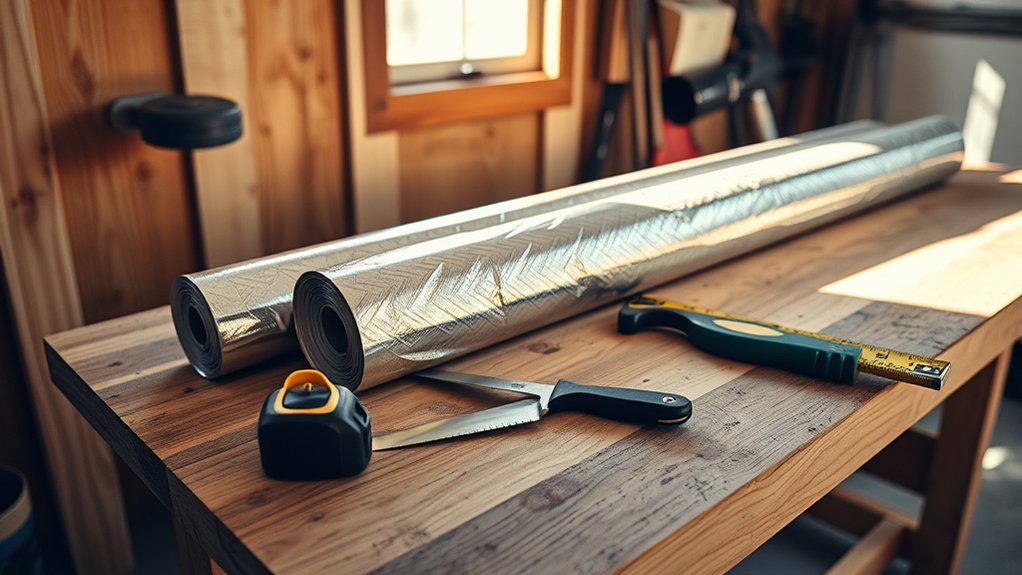
Gather everything before opening the insulation. For most projects, you will need:
- A garage-door insulation kit or rigid foam approved for the application
- Tape measure, marker, and rigid straightedge
- Sharp utility knife with spare blades
- Clean cloth and a mild cleaner that is safe for the door finish
- Manufacturer-supplied clips, retainers, or approved foam-safe tape or adhesive
- Gloves, eye protection, long sleeves, long pants, and closed-toe shoes
- A stable step stool if needed; never stand on the door, tracks, or opener rail
- Replacement bottom seal or side-and-top weather seal if the existing material is cracked or no longer contacts the door
Fiberglass can irritate the skin, eyes, and respiratory tract. Follow the product label and use the protective clothing described in OSHA’s insulation and air-sealing safety guidance. Work in a ventilated area and clean up fibers with the method recommended by the insulation manufacturer.
Pro Tip: Number the door cavities from left to right and label the back of every cut piece. This prevents mix-ups when panel sizes differ by a small amount.
Products Worth Considering

【High Quality】Garage door insulation kit is made of premium aluminum foil material, lightweight and odorless. The surface is aluminized film, the middle layer is polyethylene bubble. Bubble insulation films is not easy to break or deform, can be used for a long time. Tips: Please measure size of garage door to choose right size and quantity.
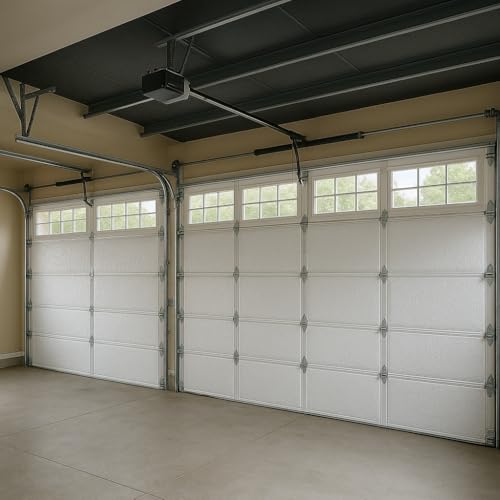
COVERAGE: This kit is designed to insulate one single-car garage door. For a two-car garage, you will need two kits. For a three-car garage, you will need three kits.
Step-by-Step Installation Process
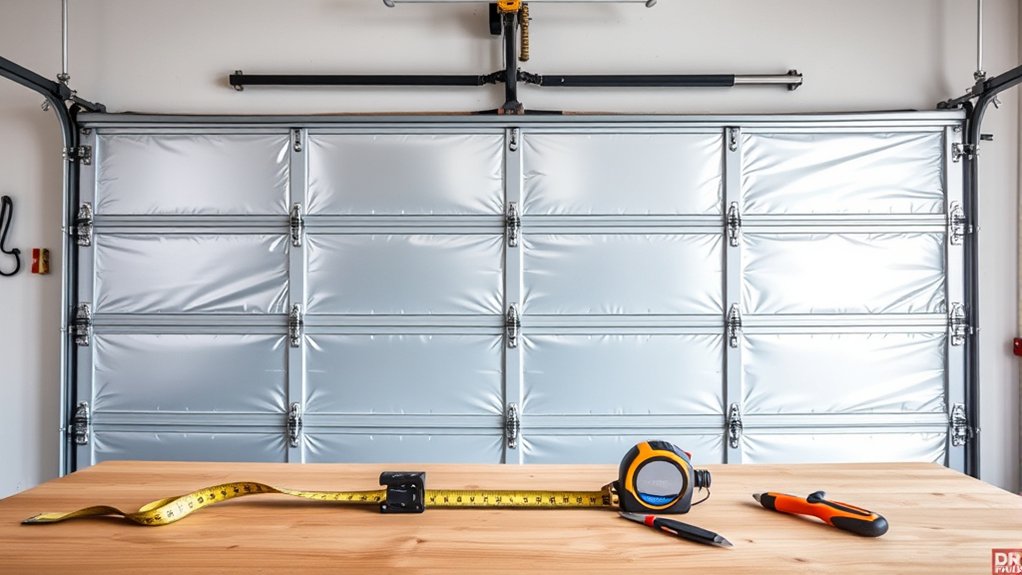
1. Close, Secure, and Clean the Door
Park vehicles outside, close the door fully, and unplug or disable the opener as directed by its manual so no one operates the door while you work. Clean the inside panel surfaces where clips or tape will attach, then let them dry completely.
2. Measure Every Panel Cavity
Measure the clear height, width, and depth inside each recessed section. Do not measure over hinges, stiles, or reinforcement. Record each cavity separately because nominally matching sections can vary.
3. Mark the Insulation
Transfer each measurement to the insulation using a straightedge. Follow the kit instructions for any required oversize or undersize allowance. Fiberglass kits may need extra material for a snug fit, while rigid boards usually need a small clearance so they can slide under the panel lips without bowing.
4. Cut With Controlled, Clean Passes
Place the material on a protected, stable surface. Score rigid foam in several light passes with a sharp utility knife, then snap or finish the cut as directed. Cut fiberglass against a firm board with the facing positioned as the manufacturer instructs.
Avoid power saws unless the insulation manufacturer specifically permits them and you can control dust and debris. A utility knife usually gives enough control for garage-door panels.
5. Install Retainers or Approved Attachment Points
For a kit, mark and install the adhesive bases and retainer clips exactly as shown in the kit instructions. Press adhesive parts onto clean, dry metal for the required time. Do not substitute screws, drill holes, or attach anything to cables, tracks, hinges, or bottom brackets.
6. Fit and Secure Each Piece
Place the insulation inside the panel frame without crushing it or forcing it against moving hardware. Cut precise reliefs only where the product instructions allow. Secure each piece with the supplied caps, retainers, or approved method, then check that no edge can fall into a hinge or track.
7. Check Clearances One Section at a Time
Before moving to the next section, confirm that hinges can fold, rollers can travel, locks can move, and the opener reinforcement remains uncovered. Keep insulation away from panel joints where fingers can be pinched.
8. Repeat, Then Remove All Debris
Install the remaining pieces in the same order. Remove scraps, loose fibers, backing paper, blades, and tools from the floor and tracks before operating the door.
Seal the Door Without Blocking Movement
Insulation slows heat flow through the panels, while weather seals reduce air leakage around the edges. Inspect the bottom seal and the flexible stop molding along the top and sides. Replace seals that are cracked, flattened, missing, or no longer touch the closed door.
Use exterior-grade caulk or a compatible low-expansion foam only at stationary gaps between the fixed jamb or framing and the wall. Do not inject foam into door sections, panel joints, tracks, roller areas, or the space where the door travels. Expanding foam can spread beyond the target area; the manufacturer’s guidance for one-component foam sealant advises preparing the surface, wearing gloves and eye protection, and partially filling gaps rather than packing them full.
Close the door and look for daylight along the perimeter, but do not force side or top seals so tightly against the door that they create drag. A bottom seal should contact the floor across the full width without preventing the door from closing normally.
Common Pitfalls and Troubleshooting
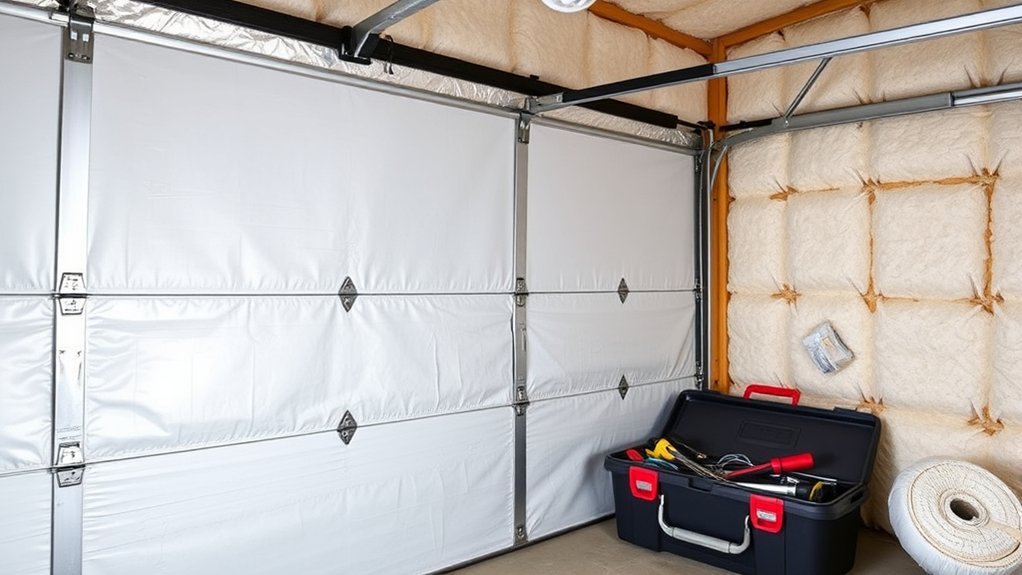
Most problems come from adding too much thickness, using an attachment method the door was not designed for, or ignoring balance and clearance.
| Problem | Likely Cause | What to Do |
|---|---|---|
| Door feels heavy or will not stay partly open | Added weight changed the balance or revealed a spring problem | Stop using the opener and call a trained technician; do not adjust springs |
| Opener strains, slows, or reverses | Unbalanced door, blocked travel, or incorrect limits/force | Remove the obstruction, verify manual balance, and follow the opener manual or call for service |
| Insulation bows or falls out | Incorrect panel size, excess thickness, weak adhesive, or missing retainers | Recut the piece and use the approved retention method |
| Hinge rubs the insulation | Panel is too thick or the relief cut is too small | Stop operating the door and trim or replace the piece without altering the hinge |
| Draft remains around the perimeter | Worn bottom seal, side/top seal, or fixed framing gap | Replace the correct seal and close stationary construction gaps |
| Condensation appears on metal or facing | Warm humid air is reaching a cold surface, or water is entering around the door | Check leaks, ventilation, insulation fit, and indoor moisture sources; correct water entry first |
Final Safety and Operation Test
- Confirm that every tool and scrap is clear of the tracks and opening.
- Move the door manually through its full travel using safe handles. Stop if it binds, drifts rapidly, or a roller leaves the track.
- Reconnect and power the opener according to its manual.
- Open and close the door while watching every insulated panel pass through the curved track area.
- Test photo-eye reversal and any contact-reversal procedure exactly as the opener manufacturer directs.
If the opener must use noticeably more force after insulation, do not simply increase the force setting. First verify that the door is balanced and unobstructed.
Cost and Budget Considerations

The final cost depends on the door width, number and size of panel cavities, insulation type, retention system, replacement seals, and whether professional balance or repair work is needed.
Use these steps to create a realistic budget:
- Measure the door first: Calculate the number of panels or kits from the actual cavity dimensions, not only the nominal door size.
- Include attachment parts: Buy approved clips, retainers, tape, or adhesive if they are not included.
- Inspect the seals: Add the cost of the correct bottom seal and side/top stop molding when existing seals are worn.
- Plan for waste: Allow extra material for cutting mistakes and unusual panel shapes.
- Allow for professional service: A door that is damaged or out of balance needs repair before or after the insulation project.
A pre-sized kit can save layout time and includes a tested retention method. Rigid foam may cost less for some doors, but it requires careful material selection, cutting, and attachment. Do not select a product only because its advertised R-value is higher; fit, weight, fire characteristics, and door compatibility are equally important.
Benefits and Limits of Insulated Garage Doors
Garage-door insulation can slow heat transfer through a thin metal door, reduce some panel vibration, brighten the inside surface when it has a white facing, and make the garage feel less exposed to outdoor temperature swings.
The result varies. A frequently opened door still exchanges a large amount of air, and worn seals can allow drafts around well-insulated panels. The benefit may also be limited when the garage walls, ceiling, attic access, windows, or shared surfaces have little insulation or air sealing.
| Feature | Potential Benefit | Important Limit |
|---|---|---|
| Rated insulation panels | Slower conductive heat flow through panel areas | The rating does not represent every joint and edge in the complete door |
| Fresh perimeter seals | Less air leakage and fewer drafts | Seals must not create excessive drag |
| Added soft or rigid material | Some reduction in panel vibration and outside noise | It will not correct noisy rollers, loose hardware, or an unbalanced door |
| DIY installation | Lower labor cost on a compatible door | Spring, cable, track, and balance work still requires trained service |
Seasonal Maintenance
Inspect the insulation and seals every few months and after unusually hot, cold, or windy weather. Reattach loose retainers, replace damaged facing, remove anything rubbing a hinge, and keep the tracks free of debris. Recheck door balance whenever insulation is changed or removed.
Frequently Asked Questions
How does insulation affect garage door noise?
Insulation can dampen some panel vibration and reduce the hollow sound of a thin steel door. It will not fix noise caused by worn rollers, loose hinges, poor lubrication, a damaged track, or an unbalanced spring system.
Can insulation affect garage door opener performance?
Yes. Insulation adds weight, and an opener is meant to move a properly balanced door rather than overcome incorrect spring balance. Stop using the opener and call a technician if the door becomes heavy, drifts, strains, slows, or reverses after installation.
What are the environmental benefits of garage door insulation?
Insulation can reduce heat transfer through the door and may reduce the heating or cooling needed in a garage that is intentionally conditioned. The real effect depends on climate, door use, air leakage, and the insulation in the rest of the garage, so avoid promising a fixed energy-saving percentage.
Is professional installation necessary?
A compatible clip-in kit can be a reasonable DIY project. Hire a trained garage-door technician when the door is damaged, out of balance, wind-rated, unusually heavy, one-piece, or requires spring, cable, bracket, track, or opener adjustment.
How do weather conditions affect insulation effectiveness?
Large indoor-outdoor temperature differences increase heat flow, while wind can make air leakage around the door more noticeable. Humidity can also lead to condensation on cold metal surfaces. Correct fit, dry materials, and sound perimeter seals improve performance.
Should you insulate the garage door if the garage is not heated?
It can still reduce rapid temperature swings and some drafts, especially in an attached garage or a space used as a workshop. The improvement may be modest if the garage is opened often or the walls, ceiling, windows, and seals remain poorly insulated.
Should you use expanding spray foam inside garage door panels?
No, not unless the original door manufacturer provides a specific approved procedure. Expanding foam can distort thin panels, add uncontrolled weight, glue moving parts, or block drainage and hardware. Reserve compatible sealant for fixed construction gaps outside the door’s travel path.
Can you leave rigid foam exposed on the back of the door?
Requirements depend on the foam product, door construction, building type, and local code. Use a garage-door-specific or properly faced product, follow its installation instructions, and check with the door manufacturer or local building official when the approval is unclear.
Conclusion
Garage door insulation works best as a complete, door-safe upgrade: choose a compatible material, measure each cavity, secure every panel with an approved method, and repair worn perimeter seals.
The final step is just as important as the cutting. Test clearances, manual balance, opener travel, and safety reversal. If added weight changes how the door moves, stop and have a trained garage-door technician inspect the system rather than adjusting springs or force settings yourself.
Sources
- Owens Corning Garage Door Insulation Kit — kit R-value, panel count, dimensions, retention system, and intended door type
- DASMA Technical Data Sheet #163 — garage-door R-value and whole-assembly U-factor
- DASMA Technical Data Sheet #176 — risks of adding aftermarket weight to a garage-door assembly
- DASMA Technical Data Sheet #167 — consumer inspection, manual balance, opener, and reversal checks
- OSHA Weather Insulating and Sealing Hazards — fiberglass irritation and recommended protective clothing
- DuPont GREAT STUFF Outdoor Sealing Instructions — surface preparation, PPE, curing, trimming, and partial gap filling