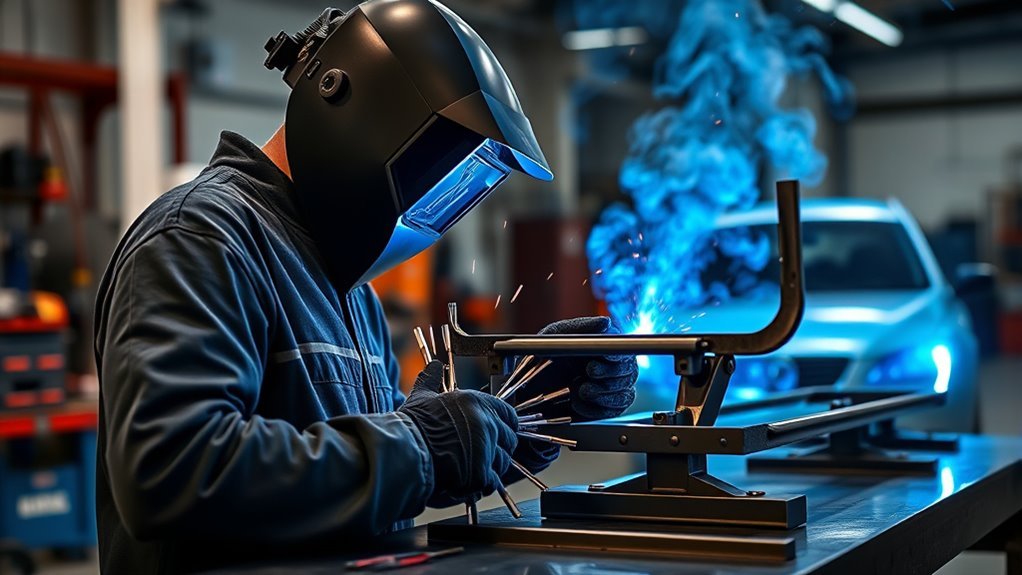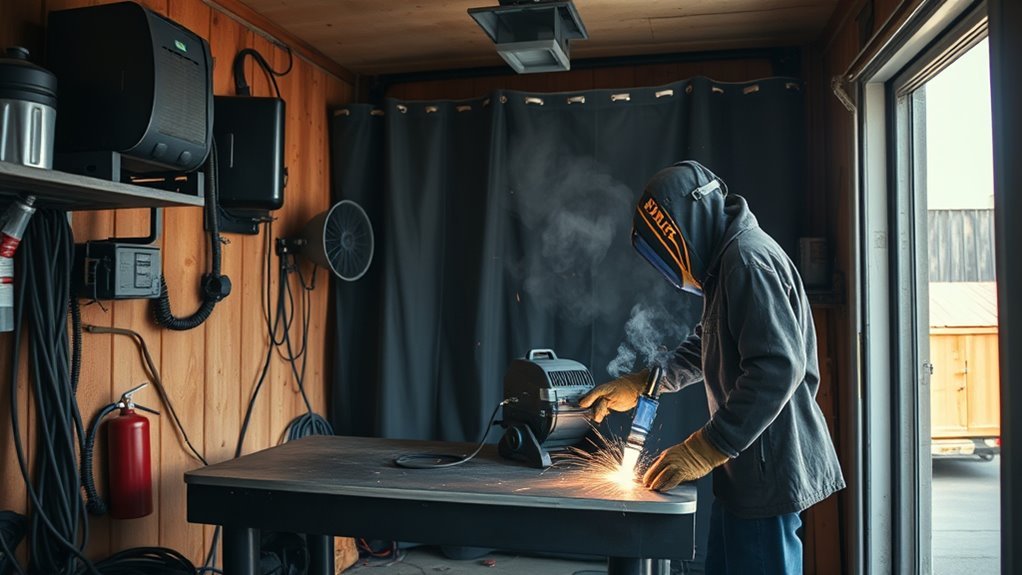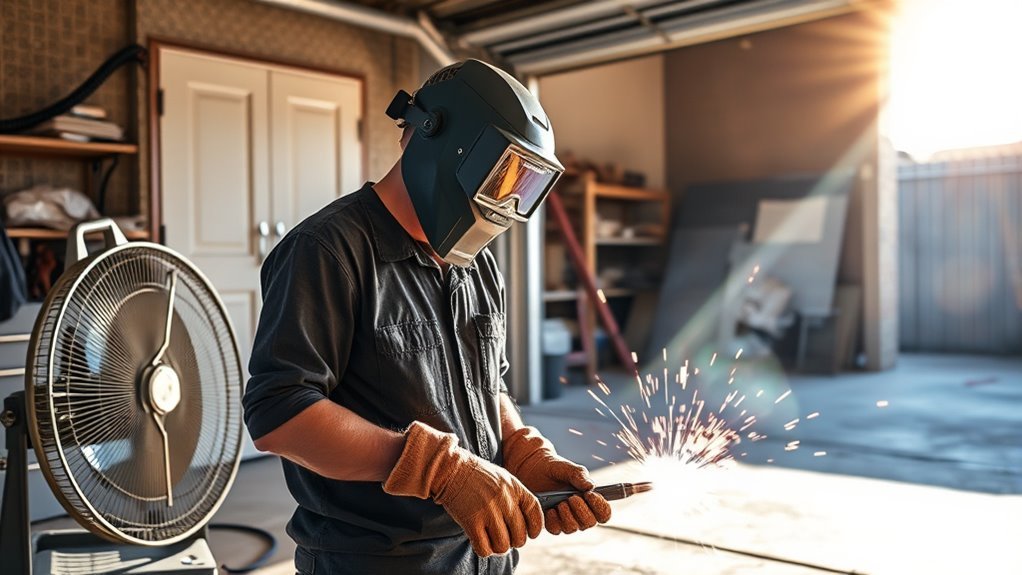
On hot summer days, garage welding gets harder on your body, your machine, and your weld quality. You need steady airflow, clean equipment, dry consumables, safe fan placement, and a plan for heat illness before you strike an arc. Keep your welder shaded, respect the duty cycle, drink water often, and stop immediately if heat starts affecting your focus, balance, or breathing.
Quick Answer
To weld safely in a hot garage, move fumes out with cross-ventilation or local exhaust, keep fans from blowing shielding gas away, clean vents and cables, store rods and wire dry, take cooling breaks, and watch for heat illness. If you feel confused, faint, very weak, or stop sweating normally, stop welding and get help.
Key Takeaways
- Set up airflow that removes fumes from your breathing zone without pushing gas-shielded welds out of coverage.
- Respect your welder’s duty cycle because high ambient heat reduces the margin before thermal shutdown.
- Keep cables, leads, vents, filters, and connectors clean so heat and resistance do not build up.
- Store wire, rods, and flux in sealed dry containers, and follow the package instructions for low-hydrogen electrodes.
- Take heat stress seriously. Dizziness, confusion, nausea, cramps, weakness, or fainting means it is time to stop and cool down.
At a Glance
| Time Required | 10 to 20 minutes to set up airflow, shade, water, and a fire check before welding |
| Difficulty | Easy to moderate, depending on your ventilation and garage layout |
| Tools Needed | Exhaust fan or local fume extractor, thermometer or heat index app, water, dry storage containers, clean filters, fire extinguisher, PPE |
| Cost | Usually $0 to $150 if you already own PPE and only need fans, storage bins, desiccant, or a cooling towel |
Warning: Welding in a hot garage is not just uncomfortable. Heat can slow your reaction time, fog your eye protection, increase fatigue, and make you more likely to skip PPE. Stop work if you feel dizzy, confused, nauseous, weak, faint, or unusually hot.
Why Summer Heat Hurts Garage Welding
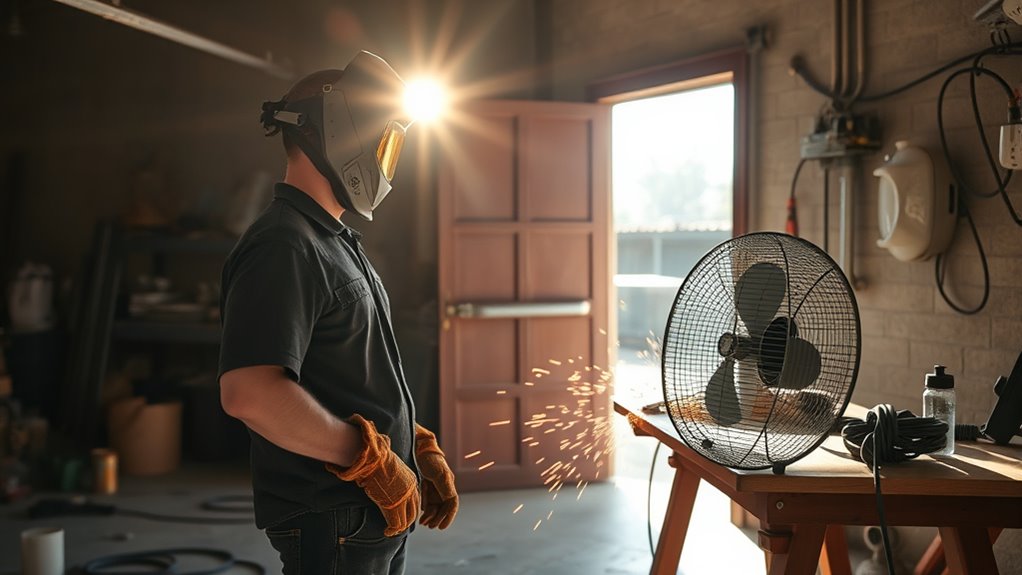
Summer heat can hit garage welding hard because it pushes both the machine and the welding process beyond normal comfort zones. When your welding equipment runs hot, internal parts work under more stress, cooling fans run longer, and thermal shutdowns become more likely.
Heat can also affect metal expansion, puddle control, shielding gas coverage, and wire feeding. That means your weld quality can drop even if your technique stays steady.
Humidity adds another problem. Moisture can attack bare metal, wire, electrodes, connectors, and unprotected storage areas. Damp consumables can increase porosity and make arc starts less consistent.
In an open garage, dust and debris can clog welder vents, filters, and small cooling passages. Once airflow through the machine drops, the machine has to fight heat from both the weld and the room.
Long hot sessions also speed wear on plastic housings, cables, insulation, gloves, and torch parts, especially when gear sits in direct sun.
You need to watch for overheating, erratic arc behavior, inconsistent penetration, and your own body warning signs. Staying alert helps you protect your gear, your work, and your freedom to build safely. For a broader safety setup, review proper ventilation in the workspace before long hot-work sessions.
Summer Garage Welding Checklist
Before you weld in summer heat, run through a short setup check. It only takes a few minutes, but it helps you avoid heat stress, porosity, tripping hazards, and machine shutdowns.
- Open the garage door and at least one opposite window or door so air can move through the space.
- Place exhaust or fume extraction so it pulls fumes away from your breathing zone.
- Keep fans from blowing directly across a MIG or TIG arc because that can disturb shielding gas.
- Move cardboard, rags, sawdust, solvents, gasoline, and other combustibles away from the welding area.
- Check your fire extinguisher, welding blanket, and escape path.
- Put water or electrolyte drink nearby, but away from sparks and electrical leads.
- Inspect cables, ground clamp, gun, torch, vents, and filters before you begin.
- Plan short weld blocks with cooling breaks for both you and the machine.
Pro Tip: Set one fan to move fresh air into the garage and another exhaust point to pull hot air and fumes out. Keep the airflow path beside or behind the weld plume, not straight across the arc.
Set Up Your Garage for Better Airflow
To keep heat and fumes from building up, you need to move air through the garage, not just around it. Fresh air should enter from one side, and warm air and fumes should leave from another side.
Put exhaust fans or a local fume extractor where they pull fumes away from you. Open windows and doors on opposite sides to create strong cross-ventilation. That airflow gives cooler air a path through the space and helps you work when temperatures are lower.
Fan direction matters. Do not point a fan straight at the arc on gas-shielded welding. Too much side draft can push shielding gas away and cause porosity. Instead, pull fumes from behind or beside the weld area while keeping the arc covered.
If the heat still feels oppressive, run a portable air conditioner, evaporative cooler, or shop fan before welding starts. Avoid using a swamp cooler if it raises humidity enough to dampen consumables, tools, or bare steel.
Keep the floor clear of scrap, cords, and tools so air can circulate freely around your work area. You can also block direct sunlight with reflective film, shades, welding curtains, or a canopy. If you cut or grind before welding, use proper PPE and safe tool handling, including the kind of spark awareness discussed in this guide on how to use proper safety gear.
For safety, your setup should not trap smoke, concentrate fumes, or create trip hazards. OSHA welding guidance requires ventilation to control toxic fumes and gases, and CCOHS recommends local exhaust positioned close to the plume source when needed. A freer, safer garage lets you weld with more control and less strain, even in brutal summer conditions.
Keep Your Welder From Overheating
Watch your duty cycle closely on hot days so you do not push the welder past its thermal limit and trigger shutdowns. Keep airflow moving around the machine by cleaning vents and filters, and make sure nothing blocks the cooling path. Shade the welder or move it to a cooler area to cut heat buildup and protect its internal components. Also confirm that your circuit breaker ratings, extension cords, and input power match the equipment manual.
Products Worth Considering


Watch Duty Cycles
When temperatures climb, you need to keep a close eye on your welder’s duty cycle because extended run time can quickly push the machine past its cooling limit. If you ignore the rating, you can trigger shutdowns and stress internal components.
Watch duty cycles on every pass, and respect the percentage listed for your machine. A 60% rating usually means 6 minutes of welding in a 10-minute window at the rated output, followed by cooling time. If you need more arc time, lower amperage when the job allows, or break the job into shorter weld blocks.
Take planned breaks before the welder gets hot enough to quit. Check whether your model is built for continuous use or needs frequent rest. That discipline helps you protect equipment and weld with greater control in summer heat.
Improve Airflow
Improve airflow around your welder by setting it up in a well-ventilated spot, ideally near a door or window that supports cross-ventilation. You reduce overheating when heat can escape instead of pooling around the machine.
Use these steps:
- Place a portable exhaust fan or fume extractor to move hot air and fumes away from the welder and your breathing zone.
- Clean or replace machine filters regularly so restricted passages do not trap heat.
- Keep power cables loose, not tightly coiled, and work during cooler parts of the day.
Monitor ambient temperature before you strike an arc. If the garage feels oppressive, pause and reset your setup.
This practical approach helps protect the machine, reduce fatigue, and keep your welding operation safer and more consistent.
Shade the Welder
Set your welder in a shaded area, or use a portable canopy, to block direct sunlight and reduce heat buildup during summer welding. When you shade the welder, you cut thermal stress and give the machine a better chance at staying cool.
Add reflective tarps, welding screens, or shades around the work zone to bounce sunlight away from the cabinet and cables. Keep ventilation openings clear, and clean filters often because dust can trap heat and raise failure risk.
When the welder is not running, store it out of direct sun. Use a cover only after the machine has cooled and only if the cover does not trap heat or moisture. Watch the temperature indicator during each session, and if the unit starts running hot, stop work and let it cool.
Clean Cables, Leads, and Filters
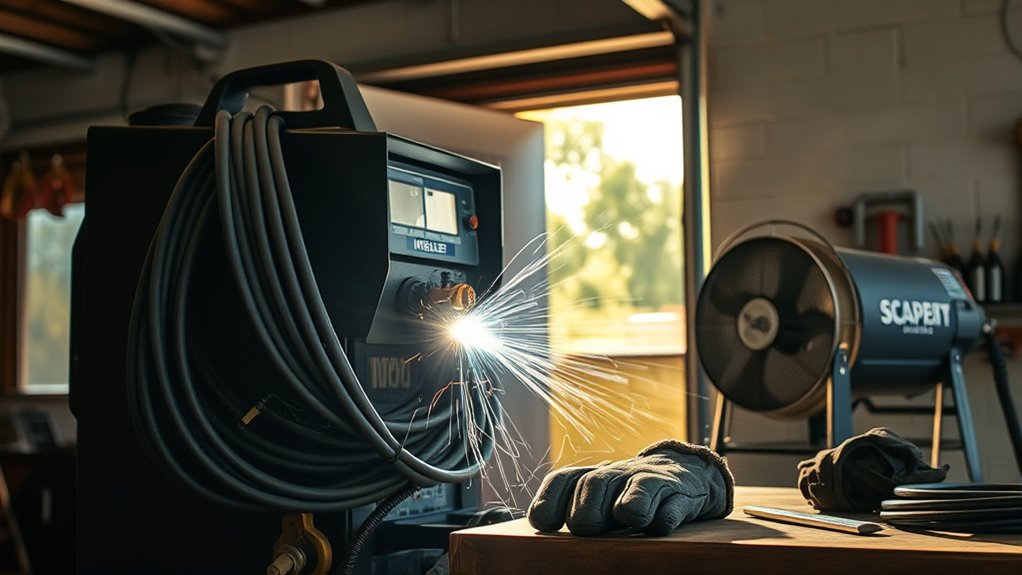
Regularly inspect and clean your cables, leads, and filters so summer heat does not turn minor buildup into overheating, poor conductivity, or cooling problems.
When you clean cables, you cut resistance, protect insulation, and keep your machine working without unnecessary strain. Wipe off dust, grinding grit, spatter, and grime, then check for fraying, discoloration, or brittle spots that signal wear.
Keep connections tight and free of dirt or corrosion so current flows cleanly and failures stay less likely.
- Clean leads, connectors, and the ground clamp after dusty or heavy sessions.
- Replace clogged filters often to preserve airflow and cooling efficiency.
- Store cables in a dry area so humidity does not drive corrosion.
If you spot damage, fix it before you strike an arc. Summer conditions punish neglected gear, but disciplined maintenance keeps your setup safe, efficient, and ready for work. Good proper gas flow is also crucial for maintaining weld quality, especially when fans and open doors change airflow around the weld.
Store Welding Consumables the Right Way
Store your welding rods, wire, and flux in a dry, stable space so they do not absorb moisture or lose performance. Summer humidity can be just as harmful as heat, especially if consumables move between air conditioning and a damp garage.
Keep consumables in sealed containers with desiccant packs, and store them off the floor and out of direct sunlight. Check for rust, damaged packaging, wet flux, or brittle coatings before use.
Low-hydrogen stick electrodes may need oven storage or reconditioning, but the correct temperature depends on the electrode and manufacturer instructions. Use the package directions instead of guessing. This guide on what welding rods need to be kept in an oven can help you understand when rod ovens matter.
Dry, Sealed Storage
When summer heat and humidity climb, keep welding rods, wire, and flux in moisture-resistant containers so they stay dry and perform as intended.
Use dry, sealed storage for your welding consumables, and treat every bin like critical safety gear. Tight lids block dust, debris, and shop grime, which helps protect weld quality and keeps contaminants out of the weld area.
- Pick sealed rod tubes, wire storage bins, or cabinets that stay dry.
- Add moisture-absorbing packets and replace them when saturated.
- Inspect consumables often, and replace anything warped, rusted, wet, or damaged.
You are building consistency through preparation, not chance. When you store materials right, you reduce defects, avoid wasted time, and keep your garage welding setup dependable.
Moisture Control Methods
Moisture control starts with keeping your welding consumables away from damp corners, sweating concrete floors, open windows during storms, and direct sunlight.
Store rods, wires, flux, and TIG filler rods in sealed containers with moisture-absorbing packets. Label containers with purchase or opening dates so you use older stock first.
If you bring cold consumables into a hot humid garage, let the sealed container warm up before opening it. That reduces condensation on the metal.
Check desiccants often and replace them when they are saturated. Tired packets cannot protect your gear.
This routine helps preserve arc stability, reduce porosity, and weld with confidence.
Note: Do not spray welding rods or wire with oil, WD-40, or other shop chemicals. Store them dry instead. Oils and residues can contaminate the weld area and may add fume or fire hazards.
Adjust Your Welding Settings on Hot Days
Hot weather can throw off your welding process, so dial in your machine settings before you strike an arc. When you are welding in a garage that is heating up, start by checking amperage, wire speed, travel speed, and gas coverage. If the puddle feels too fluid or the plate starts to warp, reduce heat input in small steps.
Dial in your settings before welding in the heat, then test a short bead before committing to the full joint.
- Reduce amperage or voltage a little at a time, then test a short bead.
- Use stitch welding or shorter passes when thin metal starts to warp.
- Match your duty cycle to the room temperature and allow extra cooling time.
- Check gas flow and ventilation so shielding stays consistent and porosity stays low.
Proper shielding gas flow is crucial to maintaining a stable arc and preventing defects in your welds. If a fan changes your bead appearance, blocks gas coverage, or creates porosity, move the fan and test again.
Use a lighter, more flexible setup when you can. It cuts fatigue and gives you better control without fighting stiff leads or extra body heat.
Keep your settings disciplined, and you will weld cleaner and safer in summer heat. For stick welding, a stick welding amperage chart can help you stay close to the right range before fine-tuning on scrap.
Prevent Garage Fires During Summer Welding
Hot weather can make a messy garage more dangerous because sparks can land in dry dust, cardboard, rags, sawdust, leaves, or solvent residue. Before welding, clear the area around the work and shield anything you cannot move.
- Move combustibles away from the welding area whenever possible.
- Cover nearby items with welding blankets or noncombustible shields.
- Keep fuel cans, aerosol cans, paint, solvents, and oily rags out of the garage welding zone.
- Keep cylinders upright, secured, and away from heat sources.
- Keep a rated fire extinguisher nearby and know how to use it.
- Stay in the area after welding long enough to catch smoldering material.
Do not weld on closed containers, drums, tanks, or unknown metal parts that may contain flammable residue. Heat can turn hidden residue into toxic vapor or an explosion risk.
Catch Heat Stress Before It Gets Worse
As the temperature climbs, you need to watch for heat stress before it shuts you down. Welding PPE protects you from burns and arc radiation, but it also traps body heat. That makes hydration, cooling breaks, and ventilation part of the job, not optional extras.
Drink water regularly, even if you do not feel thirsty. For longer hot sessions, use electrolyte drinks along with water. Take breaks in shade, air conditioning, or a cooler room before fatigue cuts your focus.
If you feel dizzy, confused, weak, faint, nauseous, or unusually hot, stop work immediately. Do not push through those signs. Move to a shaded or ventilated area, remove extra outer layers if safe, cool your body, and get help if symptoms do not improve quickly.
Plan garage welding for early morning or late afternoon when the air is cooler and your body is not fighting peak heat. Wear breathable, flame-resistant clothing that still protects your skin from sparks and arc exposure. Proper proper ventilation also helps manage heat and fume exposure effectively.
| Warning Sign | What to Do |
| Heavy sweating, thirst, fatigue, cramps, headache | Stop welding, move to a cooler area, drink water or electrolytes, and rest until fully recovered. |
| Dizziness, nausea, vomiting, faintness, fast heartbeat | Stop immediately, cool down, do not weld alone, and seek medical help if symptoms continue. |
| Confusion, slurred speech, seizure, unconsciousness, or very hot body temperature | Call 911, cool the person with ice, cold water, wet towels, and fans, and never leave them alone. |
Choose Cooler MIG Gun Gear
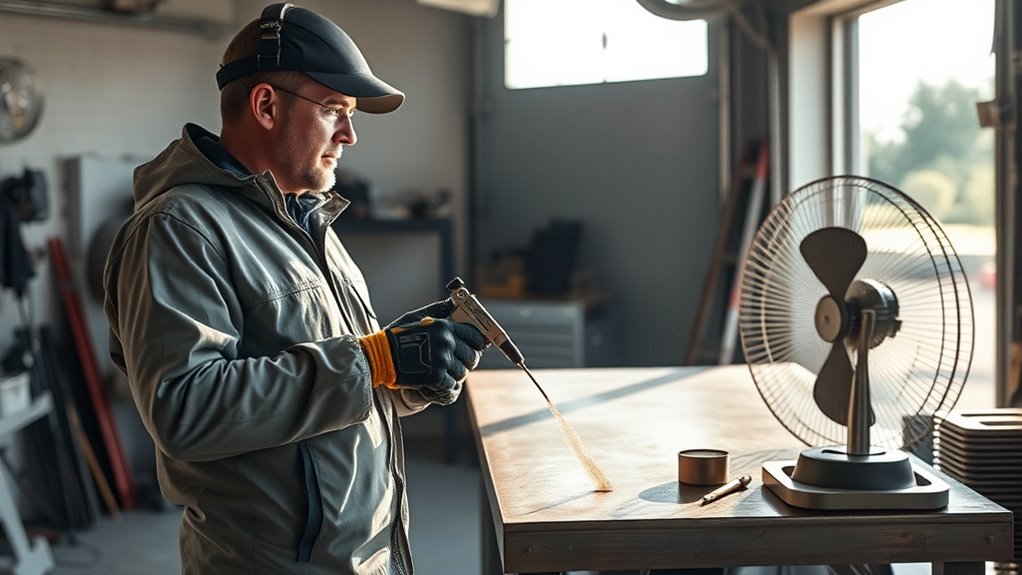
Your MIG gun setup can either add to the heat load or help you manage it, so pick gear that stays comfortable in your hand and reduces fatigue.
- Choose smaller, ventilated MIG guns with ergonomic grips when they are properly rated for the job. They can reduce hand strain and help you stay steadier during long passes in a hot garage.
- Use lightweight, flexible power cables. They improve maneuverability, lower exertion, and help you hold position without fighting stiff leads or extra body heat.
- Match the gun and machine duty cycle to the job. Oversized gear can be heavy and tiring, while undersized gear can overheat.
If you are pushing amperage for long sessions, water-cooled MIG guns can reduce handle heat and ease fatigue, but they add cost and setup complexity. For many garage welders, better timing, cleaner cables, and shorter weld blocks are enough.
Stay alert to the heat your equipment creates, and choose tools that let you weld with more control and less strain.
Make Summer Welding Safer and Easier
To make summer welding safer and easier, reduce heat at the source by improving garage ventilation, adding a portable fan or AC if you can, and scheduling welds for the coolest part of the day. You will keep airflow moving, protect machine performance, and make it easier to stay focused while you work.
Plan welding tasks for early morning or late afternoon, when the shop is not punishing you with peak heat. Take regular breaks in shade or a cooler room, drink water, and reset before fatigue cuts your focus.
Schedule welds for cooler hours, take breaks, and hydrate so heat never dulls your focus.
Use moisture-resistant containers and dry storage for wire, rods, and flux so heat and humidity do not ruin your consumables. If you are running long sessions, check your gear and your body for signs of overheating. Proper amperage settings can also help limit excess heat input and improve your overall welding performance.
Smart cooling steps do not weaken your craft. They help you weld with better control, safer habits, and less strain.
Frequently Asked Questions
How do you stay cool as a welder in summer?
Stay cool by welding during cooler hours, using ventilation or local fume extraction, drinking water often, taking planned breaks, and wearing breathable flame-resistant gear. Cooling towels, shade, fans, and air conditioning can help, but they should never replace proper PPE or fume control.
Can you weld in a hot garage with a fan?
Yes, but place the fan carefully. Use airflow to move heat and fumes away from your breathing zone, not straight across the arc. On MIG or TIG welds, a strong side draft can disturb shielding gas and cause porosity.
Why do welders drink milk?
Some welders drink milk because of an old shop belief that it helps after fume exposure. Do not rely on milk as a safety treatment. For summer welding, water, electrolytes, rest, shade, ventilation, correct PPE, and medical help when needed are the real controls.
What is the golden rule in welding?
The golden rule in welding is to control hazards before you weld. Wear proper PPE, keep fumes out of your breathing zone, remove fire hazards, inspect equipment, secure cylinders, and stop when heat, fatigue, or poor visibility makes the job unsafe.
Should welders coat welding rods with WD-40?
No. Do not coat welding rods with WD-40, oil, or other shop sprays. Store rods dry in sealed containers, use desiccant when needed, and follow the electrode manufacturer’s storage instructions. Oil and residue can contaminate the weld area and may add fume or fire hazards.
When is it too hot to weld in a garage?
It is too hot when you cannot control fumes, keep PPE on, maintain focus, or cool down during breaks. Stop if you feel dizzy, confused, nauseous, faint, weak, or unusually hot. If serious symptoms appear, cool the person and call emergency help.
Conclusion
Hot summer garage welding can push your machine, consumables, and body past safe limits. Keep airflow moving, monitor your welder’s duty cycle, store consumables dry, and clean cables, leads, and filters before heat makes small problems worse.
If you start sweating heavily, feeling dizzy, getting confused, or making simple mistakes, stop and cool down. Do not treat heat illness as normal shop discomfort. By adjusting your setup, watching your body, and giving your welder time to cool, you can weld safer, cleaner, and with fewer shutdowns all summer.
Sources
- CDC/NIOSH Heat Stress and Workers — supports heat-stress risk factors, PPE/clothing risk, and worker heat illness overview.
- OSHA Water. Rest. Shade. — supports hydration, rest breaks, cool recovery areas, and electrolytes for longer hot work.
- OSHA Heat-Related Illnesses and First Aid — supports warning signs, cooling steps, and when to call 911.
- OSHA 29 CFR 1910.252 Welding, Cutting, and Brazing — supports ventilation, PPE, fire prevention, and hot-work precautions.
- CCOHS Welding Fumes and Gases — supports fume composition, coatings/residue hazards, ventilation, and local exhaust guidance.