You might not know that plasma arc welding (PAW) relies on a unique pilot arc to ionize gas and create a focused plasma stream for welding. It’s essential to align the tungsten electrode precisely and regulate gas flow rates between 2 to 40 liters per minute. This setup guarantees stability and minimizes defects. Curious about how shielding gas, like argon, plays a role in enhancing weld quality and integrity? There’s more to uncover.
Understanding the Plasma Arc Welding Process

To truly grasp the plasma arc welding process, start by understanding its core components. At its heart, plasma arc welding involves a pilot arc struck between a tungsten electrode and your workpiece. This action ionizes the gas, generating plasma characterized by its high temperature and velocity. These plasma characteristics allow for deep penetration and precision, vital for achieving a stable arc.
The plasma, directed through a narrow nozzle, guarantees arc stability, maintaining consistent energy delivery and minimizing weld defects. Shielding gas envelops the arc, preventing atmospheric contamination and oxidation, essential for high-quality welds.
Depending on your project needs, you can operate in soft plasma mode for non-keyhole welding or keyhole mode for deep, complete penetration. This adaptability enables you to tackle various material thicknesses and welding applications. Adding filler metal is optional, enhancing flexibility similar to TIG welding techniques.
Key Components and Equipment Used in Plasma Arc Welding
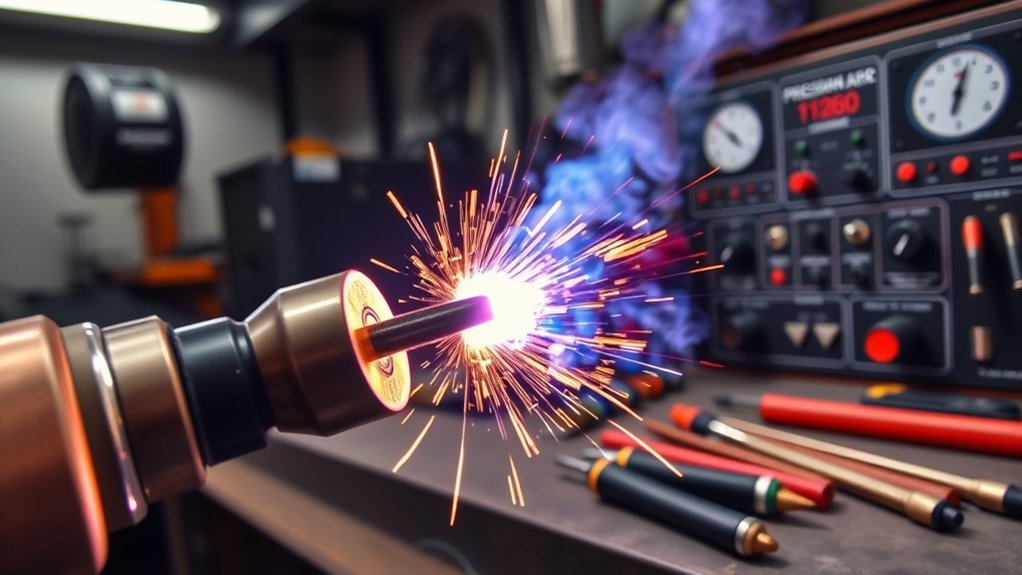
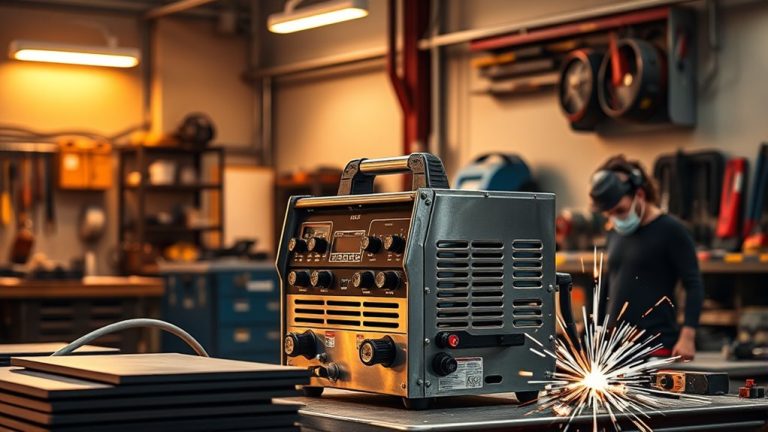
At the heart of plasma arc welding are its key components and equipment, each playing an essential role in the process’s success. The plasma torch, the centerpiece, precisely controls the plasma arc through a fine-bore nozzle. Integral to this setup is the tungsten electrode, usually thoriated, enhancing conductivity and performance. The power source, typically a direct current system, operates with an open circuit voltage of 70 volts or more, supporting currents from 50 to 350 amps.
Efficiency and safety are paramount, so the plasma torch often features a water-cooling system to prevent overheating. You’ll also manage gas flow rates carefully, ranging from 2 to 40 liters per minute, to maintain arc stability. Here’s a quick overview to help you visualize these components:
| Component | Function | Notes |
|---|---|---|
| Plasma Torch | Controls and constricts arc | Water-cooled |
| Tungsten Electrode | Conducts electricity for the arc | Often thoriated for performance |
| Power Source | Provides necessary voltage/current | Direct current, 70+ volts |
The Role of Shielding Gas in Plasma Arc Welding
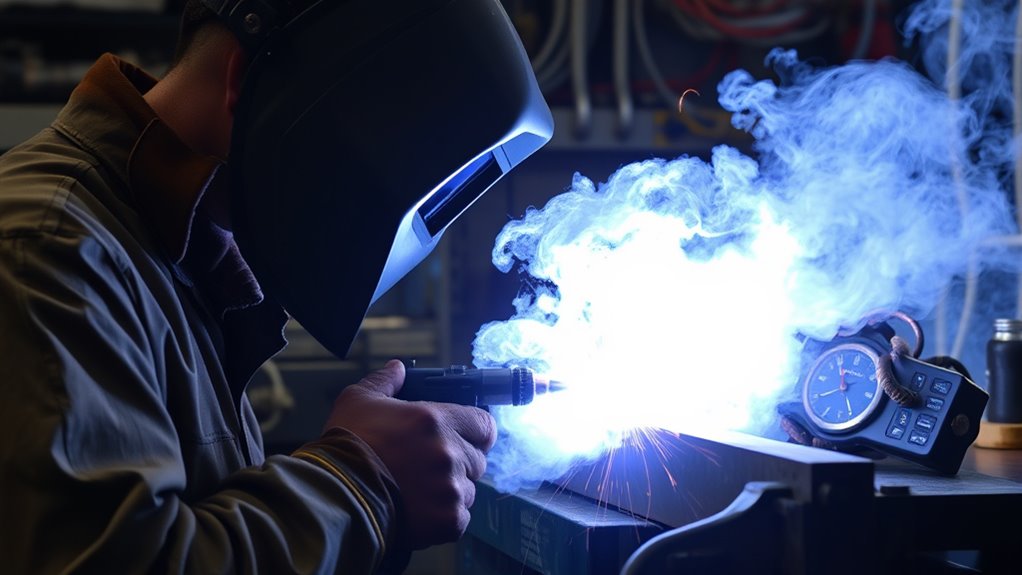
When you explore the intricacies of plasma arc welding, the role of shielding gas emerges as a vital factor in guaranteeing weld integrity.
Shielding gas types, such as argon or helium, protect the molten weld pool from atmospheric contaminants, which is essential for achieving a clean, strong weld. These gases minimize oxidation and contamination, particularly important when working with reactive metals like aluminum and stainless steel.
The gas flow rate is another significant parameter, typically ranging from 2 to 40 liters per minute. It needs precise adjustment based on welding parameters and the material being welded.
Gas flow rates, crucial for weld quality, require precise adjustment between 2 and 40 liters per minute.
A well-regulated flow rate helps reduce heat-affected zones and prevents defects like porosity and inclusions. By effectively managing your shielding gas, you maintain the weld’s integrity and secure a superior finish.
Attention to these details is key to mastering plasma arc welding and achieving ideal results.
Optimizing Setup for Effective Plasma Arc Welding
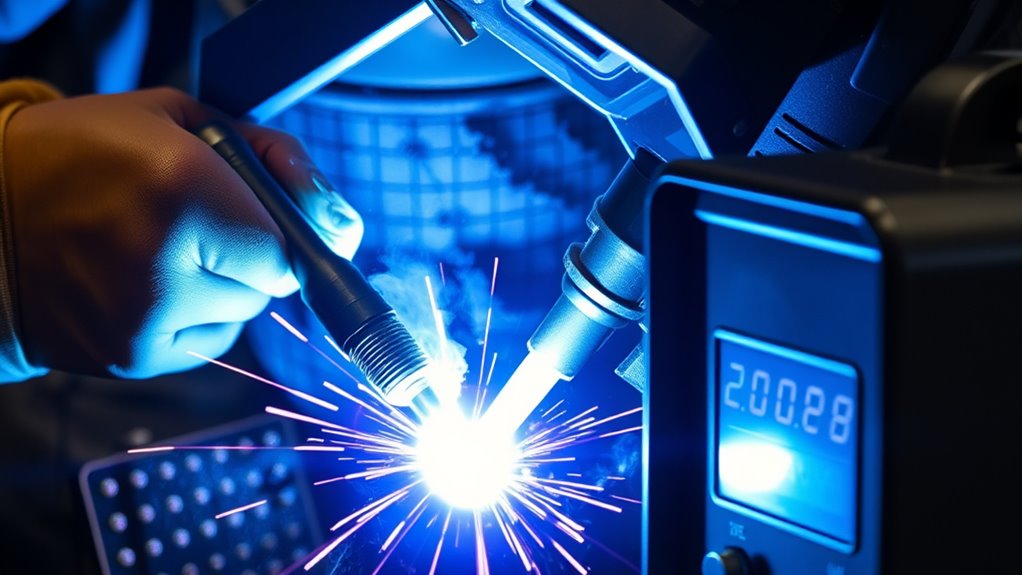
While understanding shielding gas is essential, your journey to mastering plasma arc welding also demands a meticulous setup.
Precision starts with electrode alignment. Make sure the tungsten electrode is perfectly centered within the torch to maintain a stable arc and deliver peak heat to the workpiece.
Next, focus on dual-gas configurations. The plasma gas initiates the arc, while the shielding gas prevents contamination. Balance is key for effective gas flow.
Consider these critical setup elements:
- Electrode Alignment: Adjust the tungsten electrode meticulously to stabilize the arc.
- Gas Flow: Monitor and adjust between 2 to 40 liters per minute for effective separation and defect prevention.
- Nozzle Design: Choose nozzle diameter wisely; narrower for penetration, wider for cooling.
- Cooling: Use water-cooled torches to avoid overheating, preserving nozzle integrity during intense operations.
Applications and Benefits of Plasma Arc Welding
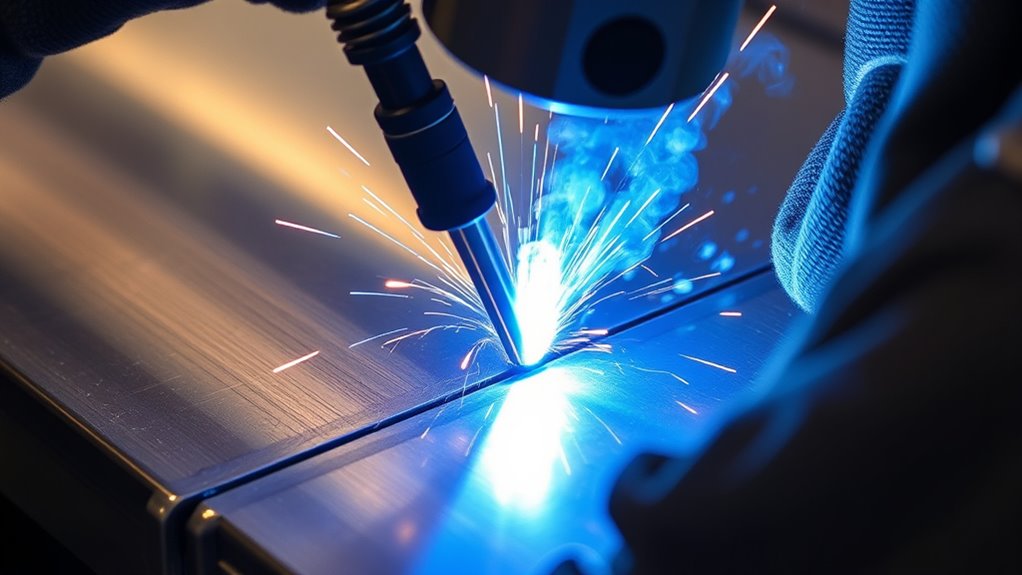
Although the intricacies of plasma arc welding (PAW) might seem intimidating at first, its applications and benefits make mastering this technique worthwhile.
In aerospace applications, PAW’s ability to join thin, challenging metals like titanium guarantees structural integrity and precision. The process’s deep penetration and narrow welds minimize the heat-affected zone, reducing distortion in critical components. This precision is equally important in medical manufacturing, where stainless steel and titanium are staples.
PAW’s fast travel speeds and concentrated heat input make it ideal for high-volume production, boosting efficiency and consistency. The dual gas strategy, with plasma and shielding gases, guarantees high-quality, contamination-free welds, essential in sensitive environments.
Additionally, PAW’s adaptability for both manual and automated setups means you can seamlessly integrate it into diverse production lines. This versatility makes PAW not only a practical choice for current requirements but also a forward-thinking investment in manufacturing innovation.
Frequently Asked Questions
What Safety Precautions Are Essential for Plasma Arc Welding?
Make certain you wear personal protective equipment like gloves, helmet, and goggles. Regularly check equipment maintenance to prevent malfunctions. Analyze your workspace for hazards, making sure ventilation and fire safety measures are in place to mitigate risks effectively.
How Does Plasma Arc Welding Differ From TIG Welding?
Though you might think they’re similar, plasma arc offers a constricted arc for precision and higher temperatures compared to TIG welding. You’ll find it more efficient on thicker materials, enhancing penetration and reducing welding time.
What Materials Can Be Welded Using Plasma Arc Welding?
You can weld various materials using plasma arc welding, including aluminum alloys and stainless steel. Its precise control over heat and penetration makes it ideal for handling these metals, ensuring strong, clean welds with minimal distortion.
Is Special Training Required to Operate Plasma Arc Welding Equipment?
You absolutely need special training for plasma arc welding—it’s not rocket science, but close! Certification requirements guarantee you’ve mastered operator skills, essential for handling the equipment safely and efficiently. Proper training sharpens your analytical thinking and technical expertise.
How Do Environmental Factors Affect Plasma Arc Welding Quality?
Environmental factors greatly influence plasma arc welding. You must guarantee precise temperature control and monitor gas composition closely. Variations can lead to defects, affecting weld quality and integrity. Maintain stable conditions for ideal results and consistent performance.
Conclusion
In mastering plasma arc welding, you’ve opened up the art of precision and control, crafting impeccable welds with finesse. By understanding the intricate dance between the electrode, gas flow, and shielding, you guarantee robust and defect-free joints. Remember, it’s not just about setting up equipment—it’s about orchestrating a symphony of elements that harmonize to create excellence. With these skills, you’re not just welding metal; you’re shaping the future of craftsmanship.