Automotive seam sealer protects repaired body seams from water, dust, air, and road contamination, but it works only when the weld, substrate, primer, and sealer are compatible. Before opening a cartridge, check the vehicle maker’s body repair instructions and the product’s technical and safety data sheets. Those documents determine whether the sealer goes over primer or bare metal, how it is applied, and when it can be painted.
Quick Answer
Finish all welding first, then follow the vehicle maker’s repair procedure and the seam sealer’s technical data sheet. Dress and clean the joint, apply the required primer, work a tight coat into the seam, add the appearance bead, tool it, remove tape while wet, and follow the stated paint and cure windows.
Key Takeaways
- Check the vehicle-specific body repair manual before choosing a direct-to-metal or primer-only seam sealer.
- Complete and inspect every weld before applying sealer; seam sealer cannot repair a weak joint or replace structural adhesive.
- Use only substrates, primers, cleaners, abrasives, and paint systems approved by the OEM and sealer manufacturer.
- Apply a tight coat into the joint before building the visible bead so the sealer does not bridge over voids.
- Treat work time, paint time, recoat window, and full cure as separate product specifications.
- Restore backside corrosion protection and cavity wax wherever the vehicle maker requires it.
How to Properly Apply Seam Sealer for Automotive Welds

At a Glance
| Time Required | About 45–90 minutes of active preparation and application time, plus the product-specific primer, paint, and cure times |
| Difficulty | Intermediate; professional repair is recommended for structural, aluminum, high-strength-steel, or safety-related body repairs |
| Tools Needed | Approved abrasives, clean compressed air, lint-free cloths, cleaner, masking tape, applicator gun, nozzle or static mixer, and tooling spreader or brush |
| Cost | Product-dependent; 1K cartridges may use a standard caulk gun, while 2K products often require a matching applicator and disposable static mixers |
What’s in This Article
- How to Properly Apply Seam Sealer for Automotive Welds
- Why Seam Sealer Matters
- Choosing the Right Seam Sealer
- Before You Begin
- Preparing the Surface
- Cleaning for Adhesion
- Step-by-Step Application
- Application and Tooling Tips
- Essential Tools
- Common Mistakes
- Paint and Cure Times
- Troubleshooting
- Final Quality Check
- Frequently Asked Questions
Estimated active time: Plan on about 45 to 90 minutes for inspection, surface preparation, masking, application, and tooling. Primer flash time, paint time, and full cure are separate and vary widely by product.
Note: The procedure below is a general workflow. The vehicle maker’s body repair manual, the paint-system instructions, and the seam sealer’s technical data sheet take priority whenever their requirements differ.
Why Seam Sealer Matters in Automotive Applications
Automotive seam sealer closes panel joints where water, air, dirt, and road salt could enter. By keeping contamination away from repaired seams, it supports the vehicle’s corrosion-protection system and helps the repair match the original factory appearance.
Seam sealer may be used on areas such as floor pans, trunk floors, door skins, hem flanges, roof seams, wheelhouses, rear body panels, and other locations identified by the vehicle manufacturer. The exact bead width, texture, coverage, and substrate may change from one seam to another.
Seam sealer does not make an incomplete weld safe. It also does not replace structural adhesive, weld-through primer, cavity wax, epoxy primer, undercoating, or any other product required by the repair procedure. Finish the structural repair first, verify the attachment method, and then restore the sealing and corrosion-protection layers in the required order.
A neat bead is not proof of a sound repair. The joint must be structurally complete, corrosion-protected, and fully sealed beneath the visible finish.
Choosing the Right Automotive Seam Sealer
Select the product by repair location, substrate, flexibility, paint system, application method, and OEM approval. Do not assume that all products labeled “automotive seam sealer” are interchangeable.
Products Worth Considering
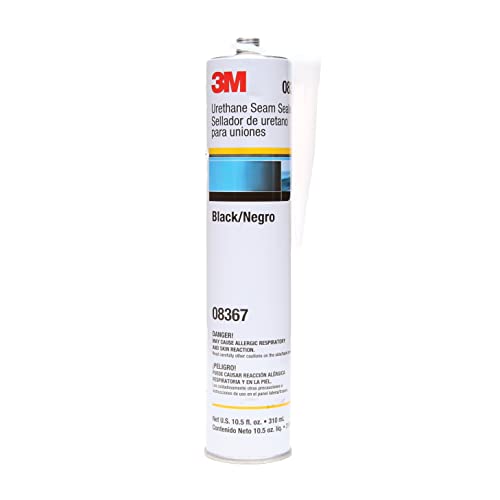
SINGLE COMPONENT FORMULA: Adheres well to bare metal, primed metal and painted surfaces
![[2-Pack] Berkland Polyurethane Seam Sealer, Black - Paintable Auto Body](https://m.media-amazon.com/images/I/4184QW8Um7L._SL500_.jpg)
PROFESSIONAL AUTOMOTIVE SEAM SEALER — BLACK — WON'T SHRINK OR CRACK — Polyurethane formula in black seals body panel seams, weld joints, and gaps with a durable, flexible compound. Black color blends with dark undercarriage surfaces, rocker panels, and wheel wells where visible sealant lines need to disappear.
SINGLE COMPONENT FORMULA: Adheres well to bare metal, primed metal and painted surfaces
One-Component Urethane or MSP Sealers
Many 1K products are supplied in a caulk-style cartridge and remain flexible after curing. They are convenient for interior and exterior joints, but their work, paint, and full-cure times depend on the exact formula, bead thickness, temperature, and humidity. A product described as direct-to-metal may still be unsuitable when the vehicle maker requires primer first.
Two-Component Epoxy Sealers
Two-component products mix resin and hardener through a static nozzle. They often have short work times and predictable chemical curing. For example, the 3M OEM Match Epoxy Seam Sealer technical data sheet lists a six-minute work time, a 15-minute paint time, and a one-hour cure at 70°F for that product. These figures are examples, not universal timing.
Sprayable and Textured Sealers
Some factory seams use a sprayed, rippled, or textured finish. Reproducing that pattern may require a dedicated applicator, air supply, or OEM-style nozzle. Practice on a test panel before applying the final bead to the vehicle.
Butyl Strip Caulk
Non-hardening butyl strip caulk can fill certain gaps, openings, and noise paths without a cartridge gun. However, it is not a direct replacement for every painted body seam. The 3M Strip-Calk technical data sheet states that other seam-sealer options provide better performance for painted seams.
Substrate and Paint Compatibility
Confirm that the sealer is approved for the actual substrate, which may include bare steel, galvanized steel, aluminum, factory E-coat, 2K epoxy primer, 2K urethane primer, or a sanded OEM finish. Also confirm whether the topcoat is solvent-borne or waterborne and whether scuffing is required after the maximum recoat window.
Before You Begin Seam Sealer Application
Obtain the vehicle-specific body repair information before sanding or sealing. It should identify the original seam locations, attachment method, primer requirements, corrosion-protection materials, bead shape, and any areas that must remain open.
OEM instructions can be stricter than the product label. For example, Honda’s corrosion-protection guidance directs technicians to apply seam sealer over cured epoxy primer, 2K urethane primer surfacer or sealer, or factory E-coat—not bare metal. That requirement controls on the covered Honda repair even when a sealer is marketed as direct-to-metal.
Read the seam sealer’s technical data sheet and safety data sheet. Verify:
- Approved substrates and primers
- Interior or exterior use
- Minimum application temperature
- Cartridge conditioning requirements
- Work and tooling time
- Paint compatibility and paint window
- Full-cure time
- Required ventilation and personal protective equipment
- Whether the product is approved for any resistance-welding operation
Warning: Do not MIG, TIG, arc weld, cut, or heat through ordinary seam sealer. Thermal breakdown can create hazardous fumes and contaminate the joint. A limited exception may apply when both the OEM and the product manufacturer specifically approve the sealer between mating flanges for squeeze-type resistance spot welding. Follow their preparation instructions and make the required test welds first.
Use the product in a well-ventilated work area. Select gloves and respiratory protection from the SDS rather than relying on a generic glove or dust mask. OSHA notes that isocyanates used in polyurethane materials can affect the lungs, skin, eyes, nose, and throat. Review the OSHA isocyanates guidance before working with products that list an isocyanate hazard.
Keep cleaners and sealers away from sparks, flames, hot metal, and other ignition sources. Protect wiring, trim, glass, exhaust parts, threaded grounds, fasteners, and mechanical components from overspray or contamination. Do not block factory drain holes or water paths.
What You’ll Need
- Vehicle-specific body repair procedure
- Seam sealer technical data sheet and safety data sheet
- Wire brush or approved abrasive file belt
- Abrasives in the grades specified by the repair process
- Dual-action sander, where appropriate
- Approved nonwoven scuff pad
- Clean, dry, oil-free compressed air
- Approved surface cleaner and degreaser
- Silicone-free wax and grease remover, when specified
- Lint-free cloths or paper towels
- Masking tape and masking material
- Standard, pneumatic, or product-specific applicator gun
- Correct nozzle, static mixer, brush, or spreader
- Automotive seam sealer approved for the repair
- Compatible primer and paint materials
- Chemical-resistant gloves selected from the SDS
- Eye protection, suitable work clothing, and required respiratory protection
Preparing the Surface for Seam Sealer
Complete all welding, adhesive bonding, metal finishing, and corrosion-repair work before applying the final seam sealer. Inspect the joint for missed welds, pinholes, excessive gaps, cracks, sharp projections, loose rust, and damaged surrounding coatings.
- Repair weld defects by the OEM-approved method instead of hiding them beneath sealer.
- Dress only the amount of weld necessary to achieve the required profile. Excess grinding can thin the panel or weaken the joint.
- Use the abrasive sequence specified by the sealer, primer, paint system, and OEM procedure.
- Keep drainage slots, locating holes, attachment points, and threaded grounds clear.
- Remove loose old sealer far enough to reach a sound, clean edge.
- Feather surrounding coatings without exposing more bare metal than necessary.
3M’s general seam-sealer SOP describes dressing welded surfaces with grade 80 abrasive, feathering the scratches with grade 180 as needed, and scuffing with an approved nonwoven hand pad. By comparison, the cited SEM 1K Seam Sealer technical data sheet specifies P180 for its surface preparation. Follow the instructions for the exact product in hand.
Primer or Bare Metal?
Primer or OEM E-coat is usually the safer corrosion-protection base when the repair procedure permits it. Some seam sealers are tested for properly prepared bare steel, galvanized steel, or aluminum, but direct-to-metal approval on the cartridge does not override an OEM primer requirement.
If primer is required, allow it to reach the specified seam-sealer application stage before continuing. Do not trap uncured primer solvent beneath the bead.
Warning: Do not place the cited 3M or SEM seam sealers directly over acid-based self-etching primer unless the product maker expressly approves that combination. Residual acid can weaken adhesion or contribute to cracking and blistering.
Cleaning Techniques for Adhesion

Cleanliness is essential because seam sealer cannot bond reliably through oil, silicone, sanding dust, moisture, rust, or cleaner residue. Clean before sanding when needed to avoid grinding contamination into the surface, then clean again after the final scuffing step.
Surface Preparation Essentials
- Use a dedicated lint-free cloth or towel for the seam area.
- Remove loose abrasive particles with clean, dry, oil-free compressed air.
- Wipe the surface with the cleaner approved by the paint and sealer systems.
- Allow the cleaner to evaporate completely before applying primer or sealer.
- Inspect corners and lap joints where dust or moisture can remain hidden.
- Do not touch the cleaned bonding area with bare fingers.
Recommended Cleaning Products
Use an automotive surface cleaner or degreaser approved for the substrate and local VOC rules. Where instructed, follow it with a silicone-free wax and grease remover. Do not substitute household cleaners, silicone sprays, oily rust penetrants, or cleaners that leave a film.
Do not spray cleaner directly into an open seam or saturate a lap joint. Liquid trapped between panels can interfere with adhesion and remain beneath the sealer. Apply the cleaner to the cloth when the product instructions permit, wipe the surface, and use a separate clean cloth to remove residue.
Avoiding Contamination Risks
- Keep polishing compounds, tire dressings, silicone aerosols, and oily air tools away from the repair.
- Drain and maintain the compressed-air system so it does not blow oil or water onto the panel.
- Replace dirty gloves before handling the cleaned seam.
- Use clean nozzles, spreaders, brushes, and mixing components.
- Do not use a solvent to tool or smooth the bead unless the product maker permits that exact solvent and method.
- Do not apply sealer over active rust, scale, or damp metal.
Step-by-Step Seam Sealer Application
- Verify the repair procedure. Confirm the seam location, original bead profile, substrate, approved sealer, required primer, paint process, and backside corrosion protection.
- Inspect the completed joint. Correct pinholes, missed welds, large gaps, loose metal, sharp edges, and remaining old sealer before sealing.
- Dress and scuff the surface. Use the abrasive grades specified by the OEM, sealer TDS, and paint system. Avoid thinning the panel.
- Clean and dry the area. Remove sanding dust and contamination without saturating the joint. Allow every cleaner to evaporate.
- Apply the required primer. Use cured 2K epoxy, 2K urethane, or another approved coating when the repair procedure calls for it. Scuff the primer if required.
- Prepare the cartridge. Bring the product and panel into the stated temperature range. For a 1K cartridge, puncture the seal and fit the correct nozzle. For a 2K cartridge, dispense until both components flow evenly, install the static mixer, and discard the initial mixed material as directed.
- Mask the seam. Place tape beside the intended bead when a sharp factory-style edge is required. Protect nearby openings and components.
- Apply a tight coat. Lay a small amount directly into the joint and tool it firmly against both sides. This first coat seals the joint and reduces bridging over scratches or voids.
- Build the appearance bead. Apply the additional material needed to match the original width, height, texture, and coverage without making the bead thicker than the product allows.
- Tool the sealer. Shape it with the approved spreader, brush, nozzle, or gloved-finger method listed by the product maker. Work within the stated tooling time.
- Remove the tape while wet. Pull it away before the product skins or sets, then make only the final tooling passes needed to smooth the edge.
- Inspect the coverage. Check the full seam for gaps, pinholes, lifted edges, trapped air, blocked drains, thin spots, and contamination.
- Prime or paint within the approved window. Observe the stated minimum paint time, compatible coating system, maximum recoat window, and scuffing rule. Do not substitute “feels dry” for the TDS timing.
- Restore the remaining corrosion protection. Apply cavity wax, backside coating, undercoating, or other materials in the locations and order specified by the vehicle manufacturer.
How to Apply Seam Sealer Effectively
Cut the nozzle opening smaller than the desired finished bead and enlarge it only when necessary. A small opening is easier to control and wastes less material.
Keep steady pressure on the applicator and place the nozzle close enough to force material into the joint rather than laying a loose rope across the top. The initial tight coat should contact the prepared surface on both sides of the seam.
Match the original seam’s function before its appearance. A decorative ripple that sits over an unsealed gap may look correct but still allow water intrusion. Seal the joint first, then reproduce the visible pattern.
When using a 2K product, plan the entire application before attaching the mixer. Once the components enter the static nozzle, the work-time clock begins. Keep spare approved mixers ready when the procedure requires them; do not force partially cured material through a blocked nozzle.
Practice unfamiliar sprayed, rippled, or brushed textures on a scrap panel. Adjust nozzle size, gun speed, air pressure, and tool marks on the test piece rather than experimenting on the finished repair.
Pro Tip: Photograph and measure the undamaged factory seam before removing it. Use the image to match bead width, edge placement, texture, start and stop points, and nearby unsealed openings.
Essential Tools for Seam Sealing Success
- Abrasive file belt or approved grinding tool: Dresses weld high spots without removing unnecessary parent metal.
- Dual-action sander: Feathers coarse scratches where the process calls for a finer finish.
- Nonwoven scuff pad: Scuffs compatible primer, paint, or E-coat without creating deep scratches.
- Clean compressed-air supply: Removes loose dust when the air is dry and free of oil.
- Lint-free cloths: Prevent fibers and contamination from becoming trapped under the bead.
- Approved cleaner: Removes oils and surface residue without leaving an incompatible film.
- Masking tape: Creates controlled edges and protects nearby surfaces.
- Applicator gun: Delivers the cartridge at a steady rate. Use the exact manual, pneumatic, or battery applicator required by the product.
- Static mixing nozzle: Mixes a 2K product in the correct path and proportion.
- Tooling spreader, brush, or OEM-pattern nozzle: Shapes the tight coat and visible bead.
- Inspection light and mirror: Help reveal gaps and thin coverage in corners.
- Required PPE: Includes eye protection, SDS-selected gloves, protective clothing, ventilation, and any specified respiratory protection.
Products Worth Considering

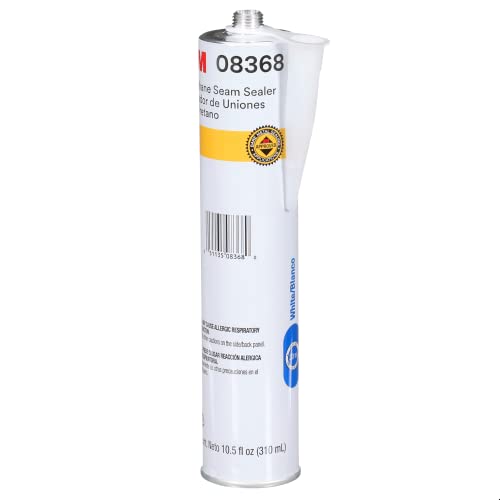
SMOOTH DISPENSING: Pneumatic power allows for longer, more consistent beads of 3M Urethane and MSP Seam Sealers
![[Black] 2 Pack Professional Automotive Seam Sealer, Paintable Quick-Set Polyurethane Auto Body Seam Sealer for Metal Surfaces of Cars, Trucks, Etc, Includes Gloves & Tip - Black RV Roof Sealant](https://m.media-amazon.com/images/I/51rYdoPRb-L._SL500_.jpg)
Bonds to All Surfaces: Our seam sealer automotive formula bonds strongly with primed, painted, or bare metal surfaces, offering a fast curing solution. Ready for paint in just 30 minutes, it serves as an effective RV roof sealant and polyurethane auto body filler without the need for sanding.
![[Black] Professional Automotive Seam Sealer, Paintable Quick-Set Polyurethane Auto Body Seam Sealer for Metal Surfaces of Cars, Trucks, Etc, Includes Gloves & Tip - Black RV Roof Sealant](https://m.media-amazon.com/images/I/41CSSWLKzxL._SL500_.jpg)
Bonds to All Surfaces: Our seam sealer automotive formula bonds strongly with primed, painted, or bare metal surfaces, offering a fast curing solution. Ready for paint in just 30 minutes, it serves as an effective RV roof sealant and polyurethane auto body filler without the need for sanding.
Common Mistakes to Avoid
- Starting without the vehicle-specific body repair procedure
- Using seam sealer to hide a weak weld, crack, pinhole, or oversized panel gap
- Applying a DTM product to bare metal when the OEM requires cured primer
- Placing seam sealer directly over an incompatible acid-etch primer
- Sealing over rust, moisture, silicone, dust, oil, or cleaner residue
- Saturating a lap seam with solvent before application
- Grinding away too much of the weld or surrounding panel
- Failing to equalize and purge a 2K cartridge before fitting the mixer
- Continuing to use material after its stated work time
- Laying one cosmetic bead over the seam without first working in a tight coat
- Applying a bead thicker than the product permits
- Blocking a drain hole or factory water path
- Waiting for full cure when the product requires painting during an earlier window
- Painting too early or with an incompatible coating
- Assuming a tack-free surface proves the center of a thick bead has cured
- Failing to restore cavity wax or backside corrosion protection
- Heating, welding, or grinding through cured sealer without an approved procedure
Curing Time for Seam Sealer: What You Need to Know

Work time, set time, paint time, and full cure are not the same. A product may accept paint before it reaches full cure, and it may require scuffing if the maximum paint window has passed.
Paint time tells you when a compatible coating may be applied. Full-cure time tells you when the bead has completed the manufacturer’s stated curing process.
Real products show how different these specifications can be:
- The cited 3M OEM Match Epoxy Seam Sealer lists a six-minute work time, 15-minute paint time, and one-hour cure at 70°F.
- The cited 3M Urethane Seam Sealer permits painting after 30 minutes and calls for scuffing after 24 hours.
- The cited SEM 1K Seam Sealer lists a five- to ten-minute work time, a 20- to 30-minute set time, a one-hour waterborne paint time, and a cure rate of 4 mm per 24 hours at 70°F.
These values apply only to those products under their stated conditions. Never copy one product’s timing to another cartridge.
Curing Time Factors
- Product chemistry: A moisture-cure urethane, modified silane polymer, and two-component epoxy do not cure in the same way.
- Panel and product temperature: Cold material can become difficult to dispense and may cure more slowly. Excess heat can shorten work time.
- Bead thickness: A thick mass may take longer to cure through than a thin tooled bead.
- Mixing quality: A 2K product may remain soft if the components were not equalized, mixed, or purged correctly.
- Humidity: Its effect depends on chemistry. Do not assume that drier air is always faster or better.
- Primer and cleaner flash: Trapped solvent beneath the bead can interfere with adhesion and curing.
- Storage and age: Expired, frozen, overheated, or poorly stored material may not perform as listed.
How to Use the Manufacturer’s Timing
- Record the product name, batch information, application time, shop temperature, and substrate temperature when required.
- Finish tooling before the stated work or skin time ends.
- Wait at least the stated minimum time before applying the specified primer or topcoat.
- Use only a coating system listed as compatible or approved by the paint manufacturer.
- If the maximum paint window passes, scuff or prepare the bead exactly as the TDS directs.
- Keep the repair dry and protected until the product reaches the required handling or service cure.
Signs the Repair Is Ready for the Next Step
Touch alone cannot prove that the center of the bead has cured or that the paint window has opened. Use the product timing and conditions first, then inspect the bead.
- The required time has passed at the stated panel and air temperature.
- The product was mixed and applied within its work time.
- The bead has not slumped, bubbled, lifted, cracked, or separated from an edge.
- The surface condition matches the TDS description for painting or handling.
- The chosen coating is compatible with the sealer.
- Any required scuffing or primer step has been completed.
Note: “Tack-free,” “set,” “paintable,” and “fully cured” may describe four different stages. Use the exact wording and timing in the technical data sheet.
Seam Sealer Troubleshooting
The Sealer Peels or Lifts
Likely causes include oil, silicone, dust, moisture, an incompatible primer, insufficient scuffing, cleaner residue, or application outside the approved paint or primer window. Remove failed material back to a sound edge, identify the contamination, and repeat the approved preparation process. Do not cover a loose edge with another bead.
Bubbles or Pinholes Appear
Air may have been trapped because the bead bridged the joint instead of being tooled into it. Contaminated compressed air, trapped solvent, aggressive mixing, or an incorrect application temperature may also contribute. Repair the defect according to the TDS before topcoating.
The Sealer Remains Soft
Check product age, storage history, shop temperature, bead thickness, and elapsed cure time. With a 2K product, confirm that both components flowed evenly and that the initial mixed material was discarded. Material that did not mix correctly may need to be removed rather than given more time.
Paint Wrinkles or Loses Adhesion
The coating may have been applied outside the allowed window, over uncured primer or cleaner, or without the required scuffing. The paint and sealer systems may also be incompatible. Stop and consult both manufacturers before adding more coating.
The Sealer Cracks or Shrinks
Possible causes include excessive bead thickness, the wrong sealer for a flexible joint, poor substrate preparation, incompatible coatings, or material applied beyond its work time. Remove the failed section and use the product specified for that seam.
Rust Appears at the Sealer Edge
The seam may have been left partly bare, the primer may not have covered the edge, or backside corrosion protection may be missing. Correct the corrosion and restore the full primer, sealer, paint, and cavity-protection system rather than covering the rust.
Final Quality Check
Inspect the repair before returning trim or interior panels to the vehicle.
- The welded or bonded joint matches the OEM attachment procedure.
- The entire required seam is sealed continuously.
- No gaps, pinholes, bubbles, lifted edges, or thin spots are visible.
- The bead matches the factory function, location, and appearance.
- Drain holes, water paths, fastener holes, and threaded grounds remain open.
- The sealer has remained within its work and paint windows.
- The primer and topcoat cover the required surfaces and sealer edges.
- Backside coating, undercoating, and cavity wax have been restored where specified.
- Adjacent wiring, exhaust parts, mechanical parts, trim, and glass are free of overspray and sealer.
- The repair has remained dry and protected for the required handling or service time.
Frequently Asked Questions
Do You Put Seam Sealer Over Primer or Bare Metal?
Follow both the vehicle maker’s body repair procedure and the seam sealer’s technical data sheet. Some products permit properly prepared bare metal, but an OEM may still require cured epoxy primer, 2K urethane primer, or factory E-coat. The OEM requirement takes priority for that vehicle.
How Do You Apply Automotive Seam Sealer?
Complete and inspect the weld, prepare the approved substrate, clean and dry it, apply the required primer, and mask the bead area. Work a tight coat into the seam, add the appearance bead, tool it within the stated work time, remove tape while wet, inspect the coverage, and follow the product’s paint and cure instructions.
Can You Weld Through Seam Sealer?
Do not MIG, TIG, arc weld, cut, or heat through ordinary seam sealer. Certain products may be approved between mating flanges for squeeze-type resistance spot welding, but only when the vehicle maker and product manufacturer both permit it. Follow the specified preparation and test-weld procedure.
How Do You Make Seam Sealer Look Like the Factory Bead?
Photograph the original seam, mask its edges, select the correct nozzle or brush, and practice the pattern on a test panel. Seal the joint with a tight coat first, then reproduce the visible bead. Remove masking tape while the material is still wet and finish tooling before the work time ends.
Can You Paint Over Automotive Seam Sealer?
Many automotive seam sealers are paintable, but the minimum paint time, compatible coating, maximum recoat window, and scuffing requirement vary. Do not wait automatically for full cure, and do not paint merely because the surface feels dry. Follow the sealer and paint manufacturers’ instructions.
How Long Does Automotive Seam Sealer Take to Dry?
There is no universal drying time. Depending on the chemistry, a product may have only a few minutes of work time, become paintable in 15–60 minutes, and take an hour or much longer to cure through. Bead thickness, temperature, humidity, mixing, and the exact product all affect timing.
Can Seam Sealer Be Applied Over Rust?
No. Remove or repair corrosion by the vehicle maker’s approved method, prepare the metal, and restore the required primer before sealing. Applying seam sealer over rust can hide continued corrosion without creating a reliable bond.
Is Automotive Seam Sealer a Structural Adhesive?
Not unless a specific product and OEM repair procedure identify it as a structural joining material. General seam sealer is used to close joints and reproduce factory sealing. It cannot replace welds, rivets, structural adhesive, or another required attachment method.
Conclusion
Good automotive seam-sealer work begins before the cartridge is opened. Verify the OEM repair procedure, complete and inspect the weld, prepare the approved substrate, and use a compatible primer, sealer, and paint system. Work a tight coat into the joint before shaping the visible bead, then follow the product’s paint and cure windows instead of relying on touch alone. Finish by checking every edge, keeping drains open, and restoring the required backside corrosion protection.
Sources
- 3M General Seam Sealer Application Standard Operating Procedure — surface preparation, cleaning, tight-coat application, tooling, tape removal, and topcoating
- 3M OEM Match Epoxy Seam Sealer Technical Data Sheet — substrates, cartridge preparation, work time, paint time, cure time, and primer compatibility
- 3M Urethane Seam Sealer Technical Data Sheet — paint window, bare-metal preparation, and limited squeeze-type resistance-welding use
- SEM 1K Seam Sealer Technical Data Sheet — P180 preparation, tooling, coating-specific paint times, cure rate, and acid-primer warning
- Honda Corrosion Protection for Vehicle Repair — OEM primer, seam-sealer, cavity-wax, and corrosion-restoration requirements
- OSHA Isocyanates Overview — health hazards associated with isocyanate exposure in polyurethane materials