Modern car bodies are not made from one uniform sheet of metal. A vehicle may use soft, highly formable steel in an exterior door skin, corrosion-resistant coated steel along the lower body, and extremely strong press-hardened steel around the passenger compartment. Each grade is selected for the exact job the part must perform.
Quick Answer
Car bodies use a mix of mild steel, high-strength low-alloy steel, advanced high-strength steel, and press-hardened steel. Zinc-based coatings may be added for corrosion protection. Automakers match each material to the part’s forming needs, crash function, stiffness, weight target, joining method, durability, and production cost.
Key Takeaways
- Low-carbon and other highly formable steels remain useful for exterior panels and complex stamped parts.
- Galvanized and galvannealed describe zinc-based coatings, not one specific strength class.
- HSLA and advanced high-strength steels let engineers strengthen load paths or reduce sheet thickness where the design permits.
- Crash rails need controlled energy absorption, while pillars and rocker reinforcements often need high intrusion resistance.
- Modern press-hardened steel can approach 2,000 MPa, so appearance alone cannot identify a safe repair method.
- Collision repairs must follow the exact OEM procedure for the vehicle, model year, body style, powertrain, and component.
What’s in This Article
- Why Automotive Steel Matters in Car Bodies
- Main Types of Automotive Steel
- Low-Carbon Steel for Body Panels
- Galvanized Steel for Rust Protection
- High-Strength Steel in Structural Parts
- Where AHSS Improves Crash Safety
- How Automakers Choose Automotive Steel
- How Automotive Steel Is Formed and Joined
- How to Identify Steel Types During Repair
- Frequently Asked Questions
- Conclusion
- Sources
Why Automotive Steel Matters in Car Bodies
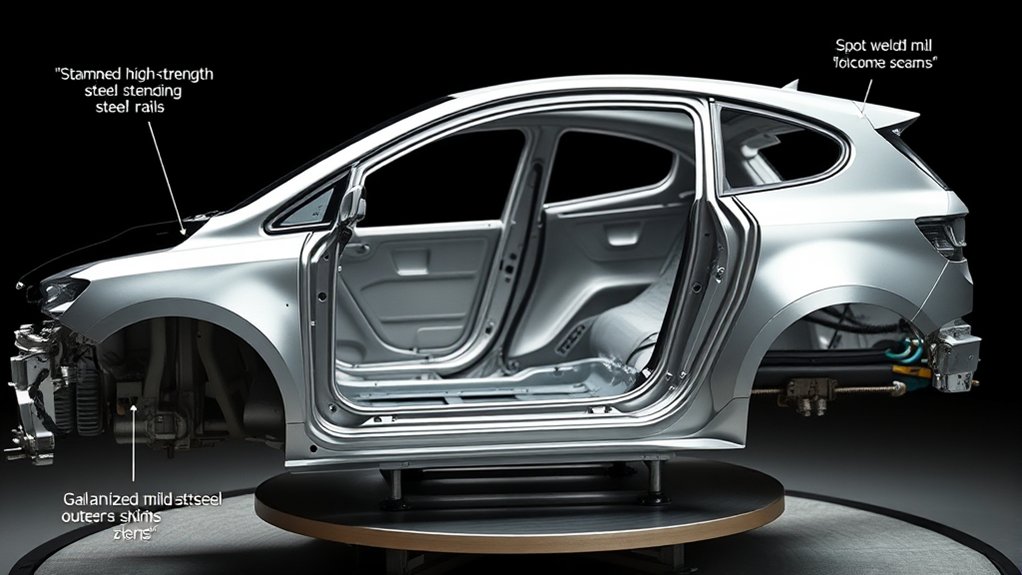
Automotive steel plays a central role because the body must perform several jobs at once. It must support passengers and equipment, resist bending and twisting, manage collision loads, provide a smooth painted surface, resist corrosion, and remain practical to manufacture at high volume.
The term car body can refer to several related groups of parts:
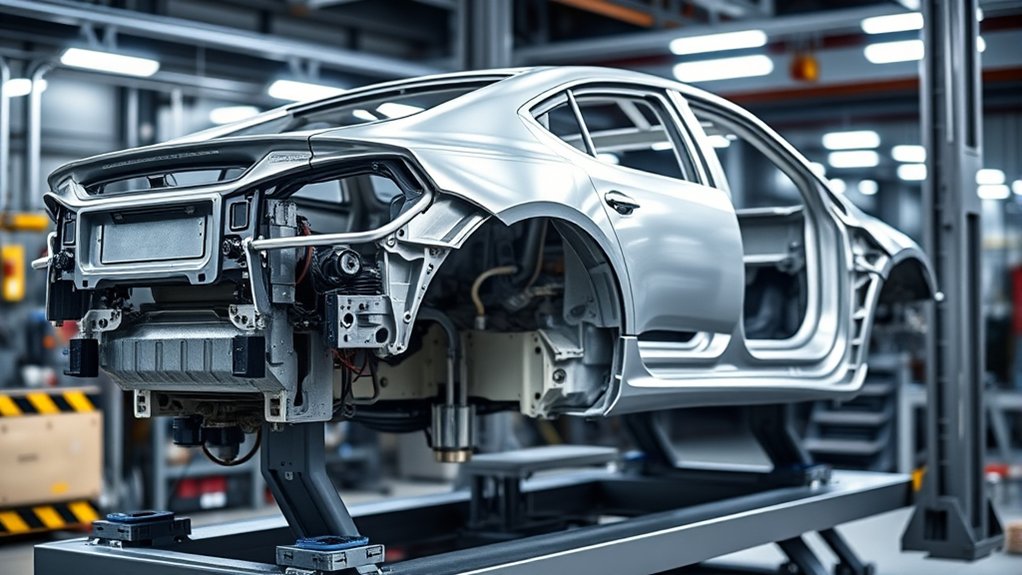
- Body-in-white: The welded structural shell before paint, glass, trim, and most mechanical systems are installed.
- Closures: Doors, hood, liftgate, deck lid, and related reinforcements.
- Exterior panels: Roof skins, quarter panels, fenders, and other visible surfaces.
- Safety-cage parts: Pillars, roof rails, rocker reinforcements, crossmembers, and other parts that help preserve occupant space.
- Crush structures: Front and rear rails, crash boxes, and other parts designed to manage impact energy.
The American Iron and Steel Institute reports that steel accounts for about 54% of the average vehicle. That is a broad North American vehicle statistic rather than a rule for every model, and the percentage inside the body structure varies by vehicle design.
One steel grade may stamp into a deep door panel without tearing but provide too little strength for a B-pillar reinforcement. Another may resist intrusion extremely well but require hot forming, tighter joining controls, and replacement rather than straightening after a collision.
Automotive steel is not selected by strength alone. The grade, thickness, coating, part shape, joints, forming route, and crash function must work as one system.
Main Types of Automotive Steel
Automotive steel names can be confusing because some describe composition, some describe strength, some describe microstructure, and others describe a surface coating. The exact dividing lines used for HSS, AHSS, and UHSS can also vary by automaker or technical standard.
| Steel category | Main advantage | Common examples | Important limitation |
|---|---|---|---|
| Mild or low-carbon steel | High formability and straightforward joining | Outer panels, brackets, floors, and non-critical stampings | Lower strength may require more thickness or reinforcement |
| Conventional HSS or HSLA | Balanced strength, formability, and weldability | Rails, crossmembers, underbody structures, and reinforcements | Repair and forming limits vary by grade and part |
| AHSS | Engineered combinations of strength, ductility, and energy management | DP, TRIP, complex-phase, martensitic, and third-generation steels | Heat and unapproved repair methods can alter performance |
| Press-hardened steel | Very high strength and intrusion resistance | Pillars, roof rails, rockers, door rings, and tunnel reinforcements | Often has strict replacement, sectioning, and joining limits |
| Galvanized or galvannealed steel | Zinc-based corrosion protection | Doors, roof panels, lower-body parts, floors, and reinforcements | This is a coating description; the underlying steel determines strength |
Note: “Ultra-high-strength steel” is a useful repair and engineering label, but it is not one universal alloy. Always use the vehicle manufacturer’s material map and repair terminology rather than relying on a general strength cutoff.
Low-Carbon Steel for Body Panels
Low-carbon steel, often called mild steel, offers the formability needed to stamp complex shapes. It has long been used for door skins, fenders, hoods, roof panels, floors, brackets, and other parts that need smooth surfaces or deep draws.
Regional material labels such as SPCC or DC01 may appear in specifications, but they are not universal names for every automotive exterior panel. Their exact properties depend on the standard, thickness, processing condition, and supplier specification. Automakers also use proprietary grades developed for dent resistance, paint-bake hardening, or improved deep drawing.
| Property | Typical importance in body panels |
|---|---|
| Formability | Supports deep stamping, curved surfaces, flanges, and character lines |
| Weldability | Allows efficient spot welding and other production joining methods |
| Surface quality | Helps produce a smooth painted finish on visible panels |
| Ductility | Reduces splitting during deep drawing and flange formation |
| Corrosion protection | Usually supplied by zinc coatings, e-coat, paint, seam sealer, and cavity treatments |
Consistent blanking, forming, and joining behavior helps preserve panel fit and reduces rework. High-quality consumables, clean tooling, stable stamping conditions, and regular equipment maintenance also support repeatable production.
Low-carbon steel is not automatically the best choice for every visible panel. Engineers may select bake-hardenable or higher-strength sheet when they need more dent resistance or a thinner panel without losing surface quality.
Galvanized Steel for Rust Protection
Galvanized automotive sheet combines a steel substrate with a zinc-based coating. The substrate may be mild steel, HSLA, or an advanced high-strength grade. The coating provides corrosion protection, while the steel below it supplies most of the part’s mechanical strength.
Products Worth Considering

Flat Smooth Clean - The weldable cold rolled steel plate features a smooth, even surface with clean-cut, without-burr edges, requiring no secondary processing before use

This product is manufactured in china

Surface situation:The product surface state was mirror finished for both sides,not a brushed stainless-steel or matte finish surface,they are reflectivity almost as strong as a mirror.
How Zinc Protects Automotive Steel
Zinc coatings help in two ways. First, they form a barrier that limits contact between the steel, moisture, and oxygen. Second, zinc can provide galvanic or sacrificial protection by corroding in preference to nearby exposed steel. The International Zinc Association describes both barrier and cathodic protection as key zinc-coating mechanisms.
This protection is valuable around doors, wheel openings, rocker panels, floors, roofs, and lower-body areas exposed to water, humidity, mud, and road salt. It does not make the vehicle rust-proof. Coating thickness, drainage, seams, stone chips, contamination, repair quality, e-coat, paint, sealers, and cavity protection all influence long-term corrosion performance.
Galvanized, Galvannealed, and Other Coatings
Automotive manufacturers may use several coated-sheet systems:
- Galvanized sheet: Uses a zinc-rich surface for barrier and sacrificial protection.
- Galvannealed sheet: Uses a zinc-iron coating that can provide a surface well suited to painting and certain manufacturing processes.
- Electrogalvanized sheet: Applies zinc through an electrochemical process where controlled surface properties are needed.
- Aluminum-silicon-coated press-hardened steel: Helps protect steel during hot-stamping operations and service.
These metallic coatings work with the vehicle’s e-coat, primer, paint, seam sealer, adhesives, and cavity wax. Damage to any part of that protection system can create a path for corrosion.
Welding and Repairing Zinc-Coated Steel
Zinc affects electrical resistance, heat flow, electrode life, fume production, and weld appearance. Production weld schedules are developed for the exact combination of steel grade, coating, thickness, and joint stack.
During collision repair, remove coating only where the OEM procedure or approved joining process requires bare metal. Excessive removal can weaken corrosion protection. After joining, restore primers, seam sealers, cavity protection, and other corrosion-resistant materials specified by the manufacturer.
A detailed surface-preparation method may include limited zinc removal, but that step must not be treated as permission to strip an entire panel or ignore the OEM repair process.
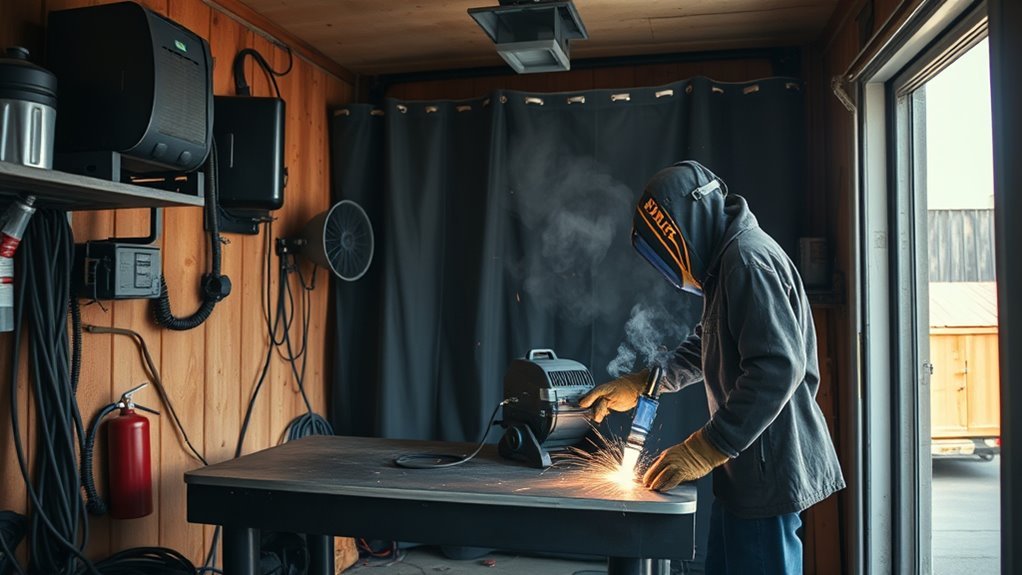
Warning: Heating, welding, brazing, or cutting zinc-coated steel can create zinc-oxide fumes. Use suitable local exhaust ventilation and follow workplace exposure controls. OSHA requires specific ventilation precautions for indoor and confined-space work involving zinc-bearing materials. Flame-resistant clothing protects against sparks and heat, but it does not control fume exposure.
High-Strength Steel in Structural Parts
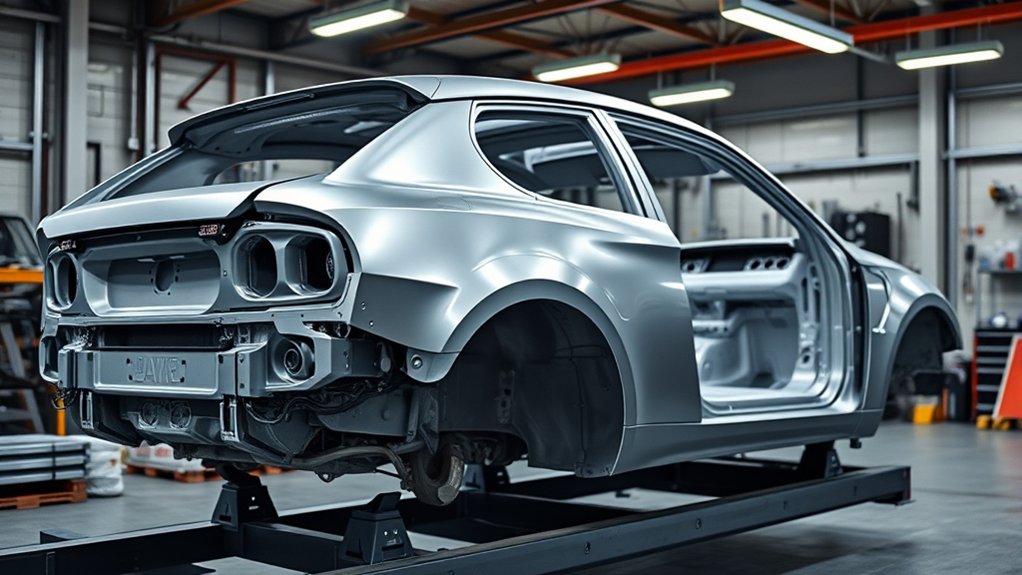
High-strength steel is a broad term for grades stronger than traditional mild sheet. High-strength low-alloy steel, or HSLA, gains strength through controlled chemistry, rolling, and microalloying while retaining useful formability and weldability.
Products Worth Considering
FINE WORKMANSHIP: Using High-Precision Cutting Technology, The Threads Are Very Precise And Clean, And The Deep And Clear Threads Can Easily Penetrate The Sheet Metal To Ensure A Firm Fixing, While Not Easily Deformed And Sliding Use

🔩【Durable Material】: These screws are made from premium 410 stainless steel and Black Dacromet coatings.Passes salt spray tests, Super corrosion resistance offering 5-10x higher corrosion resistance than zinc plating、black oxide.It is very suitable for outdoor and wet conditions.(Tips: 410 Stainless Steel Is A New Type Of Magnetic-Absorbing Stainless Steel so they are also still magnetic.)

PRODUCT NAME - #8 #10 Truss Head Self-Tapping Screws black metal screws, With Extra Cross-Drilled Tail For Each Box, Various Sizes And Precise Threads For Different Usage. #8 x 1/2", 5/8", 3/4", 1", 1-1/4", 1-1/2", 2". #10 x 1/2", 5/8", 3/4", 1", 1-1/4", 1-1/2", 2". Black self tapping screws for metal sheet metal screws.
Strength Without Unnecessary Mass
Stronger sheet may allow an engineer to reduce thickness while meeting a part’s load requirements. This process is called down-gauging. It does not mean that every mild-steel part can be replaced with a thinner high-strength sheet.
The final gauge must still satisfy:
- Body stiffness and vibration targets
- Crash, fatigue, and durability requirements
- Local buckling and dent resistance
- Forming and springback limits
- Welding, adhesive, and fastener performance
- Noise, vibration, and harshness control
- Corrosion allowance and repair requirements
When those conditions are met, high-strength steel can support a lighter and more compact structure without sacrificing the required load capacity.
Crash Protection Benefits
Structural steel helps create load paths that carry impact forces through the body. Some parts are designed to fold or collapse in a controlled sequence. Other parts are designed to remain comparatively rigid and resist intrusion into the passenger compartment.
A material’s static tensile strength tells only part of the story. Current crash engineering also considers yield strength, elongation, bendability, fracture strain, strain-rate response, thickness, section geometry, joint design, and the direction of loading. WorldAutoSteel notes that crash components deform far faster than a standard slow tensile test can represent.
Key Structural Applications
- Front and rear rails: Carry and manage longitudinal collision loads.
- Crossmembers: Support body stiffness and distribute loads across the structure.
- Rocker panels: Support side-impact, roof-crush, and body-stiffness requirements.
- A-, B-, and C-pillars: Help support the roof and protect occupant space.
- Bumper beams: Spread localized impact loads across a wider area.
- Floor and tunnel reinforcements: Support the passenger cell and, in some vehicles, help protect high-voltage battery structures.
- Suspension attachment areas: Carry repeated road and cornering loads into the body.
Where AHSS Improves Crash Safety
Advanced high-strength steel is not one alloy. It is a family of steels whose carefully controlled microstructures provide different combinations of strength, ductility, bendability, formability, and crash performance.
| AHSS family | General characteristics | Possible automotive roles |
|---|---|---|
| Dual-phase steel | Good combination of strength, work hardening, and formability | Rails, reinforcements, crossmembers, and crash-management parts |
| TRIP steel | High work-hardening ability and useful energy absorption | Complex formed reinforcements and selected crash parts |
| Complex-phase steel | High strength with controlled forming and hole-expansion properties | Chassis parts, rails, reinforcements, and brackets |
| Martensitic steel | Very high strength and strong anti-intrusion performance | Pillars, rockers, door beams, and safety-cage reinforcements |
| Third-generation AHSS | Designed to combine higher strength with improved formability | Complex structural stampings that previously required multiple parts |
| Press-hardened steel | Hot formed and quenched to achieve very high strength | B-pillars, roof rails, rocker reinforcements, door rings, and tunnels |
Many familiar AHSS grades fall between roughly 500 and 1,500 MPa, but that is not the full modern range. Commercial press-hardened grades near 1,900–2,000 MPa are now available, along with lower-strength press-quenched grades developed for greater ductility and bendability.
Automakers may use a more ductile AHSS grade in a crash rail that must absorb energy, while using martensitic or press-hardened steel in a B-pillar or rocker reinforcement that must limit cabin intrusion. Controlled deformability matters, but the desired amount and location of deformation are different for each component.
Note: A stronger steel does not automatically create a safer part. Crash performance comes from the complete system, including material behavior, shape, thickness, joints, surrounding parts, restraints, and the vehicle’s validated crash design.
How Automakers Choose Automotive Steel
Automakers begin by defining what each component must do. Engineers then compare candidate grades using far more than a single strength number.
- Yield strength: The stress at which permanent deformation begins.
- Tensile strength: The maximum tensile stress reached during a standard test.
- Elongation and bendability: How far the material can stretch or bend before cracking.
- Work hardening: How the steel strengthens as it deforms.
- Formability: Whether the sheet can be stamped into the required shape without splits or severe wrinkles.
- Springback: How much the part changes shape after forming pressure is released.
- Fatigue and fracture behavior: How the part handles repeated loading and crack growth.
- Dynamic response: How the material behaves at collision loading rates.
- Weldability and joinability: Whether the required joints can be produced consistently.
- Coating compatibility: How the steel and coating behave during forming, welding, painting, and service.
- Cost and production rate: Whether the part can be made reliably at the required volume.
Exterior panels often favor highly formable grades with excellent surface quality. Rails and crossmembers may use HSLA, dual-phase, or complex-phase steel. Safety-cage reinforcements may use martensitic or press-hardened grades. Exposed panels and underbody parts commonly receive zinc-based corrosion protection regardless of the underlying strength class.
Modern bodies may also combine steel with aluminum castings, aluminum sheet, magnesium, plastics, composites, adhesives, and mechanical fasteners. Electric vehicles still use substantial steel in many body and battery-protection structures, but the exact material mix varies widely by platform.
How Automotive Steel Is Formed and Joined
The production process is part of the material decision. A steel grade that performs well in a simple tensile test may still create excessive springback, edge cracking, tool wear, or weld variability in a real part.
Common Forming Methods
- Cold stamping: Shapes sheet at or near room temperature and remains common for body panels and structural stampings.
- Roll forming: Progressively bends a strip through a series of rollers, making it useful for long sections and high-strength materials.
- Hot stamping: Heats press-hardening steel, forms it in a die, and rapidly cools it to create a high-strength microstructure.
- Tailor-welded blanks: Join sheets of different grades or thicknesses before stamping so one finished part can have different properties in different areas.
Common Joining Methods
- Resistance spot welding: The dominant high-volume process for many steel body joints.
- Laser welding: Produces narrow, controlled joints and is also used in tailored blanks.
- Gas metal arc welding: Used in selected manufacturing and repair applications.
- MIG brazing: Uses lower heat than fusion welding in approved coated-steel applications.
- Structural adhesive: Spreads loads, seals seams, reduces vibration, and works with welds or fasteners.
- Mechanical fasteners: Rivets, screws, and other fasteners are used where the body design and material combination require them.
Cut quality, edge condition, fit-up, surface cleanliness, coating condition, electrode force, heat input, adhesive thickness, and cure conditions can all affect the completed structure. A substitute welding process or filler metal should never be assumed equivalent to the validated production or repair method.
How to Identify Steel Types During Repair
Automotive steel cannot be identified reliably by color, sparks, magnet response, coating appearance, or hardness alone. Painted mild steel, coated AHSS, and press-hardened steel can look nearly identical in the repair bay.
Use this identification order before cutting, heating, drilling, straightening, or welding:
- Identify the exact vehicle. Confirm the VIN, model year, body style, trim, powertrain, and production information. Material use can change within one model generation.
- Open current OEM repair information. Use the manufacturer’s body repair manual, workshop manual, collision repair guide, position statements, and material maps.
- Locate the exact component. Confirm whether the instruction applies to the outer panel, inner reinforcement, rail extension, pillar, or complete assembly.
- Check allowed operations. Verify whether cold straightening, heat, sectioning, partial replacement, plug welding, spot welding, brazing, adhesive bonding, or complete replacement is permitted.
- Confirm attachment details. Follow the required weld count, weld location, adhesive, rivet, fastener, overlap, and cut-line information.
- Restore corrosion protection. Replace damaged e-coat, primers, seam sealer, cavity wax, stone protection, and other materials as directed.
- Complete required inspections and calibrations. Structural measurement, corrosion checks, scans, restraint procedures, and ADAS calibrations may be part of the complete repair plan.
OEM1Stop provides links to manufacturer collision-information sites and position statements. Access requirements vary, and the current vehicle-specific OEM document remains the controlling source.
Pro Tip: Save or print the exact OEM procedure with the repair plan. Record the VIN, document revision, material identification, approved cut lines, joining method, corrosion-restoration products, and any calibration requirements.
Warning: Do not heat-straighten, section, weld, or substitute a joining method on AHSS, UHSS, or press-hardened components unless the current OEM procedure specifically permits it. Heat can change the engineered microstructure, damage coatings, and reduce the repaired part’s crash performance.
Frequently Asked Questions
What kind of steel is used for car bodies?
Car bodies use a mix of mild or low-carbon steel, HSLA, advanced high-strength steel, martensitic steel, and press-hardened steel. Many of these substrates also receive zinc-based coatings. The exact mix varies by vehicle, component, model year, and manufacturing process.
Why do automakers use galvanized steel?
Automakers use galvanized and other zinc-coated steels to slow corrosion. Zinc provides a physical barrier and sacrificial protection for nearby exposed steel. It works with e-coat, paint, seam sealer, adhesives, and cavity treatments as part of the vehicle’s complete corrosion-protection system.
Does galvanized mean the steel is high strength?
No. Galvanized describes a zinc-based surface coating. The steel underneath may be mild steel, HSLA, AHSS, or another grade. The substrate supplies the main mechanical properties, while the zinc coating mainly supports corrosion resistance and influences forming and joining behavior.
Is high-strength steel harder to repair?
It can be. Some high-strength components allow limited cold straightening or approved sectioning, while other parts require complete replacement. Heat, unapproved welds, or incorrect cut locations can change material properties or load paths. Follow the exact OEM repair procedure.
What is the difference between HSS and AHSS?
HSS is a broad strength-based description that includes grades such as HSLA. AHSS refers to steel families with more complex, carefully controlled microstructures, including dual-phase, TRIP, complex-phase, martensitic, third-generation, and press-hardening grades. Exact category boundaries can vary.
Can you weld advanced high-strength steel?
Many AHSS grades are welded during vehicle production, especially with resistance spot welding. Collision-repair welding is component-specific. The OEM procedure determines whether welding is permitted, which process to use, where joints may be placed, and whether the part must be replaced instead.
What metal are most modern cars made of?
Steel remains a major material in modern vehicles, but most cars are mixed-material products. Depending on the design, they may also contain aluminum, cast iron, copper, magnesium, plastics, glass, adhesives, and composites. The material mix differs considerably among models.
Conclusion
Modern car bodies rely on a carefully planned mix of steel grades rather than one universal material. Highly formable steel supports complex panels, zinc-coated sheet helps control corrosion, HSLA reinforces load paths, and AHSS or press-hardened steel delivers specialized crash and intrusion performance.
Strength is only one part of the decision. Engineers must also account for formability, elongation, fracture, stiffness, dynamic crash behavior, coating, thickness, geometry, joining, cost, and production reliability.
For repair work, begin with the exact VIN and current OEM procedure. Do not assume that a part is mild steel because it looks ordinary, and do not apply heat, sectioning, or a substitute joining method without documented approval. Correct material identification and corrosion restoration are essential to preserving the vehicle’s intended durability and crash performance.
Sources
- WorldAutoSteel — Updated AHSS Application Guidelines — current guidance on AHSS grades, coatings, forming, joining, and engineering systems.
- AHSS Insights — technical information on automotive steel metallurgy, forming, welding, and grade classifications.
- AHSS Insights — Press-Hardening Steel Grades — modern PHS and PQS strength levels and coating options.
- WorldAutoSteel — High Strain Rate Testing of AHSS — why standard tensile strength alone cannot predict crash behavior.
- OSHA 29 CFR 1910.252 — ventilation and health-protection requirements for welding and cutting, including zinc-bearing materials.
- OEM1Stop — links to vehicle-manufacturer collision repair procedures and position statements.