No dedicated tailpipe expander? You can sometimes create a small slip-fit expansion on a removable section of exhaust tubing with a smooth steel taper and light, even taps. Treat these improvised methods as minor fit-up adjustments, not substitutes for a correctly sized connector or expander, and never heat or hammer tubing while it is installed on the vehicle.
Quick Answer
To expand an exhaust pipe without a dedicated expander, remove the tube from the vehicle, deburr it, and use a smooth tapered steel mandrel with light, even taps while rotating the pipe. Expand only enough for a snug slip fit. For larger size differences, use a correct connector or rent an expander instead.
Key Takeaways
- Measure both pipes before forming. Exhaust tube size normally refers to outside diameter, while an expanded end must fit over that diameter.
- Use a connector, reducer, sleeve, rented expander, or muffler shop when the size difference is more than a slight fit-up adjustment.
- Remove the tubing from the vehicle before heating or hammering it. Never perform this work near fuel lines, undercoating, wiring, sensors, or a catalytic converter.
- A smooth taper and many light taps are safer for the tube than a few heavy blows, which can split or oval the end.
- After welding or clamping the joint, check it for leaks with a smoke machine or a carefully controlled outdoor inspection.
At a Glance
| Time Required | About 20–45 minutes for forming and fit checks, excluding pipe removal, reinstallation, welding, and cooling |
| Difficulty | Intermediate; the torch method requires hot-work experience |
| Tools Needed | Caliper or tape, vise with soft jaws, file or deburring tool, smooth tapered steel mandrel, hammer, gloves, safety glasses, and face shield; torch and welding equipment only when appropriate |
| Cost | No new purchase when suitable tools are already available; connector, clamp, rental, and shop charges vary by size and location |
Choose the safest option before expanding the pipe
Improvised expansion works best when the two pieces are already close in size and you only need to correct a tight fit. It is not a good way to convert one nominal exhaust size into another.
Before reaching for a hammer or torch, consider these options:
- I.D.-I.D. connector: Joins two pipes that both have outside-diameter ends.
- I.D.-O.D. connector: Joins a pipe end to an already expanded socket of the same nominal size.
- Reducer: Joins tubing with different nominal diameters.
- Lap-joint band clamp: Secures a properly fitted slip joint without crushing it as aggressively as a traditional U-bolt clamp.
- Tool rental: Many parts stores and tool-rental businesses offer exhaust expanders.
- Muffler shop: A shop can expand an end evenly with a hydraulic or powered expander, often in a few minutes.
Walker’s connector and reducer catalog shows the common I.D.-I.D., I.D.-O.D., O.D.-O.D., reducer, extension, and repair configurations used for exhaust work.
Pro Tip: When the mating pipe will not begin to enter the end after deburring, the mismatch is probably too large for careful hand forming. Use the correct adapter instead of stretching until the wall thins or splits.
Measure the pipes and identify the material
Measure outside and inside diameters
Use a caliper when possible. Measure the outside diameter of the pipe that will slide inside the joint. Then measure the inside diameter of the end you plan to expand.
Nominal automotive exhaust tube size usually describes the outside diameter. A slip-fit end is expanded so its inside diameter clears the outside diameter of the mating tube. Do not assume that two pieces marked with the same nominal size will slide together unless one end is already expanded.
Check the wall and condition
Inspect at least 2 inches around the end. Do not attempt to expand tubing that is:
- Deeply rusted, perforated, flaking, or cracked
- Crushed or sharply creased
- Part of a flex joint or double-wall tip
- Too short to clamp securely without damaging the finished section
- Attached directly to a catalytic converter, particulate filter, oxygen sensor boss, or delicate muffler shell
- Made from an unknown coated material that will be heated or welded
Identify the metal
Common exhaust materials include mild steel, aluminized steel, ferritic stainless such as 409, and austenitic stainless such as 304. Their forming and welding behavior differs. If you cannot identify the material, use a mechanical connector or take the section to an exhaust shop.
Note: Do not remove, bypass, hollow out, or disable a catalytic converter, oxygen sensor, diesel particulate filter, or other emissions-control component. The EPA prohibits tampering with emissions controls on road vehicles. See the EPA emissions-tampering guidance.
Why expanding exhaust pipes matters
A snug slip fit makes alignment and welding easier. It also reduces the chance of leaks, rattles, and stress at the edge of the weld. Expanding only the final section of tubing lets one pipe sleeve over the other while preserving most of the original wall shape.
A small exhaust-system leak can allow carbon monoxide to build up inside a vehicle, so every finished joint must be checked before normal driving.
The CDC advises having vehicle exhaust systems checked for leaks because carbon monoxide is colorless, odorless, and potentially deadly.
Understanding pipe expansion
A dedicated exhaust expander applies pressure around the inside circumference, which helps enlarge the end evenly. An improvised taper concentrates more force in a smaller area, so you must rotate the pipe or driver and make many small adjustments.
Your goal is not to create a large bell or flare. Stop as soon as the mating tube enters straight and slides far enough to provide the required overlap. Continued hammering can create four common problems:
- A split starting at a burr or notch
- An oval opening that binds in one direction
- A thin, wavy lip that is difficult to weld
- An oversized joint that cannot seal or align correctly
Safety first
Warning: Remove the exhaust section from the vehicle before heating or hammering it. Never use a torch near fuel lines, fuel tanks, brake lines, wiring, batteries, undercoating, insulation, catalytic converters, or oil-soaked surfaces.
- Support the vehicle correctly: Work on a level surface. Use appropriately rated lifting points and jack stands. Never place any part of your body beneath a vehicle supported only by a hydraulic or scissor jack.
- Let the exhaust cool: Catalytic converters and exhaust tubing can remain hot long after shutdown.
- Wear impact protection: Use safety glasses and a face shield when striking a driver, mandrel, socket, or tube.
- Protect your hands and hearing: Wear suitable work gloves and hearing protection during hammer forming.
- Prepare for hot work: Wear flame-resistant clothing, welding gloves, and the correct welding helmet when using a torch or arc process.
- Control fire hazards: Clear combustible materials from the area and keep a suitable fire extinguisher within immediate reach.
- Control fumes: Work with effective general ventilation and local fume extraction. Position the extractor near the plume without pulling shielding gas away from the weld.
- Clean coatings safely: Remove oil, paint, sealant, and heat-affected coating according to the product safety information. Do not burn unknown coatings off with a torch.
- Use metal forms only: Never use glass bottles, ceramic objects, concrete shapes, or damaged hardened tools as forming mandrels.
OSHA explains that welding fumes may contain harmful metals and gases and recommends keeping local exhaust close to the plume source. Review the OSHA welding-fume fact sheet and our welding safety guide before beginning hot work.
Carbon Monoxide Warning: Do not drive a vehicle with a suspected exhaust leak into the cabin. If anyone develops headache, dizziness, nausea, confusion, weakness, or unusual fatigue, shut the engine off, move into fresh air, and seek urgent medical help.
Method 1: Heat and a socket or steel cone
How it works: Controlled heat reduces the force needed to move a small section of mild-steel tubing. This is the highest-risk method in this guide and should be used only on a removed tube at a clear, noncombustible workbench. A smooth solid-steel cone is preferable to a socket because it was designed as a forming shape rather than a fastener tool.
Products Worth Considering
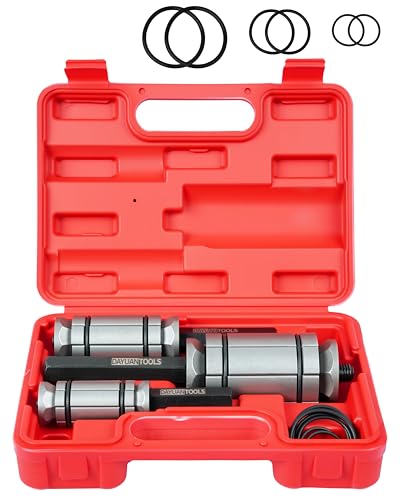
Precise Design: Used to extend a length of pipe in equal proportions so that the pipe diameter is the same rather than tapered

Wide Application: 3 different sizes exhaust pipe expanders make it suitable for all kinds of pipes, ensures a proper fit with pipes without leaks

Restore Damaged Exhaust Pipes Without Replacement:Repair dented, bent, and deformed exhaust pipe ends quickly without replacing the entire exhaust section. The Prokomon exhaust pipe expander helps restore round pipe openings for easier installation and better connections.
Step-by-step
- Cut and deburr: Make the end square. Remove sharp burrs from the inside and outside because cracks often start at notches.
- Inspect the coating: Do not torch-heat aluminized, galvanized, painted, oily, or unidentified tubing until the coating hazards and removal method are known.
- Secure the tube: Clamp it in a vise with soft jaws. Leave enough exposed length for the required overlap without clamping directly on the area being expanded.
- Prepare the mandrel: Use a smooth, gradual steel taper. A solid cone or forming drift is preferred. If a socket is used, inspect it for cracks or flaking chrome and avoid severe blows.
- Heat evenly: Use a neutral oxy-fuel flame or a propane/MAP-Pro torch suitable for the material. Sweep around the entire circumference and avoid concentrating the flame in one spot.
- Advance gradually: Insert the taper and use light taps. Rotate the tube or mandrel between taps so the force is distributed evenly.
- Test the fit: Remove the mandrel and try the mating tube after every short forming cycle.
- Stop early: Stop when the mating tube enters straight with a snug fit. Do not continue simply to make insertion effortless.
- Cool naturally: Place the hot tube on a noncombustible surface and allow it to cool without handling or forced water cooling.
- Dress the end: Remove raised spots with a file or fine flap wheel and check roundness again.
Tips
- Do not use metal color alone as a thermometer. Lighting, alloy, scale, and surface finish change the visible appearance.
- Avoid splined, knurled, cracked, or sharply stepped mandrels that can mark the bore.
- If the tube develops heavy scale, a bright local hot spot, wrinkling, or a growing crack, stop and replace the damaged end.
- Do not torch-form stainless unless you understand heat tint, oxidation, distortion, and the ventilation controls needed for the material.
Method 2: Hammer and tapered driver without a torch
How it works: A smooth tapered driver, forming drift, expanding punch, or gradual solid-steel cone stretches the lip mechanically. This method avoids torch hazards but still requires controlled, evenly distributed force.
Steps
- Cut the tube square and deburr both edges.
- Clamp the tube in soft jaws without crushing it.
- Apply a small amount of suitable lubricant to the polished driver. Keep lubricant away from any area that will later be welded until it can be cleaned completely.
- Insert only the narrow portion of the taper.
- Use light hammer taps while rotating the driver or tube around the full circumference.
- Advance the taper a small amount, remove it, and test the mating pipe.
- Correct minor ovaling with a round bar or carefully controlled planishing taps.
- Clean the bore and deburr the lip before final assembly.
Tips
- Many light taps give better control than a few hard blows.
- Strike the driver squarely. Side blows can bend the pipe or launch the driver from the opening.
- A long, gradual taper spreads the forming force better than a short, abrupt step.
- Wood is not ideal for stainless or tight-tolerance work because it can crush, split, or leave residue.
Method 3: Form over a larger steel tube
How it works: A polished scrap tube or solid round form that is only slightly larger than the workpiece’s original inside diameter supports the shape while the end is worked over it. This is the least precise of the three methods.
Steps
- Select a straight, round steel form with a smooth edge and a gradual lead-in.
- Deburr and lightly chamfer the workpiece so the edge does not catch.
- Secure the steel form firmly in a vise.
- Apply a light film of lubricant to the form if the joint will be cleaned thoroughly before welding.
- Start the tube squarely over the form. Do not begin at an angle.
- Push and tap around the circumference in small stages.
- Back the workpiece off regularly and inspect it for bell-mouthing, splits, and ovaling.
- Stop as soon as the mating pipe fits with the intended overlap.
Warning: Use only a sound metal form. Do not use a glass bottle, ceramic object, concrete shape, or pressurized container. Brittle objects can shatter and cause severe cuts or eye injuries.
A household heat gun is not useful for meaningfully softening steel in this method. It may make the surface hot enough to burn you without providing a practical forming benefit.
Welding the expanded exhaust joint
A slip joint may be welded, clamped, or secured with a combination specified for the repair. Confirm the material before choosing filler metal or wire.
Process pointers
- MIG on mild steel: ER70S-6 solid wire is a common choice. Thin exhaust is usually easier to control with small-diameter wire and short-circuit transfer. A 75% argon/25% carbon-dioxide mix is common. Miller lists 25–35 cubic feet per hour as general short-circuit MIG guidance, but you should use the machine chart, wire guidance, and a scrap test rather than copying a universal setting. See Miller’s MIG shielding-gas guidance.
- TIG on 304 stainless: Use 100% argon and a filler compatible with the verified base metal. ER308L is used for 304 and 304L stainless. A flow near 15–20 CFH is a common starting point, but cup size, gas lens, torch angle, joint position, and drafts can change the required flow.
- Dissimilar mild steel to stainless: ER309L is commonly selected for carbon-steel-to-stainless joints. Confirm the actual materials before choosing filler.
- Stick welding: Stick is generally a poor choice for thin automotive exhaust because the arc and electrode deposit are difficult to control without burn-through. Use MIG, TIG, a correct clamp, or professional repair instead.
For more process-selection help, compare MIG vs TIG and review our Miller TIG settings for stainless.
Joint preparation
- Clean to sound metal: Remove oil, rust, sealant, paint, and loose scale from the weld zone.
- Address coatings: Remove heat-sensitive coating far enough from the weld to prevent it from burning. Follow the coating manufacturer’s safety information and use extraction.
- Confirm overlap: Make sure the inner tube extends far enough into the expanded section to remain aligned during tacking.
- Align the system: Check hanger position, body clearance, suspension clearance, and tip position before final welding.
- Tack at four points: Place small tacks at roughly opposite points around the tube, then recheck alignment.
Heat-control technique
- Use short welds spaced around the circumference rather than one long continuous pass.
- Allow the joint to cool between segments when needed to control distortion and burn-through.
- Aim the arc toward the thicker or better-supported portion of the joint when the wall thickness differs.
- Do not grind the finished weld paper-thin. Remove only sharp spatter and obvious high spots that interfere with clearance.
- Keep the welding return clamp close to the joint on clean metal. If any welding is performed on the vehicle, follow the vehicle manufacturer’s service procedure for battery, electronics, and grounding precautions.
Note: Excess shielding-gas flow is not automatically safer. It can create turbulence that draws surrounding air into the shielding envelope. Set flow while gas is moving and follow the torch, cup, machine, and consumable instructions.
Check the finished exhaust joint for leaks
A leak check should be completed before normal driving. A professional smoke machine is the best option for locating small pinholes and imperfect joints because it introduces visible smoke without relying on exhaust pressure from a running engine.
Preferred smoke-test method
- Allow the exhaust system to cool fully.
- Connect an automotive smoke machine according to its instructions.
- Introduce low-pressure smoke into the exhaust.
- Inspect the entire repaired joint, nearby seams, clamp edges, and sensor bungs.
- Repair any visible smoke path and repeat the test.
Controlled cold-start inspection
When smoke equipment is unavailable, a brief cold-start inspection may reveal a larger leak. Perform it outdoors, keep the transmission secured, set the parking brake, and keep people clear of belts, fans, hot parts, and the tailpipe.
- Do not run the engine inside a closed garage.
- Do not crawl under a running vehicle unless it is properly supported and the work procedure can be performed safely.
- Listen for ticking or puffing near the repaired joint.
- Look for visible condensation pulses on a cold start.
- Shut the engine off immediately if exhaust enters the cabin or anyone develops possible carbon-monoxide symptoms.
Walker notes that repair shops commonly use smoke machines to locate small leaks. See its guide on finding exhaust-system leaks.
Pros and cons of exhaust-pipe expansion methods
| Method | Pros | Cons | Best use |
|---|---|---|---|
| Correct connector or reducer | Predictable fit; no uncontrolled stretching; no forming heat | Requires the correct size and type | Most mismatched or replacement exhaust sections |
| Rented or shop expander | More even expansion; better roundness | Requires tool access and correct setup | Controlled expansion of sound tubing |
| Heat and steel cone | Reduces forming force on suitable mild steel | Highest fire, fume, scale, thinning, and distortion risk | Experienced hot-work users with removed bare tubing |
| Hammer and taper | No torch; good control for very small adjustments | Slow; can split or oval the tube | Minor fit correction on sound tubing |
| Larger steel-tube form | Uses a stable round form | Least precise; difficult to control overlap length | Minor adjustment when a suitable form is available |
Products Worth Considering

Pipe Expansion Solution: This exhaust pipe expander kit by Orion Motor Tech offers an easy way to expand your exhaust pipes, ensuring tight connections for optimal exhaust flow. It's perfect for home DIYers and professional auto shops alike

Exhaust Pipe Expander: Thie tool provides a convenient jacket and expander needed to stretch exhaust pipes before making tight seals on smaller diameter pipes. Suitable for home diy or professional auto stores

1 Small Expander (1-1/8 inch to 1-3/4 inch), 1 Medium Expander (1-1/2 inch to 2-1/2 inch), 1 Large Expander (2-1/8 inch to 3-1/2 inch).
Material notes
- Mild steel: Usually the easiest exhaust material to form. Remove rust and protect bare external metal after welding with a coating rated for exhaust temperatures.
- Aluminized steel: The aluminum-silicon coating is damaged near a weld or torch-heated area. Remove and control the coating as required, use effective fume extraction, and protect the repaired area after it cools.
- 409 stainless: Common in original-equipment exhaust systems. It forms and welds differently from 304, so confirm the grade before selecting filler.
- 304 stainless: Tougher to form than mild steel and prone to distortion and visible heat tint. ER308L is commonly used for verified 304-to-304 joints.
- Mild steel to stainless: ER309L is commonly used for verified dissimilar joints, but filler selection should follow the actual base metals and service requirements.
- Galvanized or unknown coated tubing: Do not heat or weld it until the coating is identified and the correct coating-removal, ventilation, and respiratory controls are in place.
Common mistakes and fixes
- Expanding the wrong end: Both pieces remain outside-diameter ends. Fix: Decide which pipe will be the inner tube and which end needs an expanded socket before forming.
- Trying to bridge a large size difference: The wall becomes thin or bell-shaped. Fix: Use a purpose-made reducer or connector.
- Over-expansion: The mating tube is loose. Fix: Use a correctly sized lap-joint clamp or replace the damaged end. Do not rely on a thick weld bead to fill a large unsupported gap.
- Out-of-round opening: The tube fits in one orientation but binds when rotated. Fix: Re-round it over a suitable round form before welding.
- Cracking at the lip: A split begins at a burr, notch, or rust pit. Fix: Trim back to sound metal, cut square, deburr, and use smaller forming steps.
- Socket or driver stuck in the tube: The form advances too far or galls. Fix: Stop striking it, allow hot parts to cool, secure the tube, and work the form out without side-loading the pipe. Replace the end if extraction damages it.
- Burn-through while welding: The arc stays in one place too long or settings are excessive. Fix: Practice on matching scrap, use short tacks, reduce heat input according to the machine chart, and allow cooling between welds.
- Porous weld: Oil, coating, rust, drafts, or poor gas coverage contaminates the puddle. Fix: Clean the joint, block drafts without enclosing fumes, verify gas flow while gas is moving, and inspect the gun or torch for leaks.
- Leak after installation: The joint was not tested or shifted during tightening. Fix: Realign the system, secure all hangers and clamps, and repeat a smoke test.
Frequently Asked Questions
Can I expand an exhaust pipe with no tools at all?
No. Controlled expansion requires at least a secure vise, a smooth steel taper or form, a hammer, measurement tools, and suitable protective equipment. Trying to bend the end by hand usually creates an uneven flare rather than a round slip-fit socket.
What is the easiest method for a beginner?
The easiest and most predictable option is a correctly sized connector, reducer, rented expander, or muffler-shop service. Among the improvised methods, a long polished taper with light hammer taps avoids torch hazards and gives the clearest feedback.
How do I know when the pipe is expanded enough?
Stop when the mating tube enters straight, reaches the required overlap, and has little side-to-side play. Do not keep expanding simply to make the pieces slide together loosely. A loose fit is harder to align and seal.
Will these methods work on stainless exhaust tubing?
A slight mechanical expansion may work on sound stainless tubing, but stainless is tougher to form and can distort, gall, or crack when forced. Confirm the grade, use a smooth gradual taper, and consider a proper expander or professional service for valuable stainless components.
Can I use a heat gun to expand an exhaust pipe?
A normal heat gun can make the surface hot enough to cause burns, but it does not provide useful steel-softening heat for controlled expansion. Use a no-torch mechanical method, the correct connector, or a proper exhaust expander instead.
Can I heat or hammer the exhaust while it is still under the car?
No. Remove the section first. Under-vehicle forming can damage hangers, sensors, converters, fuel and brake lines, wiring, heat shields, undercoating, and nearby body materials. It also puts you in a dangerous position around hot metal and an unstable workpiece.
How should I check an exhaust joint for leaks?
Use an automotive smoke machine on a cool system when possible. It can reveal small pinholes and leaking clamp edges without running the engine. A brief outdoor cold-start inspection may find larger leaks, but it must be performed with the vehicle secured and everyone clear of moving and hot parts.
Related articles
Sources
- OSHA: Controlling Hazardous Fume and Gases During Welding — welding-fume hazards, coating preparation, ventilation, and local extraction
- CDC: Carbon Monoxide Poisoning Basics — vehicle exhaust leaks and carbon-monoxide exposure
- Walker Exhaust: Connectors and Reducers — standard exhaust connector, reducer, extension, and repair configurations
- Walker Exhaust: Finding Exhaust-System Leaks — professional smoke-machine leak detection
- Miller: Shielding Gas for DIY MIG Welding — common MIG shielding-gas selection and flow guidance
- Miller: TIG Shielding-Gas Best Practices — TIG gas-flow factors and troubleshooting