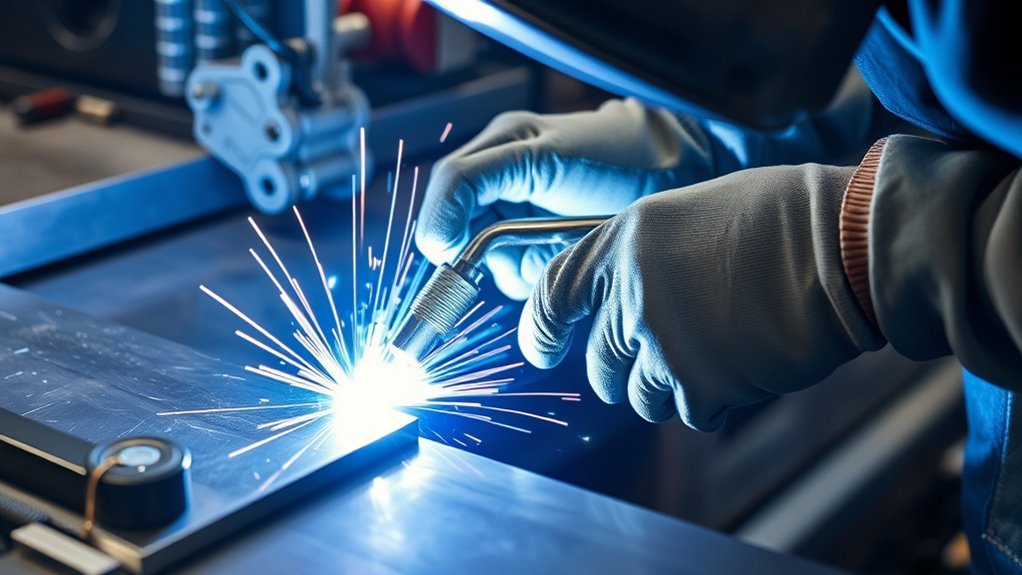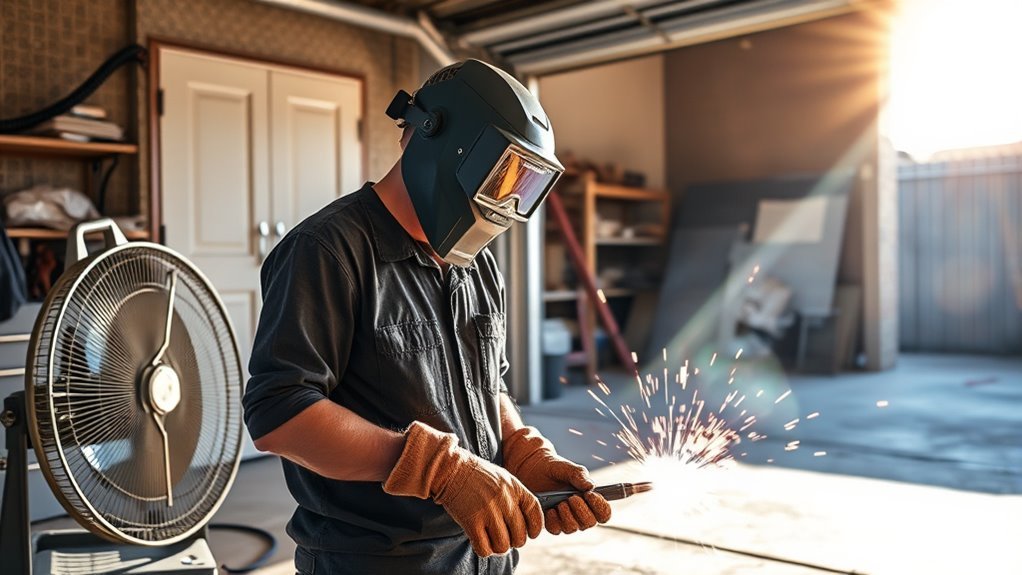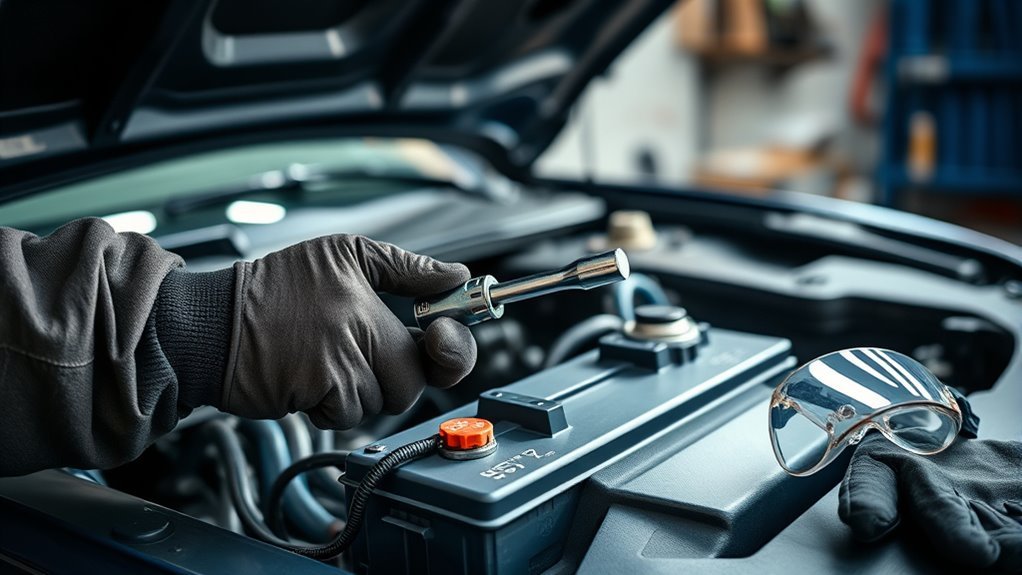
Before welding on a vehicle, shut the vehicle off, remove the key, and let the electrical system power down. Then disconnect the negative battery terminal first, followed by the positive terminal, and isolate both cables so they cannot touch the posts. If you are welding near the ECU, sensors, airbags, or other modules, check the service manual and unplug nearby sensitive connectors when required. Keep the welding work clamp on clean bare metal close to the repair, route welding cables away from wiring, and reconnect the battery in the correct order after the job.
Quick Answer
Yes, you should disconnect the car battery before welding. Remove the negative cable first, then the positive, isolate both cable ends, place the welding ground clamp close to the weld on clean bare metal, and keep welding leads away from wiring. After welding, reconnect positive first, then negative, and test the vehicle.
Key Takeaways
- Disconnect the negative terminal first before welding so your wrench is less likely to create a short to the vehicle body.
- Isolate both battery cables with caps, tape, or a clean dry barrier so they cannot spring back onto the posts.
- Put the welding work clamp on clean, bare metal close to the weld, preferably on the same panel or structural section.
- Unplug nearby modules only when the service manual or repair location calls for it, and label every connector you remove.
- Reconnect the battery positive first, negative last, then check warning lights, accessories, charging, and scan for faults if needed.
At a Glance
| Time Required | 10 to 20 minutes before welding, plus post-weld testing time |
| Difficulty | Easy on a standard 12V vehicle; professional-only for high-voltage EV or hybrid service |
| Tools Needed | Battery wrench or socket, insulated gloves, terminal covers or tape, marker labels, wire brush, fire extinguisher, service manual |
| Cost | Usually $0 to $20 if you already have basic tools and safety gear |
Warning: Do not work on, disconnect, weld near, or probe high-voltage EV or hybrid components unless you are trained and have the correct insulated tools and service information. NHTSA notes that EV traction batteries are different from a vehicle’s 12-volt battery and should not be serviced without proper training and specialized equipment.
How to Disconnect Your Car Battery Before Welding
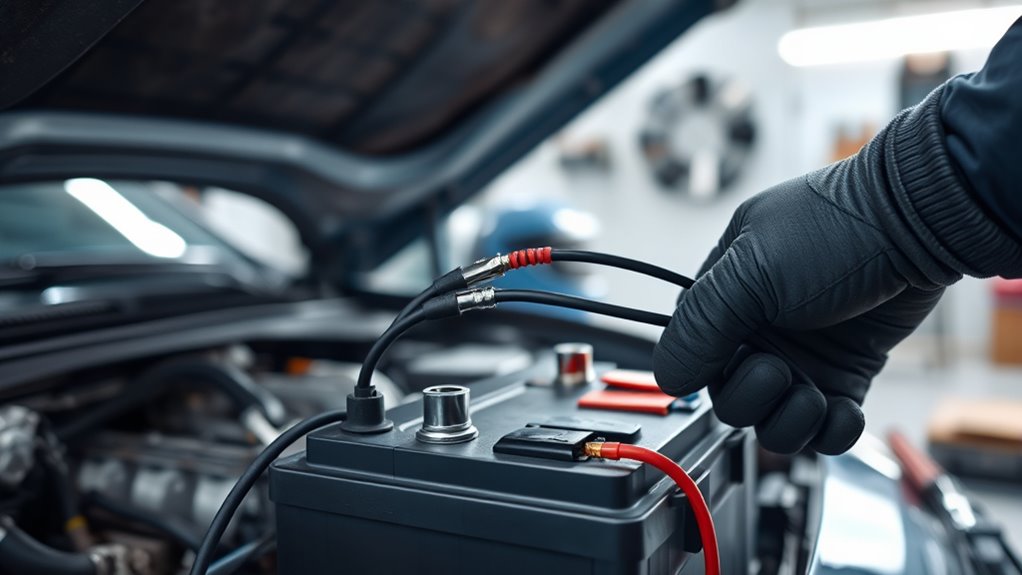
Start by parking the vehicle on a level surface, setting the parking brake, and removing the key or key fob from the work area. If the vehicle has push-button start, keep the fob far enough away that the car cannot wake up while you work.
Open the hood or battery access panel and check the battery condition before touching the terminals. Do not weld or disconnect a battery that is cracked, leaking, swollen, frozen, or giving off a strong sulfur smell. Stop and replace or professionally handle the battery first.
- Turn everything off. Switch off the ignition, lights, audio, climate controls, chargers, and accessories.
- Find the negative terminal. It is usually marked with a minus sign and often uses a black cable.
- Remove the negative cable first. Loosen the clamp and lift it clear of the battery post.
- Secure the negative cable. Wrap or position it so it cannot touch the battery, body, bracket, or tools.
- Remove the positive cable next. Lift it clear and cover the end so it cannot touch metal.
- Confirm isolation. Both battery leads should be separated, dry, and unable to spring back onto the posts.
This sequence helps reduce short-circuit risk on most modern negative-ground vehicles. If your vehicle is old, modified, positive-ground, or uses more than one battery, follow the service manual instead of guessing.
Note: Do not use a memory saver while welding. A memory saver keeps modules powered, which defeats the goal of isolating electronics from welding current and voltage spikes.
If you’re working on a hybrid or electric model, do not assume disconnecting the 12V battery makes the vehicle safe. Many EVs and hybrids use high-voltage contactors, service disconnects, capacitors, and special shutdown steps. Tesla’s first-responder information, for example, directs users to model-specific emergency response guides for high-voltage shutdown and de-energizing. Always use the manufacturer’s repair information for that exact vehicle.
Place the disconnected cables where they cannot move back to the terminals. That simple habit protects your tools, the vehicle, and the electrical system before the welding arc starts. Also wear proper protective clothing, a welding helmet, gloves, and eye protection before you begin.
Protect the ECU Before You Weld
Disconnecting the battery is only the first layer of protection. Modern vehicles have ECUs, body control modules, airbag modules, sensors, camera systems, radar units, and aftermarket electronics that can still be connected through harnesses and chassis grounds.
Before welding, check the service manual for module-disconnect rules. Some vehicles require certain modules to be unplugged before welding in a nearby zone. Others require scan-tool steps, wait times, or relearn procedures after the battery is reconnected.
Pro Tip: Take a clear phone photo before unplugging any connector. Add tape labels if several connectors look similar. That saves time and prevents wrong reconnection after the weld repair.
Disconnect Battery First
A single shortcut can turn a small welding job into a costly electrical repair, so disconnect the battery before you weld on a vehicle. Remove the negative cable first, secure it away from the post, then remove and isolate the positive cable.
Battery isolation lowers the chance of stray current traveling through powered circuits. It also reduces the chance that sensors or control modules wake up while your welder is attached to the vehicle.
If you are welding near the ECU or a major module, battery isolation alone may not be enough. The module can still be connected to chassis ground through its mounting points or harness. If the module is close to the work area, follow the service manual and unplug it before striking an arc.
Ground Clamp Placement
Place the welding work clamp as close to the weld area as you can. Use clean, bare metal, not paint, undercoating, rust, seam sealer, or a panel with hidden corrosion. A short, direct current path helps keep welding current out of wiring, bearings, hinges, sensors, and control modules.
| Check | What you want | Why it matters |
|---|---|---|
| Clamp point | Bare metal near weld | Shortens the current path |
| Cable route | Straight, secure, away from harnesses | Reduces stray current risk |
| Connection | Tight and corrosion-free | Improves arc stability |
OSHA’s arc welding standard says the work lead should be firmly attached before starting operations, and magnetic work clamps should be cleared of metal particles on contact surfaces. That same principle applies here: make the work-return path short, clean, and deliberate.
Unplug Sensitive Modules
Even with the work clamp set correctly, sensitive modules can still be exposed to electrical noise if the weld is close to them. If the ECU, airbag module, ABS module, radar sensor, camera module, or battery control module sits near the weld area, check the service manual before welding.
Unplug only what the manual recommends or what the repair clearly requires. Do not pull connectors by the wires. Release the lock tab, support the connector body, and keep removed connectors dry and clean.
If you are welding on galvanized metal, also make sure zinc coating is handled safely. Remove coating only where needed, use ventilation, and see this guide on how zinc residues are removed before welding.
Place the Ground Clamp Close to the Weld
For vehicle welding, clamp the ground lead close to the weld site, preferably on the same part you are welding. If you are patching a floor pan, clamp to cleaned metal on that pan or the closest connected structural section. If you are welding a bracket, clamp to the bracket or the same metal member when possible.
Put the clamp on clean, bare metal. Grind or brush a small area until it is free of paint, rust, seam sealer, adhesive, oil, and undercoating. A poor clamp point can force current to search for another path through hinges, brake cables, bearings, wiring, or module grounds.
Clamp to clean, bare metal near the weld so the welding current has the shortest safe return path.
Before you strike an arc, confirm the battery disconnect is complete, then inspect the clamp for tight contact. Recheck it if you move to another section of the vehicle. You are not just improving the weld; you are protecting the car’s electrical system.
A clean work surface also improves weld quality. If the repair area is contaminated, follow proper prep steps for a clean surface before welding.
Unplug Nearby Modules and Sensors
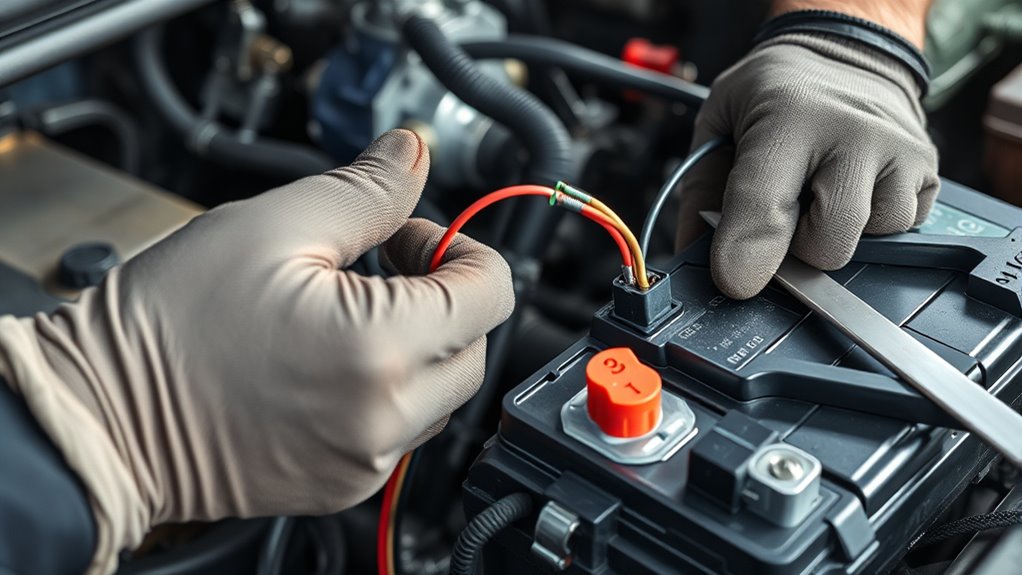
Before welding, identify nearby modules and sensors. Look behind trim panels, under seats, behind bumpers, near the firewall, around the battery tray, and inside the trunk. Some modules are hidden and may sit closer to the weld zone than you expect.
If a module or sensor is close to the repair area, unplug it only after the battery is disconnected and the service manual confirms the safe procedure. Record every connector you remove so you can reinstall it correctly after the repair.
| Action | Purpose |
|---|---|
| Check service information | Confirms required disconnections |
| Label connectors | Prevents wrong reassembly |
| Move harnesses away | Reduces heat and current exposure |
| Protect exposed wiring | Prevents sparks and spatter damage |
Good ventilation matters too, especially if you are welding coated metal, old underbody material, seam sealer, or galvanized parts. Review proper ventilation and cutting safety before welding near materials that can produce harmful fumes.
Keep Welding Cables Away From Wiring
Route your welding cables away from wiring, sensor harnesses, control modules, fuel lines, brake lines, and airbags. Do not let welding leads rest on a wiring loom or cross a module if you can avoid it.
Before you start, inspect the full cable run. OSHA says damaged welding cables with exposed conductors should be replaced, and wet machines should be dried and tested before use. Keep that same standard in the shop: no cracked insulation, loose lugs, crushed leads, or questionable clamps.
If space is tight, use welding blankets, cable sleeves, or temporary barriers to keep the leads away from harnesses and trim. Regularly inspect your setup for proper grounding so your work stays safe and controlled.
Cable Routing Distance
As a practical rule, keep welding cables at least several inches away from wiring and give sensitive electronics as much clearance as the repair allows. When possible, keep leads around 12 inches or more away from modules, sensors, and harnesses.
Run leads along metal structure instead of across wiring. Secure them with clamps or ties so they do not sag, shift, or touch hot metal while you weld. If you move the welder or change position, check the cable route again before continuing.
Avoid Sensor Harnesses
Avoid sensor harnesses by keeping welding leads clear of wiring, connectors, and modules. The goal is simple: welding current should travel between the electrode, weld area, and work clamp, not through the vehicle’s wiring network.
| Check | Action |
|---|---|
| Cable route | Keep clear of harnesses |
| Distance | Use maximum practical clearance |
| Covering | Use welding blankets or sleeves |
| Ground clamp | Place near the weld |
| Monitoring | Recheck after every position change |
Protect Electronics Nearby
To protect nearby electronics, combine three habits: disconnect the battery, place the work clamp close to the weld, and route leads away from wiring. These steps work together. Skipping one of them makes the others less effective.
Use insulated covers or wraps where contact is possible. While you work, watch the cable position and move it if it drifts toward sensors, wiring, ECUs, or airbag harnesses.
Fire and Shock Safety Before Welding on a Car
Welding on a vehicle is hot work. OSHA describes hot work as work that includes welding, cutting, brazing, grinding, or other spark-producing operations. A vehicle repair area often contains undercoating, carpet, insulation, fuel residue, grease, trim, seam sealer, and wiring, so fire control matters before the arc starts.
- Keep a suitable fire extinguisher nearby and ready.
- Move combustibles away from the work area when possible.
- Use welding blankets to protect trim, glass, wiring, and upholstery.
- Check both sides of the panel for hidden insulation, foam, fuel lines, and wiring.
- Use a fire watch during and after welding if sparks can reach hidden spaces.
- Keep the work area dry, and do not weld with wet gloves, wet clothing, or wet equipment.
OSHA welding rules require suitable fire-extinguishing equipment and specific combustible-material precautions in welding areas. The same source also requires appropriate PPE for welding, cutting, and brazing hazards. Use a welding helmet, gloves, flame-resistant clothing, and eye protection every time.
Products Worth Considering

Upgraded Reinforced Design – Unlike standard welding blankets with plain grommets, this fiberglass welding blanket comes reinforced metal grommets that resist loosening, making it more durable and stable. Each grommet is fitted with a double-sided thick black plastic washer for added strength, ensuring stronger support, more secure hanging, and flexible installation for maximum durability and safety during welding, cutting, and fire protection

Well-woven Fiberglass Blanket: Constructed from 24.7 oz/yd² fiberglass material, this welding blanket serve as an excellent shield against heat and fire. Tight stitching and exquisite weaving. Our heat resistant mat shield is a nice addition to welding equipment. Standard size : 4x6 ft (122x183cm), thickness: 0.31” (8mm)

Extreme Heat Resistance (3000°F+) – Carbon Fiber Welding Blanket Made of high-density carbon felt welding blanket, our fireproof welding blanket certified to ASTM D6413 and UL94-V0, withstands extreme temperatures over 3000°F — Outperforms standard fiberglass welding blankets (1000°F limit)Much more effective at stopping spatter than fiberglass offerings, and doesn't shed glass fibers!
Reconnect the Battery and Test the Car
After welding, let hot metal cool safely, inspect for smoldering materials, and remove welding blankets only after you are sure there is no hidden fire risk. Then reinstall any modules or connectors you unplugged.
Reconnect the battery in reverse of the disconnect sequence on a typical negative-ground vehicle: positive terminal first, negative terminal last. Tighten each clamp so it does not move by hand, but do not crush or overtighten the terminal.
- Check that all tools are away from the battery.
- Reconnect the positive cable and tighten the clamp.
- Reconnect the negative cable and tighten the clamp.
- Confirm both terminals are clean, secure, and free of corrosion.
- Switch the ignition on without starting, then watch the dash warning lights.
- Start the engine and confirm normal cranking, idle, and charging behavior.
Next, test the vehicle’s functionality in a controlled way. Check lights, brake lights, turn signals, windows, locks, wipers, radio, navigation, climate controls, power seats, cameras, parking sensors, and any system near the repair area.
If the vehicle shows a warning light, no-start condition, rough idle, inoperative accessory, or communication fault, stop and check your connector work. A scan tool may be needed to read and clear diagnostic trouble codes. Some vehicles may also need window, steering-angle, throttle, or idle relearn steps after battery power is restored.
Good grounding techniques help prevent erratic behavior during welding, but post-weld testing confirms the vehicle is safe to return to service.
Common Welding Mistakes to Avoid
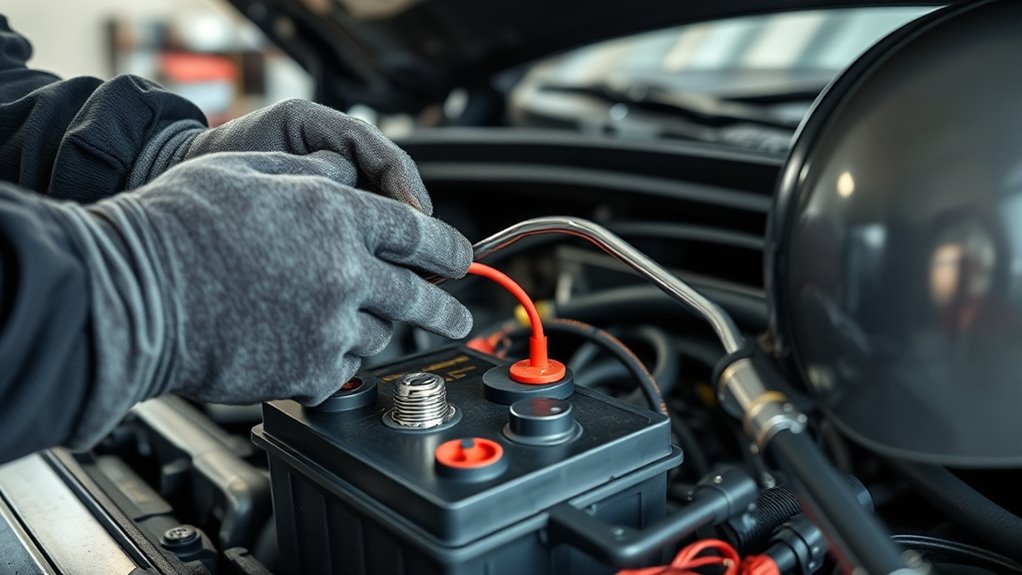
Even when you disconnect the battery, poor welding setup can still damage vehicle electronics. Avoid these common mistakes before you weld.
- Do not reconnect negative first. On most negative-ground vehicles, reconnect positive first and negative last.
- Do not ground far from the weld. A long return path can send current through parts that were never meant to carry welding current.
- Do not clamp onto paint, rust, or undercoating. Clean metal contact improves arc stability and current return.
- Do not weld near electronics without checking the manual. Disconnect or remove nearby modules when the service information calls for it.
- Do not route welding leads across harnesses. Keep cables away from wiring, sensors, airbags, and control units.
- Do not rely on surge devices alone. Surge protection can be a backup, but it does not replace battery isolation, correct clamp placement, and cable routing.
- Do not ignore fire risk. Remove flammable materials, protect trim, and inspect hidden spaces after welding.
Also make sure any cutting or grinding work is handled safely. If you need to prep the area with a grinder, choose the correct wheel and follow safe technique when you select the right disc.
Products Worth Considering

Acting like a sponge to soak up electrical surges, this unit protects sensitive electronic components when mig and spot welding on a vehicle

【LED Indicator】Clamps across the battery, when the green LED is illuminated, the system is protected from spikes while the vehicle is being worked on. No protection when the red light is on.

Eliminates the need to disconnect the battery from the terminal while welding; Provides protection for sensitive vehicle electronics during MIG, TIG, or Argon Arc welding
Frequently Asked Questions
Do I need to disconnect my car battery before welding?
Yes. Disconnecting the battery helps reduce the chance of shorts, voltage spikes, and module damage while welding on a vehicle. It is not the only safety step, though. You still need correct work clamp placement, cable routing, PPE, and service-manual checks.
Which battery terminal should I disconnect first before welding?
Disconnect the negative terminal first on most modern negative-ground vehicles. This reduces the chance of shorting a wrench between the positive terminal and the vehicle body. Then remove and isolate the positive cable.
Should I disconnect the positive terminal too?
Yes, for welding on a vehicle, disconnect and isolate both battery cables unless the manufacturer gives a different procedure. Removing only the negative cable may not be enough when modules, aftermarket electronics, or multiple batteries are involved.
Do I need to unplug the ECU before welding?
Not always. If the ECU or another sensitive module is near the weld zone, follow the service manual. Many repairs only need battery isolation and correct clamp placement, but nearby modules may need to be unplugged or removed.
Where should I put the welding ground clamp on a car?
Put the clamp on clean, bare metal as close to the weld as practical, ideally on the same panel or structural section. Avoid painted, rusty, greasy, or insulated surfaces because poor contact can push current through unsafe paths.
How do I avoid electrical shock when welding?
Keep gloves, clothing, cables, and the work area dry. Use insulated welding gloves and boots, inspect cables for damage, avoid live parts, and do not coil welding cables around your body. If equipment is wet or damaged, stop and fix it before welding.
Which battery terminal should I reconnect first after welding?
Reconnect the positive terminal first, then reconnect the negative terminal last on most modern negative-ground vehicles. After reconnecting, test the car and check for warning lights or electrical faults.
Is welding on a hybrid or electric vehicle different?
Yes. EVs and hybrids can have high-voltage components that remain dangerous even when the 12V battery is disconnected. Use the manufacturer’s high-voltage shutdown procedure and do not attempt high-voltage service unless you are trained for it.
Conclusion
Before you weld on a car, disconnect the battery, protect the ECU and nearby modules, and keep the welding work clamp close to the weld on clean bare metal. Route welding cables away from wiring, unplug nearby electronics only when the service manual calls for it, and never treat an EV or hybrid high-voltage system like a normal 12V battery. After welding, reconnect the battery positive first and negative last, then test the car before driving.
Sources
- OSHA Welding, Cutting, and Brazing — overview of welding hazards and standards.
- OSHA 1910.252 General Requirements — fire prevention, PPE, eye protection, and hot-work safety requirements.
- OSHA 1910.254 Arc Welding and Cutting — work lead, cable, grounding, and equipment-use requirements.
- NHTSA Electric and Hybrid Vehicles — high-voltage battery safety and EV/HEV service cautions.
- Tesla First Responders Information — model-specific high-voltage shutdown and emergency response resources.