A leak-free exhaust connection starts with the right joint design, not just a piece of pipe. A bolt-on exhaust flange normally requires a correctly sized weld-on flange, repair ring, or formed ball-and-socket end. You then cut the tubing square, align the parts, weld without warping the flange, install the specified gasket, and tighten the hardware to the vehicle or component maker’s instructions.
Quick Answer
To make an exhaust flange connection from pipe, match the tubing to a weld-on flange or formed socket made for that joint. Cut and deburr the pipe, test-fit the gasket, tack the flange square, weld in short alternating sections, then install the joint and tighten the fasteners evenly to the specified torque.
Key Takeaways
- Pipe alone does not provide the flat face and bolt holes of a conventional bolt-on flange.
- Identify whether the joint uses a flat gasket, a doughnut gasket, a ball-and-socket seat, or another connection before buying parts.
- Match the pipe outside diameter, flange bore, gasket, bolt pattern, and material before cutting.
- Tack and weld in short alternating sections so heat does not pull the flange out of square.
- Use the application-specific torque sequence and check the finished system for clearance, stress, and leaks.
At a Glance
| Time Required | About 2 to 4 hours, depending on access, joint type, and welding experience |
| Difficulty | Intermediate to advanced metal fabrication |
| Tools Needed | Caliper or tape, wraparound or square, saw or cutoff wheel, deburring tools, clamps, welder, and PPE |
| Cost | Low to moderate when you already own welding equipment; the flange type and material control the parts cost |
What’s in This Article
- Before You Begin
- Identify the Exhaust Joint
- Choose the Pipe, Flange, and Gasket
- Measure and Mark the Cut Line
- Cut and Prepare the Pipe
- Fit and Weld the Flange
- Install the Gasket and Hardware
- Figure Out the Final Exhaust Route
- Test for Leaks
- Troubleshooting
- Common Mistakes to Avoid
- Frequently Asked Questions
- Conclusion
- Sources
Before You Begin
Gather the tubing, matched flange or repair ring, correct gasket, new hardware, measuring tools, cutting tools, deburring tools, clamps, and welding equipment. You may also need an exhaust tubing expander or a purpose-built flaring machine when the joint uses a formed ball or socket instead of a flat weld-on flange.
Work only on a cold exhaust system. Support the vehicle on equipment rated for its weight and follow the vehicle maker’s lifting points and service procedure. Never rely on a hydraulic jack alone. Remove oil, fuel, upholstery, wiring, undercoating, and other combustible materials from the spark path before cutting or welding.
Warning: Cutting, grinding, and welding create flying metal, hot sparks, fumes, noise, ultraviolet radiation, and fire hazards. Wear suitable eye and face protection, hearing protection, gloves, protective clothing, and respiratory protection when required. OSHA lists hot metal, fumes, gases, noise, and radiation among the main hot-work hazards.
Before welding on a vehicle, follow the service manual’s battery and electronics precautions. Place the welding return clamp on clean bare metal as close to the weld as practical, and never route welding current through bearings, control modules, or sensitive wiring.
Note: In the United States, removing, bypassing, or disabling emissions-control equipment can violate the Clean Air Act. Keep catalytic converters, oxygen sensors, particulate filters, and other required controls in their approved configuration, and check local rules before modifying an exhaust system.
Identify the Exhaust Joint
Start by identifying the joint you need to reproduce. The word flange can describe several different exhaust connections, and the parts do not interchange.
- Flat two-bolt or three-bolt flange: A flat plate or ring is welded to the pipe and seals against a flat gasket or metal gasket.
- Ball-and-socket flange: A formed spherical pipe end mates with a matching socket and may use spring bolts.
- Doughnut-gasket joint: A tapered or rounded gasket fits between formed mating surfaces. A flat pipe end will not seal it correctly.
- V-band joint: Two machined weld ferrules are held together by a V-band clamp and normally do not use a conventional doughnut gasket.
- Slip-fit joint: One pipe fits into another and uses the specified clamp, lap-joint band, or welded seam.
A conventional bolt-on flange cannot be made from pipe alone because the joint also needs a flat or formed sealing surface and a bolt or clamp interface. Use a manufactured weld-on flange, flange repair ring, or matched formed end. Do not substitute freehand hammering for a controlled forming process.
Choose the Pipe, Flange, and Gasket
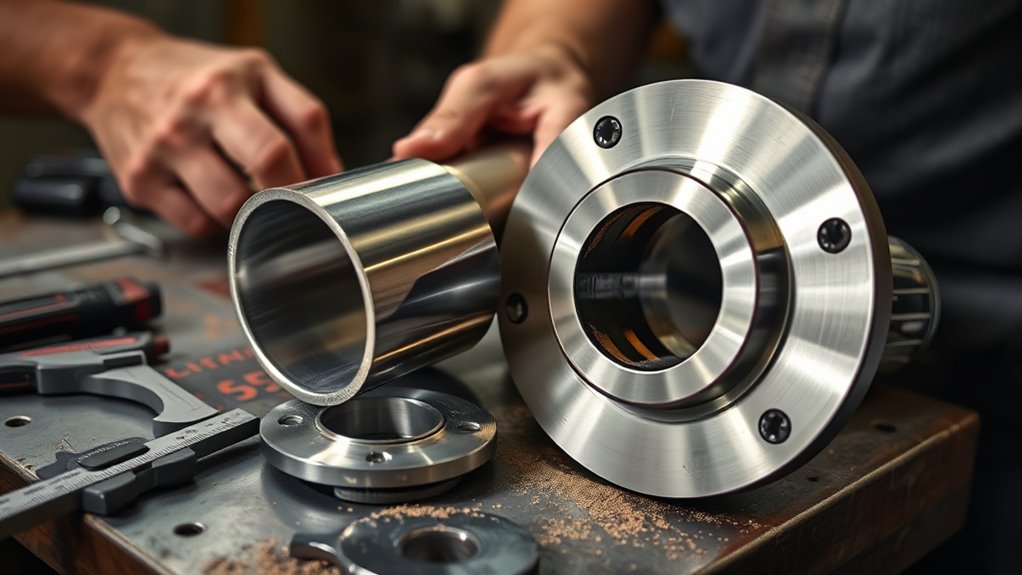
Measure the existing tubing’s outside diameter with a caliper whenever possible. Match that measurement to the flange bore and the gasket or mating component. Nominal exhaust sizes do not always tell you whether a pipe is designed to slip over another tube, slip inside it, or butt-weld to it.
Match the material as closely as practical. Mild-steel tubing pairs well with a mild-steel flange, while stainless tubing should use a compatible stainless flange and filler metal. Mixing materials can make welding more difficult and may speed corrosion at the joint.
Inspect the tubing for dents, severe pitting, cracks, thinning, or previous repairs. Do not weld a new flange to metal that is too thin to support the joint. Replace the weak section first.
Confirm all of these dimensions before cutting:
- Pipe outside diameter and wall condition
- Flange bore and bolt-hole pattern
- Gasket inside diameter, outside profile, and thickness
- Fastener size, grade, spring hardware, and locking method
- Required orientation relative to hangers, bends, sensors, and nearby parts
There is no universal flange thickness for every exhaust. Choose a manufactured flange or repair part designed for the pipe size, gasket, temperature, and load. When you design a one-off flat flange, verify the dimensions and weld sizing with a qualified fabricator.
Products Worth Considering

Premium Materials: This exhaust flange gasket is crafted from high-quality stainless steel, offering resistance to high temperatures and pressures. It withstands extreme heat generated by exhaust systems without deformation or damage, ensuring robust durability and extended service life.

Improved Sealing: Our flange repair kit can firmly connect critical parts inside the car, such as manifolds and mufflers. The use of gaskets and bolts improves the sealing of the joints, effectively avoiding spillage and reducing noise
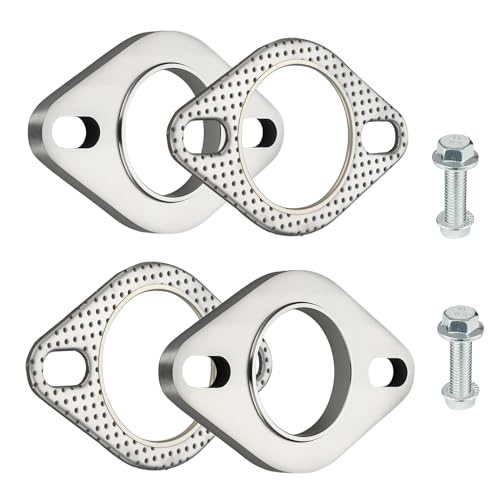
Package Included:The exhaust flange connection kit has 2 PCS flanges, 2 PCS gaskets, 2 PCS bolts and nuts. Flange ID: 1.81″ / 46mm. Flange Thickness: 0.31″ / 8mm. Flange Bolt Size: M10 x 35mm
Measure and Mark the Cut Line
Mock up the exhaust route before you cut. Hold the flange against its mating surface, position the pipe in the intended path, and mark the pipe where the finished weld joint must sit. Include enough straight tubing for the flange, weld bead, clamp access, and any required insertion depth.
Establish a Reference Line
Mark a longitudinal reference line along the pipe and transfer that line onto the flange. This clocking mark helps you keep the bolt holes in the correct position after the pipe leaves the vehicle.
For a flange with an asymmetric bolt pattern, make a cardboard or thin-sheet template from the mating part. Mark the top, bottom, and vehicle centerline so you cannot install the flange rotated 180 degrees.
Mark a Square Cut Line
Use a pipe wraparound, a strip of paper with straight edges, or a tubing square to draw a line around the full circumference. Measure from more than one reference point to confirm that the line is square.
Keep the mark narrow and visible. A thick marker line can hide several millimeters of error, which may tilt the flange and preload the exhaust when the bolts are tightened.
Remove paint, rust, oil, plating, and coatings from the weld zone. If the tubing is galvanized or zinc-coated, review safe coating-removal and ventilation practices before heating it; this guide to zinc coating and welding explains the added fume hazard.
Cut and Prepare the Pipe
Choose a band saw, chop saw, tubing cutter, or cutoff wheel that suits the pipe diameter, wall thickness, and access. Clamp the pipe securely and keep hands out of the cutting path. For cutoff-wheel setup and PPE, follow these safe cutoff wheel cutting steps.
Cut on the waste side of the line and let the tool do the work. Do not force a wheel sideways. If you use plasma cutting, allow extra material for cleanup and remember that the heat-affected edge will need grinding; this overview of plasma-cutter heat explains why careful handling matters.
After cutting, deburr the inside and outside edges. Dress the pipe until the end is square and fits fully into or against the flange without rocking. Remove enough oxide and coating to expose bright metal around the weld zone.
Pro Tip: Slide the flange onto a straight scrap of matching pipe before using it. If it rocks or the bore is badly oversized, correct the part now instead of trying to pull it square with the bolts later.
Fit and Weld the Flange
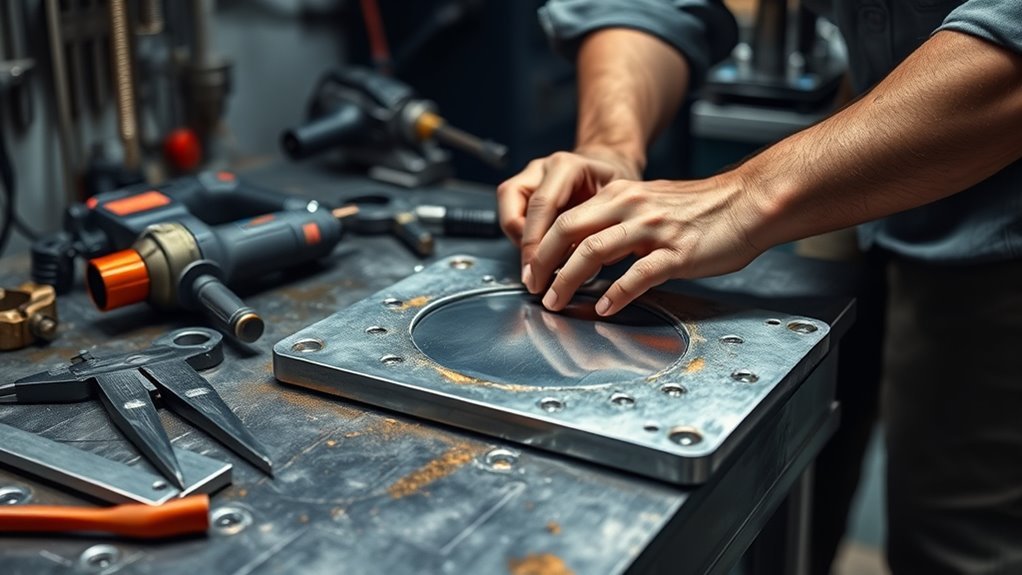
Clean the flange bore and both sides of the weld area. Position the flange so its sealing face is square to the pipe centerline. Use a machinist’s square, a flat welding table, or a simple fixture to hold the parts in alignment.
For a flat weld-on flange, seat the pipe at the depth intended by the flange design. Tack it in at least four evenly spaced positions. Recheck bolt-hole clocking, pipe angle, and face squareness after the first two tacks and again after all tacks are in place.
Weld short sections on opposite sides of the pipe, allowing the joint to cool between passes. Alternating the weld location helps balance shrinkage and reduces flange warping. Use a process and filler metal that match the tubing and flange. These exhaust-pipe cleaning and welding practices can help with thin-wall tubing.
If the joint uses a ball, flare, or doughnut-gasket seat, form the pipe with the correct exhaust tubing expander, swaging dies, or flaring machine. Do not beat the edge outward with a hammer. Freehand blows can thin the wall, create cracks, distort the seat, and produce uneven gasket pressure.
Let the assembly cool naturally. Do not quench a hot flange. Place the sealing face against a known-flat surface and check for rocking or visible gaps. A warped flange should be resurfaced by a capable machine shop or replaced.
The bolts should clamp an already aligned joint. They should not be used to bend a crooked pipe or pull a warped flange flat.
Install the Gasket and Hardware
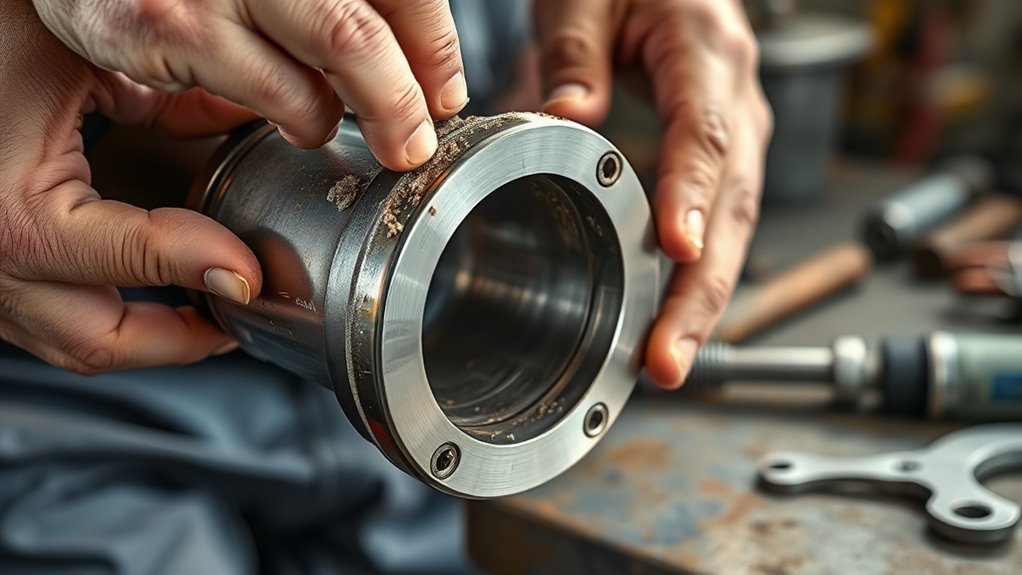
Select the exact gasket style required by the mating parts. A doughnut gasket must match the seat angle and diameter, while a flat flange requires the specified flat or embossed gasket. Replace damaged spring bolts, studs, nuts, and retainers with application-correct hardware.
Products Worth Considering

Buyer's Guide:Car exhaust gasket OEM#120-06310-0002. Its size is 120x80mm/4.72x3.16inch, thickness is 2mm/0.78inch, and inner diameter is 51mm/2inch. The exhaust flange gasket comes with 2 bolt holes spaced 69-105mm/2.69-4.15inch apart. It is suitable for bolt hardware smaller than 12mm or 1/2 inch.

【Shock Absorbing Spring】 This car bolt is different from similar products in the market, we also specially equipped with springs, the springs can absorb some of the vibration, reduce the impact of vibration on the fixed parts, prolong the life of the parts. In high temperature environments, the bolts with springs can compensate for this change through the compression or extension of the spring, maintaining the sealing and stability of the system.

Package Dimensions: 0.508 cms (L) x 22.199 cms (W) x 22.301 cms (H)
Check Gasket Fitment
Clean the sealing faces without gouging them. Test-fit the gasket before assembly. It should sit evenly without rocking, folding, or blocking the exhaust passage.
Install the gasket dry unless its manufacturer or the vehicle service procedure specifically calls for a sealant. Modern gasket designs may rely on built-in coatings or sealing layers, and extra RTV can interfere with seating. Fel-Pro advises using supplemental sealant only where the gasket instructions require it.
Align and Tighten the Joint
Support the exhaust so the pipes meet naturally. Start every fastener by hand, then snug them gradually. For two-bolt flanges, alternate between the bolts. For three-bolt or multi-bolt flanges, use an even rotating or cross pattern as the design allows.
Use the vehicle or component manufacturer’s torque specification. Do not copy a generic torque value from another flange. Walker recommends progressively tightening flange fasteners and keeping the load even because incorrect torque can cause leaks, gasket failure, stud damage, and fatigue.
Keep welding clothing and nearby materials protected from heat and sparks. Review suitable flame-resistant materials when the joint still needs welding or hot adjustment.
Figure Out the Final Exhaust Route
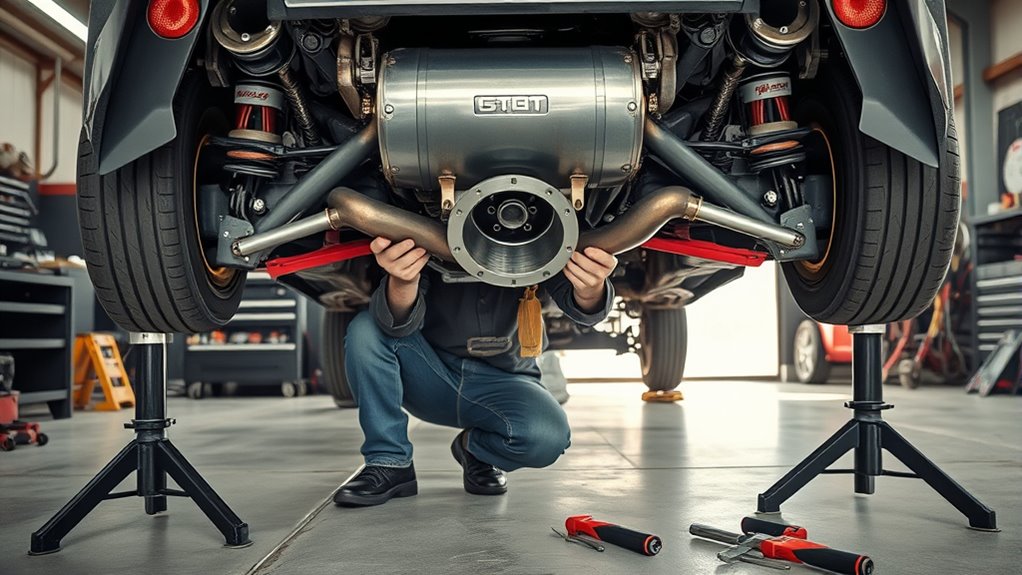
Leave all clamps, flange bolts, and hangers slightly loose until the complete system is assembled. Adjust the pipes so the hangers share the load and the flange faces meet without side pressure.
Check clearance around the body, frame, suspension, brake and fuel lines, wiring, hoses, heat shields, plastic trim, and the driveshaft. Walker’s general installation guidance calls for roughly 1/4 to 1/2 inch around potential metal-to-metal contact points and 2 to 3 inches from non-metal parts that are not designed for exhaust heat. Treat those figures as general guidance and follow the vehicle maker’s larger clearance wherever specified.
- Verify alignment at every bend and hanger.
- Make sure the exhaust can move as the engine rocks and the tubing expands with heat.
- Keep the tailpipe outlet outside the body perimeter as designed.
- Confirm oxygen-sensor wires are not twisted, stretched, or touching hot metal.
- Install every required brace, spring bolt, heat shield, and isolator.
Once the system sits naturally, tighten the hardware in stages. The finished exhaust should not depend on the flange bolts to hold the pipe away from the body.
Test for Leaks
Inspect the cold joint first. Check that the gasket is centered, the flange faces are parallel, the weld has no visible pinholes, and the hardware is evenly seated.
Move the vehicle outdoors before running the engine. Start it briefly and listen for ticking or puffing at the joint while keeping your hands, clothing, and tools away from hot or moving parts. An automotive smoke machine is the safest precise way to find small leaks without touching the joint.
Carbon monoxide is colorless and odorless. The CDC warns that even a small exhaust leak can allow carbon monoxide to build up inside a vehicle. Never run the engine in an attached garage, even with the garage door open.
After the first full heat cycle, let the system cool completely and inspect the flange, gasket, weld, hangers, and clearances again. Recheck torque only when the vehicle or hardware manufacturer calls for it.
Troubleshooting
| Problem | Likely Cause | Fix |
| Leak at one side of the gasket | Warped flange, uneven torque, or side-loaded pipe | Realign the system, check flange flatness, replace the gasket, and tighten evenly to specification |
| Bolt holes do not line up | Incorrect clocking or wrong flange pattern | Do not enlarge the holes casually; verify the template and replace or reweld the flange in the correct position |
| Weld cracks after driving | Poor penetration, contaminated metal, missing hanger, or excessive drivetrain movement | Remove the cracked weld, repair sound metal, and correct the support or movement problem before rewelding |
| Rattle after installation | Insufficient clearance or loaded isolator | Neutralize the system, reposition the pipe, and restore the required heat and movement clearance |
Common Mistakes to Avoid
- Hammering a flange by eye: This can create an uneven, cracked, or thin sealing edge. Use a manufactured flange or proper forming dies.
- Choosing parts by nominal pipe size alone: Measure the actual pipe outside diameter and confirm the flange bore and gasket profile.
- Cutting before checking bolt-hole clocking: Make a reference line or template first.
- Welding continuously around the flange: Excess heat can warp the sealing face. Use short, alternating weld sections.
- Using sealant automatically: Follow the gasket maker’s instructions. Extra RTV can prevent correct seating.
- Pulling the exhaust into place with bolts: Support and align the system before tightening.
- Guessing the torque: Use the service manual or component maker’s value and sequence.
- Skipping the leak test: A small leak can introduce exhaust gases into the cabin and damage nearby parts.
Frequently Asked Questions
Can I fabricate my own exhaust?
Yes, when you can measure, cut, support, and weld thin tubing safely. Use application-correct flanges, gaskets, hangers, and hardware. Do not alter required emissions equipment, and use a qualified exhaust fabricator when the joint is near a catalytic converter, turbocharger, fuel system, or structural component.
How do you create an exhaust flange?
For a bolt-on joint, use a correctly sized weld-on flange or repair ring. Cut the tubing square, deburr and clean it, clock the bolt holes, tack the flange square, weld in short alternating sections, check flatness, install the correct gasket, and tighten the hardware evenly to the specified torque.
Can I make a bolt-on flange from pipe alone?
Not a conventional flat bolt-on flange. Pipe does not provide the flat sealing face and bolt-hole area. You need a separate weld-on flange, repair ring, or a matched formed connector made with the correct tooling.
What is the formula for flange design?
There is no single safe formula for every automotive exhaust flange. The design depends on pipe diameter, gasket geometry, bolt pattern, flange material and thickness, temperature, vibration, and the load from the exhaust system. Copy the original equipment dimensions or use a manufactured flange. Have a qualified fabricator review a one-off high-load or turbo application.
How thick should an exhaust flange be?
Use the thickness specified for the flange, gasket, and application. A universal 1/4-inch recommendation is not reliable because small tailpipe joints, manifolds, turbo outlets, and V-band ferrules carry different heat and loads. A manufactured application-specific flange is the safer choice.
Should I use gasket maker on a doughnut gasket?
Only when the gasket maker, gasket manufacturer, or vehicle service procedure specifically requires it. Many exhaust gaskets are designed to seal on clean, dry surfaces. Unapproved sealant can act as a lubricant, create uneven clamping, or burn away and leave a leak path.
Can I shape a doughnut-gasket seat with a hammer?
Do not rely on freehand hammering for a sealing seat. Use the correct swaging, expanding, or flaring dies so the surface remains round, smooth, and concentric. Replace the pipe end when it is cracked, thinned, or badly distorted.
Conclusion
The reliable way to make an exhaust flange connection from pipe is to combine accurately cut tubing with the correct manufactured flange or properly formed connector. Match the joint type, gasket, material, bolt pattern, and pipe diameter before cutting. Then keep the flange square, control welding heat, and let the complete exhaust sit naturally before final tightening.
Finish by checking the weld, gasket seating, hardware, hangers, heat clearance, and tailpipe position. Test the system outdoors for leaks and inspect it again after a full heat cycle. A straight, supported, correctly torqued joint will seal better and place less stress on the rest of the exhaust.
Sources
- Walker Exhaust: How to Properly Torque Flanges — progressive tightening, even fastener load, and flange-failure prevention
- Walker Exhaust: Exhaust System Installation Tips — system neutralization, hardware tightening, hanger checks, and clearance guidance
- Fel-Pro: Exhaust System Gaskets — exhaust gasket types, heat, motion, corrosion, and sealing requirements
- Fel-Pro: Proper Gasket Installation — clean, dry installation and when supplemental sealant may interfere with gasket seating
- OSHA: Hot-Work PPE and Hazards — eye, face, hand, clothing, fume, radiation, and noise protection
- CDC: Carbon Monoxide Poisoning Basics — exhaust-leak and enclosed-garage carbon monoxide risks