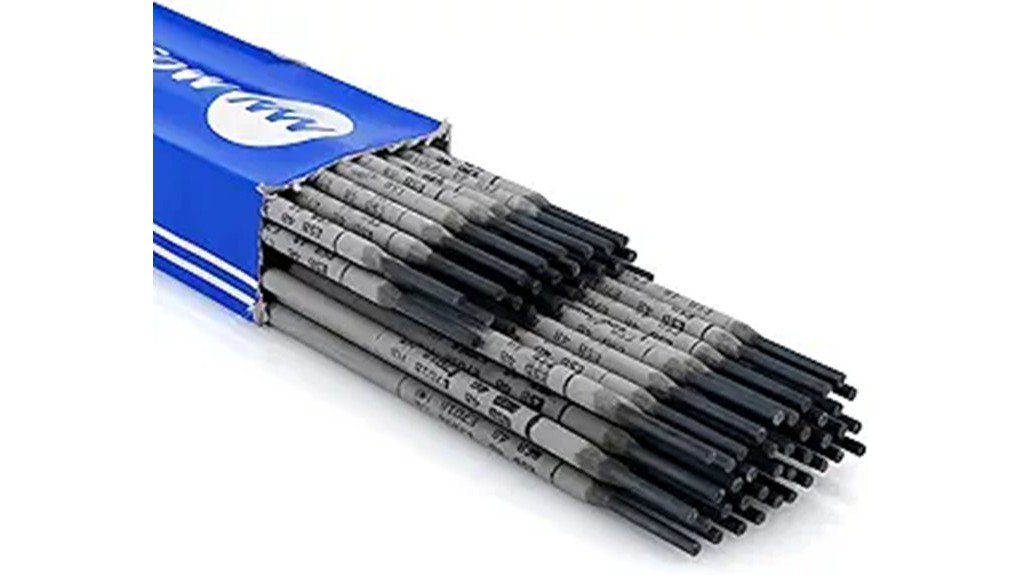
Nickel TIG filler rods for cast iron come in two common alloys, and this comparison covers Blue Demon’s ERNi55 and ERNi99. Nickel 99 is a near-pure nickel rod, while nickel 55 is a nickel-iron alloy. Both are listed as 3/32 in. x 36 in. rods in a 1 lb tube. This page focuses on the specs and what the alloy numbers mean.
Top Picks
|
Best for |
Product |
|---|---|
|
Repairs you will machine afterwards |
|
|
Joining cast iron to mild steel |
Nickel TIG Filler Rods: What 55 and 99 Mean
- Alloy: nickel 99 is a near-pure nickel filler. Nickel 55 is a nickel-iron alloy, with roughly 55% nickel and the balance mostly iron.
- Machining: retailer pages describe Ni99 welds as easy to machine and Ni55 welds as moderately hard, needing carbide-tipped tools.
- Joints: the Ni55 rod is listed for welding gray iron to itself and to mild steel. The Ni99 rod is listed for repairing gray iron castings, overlay and build-up.
- Sizes: both rods are sold in 1/16, 3/32 and 1/8 in. diameters and 36 in. length per the retailer pages. The listings reviewed here are 3/32 in.
- Labels: retailer pages use ERNi-CI and ENiFe-CI names loosely, so read the label on the tube.
Packaging size and price per tube were included because they affect how you stock consumables, and customer ratings helped validate performance across repair and machining scenarios.

Blue Demon’s Ni55 TIG rod is a nickel-iron filler for welding gray iron castings to themselves, joining them to mild steel, and repairing castings. The retailer page recommends at least 350°F (177°C) preheat and interpass temperature.
The welds are moderately hard, so plan on carbide-tipped tools if you machine them afterwards.
Buyer Feedback to Check
Read the recent buyer reviews on the listing page before you order. Look for comments on how the rod flows, how the weld machines, and how many rods came in the tube.
|
Pros |
Cons |
|---|---|
|
✅ Listed for gray iron to itself and to mild steel |
❌ Welds are moderately hard and need carbide tools to machine |
|
✅ Clear preheat figure on the retailer page |
❌ Preheat of at least 350°F (177°C) |
|
✅ 3/32 in. x 36 in. rods in a 1 lb tube |
❌ About 12 to 16 rods per 1 lb tube |
Best Uses
- Joining cast iron to mild steel
- Strength-focused gray iron repairs
- General cast iron shop repairs
Blue Demon’s Ni99 TIG rod is a high-nickel filler for repairing gray iron castings and for overlay and build-up work. The retailer page says the high nickel content makes the welds easy to machine and recommends preheating.
Dilution from the casting changes the weld’s properties, so keep heat input controlled and cool the part slowly.
Buyer Feedback to Check
Read the recent buyer reviews on the listing page before you order. Look for comments on how the rod flows, how the weld machines, and how many rods came in the tube.
|
Pros |
Cons |
|---|---|
|
✅ High-nickel deposit described as easy to machine |
❌ Preheat recommended and slow cooling needed |
|
✅ Listed for gray iron repair, overlay and build-up |
❌ Weld properties change with dilution from the casting |
|
✅ 3/32 in. x 36 in. rods in a 1 lb tube |
❌ Not the rod listed for joining cast iron to steel |
Best Uses
- Castings you will drill, tap or machine after welding
- Build-up of worn cast iron surfaces
- Cracked gray iron housings and brackets
Related guides: TIG filler rod types for automotive welding, how to weld cast iron automotive parts, and ENi-CI nickel cast welding electrodes.
Frequently Asked Questions
What is the difference between nickel 55 and nickel 99 TIG rods?
Nickel 99 is a near-pure nickel filler, and retailer pages describe its welds as easy to machine. Nickel 55 is a nickel-iron alloy listed for joining gray iron to itself and to mild steel, with moderately hard welds that need carbide tools to machine.
Which nickel TIG filler rod is easier to machine?
Nickel 99. The retailer page says its high nickel content makes the welds easy to machine, while the nickel 55 page says carbide-tipped tools are needed.
Can nickel TIG filler rods weld cast iron to steel?
The nickel 55 rod is listed for joining gray iron castings to mild steel. Test on scrap of the same materials first, because castings vary and dilution affects the result.
What diameters do these rods come in?
Retailer pages list 1/16, 3/32 and 1/8 in. diameters in 36 in. lengths. The two listings covered here are 3/32 in.
How many rods come in a 1 lb tube?
Retailer information gives roughly 12 to 16 rods at 3/32 in., 26 to 30 at 1/16 in. and 8 to 10 at 1/8 in. The exact count varies, so check the listing.
Which Rod Fits Which Job
Pick Ni55 for cast-to-steel joints or tougher repairs where carbide tooling is acceptable, and Ni99 for repairs that will be drilled, tapped or ground. Preheat and cool slowly with either rod.
Bottom Line
Choose Blue Demon ERNi99 when the repair has to be machined, and ERNi55 when you are joining cast iron to mild steel or can machine with carbide. With either nickel TIG filler rod, preheat as the tube instructs, control heat input, cool slowly, and wear eye protection and gloves with good ventilation.
| Blue Demon ERNI55 X 3/32″ X 36″ X 1LB Tube | Blue Demon ERNI99 X 3/32″ X 36″ X 1LB Tube | |
|---|---|---|
 |
|
|
| Alloy | Nickel 55 (nickel-iron) | Nickel 99 (near-pure nickel) |
| Rod size and pack | 3/32 in. x 36 in., 1 lb tube (per the listing) | 3/32 in. x 36 in., 1 lb tube (per the listing) |
| Other sizes (retailer page) | 1/16 in. and 1/8 in. | 1/16 in. and 1/8 in. |
| Approx. rods per 1 lb at 3/32 in. | 12 to 16 | 12 to 16 |
| Machining the weld | Moderately hard, carbide tools needed | Described as easy to machine |
| Preheat (retailer page) | At least 350°F (177°C) | Recommended |
| Check price on Amazon → | Check price on Amazon → |