Best Shielding Gas for Auto Body Panels
Thin auto body panels can warp fast when your shielding gas runs too hot or unstable. For most steel panels, you’ll get the cleanest MIG welds with a 75% argon / 25% CO₂ shielding gas mix. It gives you a stable arc, low spatter, and better control on thin sheet metal. Set flow around 20 to 25 CFH, keep the nozzle clear, and test on scrap before welding the panel.
Quick Answer
Use a 75% argon and 25% CO₂ mix for most MIG welding on steel auto body panels. It gives you smooth arc control, low spatter, and enough penetration for thin sheet metal. Use 100% argon for aluminum, and avoid straight CO₂ on thin panels because it adds heat and cleanup.
Key Takeaways
- Choose 75/25 argon-CO₂ for most steel auto body panel MIG welding.
- Use 100% argon when you weld aluminum panels with the correct setup.
- Keep gas flow near 20 to 25 CFH for steady coverage in calm shop air.
- Clean the nozzle often so spatter does not block shielding gas flow.
- Practice on scrap sheet metal before you weld a visible body panel.
Best Shielding Gas for Auto Body Panels

For most auto body panel MIG welding, you should use a 75% argon / 25% CO₂ shielding gas mix. It gives you a stable arc, minimal spatter, and cleaner welds on thin steel panels. You’ll also get better puddle control when you set gas flow at 20 to 25 CFH.
This shielding gas supports controlled short-circuit transfer, so your MIG work stays more precise. Keep the 75% argon and 25% CO₂ mix for steel repairs where you need strength without excess cleanup. If you’re welding aluminum panels, use 100% argon with the right wire, drive setup, and technique.
Don’t use pure CO₂ on thin auto body panels unless you accept more spatter and heat. The hotter arc can make thin steel harder to control. By choosing the right shielding gas, you protect your welds, reduce rework, and keep your repair process clean.
Using a 75/25 mix also helps limit oxidation and supports a flatter weld profile.
Products Worth Considering
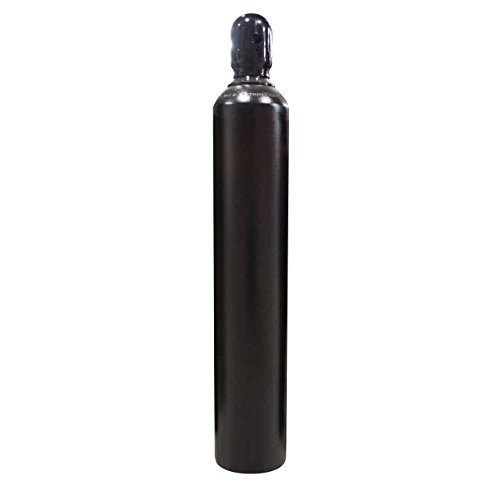
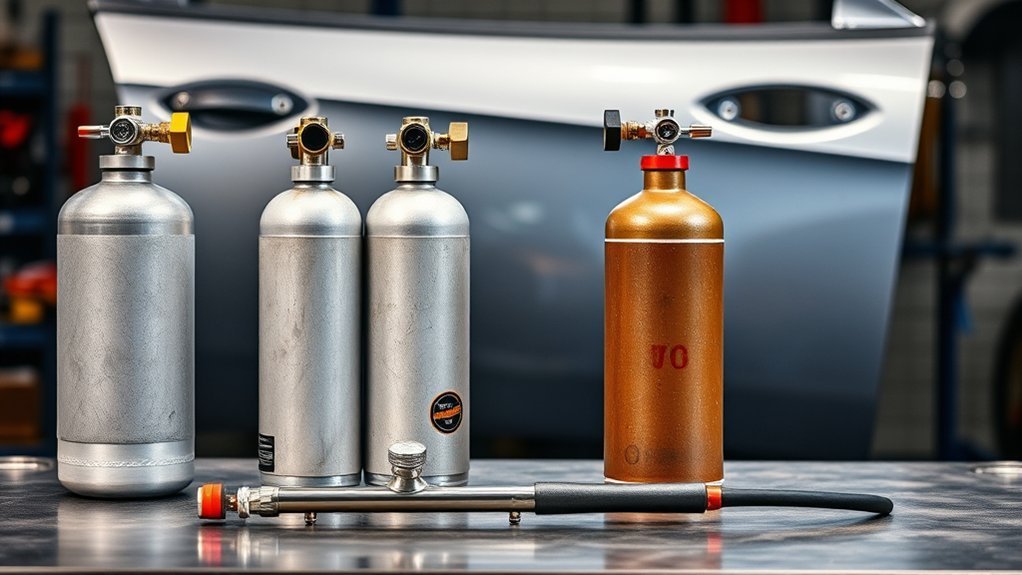
All HP cylinders come with a 10 year hydrotest date stamped.

All HP cylinders come with a 10 year hydrotest date stamped.

All HP cylinders come with a 10 year hydrotest date stamped.
What Shielding Gas Does in MIG Welding
Shielding gas protects the molten weld pool from oxygen and nitrogen in the air. This helps you prevent porosity, oxidation, and weak welds. In MIG welding, you use shielding gas to keep the weld pool clean, the arc stable, and the bead consistent.
Your gas flow must stay in the proper range for your setup. A common shop range for body panel work sits around 20 to 25 CFH. Too little flow leaves the puddle exposed, while too much flow can create turbulence and pull air into the weld.
The gas you choose also changes heat transfer, bead shape, and surface finish. That means shielding gas directly affects weld quality and how much grinding you need later. For stainless steel work, a tri-mix such as 90% He / 7.5% Ar / 2.5% CO2 can improve arc behavior in specific short-circuit welding setups.
- Use shielding gas to isolate the weld pool from air.
- Maintain correct gas flow for reliable coverage.
- Expect a stable arc when coverage stays uniform.
- Choose pure argon when welding aluminum.
- Match the gas to the metal and joint for better bead control.
How 75/25 Shielding Gas Improves Sheet Metal Welds
When you weld sheet metal, 75/25 argon-CO₂ gives you a smooth, stable arc with minimal spatter. This makes it a strong choice for auto body panels. You can steer the weld puddle with more control, so you lower the risk of blowing through thin steel.
The argon softens the arc, while the CO₂ supports penetration. That balance helps you fuse edges without excessive heat input. Good heat control matters because thin panels can warp, oil-can, or burn through when you rush the weld.
With 75/25 argon-CO₂, you’ll also cut down on cleanup because low spatter leaves less grinding and finishing. Better arc stability helps reduce porosity and other defects. Use it when you want durable repairs that preserve panel shape and keep your work efficient.
Pro tip: Run short welds with cooling time between them to reduce heat buildup on thin panels.
If you weld coated or galvanized material, clean the work area first and control fumes. Welding galvanized steel can create health risks, so review safe practices before you work on coated metal. Proper gas choice helps weld quality, but ventilation and surface prep matter too.
You can learn more about this risk in this guide to welding galvanized steel.
Products Worth Considering

APPLICATION: The ARCCAPTAIN gas pressure regulator can be used with argon, helium, and carbon dioxide gas tanks.

CGA580 Inlet Connection: Welding gas regulators connects easily to argon and Co2 tanks, note that a CGA-320 adapter is required for use with Co2 cylinders. This product comes standard with the CGA-580 connector only
When Pure CO2 Makes Sense

Pure CO₂ can make sense when you weld thicker steel and want deeper penetration. It costs less in many shops, but it usually creates more spatter and a harsher arc. For thin auto body panels, that extra heat can make your job harder.
- Choose pure CO₂ for thick plate, not thin auto body panels.
- Expect deeper penetration and a larger heat-affected zone.
- Plan for more spatter and post-weld cleanup.
- Keep travel speed steady to control heat input.
- Avoid pure CO₂ for visible collision repair when finish quality matters.
- For proper gas flow, keep a steady range that matches your welder and shop conditions.
Warning: Straight CO₂ can add heat and spatter, so test it before using it on thin panels.
Select pure CO₂ only when penetration and cost matter more than appearance and cleanup.
MIG Shielding Gas Tips for Cleaner Welds
For cleaner MIG welds on auto body panels, run a 75% argon and 25% CO₂ mix. Set your shielding gas flow at 20 to 25 CFH in calm indoor conditions. Then check contact tip to work distance so the gas blanket covers the puddle.
Keep the nozzle and contact tip clean because buildup can disrupt coverage. A blocked nozzle sends gas unevenly around the wire. That can cause porosity, spatter, and a rough bead.
- Clean paint, rust, seam sealer, and oil before welding.
- Use wind blocks when you must weld near moving air.
- Keep stickout short enough for stable gas coverage.
- Make test welds on matching scrap before panel repair.
- Adjust wire speed and voltage in small steps.
For outdoor welding, block wind so the shielding gas does not blow away from the joint. Match your settings to the manufacturer’s recommendations, then fine-tune arc behavior on scrap. Maintaining proper settings helps you keep stable arcs and reduce weld defects.
Common Mistakes That Ruin Gas Coverage
Good shielding gas cannot fix poor setup. If you hear popping, see black soot, or notice pinholes, check gas coverage before changing every welder setting. Many gas problems come from simple shop habits.
- Running too little gas flow for the nozzle size and work area.
- Running too much gas flow and creating turbulence around the puddle.
- Holding the gun too far from the panel.
- Welding near fans, open doors, or strong drafts.
- Using a dirty nozzle that blocks smooth gas flow.
Fix one variable at a time so you know what helped. Start with clean metal, correct gas flow, and a steady gun angle. Then tune voltage and wire speed after gas coverage looks consistent.
Frequently Asked Questions
What Is the Best Gas for MIG Welding Body Panels?
You’ll usually get the best results with a 75/25 argon-CO₂ mix on steel body panels. It balances arc stability, low spatter, and enough penetration for thin sheet metal. Set gas flow near 20 to 25 CFH in calm shop conditions.
Can I Use Pure Argon for Steel Auto Body Panels?
Pure argon does not work well for standard MIG welding on steel. It can create an unstable arc and poor bead shape. Save pure argon for aluminum welding with the correct wire and machine setup.
Can I Use 75 Argon 25 CO2 to Weld Aluminum?
No, you shouldn’t use 75/25 for aluminum. The CO₂ can contaminate the weld and hurt bead quality. Use 100% argon and match your wire, liner, drive rolls, and gun setup to aluminum.
Can You MIG Weld Auto Body Panels?
Yes, you can MIG weld auto body panels when you control heat and use the right settings. Use clean metal, short welds, correct gas flow, and the proper wire size for thin sheet. Practice on scrap before welding a visible panel.
Why Do Body Panel Welds Get Porosity?
Porosity often comes from poor gas coverage, dirty metal, wind, or a clogged nozzle. Check gas flow, clean the panel, and shield the weld area from drafts. If the problem continues, inspect the hose, regulator, and gun for leaks.
Conclusion
The right shielding gas gives you more control over heat, spatter, and bead quality. For steel auto body panels, choose 75/25 argon-CO₂ for smoother arc control and cleaner sheet metal fusion. Save pure CO₂ for thicker steel when appearance matters less.
Before you weld the actual panel, clean the metal, set your gas flow, and test your settings on scrap. Keep your stickout short, your nozzle clean, and your welds brief. With the right gas and steady technique, you can make cleaner repairs with less distortion.