For effective auto body work, you need welding tools that help you control heat, hold thin panels in alignment, and protect yourself from sparks, UV light, fumes, and sharp metal. A beginner-friendly MIG welder, a sturdy welding table, quality clamps, proper filler wire, an angle grinder, and reliable welding safety gear form the core setup for most small automotive repairs. The right tools will not replace practice, but they can make clean panel fit-up, plug welds, tack welds, and basic sheet metal repairs much easier to learn.
Quick Verdict: What Auto Body Welding Tools Matter Most?
If you are starting from scratch, prioritize a controllable MIG welder, auto-darkening helmet, flame-resistant gloves and jacket, welding clamps, a stable work surface, an angle grinder, and cleaning tools. These items solve the biggest beginner problems: poor fit-up, dirty metal, weak welds, burn-through, and unsafe work habits.
- Best first welder: A MIG welder with adjustable voltage and wire speed for thin automotive sheet metal.
- Best support tools: Welding clamps, magnetic squares, a welding table, and step bits for accurate panel alignment and plug weld holes.
- Most important safety gear: Auto-darkening helmet, gloves, flame-resistant clothing, eye protection, hearing protection, and proper ventilation.
- Biggest beginner mistake: Welding over dirty, painted, coated, or rusty metal without proper prep.
Essential Welding Equipment for Beginners in Auto Body Work
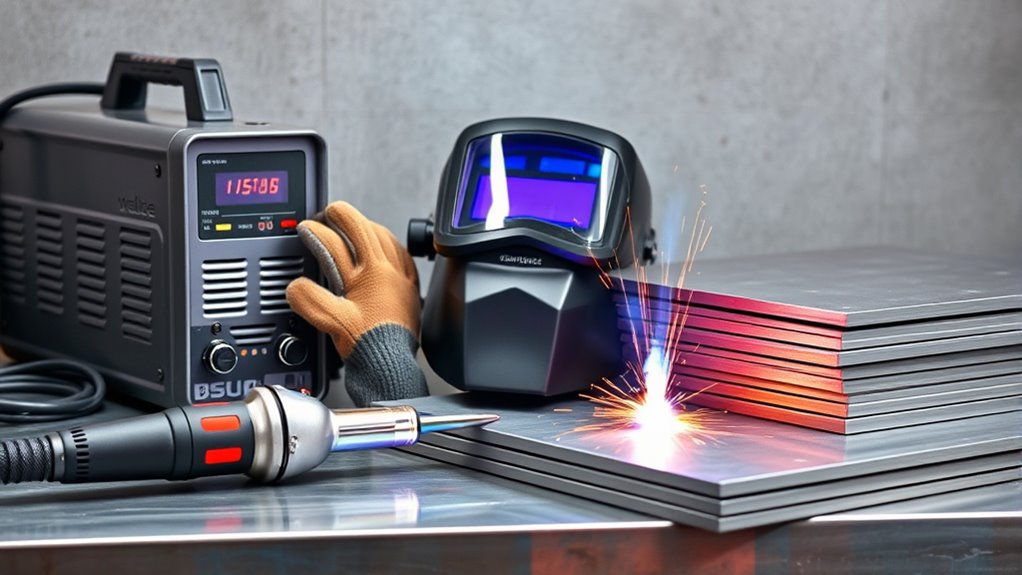
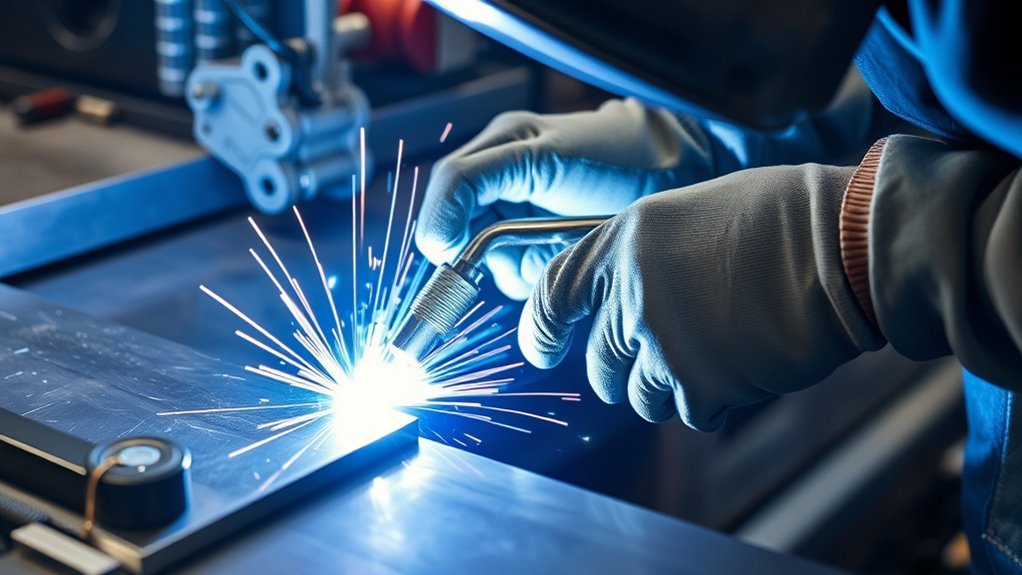
When you’re starting out in auto body work, having the right welding equipment helps you make cleaner, safer, and more consistent repairs. MIG welders are often the most practical choice for beginners because they are easier to learn than TIG and work well for many steel body-panel repairs when set up correctly.
Starting in auto body work? A properly adjusted MIG welder, clean metal, and strong panel alignment are the foundation for better sheet metal repairs.
For automotive sheet metal, choose a welder with good low-amp control so you can reduce the risk of burn-through. If you plan to weld aluminum, make sure your machine, wire, shielding gas, and feed setup are suitable for aluminum work. Aluminum often requires more setup care than mild steel.
A sturdy welding table with clamps gives you a stable work area, helping you secure body panels before tacking or welding. Good fit-up matters because gaps, movement, and poor alignment can lead to weak welds or excessive grinding later.
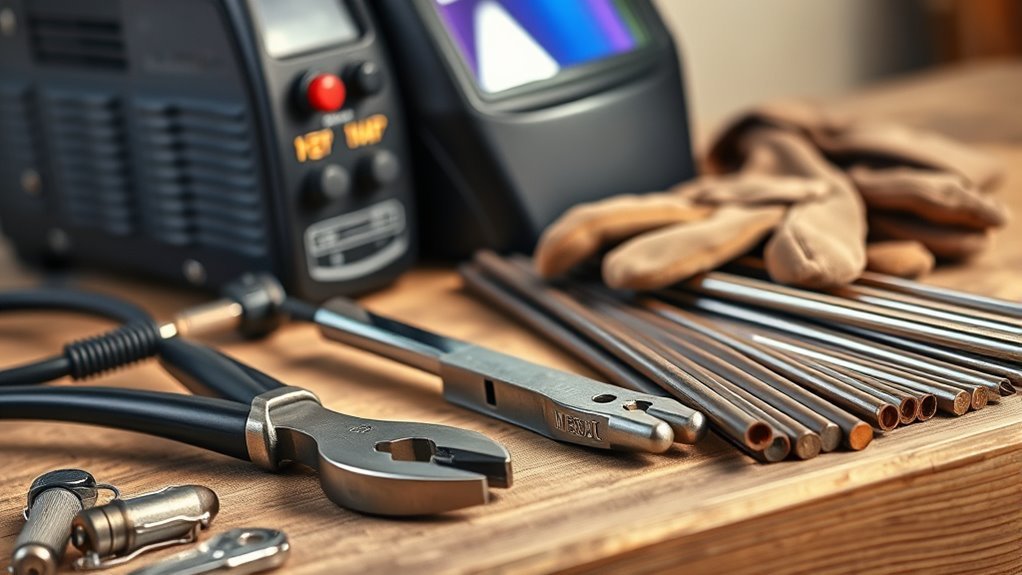
Equipping yourself with the right welding supplies, including compatible filler wire, shielding gas, contact tips, and cleaning tools, is also important. Different metals and repair types call for different consumables, so check your welder manual and material requirements before you start.
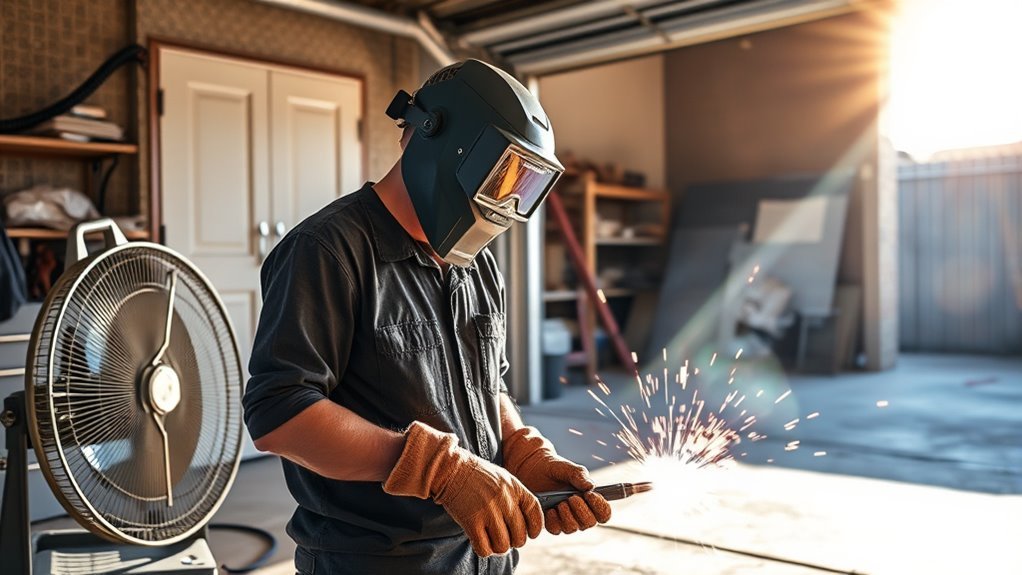
Don’t forget your safety gear. An auto-darkening welding helmet, flame-resistant gloves, a welding jacket, safety glasses, and proper footwear help protect you from sparks, heat, UV exposure, and sharp metal. Also follow safety guidelines when working near galvanized or coated steel, since coatings can create hazardous fumes when heated.
Products Worth Considering
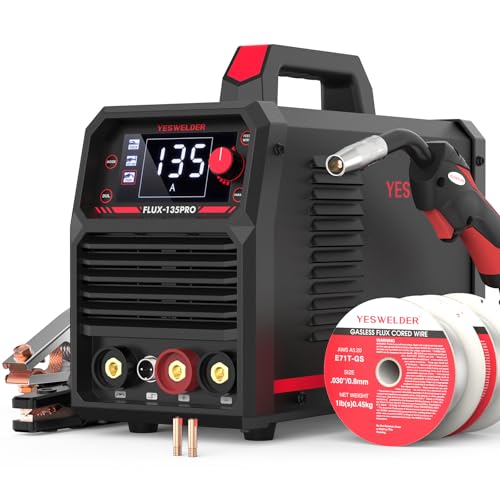
READY OUT OF THE BOX: Start welding immediately! It masterfully handles Gasless Flux Core MIG, Stick, and Lift TIG (Extra Lift TIG torch required). This budget-friendly 3-in-1 machine includes extra E71T-GS .030''&.035'' flux core wires, known for its smooth arc and high feedability. Say goodbye to heavy shielding gas cylinders—perfect for outdoor, windy, or all-position welding.


4 IN 1 MULTIFUNCTIONAL: Enjoy the convenience of a 4-in-1 welding machine that masterfully handles Gasless Flux Core MIG/Gas MIG/Stick/Lift TIG (additional lift TIG torch required). This unit suits a wide range of welding applications and meets your various welding needs.
Before You Buy Auto Body Welding Tools
Before spending money on welding tools, match your setup to the type of auto body work you actually plan to do. A small rust patch, floor pan repair, rocker panel job, and aluminum body repair may require different tools, settings, and consumables.
- Material type: Confirm whether you are welding mild steel, stainless steel, aluminum, or coated metal.
- Panel thickness: Thin sheet metal needs careful heat control and short welds to reduce warping.
- Power supply: Make sure your garage outlet can support the welder you choose.
- Consumables: Budget for wire, gas, tips, nozzles, flap discs, cutting wheels, and cleaning brushes.
- Safety setup: Plan for ventilation, fire prevention, PPE, and a clean work area before striking an arc.
Essential Welding Safety Gear for Protecting Yourself
While welding can be a rewarding skill, it also involves real risks if you work without proper safety gear. Prioritizing welding safety helps protect your eyes, skin, lungs, hearing, and feet in the workshop.
A welding helmet with auto-darkening lenses helps shield your eyes and face from intense arc light, sparks, and harmful UV exposure. You should also keep separate eye protection, such as safety glasses, nearby for grinding, cutting, wire brushing, and cleanup.
Flame-resistant gloves and jackets help reduce burn risk from sparks and hot metal. Avoid synthetic clothing that can melt when exposed to heat. Steel-toe boots provide useful foot protection against dropped tools, sharp edges, and heavy parts.
Hearing protection, such as earplugs or muffs, is useful when grinding, cutting, hammering, or using loud shop equipment. Awareness of kickback causes is also important because grinders can move unexpectedly if the wheel binds or catches.
Safety Note: Keep a fire extinguisher nearby, remove flammable materials from the work area, and check both sides of the panel before welding. Heat and sparks can damage wiring, insulation, carpet, fuel lines, seam sealer, and hidden trim.
Regular maintenance of your safety gear is essential. Replace cracked helmet lenses, burned gloves, damaged jackets, and worn eye protection so your gear continues to protect you properly.
Products Worth Considering

True Color Clear View: A 3.64" x 1.67" viewing area with 1/1/1/1 optical clarity delivers a true color view for improved visibility and reduced eye strain.

LARGE VIEW WITH TRUE COLOR CLARITY: See more of the weld puddle, joint edges, and work position through a wide 3.93" x 3.66" viewing area. The 1/1/1/1 true-color optical clarity provides a clearer, more natural view than traditional green-tinted lenses, helping support better visibility for detailed welding, fabrication, and garage projects.

True Color Clear View: A 3.64" x 1.67" viewing area with 1/1/1/1 optical clarity delivers a true-color view for improved visibility and reduced eye strain, so you can read the weld puddle more accurately.
What Welding Tools Are Essential for Precise Repairs?
To achieve precise repairs in auto body work, you need tools that improve alignment, surface preparation, heat control, and finishing. The table below shows the core tools and what each one helps you do.
| Tool | Purpose | Best For |
|---|---|---|
| MIG welder | Joins thin automotive sheet metal when properly adjusted | Beginner-friendly steel panel repair |
| Multi-process welder | Supports multiple welding processes depending on machine capability | Users who want more flexibility as skills grow |
| Welding clamps | Hold panels securely for accurate fit-up and alignment | Patch panels, brackets, and body seams |
| Welding table | Provides a stable work surface for cutting, fitting, and welding | Small parts, brackets, and controlled practice welds |
| Step bits | Create clean, uniform holes for plug welding | Replacing spot welds or attaching overlapping panels |
| Angle grinder | Cleans metal, removes rust, trims edges, and finishes welds | Prep work and final weld cleanup |
Using a multi-process welder can be useful if you want room to grow, but beginners working mostly on steel body panels can often start with a capable MIG setup. Welding clamps and magnetic angle plates help keep parts from shifting, which reduces rework and improves the final fit.
A well-equipped welding table provides stability, while step bits help create repeatable holes for plug welds. Finally, angle grinders are important for preparing edges, removing coatings, and smoothing welds after the joint has cooled. Also consider the safety features of your welding tools so your setup supports safer operation.
How to Achieve Clean and Effective Welds Like a Pro
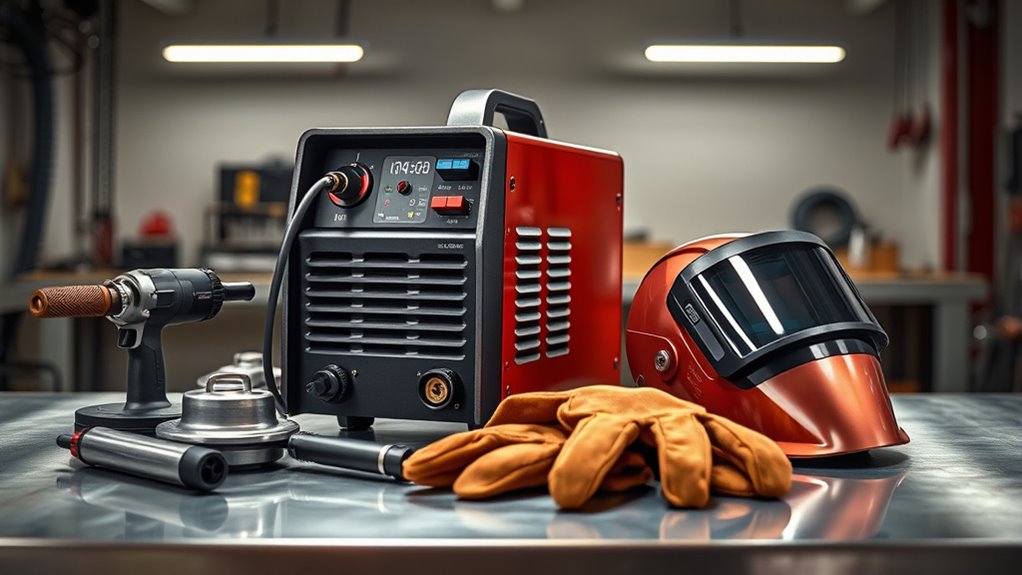
Achieving clean and effective welds takes preparation, practice, and control. Auto body panels are thin, so your goal is not just to make the weld stick. You also need to limit heat buildup, reduce warping, and avoid burning through the metal.
- Preparation is key: Clean the metal surfaces with a wire brush, abrasive disc, or grit blaster to remove rust, paint, primer, oil, and contaminants.
- Control your heat: Adjust welder settings for the panel thickness. Too much heat can cause burn-through or warping, while too little heat can create weak welds.
- Use short welds: Tack weld in small sections and allow cooling time between welds to reduce heat distortion.
- Keep a steady hand: Maintain a consistent angle, travel speed, and stickout for more even bead placement.
- Use proper filler materials: Match the wire or filler to the metal type. For aluminum, verify the correct wire, shielding gas, and feed setup before welding.
Practice on scrap metal with similar thickness before working on the vehicle. This helps you dial in your settings and recognize problems such as porosity, undercut, poor penetration, and excessive spatter. Clean surfaces thoroughly to help avoid porosity and inclusions, which can weaken weld quality.
Tips for Welding Tool Maintenance
Proper maintenance of your welding tools helps improve reliability, safety, and weld consistency. Start by regularly inspecting your welding equipment for signs of wear, including frayed cables, loose ground clamps, damaged nozzles, worn contact tips, and cracked insulation.
After each use, clean your tools to remove spatter, dust, and grinding residue. This helps maintain function and extends tool life.
Cleaning your tools after each use helps maintain performance and reduces avoidable problems during your next repair.
Store welding supplies, such as filler rods, wire, and electrodes, in a dry environment to reduce moisture-related problems. Lubricate moving parts on clamps and other mechanical tools when needed, and inspect grinder wheels before use. Follow proper grip technique to improve safety and control while using your angle grinder.
Don’t overlook your safety gear. Check helmets, gloves, jackets, and boots for damage, burns, cracks, or excessive wear. Replace damaged items before they fail during a repair.
Common Auto Body Welding Mistakes to Avoid
- Skipping surface prep: Paint, rust, oil, and coatings can contaminate welds and create fumes.
- Using too much heat: Long welds on thin panels can cause warping and burn-through.
- Poor fit-up: Wide gaps make welding harder and often require more grinding afterward.
- Ignoring the backside of the panel: Hidden wires, insulation, carpet, or fuel-related parts can be damaged by heat.
- Grinding too aggressively: Over-grinding can thin the panel and weaken the repair area.
Final Recommendation
If you are building your first auto body welding setup, start with the tools that improve safety, fit-up, and heat control. A beginner-friendly MIG welder, good PPE, clamps, a solid work surface, an angle grinder, step bits, and cleaning tools will cover many common repair tasks. Add specialty tools later as your projects become more complex.
Frequently Asked Questions
What Kind of Welder Do I Need for Auto Body Work?
For most beginner auto body work on steel panels, a MIG welder is usually the most practical choice because it is easier to learn and works well on thin sheet metal when adjusted correctly. TIG can be useful for precision work and aluminum, while spot welding or plug welding may be used for panel attachment depending on the repair.
What Are the 5 Welding Essentials?
The five core welding essentials for auto body repairs are a suitable welder, proper safety gear, clamps for alignment, clean filler materials or wire, and an angle grinder for prep and finishing. A stable work surface is also highly recommended because it helps improve control and accuracy.
What Tools Should Every Welder Have?
Every welder should have a welding helmet, gloves, flame-resistant clothing, safety glasses, hearing protection, clamps, a grinder, cleaning tools, measuring tools, and basic consumables. For auto body work, panel alignment tools and step bits are especially helpful for patch panels and plug welds.
How Do I Avoid Warping Thin Auto Body Panels?
Use short tack welds, move around the panel, allow cooling time, and avoid long continuous beads on thin sheet metal. Clean fit-up, correct welder settings, and patience are more important than speed when welding body panels.
Can You Make $100,000 a Year Welding?
Yes, some welders can earn $100,000 a year or more, especially with advanced skills, certifications, overtime, specialized industries, mobile welding, or business ownership. However, income varies widely by location, experience, process, industry, and demand.
Conclusion
In auto body work, welding tools shape the quality of your repair just as much as your technique. A controllable MIG welder, reliable safety gear, strong clamps, a stable welding surface, clean filler materials, and a good grinder all help you work more safely and accurately. Keep your tools maintained, practice on scrap metal, and focus on clean prep and heat control. With the right setup and steady practice, your repairs can move from rough patches to cleaner, stronger, more professional-looking results.