Welding Galvanized Steel in Auto Body Work
What’s in This Article
- What Makes Galvanized Steel Hard to Weld
- Why Zinc Fumes Are Dangerous
- Prep the Weld Zone on Galvanized Steel
- Use Ventilation and Fume Extraction
- Choose PPE for Galvanized Steel Welding
- Spot Metal Fume Fever Early
- Weld Galvanized Steel Safely in Auto Body Repair
- Why Milk Won’t Prevent Fume Fever
- Follow Welding Regulations and Safety Rules
- Frequently Asked Questions
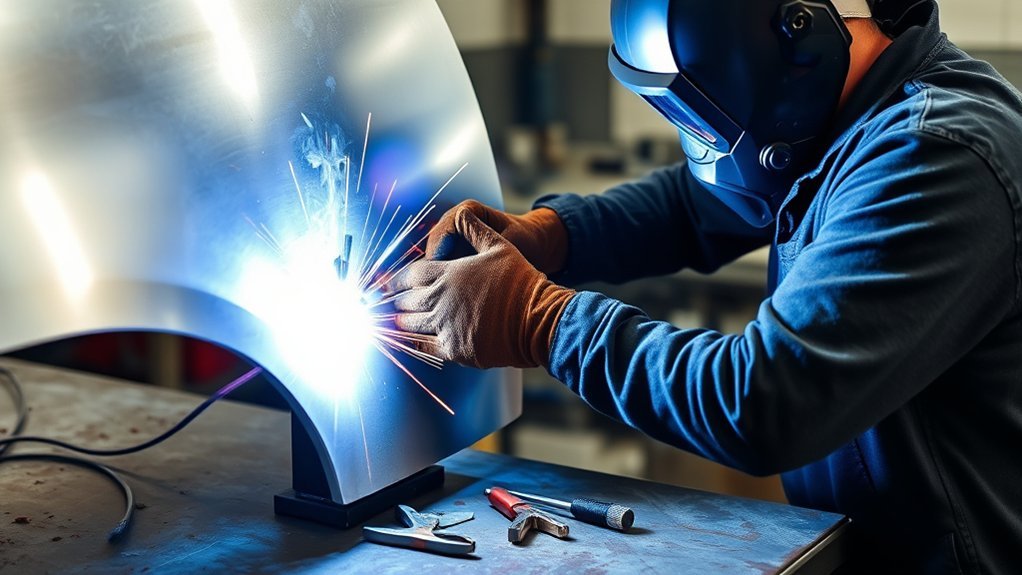
Welding galvanized steel in auto body work can expose you to zinc oxide fumes, weak welds, and heavy spatter fast. The zinc coating protects steel from rust, but arc heat burns it off and can make the job unsafe. You need clean metal, strong local exhaust ventilation, proper respiratory protection, and full welding personal protective equipment (PPE) before you strike an arc.
Quick Answer
You can weld galvanized steel, but you should remove the zinc coating from the weld zone first. Use local exhaust ventilation, a respirator rated for welding fumes, and full PPE to reduce exposure. Stop work if you see heavy white residue, yellow-green smoke, or feel flu-like symptoms after welding.
Key Takeaways
- Remove zinc coating from the weld zone before welding galvanized steel.
- Use local exhaust ventilation to capture fumes close to the arc.
- Wear a respirator rated for welding fumes, plus full flame-resistant PPE.
- Watch for metal fume fever symptoms such as chills, fever, nausea, and body aches.
- Do not trust milk as protection against zinc oxide fumes.
What Makes Galvanized Steel Hard to Weld
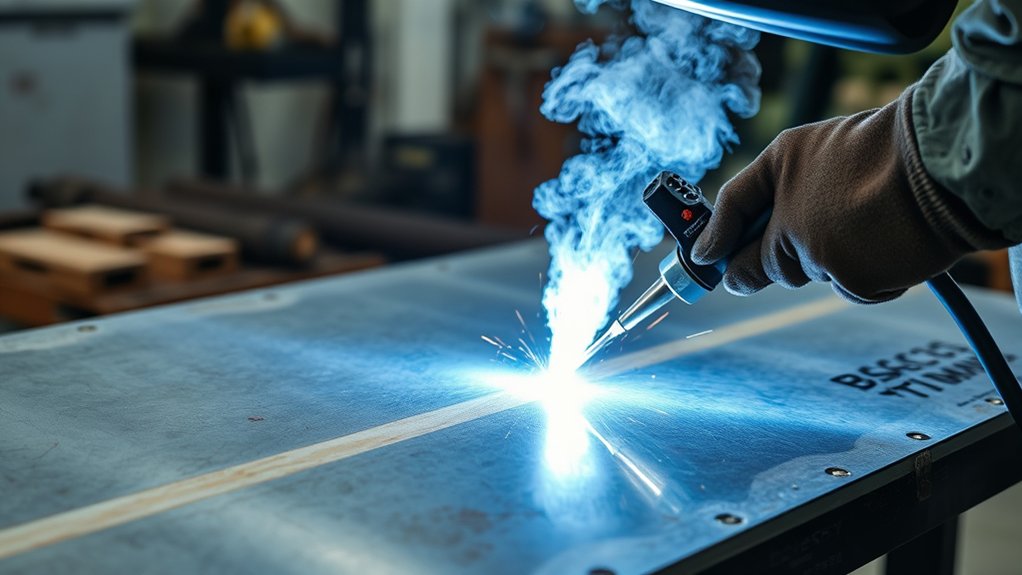
Galvanized steel is hard to weld because the zinc coating vaporizes under arc heat. That vapor can form zinc oxide fumes, which you should treat as a serious inhalation hazard. The coating can also increase spatter, porosity, and puddle instability, so your bead can lose consistency fast.
Coating thickness varies between panels and parts, so you can’t use one setup for every repair. Thicker zinc often demands more heat control, more prep, and stronger fume management. To improve results, you should grind or sand the coating from the weld zone before striking an arc.
That step lowers fume output and helps you get cleaner fusion and better penetration. You still need a skilled hand to balance travel speed, heat, and filler choice without burning through thin auto body metal. With proper safety and disciplined prep, you can control the material instead of letting it control you.
Understanding flux core welding techniques can also help you think through heat control and puddle behavior on coated materials.
Why Zinc Fumes Are Dangerous
When zinc-coated steel heats up under the arc, it releases zinc oxide fumes. You should treat those fumes as a serious inhalation hazard, not as normal welding smoke. Short exposure can trigger metal fume fever, with chills, fever, nausea, and muscle aches often starting within a few hours.
Symptoms often fade after exposure stops, but that does not make the exposure safe. Repeated inhalation can raise the risk of breathing problems, especially if you weld coated metal often without proper controls. The amount of fume you create depends on heat input, coating thickness, joint prep, and welding technique.
Occupational Safety and Health Administration (OSHA) exposure limits include limits for zinc oxide fumes, and your work area should stay below the applicable limit. Use effective ventilation and fume extraction to pull contaminants away from your breathing zone. Proper ventilation systems also help reduce exposure to harmful fumes during hot work.
Warning: Leave the area and get medical help if breathing trouble, chest pain, severe fever, or worsening symptoms occur after welding.
Prep the Weld Zone on Galvanized Steel
You should clean the weld area first by grinding or sanding off the galvanized coating around the joint. Removing the zinc reduces fume generation, improves penetration, and helps prevent porosity and inclusions. If you still see yellow-green smoke or white residue, stop and clean more of the weld zone.
Good preparation matters because clean metal yields better weld results. It also helps you avoid trapping zinc residue inside the weld. That small prep step can protect both your lungs and your repair quality.
Products Worth Considering


[High-Performance Cutting] Designed for cutting metal & stainless steel, these cut off wheels 4 1/2 inch work efficiently with any angle grinder wheel, supporting speeds up to 13,300 RPM.

High performance aluminum oxide grain for long life and high material removal of the grinding wheel
Clean the Weld Area
Grind or sand away the zinc coating from the weld zone before striking an arc on galvanized steel. This cuts down on toxic zinc oxide fumes and improves weld quality. Your cleaning should leave the area bare, dry, and free of paint, oil, rust, and coating residue.
Watch for yellowish-green smoke or white residue. Those signs can mean the zone still carries zinc and the hazard is rising. Proper prep helps prevent porosity, inclusions, spatter, and poor penetration.
- Remove all visible coating from the joint faces.
- Confirm the surface is clean and dry before welding.
- Stop and rework the area if heavy fumes appear.
This discipline protects your lungs and your welds.
Remove Zinc Coating
With the weld area cleaned, remove the zinc coating from the full weld zone before striking an arc. Use a grinder, sanding disc, or wire brush to strip the coating at least 1 inch around the joint where the repair allows it. Clean both sides of the joint when you can reach them.
When you remove zinc coating thoroughly, you cut fume generation, improve penetration, and reduce porosity and spatter. This step matters when welding galvanized steel because the zinc vaporizes fast and can contaminate the pool. If you see yellowish-green smoke or white residue, stop and clear more metal.
Prep the steel until bare, bright metal shows. That disciplined surface prep gives you cleaner fusion, a stronger repair, and better long-term durability.
Use Ventilation and Fume Extraction
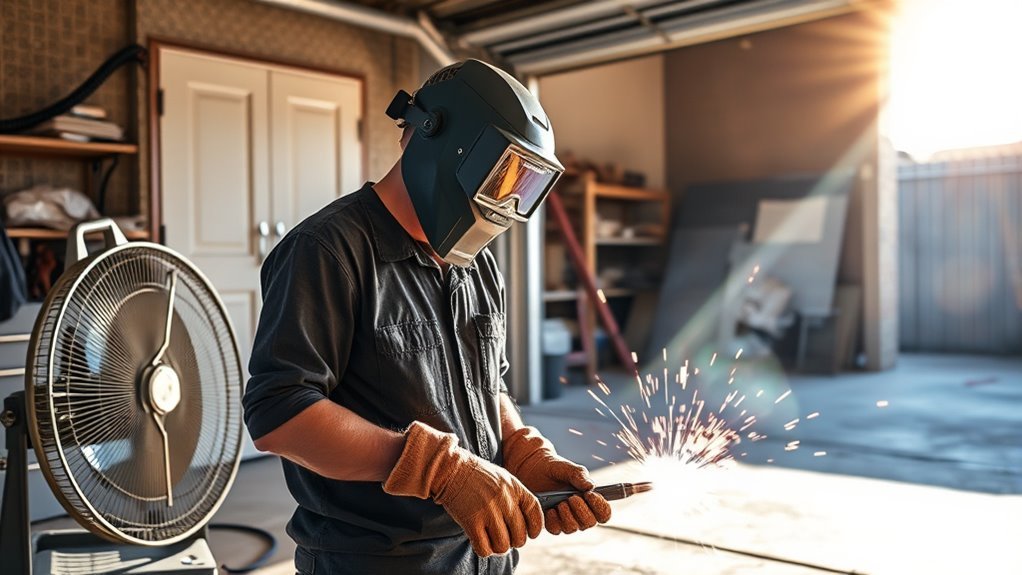
Effective ventilation matters when welding galvanized steel because zinc oxide fumes can build up quickly. You need strong ventilation and fume extraction to keep fumes out of your breathing zone. Use local exhaust ventilation at the arc because it captures contaminants before they spread through the shop.
- Position extraction arms close to TIG welds so they capture fumes at the source.
- Use extraction guns for MIG work to reduce airborne zinc oxide during each pass.
- Check air quality when possible so you can verify that controls work.
Don’t rely on personal protective equipment alone. Pair PPE with engineered controls for better protection. When you monitor airflow, maintain extraction systems, and correct poor capture quickly, you keep your workspace cleaner and safer.
Regular checks of effective ventilation can further support safer work practices.
Pro tip: Place the extraction nozzle close enough to capture fumes, but not so close that it disrupts shielding gas.
Choose PPE for Galvanized Steel Welding
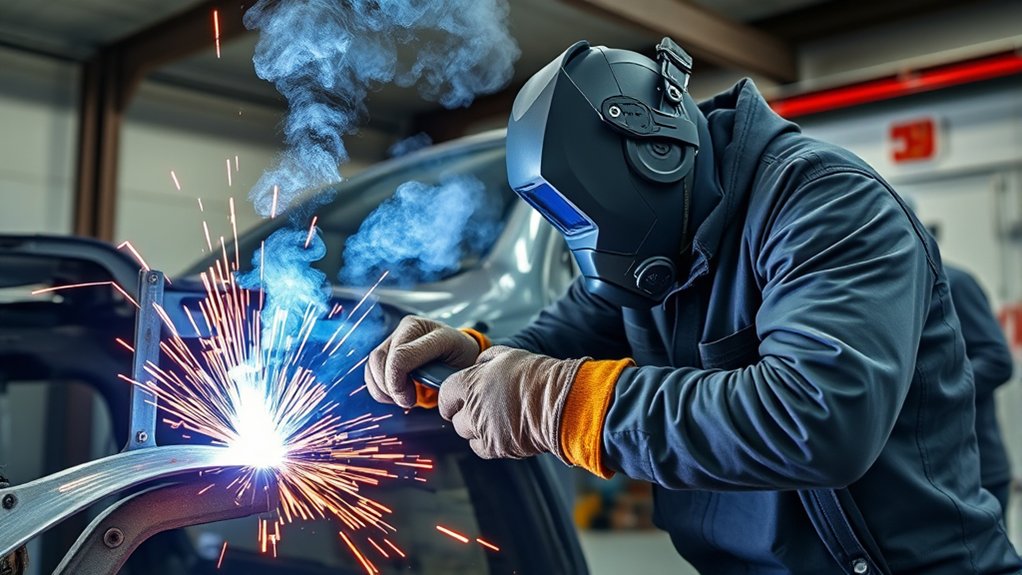
Choose PPE for galvanized steel welding as a layered defense against zinc oxide fumes, sparks, ultraviolet light, and molten spatter. You need respiratory protection matched to the hazard. Use a powered air-purifying respirator (PAPR) or another respirator rated for welding fumes when your exposure risk requires it.
Wear full-body PPE, including a flame-resistant jacket, sleeves, and gloves, to block heat, sparks, and ultraviolet light. Fit a welding helmet with the correct filter shade. Use safety goggles or safety glasses when your setup calls for extra eye protection during grinding or cleanup.
Check every item before each shift for worn straps, cracks, holes, or degraded seals. Damaged gear can fail when you need it most. Choose equipment that meets relevant OSHA or ANSI standards because standards help you control real shop risks.
When you select and maintain the right PPE, you keep your body protected and your work deliberate. Make sure your gloves use flame-resistant materials to improve protection from heat and sparks.
Products Worth Considering

Fits easily under most welding helmets


NIOSH-APPROVED: NIOSH, a USA federal government regulatory agency, has tested and approved the 6300 with 3M cartridges, filters or supplied air systems to help reduce inhaling certain airborne contaminants
Spot Metal Fume Fever Early
Metal fume fever can hit fast after you weld galvanized steel. Inhaled zinc oxide fumes can trigger chills, fever, muscle aches, fatigue, a dry cough, nausea, and a metallic taste in your mouth. Symptoms can begin within a few hours after exposure.
You’re dealing with welding fumes that can overwhelm you before you realize the cause. Treat early symptoms as a warning, not as a nuisance. Your risk rises when you weld coated metal without enough ventilation or respiratory protection.
- Watch for a rapid flu-like shift after welding.
- Link symptoms to recent zinc oxide exposure.
- Move to fresh air and rest immediately.
- Seek medical care if symptoms feel severe or do not improve.
Wearing proper personal protective equipment can help reduce the risk of inhaling harmful fumes during welding.
Many mild cases improve after exposure stops, but you should not ignore symptoms. Fast action helps you protect your health and return to work safely.
Weld Galvanized Steel Safely in Auto Body Repair
When you weld galvanized steel, remove the zinc coating from the weld zone first. This reduces zinc oxide fume generation and lowers metal fume fever risk. It also helps limit porosity and weak fusion in the finished repair.
You should weld in a well-ventilated area or use local exhaust ventilation (LEV). Wear a respirator rated for welding fumes, plus the other PPE your job requires. Verify air quality, training, and controls when shop rules or job risk call for monitoring.
Mechanical methods such as grinding with an angle grinder can provide effective zinc removal for a cleaner weld.
Fume Exposure Risks
Welding galvanized steel in auto body repair releases zinc oxide fumes that can trigger metal fume fever. Symptoms can include chills, fever, nausea, headache, and fatigue. You need to treat fume control as a safety-critical step.
Your fume exposure rises with higher heat, aggressive technique, and thicker coatings. Those factors can increase health risks and reduce weld quality. Use protective equipment and reduce fume release at the source.
- Grind or sand the coating near the weld.
- Use ventilation to move fumes away from your breathing zone.
- Wear a respirator matched to the hazard.
- Stop work if symptoms start after exposure.
Disciplined control helps you protect your lungs and keep the repair process safer.
Safe Welding Practices
To weld galvanized steel safely in auto body repair, reduce zinc oxide fumes at the source first. Grind or sand the coating from the weld zone before you strike an arc. That prep step gives you the first line of defense.
Follow safe welding practices with strong ventilation and disciplined PPE use. Use LEV or a fume extractor instead of relying on room air alone.
| Control | Action |
|---|---|
| Prep | Remove zinc coating |
| Air | Capture fumes at source |
| PPE | Wear a properly selected respirator |
| Oversight | Train, inspect, and monitor |
Keep your respirator, gloves, welding helmet, and protective clothing on during the job. Report unsafe conditions immediately. You protect your lungs, your craft, and your ability to keep working safely.
Why Milk Won’t Prevent Fume Fever
Milk won’t prevent metal fume fever because drinking it does not block inhalation or absorption of zinc oxide fumes. You can’t outdrink airborne contamination. Your lungs take in fumes when you breathe contaminated air near the weld.
Milk also should not replace ventilation, respirators, or proper weld prep. The safer choice is to control fumes before they reach your breathing zone. Treat milk as a myth, not a safety method.
- Recognize the real hazard: zinc oxide exposure can trigger chills, fever, nausea, and fatigue.
- Use practical safety measures: control the air you breathe, use PPE, and keep your welding setup clean, including proper protective clothing to minimize exposure.
- Act early: if symptoms start after welding, stop work and get medical attention instead of trusting a folk remedy.
You gain real protection when you rely on science, not folk remedies. For galvanized steel work, your defense is prevention, awareness, and disciplined technique.
Follow Welding Regulations and Safety Rules
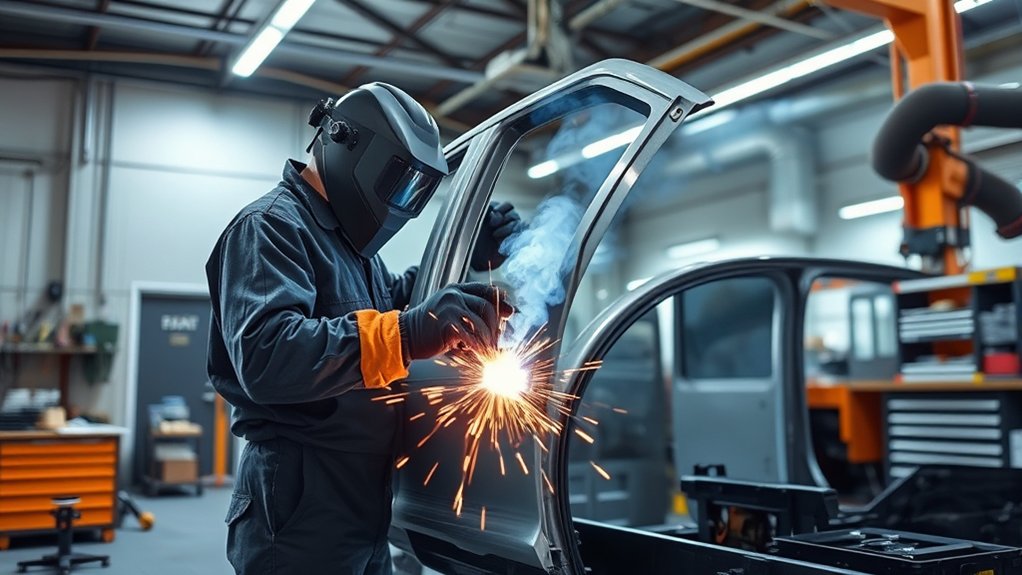
Real protection from galvanized-steel fumes comes from rules and work practices that control exposure. When you’re welding galvanized steel, treat zinc oxide fumes as a serious hazard. Follow your shop safety plan, OSHA rules, and any local workplace requirements that apply to the job.
Don’t rely on standard heating, ventilation, and air conditioning (HVAC) systems. They usually do not capture hazardous welding fumes fast enough at the source. Use proper ventilation, especially local exhaust ventilation, to pull fumes away before they reach your breathing zone.
Your employer should provide suitable respirators when the hazard requires them, fit them correctly, and train you on health risks before you weld. Ask for air-quality checks when the job, coating, or shop setup creates higher exposure risk. Measured data helps you know whether your controls work.
Learn the symptoms of metal fume fever, including chills, nausea, headache, fatigue, and fever. Stop work and get first aid quickly if symptoms appear. Make sure proper ventilation is in place to reduce fume buildup.
What to Do After Welding Galvanized Steel
After welding, let the area clear before you remove respiratory protection. Keep ventilation running during cooldown and cleanup. White powdery residue can still contain zinc oxide, so avoid blowing it into the air with compressed air.
Clean the area with safe shop methods, inspect the weld for porosity, and check both sides of the repair when possible. If the repair needs corrosion protection, follow the coating or primer instructions for bare steel. Good cleanup keeps the repair safer and helps prevent future rust.
Frequently Asked Questions
Is galvanized steel toxic when welding?
Yes. Welding galvanized steel can release zinc oxide fumes when the zinc coating burns under arc heat. You need clean metal, local exhaust ventilation, and a respirator rated for welding fumes to reduce exposure.
Why do many welders avoid welding galvanized steel?
Many welders avoid it because the zinc coating can create hazardous fumes, heavy spatter, porosity, and weak welds. You can reduce those problems by removing the coating from the weld zone before welding.
What are the symptoms of metal fume fever from welding galvanized steel?
Common symptoms include chills, fever, nausea, headache, fatigue, body aches, dry cough, and a metallic taste. Symptoms can start within a few hours after exposure. Move to fresh air and seek medical care if symptoms feel severe or do not improve.
What happens if you weld galvanized steel without a respirator?
You can inhale zinc oxide fumes and raise your risk of metal fume fever or breathing irritation. A respirator does not replace ventilation, but it adds protection when you choose the right type and fit it correctly.
How much zinc should you remove before welding?
Remove the coating from the joint and the nearby heat-affected area where the repair allows it. A common shop practice is to clean at least 1 inch around the joint, then remove more if smoke or residue shows that zinc remains.
Safety Disclaimer: This article is for informational purposes only and does not replace professional workplace safety advice, medical advice, or OSHA compliance guidance. Always follow your employer’s safety plan, equipment manuals, applicable regulations, and advice from qualified safety or medical professionals.
Conclusion
Welding galvanized steel safely starts with removing zinc from the weld zone and controlling fumes at the source. Use local exhaust ventilation, proper respiratory protection, and full PPE every time the job calls for it. Watch for metal fume fever symptoms, and do not trust milk or other folk remedies as protection.
Your next step is simple: prep the metal, check your ventilation, inspect your PPE, and stop work if fumes or symptoms appear. Careful setup helps you finish cleaner repairs while protecting your lungs for the next job.
References
- OSHA Occupational Chemical Database: Zinc Oxide — Occupational Safety and Health Administration
- Welding, Cutting, and Brazing — Occupational Safety and Health Administration
- Welding and Manganese: Potential Neurologic Effects — National Institute for Occupational Safety and Health