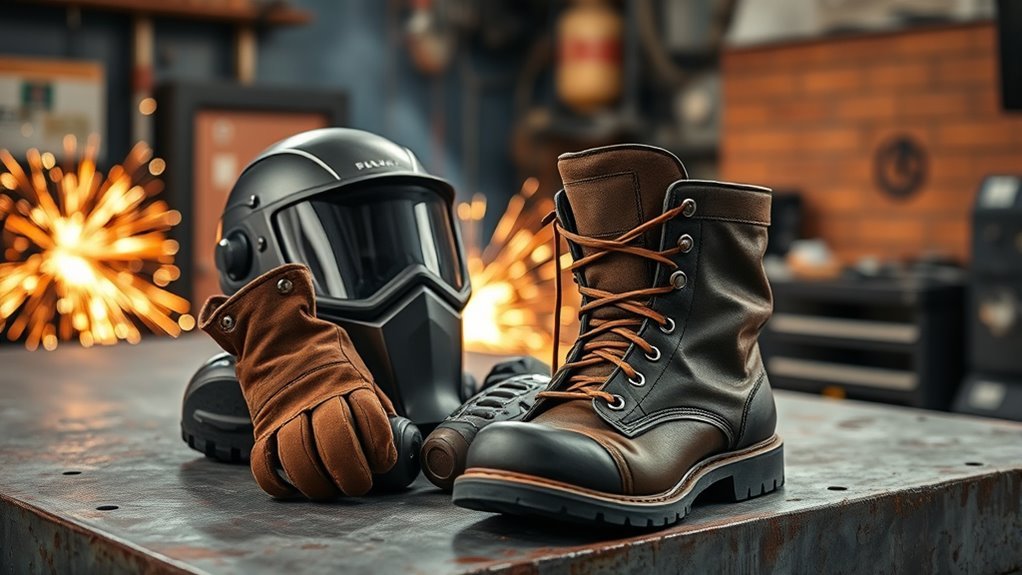
Welding protective gear protects your eyes, skin, lungs, hearing, hands, feet, head, and neck from the hazards created by welding. A good setup includes a properly shaded helmet, safety glasses, welding gloves, flame-resistant clothing, leather boots, hearing protection, and respiratory protection when fumes cannot be controlled by ventilation alone.
Quick Answer
Welding PPE protects you from UV and infrared radiation, arc flash, sparks, spatter, molten metal, hot workpieces, flying debris, noise, fumes, and impact injuries. It does not replace safe work practices, ventilation, fire prevention, training, or following the correct procedure for the welding process and material.
Key Takeaways
- Your helmet and safety glasses protect your eyes and face from arc radiation, sparks, slag, and flying particles.
- Flame-resistant clothing, gloves, boots, aprons, and neck protection reduce burn risk from spatter, heat, and molten metal.
- Respirators only work when they fit correctly and match the fume hazard, so ventilation and material safety data still matter.
- Inspect every piece of welding PPE before you strike an arc, because damaged gear can leave skin, eyes, or lungs exposed.
At a Glance
| Time Required | 5 to 10 minutes to inspect and put on PPE before each welding job |
| Difficulty | Beginner, but respirator selection and confined-space work require trained guidance |
| Tools Needed | Helmet, safety glasses, welding gloves, FR clothing, boots, hearing protection, respirator when needed, apron, cap, and neck cover |
| Cost | Varies by helmet quality, respirator type, FR clothing, and how often damaged parts must be replaced |
Warning: PPE is the last line of defense, not the whole safety plan. Use ventilation, remove fire hazards, protect nearby people with screens, follow the material safety data sheet, and do not weld in confined spaces without proper training and procedures.
What Does Welding PPE Protect You From?
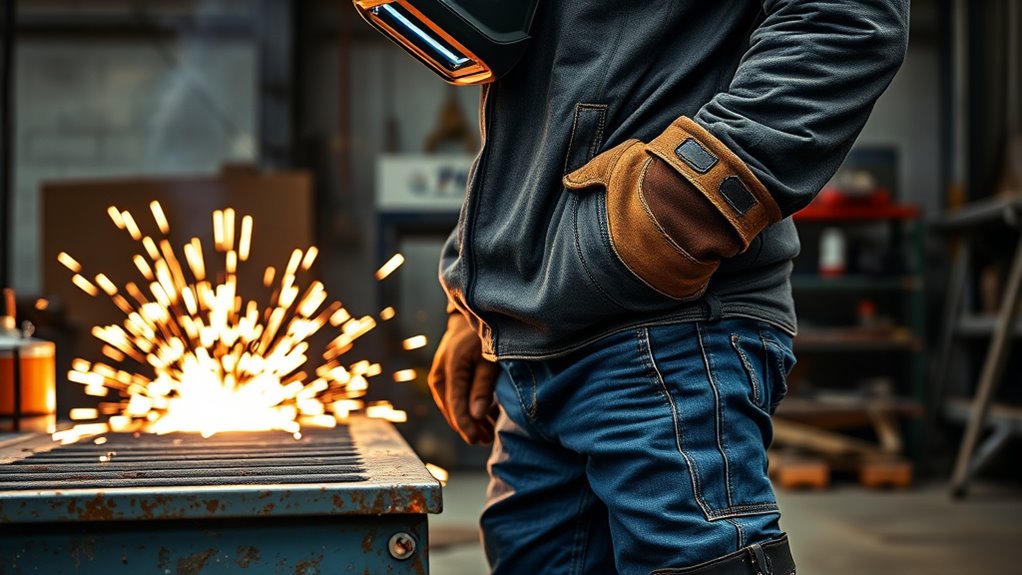
Welding PPE protects you from several serious hazards created by the welding process. According to OSHA welding safety guidance, welding hazards can include metal fumes, ultraviolet radiation, burns, eye damage, electrical shock, cuts, and crushed toes or fingers.
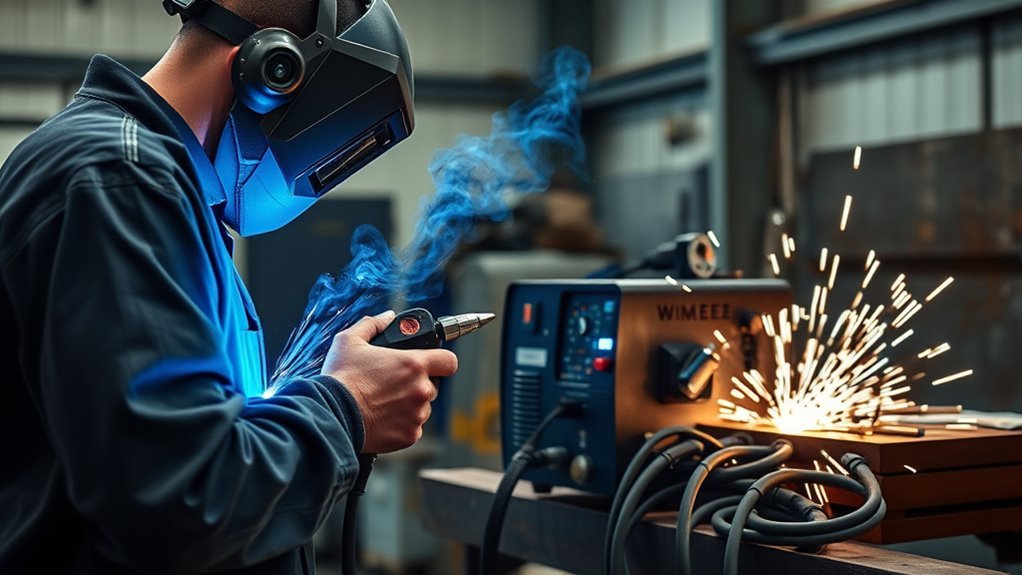
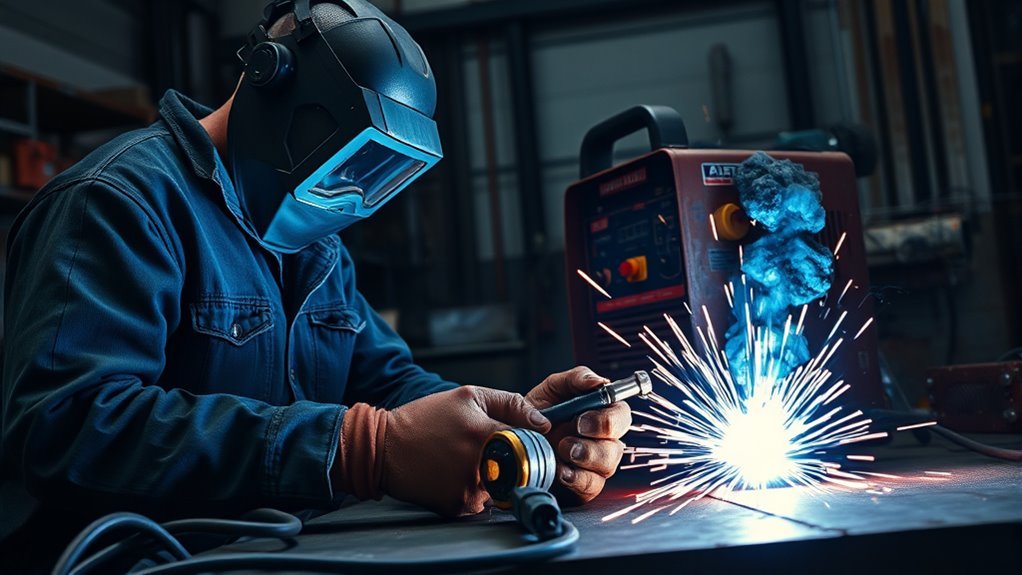
You face intense UV radiation and infrared energy that can burn your skin and eyes, so full eye, face, and skin coverage matters. A welding helmet protects your face from the arc and flying debris, while the correct lens shade helps control glare and harmful light.
Flame-resistant clothing shields you from sparks, heat, and molten metal. It reduces burn severity and helps keep your clothing from catching fire. Choose gear that covers your arms, torso, legs, wrists, neck, and ankles without leaving gaps.
One missing layer can expose you to arc flash, spatter, hot slag, or fume. Treat welding PPE as a complete system, not separate optional pieces.
Protective gloves defend your hands from heat, cuts, and abrasions while still letting you control the torch, electrode holder, grinder, or workpiece. Steel-toe or metatarsal welding boots protect your feet from dropped parts, sparks, slag, and molten metal.
For respiratory protection, you may need a respirator or supplied-air system when ventilation does not control welding fumes. The NIOSH Pocket Guide for welding fumes lists inhalation as an exposure route and notes symptoms can vary by fume component, including metal fume fever and breathing problems.
When you use welding PPE correctly, you create safer working conditions and can focus on the weld instead of the hazard. Proper PPE use also matters when grinding, cleaning, and preparing metal around the weld area.
Welding PPE by Hazard
The easiest way to choose welding protective gear is to match each body area to the hazard it faces. Use this as a basic checklist before you weld.
| Hazard | PPE That Helps | What to Check |
|---|---|---|
| Arc flash and radiant energy | Welding helmet, filter lens, safety glasses | Correct shade, clean lens, no cracks, good side protection |
| Sparks, spatter, and molten metal | FR jacket, leather gloves, apron, boots | No holes, no oil, no frayed cuffs, no exposed skin |
| Welding fumes | Ventilation, fume extraction, respirator when required | Filter type, seal, fit, cartridge life, SDS requirements |
| Noise | Earplugs or earmuffs | Comfort, fit under helmet, proper noise reduction rating |
| Impact and dropped parts | Safety glasses, helmet shell, steel-toe or metatarsal boots | Boot condition, impact rating, clear walking path |
Welding Helmet and Eye Protection Basics
Protecting your eyes and face is one of the most important parts of welding PPE. The arc emits intense UV and IR radiation that can cause arc eye, skin burns, and long-term eye injury. You need a welding helmet that blocks this exposure while giving you clear visibility during the weld.
Use a helmet with an opaque, impact-resistant shell and a filter lens that is right for your process and amperage. OSHA requires filter lenses with shade numbers appropriate to the work being performed for protection from injurious light radiation. Its eye and face protection rule lists minimum protective shade numbers for welding, cutting, brazing, and soldering operations.
Note: A darker lens is not always better if it makes the joint hard to see. Start with the required minimum shade for the process, then use the lightest shade that still protects your eyes and gives a clear view of the weld zone.
| Process | Common Minimum Shade Range | What It Means |
|---|---|---|
| Torch soldering and brazing | Shade 2 to 3 | Lower light output than arc welding |
| Gas welding and oxygen cutting | Shade 3 to 6 | Shade depends on plate thickness and operation |
| MIG, TIG, stick, FCAW, plasma | Shade 6 to 11 or higher | Shade depends on process and arc current |
| Carbon arc welding | Shade 14 | Very intense radiant energy |
Proper fit matters. A loose helmet can leave gaps around your face and weaken your protection. Treat the helmet as essential personal protective equipment, not optional hardware. A helmet with adjustable headgear can help keep the shell stable and comfortable while you work.
Good maintenance also matters. Replace scratched, cracked, loose, or cloudy lenses right away so visibility stays sharp and your protection stays reliable. Keep safety glasses on under the helmet when there is a risk of grinding sparks, chipped slag, or flying particles.
Products Worth Considering
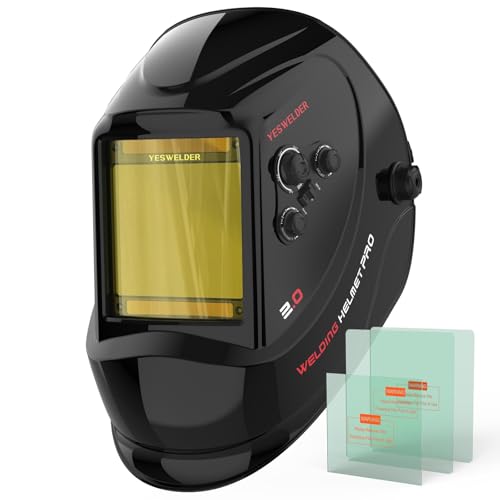
LARGE VIEW WITH TRUE COLOR CLARITY: See more of the weld puddle, joint edges, and work position through a wide 3.93" x 3.66" viewing area. The 1/1/1/1 true-color optical clarity provides a clearer, more natural view than traditional green-tinted lenses, helping support better visibility for detailed welding, fabrication, and garage projects.

AUTO DARKENING FILTER - This welding helmet comes with high-end auto-darkening lens and 4 premium arc sensors which let you adapt to different working environments by adjusting the lens's shade and sensitivity while you are operating ARC/MIG/TIG Welding. DIN4 on light state, DIN5-9/9-13 on dark state.

【True Color View & Better Clarity】TRQWH welding helmet features advanced true color technology with top 1/1/1/2 optical clarity, restoring every detail of your workpiece. Perfect for fine TIG welding or intricate fabrication where visual accuracy is critical. Plus, wide view with USB rechargeable top LED light, comfortable operation even in dim or dark environments, ideal for indoor fabrication, night repair & DIY metal work
Welding Gloves, Jackets, and Skin Protection
When you handle the arc, your gloves, jacket, pants, and base layers must form a complete barrier against heat, sparks, spatter, and UV exposure.
Welding gloves should match the job. Heavy stick and flux-cored welding often need thicker leather gloves with more heat resistance. TIG welding may need thinner gloves with better finger control. Choose leather gloves reinforced at stress points so your hands stay protected without sacrificing control. The WZQH 16-inch leather welding gloves are designed for heat resistance while covering the wrist and lower forearm.
Welding jackets made from flame-resistant material block spatter and UV radiation while still letting you move. Leather gives strong spark protection for heavier work, while FR cotton can be more comfortable for lighter welding when it is clean, dry, and in good condition.
For skin protection, wear long sleeves and pants made from tightly woven, heavyweight cotton, wool, leather, or rated FR fabric. Avoid ordinary synthetic clothing because some fabrics can melt when exposed to heat or sparks.
- Keep gaps closed at wrists, waist, ankles, and neck.
- Avoid cuffs where sparks and slag can collect.
- Keep clothing free of oil, grease, solvents, and frayed threads.
- Replace gloves, sleeves, jackets, and pants when holes or stiff burned areas appear.
Pro Tip: Do a quick skin-gap check before welding. Raise your arms, bend forward, and turn your wrists. If skin shows at your neck, waist, wrist, or ankle, sparks can find that gap.
Products Worth Considering

Great Fire & Heat Resistance: Made from premium heat-resistant split cowhide leather with a soft cotton lining and reinforced palm padding. The fireplace gloves deliver reliable protection from high temperatures, sparks, and burning embers. Ideal for tending fireplaces, feeding a wood stove, or adjusting logs in a fire pit
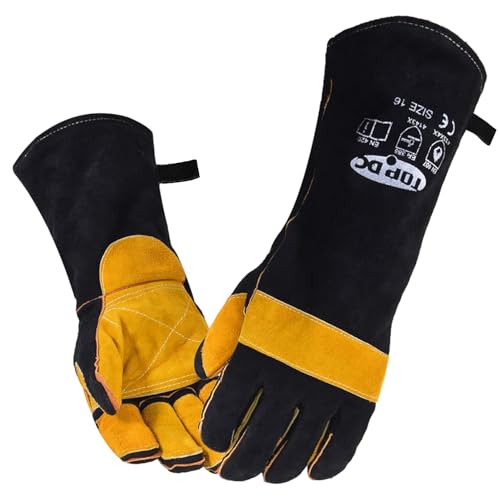
EXTREME HEAT RESISTANT PROTECTION: Reinforced Kevlar stitching, double leather reinforcement and high-strength sewing on the fingers, palms, elbows and backs. An aluminum foil layer in the palm adds insulation. A fully lined interior helps protect against heat, flames, spatter and sparks during welding tasks. Heat resistant up to 932°F (500°C)

SAFE & RELIABLE: This welding jacket is made of 11oz(310g) FR cotton, blocking high-temperature sparks and preventing melting. It also has reflective strips—ideal for low-light workshops, nighttime outdoor repairs. The fabric holds NFPA2112 certification (meets pro standards) and suits MIG, TIG welding & cutting operations, safeguarding safety in workshops and outdoors
Welding Boots, Earmuffs, and Head Protection
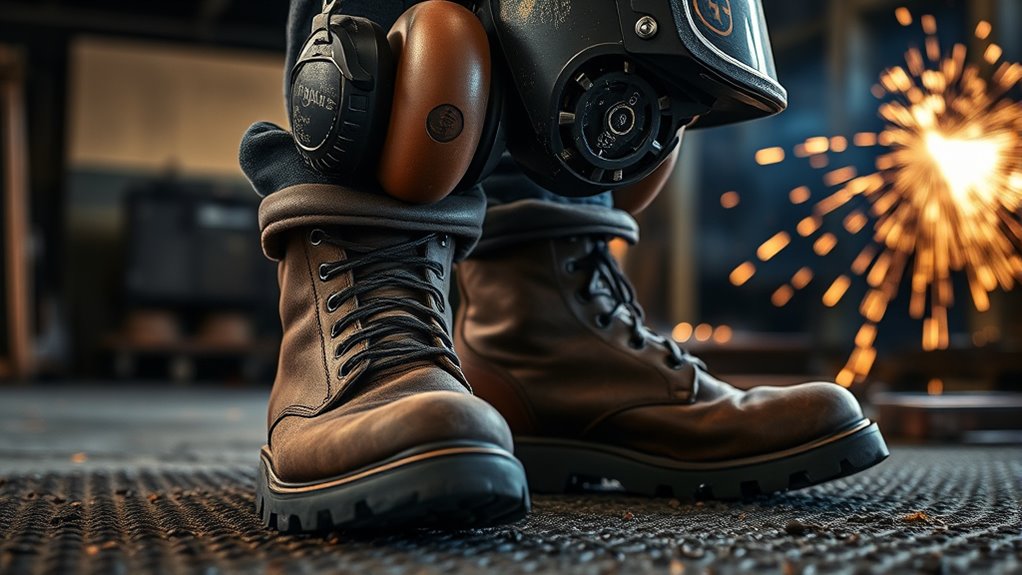
| Gear | What it does |
|---|---|
| Welding boots | Shield feet from sparks, slag, heat, and impact |
| Earplugs or earmuffs | Reduce noise exposure from welding, grinding, chipping, and cutting |
| Head protection | Blocks UV radiation, sparks, hot slag, and debris around the scalp and ears |
| Adjustable fit | Keeps the helmet stable, comfortable, and properly positioned |
Choose leather welding boots that cover the ankle and resist sparks. Steel-toe or metatarsal protection helps when you handle heavy parts, clamps, plates, cylinders, or frame sections. Keep laces covered if possible, because sparks can burn through exposed laces.
Use earplugs, earmuffs, or both when welding, grinding, chipping, or cutting creates high noise. The CDC/NIOSH hearing protection guidance notes that hearing protection should be comfortable, compatible with the job, and selected to reduce noise exposure below recommended limits.
Set the helmet’s adjustable fit so it stays secure while you work. Less movement means better coverage and control. A fire-resistant welding cap or skull cap adds another layer of protective clothing that helps cover your scalp, ears, and hair. Wearing proper flame-resistant clothing also helps prevent burns from sparks and heat generated during welding.
Respirators, Aprons, and Neck Protection
Respirators can reduce inhalation of welding fumes and fine particulates, but only when the respirator is right for the hazard and fits your face. A loose respirator leaks. The wrong filter may not protect you from the fumes or gases produced by the metal, coating, flux, or welding process.
Start with ventilation. OSHA’s welding, cutting, and brazing requirements call for ventilation in confined spaces and require ventilation systems to keep toxic fumes, gases, or dusts below applicable limits. Local exhaust or fume extraction is usually better than relying on a respirator alone.
If you can smell, taste, or feel irritation through a respirator, stop and check the fit, filter, ventilation, and material hazard before continuing.
Welding aprons made from flame-resistant material shield your chest, stomach, and upper legs from sparks, hot slag, and molten metal. They are especially useful for bench work, overhead work, heavy stick welding, and jobs with heavy spatter.
Neck protection, such as flame-resistant bandanas, hoods, bibs, or helmet shrouds, blocks UV radiation and sparks from your neck and upper chest. This area burns easily because it is often exposed when you lean, look down, or reach around a workpiece.
- Check respirators for seal, straps, valves, cartridges, and filter condition before every job.
- Inspect welding aprons for holes, burns, stiff seams, and loose ties.
- Replace neck protection if it is torn, oil-soaked, loose, or no longer covers the gap below your helmet.
- Read the safety data sheet when welding coated, painted, galvanized, stainless, or alloyed metals.
Maintenance matters. Damaged gear will not protect you the way it should. Choose equipment that fits your body and covers the hazard area, because precise coverage lets you work with more control and less risk.
What Welding PPE Does Not Replace
Welding PPE helps protect you, but it does not make every job safe. It works best with good work practices, clean metal, safe electrical setup, fire prevention, ventilation, and clear communication with anyone nearby.
- It does not replace ventilation. Fume extraction and fresh air are still needed when fumes can build up.
- It does not replace fire prevention. Remove flammables, shield nearby surfaces, and keep fire protection ready.
- It does not replace training. Confined-space welding, galvanized metal, stainless steel, and coated materials can require extra controls.
- It does not protect bystanders automatically. Use welding curtains, screens, or barriers so others are not exposed to arc rays and sparks.
- It does not fix damaged equipment. Cracked lenses, burned gloves, torn sleeves, and expired respirator cartridges should be replaced.
Pre-Weld PPE Inspection Checklist
Before you strike an arc, check your welding protective gear from head to toe. This only takes a few minutes and can prevent painful injuries.
- Helmet: Confirm the shell is not cracked, the lens is clean, and the shade is right for the process.
- Safety glasses: Wear them under the helmet when there is a risk of flying particles.
- Respirator: Check fit, straps, valves, filters, and cartridge condition when respiratory protection is needed.
- Gloves: Look for holes, thin spots, burned seams, and poor wrist coverage.
- Jacket and pants: Check for oil, grease, holes, frayed edges, and exposed skin gaps.
- Boots: Cover laces, remove trapped slag, and make sure cuffs do not catch sparks.
- Hearing protection: Use earplugs or earmuffs that fit with your helmet and cap.
- Work area: Set up screens, ventilation, fire protection, and a clean path before welding.
Frequently Asked Questions
What are the 5 main types of welding PPE and their uses?
The five main types are eye and face protection, hand protection, body protection, foot protection, and respiratory protection. A helmet and safety glasses protect your eyes and face. Gloves protect your hands. FR clothing protects your skin. Welding boots protect your feet. Respirators help reduce fume exposure when ventilation alone is not enough.
Why do welders drink milk?
Some welders drink milk because of an old belief that it helps with welding fumes, but milk does not filter inhaled fumes from your lungs. Use ventilation, correct respirator selection, clean base metal, and safe work practices instead. Milk can be part of normal nutrition, but it is not welding fume protection.
What is F1, F2, F3, and F4 in welding?
In welding qualification work, F-numbers usually refer to filler-metal groupings, not PPE categories. They help group electrodes, rods, and wires by usability for procedure and welder qualification. Lens shade numbers are separate and relate to eye protection, not F-number filler-metal groups.
Can you make $100,000 a year welding?
Yes, some welders can reach $100,000 or more in specialized, high-demand, overtime-heavy, travel, pipeline, underwater, industrial shutdown, or contract roles. It is not the typical base wage for every welding job, so compare local wage data, certifications, overtime, travel, and risk before judging income potential.
Do you need safety glasses under a welding helmet?
Yes, safety glasses are strongly recommended under a welding helmet because the helmet may be lifted during setup, chipping, grinding, or inspection. Glasses with side protection help guard against flying particles and hot slag when your helmet is not fully covering your face.
How often should welding PPE be replaced?
Replace welding PPE whenever it is damaged, contaminated, loose, burned through, cracked, or no longer fits correctly. Replace scratched lenses, torn gloves, oil-soaked clothing, damaged boots, and respirator filters or cartridges according to the manufacturer’s instructions and the exposure conditions.
Conclusion
When you suit up with the right welding PPE, you build a shield against sparks, UV/IR radiation, heat, spatter, fumes, noise, impact, and flying debris. Your helmet protects your eyes and face, your gloves and jacket defend your skin, and your boots, respirator, hearing protection, and head and neck gear fill critical gaps. Use every piece correctly, inspect it before each job, and remember that PPE works best with ventilation, fire prevention, training, and safe welding procedures.
Sources
- OSHA: Welding, Cutting, and Brazing Hazards and Solutions — supports the overview of welding hazards, including fumes, UV radiation, burns, eye damage, electrical shock, cuts, and crush risks.
- eCFR: 29 CFR 1910.133 Eye and Face Protection — supports filter lens shade guidance and eye/face protection requirements.
- OSHA: 29 CFR 1910.252 Welding, Cutting, and Brazing — supports protective clothing, welding screens, ventilation, and confined-space safety points.
- CDC/NIOSH Pocket Guide: Welding Fumes — supports welding fume exposure routes, symptoms, and respirator considerations.
- CDC/NIOSH: Welding Fumes and Manganese — supports current welding fume and manganese health context.
- CDC/NIOSH: Provide Hearing Protection — supports hearing protection selection and noise exposure guidance.