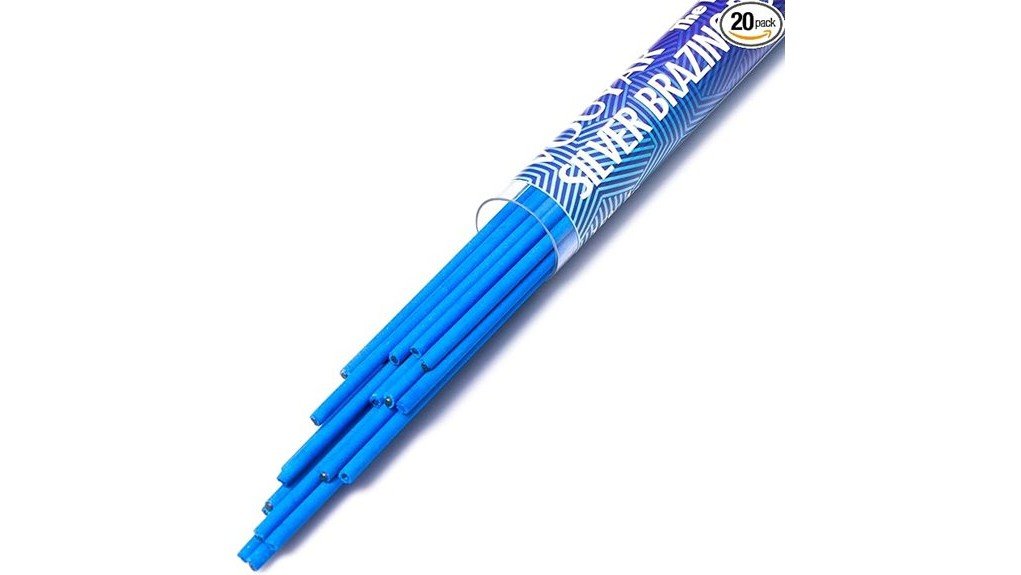
These flux coated brazing rods are 15% silver BCuP-5 sticks, 1/16 inch thick and 18 inches long, per the Amazon listing. The flux coating helps the filler wet the joint, which matters most on brass and bronze. They are meant for copper-alloy work such as HVAC lines, not aluminum or steel.
Quick Verdict
- Best for: HVAC, refrigeration and general copper, brass or bronze brazing where built-in flux is convenient.
- Skip it if: you need to braze aluminum or steel, or you need a verified brand data sheet.
- Check first: the pack count. The product name says 15 sticks, but confirm it on the live listing.
Flux Coated Brazing Rods Specifications
| Specification | Per the listing |
|---|---|
| Product | Flux-coated brazing rods, 15 sticks |
| Classification | AWS A5.8 BCuP-5 |
| Silver content | 15% (copper-phosphorus-silver alloy) |
| Rod size | 1/16 inch x 18 inches |
| Flux | Coated rod surface |
| Solidus | 1190°F |
| Brazing range | 1300°F to 1500°F |
| Uses | HVAC, refrigeration, AC, cold storage, general metalwork |
Why the Flux Coating Matters
BCuP alloys flow on clean copper without flux, but brass and bronze need it. A coated rod carries the flux to the joint so you do not have to brush it on. The coating does not replace cleaning. Oxide, oil and a poor gap still give weak joints.
Who Should Buy Them
- HVAC and refrigeration workers brazing copper joints
- DIY metalworkers who want flux built in
- Buyers who want a compact 18-inch rod for small joints
Who Should Skip Them
- Anyone brazing aluminum
- Anyone brazing steel, stainless or nickel alloys, where phosphorus makes joints brittle
- Buyers who want a large, verified bulk pack
How to Use Them
- Clean the joint to bright metal and fit it with a tight, even gap.
- Heat the parts evenly, not the rod.
- Touch the coated rod to the joint once it is hot enough to melt it.
- Let the filler flow around the joint, then cool.
- Wipe or wash off flux residue and leak test the joint.
See How to Braze HVAC Copper Lines Without Leaks for a full walk-through.
Safety
Brazing makes fumes and flux vapors. Ventilate, wear safety glasses and heat-resistant gloves, and keep flammables away. Never braze a charged or pressurized line.
Pros and Cons
Pros
- 15% silver BCuP-5 composition
- Flux coating for brass and bronze joints
- 18-inch rods for controlled work
Cons
- Not for aluminum or ferrous metals
- Pack count should be confirmed
- Needs clean parts and heat control
Is It Worth the Price?
It is a good fit if you braze copper alloys and want built-in flux. For uncoated rods see our 15% silver BCuP-5 review. For a cheaper 5% silver rod, see the Cloud Fire BCuP-3 review.
Final Verdict
These flux coated brazing rods are a practical BCuP-5 option for copper, brass and bronze. Confirm the pack count, clean the joint well and keep them off aluminum and steel.
Frequently Asked Questions
What are flux coated BCuP-5 rods used for?
They braze copper, brass and bronze in HVAC, refrigeration and general metalwork.
Do I still need to clean the joint?
Yes. The flux coating helps wetting but does not replace cleaning to bright metal and a tight fit.
Can I braze aluminum with them?
No. Use a filler and method made for aluminum.
Can I use them on steel?
No. Phosphorus-bearing alloys form brittle joints on ferrous metals and many nickel alloys.
How many sticks are in the pack?
The product name says 15 sticks. Confirm on the live listing.
What temperature range does the listing give?
A 1190°F solidus and a 1300°F to 1500°F brazing range.